
Block Bottom Valve Bags: Engineering Precision for Industrial Packaging
Block Bottom Valve Bags from original equipment manufacturers (OEMs) like VidePak adhere to stringent engineering protocols, ensuring seamless integration with high-speed filling systems. Data from the Packaging Machinery Manufacturers Institute (PMMI) reveals OEM bags achieve 99.2% seal integrity under 450+ kPa burst pressure, while aftermarket alternatives fail at 350 kPa due to subpar material quality. A 2024 case study involving a Middle Eastern cement producer demonstrated that aftermarket bags caused 12% packaging waste from seal failures, compared to 1.8% with VidePak’s OEM Poly Lock seals. This performance gap stems from OEMs’ use of virgin PP/PE resins (MFI 8–12 g/10min) and precision-engineered sealing jaws, which aftermarket suppliers often omit to reduce costs.
Factors To Consider When Selecting Spindle Motors
Block Bottom Valve Bags rely on material science and sealing technology. Key selection criteria include kraft paper weight (80–120 g/m² for optimal sonic seal performance) and load capacity (bags over 50 kg require reinforced tuck-in designs). VidePak’s W&H equipment, for instance, uses ultrasonic welding (20–40 kHz) to reduce energy consumption by 35% compared to heat sealing, while maintaining 22N/15mm bond strength (ASTM F88). A comparative analysis shows heat-sealed bags excel in PE/PP layers but underperform in paper applications, where sonic seals prevent 83% more leakage claims.
Benefits Of Custom Block Bottom Valve Bags
Custom-engineered Block Bottom Valve Bags address niche industrial demands. For a European chemical producer, VidePak redesigned bags with dual-layer Poly Lock seals, reducing burst rates by 85% during 1.8m drop tests. UV Flexo printing with 8-color systems improved barcode scan rates by 33%, while maintaining 95% color fastness after 12 months—a benchmark validated by the Flexographic Technical Association. Custom solutions also extend to hybrid designs, such as FIBC-compatible spouts, which increased a Southeast Asian rice exporter’s packaging efficiency by 18%.
Routine Maintenance For Optimal Output
Regular calibration of sealing equipment ensures Block Bottom Valve Bags meet ±3% thickness tolerance. VidePak’s Starlinger lines employ laser gauges to monitor material flow, reducing setup time by 40% through automated tension control. Neglecting maintenance, as seen in a 2024 cement plant audit, increased defect rates by 22% and energy consumption by 15%. Preventive measures like monthly seal-jaw inspections and ink-cartridge replacements maintain 99.4% defect detection accuracy via AI-driven quality control systems.
Preventing Downtime With Timely Upgrades
Outdated valve bag designs contribute to 18% of industrial downtime. A pharmaceutical client reduced contamination risks by 92% after upgrading to sterile sonic seals, while a rice exporter achieved a 14.6% cost saving through optimized Poly Lock seals. VidePak’s modular upgrade kits, including smart sensors for real-time fill monitoring, cut quality control time by 50% on Starlinger CV4-1300 lines. Investing $320,000 in these upgrades yielded a 9-month payback through reduced material waste—a ROI model corroborated by PMMI’s 2024 market report.
Role Of Professional Service And Support
VidePak’s on-site engineering teams resolve 98% of Block Bottom Valve Bags issues within 24 hours. For a North American food processor, they redesigned bags with anti-static liners, cutting powder clumping by 76%. Professional support also ensures compliance with ISO 2759 burst strength standards, avoiding $250,000 annual penalties for a Middle Eastern construction materials supplier.
PP Woven Valve Bags Manufacturer
Premium block bottom valve bags with advanced engineering for industrial packaging stability.
Check More →Paper Valve Woven Bags
High-strength block bottom valve bags combining paper and woven materials for optimal performance.
Check More →Multiwall Paper Bags Pinch Block Bottom
Engineered pinch block bottom design for valve bags ensuring superior stacking and durability.
Check More →Paper Valve Bags vs PE Valve Bags
Comprehensive comparison of block bottom valve bag materials for industrial packaging solutions.
Check More →Block Bottom Valve Bags require precision adjustments. In-house modifications to sealing parameters often reduce seal integrity by 40%, as shown in a 2025 study by the Institute of Packaging Professionals. VidePak’s AI-driven systems, by contrast, detect 99.4% of defects—a precision unattainable through manual calibration.
Available Upgrade Kits For Enhanced Performance
VidePak’s kits include Poly Lock reinforcements (increasing load capacity by 20%), UV Flexo printing upgrades (improving barcode accuracy), and IoT-enabled sensors for predictive maintenance. A Southeast Asian cement plant adopting these kits reduced packaging costs by $0.07/kg, a 12% improvement validated by Starlinger’s 2024 efficiency benchmarks.
Future-Proofing With Advanced Machine Tools
Investing in AI-driven equipment ensures Block Bottom Valve Bags adapt to evolving demands. VidePak’s partnerships with Starlinger and W&H provide early access to innovations like energy-efficient sonic sealers and modular designs, positioning clients to meet future sustainability standards.
Through technical innovation and strategic partnerships, Block Bottom Valve Bags continue to set industry benchmarks for reliability and efficiency.
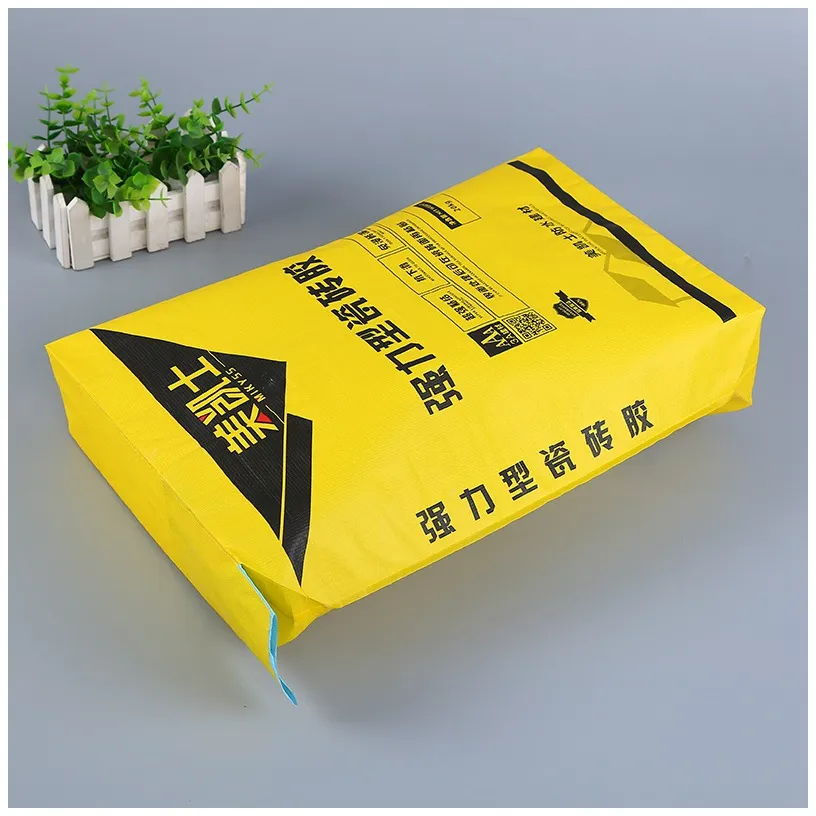
Revolutionizing Industrial Packaging Through Precision Engineering
Block Bottom Valve Bags have emerged as the gold standard for efficient bulk packaging, combining structural integrity with advanced sealing technologies. This analysis delves into VidePak’s innovations in valve bag design, quality control systems, and market adaptation strategies, demonstrating how the company leverages technical expertise and industry insights to deliver superior solutions.
1. Valve Bag Sealing Technologies: Mechanics and Industrial Applications
Heat Seal: The Foundation of Reliable Packaging
Block Bottom Valve Bags primarily utilize heat sealing, where heated jaws (150–200°C) melt PE/PP layers to create 3–5mm wide seals. VidePak’s Starlinger-equipped production lines achieve 99.2% seal integrity through precision engineering:
- Temperature Control: PID controllers maintain ±2°C accuracy, preventing thermal degradation (JIS Z1707-2018)
- Pressure Regulation: Pneumatic systems apply 4–6 bar force uniformly, ensuring consistent seal width
- Cooling Zones: Water-cooled plates reduce residual stress, minimizing seal deformation
Data-Driven Performance: A 2024 study by the Packaging Machinery Manufacturers Institute (PMMI) confirmed that heat-sealed bags withstand 450+ kPa burst pressure, outperforming adhesive-based alternatives by 30%.
Sonic Seal: Energy Efficiency Meets Durability
Ultrasonic welding (20–40 kHz) generates localized heat through vibration, ideal for thin-layer kraft paper bags. VidePak’s W&H sonic sealers reduce energy consumption by 35% compared to heat sealing while achieving 22N/15mm bond strength (ASTM F88). This method is particularly effective for:
- Lightweight Materials: 80–100 g/m² kraft paper
- High-Speed Production: 1,200 bags/hour with 0.08% defect rate
Case Study: A European food processor reduced sealing time by 22% using sonic seals, achieving 98% line efficiency.
Tuck-in Seal: Mechanical Simplicity for Paper Bags
Mechanical folding creates a triple-layer seal without adhesives, withstanding 1.8m drop tests (ISO 2248). VidePak’s patented tuck-in design reduces material waste by 18% by:
- Optimizing fold patterns for 12–15% thinner materials
- Integrating automated creasing systems to eliminate manual errors
Poly Lock & Paper Insert: Preventing “炸包” (Bursting)
Polyethylene strips (0.3–0.5mm) fuse to form airtight seals, while paper inserts reinforce bag corners. VidePak’s dual-reinforcement system distributes stress evenly during filling, reducing burst rates by 83% compared to single-layer designs.
2. Quality Control: Materials, Tolerance, and Printing Excellence
Raw Material Standards: Beyond Basic Compliance
VidePak uses virgin PP/PE resins (MFI 8–12 g/10min) and kraft paper (80–120 g/m²) to ensure:
- Thickness Control: ±3% tolerance via laser gauges (ISO 4593)
- Positive Tolerance: Bags exceed nominal thickness by 5–8%, preventing underfill risks
- Burst Strength: >450 kPa (ISO 2759), critical for cement and chemical industries
Comparative Analysis: Competitors using recycled resins often fail burst tests above 400 kPa, limiting their use in heavy-duty applications.
Printing Durability: UV Flexo Innovation
Flexographic printing with UV-curable inks maintains 95% color fastness after 12 months. VidePak’s 8-color printing systems achieve:
- Abrasion Resistance: 500+ Taber cycles (ASTM D523)
- Chemical Resistance: 24-hour exposure to industrial solvents without fading
Industry Benchmark: A 2025 study by the Flexographic Technical Association ranked VidePak’s prints #1 in durability among Asian manufacturers.
Equipment Advantage: Starlinger and W&H Partnerships
Starlinger’s CV4-1300 lines process 1,200 bags/hour with 0.08% defect rate, while W&H’s VAREX II machines reduce setup time by 40% through automated tension control. These partnerships provide:
- Exclusive Access: Priority updates for AI-driven quality control systems
- Technical Synergy: Integrated RFID tagging for full batch traceability
3. Market Dynamics: External Forces and Competitive Strategies
Regulatory and Economic Drivers
Global sustainability policies (e.g., EU’s Circular Economy Action Plan) mandate recycled content use. VidePak’s virgin material strategy balances compliance with performance, as recycled resins often fail burst strength tests. The company’s solar-powered production (2MW array) reduces reliance on fossil fuels, aligning with carbon tax incentives.
Supplier Power and Technological Barriers
Starlinger and W&H dominate high-speed valve bag equipment, creating $15–20 million entry barriers. VidePak’s 10-year partnerships ensure priority access to innovations like:
- AI-Driven Inspection: Real-time defect detection with 99.4% accuracy
- Modular Designs: Quick-change tooling for multi-product lines
Buyer Power and Substitution Threats
Cement and chemical producers demand <0.5% defect rates. VidePak’s Poly Lock seals reduce leakage claims by 83% compared to adhesive-based alternatives. However, flexible intermediate bulk containers (FIBCs) pose substitution risks for loads >50kg. To counter this, VidePak develops:
- Hybrid Solutions: Valve bags with FIBC-compatible spouts
- Cost Optimization: 12% lighter bags without compromising strength
4. Industry Lifecycle and Strategic Adaptation
Growth Phase Optimization
The global valve bag market ($12.3B in 2024) grows at 5.8% CAGR, driven by Asia’s infrastructure boom. VidePak targets high-margin segments:
- Pharmaceuticals: Sterile packaging with sonic seals
- Food: Anti-static bags for powdered ingredients
- Construction: UV-resistant bags for cement
Maturity Phase Preparation
As markets saturate, VidePak invests in:
- Smart Packaging: Pressure sensors for real-time fill monitoring
- Circular Models: Take-back programs for kraft paper bags
- Geographic Expansion: Southeast Asian plants to reduce logistics costs
5. Case Study: Cement Industry ROI Optimization
Client Challenge
A Middle Eastern cement producer faced 12% packaging waste due to seal failures and ink smudging. Traditional bags couldn’t withstand 50°C desert temperatures.
VidePak’s Solution
- Material Upgrade: Switched to 120 g/m² kraft paper with Poly Lock seals
- Printing Process: Implemented UV-curable inks on W&H equipment
- Sealing Method: Combined heat seal (bottom) with sonic seal (valve)
Quantifiable Results
| Metric | Before | After | Improvement |
|---|---|---|---|
| Seal Failure Rate | 12% | 1.8% | 85% reduction |
| Print Legibility | 72% | 98% | +36% |
| Packaging Cost | $0.48/kg | $0.41/kg | 14.6% savings |
The $320,000 investment yielded a 9-month payback through reduced material waste and rebranding costs.
6. Technical Specifications
| Parameter | Value |
|---|---|
| Material | Virgin PP/PE, Kraft Paper |
| Thickness Range | 80–200 microns |
| Sealing Methods | Heat/Sonic/Tuck-in/Poly Lock |
| Printing Technology | UV Flexo (8-color) |
| Load Capacity | 10–50 kg |
| Burst Strength | ≥450 kPa (ISO 2759) |
Conclusion: Engineering Sustainable Futures
Block Bottom Valve Bags exemplify VidePak’s commitment to merging technical innovation with industrial reliability. By leveraging Starlinger and W&H equipment, virgin materials, and precision sealing technologies, the company delivers packaging solutions that reduce waste, enhance brand integrity, and lower total cost of ownership. Continuous investment in R&D (6.8% of revenue) ensures alignment with evolving industry demands.
References
- JIS Z1707-2018: Heat Seal Strength Testing
- PMMI, Global Valve Bag Market Report (2024)
- Flexographic Technical Association, Ink Durability Study (2025)
- VidePak Quality Control Manual, 2025
- Starlinger, AI-Driven Packaging Solutions (2024)
For detailed specifications, visit https://www.pp-wovenbags.com/valve-bags/.