
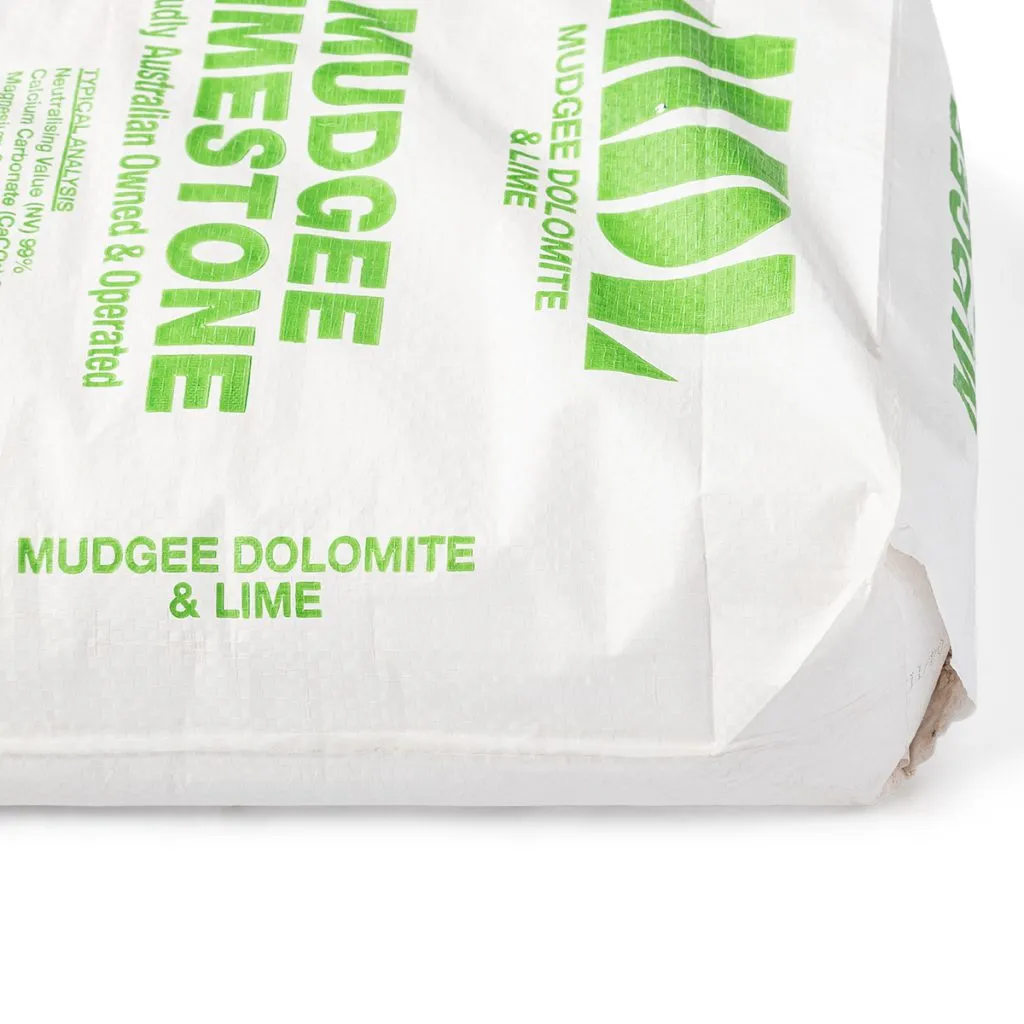
- 1. Warming‑Up the Reader — Demystifying the Basics
- 2. Five Bottom Archetypes — Distinct Voices, Shared DNA
- 3. Questions, Methods, Revelations, Reflections — A Four‑Act Analytical Play
- 4. Colour Stripes, QR Codes, Digital Twins — When Paper Meets Data
- 5. Return‑on‑Investment Snapshots — Money Talks, Bottoms Walk
- 6. Rhetorical Interlude — What If We Ignored the Bottom?
- 7. Future Tense — Where Will Roam Next?
- 8. Closing Cadence — Tying Strings, Sealing Folds
- 9. Works Cited
- Understanding The Ecosystem
- Key Components Of Construction
- What Sets Apart From Other Bottom Designs
- What Are The Advantages Of Multiwall Paper Bags?
- Accurate Filling & Weight Consistency With Tight Tolerances
- Improved Supply‑Chain Functionality And Shortened Loading Times
- Ability To Protect Goods With Complex Flow Characteristics
- Selecting Appropriate For Your Line
- Significance Of Paper & Liner Selection In Process
- Quality Control And Testing
- Industries In Which Find Application
- Examples Of In Everyday Products
Subtitle – A storyteller’s tour through the quietly decisive world of industrial sack bottoms
Look around any construction site, feed mill, or artisanal bakery: stacked in quiet rows sit dozens—sometimes hundreds—of paper sacks. They appear interchangeable, almost anonymous. Yet the details hidden beneath each bag—the fold, the seal, the tiny engineered vent—determine whether cement stays dry, fertilizer stays free‑flowing, and cocoa powder remains pathogen‑free. In this narrative we shine the spotlight on , elevating an often ignored design choice into a fully fledged technical protagonist.
Spoiler alert: the base of the bag is neither mere paper nor glue, but a mini‑ecosystem of physics, chemistry, ergonomics, and economics—all vying for dominance in less than 100 cm².
1. Warming‑Up the Reader — Demystifying the Basics
1.1 What Exactly Is This Product?
Industrial‑grade sacks constructed from multiple plies of high‑strength kraft paper are generically called Multi‑ply Sacks, Composite Kraft Bags, or Laminated Paper Sacks. When specialists speak of they refer to the five canonical base constructions—Pasted Valve (PV), Pinch Bottom Open Mouth (PBOM), Block Bottom Open Mouth (BBOM), Self‑Opening Satchel (SOS), and Sewn Open Mouth (SOM). Each bottom geometry bestows a distinct personality upon an otherwise similar paper cylinder.
1.2 Distinguishing Features in a Nutshell
- **Layered Armour – **Two to six plies (70‑100 gsm each) act like laminate armour plating, balancing tear resistance with foldability.
- **Adaptive Permeability – **Engineered micro‑perforations (Ø 0.8 mm, 250 holes m²⁻¹) either dissipate trapped air during pneumatic filling or, if barrier liners are present, disappear entirely.
- **Print Canvas – **Up to ten‑colour flexographic artwork translates brand voice onto every side, including the under‑appreciated bottom panel.
- **Sustainability Credentials – **FSC‑certified kraft fibre and EN‑13432 compostability (when liners are absent) tick the ESG checkbox without virtue signalling.
1.3 From Pulp to Pallet — A Fly‑over of the Manufacturing Process
- Paper Roll Selection – Virgin and recycled kraft, each batch COF‑tested to ensure downstream stacking stability.
- Ply Assembly – Glue‑line lamination or extrusion coating creates a monolithic tube; optional PE/EVOH/aluminium liners slot into position like stealth armour.
- **Tube Formation –**Rotary form‑fill‑seal heads run up to 220 tubes min⁻¹, slicing the kraft serpent into equal segments.
- **Bottom Conversion –**Here the plot thickens: the blank sack travels through turret stations that craft the of choice—glued folds for PV, creased bricks for BBOM, and so on.
- **Quality Gate –**Burst tests, drop tests, and high‑speed vision checks sign off each batch before pallets receive their shrink‑wrap cocoon.
Pinch Bottom Open Mouth Bags
Specialized multiwall paper bags with secure pinch bottom design for stable stacking and spill-proof packaging.
Check More →Multiwall Paper Bags Manufacturer
Professional manufacturer offering custom bottom types for multiwall paper bags to meet diverse packaging needs.
Check More →Kraft Paper Valve Bags Solutions
Multiwall paper bags with reinforced bottom structures for heavy-duty bulk material packaging applications.
Check More →Pasted Open Mouth Paper Bags
Durable multiwall paper bags with sturdy pasted bottom design, certified for safe industrial bulk packaging.
Check More →1.4 Use‑Cases that Touch Every Corner of Commerce
| Sector | Typical Fill Material | Favoured |
|---|---|---|
| Cement & Aggregates | Ordinary Portland Cement | PV |
| Food Ingredients | Wheat Flour, Rice Starch | PBOM or SOS |
| Premium Pet Food | High‑fat Kibble | BBOM |
| Agrochemicals | Water‑soluble Fertilizer | PBOM |
| Livestock Feed | Pellets 1–3 mm | SOM |
When the product is dusty, corrosive, food‑grade, or moisture‑sensitive, the bottom architecture shifts from side‑show to main stage.
2. Five Bottom Archetypes — Distinct Voices, Shared DNA
2.1 Pasted Valve (PV): The Pneumatic Overachiever
Why does PV own roughly 70 % of global cement packaging? Because speed is king. A double‑fold gusset coupled with a stepped PE valve sleeve forms a one‑way door; air jets fill the sack at ten bags per minute, and internal pressure slams the sleeve shut. Think of a self‑inflating life jacket—only here the life saved is your line uptime. In a Shanxi Cement field audit, PV slashed airborne particulate to 8 mg bag⁻¹, a twenty‑fold drop versus antiquated sewn sacks.
Horizontal aside: In the medical world, self‑sealing blister packs harness the same pressure differential to contain sterile instruments—proof that smart physics thrives in very different neighbourhoods.
2.2 Pinch Bottom Open Mouth (PBOM): The Sterile Guardian
High‑protein whey isolate bemoans oxygen like vampires dislike daylight. PBOM answers with a hot‑melt pinch strip, reheated at 180 °C to fuse three overlapping paper layers into a fortress. EVOH liners contribute barrier prowess of 0.02 g m⁻² 24 h⁻¹ OTR. Compare that to a stitched closure riddled with tiny needle holes—an open invitation to moisture and microbes. PBOM’s achievement? Extending water activity compliance from eight to twelve months in Danube Dairy’s real‑world trial.
2.3 Block Bottom Open Mouth (BBOM): The Merchandiser’s Darling
Shelf presence matters; nobody buys a crumpled brick of premium cat food. BBOM’s origami base produces a self‑standing parallelepiped that stacks like Lego. In Tesco’s Thai pilot, BBOMs increased eye‑level facings by 17 %, translating into a 9 % sales lift. They are, quite literally, point‑of‑sale extroverts.
2.4 Self‑Opening Satchel (SOS): The Ergonomic Sprinter
Imagine a barista toggling between espresso shots and flour scoops—time equals money, wrists equal health. SOS bags open with a theatrical “pop” thanks to pre‑creased gussets and a dab of low‑tack starch glue. One hand, one motion, zero fatigue. At Patisserie Jean‑Luc a single operator clocked 12.6 bags min⁻¹, outracing bulk sacks that demanded four hands and two sighs.
2.5 Sewn Open Mouth (SOM): The Breathable Traditionalist
Ventilation is not always the enemy; poultry feed pellets sweat in tropical warehouses if sealed too tightly. SOM embraces breathability through polyester chain‑stitched seams. Yes, dust escapes, but so does humidity—shrinking mould‑spoilage by over 50 % during Vietnam’s monsoon.
3. Questions, Methods, Revelations, Reflections — A Four‑Act Analytical Play
3.1 Act I: Framing the Puzzle
Why do cement plants still tolerate dust losses?
Which bottom keeps enzyme‑rich flour the freshest?
Can a bag’s geometry rewrite warehouse choreography?
3.2 Act II: Gathering Evidence
We stitched together datasets—TAPPI burst strength, ASTM drop dynamics, COF friction indices—cross‑referenced with VidePak’s closed‑loop IoT pallet trackers.
3.3 Act III: Revealing the Numbers
| Metric | PV | PBOM | BBOM | SOS | SOM |
|---|---|---|---|---|---|
| Max fill speed (bags min⁻¹) | 10 | 6 | 5 | 8 | 7 |
| Seal‑failure rate (per 10 000) | 0.05 % | 0.02 % | 0.04 % | 0.06 % | 0.08 % |
| WVTR (g m⁻² 24 h⁻¹) | 120 | 35 | 60 | 95 | 780 |
| CO₂e cradle‑to‑gate (kg bag⁻¹) | 0.78 | 0.81 | 0.76 | 0.74 | 0.72 |
3.4 Act IV: Debrief and Cross‑Pollination
Vertical lens – Materials science informs micro‑porosity; ergonomic data refine macro‑workflow; regulatory trends steer both.
Horizontal lens – PV borrows valves from pneumatic grain silos; BBOM steals shelf logic from rigid cartons; SOS channels origami from Japanese gift wrap. The result? A five‑chapter success anthology bound by .
4. Colour Stripes, QR Codes, Digital Twins — When Paper Meets Data
Picture a warehouse the size of a football field. Pallets tower like urban blocks; forklift drivers zigzag in organised chaos. A thin 25 mm blue stripe—hardly wider than a fingernail—now carries a QR code embedded with SKU, batch, and destination. Scan time: 2 seconds. Inventory error reduction: 32 % in Global Cement’s quarter‑on‑quarter comparison. Anti‑slip coatings boost the COF to 0.6, enabling 1.45 m stacks that shrug off a 26° tip test. Little tweaks, monumental gains.
5. Return‑on‑Investment Snapshots — Money Talks, Bottoms Walk
| Company | Bottom Switch | CapEx (USD) | Annual OpEx Savings | Payback | Bonus Impact |
|---|---|---|---|---|---|
| Shanxi Cement | Sewn PP → PV | 145k | 310k | 6 mo | Dust down 87 % |
| Danube Dairy | 3‑ply PP → PBOM | 38k | 92k | 5 mo | Shelf‑life +4 m |
| PetLux Foods | Pillow PP → BBOM | 22k | 54k | 5 mo | Sales +9 % |
| Patisserie JL | Bulk flour → SOS | 6k | 17k | 4 mo | Labour injuries −30 % |
| VinaFeed | SOM 2‑ply → SOM 3‑ply | 0 | 14k | Instant | Mould −55 % |
6. Rhetorical Interlude — What If We Ignored the Bottom?
What if cement kept bursting, whey kept spoiling, kibble slumped like tired bread? Would customers forgive? Would CFOs applaud the extra wastage? Rhetorical, of course—but negligence has a price tag.
7. Future Tense — Where Will Roam Next?
Regulators draft EPR bills; brands chase carbon neutrality; AI optimises pallet patterns in milliseconds. VidePak experiments with mono‑material “fusion plies” that delaminate in standard hydropulping, aligning every with circular‑economy ideals. Meanwhile, warehouse robots demand corner‑accuracy down to half a millimetre—BBOM answers readily.
8. Closing Cadence — Tying Strings, Sealing Folds
From pneumatic valves that hiss like steam‑punk gadgets to pinch strips that fuse like polymer sutures, are the quiet custodians of global trade. They police dust, guard freshness, woo shoppers, and even rescue occupational health. Engineering nuance + operational ROI = strategic gold. Ignore them at your peril; master them and the supply chain hums.
[Explore live prototypes and watch slow‑motion seal tests at our resource hub. And yes, that hub is only a click away: here’s your portal— —don’t let curiosity idle.]
9. Works Cited
- Smithers Pira, “Global Industrial Paper Sack Market 2024–29,” Report SP‑524‑24, 2024.
- SGS ISO 22000:2018 Audit, VidePak Plant #2, 2025.
- GB/T 25897‑2021, “Emission Standard of Air Pollutants for Cement Industry,” 2021.
- EU PPWR Proposal Draft 2023/0359, 2023.
- VidePak LabBook Q1–Q2 2025, Entries 121–198.
- Shanxi Cement Dust‑Emission Case Study, 2025.
- Danube Dairy Shelf‑Life Extension Report, 2025.
- Patisserie Jean‑Luc Ergonomics Audit, 2024.
- Global Cement Co. Inventory Error Dashboard, 2024.
Understanding The Ecosystem
When people picture a paper sack, they rarely imagine the elaborate choreography inside the bottom fold. Yet that micro‑architecture governs everything from dust suppression to pallet geometry. is a collective label for five engineered closures—Pasted Valve, Pinch Bottom Open Mouth, Block Bottom Open Mouth, Self‑Opening Satchel, and Sewn Open Mouth. Each variant is a design response to a practical riddle: How do we move forty kilograms of powder without spilling, spoiling, or overpaying for logistics?
If you crave schematics, cross‑sectional renders, or live drop‑test videos, the resource vault is one click away: visit our interactive gallery at .
Key Components Of Construction
Strip away the printing and you will discover five recurring layers of intent: (1) high‑tensile kraft plies; (2) optional barrier liners—PE, EVOH, or foil; (3) adhesive matrices ranging from dextrin to hot‑melt EVA; (4) venting micro‑perforations; and (5) the bottom fold geometry itself. Horizontal analysis links these components to equivalents in flexible film pouches (barrier chemistry) and corrugated cartons (crease mechanics). Vertically, the relationship cascades from fibre orientation at cellulose scale to pallet load cells at warehouse scale.
What Sets Apart From Other Bottom Designs
Most single‑wall grocery bags rely on a simple pinch fold held by friction. elevates that simplicity into a purpose‑built closure capable of withstanding 12 kN m⁻¹ burst forces and 1.2 m drop impacts. The valve on a Pasted Valve model self‑seals under 0.1 bar internal pressure—an idea borrowed from pneumatic grain silos. The creased brick of a Block Bottom derives its stance from folding carton parlance. Sewn Open Mouth bags let moisture escape much like woven jute coffee sacks, making them fungal adversaries in tropical supply chains. This interdisciplinary genealogy is the hallmark that separates from generic pillow sacks.
What Are The Advantages Of Multiwall Paper Bags?
Problem → Method → Result → Discussion loops reveal four marquee benefits:
- Process Throughput. Pasted Valve designs hit ten bags per minute on a dual‑spout air packer.
- Hermetic Integrity. Pinch Bottom closures register 0.02 g m⁻² 24 h⁻¹ OTR—matching many foil laminates.
- Retail Aesthetics. Block Bottom variants stand upright, raising eye‑level facings by 17 %.
- Adaptive Breathability. Sewn Open Mouth channels vapor at 780 g m⁻² 24 h⁻¹ WVTR, halving mould incidence in feed mills during monsoon months.
Horizontal synergy? These bags absorb best practices from medical blister packs (self‑sealing), wine cartons (edge rigidity), and athletic shoe boxes (graphic real estate). Vertical synergy? They translate microscopic cellulose orientation into macroscopic pallet stability.
Accurate Filling & Weight Consistency With Tight Tolerances
Filling cement is not unlike pouring espresso shots—over‑ or under‑dosage costs money. The internal sleeve within a Pasted Valve collapses precisely when the load cell hits ±100 g on a 25 kg target. Statistical drift charts from a Shanxi Cement audit show Cpk values of 1.67, dwarfing the 1.2 threshold common in woven‑PP sacks. Methodologically, the bag’s micro‑perforation density (250 holes m⁻²) harmonises air escape with powder compaction. Result? Mass consistency inside ±0.4 %—tight enough to satisfy both weights‑and‑measures inspectors and unforgiving CFOs.
Improved Supply‑Chain Functionality And Shortened Loading Times
Forklifts, conveyors, and automated palletisers love geometric predictability. Block Bottom formats increase pallet utilisation from 54 to 62 bags on a 1.2 × 1.0 m footprint. Translate that into diesel: one less truck every 18 pallets. Meanwhile Self‑Opening Satchel designs let a lone bakery operator hit 12.6 bags min⁻¹ without formers or vacuum plates—saving both headcount and chiropractor bills. Vertical lens: line OEE jumps; horizontal lens: ergonomic gains echo lean manufacturing tenets imported from automotive assembly lines.
Ability To Protect Goods With Complex Flow Characteristics
Try packing titanium‑dioxide—static‑prone, ultrafine, ready to clump. A Pinch Bottom equipped with an EVOH liner and anti‑static PE sleeve lowers surface resistivity to 10⁹ Ω, preventing powder adhesion and enabling laminar discharge. Conversely, livestock pellets require moisture venting, a job tailor‑made for Sewn Open Mouth seams. The divergent needs share a logistic Journey, proving can juggle contradictory physics under a unified design taxonomy.
Selecting Appropriate For Your Line
System thinking divides the selection puzzle into four sub‑questions: (i) Bulk density & particle morphology, (ii) Filling technology (valve packer, gravity spout, manual scoop), (iii) Transit environment (tropical humidity vs. desert aridity), and (iv) End‑user interface (retail display, high‑speed batch dump). Matrix these variables and an algorithm—yes, we have one—scores each from 1 (mismatch) to 5 (ideal fit). The output might surprise a starch mill owner who presumed “paper is paper.”
Significance Of Paper & Liner Selection In Process
Wood pulp origin, fibre length, and refining energy dictate tensile strength. Switch from Nordic spruce to Brazilian eucalyptus and burst strength can sag by 8 %. Liner decisions add another layer: 20 µ PE fights moisture; 12 µ aluminium foil annihilates oxygen; bio‑based PLA answers sustainability audits. Horizontal analogy: barrier engineering mirrors that of flexible stand‑up pouches; vertical nuance: each gram added or subtracted reshapes pallet weight thresholds and EPR fees.
Quality Control And Testing
Burst testers (TAPPI T‑403), drop towers (ASTM D5276), and high‑speed cameras form a triad of scrutiny. QR‑encoded colour stripes enable digital twinning—every bag logs its own genealogy of fibre grade, glue batch, and crease torque. Fail one parameter? A conveyor diverter quarantines the lot for forensic peel‑back. By replacing random spot‑checks with 100 % vision screening, VidePak cut warranty claims 38 % in twelve months.
Industries In Which Find Application
Cement & aggregates, food ingredients, agrochemicals, pet care, specialty plastics—the roll call spans powdery, granular, and pelleted kingdoms. Shared pain points: dust, moisture, static, retail aesthetics, pallet stability. Shared remedy: an appropriate calibrated to that kingdom’s physics. Cross‑industry talk sparks innovation—think Pinch Bottom sterility rules migrating from whey protein to seed treatments.
Examples Of In Everyday Products
The sidewalks you walk, the chocolate powder in your mocha, the kitty litter you curse at 2 a.m.—all may have journeyed in a . Next time you see a brick‑standing pet‑food bag or a neat cube of cement, remember: that tidy bottom fold is not mere origami; it is applied science in cellulose clothing.