
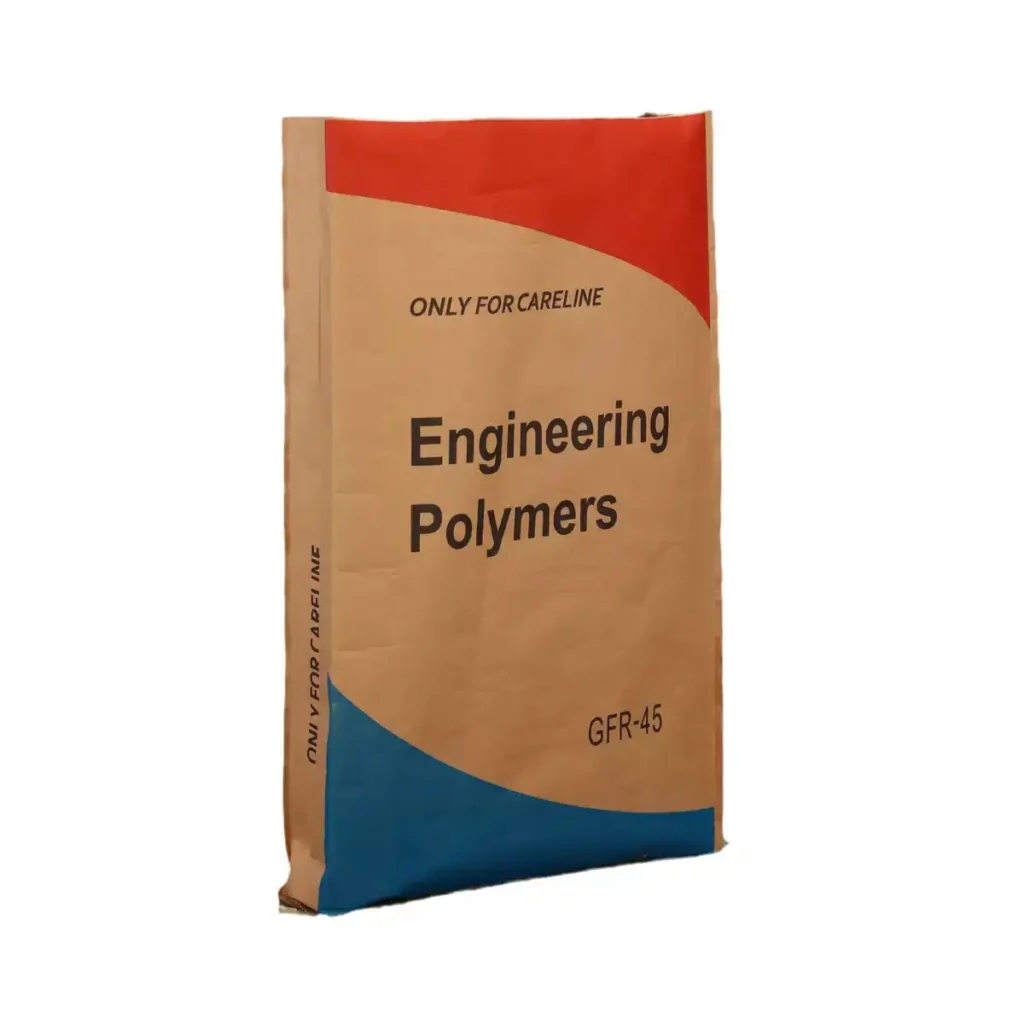
- What is Pasted Open Mouth Paper Bags
- What features define Pasted Open Mouth Paper Bags
- How is Pasted Open Mouth Paper Bags made in practice?
- Why choose Pasted Open Mouth Paper Bags: a positioning statement in questions and contrasts
- A system model for specifying Pasted Open Mouth Paper Bags (problem → sub‑problems → integrated solution)
- Paper architecture: the physics of strength, breathability, and runnability
- Inner functionality: keeping product in, moisture out, and aromas where they belong
- Mouth closure choices on Pasted Open Mouth Paper Bags: heat, tape, stitch—three verbs, three behaviors
- Printing on Pasted Open Mouth Paper Bags: full‑bleed art, Pantone®/RAL fidelity, and coatings that survive the route
- Logistics engineering: geometry, friction, and wrap discipline for calmer pallets
- Customization canvas: dimensions, ply stacks, full‑coverage art, and hybrid paper‑laminated woven builds
- Compliance and documentation: what “food‑grade” really means for Pasted Open Mouth Paper Bags
- Data‑forward parameter windows (illustrative, defendable, and in market)
- Case study A — Flour that must look premium and stay dry
- Case study B — Minerals exporter versus sifting and forklift abuse
- Case study C — Pet‑food brand chasing photographic print and Pantone precision
- Horizontal comparisons: choosing the lightest lever first
- Vertical logic: from fiber to forklift, cause meets effect
- A buyer’s blueprint: nine checkpoints that turn RFQs into reliable production
- Introduction — What are Pasted Open Mouth Paper Bags, and why does this closure matter?
- Method — A system model to specify Pasted Open Mouth Paper Bags with confidence
- Background — Materials knowledge behind Pasted Open Mouth Paper Bags
- Problem Framing — For which uses is the pasted‑open‑mouth closure the best fit?
- Horizontal Analysis — Comparing closure choices across industries
- Vertical Analysis — From fiber to forklift: cause and effect inside Pasted Open Mouth Paper Bags
- Printing & Color — Full‑bleed, Pantone®/RAL fidelity, and coatings that survive the route
- Customization — Dimensions, plies, porosity, and hybrid options
- Method in Practice — Building a closure decision tree for Pasted Open Mouth Paper Bags
- Results — Three concise field narratives
- Discussion — Integrating sub‑solutions into a single, stable specification
- Internal Link — Explore related kraft solutions
- Buying Checklist — Turning RFQs into reliable production
- References
What is Pasted Open Mouth Paper Bags
Pasted Open Mouth Paper Bags are pre‑made, multiwall paper sacks with a factory‑sealed, squared pasted bottom and an open top that the packer closes after filling. In industry catalogs and procurement portals they also appear as pasted open mouth sacks, multiwall kraft open‑mouth bags, block‑bottom paper sacks, and open mouth paper sacks—different phrases for the same trustworthy geometry. Why do operators favor this format? Because it balances industrial toughness with branding headroom and line flexibility: the bottom arrives rigid and perfectly squared for pallet efficiency, while the top can be finished by heat‑seal, tape, or stitch depending on the product and the filler.
What features define Pasted Open Mouth Paper Bags
The defining features of Pasted Open Mouth Paper Bags are a triad: stackability that comes from the pasted block bottom; printability that ranges from clean line art to photographic, full‑bleed imagery; and configurable protection via functional inner plies (PE coating, film liners, even barrier patches where needed). Capacity typically spans 5–50 kg, supported by 2–4 plies of high long‑fiber sack kraft engineered for tensile strength, stretch, and internal tear resistance. Because paper is naturally porous, deaeration during filling is well‑behaved; because the structure is layered, we can tune porosity, stiffness, and moisture response with remarkable finesse.
How is Pasted Open Mouth Paper Bags made in practice?
The value chain runs like a metronome: select sack‑kraft grades (often 70–100 g/m² per ply) → preprint or postprint the web (flexographic or offset) → form the tube and bond the longitudinal seam → paste the block bottom with water‑based or hot‑melt adhesives and squared patches → prepare the mouth for the intended closure (plain paper lip, heat‑sealable film insert, crepe‑tape ledge) → inspect grammage, MD/TD tensile (ISO 1924‑2; TAPPI T 494), Mullen burst (ISO 2758; TAPPI T 403), internal tear (ISO 1974), adhesive bond strength, and bottom squareness. What emerges is a rigid, clean, square sack that runs fast on standard open‑mouth fillers.
UN 5M2 Compliant Pasted Open Mouth Paper Bags
High-quality open mouth paper bags meeting UN transportation safety standards.
Check More →PBOM Pinch Bottom Open Mouth Bags
Durable pinch bottom open mouth paper bags for industrial packaging.
Check More →Laminated Kraft Paper Sacks
Moisture-proof laminated kraft paper sacks for bulk material packaging.
Check More →Multiwall Paper Bags Manufacturer
Professional multiwall paper bag solutions for various industrial applications.
Check More →What do Pasted Open Mouth Paper Bags carry day to day? The list is long and familiar: flour, sugar, starches, semolina, and bakery premixes; grains and rice; animal feed and seeds; pet‑food bases; cement, gypsum, lime, calcium carbonate, and other minerals; salts and tablets; chemical additives and masterbatch carriers. Where a 10–50 kg package must be safe to lift, easy to stack, and clear to read, this format shines. If you want a quick, visual tour of related kraft solutions, visit this hub: Pasted Open Mouth Paper Bags.
Why choose Pasted Open Mouth Paper Bags: a positioning statement in questions and contrasts
Why not sewn‑open‑mouth (SOM)? Why not pinch‑bottom open‑mouth (PBOM)? Why not valve? Each has a logic; the trade is not binary but contextual.
SOM closes at speed and tolerates dust, but the sewn bottom can compromise squareness and sifting control. PBOM excels at near‑hermetic closure using hot‑melt along a pinchable lip, though it demands tight filler alignment and generally higher material/energy budgets. Valve sacks dominate on high‑throughput powder lines, yet constrain large front panels and complicate manual operations.
Pasted Open Mouth Paper Bags sit in the productive middle: a tidy pasted bottom for cube efficiency, an open top for closure choice on the line, and a broad, flat canvas for full‑bleed graphics. When hermeticity is moderate, branding is vital, and fillers vary from manual to semi‑auto, this format is not a compromise—it’s the optimum.
A system model for specifying Pasted Open Mouth Paper Bags (problem → sub‑problems → integrated solution)
Think in layers and links. One headline question—“What bag should we buy?”—unpacks into five interlocking sub‑questions:
- Paper architecture: How many plies, what grammage, which fiber composition, which porosity?
- Inner functionality: Do we need a PE‑coated ply, a glued film liner, or a small barrier insert near the mouth?
- Mouth closure: Heat‑seal, tape, or stitch? What lip preparation and tamper evidence?
- Graphics & coating: Full‑bleed art? Pantone® or RAL accuracy? Rub/scuff strategy?
- Logistics & compliance: Stacking geometry, pallet friction targets, regulatory and food‑contact documentation.
Solve each sub‑problem with data; then recombine. The result is a specification that is not only technically sound but also operationally calm—bags that fly on the filler, sit square on the skid, and keep the warehouse quiet.
Paper architecture: the physics of strength, breathability, and runnability
Paper is not just paper. Sack kraft is engineered. Long softwood fibers deliver tensile and tear; controlled freeness tunes formation and porosity; machine orientation sets MD/TD balance so the tube forms cleanly and the mouth resists fray.
Typical ranges: per‑ply grammages of 70–100 g/m²; 2 plies for 10–25 kg dry foods; 3 plies for 25–40 kg feeds/minerals; 3–4 plies for 40–50 kg heavy powders. Wet‑strength agents maintain mechanicals in humid routes; micro‑perforation or porous plies manage deaeration on fast fills.
Laboratory anchors:
- ISO 536 / TAPPI T 410 for grammage;
- ISO 1924‑2 / TAPPI T 494 for tensile and stretch;
- ISO 2758 / TAPPI T 403 for Mullen burst;
- ISO 1974 / TAPPI T 414 for Elmendorf tear;
- TAPPI T 460 (Gurley) for air resistance; Bendtsen for permeability.
Design levers: increase a ply’s grammage to lift tensile; add a porous inner ply to speed deaeration; specify wet‑strength for monsoon storage; choose a PE‑coated inner when sifting or moisture is the enemy. Every lever has a cost; the art is to pull the lightest lever that solves the loudest pain.
Inner functionality: keeping product in, moisture out, and aromas where they belong
A pure‑paper sack breathes. Sometimes that is perfect (no condensation in warm fills). Sometimes it is dangerous (sugar picking up moisture; salt caking; nutraceuticals oxidizing). Pasted Open Mouth Paper Bags let you layer function only where needed.
Options in ascending barrier:
- PE film liner—loose‑insert or glued. Establishes basic moisture control and sifting suppression; enables heat‑sealable mouths.
- PE‑coated ply—integrates a thin PE film onto a paper ply. Lowers WVTR while keeping a paper feel and in some markets a simpler recycling path.
- Barrier patch near the mouth—a small EVOH or foil‑laminate element added where the heat‑seal forms; common for foods that need only local hermeticity.
- Full barrier laminate (rare in classic POM, but possible)—PET/AL/PE or NY/AL/PE inner nested inside the paper body for oxygen + light protection.
Test criteria: WVTR via ASTM F1249; OTR via ASTM D3985 for barrier elements; heat‑seal strength (if applicable) via ASTM F88/F88M; organoleptics via sensory panels when flavor matters. Choose the least intrusive inner that hits your shelf‑life target. Over‑barrier is expensive and unforgiving on the line; under‑barrier is a silent thief of quality.
Mouth closure choices on Pasted Open Mouth Paper Bags: heat, tape, stitch—three verbs, three behaviors
Heat‑seal (with sealable inner): clean, sift‑resistant, and tamper‑evident. Use mLLDPE‑rich sealants to widen hot‑tack so closures survive the seconds after sealing. Map a seal curve—temperature × pressure × dwell—on your real film at real line speeds.
Tape (crepe or BOPP): rapid, tidy, optionally easy‑open, and ideal where reclose is desirable. Match adhesive profile to paper porosity and dust level.
Stitch: rugged and forgiving for heavy or abrasive fills; pair with crepe tape to prevent tear initiation.
Decision grammar: If hermeticity and tamper evidence dominate, heat‑seal (or consider PBOM). If speed and reclose matter, tape. If dust and aggression dominate, stitch plus inner PE. The wrong choice will show up as fines in the truck or returns on the ledger; the right choice will be invisible—a closure that becomes a non‑event.
Printing on Pasted Open Mouth Paper Bags: full‑bleed art, Pantone®/RAL fidelity, and coatings that survive the route
Graphics sell. Logistics scuff. The job is to satisfy both. Paper welcomes ink, but it also wicks, rubs, and lives a rough life on conveyors. We design for vibrancy and durability together.
Capabilities:
- Full‑bleed (all‑over) printing on faces, gussets, even bottom panels;
- Support for Pantone® (PMS) and RAL color maps;
- Expanded‑gamut strategies to reduce the number of spot plates without sacrificing brand tones;
- Metallic or tactile effects with appropriate varnishes.
Controls that make color repeatable:
- Water‑based flexo inks selected under EuPIA GMP; where relevant, compliance with Swiss Ordinance SR 817.023.21 positive lists for printing inks in food packaging;
- Line screens 100–150 lpi with registration gates around ±0.3–0.5 mm on stable webs;
- ΔE targets at press‑pull and at palletization (the latter catches handling drift);
- Rub resistance proven by ASTM D5264 (Sutherland), plus customer‑specific carton‑on‑bag scuff tests;
- Zoning of overprint varnish: gloss on brand panels for pop, matte on contact zones for friction.
Light and time punish color. Where skylights or outdoor yards are a reality, select lightfast pigments and protective varnishes; run shelf‑simulation exposure and track ΔE. When the brand asks, “Will it fade?”, you will have an answer grounded in data, not hope.
Logistics engineering: geometry, friction, and wrap discipline for calmer pallets
The pasted block bottom is not an aesthetic flourish. It sets a square footprint, transmits vertical loads cleanly, and resists corner collapse. But geometry alone does not make a quiet pallet.
Friction: paper’s natural COF is friendly to stacking; if conveyors skid or trucks brake hard, add anti‑slip lacquer lanes or micro‑emboss bands. Measure per ASTM D1894 / ISO 8295 and then prove the unit load via tilt or horizontal acceleration tests (EUMOS‑style criteria are a good yardstick).
Wrap logic: cross‑wrap the first two layers and add a top band; corner boards for soft fills; avoid over‑tension that crushes corners. Many programs cut film usage by 8–15% once bag COF and wrap recipe are co‑tuned.
Bottom squareness: glue weight and patch alignment drive lean. Track these on the bag machine, not after you see pyramids in the warehouse.
Customization canvas: dimensions, ply stacks, full‑coverage art, and hybrid paper‑laminated woven builds
Dimensional windows: flat widths around 300–600 mm, lengths 500–1100 mm, gussets 70–220 mm—covering 5–50 kg fills across foods, feeds, and minerals.
Ply architecture: 2 × 70–90 g/m² for 10–25 kg foods; 3 × 80–90 g/m² plus inner PE for 25–40 kg minerals; 3–4 plies with reinforced bottoms for 40–50 kg heavy duty.
Full‑coverage printing: full‑bleed faces/gussets/bottom; precise die‑cuts for windows or tear‑strips where consumer handling requires it.
Color systems: we match Pantone® and RAL, hold ΔE at ≤2.0–3.0 on key brand tones under defined conditions, and document press conditions so repeats behave.
Hybrid variants: when the brief says “paper looks, woven strength,” we offer paper‑laminated PP woven with a pasted block bottom—a kraft face laminated to PP woven cloth for tear resistance without sacrificing shelf aesthetics.
Compliance and documentation: what “food‑grade” really means for Pasted Open Mouth Paper Bags
U.S. framework:
- 21 CFR 176.170 and 176.180 for paper components in contact with aqueous/fatty foods and dry foods;
- 21 CFR 175.105 for adhesives;
- 21 CFR 175.300 for resinous/polymeric coatings where used.
EU framework:
- Regulation (EC) No 1935/2004 (materials in contact with food) and (EC) No 2023/2006 (GMP). The EU lacks a harmonized paper standard; many buyers reference BfR Recommendation XXXVI (Germany) for paper and board guidance.
Site hygiene: audits to BRCGS Packaging Materials or FSSC 22000/ISO 22000; pest control, cleaning validation, and traceability recorded. DoCs tie lot codes to third‑party reports (e.g., SGS, Intertek, TÜV).
Forestry & chemicals: FSC®/PEFC chain‑of‑custody on request; REACH/SVHC statements for inks/adhesives; clear labelling zones for CLP/GHS where hazardous contents require it.
Documentation is not paperwork—it is proof that your Pasted Open Mouth Paper Bags are engineered, not improvised.
Data‑forward parameter windows (illustrative, defendable, and in market)
- Load classes: 10–25 kg foods (2 plies, ~70–90 g/m² each); 25–40 kg feeds/minerals (3 plies, ~80–90 g/m² + inner PE); 40–50 kg heavy minerals (3–4 plies with reinforced bottom).
- Bottom strength: glue lines and patches verified via internal drop tests and compression simulations; Mullen per ISO 2758 / TAPPI T 403.
- Fill behavior: Gurley (TAPPI T 460) selected for deaeration vs. dust; micro‑perfs where fast packers demand it.
- Friction: external COF tuned to conveyor and wrap; validated per ASTM D1894 / ISO 8295.
- Print durability: Sutherland rub ASTM D5264; carton‑on‑bag scuff per buyer method; ΔE at palletization to catch handling drift.
These windows are not bench rumors; they map to what converters build, sell, and certify every week.
Case study A — Flour that must look premium and stay dry
Problem: A national flour brand running 25 kg sacks saw smearing logos, corner crush on pallets, and caking in humid weeks.
Solution: Moved to 2 × 80 g/m² Pasted Open Mouth Paper Bags with a PE‑coated inner ply, added a heat‑sealable lip, specified water‑based flexo with ΔE ≤ 2.5 on brand red, and zoned a matte anti‑slip varnish on contact faces. Wrap recipe: cross‑wrap first two layers plus a top band.
Result: Rub failures fell sharply; pallets stood straighter; moisture stayed within spec through the rainy season.
Discussion: Inner coating cut WVTR → less caking → fewer returns; anti‑slip raised inter‑layer friction → less lean → less wrap. PBOM was evaluated and declined due to filler compatibility and cost; POM + heat‑seal lip met the risk profile elegantly.
Case study B — Minerals exporter versus sifting and forklift abuse
Problem: A 40 kg calcium‑carbonate program suffered visible dust trails and burst corners after forklift hits.
Solution: Upgraded from 3 × 80 g/m² plain paper to 3‑ply with inner HDPE film, reinforced bottom patches, added corner tapes, and tightened Gurley to control sifting while retaining deaeration. Closure remained tape for speed.
Result: Sifting complaints dropped; corner bursts disappeared in plant trials; weight variance narrowed because packers could run faster without trapping air.
Discussion: Inner film + porosity tuning handled powder physics; reinforcement handled impact physics. Valve sacks were reviewed; Pasted Open Mouth Paper Bags won on graphics area and on line fit.
Case study C — Pet‑food brand chasing photographic print and Pantone precision
Problem: Photographic panels muddied, Pantones drifted across plants, and scuffing scarred faces.
Solution: Switched to preprint flexo at 120–133 lpi, laid a high‑opacity white underlay, used EuPIA‑compliant low‑odor inks, zoned gloss OPV on brand fields and matte on contact zones, set ΔE gate ≤ 2.0 at palletization, and formalized press control per ISO 12647‑6. Closure: heat‑seal for hygiene.
Result: Audit remarks disappeared; shelf presence improved; complaints fell.
Discussion: Press control → ΔE stability → brand fidelity; OPV zoning → scuff resistance without feeding issues. The sack became a billboard that could travel.
Horizontal comparisons: choosing the lightest lever first
Faded imagery → raise white‑underlay opacity or consider gravure for long‑run metallics; more spot plates only if needed.
Seal weakness on warm/oily fills → mLLDPE‑forward sealants, knurled jaw faces, and seal‑curve mapping at speed; if oxidation also bites, add a local barrier patch.
Pallet creep → anti‑slip lanes plus wrap retune before thickening plies.
Dust & static → dissipative coatings, ionizing bars at the hopper, reel bagging; also confirm paper porosity for clean deaeration.
Corner crush → check bottom squareness and glue weight; corner boards are cheaper than returns.
The pattern is constant: treat Pasted Open Mouth Paper Bags as a system, not a single component, and you will spend less to achieve more.
Vertical logic: from fiber to forklift, cause meets effect
Increase long‑fiber content → lift tensile and internal tear → enable lighter plies for the same SWL → reduce bag mass → raise units per truck → lower transport cost and footprint.
Add a PE‑coated inner → lower WVTR → reduce caking and clumping → stabilize yield and QA scores → fewer credits issued to customers.
Improve ΔE control and OPV zoning → better shelf image → higher sell‑through → fewer reprints and scrapped art.
Tune COF and wrap together → calmer pallets → fewer tip‑overs → safer warehouses.
This is the ladder Pasted Open Mouth Paper Bags climb when specified with intent.
A buyer’s blueprint: nine checkpoints that turn RFQs into reliable production
- Product profile: bulk density, particle shape, oil/moisture sensitivity, fill temperature, and dust class.
- Paper stack: plies and grammage; Gurley/Bendtsen targets; wet‑strength if the route is humid.
- Inner function: none, PE‑coated ply, glued PE film, or barrier patch; define heat‑seal need.
- Mouth logic: heat‑seal/tape/stitch; lip prep; tamper evidence; easy‑open.
- Graphics plan: full‑bleed coverage; Pantone®/RAL map; ΔE tolerances; OPV zoning for rub and scuff.
- Logistics tests: external COF, tilt/acceleration criteria, wrap recipe, bottom squareness audits.
- Compliance set: U.S. CFR and EU framework clauses; BRCGS/FSSC scope; FSC/PEFC chain‑of‑custody; REACH/SVHC statements.
- Lab gates: grammage tolerance; Mullen; MD/TD tensile & tear; heat‑seal curve (if applicable); Sutherland rub.
- Change control: who may alter paper mill, adhesive, ink set, or inner film—and how re‑qualification occurs.
When these nine boxes are ticked, Pasted Open Mouth Paper Bags stop being a cost line and start acting like a risk reducer and a brand asset.
Introduction — What are Pasted Open Mouth Paper Bags, and why does this closure matter?
Pasted Open Mouth Paper Bags are pre‑formed, multiwall paper sacks with a factory‑pasted, squared bottom and an open top that is closed on the filling line. In catalogs they also appear as pasted open mouth sacks, multiwall kraft open‑mouth bags, block‑bottom paper sacks, and open‑mouth paper sacks. The format combines a clean, cube‑friendly base with a versatile mouth that can be heat‑sealed, taped, or stitched after filling. Core features include dimensional stability for stacking, full‑bleed print potential for brand visibility, configurable inner plies for moisture or sift control, and a practical capacity window from roughly 5 to 50 kg. As for uses, Pasted Open Mouth Paper Bags routinely carry flour and starch (breathable yet protected), sugar and salt (clean handling, readable labels), animal feed and seed (rigid panels for traceability), construction minerals (square pallets, tough corners), and chemical additives (clear hazard panels, dependable closure).
Method — A system model to specify Pasted Open Mouth Paper Bags with confidence
A persuasive specification starts by decomposing the whole into manageable parts. For Pasted Open Mouth Paper Bags, five subsystems do the heavy lifting: (1) paper architecture (plies, grammage, porosity), (2) inner functionality (PE‑coated ply or film insert), (3) mouth closure (heat‑seal, tape, or stitch), (4) graphics and coatings (Pantone®/RAL mapping, full‑bleed coverage, rub resistance), and (5) logistics and compliance (pallet geometry, COF targets, food‑contact documentation). Solve each sub‑problem with evidence; integrate them back into a single bill of materials and a short list of test gates. The result is predictable performance from hopper to truck.
Background — Materials knowledge behind Pasted Open Mouth Paper Bags
Sack kraft paper is engineered, not generic. Long softwood fibers provide tensile strength and internal tear; controlled freeness balances formation with porosity; machine direction (MD) and transverse direction (TD) properties are tuned so tubes form cleanly and mouths resist fray. Typical per‑ply grammage runs 70–100 g/m²; two plies suit many 10–25 kg foods, while three or four plies address 25–50 kg minerals. Because Pasted Open Mouth Paper Bags are layered, we can tune breathability for deaeration while adding local barriers only where they are needed.
Problem Framing — For which uses is the pasted‑open‑mouth closure the best fit?
Not every bag closes the same way. Sewn‑open‑mouth (SOM) favors speed and dust tolerance; pinch‑bottom open‑mouth (PBOM) favors near‑hermeticity and tamper evidence; valve sacks favor high‑throughput powder lines. Pasted Open Mouth Paper Bags sit in the middle ground: a factory‑pasted bottom for square stacking and an open top that you can close your way. That flexibility pays off in four clusters: dry foods that benefit from breathable paper; animal nutrition that needs clean panels and optional reclose; minerals that want a square base without the complexity of valves; and chemicals that need space for hazard pictograms alongside robust closure.
Horizontal Analysis — Comparing closure choices across industries
Looking across categories reveals common threads. In bakeries, Pasted Open Mouth Paper Bags with a PE‑coated inner lip allow heat‑seals that resist sift‑out while preserving paper’s natural look; in seed and feed, tape closures add speed and optional easy‑open; in cement and gypsum, stitched mouths paired with reinforced patches survive forklift abrasion. Different products, one pattern: pick the lightest closure that delivers the needed hygiene, tamper resistance, and speed. That is why the same geometry scales from a 10 kg semolina sack to a 40 kg calcium‑carbonate bag.
Vertical Analysis — From fiber to forklift: cause and effect inside Pasted Open Mouth Paper Bags
Increase long‑fiber content and stretch, and you raise tensile and tear; raise tensile, and you can trim grammage without losing safe working load; trim grammage, and you lift units per truck and cut emissions per pallet. Add a PE‑coated inner, and you lower WVTR; lower WVTR, and you reduce clumping, caking, and returns; reduce returns, and you stabilize the P&L. Tune the external coefficient of friction, and pallets calm down; calm pallets, and stretch‑wrap use drops. Every upstream choice has a downstream echo.
Printing & Color — Full‑bleed, Pantone®/RAL fidelity, and coatings that survive the route
A bag is packaging, but also a billboard. Pasted Open Mouth Paper Bags can be printed pre‑ or post‑tube with flexographic or offset processes, enabling full‑coverage imagery that wraps across faces, gussets, and even the bottom. We map brand books to Pantone® or RAL references and, where helpful, use expanded‑gamut strategies to reduce spot plates. Rub resistance is engineered—not guessed—via overprint varnish zoning: gloss for shelf pop, matte on contact zones for friction. When skylights or outdoor yards are involved, we select lightfast pigments and validate color drift (ΔE) under exposure. The goal is simple: vibrant graphics that don’t smear at the mouth seal, don’t scuff on conveyors, and don’t fade in the sun.
Customization — Dimensions, plies, porosity, and hybrid options
Spec ranges are broad yet practical. Flat widths around 300–600 mm, lengths 500–1100 mm, gussets 70–220 mm cover most 5–50 kg formats. Two plies at 70–90 g/m² each serve dry foods; three plies with an inner PE film address heavier minerals; four‑ply builds and reinforced bottoms serve the most aggressive powders. Full‑bleed art is achievable, including precise windows or tear‑strips when the consumer needs easy‑open. Where the brief says “paper look with woven strength,” a paper‑laminated PP woven variant keeps the pasted block bottom but adds tear‑resistant cloth behind the kraft face.
Method in Practice — Building a closure decision tree for Pasted Open Mouth Paper Bags
Start with the product: Is it dusty? Hygroscopic? Warm at fill? Then the route: Does the pallet see humidity, outdoor dwell, or sharp acceleration? Choose closure logic accordingly. Heat‑seal for sift control and tamper evidence when a sealable inner is present; tape for speed and optional reclose; stitch for abrasives and high drops. Map a seal curve (temperature × pressure × dwell) if you seal; specify adhesive profile and tape width if you tape; define stitches per inch and thread composition if you sew. The decision is written into a one‑page matrix that QA and operations can audit.
Results — Three concise field narratives
A flour brand struggled with smearing logos and caking in humid weeks. Switching to Pasted Open Mouth Paper Bags built as 2 × 80 g/m² with a PE‑coated inner and a heat‑sealable lip, plus matte anti‑slip varnish on contact panels, cut rub failures and stabilized moisture through monsoon storage. A minerals exporter saw dust trails and corner bursts; a redesign to a 3‑ply build with an inner HDPE film, reinforced bottom patches, and tighter Gurley porosity reduced sifting and eliminated burst corners in trials. A pet‑food maker needed photographic panels and Pantone precision; preprint flexo at 120–133 lpi with a high‑opacity white underlay, EuPIA‑compliant low‑odor inks, and ΔE gates ≤2.0 at palletization returned audit‑proof color without feeding issues.
Discussion — Integrating sub‑solutions into a single, stable specification
When paper architecture (plies, grammage, porosity) aligns with inner function (coated ply or film), when mouth logic (heat, tape, stitch) is matched to product physics, when graphics are profiled to the press and protected by the right varnish, and when logistics are validated by COF targets and tilt/acceleration tests, Pasted Open Mouth Paper Bags stop being a commodity and start acting like an engineered component of the supply chain. The benefit isn’t abstract: fewer stoppages on fillers, calmer pallets in trucks, cleaner audits in retail.
Internal Link — Explore related kraft solutions
For adjacent formats and more specification ideas, visit the resource page: Pasted Open Mouth Paper Bags.
Buying Checklist — Turning RFQs into reliable production
Define the product profile (bulk density, particle size/shape, moisture/oxygen sensitivity, fill temperature). Choose paper stack (plies, grammage, Gurley/Bendtsen targets, wet‑strength grade if needed). Select inner function (none, PE‑coated ply, glued film, or barrier patch near the mouth). Decide the mouth (heat‑seal, tape, or stitch) and specify the parameters (seal curve; tape width/adhesive; SPI/thread). Lock the graphics plan (full‑bleed coverage; Pantone®/RAL map; ΔE tolerances; varnish zoning). Set logistics tests (external COF, tilt/acceleration, wrap recipe, bottom squareness). Write compliance (U.S. 21 CFR 176.170/176.180 for paper components, 175.105 for adhesives, 175.300 for coatings; EU 1935/2004 framework; 2023/2006 GMP; BfR XXXVI guidance; FSC/PEFC chain‑of‑custody if requested). Establish change control for mills, adhesives, inks, and inner films.
References
ISO 536 — Paper and board — Determination of grammage.
ISO 1924‑2 — Paper and board — Determination of tensile properties.
ISO 2758 — Paper — Determination of bursting strength (Mullen).
ISO 1974 — Paper — Determination of tearing resistance (Elmendorf).
TAPPI T 410, T 494, T 403, T 414, T 460 — Standard paper test methods for grammage, tensile, burst, tear, and air resistance.
ASTM D1894 — Static and kinetic coefficients of friction of plastic film and sheeting (used analogously for surface COF targets on coated zones).
ASTM F88/F88M — Seal strength of flexible barrier materials (for heat‑sealable lips/liners).
ASTM F1249 / ASTM D3985 — WVTR and OTR of barrier elements used inside paper sacks.
EuPIA Good Manufacturing Practices for Printing Inks (latest edition).
Regulation (EC) No 1935/2004 and (EC) No 2023/2006 — EU food‑contact framework and GMP for packaging materials.
21 CFR 176.170 / 176.180 / 175.105 / 175.300 — U.S. FDA provisions covering paper components, adhesives, and coatings used in food packaging.