
Transparent PP Woven Bags: Transparent Packaging and Transparent Window Solutions That Let Product Quality Be Seen
Industrial packaging has traditionally been judged by a simple question: can the bag protect what is inside? Today, that question is no longer enough. Buyers also want to identify the product quickly, check its visible condition, strengthen shelf presentation, support warehouse control, and reduce uncertainty before a package is opened. This is where VIDEPAK Transparent PP Woven Bags create a different kind of value. They combine the load-bearing structure of woven polypropylene with visibility, giving customers a package that can protect the product while allowing the product itself to become part of the communication. VIDEPAK’s published PP woven bag range is based on woven polypropylene tapes and includes customizable bag structures, lamination, liners, anti-slip treatments, different closures, and viewing-window options.
The idea is easy to understand. Do not hide a product that customers want to inspect. Let rice show its grain. Let seeds show their size. Let pellets show their shape. Let granules show their consistency. A Transparent package can shorten the distance between a printed product promise and visible product evidence. A carefully positioned Transparent Window can achieve a similar result while preserving a large printed area for branding, instructions, regulatory information, barcodes, and product photography. Recent consumer research also supports the broader marketing logic behind visibility: studies published in 2026 found that seeing a product through packaging can influence preference and psychological ownership, while eye-tracking research found that clear-window packaging can attract attention quickly and sustain viewing. At the same time, earlier research shows that visibility does not improve purchase intention in every category, which means the window must suit the product rather than simply follow a design trend.
The VIDEPAK visibility principle: choose Transparent PP Woven Bags when broad product visibility is useful; choose a Transparent Window when the package needs both strong graphic communication and selective product visibility. Strength carries the product. Printing tells the story. Visibility provides the proof.
Transparent PP Woven Bags: What the Product Really Is
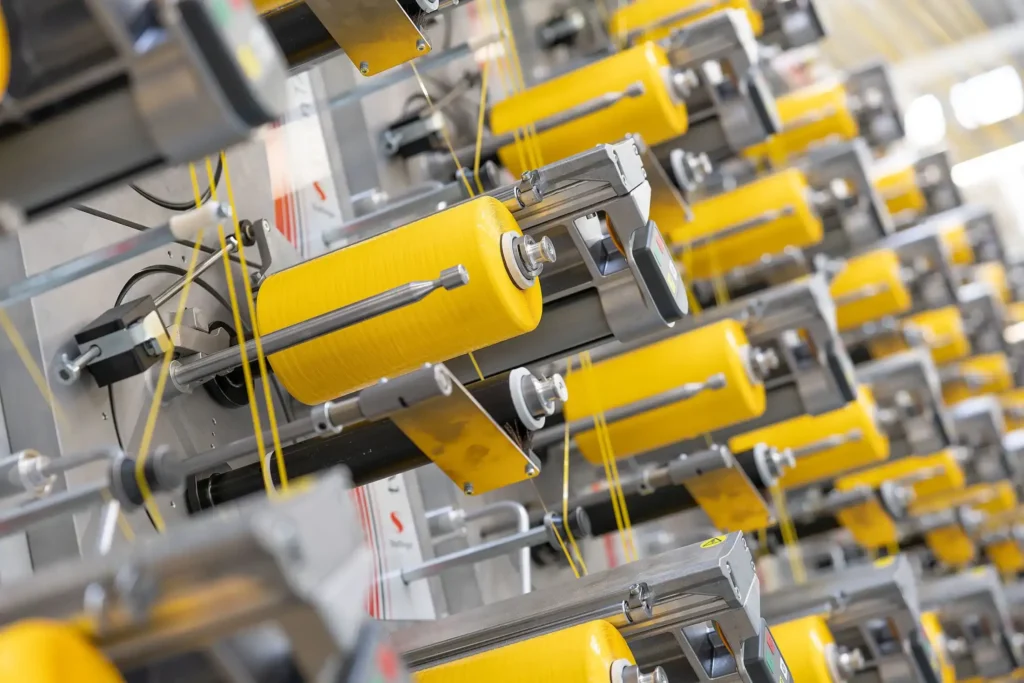
Transparent PP Woven Bags are woven sacks made from polypropylene tapes engineered to retain much more visual clarity than conventional colored or opaque woven packaging. Polypropylene resin is processed into film, slit into tapes, drawn to improve mechanical performance, and woven into a flexible fabric. In a clarity-focused construction, material selection, filler level, color formulation, tape geometry, weave density, coating, and lamination all influence how easily the contents can be seen. The result is not the same as a perfectly clear flat film because the eye still sees the woven tape structure, yet the contents can remain clearly recognizable through the fabric. VIDEPAK’s own material describes clear woven formats as visibility-oriented sacks and identifies woven density in the approximate range of 9 × 9 to 14 × 14 ends per inch and tape specifications around 600–1500 denier as reference options for relevant projects.
The important point is that Transparent PP Woven Bags do not exchange strength for visibility in a simple one-for-one trade. Their strength still comes from thousands of oriented PP tapes sharing load through the woven structure. This architecture is why woven PP sacks are widely used for dry products that must survive filling, lifting, palletizing, storage, and transport. ISO 23560, for example, specifically addresses general characteristics, requirements, and testing of woven polypropylene sacks used for bulk packaging of foodstuffs such as cereals, sugar, and pulses in 25 kg and 50 kg formats. The final VIDEPAK specification should nevertheless be based on the packed product, bulk density, bag volume, closure, drop risk, storage conditions, and filling equipment rather than nominal weight alone.
Material Structure: Visibility Without Giving Up Woven Strength
A conventional opaque woven sack usually uses pigmentation, masterbatch, fillers, printed coating, laminated artwork, or some combination of these elements to cover what is inside. A Transparent construction takes the opposite approach: the material system is selected so that less of the product view is blocked. For full-body Transparent PP Woven Bags, the visible effect begins at the woven substrate itself. For laminated designs, a clear BOPP film can form a smoother outer optical layer, and reverse printing can place ink beneath that film while leaving selected zones clear. VIDEPAK describes the BOPP layer as an optical skin in its technical discussion of Transparent PP Woven Bags, and its laminated-bag materials explain that reverse printing places the graphic layer between the outer film and woven fabric.
Woven Backbone
Oriented PP tapes distribute mechanical stress through the fabric, creating the structural foundation of Transparent PP Woven Bags.
Clear Visual Path
A Transparent substrate reduces visual obstruction so buyers can recognize the packed product without opening the sack.
Optional Optical Skin
Clear BOPP lamination can add a smoother printable surface while supporting a visible product area when the artwork is designed correctly.
This gives VIDEPAK several design paths. A customer may need nearly the entire bag to remain Transparent. Another may need only one side to provide visibility. A retail project may require a narrow vertical Transparent Window, while a rice or seed package may benefit from a wider front viewing zone. The engineering principle remains the same: visibility must be designed together with strength, printing, barrier needs, filling behavior, seams, and pallet performance. A clear surface that looks attractive but creates problems on the packing line is not a good package; a strong sack that prevents customers from inspecting a visually important product may also be commercially incomplete.
Full-Body Transparent Versus Selective Product Visibility
Full-body Transparent PP Woven Bags make sense when identification and inspection are more important than having a large opaque graphic field. The packed material itself becomes the dominant visual element. This approach can be practical for grains, seeds, agricultural products, resin pellets, selected feed products, recycling materials, and other dry goods where appearance helps users confirm what they are handling. It can also be useful in warehouses because workers may visually distinguish products, particle colors, fill conditions, or obvious contamination without immediately cutting open the sack. These benefits should be treated as operational aids rather than replacements for labels, lot numbers, barcodes, or formal quality testing.
A Transparent Window, by contrast, divides the package into two visual jobs. One part communicates; one part demonstrates. The printed area can carry brand color, product name, instructions, traceability information, handling marks, and other content. The Transparent Window lets the physical product speak for itself. That contrast can be particularly effective when customers care about color, shape, cleanliness, grain size, pellet consistency, or mixture uniformity. Research on clear packaging suggests that direct product visibility can affect quality judgments and buying behavior in appropriate categories, but the effect is product-dependent; therefore, VIDEPAK treats visibility as a design decision, not a universal marketing formula.
Why the Transparent Window Is More Than a Decorative Feature
The strongest commercial argument for a Transparent Window can be stated in four words: show the real product. In categories where appearance matters, an image printed on packaging is a representation; a Transparent Window is direct visual access. The customer can compare what is printed with what is actually packed. For visually attractive dry products, that can reduce uncertainty, make inspection faster, and transform the product from hidden cargo into part of the package design. VIDEPAK’s own PP woven bag page identifies the Transparent Window specifically as an option for content visibility and checking.
This matters both before and after retail. At the warehouse stage, visibility can support quick product recognition. During distribution, it can help users notice an obvious mismatch between the package identity and the contents. At the point of sale, the Transparent Window can create a visual pause: printed color surrounds real product texture, and the difference draws attention. Recent peer-reviewed research reported that packaging with visible product access can increase psychological closeness to the product, while separate eye-tracking work found quicker visual attention and longer fixation for clear-window packaging than for product-image packaging in the studied conditions. Those findings support the marketing logic behind a Transparent Window, although they should not be converted into a guaranteed sales claim for every product or market.
Promise versus proof: printed graphics can describe quality; a Transparent Window can help customers inspect visible quality. The most effective package often lets these two roles work together rather than forcing one to replace the other.
How VIDEPAK Engineers a Transparent Window
A VIDEPAK Transparent Window is not simply a hole cut through the sack. VIDEPAK describes the structure as a combination of a clear PP substrate, a clear film where applicable, and an intentionally unprinted registered area. Because opaque white ink or dense colored ink would block the view, the artwork is designed so that printing stops at the chosen window boundary. The clear substrate remains underneath, producing the visible zone. This is sometimes described in packaging as a knock-out window: the artwork is present around the viewing area but omitted within it.
That apparently simple choice has consequences throughout production. The window must remain correctly positioned after printing, lamination, cutting, gusseting, sewing, and bottom formation. A design file may look perfect on a flat screen but perform differently after the bag takes three-dimensional shape. For that reason, VIDEPAK considers window placement together with seam location, gusset folds, valve position, handles where used, bottom geometry, and the front panel visible after filling. The goal is simple: the Transparent Window should still look intentional when the sack is full, stacked, and viewed in normal use.
Window size also needs balance. More viewing area gives more product proof, but less space for opaque graphics. A small Transparent Window protects graphic space but may reveal too little to influence inspection. A vertical strip can show fill level across much of the bag. A broad front zone can display grain, pellets, or seeds clearly. A side Transparent Window can preserve the primary front panel for branding. Shaped windows can become recognizable visual devices, but very complex shapes increase the importance of print registration and converting accuracy. VIDEPAK therefore approaches the window as an engineering feature with a marketing purpose, rather than a graphic effect added at the last minute.
There are also situations where more visibility is not better. Light-sensitive goods may require less exposed area. Fine powder can deposit on the inside of the clear surface and reduce visual clarity. Products that customers do not judge by appearance may gain little from a large window. Research likewise shows that the impact of clear packaging depends on category and product appearance. The better question is therefore not, “Can VIDEPAK add a Transparent Window?” It is, “How much visibility will help this specific product, in this specific market, without weakening another packaging function?”
Technical Specifications for VIDEPAK Transparent PP Woven Bags
No serious specification for Transparent PP Woven Bags should begin and end with bag dimensions. A 25 kg bag for dense granules and a 25 kg bag for a low-density product can require very different volume, fabric construction, seams, and pallet geometry. VIDEPAK therefore treats published values as reference ranges for project discussion rather than universal recommendations. Its general PP woven bag page lists customizable thickness around 80–120 microns, grammage around 80–150 GSM, sizes illustrated from approximately 40 × 60 cm to 120 × 180 cm, and capacities from 5 kg to 50 kg. Its dedicated discussion of Transparent PP Woven Bags adds reference woven structures around 9 × 9 to 14 × 14 ends per inch, tape ranges around 600–1500 denier, optional PP/PE liners around 40–80 microns, and common capacity classes including 5, 10, 20, 25, and 50 kg.
| Specification Area | VIDEPAK Published Reference | Why It Matters for Transparent PP Woven Bags |
|---|---|---|
| General woven thickness | About 80–120 μm, customizable | Influences material use, stiffness, handling, and the chosen performance balance. |
| Fabric grammage | About 80–150 GSM for the general PP woven range | Must be matched to load, product density, seam construction, and distribution risk. |
| Reference bag dimensions | Examples from about 40 × 60 cm to 120 × 180 cm | Width, length, and gusset determine volume, print panel size, and pallet footprint. |
| Nominal capacity | Approximately 5–50 kg across the general range | The final bag must also reflect bulk density and handling conditions. |
| Reference weave | About 9 × 9 to 14 × 14 ends per inch | Weave geometry affects fabric stability, product containment, surface appearance, and visible texture. |
| Tape denier | About 600–1500D in the dedicated clarity-focused reference | Tape size works together with weave density and orientation to define fabric behavior. |
| Optional liner | PP/PE liner around 40–80 μm as a published option | Can improve fine-particle or moisture control, but may alter visibility, venting, sealing, and recycling structure. |
| Transparent Window | Custom position, shape, and graphic knock-out area | Balances product visibility with brand space, converting accuracy, and protection requirements. |
The ranges above come from VIDEPAK’s published general and clarity-focused product information and are best understood as starting points. Final values can move according to the product and selected bag architecture.
For laminated Transparent PP Woven Bags or Transparent Window structures, the BOPP film brings another set of variables. VIDEPAK’s product material describes reference laminated constructions around 90–130 microns and approximately 100–180 GSM for certain BOPP woven ranges, with customized dimensions and typical filling capacities around 5–40 kg in that particular product family. These figures should not be mixed blindly with the general unlaminated range; lamination, fabric GSM, film gauge, coating, bag dimensions, liner, and closure must be defined as one structure.
Important specification rule: do not purchase Transparent PP Woven Bags by GSM or filled weight alone. Product bulk density, particle size, moisture sensitivity, filling speed, drop height, required visibility, Transparent Window size, closure method, pallet pattern, storage climate, and transport route should be reviewed together.
Optical quality can also be specified instead of judged only by eye. ASTM D1003 is a recognized test method for haze and luminous transmittance of planar clear plastics. A woven bag is more optically complex than a uniform film because the fabric contains intersecting tapes, small openings, surface texture, and potentially several layers, so customer and manufacturer should agree in advance on the sample layer and method if numerical optical performance is required. A customer asking for “very Transparent” packaging and a supplier measuring a single flat BOPP film could otherwise be discussing two different things. A physical approved sample remains especially important for this reason.
Other customization choices remain available around the visible structure. VIDEPAK lists flat and gusseted forms; fold-over stitching, PE-tape reinforcement, heat-sealed options, and block-bottom structures; anti-slip surface treatment; and several opening or closing concepts. Each choice can change the way Transparent PP Woven Bags fill, settle, stand, stack, and display. The visible feature should therefore be part of the bag architecture, not an isolated decoration.
Where Transparent Packaging Creates Commercial and Operational Value
The best application for Transparent PP Woven Bags is a product for which visible characteristics carry useful information. Rice is a clear example: buyers may care about grain length, color, apparent cleanliness, broken-grain appearance, and mixture consistency. Seeds provide another example because size, color, and uniformity can be meaningful. Pelleted products can benefit when the customer wants to inspect pellet form or mixture appearance. Dry granules, polymer pellets, minerals, selected fertilizers, feed materials, pet-related dry goods, and other visually identifiable products can also gain from visibility when the package and regulatory requirements allow it. VIDEPAK lists grains, feed, fertilizer, chemicals, pet-related products, and other dry bulk categories across its woven and BOPP product material.
| Application Direction | Visibility Goal | Possible VIDEPAK Direction |
|---|---|---|
| Rice, grains, pulses | Show grain appearance and allow quick visual inspection. | Transparent PP Woven Bags or a broad front Transparent Window. |
| Seeds | Show size, color, and visible uniformity while retaining a branded information panel. | Printed laminated bag with a controlled Transparent Window. |
| Feed and pellets | Allow users to see pellet shape, color, and mixture appearance. | Side or front Transparent Window, potentially combined with gussets. |
| Dry granules and polymer pellets | Support fast visual product recognition in handling and storage. | Full-body Transparent PP Woven Bags where labeling requirements remain fully satisfied. |
| Retail-oriented dry products | Combine premium graphics with real product evidence. | Reverse-printed BOPP format with a registered Transparent Window. |
For the marketing team, the central value is trust through inspectability. A photograph says, “this is what the product should look like.” A Transparent Window says, “this is the product currently inside this package.” That difference becomes more important when product appearance is strongly connected with perceived quality. Research has found that the benefit of clear packaging tends to be stronger where consumers perceive meaningful product-quality risk, because visibility gives them another cue for evaluating what they are buying.
For operations teams, the value is different but related. Transparent PP Woven Bags can assist visual identification without replacing formal labeling systems. A worker can see that one bag contains white pellets and another contains dark granules; a warehouse team can notice obvious foreign material; a distributor can see that the visible product does not match expectations. These are simple observations, but simple observations can matter. The package becomes an information surface and a viewing surface at the same time.
For brand owners, selective visibility can be even more interesting than full visibility. A strong Transparent Window lets the designer create contrast. Bright print beside natural grain. Matte graphics beside a clear strip. A dark color field beside pale pellets. A clean rectangular window inside a vivid front panel. Product and design play different roles, yet reinforce each other: words explain, colors attract, and the real product reassures. This is the practical reason Transparent Window packaging can be more persuasive than simply making everything clear.
See
A Transparent Window gives direct access to visible product characteristics.
Verify
The user can compare visible contents with the product identity and printed presentation.
Recognize
Transparent PP Woven Bags can support faster visual differentiation in suitable warehouse and distribution environments.
Present
The product itself becomes part of the front-of-pack communication instead of remaining completely hidden.
Visibility, however, should never be allowed to create false confidence. A Transparent Window cannot confirm chemical composition, food safety, internal moisture, microbiological condition, or every hidden quality characteristic. It is an inspection aid and marketing feature, not a laboratory. This distinction is important for credible packaging communication and reflects a broader EEAT principle: show what the package can genuinely do, and do not turn a useful feature into an unsupported promise.
From Transparent Concept to Repeatable VIDEPAK Production
A good Transparent PP Woven Bags project starts before the first tape is woven. VIDEPAK needs to know what the customer packs, nominal net weight, bulk density, particle characteristics, required bag volume, filling process, closure method, expected drop and transport conditions, storage climate, printing requirements, and the reason visibility is needed. The viewing requirement then becomes measurable: full-body Transparent, one-side visibility, narrow Transparent Window, wide Transparent Window, vertical strip, shaped window, or another defined layout. This information is what turns the word “clear” into a manufacturable specification.
VIDEPAK states that it uses 100% virgin polypropylene for its PP woven bag range and that its production and testing approach references ISO 9001, ASTM, EN, and JIS frameworks, with incoming-material inspection and product testing such as tensile, impact, and weather-related checks. Its current company profile states that the business was founded in 2008, has more than 500 employees, exports to more than 70 countries, and publishes overall production capability of up to 800 million bags annually across its wider portfolio. These are company-reported capabilities rather than independent guarantees of performance for an individual specification, so the decisive evidence for any customer remains the approved sample, agreed technical specification, applicable test plan, and controlled production order.
VIDEPAK Transparent PP Woven Bags Development Flow
Quality is cumulative. Resin consistency influences tape formation. Tape formation influences weave uniformity. Weave uniformity influences surface appearance and lamination. Printing registration controls whether a Transparent Window appears where the artwork intended. Cutting and gusseting determine whether that window remains centered on the finished bag. Seam construction and closure determine whether the package survives use. This is why final inspection alone cannot create quality; the process has to build it from one stage to the next. VIDEPAK describes its PP woven production chain around extrusion, drawing, weaving, lamination or coating where required, printing, conversion, and finished-bag control.
A well-written purchase specification should therefore identify more than width and length. It should define fabric construction or agreed GSM, dimensions and tolerance, gusset, nominal fill weight and product density, clear or laminated structure, liner where required, printing artwork revision, exact Transparent Window dimensions and location, closure, seam details, surface treatment, packing method, and agreed tests. For projects where optical appearance is critical, an approved physical sample can establish acceptable clarity and appearance; where a numerical optical requirement is necessary, an agreed test protocol should also define exactly which material layer or sample construction is measured. ASTM D1003 provides a recognized basis for measuring haze and luminous transmission of clear plastics, while ISO 9001 provides a framework for controlled quality-management processes rather than a product-specific performance guarantee.
A practical RFQ rule: send VIDEPAK the product name, net weight, bulk density, current bag dimensions, filling method, desired print, required Transparent level, preferred Transparent Window position, closure, liner requirement, pallet pattern, storage environment, and a current bag sample where available. The more complete the input, the less packaging design depends on guesswork.
The final choice between full-body Transparent PP Woven Bags and a Transparent Window can then be made logically. Choose broader Transparent construction when product visibility is itself the main communication tool and only limited opaque print coverage is required. Choose a Transparent Window when the package must balance visual proof with a strong branded surface. Add lamination when the project needs a smoother, more graphic-oriented exterior and suitable moisture or surface protection. Add a liner only when the contents and distribution conditions justify it, because additional layers can change air release, sealing behavior, visible clarity, cost, and end-of-life material structure. Choose gussets, bottom style, stitching, anti-slip treatment, and opening style according to filling and logistics needs rather than visual preference alone.
That is the real advantage of VIDEPAK Transparent PP Woven Bags: the product is not limited to a single clear sack. It is a configurable visibility system built on woven PP packaging. Full-body Transparent visibility can make identification direct. A carefully engineered Transparent Window can combine product proof with rich printed communication. BOPP lamination can support a smoother graphic surface. Gussets can change filled shape. Anti-slip treatment can support stack control. Liners can address specific containment or moisture requirements. Different seams and closures can match different packing lines. The best solution is the one in which these decisions reinforce one another.
Transparent PP Woven Bags make a simple idea industrially useful: what protects the product can also help people see the product. The Transparent Window takes that idea one step further by deciding exactly where visibility creates the most value. Not visibility everywhere for its own sake. Not printing everywhere for its own sake. Protection where protection is needed, communication where communication is needed, and visibility where visibility earns its place.
For VIDEPAK, that balance defines modern Transparent PP Woven Bags. Strong enough for demanding woven-packaging applications. Transparent enough to make suitable products easier to inspect. Flexible enough to combine printing, lamination, liners, gussets, different closures, and a custom Transparent Window. And clear in the most important sense of all: the package does not merely tell customers what is inside. It can let them see.
- Transparent PP Woven Bags: Transparent Packaging and Transparent Window Solutions That Let Product Quality Be Seen
- Transparent PP Woven Bags: What the Product Really Is
- Why the Transparent Window Is More Than a Decorative Feature
- Technical Specifications for VIDEPAK Transparent PP Woven Bags
- Where Transparent Packaging Creates Commercial and Operational Value
- From Transparent Concept to Repeatable VIDEPAK Production
- What Are Transparent PP Woven Bags? (Aliases, Features, Process, Uses)
- Overview: Why Transparent PP Woven Bags Turn Packaging into Information
- What Types of Goods Fit Transparent PP Woven Bags Without Compromise?
- Why Is Windowed Lamination So Valuable on Transparent PP Woven Bags?
- What Job Does the Valve Mouth Perform Beyond Just Filling?
- Why Do Brands Favor Transparent PP Woven Bags for Large Runs?
- What Role Do Film Finish and Coefficient of Friction Play?
- How Do Converters Engineer Non‑Standard Transparent PP Woven Bags?
- What Factors Determine Lamination and Liner Selection?
- Understanding the Components of Transparent PP Woven Bags
- Common Accessories and Add‑Ons That Elevate Transparent PP Woven Bags
- Identifying Critical Quality Metrics for Longevity
- Factors to Consider When Selecting Valve Types
- Preventing Downtime with Design and SOP Upgrades
- References
What Are Transparent PP Woven Bags? (Aliases, Features, Process, Uses)
Transparent PP Woven Bags are high‑strength polypropylene sacks designed to deliver one capability traditional woven packaging cannot: controlled visual access to the product itself. The substrate is the familiar raffia‑style woven PP fabric, but the optics are intentionally engineered—through clear tapes, transparent laminations, or window panels—so operators, auditors, and shoppers can literally see what they are dealing with. In trade parlance you will hear these bags described as clear PP woven sacks, BOPP‑laminated PP woven bags (transparent finish), transparent window woven sacks, and clear‑gusset PP woven bags—different aliases for the same principle: rugged structure plus purposeful visibility.
Features of Transparent PP Woven Bags
- High tensile, tear, and puncture performance from oriented PP tapes with excellent strength‑to‑weight ratio.
- Tunable transparency via unpigmented tapes, glossy or matte BOPP film faces, and localized clear windows/gussets that align with branding and barcodes.
- Moisture and dust protection through coatings, laminations, or optional liners; print locked under film for scuff resistance.
- Line‑friendly geometries including valve mouth options for fast filling and block bottom formats that stand square on a pallet.
- Food‑contact compliant builds available with documented resins, inks, and adhesives where required.
BOPP Woven Bags With Transparent Windows
Transparent window designed PP woven bags with clear visibility and premium lamination for product display.
Check More →BOPP Laminated PP Woven Bags
High-transparency BOPP laminated woven bags offering clear visual effect and durable packaging.
Check More →BOPP Laminated Woven Bags Solutions
Custom transparent PP woven bag solutions with high clarity and customizable design options.
Check More →BOPP Woven Bags
Premium transparent BOPP woven bags with excellent clarity and smooth surface for visual packaging.
Check More →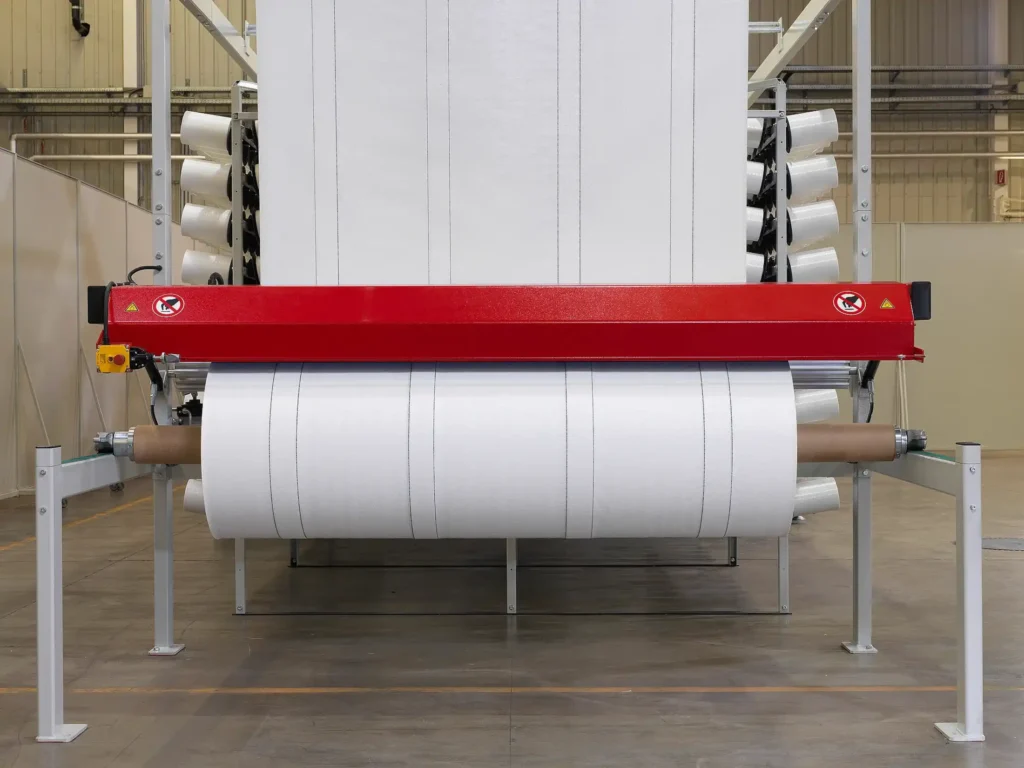
Overview: Why Transparent PP Woven Bags Turn Packaging into Information
Transparent PP Woven Bags combine the mechanical strength of woven polypropylene with engineered visibility, letting teams verify contents without breaking seals and letting shoppers trust what they see. Think of them as a rugged container and a display window in one. In the market, you’ll also hear clear PP woven sacks, BOPP‑laminated PP woven bags (transparent finish), and transparent window woven sacks. The problem they solve is simple: mistakes thrive in opacity. The method is optical design—clear tapes, transparent laminations, or registered windows. The result is faster inspection, fewer picking errors, and cleaner retail storytelling. Discussion point: when done right, transparency is not a cosmetic flourish; it’s an operational control. For a quick primer, see Transparent PP Woven Bags.
What Types of Goods Fit Transparent PP Woven Bags Without Compromise?
Background. Diverse products—grains, seeds, pet food, pellets, masterbatches—need strong sacks, but they also need identity verification at a glance. Horizontal comparison with rigid clear containers shows the same aim—visibility—yet flexible woven structures win on weight, cube efficiency, and drop resilience. Vertical analysis drills down from category (food, agro, chemical) to particle behavior (size, brittleness, hygroscopy) and then to optics (full‑face clarity vs window). Method. Match clarity to risk: full‑panel for retail grains; narrow side windows for dusty minerals; clear gussets for quick inventory. Result. Content checks happen in seconds, not minutes. Discussion. When visibility reduces returns or mis‑picks by a few percent across thousands of bags, the math is decisive.
Why Is Windowed Lamination So Valuable on Transparent PP Woven Bags?
Background. Reverse‑printed BOPP protects artwork beneath a film while leaving a selective transparent zone for product display. Horizontally, think of blister packaging: brand plus truth side by side. Vertically, the stack reads optics → print durability → shelf impact → scan accuracy. Method. Use gloss films to amplify color depth or matte films to cut glare and hide scuffs; engineer the window’s position away from fold lines. Result. Bags look new longer, scanners capture codes cleanly, and the transparent zone stays clear of abrasion. Discussion. What seems like marketing is also maintenance—fewer rewraps, fewer label reprints.
What Job Does the Valve Mouth Perform Beyond Just Filling?
Background. In Transparent PP Woven Bags, the valve is more than an inlet; it’s a dust control device, a sealing mechanism, and a repeatability tool. Horizontal thinking compares valve options—self‑close, heat‑seal, ultrasonic, tuck‑in—across powders with different aeration. Vertical reasoning ties bulk density, residual air, and voyage length to sealing choices. Method. For springy, aerated powders, add a heat‑seal or ultrasonic finish; for coarse granules, a pressure‑seal sleeve may suffice. Result. Cleaner seams, fewer sift losses, and optics preserved because the valve patch—not the window—takes the wear. Discussion. A well‑chosen valve prevents downtime far beyond the filling head.
Why Do Brands Favor Transparent PP Woven Bags for Large Runs?
Background. Scale magnifies small errors. On big promotions or seasonal harvests, mis‑picks and mis‑labels are costly. Horizontal comparison with opaque woven sacks shows parity in strength but a gap in verification speed. Vertical view moves from line‑level time savings to fleet‑level return reductions. Method. Standardize a transparent layout per SKU family, encode barcodes near a clear area, and lock dyne/COF targets so packs don’t scuff in transit. Result. Throughput holds while accuracy improves; returns and claims decline. Discussion. Transparency turns brand promises (“what you see is what you get”) into a measurable KPI.
What Role Do Film Finish and Coefficient of Friction Play?
Background. Surface finish controls both readability and stack stability in Transparent PP Woven Bags. Horizontal lens: gloss vs matte vs micro‑emboss finishes. Vertical lens: finish → COF → pallet stability → damage rate. Method. Specify dyne ≥38 for print adhesion; tune COF (e.g., 0.35/0.30) via matte chemistries or emboss on non‑window panels. Result. Bags slide when they should (on conveyors) and stay when they must (on pallets). Discussion. Film finish is not a “look”—it’s a handling parameter with safety implications.
How Do Converters Engineer Non‑Standard Transparent PP Woven Bags?
Background. Not every product fits the catalog. Horizontal practice borrows from retail pouches (die‑cut handles, zipper ideas) while respecting woven strength. Vertical path: product hazards → geometry constraints → optical zones → compliance. Method. Combine block‑bottom geometry for stand‑up posture with a registered window; integrate micro‑perfs for de‑aeration; place artwork to frame the view. Result. Unique formats that still run on your fillers. Discussion. Customization should read as a system, not a collage.
What Factors Determine Lamination and Liner Selection?
Background. Barrier needs diverge: rice cares about moisture and scuff; pigments about dust and static; pet food about aroma retention. Horizontal mapping compares BOPP, matte/gloss blends, and optional PP/PE liners. Vertical logic: environment (humidity, UV) → barrier stack (film gauge, tie layer) → liner gauge. Method. Keep mono‑material PP where possible (PP tape + BOPP + PP tie), use PP liners when sealing targets allow; reserve PE liners for specific barrier or sealing needs. Result. Recyclability improves without sacrificing performance. Discussion. Liner mistakes are expensive; a non‑dissipative liner in a grounded warehouse can re‑charge powders and negate your gains.
Understanding the Components of Transparent PP Woven Bags
Background. The bill of materials is a set of levers. Horizontal view lists the elements: woven scrim (mesh and denier), lamination film (gauge and finish), tie layer, window panel, valve sleeve, bottom style, optional liner. Vertical view ranks their impact: strength (scrim, seams) → optics (film, window) → handling (COF, block bottom). Method. Put numbers on each: GSM and mesh for fabric; μm for films and ties; valve type; window width and placement; COF/dyne targets. Result. Drawings that engineers can run, QA can audit, and buyers can price. Discussion. Precision in the BOM is the cheapest reliability you can buy.
Common Accessories and Add‑Ons That Elevate Transparent PP Woven Bags
Background. Small options fix big headaches. Horizontal list: anti‑slip backs, die‑cut handles for retail sizes, UV stabilizers for outdoor yards, QR labels linked to COAs. Vertical reasoning: add‑on → behavior change → metric shift (fewer drops, faster scans). Method. Pilot a single accessory per run to isolate its effect. Result. Clear evidence of ROI. Discussion. Over‑customization is noise; targeted add‑ons are music.
Identifying Critical Quality Metrics for Longevity
Background. Bags fail quietly: scuffed art, loose seams, cloudy windows. Horizontal metrics: tensile (warp/weft), seam strength, drop height, ink rub, haze/clarity, barcode readability. Vertical loop: specification → in‑process checks → retention samples → corrective actions. Method. Build a PQCP with AQL sampling and lot‑level dyne and COF records; photograph labels and windows per batch. Result. Traceability that shortens investigations from days to hours. Discussion. When the numbers speak, disputes shrink.
Factors to Consider When Selecting Valve Types
Background. The right valve converts a decent filling day into a great one. Horizontal matrix: self‑close for speed, heat‑seal for voyage length, ultrasonic for dust control, tuck‑in for re‑open needs. Vertical pathway: powder aeration → sealing energy → mouth aesthetics. Method. Map bulk density and residual air; choose the lightest valve that guarantees sift‑proofness in the worst season. Result. Stable weights, clean pallets, calm auditors. Discussion. The cheapest valve is the one that prevents your next recall.
Preventing Downtime with Design and SOP Upgrades
Background. Downtime often hides in packaging: bags that slip on conveyors, windows that scuff, codes that won’t scan. Horizontal fixes include COF tuning, matte windows for glare, and relocating barcodes to clear zones. Vertical loop: symptom → root cause → design tweak → SOP update. Method. Add ground checks for valve sealers, set humidity bands at the filling head, revise pallet patterns for block‑bottom profiles. Result. The line stops less and ships more. Discussion. Reliability is a choreography of small improvements.
References
FDA 21 CFR §177.1520 (Olefin polymers in food contact); EU Regulation No. 10/2011 on plastic materials and articles intended to come into contact with food; GB/T 8946—Plastic woven bags—Terms, requirements, test methods; BRCGS Packaging Materials (Issue 7); ISO 22000 Food Safety Management Systems; Typical specification ranges and product listings for BOPP‑laminated and windowed PP woven bags on Made‑in‑China and Alibaba International (accessed 2025); Converter technical datasheets on BOPP film gauges (18–30 μm), extrusion tie layers (12–25 μm), and COF/dyne targets used in woven sack lamination lines.