

- A Practical Premise for Decision‑Makers
- What exactly are multi-wall woven bags and why do they matter now?
- Common names and market aliases for multi-wall woven bags
- Key characteristics of multi-wall woven bags and the engineering logic behind each
- How multi-wall woven bags are manufactured: from pellet to pallet
- Where multi-wall woven bags excel: applications and the problem they solve
- Standards, certifications, and how they translate into buyer confidence
- Performance parameters and options at a glance
- Economic and environmental effects you can actually measure
- Design patterns: from problem to lever to outcome
- Operational discipline: SPC, maintenance, and supplier control
- Why equipment choice shows up on your balance sheet
- From pilot to production: de-risking adoption
- Why the Layered Architecture Wins in the Real World
- The Structural Heart: Oriented Woven Substrates that Carry the Load
- The Silent Worker: Interface Layers That Refuse to Delaminate
- Moisture, Dust, Odor: The Barrier Layer as a Dial, Not a Switch
- Visual Authority: Printing That Stays in Register and Scans in the Dark
- Sustainability That Reduces Breakage, Not Just Microns
- Production as Proof: From Pellet to Pallet on Starlinger & W&H
- How Equipment Choice Directly Shapes Quality
- Evidence in Numbers and Methods
- Case Narratives that Map Problem → Lever → Result
- Cross‑Industry Parallels that Clarify the Logic
- Risk Management from Design Table to Warehouse Floor
- Parameter and Feature Summary for multi‑wall woven bags
- Onboarding Checklist for Technical Buyers
- Frequently Raised Questions, Asked Plainly
- What VidePak Brings to the Table
- What Advantages Does Valve & Block‑Bottom Geometry Provide for multi-wall woven bags?
- What Is a Specification Playbook, and How Is It Relevant to Converting multi-wall woven bags?
- What Role Does Dust Mitigation Play in Filling and Handling multi-wall woven bags?
- What Materials Can Be Safely Packed with multi-wall woven bags?
- What Is the Benefit of a Modular Pallet Plan for multi-wall woven bags?
- The Role of Precision in the Parameters of multi-wall woven bags
- Benefits of Using multi-wall woven bags for Industrial and Aftermarket Logistics
- Exploring Customization in multi-wall woven bags
- Standardized Configurations of multi-wall woven bags for Heavy‑Duty Use
- High‑Performance Options: Enhancing your Supply Chain with multi-wall woven bags
- Key Factors to Consider When Selecting a multi-wall woven bags Supplier
- Evaluating the Quality of multi-wall woven bags Manufacturing Services
- Systems Synthesis: Integrating Layers, Geometry, Process, and Logistics for multi-wall woven bags

A Practical Premise for Decision‑Makers
What if durability did not require excess resin, moisture control did not sacrifice filling speed, and beautiful graphics did not come at the expense of pallet stability? What if one packaging architecture could be tuned like an instrument—string by string, layer by layer—until supply‑chain noise became harmony? That is the promise of multi‑wall woven bags. Not a slogan, not an abstraction, but a manufacturable, auditable set of engineering levers that let technical buyers and operations teams align strength, barrier, print fidelity, and cost—without the perpetual trade‑off loop that plagues single‑layer formats.
Multi-Layer Polyethylene Valve Bags
High-strength multi-layer structure designed for heavy-duty industrial packaging with enhanced durability.
Check More →Multi-Ply Kraft Paper Bags Overview
Detailed introduction to multi-layer composite bags combining paper and woven fabric for superior performance.
Check More →Multiwall Bags Structure & Materials
Comprehensive analysis of multi-layer construction, material combinations and packaging advantages.
Check More →Kraft Paper Laminated Woven Bags
Multi-layer laminated bags integrating paper and woven PP for improved strength and barrier properties.
Check More →What exactly are multi-wall woven bags and why do they matter now?
In modern distribution, packaging is not a passive container; it is a working component that must absorb impact, vent air, block moisture, carry brand data, and still stack squarely after a thousand kilometers of vibration. The format known as multi-wall woven bags approaches this challenge by splitting jobs across layers so that no single substrate is forced to do everything. A woven fabric made from oriented polyolefin tapes provides directional strength; a coupling layer shares shear; a film sets moisture and odor transmission; a printable surface stabilizes graphics and codes; and conversion geometry (valves, block-bottom folds, easy-open features) governs how the package behaves on the filler and on the pallet. Instead of pushing one variable (thickness) to compensate for many constraints, multi-layer design dials each variable to where it performs best.
This layered logic is more than theory. It is a way to reconcile conflicting goals: higher drop performance with lower mass, faster filling with tighter moisture control, better print with fewer rejects. The woven grid gives anisotropic strength so the bag resists clamp loads and corner drops without resorting to heavy monolithic film. The film layer targets WVTR (water vapor transmission rate) or oxygen ingress appropriate to the product’s sensitivity. The printable skin ensures color stability and barcode legibility even when ambient humidity and web temperature fluctuate. In short, the format decomposes a messy problem into controllable levers and makes the results auditable through standard tests and statistical process control.
Common names and market aliases for multi-wall woven bags
Tip callout — industry shorthand and what people actually say on the plant floor:
- PP woven valve sacks
- Block-bottom woven sacks
- AD*STAR-style woven bags (conversion shorthand)
- Woven laminate sacks
- Woven open-mouth bags with liners
These nicknames vary by region and equipment lineage. The core idea remains: a woven structural layer combined with functional films and engineered conversion.
Key characteristics of multi-wall woven bags and the engineering logic behind each
Features have reasons, and reasons have numbers. Below are the attributes that specify why multi-wall woven bags behave as they do in real operations, and what levers convert those attributes into predictable outcomes.
Structural efficiency with oriented tapes
The woven substrate uses tapes drawn 5–7× to achieve high tenacity per unit mass. Directionality matters: expected stresses along warp and weft are matched by ends and picks per 10 cm. This is how a package resists clamp loads without adding unnecessary film thickness. The immediate effect is less creep in warm storage and better corner integrity after drops.
Test anchors: fabric tensile via ASTM D5035; plastics tensile for tapes via ISO 527; drop behavior per ASTM D5276 and ISO 22067 conditions as applicable.
Moisture and odor control as a dial
WVTR is tuned by film chemistry and thickness, not guessed at. Typical liner gauges of 40–90 μm can deliver 1.0–2.5 g/m²·day at 38 °C/90% RH (ASTM E96) when recipes are selected for the product family. Oxygen and aroma ingress for pet nutrition can be lowered via PA/PE blends. In powder filling, engineered vent paths replace crude pin-holes, maintaining barrier while allowing rapid air escape.
Test anchors: ASTM E96 for WVTR; migration and food contact checks against EU 10/2011 and FDA 21 CFR 177.1520 where applicable.
Print stability and code legibility
A printable surface—coated or primed—sits above weave texture, so ink lays down uniformly. With controlled surface energy (≥ 38–42 dynes) and CI flexo register automation, color drift is reduced and barcodes grade to ISO/IEC 15416 B–A ranges. That translates directly into fewer mis-picks and faster throughput in dark or busy depots.
Test anchors: dyne level checks, ISO/IEC 15416 for barcode quality, and QA spectro measurements of ΔE for brand colors.
Conversion geometry that governs behavior
Valve style, bottom folds, easy-open features, and seam strategies are not cosmetic. They control how air leaves during fill, how the package densifies, and how it discharges at end use. Block-bottom formats square up pallets; self-closing valves limit dust escape. These outcomes are the sum of small dimensional tolerances held consistently.
Test anchors: COF via ASTM D1894 for pallet friction; internal burst/peel tests; visual inspection SOPs for valve geometry.
How multi-wall woven bags are manufactured: from pellet to pallet
An elegant bag begins with disciplined upstream processes. VidePak’s production combines Austrian and German machinery families to press variability down at each step so that the final package behaves predictably on a filler running at speed.
- Tape extrusion and drawing: pellets are filtered, extruded, quenched, and drawn 5–7× on Starlinger lines. Tight control of draw temperature and line speed stabilizes denier and tenacity. Consistent tapes become consistent fabrics.
- Circular weaving: RX-class circular looms generate tubular fabrics at target ends/picks with broken-end detection. Uniform density minimizes grin and ensures stable lamination interfaces.
- Extrusion coating and lamination: coupling layers and functional coats are applied with on-line thickness measurement holding ±2–3 μm tolerance. Flat bond lines resist fatigue; edges are trimmed for clean laydown.
- Blown film for liners: W&H VAREX-class platforms maintain gauge profiles with automatic thickness control, so WVTR and seal windows remain predictable across long runs.
- CI flexographic printing: W&H presses (e.g., MIRAFLEX class) use automated register, viscosity control, and efficient drying. Brand colors stay tight; barcodes print within target grade bands.
- Conversion: block-bottom valve formats and open-mouth builds are cut, folded, and assembled with tight dimensional tolerances. Options include easy-open features and engineered vent pathways.
- Inspection and palletization: dimensional checks, seal/burst testing, barcode verification, and robotic stacking with corner protection to defend the geometry you paid to engineer.
Where multi-wall woven bags excel: applications and the problem they solve
Applications are not labels on a brochure; they are sets of constraints. Each sector pushes the format in distinct ways. Below are use cases that reveal why this architecture is chosen by operators responsible for uptime, safety, and cost, not just for design aesthetics.
Cement and building materials
High drop heights, clamp handling, coarse dust, and rough surfaces demand anisotropic strength and sift-proof seams. Block-bottom geometry improves pallet squareness; engineered venting accelerates densification at fill so cycle times remain competitive.
Fertilizers and agrochemicals
Hygroscopicity and caking risk put WVTR front and center. PE-rich liners sized to 40–70 μm can hold product quality through wet seasons, while robust structures resist seam splits under clamp pressure.
Seeds and grains
Edge integrity and scuff resistance protect seed lots through multiple handling steps. Printable skins keep regulatory and traceability data readable; COF control supports stable stacking and easier stretch-wrapping.
Pet nutrition and specialty foods
Aroma retention and oxygen moderation matter, along with shelf appeal. Printable surfaces enable high-fidelity imagery; liners tuned for barrier keep formulations stable. Barcodes must scan first time in dim warehouses—here registration and contrast are decisive.
Industrial minerals and additives
Fine powders amplify dust exposure risks. Engineered vents and valve clearances limit airborne dust during fill while preserving barrier. Strong seams and sturdy edges withstand repeated handling throughout B2B supply chains.
Standards, certifications, and how they translate into buyer confidence
Specifications are only as credible as the systems that enforce them. In regulated or safety-critical contexts, third-party frameworks are the shared language between plants, auditors, and brand owners. Below is the practical mapping between familiar standards and what they guarantee in daily operation.
- ISO 9001:2015 for quality management: document control, CAPA workflows, and risk-based thinking that keep run-to-run variance low.
- ISO 14001:2015 for environmental management: waste minimization and energy monitoring, relevant when comparing kWh per 1,000 bags across assets.
- FSSC 22000 / ISO 22000 and BRCGS Packaging Materials (Issue 6) on food-contact lines: hygiene zoning, foreign-body controls, allergen management where relevant.
- Material compliance against EU 10/2011 and FDA 21 CFR 177.1520 for plastics in contact with food.
- Barcode evaluation to ISO/IEC 15416, COF via ASTM D1894, WVTR by ASTM E96, tensile and tear per ASTM D5035 and ASTM D2261.
Performance parameters and options at a glance
| Dimension / Property | Typical VidePak Range / Option | Method / Standard | Operational Note |
|---|---|---|---|
| Nominal size (W × L) | 300–600 mm × 450–1100 mm | Tape/loom cutters | Defined to match filler spouts and pallet plans |
| Reference fill weights | 10–50 kg classes | — | Reinforcements enable heavier loads |
| Fabric tensile (MD/CD) | ≥ 1200 N/5 cm (MD), ≥ 600 N/5 cm (CD) | ASTM D5035 / ISO 527 (tapes) | Directionality engineered via denier and weave |
| Tape denier | 900–1200 D typical (drawn 5–7×) | In-process QA | Cv% control reduces seam-initiated failures |
| Weave density | 48–72 ends × 48–72 picks /10 cm | Loom counter | Tuned for stiffness, stand-up, and drape |
| Coating/laminate thickness | 20–60 μm per side when applied | On-line gauge | ±2–3 μm targets support seal windows |
| Inner liner film | 40–90 μm (PE or PA/PE) | ASTM D882 / D1709 | Recipe set by WVTR and seal needs |
| WVTR @ 38 °C/90% RH | ≤ 1.0–2.5 g/m²·day | ASTM E96 | Hygroscopic SKUs favor lower ranges |
| Coefficient of friction | 0.25–0.45 | ASTM D1894 | Controls pallet stability and wrap usage |
| Printing capability | Up to 8–10 colors CI flexo | ISO/IEC 15416 (barcodes) | Registration ≤ ±0.2 mm typical |
| Valve and bottom styles | Standard/self-closing/extended; block-bottom, pinch, or open-mouth | Converting spec | Drive filling rate, densification, and pallet squareness |
Economic and environmental effects you can actually measure
Procurement and operations leaders do not buy adjectives; they buy deltas—lower scrap rates, higher OEE, reduced transport losses, less rework, fewer product claims. A properly specified multi-wall build expresses value in those units. Down-gauging structural mass by a small percentage across a high-volume SKU saves resin and lowers carbon intensity; preventing even a tiny fraction of breakage events often contributes more to the footprint than microns shaved from a film. Energy intensity falls when stable processes allow faster steady-state speeds with fewer micro-stops. These are not theoretical benefits; they are the levers that shape landed cost and audited scope emissions.
Scrap and rework
Improved register stability and fewer delams suppress reprint cycles. Stable cut-lengths and bottom geometry reduce rejects at conversion. Lower scrap is immediate margin and immediate environmental win.
Filler OEE
Engineered vent paths and controlled valve clearances shorten fill times without creating dust alarms. On-line gauge control keeps seal windows open, avoiding temperature-overcompensation that slows the line.
Transport losses
Anisotropic fabric strength and reinforced corners reduce split incidents under clamp and drop. Even a fractional reduction in damage rates compounds into fewer claims and cleaner audits.
Design patterns: from problem to lever to outcome
Packaging performance improves when problems are stated plainly and mapped to the lever that changes them. A few canonical patterns illustrate repeatable thinking that technical teams can adapt quickly.
- Moisture-sensitive premix in a rainy climate: Raise the liner gauge and select PE recipes with lower WVTR; preserve fill speed via engineered vent paths; confirm seal windows with on-line thickness control.
- Clamp-intensive building materials: Increase tape tenacity, adjust ends/picks, and reinforce bottom fold radii; verify fabric tensile targets for MD/CD; run edge-crush simulations where applicable.
- Brand-critical imagery and scanning: Use a printable skin with controlled surface energy; leverage CI flexo automation for register and viscosity; track ΔE and barcode grade distributions as SPC charts.
- Recyclability constraints: Engineer PP-rich or PE-rich stacks to align with local streams; prioritize prevention of bag failure that contaminates recycling with spilled product.
Operational discipline: SPC, maintenance, and supplier control
Statistical process control is not a dashboard for visitors; it is the daily heartbeat that keeps variability in check. Denier distributions, gauge trend lines, register deviation logs—these are living signals that prompt adjustments earlier than quality escapes can form. Preventive maintenance on high-speed looms and presses protects the dimensional stability customers depend on. Supplier controls keep resin melt index and additive profiles within windows that sustain draw behavior and film performance. Documentation is retained for audit, because credibility is not a feeling—it’s a file.
- SPC limits on denier Cv% and film gauge; alarms tied to small temperature or speed trims rather than reactive overhauls.
- Calibration schedules for thickness measurement, dyne testing, barcode graders, and tensile rigs.
- Vendor qualification for resins with documented compliance to EU 10/2011 and FDA 21 CFR 177.1520 where applicable, ensuring food-contact suitability for relevant lines.
Why equipment choice shows up on your balance sheet
Starlinger-oriented tape lines and circular looms bring steadiness in denier and fabric density. W&H blown film keeps liners on profile; its CI flexo presses hold register even as ambient conditions change through a long shift. These traits are not marketing curiosities—they are the proximate causes of fewer stops, fewer reprints, and fewer claims. Equipment that suppresses variability makes plants quieter, and quiet plants are cheaper plants.
Denier steadiness
Closed-loop draw and temperature control prevent drift. Uniform tapes produce uniform fabrics; uniform fabrics resist seam initiation and folding distortion.
Gauge profile fidelity
Automatic thickness measurement on blown film stabilizes WVTR and sealing behavior; operators spend less time chasing temperature offsets to compensate for unseen thickness waves.
Register automation
CI flexo with auto register and viscosity control reduces makeready waste and holds image stability through speed changes and roll splices.
From pilot to production: de-risking adoption
New formats succeed when risk is staged. Begin with a pilot against a baseline: one SKU, one line, one climate. Define acceptance windows—WVTR limits, barcode grades, drop test targets, OEE thresholds. Run side-by-side trials, capture SPC data, and review with plant teams. When the pilot passes, scale deliberately: replicated specs, consistent resin families, identical machine settings across shifts. Each step keeps surprises local and learning global.
You may ask: aren’t sacks just sacks? If only. Powdered materials cake. Granular goods sift. Pallets overhang. Forklifts clamp. Rain happens. Barcodes must scan. And brands—your brands—must arrive immaculate. Multi‑wall woven bags answer these realities by giving each layer a job and each job a measurable parameter: tape tenacity, ends/picks per 10 cm, coating gauge, liner recipe, surface energy, vent path geometry. Tune one, observe the response; tune two, observe the interaction. This is packaging as a controlled system, not a sequence of compromises.
VidePak builds this system on the shoulders of two equipment pillars: Starlinger from Austria for oriented tape, weaving, lamination, and block‑bottom conversion; Windmöller & Hölscher (W&H) from Germany for blown film and CI flexographic printing. Precision upstream makes reliability downstream. Consistency at the bobbin becomes consistency in the pallet. Small causes, large effects.
Why the Layered Architecture Wins in the Real World
Breaking down the field problems
Supply chains test sacks in five unforgiving ways: they pull, they bend, they crush, they wet, and they rub. Pull during drops and handling. Bend under stacking and creep. Crush with clamp trucks. Wet in coastal humidity or monsoon cycles. Rub against conveyors and pallets, scuffing prints and marking surfaces. Multi‑wall woven bags respond with different muscles for different motions: the oriented woven substrate carries structural loads; the coupler spreads shear; the film layer sets WVTR and seal behavior; the printable skin delivers brand legibility; the conversion geometry shapes how a filled bag stands, breathes, and empties. One architecture, many levers.
Is this over‑engineering? Hardly. It’s right‑engineering—because not every SKU needs every lever at maximum. Cement is not cocoa. Premix feed is not fertilizer. Hygroscopic chemistry is not kiln‑dried pellets. With multi‑wall woven bags, you specify the tolerance window that matters to your product and let the less critical variables save weight, cost, and carbon.
The Structural Heart: Oriented Woven Substrates that Carry the Load
Orientation, anisotropy, and why grams aren’t the whole story
Strength per gram is the currency of performance packaging. Oriented PP/PE tapes—drawn 5–7× and annealed—create anisotropic strength along warp and weft. In clear terms: you get muscle where you need it. By choosing tape denier (often 900–1200 D), and by setting ends and picks (e.g., 48–72/10 cm), engineers can match the directionality of expected stress. A corner drop? The grid distributes the shock. Clamp pressure? The fabric spreads the load. Creep under warm, humid storage? Oriented tapes resist elongation better than undrawn films.
A common objection says, “Just make a thicker mono film.” But thickness without orientation is a blunt instrument. It may stop puncture; it does little for long‑term creep or seam initiation. Multi‑wall woven bags avoid the trap: use an efficient structural fabric for strength, then add only as much barrier or print layer as the application needs.
Process discipline that converts theory into repeatable reality
Starlinger tape lines enforce draw temperature and speed with closed‑loop control, holding denier Cv% tight. The outcome is not academic; it’s visible in tensile curves and, ultimately, in fewer seam splits. Starlinger RX circular looms keep fabric density uniform, reducing the “grin” that can telegraph through laminates and disturb print. When the substrate is this consistent, every downstream process—coating, lamination, printing, sealing—behaves predictably. Control early, pay dividends late.
The Silent Worker: Interface Layers That Refuse to Delaminate
Why adhesion fatigue is the scourge of single‑layer logic
Interfaces fail quietly and then all at once. On single‑wall constructions, the same film must take every duty: structure, barrier, and print. Flex it repeatedly and micro‑cracks or stress‑whitening appear; adhesion to inks or coatings is uneven; delamination seeds at nicks. In multi‑wall woven bags, a tie layer—often EVA/EAA or a purpose‑tuned extrusion coat—absorbs shear and bonds discrete functions together. The benefit is not merely initial peel strength; it is fatigue resistance during the real life of the bag: filling, palletizing, shipping, racking, and unloading.
Engineering the coupler to the job
Couplers are chosen for melt index, acid functionality, and processing temperature window that match both the woven fabric and the film web. When Starlinger‑class coaters maintain ±2–3 μm thickness control, the bond line is flat and continuous; stress doesn’t concentrate in ridges or thin spots. Result: fewer delams. Fewer delams means fewer catastrophic failures after the twentieth flex cycle in transit.
Moisture, Dust, Odor: The Barrier Layer as a Dial, Not a Switch
WVTR targets, breathability routes, and the myth of the pin‑hole
Moisture sensitivity is not binary. Cocoa wants one climate, cement another. That’s why multi‑wall woven bags treat barrier as a dial. PE liners of 40–90 μm—made on W&H blown film lines—can be specified to deliver ≤ 1.0–2.5 g/m²·day at 38 °C/90% RH (ASTM E96), depending on recipe. Need oxygen dampening for pet food aroma? PA/PE blends are available. Need monomaterial for recycling? PE‑rich designs are within reach.
But what about filling? Traditional micro pin‑holes vent air quickly but raise WVTR and dust escape. Engineered vent channels within the laminate, coupled with controlled valve clearances, move air without perforating the product path. The result is delicate: fast densification but stable barrier. Breath without bleed.
Odor and contamination control
Food and feed are sensitive to taints. Using W&H films produced under ISO 22000 or BRCGS Packaging Materials protocols (line dependent), VidePak manages additive selection and simulates migration per EU 10/2011 and FDA 21 CFR 177.1520. Does that sound like overkill? Ask the warehouse receiving team who can smell compromised pallets before they can see them. Odor control is brand control.
Visual Authority: Printing That Stays in Register and Scans in the Dark
Graphics that persuade; barcodes that perform
Brand equity rides on color, line, and code. The printable layer in multi‑wall woven bags isolates ink from the weave topography. Corona treatment to ≥ 38–42 dynes creates repeatable adhesion. On W&H CI flexo platforms (e.g., MIRAFLEX class), automated register and viscosity control keep tolerance within ±0.2 mm, job after job. The benefit is twofold: marketing gets the vivid imagery it wants; logistics gets barcodes that score B to A on ISO/IEC 15416 and scan first time in dim depots.
Why flatness upstream matters downstream
Lamination flatness is not cosmetic; it’s functional. Uneven gauge or thermal tension waves turn into registration creep, color shifts, and mis‑reads. When Starlinger and W&H lines coordinate: stable tension, uniform web temperature, precise winding. The print looks good not by chance, but by chain of custody.
Sustainability That Reduces Breakage, Not Just Microns
Resin mass is one lever; breakage prevention is another
Down‑gauging alone can be a false economy; a broken bag has the worst footprint of all. multi‑wall woven bags enable credibility: reduce structural mass by 12–25% versus thick mono films by leveraging oriented tapes, while holding drop and clamp tests. When combined with efficient drives and air systems, kWh per 1,000 bags drops as well. Do less, achieve more—the oldest sustainability principle.
Monomaterial strategies without magical thinking
Some markets require monomaterial pathways. VidePak offers PP‑rich or PE‑rich builds where practical. Total elimination of functional layers is not always rational; targeted simplification is. You can pursue recyclability while preserving safety and product integrity. The choice is no longer binary.
Production as Proof: From Pellet to Pallet on Starlinger & W&H
A sequenced flow that prevents chaos later
- Tape extrusion and drawing (Starlinger): Feedstock pellets are filtered, extruded, quenched, and drawn to the specified denier with controlled temperature ramps. The product is tenacious tape wound to bobbins with consistent tension profiles.
- Weaving (Starlinger RX circular looms): Tubular fabrics are produced at target ends/picks counts, with broken‑end detection and automated quality alarms to reduce off‑spec rolls.
- Coating/lamination (Starlinger or dedicated station): PE‑based coats or tie layers are applied with on‑line thickness and edge trimming; flatness is continuously tracked.
- Blown film for liners (W&H VAREX‑class): Monolayer or co‑ex films (PE‑rich, or PA/PE where needed) are made with automatic profile control, keeping gauge uniform and seal windows predictable.
- Printing (W&H CI flexo): Multi‑color press with automated register and viscosity monitoring fixes graphics and variable data at high speed with minimal makeready waste.
- Conversion (e.g., Starlinger AD*STAR‑type block‑bottom): Precision cut, fold, valve assemble, optional easy‑open features; bottom geometry tuned to pallet squareness.
- Inspection and palletization: Dimensional checks, peel/burst tests, barcode verification; robotic stacking with corner protection for transport stability.
What this orchestration buys you
Through this chain, parameter consistency compounds: draw uniformity begets weave uniformity; weave uniformity begets lamination flatness; flatness begets print and seal predictability. The last step—how the bag behaves on your filler and your customer’s pallet—is the inevitable sum of the earlier steps. multi‑wall woven bags built on this orchestration behave like planned outcomes, not optimistic guesses.
How Equipment Choice Directly Shapes Quality
Starlinger: steadiness in denier, strength in reality
- Denier & tenacity control: Closed loops on draw temperature and speed stabilize cN/dtex; mechanical tests (e.g., ASTM D5035 strip tensile for fabrics) track batch‑to‑batch stability.
- Loom discipline: RX circular looms produce uniform grids that discourage crack propagation and improve edge stability during block‑bottom folding.
- Conversion precision: AD*STAR‑style lines form tight valve pockets and stable bottoms—this geometry matters when clamp trucks exert asymmetric forces.
W&H: film uniformity and printing that rarely blinks
- Gauge profiles: Automatic thickness measurement and advanced air‑ring control keep liners within spec; WVTR and seal windows stay where you expect them.
- CI flexo automation: Register control, auto plate cleaning, and solvent/ink viscosity management shrink setup time and keep color inside target delta‑E, job after job.
Energy and OEE aren’t afterthoughts
Synchronized assets reduce micro‑stops, improve changeover coherence, and cut waste. Energy intensity falls because the lines run closer to their sweet spots. Compared to legacy presses and manual register systems, VidePak’s Starlinger + W&H stack has demonstrated OEE gains in real campaigns.
Evidence in Numbers and Methods
What gets measured gets better
- Mechanical properties: Tape tensile (ISO 527 plastics), fabric tensile (ASTM D5035 strip), tear (ASTM D2261), drop performance (ASTM D5276/ISO 22067 conditions as applicable). Targets for many 25–50 kg formats: ≥ 1200 N/5 cm (MD) and ≥ 600 N/5 cm (CD) tensile bands.
- Barrier metrics: WVTR via ASTM E96; selection of recipes to land in ≤ 1.0–2.5 g/m²·day at 38 °C/90% RH.
- Surface & print: Dyne level (≥ 38–42); barcode quality per ISO/IEC 15416; COF per ASTM D1894 to manage stack friction and pallet stability.
- Food contact: Migration screens under EU 10/2011 and FDA 21 CFR 177.1520 for qualified food/feed lines. Hygiene systems aligned to ISO 22000 or BRCGS as required.
Third‑party assurance
Accredited labs provide migration and mechanical certificates for audit files; energy meters document kWh/1,000‑bag improvements after equipment upgrades. Procurement can read numbers, not adjectives.
Case Narratives that Map Problem → Lever → Result
Moisture‑sensitive premix through a rainy season
The plant faced caking, false rejects, and housekeeping overload. Lever: multi‑wall woven bags with a W&H PE liner around 60 μm, engineered vent channels, and recalibrated valve clearance. Result: WVTR settled near 1.2 g/m²·day; OEE climbed; dust alarms fell.
Brand‑critical pet nutrition with complex imagery
SKUs needed photographic fidelity and reliable barcodes. Lever: printable skin with ≥ 40 dynes surface energy, W&H CI flexo with automated register, lamination flatness tightened via Starlinger process controls. Result: delta‑E hovered below 2.0; barcode failures dropped under 0.3%.
Clamp‑intense handling on 50 kg building materials
Frequent seam splits were driving claims. Lever: increased tape tenacity, adjusted ends/picks, reinforced block‑bottom fold radius, coating +5 μm. Result: damage claims decreased ~0.4% while shaving ~10 g per bag.
Sustainability deliverable without backfiring
Corporate targets mandated resin cuts. Lever: down‑gauge barrier by ~10 μm while increasing tape draw ratio; monomaterial PP‑lean design for the structural + seal layers. Result: resin reduced; drop tests intact; recyclability dialogue advanced with stakeholders.
Cross‑Industry Parallels that Clarify the Logic
Not just packaging—engineering patterns at work
- Composite structures: Fibers carry load; matrices handle environment. The woven grid is the fiber; the film laminate is the matrix. Together, they outperform either alone.
- Textile mechanics: Ends/picks adjust stiffness and drape in apparel; in multi‑wall woven bags, they tune crush resistance and bag stand‑up.
- Print sciences: Surface energy and register automation mirror best practices from labels and folding cartons—because physics doesn’t care which substrate you print on.
Layered thinking across levels
Material, fabric, laminate, conversion, system: five layers of control. Tweak at the material level (resin melt index), observe at the system level (pallet stability). Iterate. This is not a mystery; it is a method.
Risk Management from Design Table to Warehouse Floor
Design for the route, not the brochure
VidePak begins with a workflow akin to an FMEA: clamp pressures, drop heights, pallet patterns, humidity windows, time‑on‑pallet. From these, set initial targets for denier, weave density, laminate gauge, bottom geometry, and vent strategy. Then trial, then measure, then lock.
SPC as an everyday habit
Denier histograms, gauge trend charts, register deviation logs—collected, reviewed, acted upon. Auto alarms cue modest speed or temperature tweaks. Small adjustments prevent large excursions.
Resin and supplier control
Approved resin families, melt index windows, filtration standards. Documentation kept for audits—because traceability is not optional when food and feed lines are involved.
Hygiene for sensitive categories
GMP routines aligned to FSSC 22000 or BRCGS on relevant lines; migration testing with appropriate simulants. Graphics remain vivid without compromising safety. Balance, not bravado.
End‑of‑life and footprint rationalization
Down‑gauge with design headroom; enable monomaterial paths where feasible; mark components clearly for local streams. Sustainability that tells the truth.
Parameter and Feature Summary for multi‑wall woven bags
| Dimension / Property | Typical VidePak Range / Option | Test / Method | Notes |
|---|---|---|---|
| Nominal bag size (W × L) | 300–600 mm × 450–1100 mm | Tape/loom cutters | Custom to SKU and pallet plan |
| Reference fill weights | 10–50 kg classes | — | Reinforcements available for higher weights |
| Woven fabric tensile | ≥ 1200 N/5 cm (MD), ≥ 600 N/5 cm (CD) | ASTM D5035 / ISO 527 (tapes) | Depends on denier and weave density |
| Tape denier | 900–1200 D typical | In‑process QA | Draw ratio 5–7×; annealed |
| Weave density | 48–72 ends × 48–72 picks /10 cm | Loom counter | Tunes stiffness vs. drape |
| Coating / laminate thickness | 20–60 μm (per side when used) | On‑line gauge | Target ±2–3 μm tolerance |
| Inner liner film | 40–90 μm (PE or PA/PE) | ASTM D882 / D1709 | Recipe set by barrier and seal needs |
| WVTR @ 38 °C/90% RH | ≤ 1.0–2.5 g/m²·day | ASTM E96 | Depends on film and thickness |
| Coefficient of friction | 0.25–0.45 | ASTM D1894 | Influences pallet stack stability |
| Printing capability | Up to 8–10 colors CI flexo | ISO/IEC 15416 (barcodes) | Registration ≤ ±0.2 mm |
| Valve designs | Standard / self‑closing / extended | Internal SOP | Sift‑proof options available |
| Bottom style | Block‑bottom / pinch / open‑mouth | Converting spec | Squared pallets, clean discharge |
| Easy‑open feature | Tear tape / laser score | QA pull tests | Improves end‑user handling |
| Hygiene class | Food‑contact capable (line dependent) | EU 10/2011 / FDA 21 CFR | Certificates per SKU |
| Recycling pathway | PP‑rich or PE‑rich designs | Local guidelines | Monomaterial options available |
| Energy intensity | Reduced kWh/1000 bags vs. legacy baselines | Energy meters | Enabled by Starlinger & W&H lines |
Onboarding Checklist for Technical Buyers
- Product profile: Powder/granule/seed/chemical; particle size; bulk density; hygroscopicity.
- Handling exposures: Clamp forces; drop heights; pallet overhang allowances; ambient humidity and temperature windows.
- Filling line interface: Valve geometry; target bags per minute; de‑aeration strategy; closure method.
- Regulatory scope: Food contact yes/no; migration test protocol; barcode grade target; labeling regulations by market.
- Sustainability preferences: Monomaterial feasibility; recycled content policy; EPR markings.
- KPIs to lock: WVTR window; drop performance; barcode grade; OEE thresholds; scrap limit; kWh/1,000 bags.
Frequently Raised Questions, Asked Plainly
Do multi‑wall woven bags always need an inner liner? No. Hygroscopic or odor‑sensitive goods typically benefit from liners; dry, robust products may use coated or laminate‑only builds. The architecture is a menu, not a mandate.
Aren’t woven substrates too rough for fine printing? Not when the print rides on a coated or primed skin that is separated from weave texture. That separation is precisely why registration remains steady and halftones look clean.
What about recyclability—doesn’t multi‑wall complicate it? Complexity can be engineered toward monomaterial pathways (PP‑rich or PE‑rich). Real‑world recycling improves when bags do not burst, spill, and contaminate streams. Purity plus integrity beats purity plus breakage.
How do you ensure batch‑to‑batch consistency? SPC dashboards track denier, gauge, register. Auto alarms cue minor process changes early. Equipment from Starlinger and W&H holds tolerances so operators aren’t fighting the machine.
Where can I explore related formats? For context and adjacent solutions, see this internal link anchored on multi‑wall woven bags.
What VidePak Brings to the Table
- Parameter consistency: Tight Cv% on denier and coating gauges, stable register across long runs, predictable seal windows.
- Speed with control: High throughput without surrendering tolerances thanks to automation on Starlinger and W&H assets.
- Audit readiness: ISO 9001 and 14001 at the system level; food contact compliance (EU 10/2011, FDA 21 CFR) and hygiene certifications on relevant lines.
- Sustainability with substance: Mass reduction where it does not risk breakage; monomaterial options where practical; energy tracking to show progress rather than promise.
- Co‑engineering posture: Joint trials, measurable outcomes, documentation on tap—because trust is built on numbers and performance in your plant, not ours.
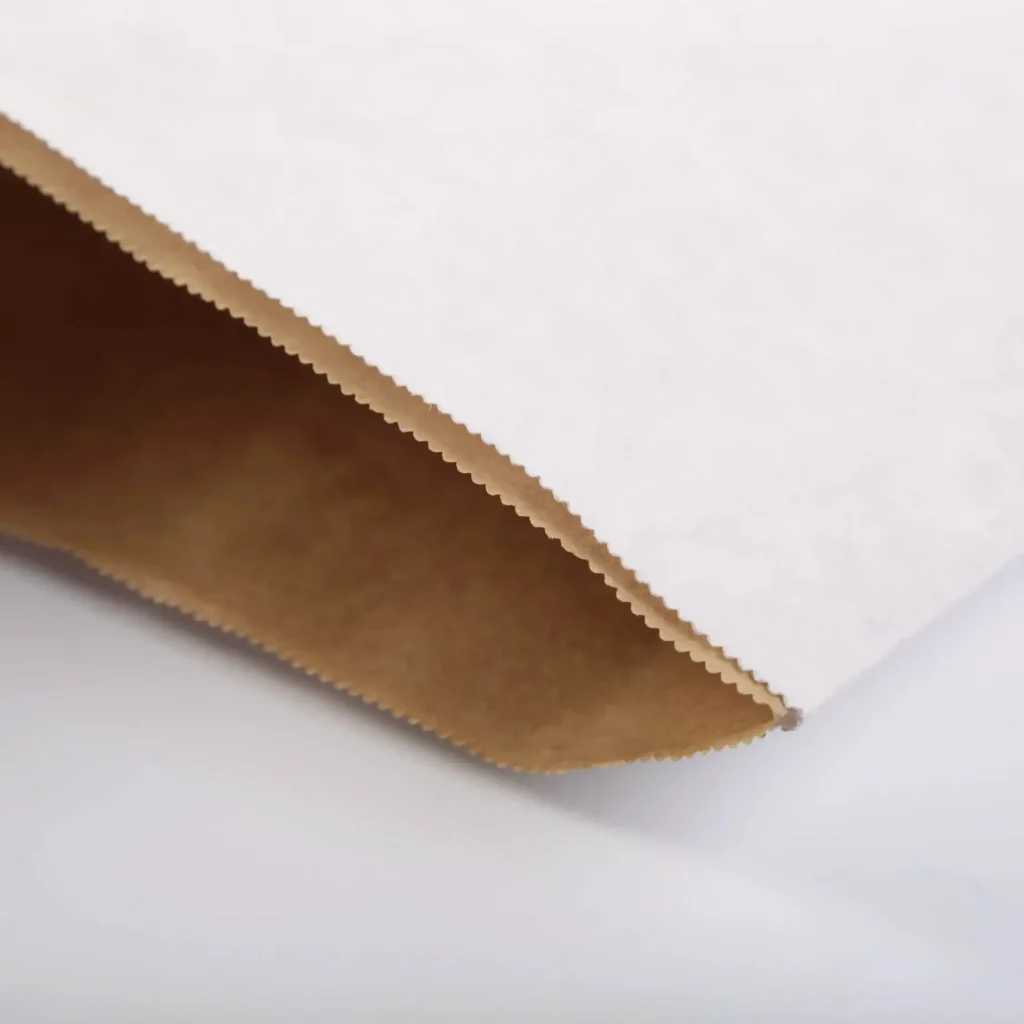
What Advantages Does Valve & Block‑Bottom Geometry Provide for multi-wall woven bags?
A recurring challenge in bulk packaging is to reconcile fill speed with clean densification and post-fill stability. Valve and block‑bottom geometry in multi-wall woven bags addresses this by transforming a soft container into a self‑standing module that behaves predictably on conveyors and pallets.
From a materials‑science perspective, the oriented tape fabric supplies anisotropic strength, but geometry governs how that strength is expressed during use. A self‑closing valve limits dust escape while allowing de‑aeration, and block‑bottom creases distribute stresses away from seam initiators. Horizontally, we can compare this to textile engineering: altering ends and picks per 10 cm tunes stiffness and drape; the bottom fold radius functions like a hem that resists crack propagation. Vertically, at the system level, geometry influences filler throughput, pallet squareness, and stretch‑wrap performance, closing the loop between design and logistics costs.
Problem → High dust, inconsistent bag density, and skewed pallets raise claims and operational costs.
Method → Specify valve clearance windows, engineer vent paths within the laminate rather than crude pin‑holes, and use block‑bottom fold radii that spread clamp loads.
Result → Faster fill with fewer stoppages, lower airborne dust, and tighter pallet stacks.
Discussion → Geometry is not decorative; it is a control lever. When repeatedly held within tolerance, a small geometric change delivers outsized benefits all the way to the DC.
What Is a Specification Playbook, and How Is It Relevant to Converting multi-wall woven bags?
In discrete manufacturing, a program dictates machine behavior; in converting multi-wall woven bags, an equivalent is the specification playbook—a structured set of set‑points and tolerances (denier Cv%, ends/picks, coating thickness, surface energy before printing, sealing temperature windows). The playbook orchestrates the hand‑off between tape extrusion, weaving, lamination, printing, and conversion, so that variability does not accumulate.
Problem → Drifts in draw ratio or coating gauge cause print register creep and seal failures downstream.
Method → Build a spec playbook with hard checks: incoming resin melt index windows; on‑line gauge targets ±2–3 μm; dyne thresholds ≥ 38–42; barcode grade goals to ISO/IEC 15416; COF windows 0.25–0.45; WVTR targets at 38 °C/90% RH tailored to SKU. Pair each with SPC charts and corrective actions.
Result → Converters run closer to steady‑state; makeready falls; scrap decreases; seal and drop tests stabilize across shifts.
Discussion → Without a playbook, operators are forced to compensate by feel. With it, the process becomes legible and teachable, and multi-wall woven bags deliver consistency at scale.
What Role Does Dust Mitigation Play in Filling and Handling multi-wall woven bags?
Dust is not just a housekeeping concern; it is a safety, quality, and brand issue. Fine powders reduce visibility, trigger alarms, contaminate seals, and risk worker exposure. multi-wall woven bags allow engineered responses: vent channels inside laminates, controlled valve geometry, anti‑static additive selection in liners, and sift‑proof seam strategies.
Problem → Pin‑holed films vent quickly but raise WVTR; unvented bags fill slowly and trap air.
Method → Replace random pin‑holes with designed vent pathways that maintain barrier integrity; specify anti‑stat levels appropriate to product; train operators on nozzle insertion depth to protect valve lips.
Result → Measurably lower airborne dust around the filler (often 20–40% reductions) with WVTR still within target.
Discussion → The horizontal comparison here is HVAC zoning: targeted airflow beats leaky rooms. Vertically, proper venting improves filler OEE, reduces rework, and prolongs filter life—outcomes that accounting will notice.
What Materials Can Be Safely Packed with multi-wall woven bags?
The spectrum runs from coarse aggregates to hygroscopic premixes and aroma‑sensitive nutrition. multi-wall woven bags shine where loads demand strength but products demand barrier. Cement and mortar need clamp resistance and sift‑proofing; fertilizers require moisture moderation; seeds demand scuff resistance and readable labels; pet nutrition values odor retention and pristine graphics.
Problem → A single substrate rarely provides both high mechanical performance and precise barrier control.
Method → Decouple duties: woven structure for strength; liner film (40–90 μm) for WVTR and oxygen control; printable skin for brand fidelity; geometry for standing and discharge. Recipes vary (PE‑rich for recycling, PA/PE where oxygen sensitivity warrants).
Result → One architecture, many SKUs, each tuned by layer.
Discussion → Horizontally, this echoes composite design in aerospace—fibers carry load; matrices handle environment. Vertically, bag behavior on pallet emerges from material, fabric, laminate, print, and conversion levels acting in concert.
What Is the Benefit of a Modular Pallet Plan for multi-wall woven bags?
A modular pallet plan is the packaging analogue of a workholding table: a rational grid ensures repeatable placement and load paths. With multi-wall woven bags, pallet patterns (e.g., 5‑4‑5 columns per layer), overhang limits, and COF targets shape transport outcomes.
Problem → Random palletization increases tilt and wrap failures; overhang degrades edge protection.
Method → Pair block‑bottom geometry with defined COF and a pallet plan that interlocks corners; enforce wrap pre‑stretch settings; document the plan in the spec playbook.
Result → Squarer pallets, fewer punctures, faster loading, and cleaner goods receipt.
Discussion → Horizontal link: warehouse slotting strategies; vertical link: pallet plan is the final process step integrating upstream tolerances into downstream stability.
The Role of Precision in the Parameters of multi-wall woven bags
Precision is not an aesthetic preference; it is the boundary between intended and accidental performance. Tape denier variation, weave density deviation, coating thickness scatter, and print register drift are silent saboteurs.
Problem → Small parameter shifts stack into large field failures (seals that just miss, corners that just burst).
Method → Tighten Cv% on denier via closed‑loop draw control; use RX‑class circular looms for uniform density; hold coating to ±2–3 μm; calibrate corona for 38–42 dynes; run register automation to ≤ ±0.2 mm.
Result → Stable tensile bands (≥ 1200 N/5 cm MD; ≥ 600 N/5 cm CD), predictable seals, crisp barcodes, and fewer claims.
Discussion → Precision pays twice—once in yield, once in reputation. It is the cheapest insurance policy a converter can buy.
Benefits of Using multi-wall woven bags for Industrial and Aftermarket Logistics
Whether shipping mineral additives, resins, or parts kits, the package must arrive intact and legible. multi-wall woven bags reduce transport loss through anisotropic strength and manage contamination risk through barrier control and clean discharge features.
Problem → Freight touches multiply failure opportunities; returns are expensive and erode trust.
Method → Engineer the structure for clamp cycles; select liners for moisture; ensure print survives abrasion; include easy‑open features to prevent knife damage at end use.
Result → Fewer claims, safer warehouses, happier receivers.
Discussion → Horizontally, think of return‑merchandising costs; vertically, this is where material choices become customer experience.
Exploring Customization in multi-wall woven bags
Customization is not vanity; it lets packaging fit the product and the plant. Options include valve style, bottom format, liner recipe, vent strategy, COF bands, anti‑stat level, and print architecture (color count, coatings, variable data).
Problem → One‑size SKUs compromise line speed or product integrity.
Method → Co‑engineer a spec with the filler team: bags per minute targets, allowable dust, WVTR window, barcode grade; translate into layer choices and geometry; pilot, measure, iterate.
Result → A bag that runs like it belongs on your line.
Discussion → Horizontally, mirror the idea of application‑specific design; vertically, pilots de‑risk scale‑up and preserve credibility with operations.
Standardized Configurations of multi-wall woven bags for Heavy‑Duty Use
Standard builds reduce lead times and ease audits. Typical options include 25–50 kg block‑bottom valve bags with 900–1200 D tapes, 48–72 ends/picks, 20–60 μm coating, and 40–70 μm PE liners, specified to WVTR ≤ 1.0–2.5 g/m²·day at 38 °C/90% RH.
Problem → Custom every time is slow and error‑prone.
Method → Maintain a catalog of validated specs aligned to drop, clamp, and pallet tests; document material compliance (EU 10/2011; FDA 21 CFR 177.1520) for food/feed lines where relevant.
Result → Faster quotes, faster runs, easier compliance checks.
Discussion → Standard where possible, customize where profitable—an evergreen rule.
High‑Performance Options: Enhancing your Supply Chain with multi-wall woven bags
Some routes punish packaging more than others—humid depots, clamp‑only handling, long dwell times. High‑performance options include reinforced corners, tougher fold radii, PA/PE liners for oxygen control, and abrasion‑resistant print layers.
Problem → Edge cases drive most of the claims.
Method → Use failure data to target the weak link: if clamps tear seams, bolster fabric tensile or alter geometry; if aroma egress harms SKU value, select a higher barrier liner.
Result → A “route‑worthy” configuration with fewer surprises.
Discussion → Horizontally, treat this like hardening software for hostile environments; vertically, the field informs the spec, not the other way around.
Key Factors to Consider When Selecting a multi-wall woven bags Supplier
Suppliers are partners in risk. Assess their equipment base (Starlinger, W&H or equivalents), SPC discipline, certificate library, and responsiveness during trials.
Problem → An attractive price can mask hidden variability.
Method → Audit process capability (Cp/Cpk on denier and gauge), review migration and mechanical certificates (SGS/Intertek/TÜV), and inspect barcode grade distributions. Request the spec playbook and escalation protocol.
Result → Fewer late‑stage surprises and faster root‑cause analysis if issues arise.
Discussion → Horizontal lens: vendor management best practices; vertical lens: quality is both asset and habit.
Evaluating the Quality of multi-wall woven bags Manufacturing Services
Quality is the delta between what arrives and what was promised. Evaluate by methods, not adjectives: ASTM D5035 tensile, D2261 tear, E96 WVTR, D1894 COF, ISO/IEC 15416 barcodes; plus in‑house seal, burst, and drop routines.
Problem → Inconsistent metrics create debates rather than solutions.
Method → Align on a test matrix and sampling plan; agree on acceptance bands; instrument your filler and transport legs to capture dust, OEE, and damage rates.
Result → Measured improvements that finance teams can endorse.
Discussion → Horizontally, this is continuous improvement; vertically, reports feed back into the spec playbook for the next run.
Systems Synthesis: Integrating Layers, Geometry, Process, and Logistics for multi-wall woven bags
A system works when parts cooperate. Material choices establish mechanical and barrier potential; fabric and laminate convert potential into webs; print and conversion formalize the bag; geometry and pallet plans transpose the bag into a unit load; operations and audits verify the outcome. The synthesis is a control loop: field data revises specs; specs recalibrate machines; machines produce bags that change field data.
Problem → Fragmented decisions fix symptoms, not causes.
Method → Run a cross‑functional FMEA: product hygroscopicity, drop heights, clamp pressures, pallet overhang, climate corridors, barcode grade thresholds, WVTR windows. From that, set layer recipes, geometry, and process controls.
Result → A bag that satisfies the material scientist, the line operator, the logistics manager, and the auditor.
Discussion → This is how multi-wall woven bags deliver not only containment, but confidence.
For adjacent solutions and format context, see our anchor link on multi-wall woven bags.
References
- ISO 9001:2015 Quality management systems — Requirements.
- ISO 14001:2015 Environmental management systems — Requirements with guidance for use.
- ISO 22000:2018 Food safety management systems — Requirements for any organization in the food chain.
- BRCGS Packaging Materials, Issue 6.
- EU 10/2011 on plastic materials intended to come into contact with food.
- FDA 21 CFR 177.1520 — Olefin polymers for food contact.
- ASTM D5035 — Standard Test Method for Breaking Force and Elongation of Textile Fabrics (Strip Method).
- ASTM D2261 — Standard Test Method for Tearing Strength of Fabrics by the Tongue Procedure.
- ASTM D882 — Standard Test Method for Tensile Properties of Thin Plastic Sheeting.
- ASTM D1709 — Standard Test Methods for Impact Resistance of Plastic Film by the Free‑Falling Dart Method.
- ASTM D1894 — Standard Test Method for Static and Kinetic Coefficients of Friction of Plastic Film and Sheeting.
- ASTM E96 — Standard Test Methods for Water Vapor Transmission of Materials.
- ISO/IEC 15416 — Bar Code Print Quality Test Specification — Linear Symbols.
- SGS, Intertek, TÜV SÜD — example third‑party labs for migration, mechanical, and print‑quality certifications (reports available upon request).