
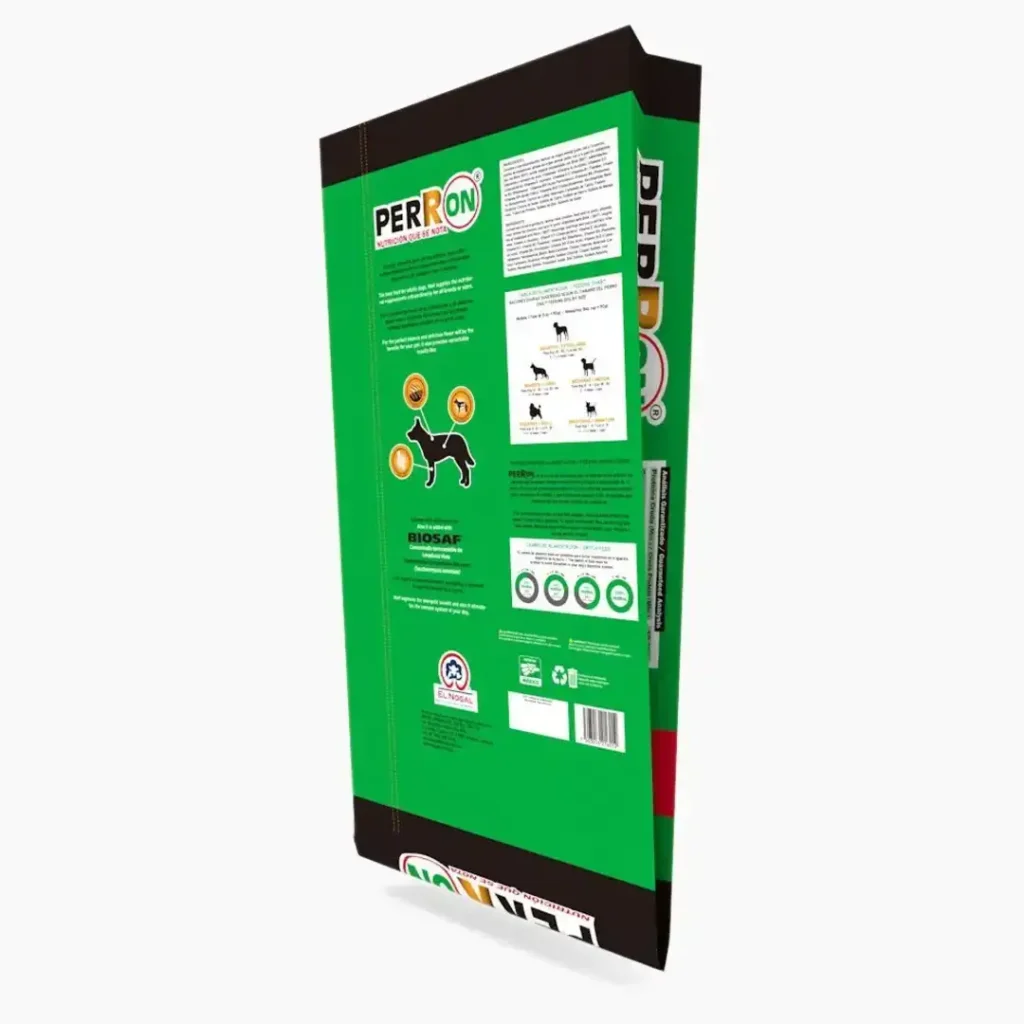
What are NPK BOPP Woven Bags?
NPK BOPP woven bags are engineered sacks designed for fertilizer blends that contain nitrogen, phosphorus, and potassium. They combine a printable biaxially oriented polypropylene (BOPP) film with a polypropylene woven fabric substrate to realize an unusual balance: moisture protection, mechanical strength, pallet safety, and brand‑forward graphics—simultaneously. By treating a bag as a small engineered environment rather than a commodity shell, the structure transforms from mere packaging to a controllable system—one that regulates water vapor ingress, preserves flowability, resists scuffing, and withstands rough handling from blending plant to farm gate.
The logic is simple to state yet demanding to execute. Fertilizer salts are hygroscopic; they attract moisture that triggers caking and lumping. Warehouses breathe, trucks vibrate, depots sit under sun, and operators stack high. In that reality, the bag must accomplish several goals at once: keep vapor out, keep fine dust in, resist UV, maintain friction on pallets, and deliver print that still looks crisp after months in circulation. NPK BOPP woven bags exist precisely to reconcile those competing forces.
What makes them distinct is not one layer but the interaction of many: the outer BOPP film (clear, matte, pearlized, or metallized), the extrusion‑coated fabric that seals needle paths, the inner polyethylene liner (often black for light‑blocking) that reinforces the moisture barrier, and the closure geometry that prevents capillary wicking at the stitch line. Each variable becomes a dial you can turn to meet a specific climate, route, and product recipe.
Common Alternative Names and Market Terminology
Callout — Alternate product names you might encounter
- BOPP laminated PP woven fertilizer sacks
- Poly BOPP fertilizer packaging bags
- Pearlized or metallized BOPP fertilizer bags
- Block‑bottom BOPP woven bags for NPK blends
- BOPP/PP composite woven sacks with inner liners
Terminology varies by region and industry vertical, but the underlying architecture is stable: a print‑capable BOPP web bonded to a PP woven fabric, usually with an added polyethylene liner. Whether described as laminated, composite, or poly BOPP, the target remains the same—control moisture, protect the product, and deliver safe, efficient logistics.
Key Features and Why They Matter
Moisture barrier that earns its numbers
WVTR performance is specified at 38 °C/90% RH per ASTM F1249. Clear BOPP in the 20–26 µm range typically lands around 7.0–5.0 g/m²·24 h; thicker 41 µm webs can approach ~3.5, while metallized film drops to ~0.2–0.3. When combined with a 40–100 µm PE liner, effective system moisture transmission decreases further. Numbers matter because caking is not a cosmetic defect but a usability failure.
Print fidelity with real‑world scuff resistance
High‑resolution rotogravure runs clean on BOPP, but protection requires the right lacquer and cure. Sutherland rub (ASTM D5264) on fertilizer dust surrogate predicts shelf wear far better than bare paper tests. Matte or micro‑emboss laminates also boost back‑panel friction without sacrificing brand blocks on the front.
Pallet safety by design
Dynamic COF targets around 0.30–0.40 (ASTM D1894) reduce layer‑to‑layer slippage. Anti‑slip lacquers or micro‑emboss films on the back panel are pragmatic insurance against collapsed stacks.
UV and light management where it counts
HALS‑stabilized tapes and UV‑rated films extend outdoor life measured under ISO 4892‑2/ASTM G154. Black PE liners block light and support temperature control under tarps, preserving both product and print.
Seam and closure geometry that prevents wicking
A coated stitch margin ≥ 25 mm beyond the needle line shuts down capillary paths during rain events. Where available, pinch‑top heat seals eliminate needle holes altogether (drop resilience validated per ISO 2248/ASTM D5276).
Seen together, these features form a logic chain: reduce vapor ingress, control friction, harden the print surface, manage UV, and engineer the closure. Each link multiplies the others.
How NPK BOPP Woven Bags Are Manufactured
Production integrates film science, weaving, coating, printing, and converting into one continuous discipline. Each stage creates opportunities to strengthen the barrier and the structure—or to undermine them. A robust plant treats the process as a chain of measurable windows rather than a sequence of vague steps.
1) Tape extrusion & weaving
PP tapes (700D–1000D) are extruded and drawn for strength, then woven at 10×10 to 12×12 ppi to hit GSM targets (~65–100+). Tensile and seam strength benchmarks reference GB/T 8946‑2013 and IS 9755:2021.
2) Extrusion coating
A PP coating (20–25 g/m²) is applied to seal needle paths and stabilize stitch zones. Coat‑weight maps validate uniformity; edge‑bead control preserves fold geometry.
3) Film lamination & surface prep
BOPP web—transparent, matte, pearlized, or metallized—is bonded to the coated fabric. Corona treatment targets secure ink adhesion; bond strength is checked by peel per ASTM D903; curl is monitored to protect register.
4) Rotogravure printing & lacquer
High‑linecount cylinders deliver fine halftones; lacquer systems are tuned for rub (ASTM D5264) and slip behavior. Where needed, micro‑emboss or matte films lift friction on the back panel.
5) Liner insertion
PE liners (40–100 µm) are inserted and gusseted to match bag geometry. Black liners are selected for sun‑exposed routes to block light and stabilize temperature.
6) Converting & closure
Open‑mouth or pinch‑top formats are formed. Fold‑stitch through coated margins (≥ 25 mm) or heat‑seal pinch‑tops to remove needle paths. Drop performance is qualified by orientation per ISO 2248/ASTM D5276.
A quality system certified to ISO 9001:2015 (process control), ISO 14001:2015 (environmental), and ISO 45001:2018 (occupational health) closes the loop. Lab work is referenced to ISO/IEC 17025 accreditation so that WVTR, COF, and drop data are not just numbers but auditable evidence.
Where NPK BOPP Woven Bags Excel
Applications stretch from coastal depots to inland farms and from high‑urea blends to complex micronutrient recipes. Rather than listing markets, the better approach is to match conditions to design. When you know the stress, you can choose the stack.
High humidity / long dwell
Metallized BOPP + black liner; wider coated margins; breathable pallet wraps with shade. WVTR targets near 0.3 g/m²·24 h (coupon) can be justified when caking fines exceed rebagging costs.
Urea‑rich blends
Low WVTR laminate plus thicker liner; pinch‑top seals preferred. Rub‑resistant lacquer minimizes dust‑induced scuffing common in granular urea handling.
Retail aesthetic requirements
Transparent or matte front panels with brand windows; micro‑emboss backs for pallet safety. Traceability via serialized QR aligns with ISO 9001 and anti‑counterfeit routines.
Feed and seed cross‑use
Poly BOPP technology translates seamlessly to animal nutrition and seed packaging lines that require dust containment and strong graphics without sacrificing barrier.
Professional Reinforcement: Standards, Reports, and Technical Proof
Evidence matters—especially when humidity, UV, and handling are unforgiving. The following frameworks convert product claims into auditable obligations. When a supplier cites these methods, you gain not just a bag but a paper trail capable of withstanding procurement, regulatory, and customer scrutiny.
Standards and third‑party anchors
- WVTR: ASTM F1249 at 38 °C/90% RH on film coupons, with ISO/IEC 17025 lab accreditation (SGS, Intertek, TÜV).
- Drop tests: ISO 2248 or ASTM D5276 on filled sacks by orientation and height matrix.
- Woven sack baselines: GB/T 8946‑2013 and IS 9755:2021 for mechanical and seam strength traits.
- Friction and rub: ASTM D1894 (COF) and ASTM D5264 (Sutherland rub) on lacquered print areas.
- UV weathering: ISO 4892‑2 / ASTM G154 exposure classes for film and fabric stability.
- Management systems: ISO 9001:2015, ISO 14001:2015, ISO 45001:2018—certification numbers that signal consistent process control.
Reports from accredited labs translate into corrective actions on the floor. If WVTR drifts high, metallize or thicken the web; if pallets slip, increase COF with micro‑emboss; if seams burst in rain, widen coated margins or migrate to pinch‑tops. Technical proof is not a vanity metric; it is a map of what to do next.
Specification Summary — Parameters and Details
| Module | Parameter | Typical Range / Target | Verification |
|---|---|---|---|
| Barrier | BOPP web type & thickness | Transparent/Matte 25–30 µm; Metallized 20–25 µm | Micrometer; supplier TDS |
| Barrier | Laminate WVTR (38 °C/90% RH) | 7.0–5.0 (clear); ~3.5 (41 µm); 0.2–0.3 (metallized) g/m²·24 h | ASTM F1249 coupon tests |
| Structure | Weave & fabric GSM | 10×10–12×12; ~65–100+ gsm | GB/T 8946‑2013; IS 9755:2021 |
| Surface | Dynamic COF target | 0.30–0.40 (film‑to‑film) | ASTM D1894 |
| Closure | Coated stitch margin | ≥ 25 mm beyond needle line | Calipers; visual audit |
| UV | Stabilization class | 200–1,600+ hours (ISO 4892‑2/ASTM G154) | Accelerated weathering |
| Printing | Process & rub resistance | 8–10 color rotogravure; lacquer to spec | ASTM D5264 |
| Strength | Drop performance | 0.6–1.2 m by orientation and fill weight | ISO 2248 / ASTM D5276 |
Numbers without conditions can mislead. Always pair the metric with its method and state the temperature, humidity, and orientation used in the test. That simple discipline keeps quotation pages and production floors aligned.
Comparative Lens — Why These Bags Outperform Commodity Options
Consider the competing priorities. A grain sack may prioritize venting for fast filling; a gypsum bag may tolerate higher WVTR; a feed bag may need dust control more than UV life. Fertilizer needs all of it: tight moisture control, strong seams, controlled slip, resilient print. That is why the composite stack, not a single feature, defines success. It is also why NPK lines benefit from pinch‑top heat seals where possible and from black liners where light exposure and long dwell are expected. The result is less rebagging, fewer pallet incidents, and a steadier brand presence from plant to point‑of‑use.
Quality Control and Risk Management
Callout — A short checklist to reduce claims
- State WVTR at 38 °C/90% RH and qualify liner gauge against shelf‑life targets.
- Verify coated stitch margins on every shift; aim for ≥ 25 mm.
- Specify COF 0.30–0.40 with micro‑emboss or anti‑slip lacquer on back panel.
- Enforce ISO/IEC 17025 testing at independent labs for coupon and drop trials.
- Use breathable pallet wraps and shade to reduce condensation cycles in depots.
These steps are routine yet decisive. They transform specifications from paperwork into performance and convert field complaints into measurable improvements. Risk declines not by slogans but by margins, gauges, and methods set in writing and upheld in practice.
- What are NPK BOPP Woven Bags?
- Common Alternative Names and Market Terminology
- Key Features and Why They Matter
- How NPK BOPP Woven Bags Are Manufactured
- Where NPK BOPP Woven Bags Excel
- Professional Reinforcement: Standards, Reports, and Technical Proof
- Specification Summary — Parameters and Details
- Comparative Lens — Why These Bags Outperform Commodity Options
- Quality Control and Risk Management
- Framing the problem: why fertilizers rewrite the rules of packaging design
- A systems view: environmental stressors in, packaging responses out
- Moisture as the dominant failure mode—and how to design around it
- Inner liners that do more than “line”: the role of black PE
- Laminates and coatings: balancing barrier, print, and friction
- Structure and seams: a bag is also a load unit
- UV, abrasion, and pallet safety: the “survival traits” that show up in the yard
- Rhetorical interlude: what must a fertilizer bag be?
- Moisture‑critical levers, expanded by cross‑industry learning and layer‑by‑layer logic
- What truly distinguishes NPK BOPP Woven Bags from generic BOPP woven sacks
- Three internal resources to broaden the technical lens
- The moisture‑barrier playbook: from numbers to practices
- Field‑ready checklists that compress risk
- Sizing, geometry, and palletization for fertilizer realities
- Sustainability without hand‑waving
- Anti‑counterfeit, traceability, and brand protection
- Manufacturing realities: what to ask your converter and what to verify in your lab
- Troubleshooting atlas for NPK BOPP Woven Bags
- Decision trees that turn contexts into specs
- Extended parameter map: numbers you can specify and test
- Practical specification file you can hand to suppliers
- Quality plan and lab routines that protect the field
- A short sequence of questions that sharpen decision‑making
- Frequently overlooked, quietly decisive
- Sizing & geometry notes for fertilizer duty
- Warehouse rules that read like common sense yet save real money
- Parameter and details table—summary for quick specification
- Procurement checklist you can copy into your RFP today
- Why Precision Matters in **NPK BOPP Woven Bags**
- Using Specialized Conversion and QA Services for **NPK BOPP Woven Bags**
- Techniques for Lamination, Coating, and Surface Control in **NPK BOPP Woven Bags**
- Ensuring Quality in Custom Specifications for **NPK BOPP Woven Bags**
- Understanding the Role of Inner Liners in **NPK BOPP Woven Bags**
- Why Metallized or Pearlized Stacks in **NPK BOPP Woven Bags** Are Preferable in Humid Lanes
- What the Converter Actually Does for **NPK BOPP Woven Bags**
- Why Seam Geometry and Axis-like Controls Matter in **NPK BOPP Woven Bags**
- Choosing the Right Specification for **NPK BOPP Woven Bags**
- Importance of Barrier Precision Revisited for **NPK BOPP Woven Bags**
- How to Use Expert Partners for **NPK BOPP Woven Bags** without Losing Control
- Techniques for Effective Printing and Surface Finishing on **NPK BOPP Woven Bags**
- Horizontally Integrating Insights Across Industries for **NPK BOPP Woven Bags**
- Vertically Layering Decisions: From Policy to Tape in **NPK BOPP Woven Bags**
- Economics of Total Cost of Ownership for **NPK BOPP Woven Bags**
- Environment and Compliance Logic in **NPK BOPP Woven Bags**
- Risk Scenarios and Countermeasures for **NPK BOPP Woven Bags**
- Digital Traceability and Anti-Counterfeit for **NPK BOPP Woven Bags**
- Training and Human Factors for **NPK BOPP Woven Bags**
- Case-Structured Applications for **NPK BOPP Woven Bags**
- Linking to Deep-Dive Guides on **NPK BOPP Woven Bags**
- Method: Building a Problem-Oriented, Closed-Loop Logic for **NPK BOPP Woven Bags**
- Results: What Changes When the Stack is Upgraded in **NPK BOPP Woven Bags**
- Discussion: The Trajectory of **NPK BOPP Woven Bags**
- References
Framing the problem: why fertilizers rewrite the rules of packaging design
Fertilizer blends are unforgiving. Hygroscopic salts pull water from the air, thermal cycles push moisture across film layers, alkaline and acidic components stress polymers, long logistics chains squeeze and scuff, and outdoor depots punish surfaces with UV. In this reality, NPK BOPP Woven Bags are not mere containers; they operate as micro‑environments that regulate vapor, protect print, carry loads, and document compliance. If the contents are N–P–K compounds, every layer—from tape denier and weave density to laminate selection and inner liner color—must be tuned to slow water vapor transmission, deter caking, manage dust, and survive drop, stack, and slide.
BOPP Laminated PP Woven Bags
Moisture-proof BOPP laminated PP woven bags ideal for NPK fertilizer and moisture-sensitive materials.
Check More →BOPP Laminated PP Woven Bags Solutions
Customized packaging solutions for moisture-critical fertilizer using high-barrier BOPP woven bags.
Check More →BOPP Woven Bags
Premium BOPP woven bags with excellent moisture resistance for safe NPK fertilizer storage.
Check More →PP Woven Bags Manufacturer
Professional manufacturer producing moisture-resistant BOPP woven bags for fertilizer packaging.
Check More →This article rebuilds the design logic of NPK BOPP Woven Bags from the ground up. It disassembles broad claims into testable parts, links field pain points to laboratory metrics, and contrasts fertilizer‑grade specifications with general BOPP woven sacks. To deepen each argument, we apply three lenses again and again: data reinforcement (numbers, standards, methods), case analysis (what happened in yards, depots, and on trucks), and comparative study (what changes when the same sack is meant for gypsum, rice, or pellets instead of N–P–K). The objective is practical: a decision‑ready playbook you can hand to sourcing, quality, and operations.
Along the way, you will see the name NPK BOPP Woven Bags recur. Repetition is intentional. Because the product is specific, the engineering is specific; because the risks are repeatable, the controls must be repeatable.
A systems view: environmental stressors in, packaging responses out
Imagine the packaging as a control loop: the environment contributes humidity, heat, UV, and mechanical shocks; the product contributes hygroscopic pull and particle abrasion; the supply chain contributes dwell time, pallet patterns, and handling severity; regulation contributes traceability and labeling constraints. NPK BOPP Woven Bags translate those inputs into layered countermeasures:
- Barrier module: laminate choice (transparent, matte, pearlized, metallized), coating weight on the fabric, liner gauge and color (clear vs black PE), and the venting strategy that relieves air yet restricts water vapor.
- Structural module: weave density (10×10 to 12×12 typical), tape denier (700D–1000D for fertilizer duty), fabric GSM (65–100+), and stitch architecture (single or double fold; chain lock; pinch‑top compatibility).
- Surface module: anti‑slip lacquers, micro‑emboss textures, matte vs gloss friction behavior, scuff resistance over printed areas.
- Closure module: heat cut + fold‑stitch geometry, coated margins that block capillary wicking, heat‑seal windows for pinch‑top operations, and liner capture.
- Information module: rotogravure artwork, abrasion‑resistant lacquers, lot coding, QR traceability.
- Compliance module: standard‑anchored metrics—WVTR per ASTM F1249, COF per ASTM D1894, drop performance per ISO 2248 or ASTM D5276, woven sack baselines per GB/T 8946 or IS 9755, UV weathering per ISO 4892‑2 or ASTM G154.
General‑purpose BOPP woven sacks can relax parts of this matrix: omit liners, accept higher WVTR, leave wider needle holes for de‑aeration, rely on low coating weights. NPK BOPP Woven Bags do not have that luxury. Why? Because moisture is the primary failure mode: caking, fused lumps, poor flow, blocked spreaders, claims.
Moisture as the dominant failure mode—and how to design around it
Data reinforcement
Moisture uptake in N–P–K blends is not linear; it accelerates near critical relative humidity thresholds. The most meaningful KPI for film and liner is WVTR (Water Vapor Transmission Rate) measured at a stated temperature and humidity, typically 38 °C/90% RH per ASTM F1249. Benchmark classes for oriented polypropylene webs at that condition:
- Unmetallized BOPP 20–26 µm: roughly 7.0 to 5.0 g/m²·24 h (thicker → lower WVTR).
- Thicker BOPP around 41 µm: about 3.5 g/m²·24 h.
- Metallized BOPP 20–25 µm: around 0.2–0.3 g/m²·24 h.
Pairing a well‑sealed liner (LDPE/LLDPE 40–100 µm) with a tight outer laminate further reduces the effective system WVTR. Stitching geometry matters because unsealed needle paths behave like capillaries under wet conditions. Stated differently: numbers on a film datasheet are necessary but not sufficient; the bag is a system.
Case analysis
Audits across humid regions consistently associate liner‑less sacks and loosely stitched tops with higher caking incidence for urea‑rich blends. The fix is not mysterious. When operators moved to NPK BOPP Woven Bags with an inner liner and enforced either a pinch‑top heat seal or a wide coated stitch margin, complaints fell. The remaining issues clustered around storage SOPs—tight pallet wraps under direct sun created condensation cycles; switching to breathable wraps and shade further improved outcomes.
Comparative study
Commodity BOPP woven sacks used for grains or fillers can tolerate WVTR that would be catastrophic for N–P–K. They may even add random needle perforations to vent air, because the product is not as hygroscopic. In contrast, NPK BOPP Woven Bags treat venting as a controlled feature—if used at all, micro‑vents are localized away from seam lines and print windows, and the liner remains intact.
Inner liners that do more than “line”: the role of black PE
Data reinforcement
Inner liners perform three jobs simultaneously: they add a low‑permeation barrier to vapor, they contain fines and dust, and—if black— they block light and stabilize against UV. Black liners leverage carbon black as a UV screen, improving light management in outdoor depots where pallets are tarped or stored under open sheds. Usual gauges for liners in NPK BOPP Woven Bags: 40–100 µm (1.6–4.0 mil), selected to balance machinability, sealability, and stiffness.
Case analysis
Consider a port‑to‑inland route across a subtropical belt. Distributors reported “brick‑hard” returns after 60–90 days of open‑yard staging when clear liners were used. A switch to black PE liners, combined with a matte outer web and an increased PP coating weight on the fabric, reduced both caking and film chalking. The pallet wraps mattered too—perforated wraps and shade lowered vapor drive, which the black liner then prevented from penetrating.
Comparative study
In general BOPP woven applications—feed, seed, building powder—clear liners (or no liners) are common to showcase product or cut cost. For NPK BOPP Woven Bags, the default should be “liner present,” with black liner chosen whenever light exposure or long yard dwell is plausible. Clear liners remain viable for premium windowed designs, but the overall barrier must be compensated with laminate choice and seam control.
Laminates and coatings: balancing barrier, print, and friction
Data reinforcement
The outer film does triple duty: carrier for high‑fidelity rotogravure, surface that slides—or better, resists sliding—on pallets, and a barrier that slows vapor. Choices include transparent gloss BOPP, matte BOPP for a paper‑like look, pearlized (cavitated) BOPP for opacity and stiffness, or metallized BOPP when barrier must be aggressive. Fabric is extrusion‑coated (often 18–25 g/m² PP) to seal needle holes and fortify the stitch zone. For tropical supply lanes, many NPK BOPP Woven Bags upgrade to metallized or pearlized webs and increase coating weight, then pair with a liner.
Case analysis
A coastal blender moved from clear BOPP + 18 g/m² coating + no liner to matte BOPP + 25 g/m² coating + 60 µm black liner. Forklift corner scuffing dropped because the matte surface ran higher friction; caking complaints after rainy storage nearly vanished. The value didn’t come from a single change; it came from the stack.
Comparative study
Commodity sacks often optimize for print economy and hand feel. Fertilizer duty in NPK BOPP Woven Bags optimizes for outcomes: lower WVTR, stable seams, controlled surface COF. Tactility gives way to reliability. When venting is necessary for fast bagging, vents are patterned zones, not random perforations.
Structure and seams: a bag is also a load unit
Data reinforcement
Fills are heavy—25 kg and 50 kg are common—so the sack must behave as a load unit. Weave density around 10×10 to 12×12, tape denier 700D–1000D, and fabric weights from ~65 to 100+ gsm are typical for fertilizer duty. Stitching creates the most frequent failure point. Standards like ISO 2248 and ASTM D5276 quantify drop resilience for loaded containers; GB/T 8946‑2013 and IS 9755:2021 define baseline mechanical performance for HDPE/PP woven sacks, including seam strength. A critical nuance for NPK BOPP Woven Bags: coated stitch margins must extend well beyond the needle line—≥ 25 mm is a practical minimum—to block capillary wicking in rain.
Case analysis
One blender saw seam bursts primarily after truck unloading in storms. Investigation found softened tapes at the top fold from water wicking along uncoated needle paths. The fix combined three simple elements: expand coated margin, reduce needle gauge, and add hot‑melt tape under the fold. Where available, converting the top to a pinch‑seal eliminated the path entirely.
Comparative study
Sacks for indoor, short‑cycle commodities can run lighter fabric, thinner coating, and narrower margins. NPK BOPP Woven Bags must assume repeated re‑stacking, humidity spikes, and pallet shifts. The conservative choice—wider margins, higher GSM, pinch‑top—wins in total cost of ownership because it trades pennies of material for fewer claims and rework.
UV, abrasion, and pallet safety: the “survival traits” that show up in the yard
Data reinforcement
Polyolefins degrade under UV. HALS and UV absorbers can raise exposure ratings from a couple hundred hours to 1,600+ hours in accelerated weathering per ISO 4892‑2 or ASTM G154. At the same time, friction matters: the dynamic coefficient of friction (COF) measured per ASTM D1894 predicts pallet stability. Printed areas must also withstand rub; ASTM D5264 (Sutherland rub) is commonly used to compare lacquers.
Case analysis
A brand that routinely parks pallets in open depots adopted HALS‑stabilized tapes and switched the back panel to a micro‑emboss over‑laminate. Pallet collapses subsided; the prints scuffed less under fork‑tip contact. The change paid for itself within a season through avoided damage write‑offs.
Comparative study
If sacks spend their life indoors, UV stabilization and high‑COF backs look optional. Yet NPK BOPP Woven Bags often traverse mixed realities—indoor blending, outdoor staging, covered truck beds, then more outdoor time at retailers. Designing for the worst leg rather than the average leg is rational risk management.
Rhetorical interlude: what must a fertilizer bag be?
It must be strong, yet light; breathable during fill, yet tight after; glossy enough for brand blocks, yet grippy enough to stop a pallet slide; printable like paper, but weather‑resistant like film. Is that a contradiction? Not when the layers are intentional. Not when NPK BOPP Woven Bags are treated as engineered systems rather than commodities. How else could one bag prevent caking, endure drops, resist sunlight, and still look new after miles on a truck?
Moisture‑critical levers, expanded by cross‑industry learning and layer‑by‑layer logic
Cross‑industry parallels (horizontal thinking)
- Moisture barrier pouches in electronics illustrate the power of clearly specified WVTR and heat‑seal windows; NPK BOPP Woven Bags benefit from the same rigor—state the test (ASTM F1249 at 38 °C/90% RH), qualify seals, keep coupons.
- Metallized webs in snack packaging show how to add barrier without surrendering graphics; fertilizer artwork can keep its vibrancy while the aluminum layer does its quiet job.
- Construction wraps deploy black poly to block light; black liners repeat the trick inside fertilizer sacks, protecting blends from photodegradation and heat buildup.
Layer‑by‑layer logic (vertical thinking)
- Policy: define shelf‑life targets by climate (e.g., 90 days coastal, 120 days inland) and product (urea‑rich vs MAP/DAP‑rich).
- Specification: translate those targets into laminate type (matte vs metallized), coating weight, liner gauge, and seam geometry.
- Process: lock sealing SOPs—fold width, stitch density, heater temperature and dwell time if pinch‑top—so the lab numbers survive the shift to the line.
- Inspection: institute per‑lot coupon WVTR, COF checks on lamination lots, drop tests by orientation, and visual audits of coated margins and liner capture.
What truly distinguishes NPK BOPP Woven Bags from generic BOPP woven sacks
- Intentional barrier architecture: metallized or pearlized webs where humidity demands it; liners as default; vents as designed features, not accidents.
- Engineered closures: wider coated stitch margins, heat‑seal‑ready pinch tops, adhesive tapes that resist channeling.
- Functional surfaces: anti‑slip targets (e.g., dynamic COF 0.30–0.40), scuff‑resistant print lacquers, matte/gloss balancing for friction and brand effect.
- Sunlight and heat management: HALS‑stabilized tapes and black liners selected based on expected yard dwell.
- Measurement culture: WVTR, drop, COF, UV—each tied to specific standards and verified by third‑party laboratories (SGS, Intertek, TÜV) under ISO/IEC 17025 accreditation.
Three internal resources to broaden the technical lens
To place fertilizer duty within the broader BOPP landscape—and to keep the focus on real engineering rather than buzzwords—consider these related, practical reads:
- NPK BOPP Woven Bags for waste‑management compliance and sustainability
- Poly NPK BOPP Woven Bags with automation‑driven quality and throughput
- Advanced NPK BOPP Woven Bags for efficiency and cost control
These links expand on material science, factory automation, and compliance—angles that reinforce the arguments made here for NPK BOPP Woven Bags.
The moisture‑barrier playbook: from numbers to practices
Barrier selection with metrics that matter
- Specify laminate WVTR at one condition (38 °C/90% RH, ASTM F1249) to make comparisons apples‑to‑apples.
- Choose metallized BOPP when WVTR ≤ 0.3 g/m²·24 h is needed; otherwise, select matte/transparent webs and compensate with a robust liner.
- Treat stitch zones as potential leak paths; use coating weight (20–25 g/m²) and margin width (≥ 25 mm) as active countermeasures.
Liner configuration with operational nuance
- Gauge selection (40–100 µm) balances barrier and machine set‑ups; thicker liners resist pinholing and are easier to heat‑seal.
- Black liners are not merely a visual choice: they manage light and often run cooler under sun due to absorption and reradiation patterns.
- Capture the liner in the fold or seal it independently to avoid wicking at the top.
Closure engineering that survives weather and time
- Where lines permit, pinch‑top heat seals remove needle paths entirely; define temperature and dwell windows that match laminate stacks.
- Where stitching remains, adopt adhesive tapes beneath folds and verify stitch density (SPI) to prevent slippage and channeling.
Field‑ready checklists that compress risk
Storage and handling SOPs for NPK BOPP Woven Bags
- Stack on pallets with air gaps; avoid direct ground contact.
- Use breathable wraps; avoid clear, tight wraps under direct sun.
- Enforce FIFO to reduce long dwell in humid months.
- Shade depots; tarp with breathable covers to limit condensation cycles.
Packing line settings that protect barrier performance
- Keep needles sharp and appropriately gauged to reduce tape damage.
- Verify hot bar temperatures for pinch‑tops against the actual laminate stack; calibrate with peel tests.
- Inspect coated margins and fold widths at shift start and after any changeover.
Sizing, geometry, and palletization for fertilizer realities
Common cut sizes for NPK BOPP Woven Bags include 45 × 75 cm and 50 × 80 cm for 25 kg fills, and around 58–60 × 93–95 cm for 50 kg fills. Gussets (5–9 cm) increase cube efficiency and pallet stability. Square‑bottom or block‑bottom formats improve stacking at the cost of a more complex conversion line. Whether open‑mouth or valve, the format should be chosen last—after barrier and seam decisions—so functionality dictates form, not the other way around.
Sustainability without hand‑waving
A credible sustainability stance avoids performative claims and focuses on design choices measurable in plants and yards:
- Monomaterial thinking: PP fabric + PP coating + BOPP film keeps to the polyolefin family; liners are PE‑family—both streamlines downstream recycling.
- Controlled PCR: in liners where regulations allow, limited post‑consumer content can be introduced without compromising moisture barrier; verify with ASTM D3985 (oxygen transmission) and ASTM F1249 (WVTR) to ensure parity.
- Durability as sustainability: fewer failures mean fewer repacks, less waste, and lower transport emissions per delivered ton.
Anti‑counterfeit, traceability, and brand protection
Because fertilizer fraud harms yields and brands, NPK BOPP Woven Bags can integrate covert and overt features: microtext in rotogravure plates, UV‑reactive inks, tear tapes with brand color coding, and serialized QR codes tied to batch records. Lot‑level traceability aligns with ISO 9001:2015 quality systems, while supplier environmental controls map to ISO 14001:2015. Occupational safety in conversion and filling aligns with ISO 45001:2018—these certification numbers are not decorative; they are the backbone of a defensible quality ecosystem.
Manufacturing realities: what to ask your converter and what to verify in your lab
- Lamination line: corona treatment levels for print adhesion, bond strength checks (e.g., ASTM D903 peel), and curl control.
- Extrusion coating: coat‑weight uniformity and edge‑bead control to keep stitch margins consistent.
- Weaving: loom settings, tape width consistency, and warp/weft balance affect bag squareness and seam stress.
- Printing: viscosity windows, doctor blade settings, and lacquer cure—especially for matte finishes—determine rub resistance.
- Converting: fold geometry jigs, stitch density targets, and inline liner insertion checks.
- QA instrumentation: WVTR cells, COF testers (ASTM D1894), rub testers (ASTM D5264), and drop rigs.
Troubleshooting atlas for NPK BOPP Woven Bags
- Hard bricks on arrival → High system WVTR, compromised seam, or no liner → Upgrade to metallized web, add black liner, widen coated margin, or switch to pinch‑top.
- Burst seams during wet unloading → Capillary wicking along stitch line → Increase coating weight and margin; add adhesive tape; reduce needle gauge.
- Pallet slides on smooth film → Low dynamic COF on glossy backs → Specify anti‑slip lacquer or micro‑emboss on back panel; target 0.30–0.40.
- Scuffed artwork → Abrasive fertilizer fines, low‑rub lacquer → Increase lacquer weight; consider matte; validate via ASTM D5264 cycles.
- Sun‑chalking and fabric embrittlement → Insufficient UV stabilization → Specify HALS package and confirm via ISO 4892‑2 exposure class; reduce yard dwell.
Decision trees that turn contexts into specs
- Climate + dwell: monsoon/coastal and 60–120 day dwell → metallized web + black liner; inland/short dwell → matte or pearlized web + clear liner—both with robust coated stitch margins.
- Blend hygroscopicity: urea‑heavy formulas → lower WVTR target and stricter closures; MAP/DAP‑heavy → moderate WVTR plus strong seams.
- Line capability: if pinch‑seal unavailable → over‑specify coating and margin; if available → qualify seal window and migrate away from needle paths.
- Brand/display: windowed print zones → use selective metallization and keep liner opaque behind non‑window areas.
Extended parameter map: numbers you can specify and test
| Module | Parameter | Typical Range / Target | Verification Method |
|---|---|---|---|
| Barrier | BOPP laminate thickness | 20–35 µm (transparent/matte); 20–25 µm (metallized) | Micrometer; supplier TDS |
| Laminate WVTR @ 38 °C/90% RH | 7.0–5.0 g/m²·24 h (20–26 µm clear); ~3.5 g/m²·24 h (41 µm); 0.2–0.3 g/m²·24 h metallized | ASTM F1249 | |
| PP coating weight on fabric | 20–25 g/m² for stitch sealing | Gravimetric, coat‑weight maps | |
| Inner liner gauge | 40–100 µm (1.6–4.0 mil) | Micrometer | |
| Liner color | Clear or Black (light‑blocking) | Visual; opacity | |
| Structure | Fabric weave density | 10×10 to 12×12 | Picks per inch |
| Tape denier | 700D–1000D | Supplier COA | |
| Fabric GSM | 65–100+ gsm | GSM cutter | |
| Drop performance (25–50 kg) | 0.6–1.2 m depending on risk | ISO 2248 / ASTM D5276 | |
| Surface | Dynamic COF (film‑to‑film) | 0.30–0.40 | ASTM D1894 |
| Anti‑slip finish | Lacquer or micro‑emboss | Slip angle; COF delta | |
| UV | Stabilization rating | 200–1,600+ hours class | ISO 4892‑2 / ASTM G154 |
| Printing | Process | 8–10 color rotogravure | Print QC |
| Rub resistance | ≥ specified Sutherland rub cycles | ASTM D5264 | |
| Closure | Stitch margin beyond needle | ≥ 25 mm, coated | Calipers; visual |
| Heat‑seal window (pinch‑top) | Per laminate; e.g., 110–140 °C | Peel test per ASTM D903 | |
| Traceability | Coding | QR + lot/date/plant | In‑plant scans |
Practical specification file you can hand to suppliers
- Construction: NPK BOPP Woven Bags, open‑mouth or pinch‑top, 25 kg/50 kg nominal. Outer web: matte or pearlized BOPP 25–30 µm; metallized option for humid lanes. Woven fabric 10×10–12×12, 800–1000D tapes, 70–95 gsm.
- Coating: PP extrusion coating 20–25 g/m²; coated width at top fold ≥ 25 mm beyond stitch.
- Inner liner: LDPE/LLDPE nominal 60 µm; specify black liner for light‑exposed chains; gusseted to match bag geometry.
- Closure: single/double fold chain stitch through coated margin with adhesive tape under fold, or pinch‑top heat seal.
- Barrier KPIs: WVTR of laminate and coupon at 38 °C/90% RH; metallized ≤ 0.3 g/m²·24 h; clear/matte ≤ 5 g/m²·24 h plus liner.
- Strength KPIs: drop qualification matrix by orientation and height.
- Surface: dynamic COF 0.30–0.40; anti‑slip on back panel.
- UV: declare stabilization class (≥ 400 h default; ≥ 1,600 h for outdoor depots).
- Printing: up to 10 colors; lacquer for rub resistance.
- Traceability: lot code and QR; optional tamper‑evident thread.
Quality plan and lab routines that protect the field
- Incoming films: thickness and WVTR coupons; COF checks by lot.
- Woven fabrics: denier, GSM, weave density; tensile and seam tests.
- In‑process: stitch density (SPI), fold width, coated margin mapping; liner capture audits.
- Finished goods: system WVTR checks on retain samples; drop tests per lot and orientation; UV certificate retention; pallet slip angle trials.
A short sequence of questions that sharpen decision‑making
- If the sacks are stored under tarps at depots, why would you pick a clear liner when a black liner blocks light and boosts UV durability?
- If the brand requires glossy panels, why not specify matte on the back to lift pallet friction?
- If the line cannot pinch‑seal, why not overspec the coated margin and add hot‑melt beneath the fold?
- If caking costs more than laminate upgrades, why not commit to metallized webs on the wettest routes?
Each answer translates directly into a line item in the spec. Each line item in the spec translates directly into fewer claims.
Frequently overlooked, quietly decisive
- Coated margin width: It is the least glamorous number on the drawing and the most effective at blocking wicking.
- COF targets: Without a number, pallets will decide for you—sometimes by falling.
- WVTR condition statement: A number without its test condition is not a number you can buy.
- Rub cycles on real dust: Test lacquer on the dust your plant produces, not on clean lab paper.
Sizing & geometry notes for fertilizer duty
For 25 kg fills, 45 × 75 cm or 50 × 80 cm bags are common; for 50 kg fills, 58–60 × 93–95 cm dominates. Add 5–9 cm gussets per side for pallet stability and cube efficiency. Block‑bottom options improve stack but may raise conversion cost—carry out a drop matrix before committing. Open‑mouth vs valve? Decide after barrier, not before. The right choice depends on the product’s air content during fill, the required de‑aeration, and the acceptable venting strategy in NPK BOPP Woven Bags.
Warehouse rules that read like common sense yet save real money
Keep pallets off bare concrete; leave air gaps between stacks; cover to shade but let the stacks breathe; set FIFO in software and on the floor; audit pallet wrap patterns each season; watch dew point forecasts around coastal depots; and yes—train forklift drivers to respect back‑panel artwork, especially on glossy prints.
Parameter and details table—summary for quick specification
| Aspect | Key Detail | Typical Value / Option | Why It Matters |
|---|---|---|---|
| Outer film | BOPP type | Transparent / Matte / Pearlized / Metallized | Balances print with barrier; metallized wins in extreme humidity |
| Film thickness | Web gauge | 25–30 µm (clear/matte); 20–25 µm (metallized) | Lower WVTR; stiffness; register control |
| Fabric | Weave & denier | 10×10–12×12; 700D–1000D | Defines load unit strength |
| Coating | PP on fabric | 20–25 g/m²; wide stitch margin | Seals needle paths; blocks capillary wicking |
| Liner | Gauge & color | 40–100 µm; clear or black | Vapor barrier; light block; dust control |
| Surface | COF target | 0.30–0.40 dynamic | Pallet safety; stack stability |
| UV | Stabilization class | 200–1,600+ h | Outdoor dwell survivability |
| Printing | Process & lacquer | 8–10 color rotogravure; rub‑resistant lacquer | Brand durability in dusty plants |
| Closure | Stitch vs pinch | Fold‑stitch through coated margin or pinch‑top heat seal | Eliminates leak paths; improves barrier |
| Testing | Core methods | ASTM F1249, D1894, D5264; ISO 2248; GB/T 8946; IS 9755 | Third‑party verifiable metrics |
Procurement checklist you can copy into your RFP today
- Moisture target stated as WVTR at 38 °C/90% RH and corresponding laminate choice.
- Liner mandatory for all SKUs; black liner on sun‑exposed lanes.
- Coated stitch margin ≥ 25 mm; coat‑weight 20–25 g/m².
- Back‑panel anti‑slip and COF target 0.30–0.40.
- Drop test matrix specified by orientation and height.
- UV stabilization class stated; exposure assumptions noted.
- Printing rub resistance with stated test method and cycles.
- QR traceability and tamper options.
- Third‑party lab qualification (ISO/IEC 17025) for barrier and drop tests.
— End of document —
Why Precision Matters in **NPK BOPP Woven Bags**
Precision in packaging is not a luxury; it is the operating system that determines whether fertilizers flow freely at the farm gate or arrive as bricks. When we speak about NPK BOPP Woven Bags, precision is a composite idea spanning barrier metrics, seam geometry, weave density, liner gauge, and pallet friction. The background context is unforgiving: nitrogen–phosphorus–potassium blends are hygroscopic, meaning they pull water vapor from ambient air. Hygroscopic uptake accelerates as relative humidity approaches critical thresholds, which causes caking, lump formation, and blocked spreaders. A bag that appears identical at a glance may produce very different results if its Water Vapor Transmission Rate (WVTR) is mis-specified, its stitch margin too narrow, or its surface friction too low. Horizontal thinking ties these variables to adjacent domains such as food flexible packaging, electronics moisture barrier bags, and construction wraps; vertical thinking drills from standards to processes to line settings to daily inspections. Precision, then, is both a measurement culture and a design stance for NPK BOPP Woven Bags.
Using Specialized Conversion and QA Services for **NPK BOPP Woven Bags**
The method that consistently yields best results starts with translating real-field stressors into laboratory targets and then into supplier obligations. For NPK BOPP Woven Bags, that looks like this: set coupon WVTR targets at 38 °C/90% RH under ASTM F1249 conditions; define dynamic coefficient of friction (COF) windows per ASTM D1894; require drop-test matrices by orientation under ISO 2248 or ASTM D5276 for filled-bag shock resistance; and enforce UV exposure classes per ISO 4892-2 for outdoor dwell. This approach anchors abstract marketing claims to third-party verifiable numbers. Horizontally, the same quality framework used in high-barrier snack films or automotive weathering can be repurposed for fertilizers; vertically, the numbers map to production windows: laminate gauge ranges, coat weight on the woven fabric, liner gauge and color, and fold/needle geometry. By coupling supplier capability audits with ISO/IEC 17025 lab reports, buyers of NPK BOPP Woven Bags convert variability into managed risk.
Techniques for Lamination, Coating, and Surface Control in **NPK BOPP Woven Bags**
Effective lamination is the hinge that connects decorative print, barrier performance, and machinability. In NPK BOPP Woven Bags, four families of BOPP web dominate: transparent gloss for billboard graphics and retail windows; matte for a paper-like aesthetic and higher back-panel friction; pearlized (cavitated) for opacity and stiffness; metallized for aggressive moisture barrier. The fabric side is extrusion-coated—typically 20–25 g/m² of polypropylene—to seal needle paths and stabilize the stitch zone. Horizontal thinking compares these choices to food and pharma laminations: there, metallization reduces WVTR without resorting to thick webs; here, the same logic applies but must be harmonized with the needs of stitching and stacking. Vertical thinking clarifies what happens when one dial moves: increasing coat weight widens the heat window for pinch-top sealing and reduces capillary wicking; switching to matte raises COF and pallet stability; adding micro-emboss texture enhances interlayer grip at the cost of a minor rub-resistance trade-off. The craft is to orchestrate these moves into a single, coherent stack for NPK BOPP Woven Bags.
Ensuring Quality in Custom Specifications for **NPK BOPP Woven Bags**
Customization invites risk unless it is bounded by a quality plan. A strong plan for NPK BOPP Woven Bags starts with a specification tree: at the limb level, film options and gauges; at the branch level, coating weights and seam geometries; at the leaf level, stitch density and liner capture. Each node is paired with a test: WVTR coupons for barrier, COF tests for handling, drop rigs for shock, Sutherland rub for print durability, peel (ASTM D903) for bond strength, and weathering per ISO 4892-2. Horizontally, this mirrors the “design control” discipline from medical devices and automotive, where each requirement is test-linked. Vertically, it becomes a process audit: incoming raw checks, in-process SPC on coat-weight and fold width, and finished-goods retention samples with periodic re-tests. Result: custom NPK BOPP Woven Bags that are individualized without being idiosyncratic.
Understanding the Role of Inner Liners in **NPK BOPP Woven Bags**
Inner liners are not mere inserts; they are the second wall of the moisture fortress. In NPK BOPP Woven Bags, liners are typically LDPE or LLDPE at 40–100 µm. Clear liners make sense where display windows are prioritized; black liners introduce opacity, mitigating photodegradation and heat buildup under tarps by screening light with carbon black. Horizontally, black liners echo the construction industry’s use of black polyethylene in wraps to block light and stabilize temperature. Vertically, the choice of liner gauge and color changes the seal strategy: thicker liners are more forgiving to heat-seal windows; captured liners inside a coated fold defeat wicking; stand-alone pinches remove needle paths entirely. When urea-heavy blends are staged for 60–120 days in humid depots, black liners coupled with metallized outer webs prove their worth in fewer caking complaints and less rework. The core lesson is universal: liners complete the system that defines NPK BOPP Woven Bags.
Why Metallized or Pearlized Stacks in **NPK BOPP Woven Bags** Are Preferable in Humid Lanes
Metallization shrinks WVTR by an order of magnitude compared to clear films of similar gauge, while pearlized BOPP adds opacity and stiffness with mid-to-low WVTR. For NPK BOPP Woven Bags traveling through monsoon corridors or coastal depots, these stacks outperform transparent gloss. Horizontally, the same physics that preserves crispness in potato chips preserves flowability in ammonium nitrate blends: fewer water molecules pass per square meter per day. Vertically, metallized stacks demand discipline at printing and sealing: corona treatment must be dialed; bond strengths must clear peel thresholds; heat bars must be profiled to protect aluminum layers. The payoff is tangible—more days of viable shelf life before caking risk rises, lower returns, and higher pallet integrity due to reduced condensation cycles.
What the Converter Actually Does for **NPK BOPP Woven Bags**
The converter’s role is to turn discrete inputs into an integrated system. For NPK BOPP Woven Bags, that means managing tape extrusion for uniform width and denier, controlling loom balance for squareness, mapping coat-weight to eliminate thin stitch margins, laminating films without curl or delamination, printing with lacquers tuned to dust-laden rub environments, inserting liners with correct gusset geometry, and converting tops to stitched folds or pinch seals that preserve barrier performance. Horizontally, this mirrors lean manufacturing’s obsession with capability indices and control charts; vertically, it turns into day-to-day routines: calibration runs for heat bars, peel tests at start-ups, COF quick checks per lamination lot, and documented drop tests per orientation at a defined frequency. Without this operating rhythm, NPK BOPP Woven Bags become a game of chance.
Why Seam Geometry and Axis-like Controls Matter in **NPK BOPP Woven Bags**
In machining, axes determine motion control; in packaging, seam geometry and fold architecture play a similar role—they control force paths and leak paths. In NPK BOPP Woven Bags, coated stitch margins must extend at least 25 mm beyond the needle line to block capillary wicking. Fold width, needle gauge, and thread tension together determine whether the seam behaves like a seal or a siphon. Horizontally, this is analogous to the capillary control in medical tubing seals; vertically, it is a hierarchy: material choice (coating), geometric choice (fold and margin), and process choice (stitch density and tension). When the top is converted to pinch-seal, needle holes disappear and the system behaves like a heat-sealed pouch perched on a woven body—an elegant fusion that gives NPK BOPP Woven Bags a step-change in moisture control.
Choosing the Right Specification for **NPK BOPP Woven Bags**
Specification is where strategy becomes paper. For NPK BOPP Woven Bags, the decision tree begins with climate and dwell. If pallets will stage outdoors in coastal humidity for 60–120 days, specify metallized web plus black liner. If dwell is short and retail windows matter, choose matte/transparent hybrids with targeted anti-slip and robust coated stitch margins. Next, look at product hygroscopicity: urea-rich blends justify lower WVTR targets and stricter closures; MAP/DAP-lean blends allow broader windows. Then evaluate line capability: if heat sealing is unavailable, over-specify coat weight and margin; if it is available, qualify a heat window and remove needle paths. Finally, match pallet patterns and COF to forklift practices. This four-step loop produces specifications that work in the field rather than on slides, and it maximizes the value of NPK BOPP Woven Bags.
Importance of Barrier Precision Revisited for **NPK BOPP Woven Bags**
Because the bag is a system, barrier precision is never “one and done.” Films drift in gauge, coaters drift in edge bead, print lacquers age, and needles wear. The practical response is continuous verification: WVTR coupons by film lot, COF checks by lamination lot, peel by shift after any changeover, drop by orientation per lot, and visual audits on coated margins and liner capture daily. Horizontally, this is statistical process control executed with intent; vertically, it is the nested loop of incoming inspection, in-process checks, and end-of-line tests that create a shield against field failures. The company that treats NPK BOPP Woven Bags as a living system achieves fewer complaints and a steadier brand presence.
How to Use Expert Partners for **NPK BOPP Woven Bags** without Losing Control
Outsourcing printing or lamination does not have to mean ceding control. The method is to bind partners to the same numbers that govern your internal acceptance: specific WVTR, COF, rub, drop, and UV targets with test methods stated. Horizontally, that echoes supply quality in automotive and aerospace; vertically, it ensures that artwork and coatings are not just pretty but durable in the dusty, abrasive fertilizer ecosystem. Add service-level agreements for lead times, retain sample retention, and corrective action timing. These levers transform partner relationships into predictable extensions of your capability for NPK BOPP Woven Bags.
Techniques for Effective Printing and Surface Finishing on **NPK BOPP Woven Bags**
High-fidelity rotogravure relies on plate quality, ink rheology, and surface energy. For NPK BOPP Woven Bags, it also relies on compatible lacquers and texturing. The default trap is to optimize on visual gloss alone. A better technique balances aesthetics and handling by specifying matte or micro-emboss on the back panel to raise friction, while keeping brand blocks glossy on the front. Rub testing on fertilizer dust surrogate using Sutherland methods provides a realistic proxy for warehouse abrasion. Horizontal analogy: carton converters who learned to test rub on corrugated dust saw fewer returns; vertical consequence: fewer scuffs translating to fewer complaints and reprints. Graphics live longer when they are designed with the operating environment in mind.
Horizontally Integrating Insights Across Industries for **NPK BOPP Woven Bags**
Cross-industry lessons are not digressions; they are accelerators. Electronics moisture barrier pouches taught us that stating WVTR without the test condition is a half-truth. Food laminations taught us that metallized films can deliver barrier while preserving print fidelity. Construction wraps taught us how black polymers manage light and heat. Each insight maps neatly into NPK BOPP Woven Bags: state the condition (38 °C/90% RH), choose metallization where payback exists, and deploy black liners where sunlight is a variable. Horizontal integration saves experiments; vertical integration locks the wins into standard operating procedures.
Vertically Layering Decisions: From Policy to Tape in **NPK BOPP Woven Bags**
Policy defines shelf-life objectives by climate and blend family. Specifications translate policy into stack choices: laminate type and gauge, coating weight, liner gauge and color, seam geometry, and surface targets. Processes translate specifications into machine windows: corona energy, bond strength, heat bar temperatures, stitch density. Inspection translates processes into evidence: WVTR coupons, COF tickets, rub cycles, drop matrices, and UV certificates. This policy–spec–process–inspection ladder ensures that NPK BOPP Woven Bags are not a leap of faith but a chain of custody from intent to outcome.
Economics of Total Cost of Ownership for **NPK BOPP Woven Bags**
Unit cost obsessives often miss the financial center of gravity. A metallized laminate plus black liner might add cents per bag, but reduced caking, fewer pallet collapses, and lower rebagging labor shift total cost of ownership (TCO) in your favor. Horizontally, one can borrow from reliability engineering models where minor design upgrades reduce field failures disproportionately. Vertically, it is a balance sheet story: fewer credits, fewer write-offs, and higher customer satisfaction scores. The economic case for a robust stack in NPK BOPP Woven Bags is forceful when all costs—not just resin and ink—are counted.
Environment and Compliance Logic in **NPK BOPP Woven Bags**
Environmental responsibility and compliance are braided into the material choices. Monomaterial thinking—PP fabric plus PP coating plus BOPP film—keeps NPK BOPP Woven Bags in the polyolefin family, easing recycling pathways. Controlled PCR can be introduced in liners where regulations allow and barrier performance remains intact. Management systems (ISO 9001/14001/45001) are not badges but structures that stabilize outcomes across seasons and staff changes. Horizontally, this mirrors the governance seen in high-stakes industries; vertically, it turns into documented work instructions, training, and audits. Sustainability stops being a slogan and becomes a measurable property of the bag’s life cycle.
Risk Scenarios and Countermeasures for **NPK BOPP Woven Bags**
Risk is predictable. Hard bricks at depot? Likely high WVTR, liner-less construction, or seam leak paths—counter with metallized lamination, liner capture, and wider coated margins. Burst seams in rain? Capillary wicking along the stitch—counter with increased coat weight, smaller needle gauge, and pinch-top where possible. Pallet slippage? Low COF on glossy backs—counter with anti-slip lacquers or micro-emboss. Sun chalking? Insufficient UV stabilization—counter with HALS packages and shorter yard dwell. Horizontally, each countermeasure is validated in adjacent industries; vertically, each becomes a specification line and a QC checkpoint for NPK BOPP Woven Bags.
Digital Traceability and Anti-Counterfeit for **NPK BOPP Woven Bags**
Serialization using QR codes, batch IDs, and microtext in rotogravure plates is no longer exotic; it is mainstream risk management. For NPK BOPP Woven Bags, traceability closes loops on recalls, isolates problem lots quickly, and deters counterfeiters. Horizontally, these tactics mirror those in pharma and premium food; vertically, they integrate with ERP and WMS to display lot coding at the pallet and unit level. A bag becomes not only a container but a node in an information network.
Training and Human Factors for **NPK BOPP Woven Bags**
Even perfect stacks fail without trained hands. Forklift drivers must understand back-panel friction; stitch operators must measure coated margins; warehouse supervisors must balance wrap tension with breathability; buyers must read a spec beyond the headline. Horizontal parallels abound in aviation and healthcare where checklists prevent common errors; vertical mapping turns into shift-start audits and signoffs. Training, in this sense, is part of the product, because human discipline is the last mile of NPK BOPP Woven Bags performance.
Case-Structured Applications for **NPK BOPP Woven Bags**
Consider four archetypal routes. Coastal monsoon with 90-day dwell: metallized BOPP, black liner, micro-emboss back, pinch-top seal, breathable pallet wrap. Inland arid with short dwell: matte front with gloss brand windows, clear liner, coated stitch margins, moderate COF target. Retail premium display: transparent front panels with selective metallization behind non-window zones, rub-strong lacquer, serialized QR. Cross-use in feed and seed: pearlized films for opacity, clear liner, anti-slip backs for safer warehouse stacking. These blueprints demonstrate that NPK BOPP Woven Bags are not one-size-fits-all but a toolkit that maps to context.
Linking to Deep-Dive Guides on **NPK BOPP Woven Bags**
For focused explorations on design trade-offs and printing precision, consult internal resources that extend the themes discussed here. Explore block-bottom NPK BOPP Woven Bags for sustainable waste management and recycling, examine printed NPK BOPP Woven Bags for high-demand applications, and review custom-printed NPK BOPP Woven Bags for diverse design needs with precision. Each resource comes at the same problem from a different angle—economics, throughput, or brand effect—but all preserve the measurement-first mindset that underpins reliable NPK BOPP Woven Bags.
Method: Building a Problem-Oriented, Closed-Loop Logic for **NPK BOPP Woven Bags**
The problem-oriented loop begins with a question—why did a blend cake at depot X?—and ends with a closed-loop correction bound to a standard. In NPK BOPP Woven Bags, the loop looks like this. Introduce: a humid route plus urea-heavy formula caused caking. Method: instrument with WVTR coupons, inspect seam geometry, audit pallet wraps and storage SOPs, and simulate drop and UV exposures under standards. Results: WVTR above target and coated margin below 25 mm, with clear liners under sun-exposed tarps. Discussion: upgrade to metallized laminate, switch to black liners, widen coated margins, specify anti-slip backs, revise pallet wrap SOPs to breathable materials, and confirm via re-test. This thinking pattern repeats and improves the system each time.
Results: What Changes When the Stack is Upgraded in **NPK BOPP Woven Bags**
When the barrier stack is upgraded and closures are engineered, field metrics change. Complaint rates fall; repacking labor shrinks; pallet accidents decline; brand panels remain legible; product flows at the spreader. Horizontal insights—from food barrier films, automotive weathering, and construction wraps—predict these improvements; vertical data—from WVTR tickets, drop logs, and UV certificates—confirm them. The result is a packaging system that functions like a control loop tuned to a known environment, which is precisely what NPK BOPP Woven Bags ought to be.
Discussion: The Trajectory of **NPK BOPP Woven Bags**
Technology is moving. Expect co-extruded liners with oxygen and moisture barrier tie-layers for extreme climates, selective metallization for windowed designs that still hit WVTR targets, digital twins for bag stacks where virtual drop and weathering predict failures, and pallet analytics that sense COF-related slippage risk before it occurs. Horizontally, advances in machine vision and process control from printing and film extrusion will migrate into bag converting; vertically, continuous commissioning—re-qualifying heat windows after film or ink changes—will become routine. The trajectory favors firms that treat NPK BOPP Woven Bags as evolving engineered systems.
References
Intertek Testlopedia: WVTR (ASTM F1249) overview and method description
ASTM D1894 — Static and Kinetic Coefficients of Friction of Plastic Film and Sheeting
Instron: Understanding ASTM D1894 for films and sheeting
ISO 2248 — Complete, Filled Transport Packages — Vertical Impact by Dropping
ASTM D5276 — Drop Test of Loaded Containers by Free Fall
ISO 4892-2 — Xenon-Arc Weathering of Plastics (Q-Lab summary)
Micom: ASTM D5276 overview and scope