
What Are Industrial Woven Packaging Bags: A Critical Solution for Flood Control and Emergency Management?
Industrial Woven Packaging Bags: A Critical Solution for Flood Control and Emergency Management are engineered polypropylene (PP) containers—ranging from handheld sandbags to crane‑ready FIBCs—purpose‑built to move mass quickly, withstand brutal weather, and keep crews out of harm’s way. On the ground they go by many names: PP woven sandbags, jumbo bags, super sacks, valve sacks for powders, block‑bottom woven bags. Labels differ, the mission doesn’t. At the core sits a high‑tenacity fabric woven from oriented PP tapes; around it, a protective skin (extrusion coating or BOPP lamination) that controls dust and enables clear printing; at the top or corners, a closure or lift geometry matched to the task—shovel fill at a levee, loader fill on a barge, or spout fill at a depot.
In emergency management, time doesn’t just pass; it compresses. Water climbs, slopes slide, radios chatter, and decisions must translate into tonnage in minutes. Industrial Woven Packaging Bags: A Critical Solution for Flood Control and Emergency Management convert chaos into choreography: they arrive flat, deploy fast, accept sand or stone or sludge, seal shut, and stand their ground. For buyers who need a quick primer or a product family overview, see this internal reference anchored to the full keyword: Industrial Woven Packaging Bags: A Critical Solution for Flood Control and Emergency Management.
Read horizontally and you’ll see materials science meeting geotechnical practice and field ergonomics. Read vertically and you’ll trace a clean logic from resin → tape → fabric → coating/lamination → seam/loop design → pallet behavior → levee performance. Each layer multiplies the value of the last.
Key Features of Industrial Woven Packaging Bags: A Critical Solution for Flood Control and Emergency Management
Strength without drag. Oriented PP tapes (often 700D–1200D) interlace into a grid that resists tear, puncture, and creep while keeping grammage modest. That means fewer grams of packaging per ton of material—mass moved, not mass carried. With FIBCs, Safe Working Loads (SWLs) of 500–2,000 kg at 5:1 (single‑trip utility) or 6:1 (multi‑trip when specified) are commonplace, so planners can scale from tactical berms to kilometer‑long river lines.
Type A B C D FIBC Jumbo Bags
Heavy-duty industrial woven bags ideal for flood control, emergency management, and bulk material containment.
Check More →Anti-Bulge FIBC Bags
High-strength anti-bulge woven packaging bags designed for emergency flood control and heavy-duty use.
Check More →FIBC Jumbo Bags Solutions
Reliable industrial woven bag solutions for emergency response, flood barrier, and disaster management.
Check More →Polypropylene Woven Bags Specifications
Durable PP woven packaging bags with industrial-grade specifications for emergency and flood control applications.
Check More →Leak control where dust is the enemy. Extrusion coating (~18–30 g/m² PP) seals the fabric window; optional liners (LDPE 60–100 μm) add moisture and odor management. In small sandbags and valve sacks, anti‑sifter builds keep fines where they belong—inside. In bulk formats, tighter weaves plus optimized coating reduce housekeeping hours at docks and depots.
UV and weather readiness. Sunlight bleaches, salt spray scours, freeze–thaw cycles bully seams. Industrial Woven Packaging Bags: A Critical Solution for Flood Control and Emergency Management can be specified with UV packages (~150–200 kLy) and scuff‑resistant outer skins so warning panels remain readable and fabric strength stays within guardrails during outdoor staging.
Handling that respects real sites. Four‑loop and cross‑corner FIBC designs (30–50 mm webbing) present cleanly to forklifts and cranes; tunnel sleeves make blind hooks quick in heavy rain. Small woven sandbags use tie strings, sewn closings, or heat‑welded block bottoms that don’t unzip when dropped.
Readable graphics, scannable codes. Reverse‑printed BOPP (15–25 μm) or high‑line flexography on coated fabric preserves hazard icons and 1D/2D codes against dust, glare, and abrasion. In a storm, the label is not decoration; it’s instruction.
Stacking that stays square. Anti‑slip lacquer bands lift static COF (≥0.4 typical), block bottoms lower the center of gravity, and tubular/gusseted bodies resist edge curl. Pallets ride quietly, counts stay honest, and stacks don’t lean into trouble.
Systems view—crosswise and lengthwise. Crosswise, these traits braid polymer physics, human‑factors design, and disaster‑response logistics. Lengthwise, benefits cascade from raw resin to the final levee line: pellets → tapes → fabric → coating → seam/loop → pallet pattern → safer route.
Production Process of Industrial Woven Packaging Bags: A Critical Solution for Flood Control and Emergency Management
Pellets to tapes. Virgin PP pellets are melted and cast as a thin film, slit into tapes, then drawn 5–7× to align molecular chains. Why care? Because narrow denier variation yields even fabric GSM, clean selvedges, and repeatable seam bite—details that decide whether a bag shrugs off a hard landing or bursts on impact.
Weaving geometry into strength. Circular and flat looms interlace tapes at about 9×9 to 12×12 picks per inch for mainstream 10–50 kg sacks; heavy‑duty programs tighten toward 12×12–14×14. FIBC bodies typically employ uncoated fabric weights around 160–220 g/m² for general duty, with heavier options for riverine works and tall stacks.
Surface engineering for the mission. PP extrusion coating (~18–30 g/m²) closes interstices for sift/splash control and enables heat sealing in block‑bottom designs. When visibility and retail‑adjacency matter, reverse‑printed BOPP (15–25 μm) is laminated onto the exterior for photo‑grade graphics and abrasion resistance.
Printing as control, not cosmetics. High‑contrast flexography on coated fabric lays down warnings, fill lines, lift diagrams, and GS1/2D data; rotogravure on BOPP supports 8–10 colors with cinematic detail. Register control preserves quiet zones so scanners read the first time—even in rain, even under LED glare.
Cutting, seaming, and closures. Open‑mouth woven sacks are trimmed and chain‑stitched with filler cord to block sift paths or finished as heat‑welded block bottoms that eliminate needle holes. Valve sacks employ internal or external sleeves for spout filling. FIBCs gain reinforcement patches and loop architectures (2‑loop/4‑loop/cross‑corner/tunnel) that keep stress in the loop path, not on fabric edges.
Proof, then pack. QA gates include grammage audits, raveled‑strip tensile tests, seam/loop pull checks, top‑lift and cyclic loading for FIBCs (e.g., 30 cycles at the target safety factor), UV exposure checks, COF before/after anti‑slip, and multi‑cycle drop tests around 1.2 m. Calm inputs yield calm deployments.
Applications of Industrial Woven Packaging Bags: A Critical Solution for Flood Control and Emergency Management
Rapid floodwall building. Loader‑filled FIBCs (≈1 m³ class) create interlocking cells for levees and coastal gaps; hand‑placed woven sandbags tie off edges and seal irregular ground. The duet—big blocks for speed, small bags for finesse—lets agencies raise lines in hours, not days. Need a quick comparison to bulk containment options? This internal reference uses the exact anchor phrase for continuity: Industrial Woven Packaging Bags: A Critical Solution for Flood Control and Emergency Management.
Scour protection and river training. Around bridge piers or channel bends, filled FIBCs arrest bed erosion; coated fabrics and optional geotextile liners tame wash‑out while works proceed.
Emergency ballast and stabilization. On barges, at cofferdams, around temporary shelters—mass matters. Industrial Woven Packaging Bags: A Critical Solution for Flood Control and Emergency Management move ballast wherever cranes can reach and forklifts can dance.
Debris and sludge removal. Open‑top FIBCs swallow mixed debris; discharge‑spout bottoms return controlled pour‑outs to separators. Woven sacks corral fines and absorbents during plant restarts.
Pre‑positioned sand reserves. Stockpiled, covered units near levees or pump stations cut response time to minutes. When the siren sounds, the sand is already on a pallet.
Crosswise, these scenes connect hydrology, logistics, and safety; lengthwise, they trace spec → filler settings → pallet map → field performance.
VidePak at a Glance — Capacity Behind Industrial Woven Packaging Bags: A Critical Solution for Flood Control and Emergency Management
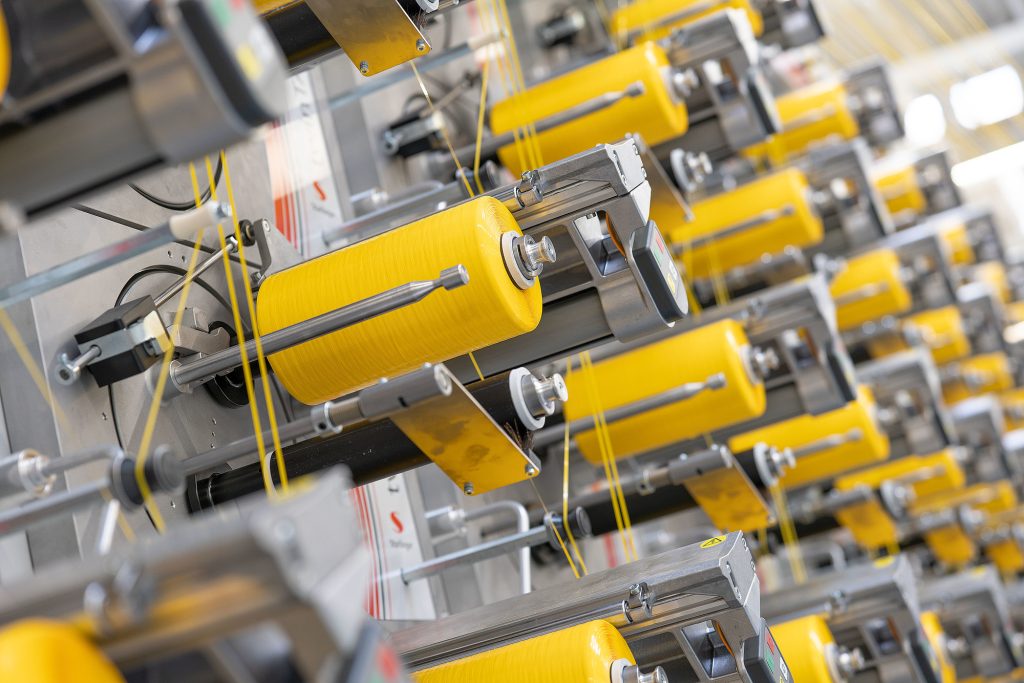
VidePak was founded in 2008 and is led by a core team with 30+ years in woven packaging. Today, 568 colleagues operate top‑tier assets from Germany’s W&H and Austria’s Starlinger: more than 100 circular looms, 16 extrusion lines, and 30+ lamination/printing machines. We run exclusively on virgin raw materials, support multi‑color printing and region‑specific labeling, and ship worldwide—to the United States, Europe, Brazil, South America, Southeast Asia, Japan, South Korea, Central Asia, the MENA Region, East Africa, and South Africa—driving annual sales around USD 80 million. Scale matters when emergencies don’t wait. That platform translates into reliable schedules, graphic repeatability, and specification discipline for Industrial Woven Packaging Bags: A Critical Solution for Flood Control and Emergency Management.
Technical Parameters of Industrial Woven Packaging Bags: A Critical Solution for Flood Control and Emergency Management
The bands below reflect realistic, orderable specs frequently listed by reputable converters and sourcing platforms for flood‑control and emergency‑response builds. Treat them as a tuned starting point; we finalize after line trials and sample fills.
| Parameter | Typical Options / Ranges for Industrial Woven Packaging Bags: A Critical Solution for Flood Control and Emergency Management |
|---|---|
| Net Capacity (small woven sacks) | 10–50 kg (common: 20 kg, 25 kg, 40 kg, 50 kg) |
| Typical Bag Size (small sacks) | 50 × 32 × 12 cm (20 kg); 55 × 35 × 12 cm (25 kg); 60 × 40 × 14 cm (40 kg); 70 × 47 × 15 cm (50 kg) |
| Net Capacity (FIBC) | 500 kg, 1,000 kg, 1,500 kg, 2,000 kg SWL |
| Safety Factor (FIBC) | 5:1 single‑trip utility; 6:1 multi‑trip when specified |
| Fabric GSM (small sacks) | ~70–110 g/m² (heavier toward 50 kg or abrasive fills) |
| Fabric Weight (FIBC, uncoated) | ~160–220 g/m² (higher for riverine/tall stacks) |
| Weave Density | ~10×10 to 12×12 PPI (up to ~14×14 heavy‑duty) |
| Tape Denier | ~700D–1200D (fine‑yarn options ~500–800D for tighter weaves) |
| Coating | PP extrusion ~18–30 g/m² (anti‑sifter, heat‑sealable) |
| Optional Lamination | BOPP 15–25 μm (gloss/matte; reverse‑printed) |
| Valve / Mouth (small sacks) | Open‑mouth sewn or heat‑sealed block bottom; valve sleeve on powder programs |
| Top Options (FIBC) | Open top; duffle top; spout top Ø 35–50 cm |
| Bottom Options (FIBC) | Flat bottom; discharge spout Ø 30–50 cm (star‑closure optional) |
| Loop Styles (FIBC) | 2‑loop, 4‑loop, cross‑corner, tunnel sleeves; webbing 30–50 mm |
| Liner Options | LDPE/LLDPE 60–100 μm (insert or glued) as required |
| Anti‑Slip | Target static COF ≥0.4 via patterned lacquer bands |
| Venting | Micro‑perforations on non‑seal panels if de‑aeration required |
| Drop Test (guide) | Typical pass ~1.2 m, multi‑cycle (specify by SKU and lane) |
| UV Stabilization | Optional packages ~150–200 kLy for outdoor staging |
Note: Indicative, not idealized—these values mirror what agencies and civil‑works buyers actually order, unload, and trust.
Engineering Notes for Industrial Woven Packaging Bags: A Critical Solution for Flood Control and Emergency Management
Seam strategy decides fate. Chain‑stitch with filler cord blocks sift paths on open‑mouth sacks; heat‑welded block bottoms eliminate needle holes for dry powders. In FIBCs, stitch density, seam allowances, and reinforcement tapes keep stress where it belongs—in the loop path, not at the fabric edge.
Base prep beats bravado. A crooked first course halves wall strength. Level the base, stagger joints, interleave layers where vibration is high, and tune wrap containment to the route. Riverbanks forgive no one.
Artwork & data must survive storms. Reserve matte quiet zones around barcodes/QR; use high‑contrast palettes for icons; align register to cut length so lot codes don’t lose their heads at the guillotine.
Venting is negotiated, not assumed. Fluffy media want more exits; dense pellets prefer fewer. Place micro‑perfs on back or side panels, never across seal paths, then validate on your actual line with your actual material.
Cross‑disciplinary echo: geotechnics tells you how mass behaves, human‑factors tells you how crews behave, polymer science tells you how the bag behaves. All three must agree before the river does.
How to Specify Industrial Woven Packaging Bags: A Critical Solution for Flood Control and Emergency Management
Begin with four blunt questions. What is the heaviest wet case you’ll face? Which handling method dominates—forklift, telehandler, crane, or hand placement? How long will units sit outside, and under what UV profile? Which labels and data (warnings, barcodes, 2D codes) must remain legible after dust, rain, and rough handling? With those answers, set SWL/SF, pick weave + GSM, choose coating and any liner, and lock loop/closure geometry. If you stack high or must cube out containers, add Q‑bag baffles on FIBCs. If dust control trumps speed, tighten the weave and lighten the perf pattern. Then run a short line trial—temperatures, dwell, pressure, unwind brakes—to ensure the spec that shines on day one performs the same on day ninety.
—
*VidePak builds and ships Industrial Woven Packaging Bags: A Critical Solution for Flood Control and Emergency Management with the repeatability emergencies demand and the flexibility real sites require. Brief us on bulk density, target pack weight, handling method, and climate; we’ll return a tuned specification and a trial plan you can tak
- What Are Industrial Woven Packaging Bags: A Critical Solution for Flood Control and Emergency Management?
- Key Features of Industrial Woven Packaging Bags: A Critical Solution for Flood Control and Emergency Management
- Production Process of Industrial Woven Packaging Bags: A Critical Solution for Flood Control and Emergency Management
- Applications of Industrial Woven Packaging Bags: A Critical Solution for Flood Control and Emergency Management
- VidePak at a Glance — Capacity Behind Industrial Woven Packaging Bags: A Critical Solution for Flood Control and Emergency Management
- Technical Parameters of Industrial Woven Packaging Bags: A Critical Solution for Flood Control and Emergency Management
- Engineering Notes for Industrial Woven Packaging Bags: A Critical Solution for Flood Control and Emergency Management
- How to Specify Industrial Woven Packaging Bags: A Critical Solution for Flood Control and Emergency Management
Introduction
Flood control and emergency management require robust, efficient, and adaptable solutions to mitigate damage caused by natural disasters. Industrial woven packaging bags play a pivotal role in providing reliable containment, storage, and transportation solutions for emergency operations. At VidePak, we specialize in producing woven bags that exceed international quality standards, combining durability with sustainability. This report explores their key applications, technical advancements, and VidePak’s commitment to excellence in the global market.
Key Applications in Flood Control and Emergency Management
Containment and Barrier Creation
Woven bags are indispensable in flood control, particularly for sandbagging. They are strong, lightweight, and easy to deploy, making them ideal for creating barriers to redirect or block water flow.
- Strength Analysis: Polypropylene fibers used in woven bags are known for their high tensile strength, ensuring they can hold significant weight without tearing.
- Example: In 2020, widespread flooding in Southeast Asia saw the deployment of millions of woven sandbags to reinforce levees and protect infrastructure, highlighting their effectiveness in emergency scenarios.
Protecting and Storing Supplies
Emergency operations demand reliable storage for essential supplies like food, medicine, and equipment. Woven bags, equipped with moisture-proof liners, safeguard contents from water damage and contamination.
- Reasoning: The inclusion of polyethylene (PE) liners adds a waterproof layer, preventing contents from being compromised in wet or humid conditions.
- Case Study: Disaster relief agencies have adopted woven bags for storing grain and medical kits, ensuring materials remain usable even in prolonged adverse conditions.
VidePak’s Quality Control and Technological Advantages
Meeting International Standards
VidePak adheres to strict quality benchmarks set by global standards organizations, including ISO, ASTM, EN, REACH, and JIS.
- ISO Compliance: Ensures that manufacturing processes are efficient, consistent, and environmentally friendly.
- ASTM Testing: Validates the mechanical properties of woven bags, such as tensile strength and puncture resistance.
- REACH Regulation: Guarantees that all materials are non-toxic and sustainable, aligning with European safety and environmental directives.
By integrating these standards into production, VidePak delivers products that are both reliable and environmentally responsible.
Advanced Technology in Manufacturing
VidePak utilizes state-of-the-art equipment from Austrian company Starlinger and Germany’s W&H, ensuring precision and consistency.
- Extrusion Temperature Control: Starlinger machines regulate extrusion temperatures to produce uniform polypropylene filaments. This uniformity results in greater tensile strength and flexibility, which are crucial for handling heavy loads.
- Optimized Draw Ratios: W&H equipment adjusts the stretching process, achieving the ideal balance between strength and elasticity. Improper stretching can lead to brittle fibers, reducing the overall quality of the bags.
- Impact: These technologies enhance load-bearing capacity and resistance to wear and tear, ensuring that each bag meets the rigorous demands of flood control and emergency operations.
Performance Metrics
| Metric | Why It Matters | How It’s Achieved |
|---|---|---|
| Tensile Strength | Prevents breakage under heavy loads. | Controlled extrusion and optimized draw ratios. |
| Water Resistance | Protects contents from moisture damage. | PE liners and laminated coatings. |
| UV Protection | Ensures durability in prolonged outdoor exposure. | Specialized UV-stabilized coatings. |
| Load Capacity | Handles weights of up to 1,000 kg. | Adherence to ASTM standards and precision weaving. |
Industry Trends and VidePak’s Approach
Focus on Sustainability
As global awareness of environmental issues grows, disaster management solutions increasingly emphasize sustainability. VidePak leads the industry by incorporating recyclable materials and minimizing production waste.
- Example: Polypropylene, the primary material in woven bags, is fully recyclable, reducing environmental impact while maintaining high performance.
Customization for Diverse Needs
Modern emergency management requires tailored solutions. VidePak offers a range of customizations, including anti-slip coatings and UV stabilization, to meet specific operational requirements.
- Practical Advantage: Customization ensures that bags perform optimally in diverse conditions, from flood zones to high-sunlight environments.
Common Questions
1. How are VidePak’s woven bags superior to conventional alternatives?
Our bags are manufactured using advanced machinery and comply with strict international standards, ensuring higher strength, water resistance, and durability.
2. Can the bags handle prolonged outdoor exposure?
Yes, UV-stabilized coatings protect the bags from sunlight degradation, making them ideal for outdoor use.
3. Are VidePak’s woven bags eco-friendly?
Absolutely. We use recyclable polypropylene and adhere to REACH regulations, prioritizing sustainability.
4. How does VidePak ensure consistent quality?
Our use of Starlinger and W&H equipment, combined with compliance with ISO and ASTM standards, ensures every bag meets stringent quality benchmarks.
Future Outlook
VidePak is committed to innovation and sustainability in the woven packaging industry.
- Smart Integration: We are exploring the use of RFID-enabled bags for enhanced inventory tracking during disaster response operations.
- Global Expansion: VidePak continues to align with international regulations, such as REACH and JIS, to expand its footprint in Europe, Asia, and beyond.
- Sustainability Leadership: Through investments in eco-friendly technologies, VidePak is setting a new standard for responsible manufacturing in the woven packaging sector.
Conclusion
Industrial woven packaging bags are indispensable in flood control and emergency management, combining durability, adaptability, and environmental responsibility. VidePak stands out by leveraging advanced technology and stringent quality control measures to produce products that meet the highest global standards.
For more insights into our sustainable solutions, explore how we align with ESG standards and our innovations in flood management solutions.