
Open-mouth block-bottom multiwall paper bags are heavy-duty industrial sacks made from multiple plies of kraft paper (typically 2–5 layers) with a square, pasted base. They reliably carry 10–50 kg of powders or granulates (e.g. cement, flour, pet food) on high-speed filling lines. Modern production lines precisely combine printing, lamination, tubing and folding stages so that each bag meets tight specifications and passes rigorous quality tests. Key materials include high-strength kraft paper (70–120 gsm per ply), optional polyethylene liners (20–40 μm film) for moisture barrier, and specialized adhesives (water-based for lamination and hot-melt for seams). Typical equipment – paper unwinders, flexographic printers, laminators, tubers, bottom-forming machines, stitchers or heat sealers, cutters and inspection systems – work together to automate each step. Critical process parameters (paper tension, glue coat weight, registration, drying) are tightly controlled, and quality is verified by tests such as tensile/burst strength (ISO 2758, TAPPI T494), seam strength (ASTM D751) and drop- or leak-tests.
A coherent production sequence (see diagram below) begins with printing and laminating kraft plies, proceeds through tube forming and side-seam gluing, then folds gussets and applies adhesives to create a square bottom, and ends with cutting and final inspection. Common defects – such as seam splits, delamination or printing misregistration – are traced to material issues or mis-set parameters and remedied by adjusting tension, adhesive dosage or process alignment. This report details each stage: raw materials and specs, machinery, step-by-step manufacture, quality control points, troubleshooting tips, and a recommended production line layout with key machine types, to guide procurement and production professionals in sourcing and operating block-bottom open-mouth multiwall bag lines.
Bag Overview
Multiwall paper bags are industrial packaging sacks built from multiple layers (plies) of kraft paper, often with internal liners or coatings. An open-mouth bag has a square block bottom and an open top – unlike valve bags (which have a small filling valve) or fully sewn bags. Open-mouth block-bottom bags stand upright on their own due to the pasted square base, making them easy to fill by gravity or automated spouts. They combine the breathability and print quality of paper with optional barrier layers for moisture or odor protection. Typical uses include cement, mortar, chemicals, flour, sugar, pet food, seeds and specialty powders. These sacks carry roughly 10–50 kg per bag and are designed for fast filling (e.g. pneumatic or auger fillers) and palletised transport.
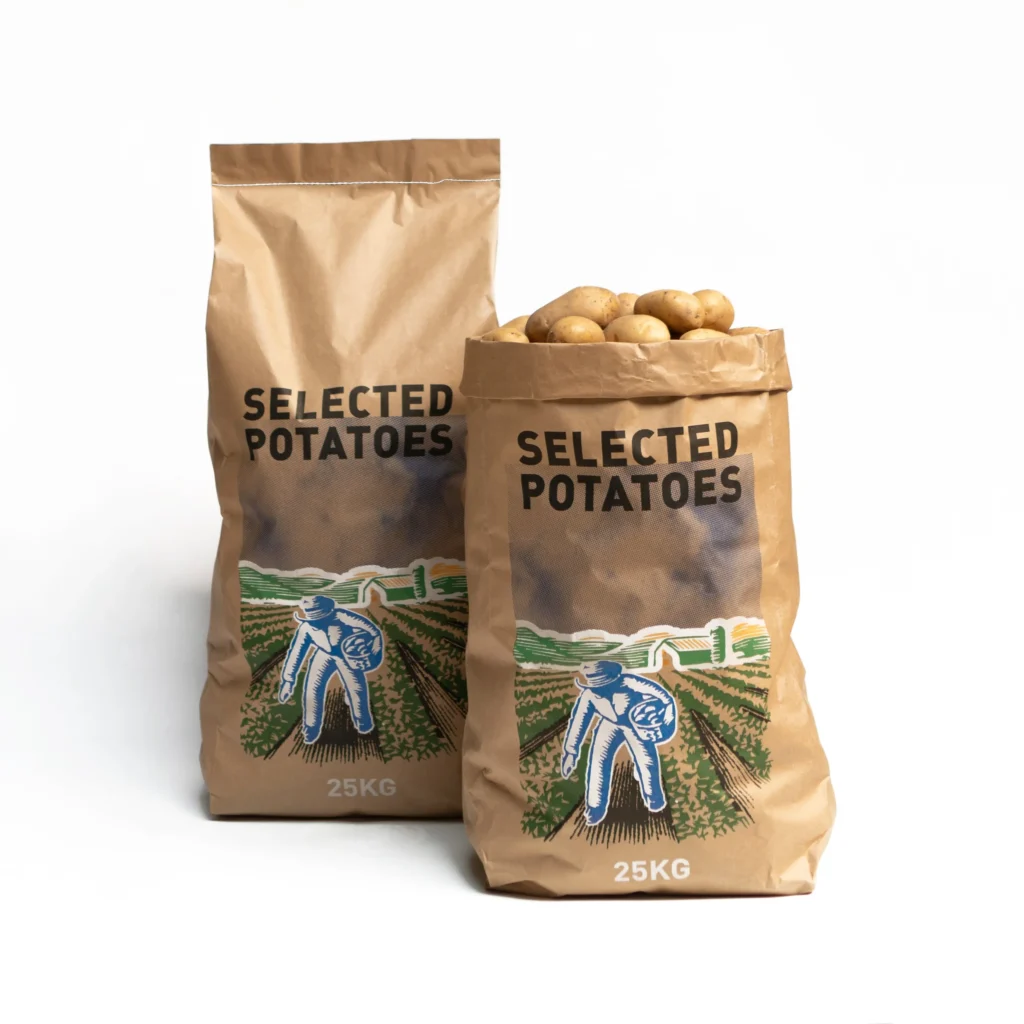
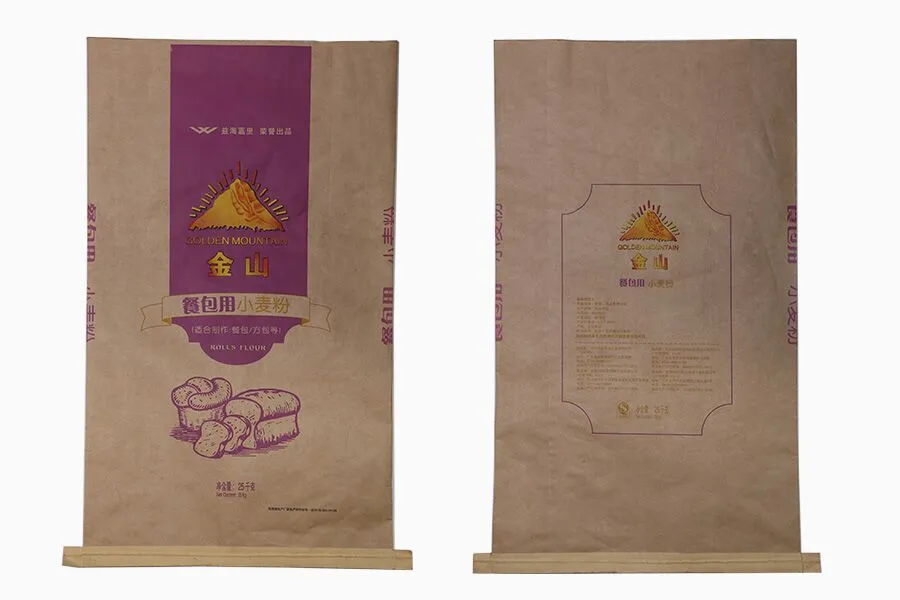
Bag construction can be customized: 2–5 plies of kraft (often brown or bleached white) in alternating fiber orientation give high tear and burst strength. A thin PE or foil liner (20–40 μm) may be extruded inside to block moisture for hygroscopic products. The outside ply is printed (up to 8 colors) with brand/label. The bottom is folded into a square and glued (“pasted”) or stitched closed, while the top remains open for filling. Water-based surface coatings or anti-slip varnishes are often applied to improve pallet stability.
Table 1. Typical materials and their specifications (and common failures if out of spec):
| Component / Material | Typical Specification | Common Defects (Cause) |
|---|---|---|
| Kraft Paper (inner plies) | 70–120 gsm unbleached kraft, 2–5 plies | Low GSM → weak tears/burst; uneven basis weight → weak spots; very high GSM → excessive stiffness, cost |
| Kraft Paper (outer ply) | 70–90 gsm (bleached/unbleached) | Poor surface → print voids; fiber orientation errors → directional weakness |
| PE Liner (optional) | LDPE film 20–40 μm (food-grade if required) | Too thin → pinholes, leaks; poor adhesion to paper → delamination (layers peel apart) |
| Side-Seam Adhesive | Water-based PVA or EVA adhesive | Insufficient glue → seam splits; incorrect viscosity → uneven coverage |
| Bottom Closure Adhesive | Hot-melt (EVA/polyamide) or cold glue | Inadequate heat → glue fails; cold glue (C2) slow cure → jams; too much glue → squeeze-out |
| Printing Ink / Coating | Water-based flexographic inks, matte/gloss varnish | Smearing (wet ink), misregistration (print out of alignment); varnish flaking if undercured |
| Reinforcement Patch (if used) | 100–200 gsm kraft patch on bottom | Missing or offset patch → bottom bulges or opens |
| Closure Tape (optional) | Paper tape with pressure-sensitive adhesive | Low tack tape → unsealed top; adhesive bleed → sticking |
Raw Materials
Kraft paper is the backbone of multiwall bags. Typically 2–5 plies of heavy-duty kraft are used: inner plies often around 70–120 gsm, outer plies 70–90 gsm. Alternating fiber orientation (cross-laminated) in successive plies maximizes tear and burst strength. The specific grade depends on product weight and abuse level: a 25 kg bag might use mid-range GSM (e.g. 80 gsm per ply), while a 50 kg bag might need heavier 100+ gsm paper. Papers may be bleached (white) or natural brown.
Barrier layers are added when moisture or oxygen sensitivity is an issue. The most common liner is a co-extruded LDPE film (20–40 μm thick) fused inside the bag. Food-grade and anti-static versions are used for food/chemical applications. For high-barrier needs, films with EVOH or aluminum foil lamination are possible. In some cases a thin water-resistant (hydrophobic) coating is applied to the outside.
Multiwall Paper Valve Bags Manufacturing
Professional manufacturing process for multiwall paper valve bags with block bottom structure and industrial-grade craftsmanship.
Check More →Applications of Pasted Open Mouth Paper Bags
Wide industrial applications of open mouth block bottom multiwall paper bags with reliable pasting and sealing technology.
Check More →Multiwall Paper Bags: Types & Structure
Complete guide to multiwall paper bag types, including open mouth block bottom designs, material differences and structural features.
Check More →What Are Multi-Ply Kraft Paper Bags
Detailed introduction to multi-ply kraft paper bags featuring open mouth design and block bottom for stable stacking and packaging.
Check More →Adhesives: Water-based adhesives (polyvinyl acetate or EVA emulsions) are used to laminate the paper plies together and glue the side seam. These must wet the kraft fibers well without weakening them. Hot-melt adhesives (e.g. EVA or polyamide hot-melt) are used at the bottom and/or for pinch-seal closures, which are activated by heat. Cold-seal adhesives (pressure-sensitive) are also an option for easy-open features. All adhesives should be chosen for strong bond under stress and, if needed, food-safety compliance.
Other materials include sewing thread or filament (for sewn seams), paper tape (for easy-open/sift-proof tapes on open-mouth bags), and optional coatings. Many lines apply an anti-slip varnish or light coating on the outside ply to raise the coefficient of friction, improving pallet stability. Moisture-resistant sizing (e.g. clay coating) may be added to certain plies for print quality or grease resistance.
Typical raw material specifications are given in Table 1 above. Even small deviations (e.g. ±5–10% in paper basis weight or glue weight) can cause quality issues like low burst strength or delamination. For example, VidePak reports that only 0.3 mm variation in kraft thickness or substandard liner film led to catastrophic delamination in transit.
Key Equipment
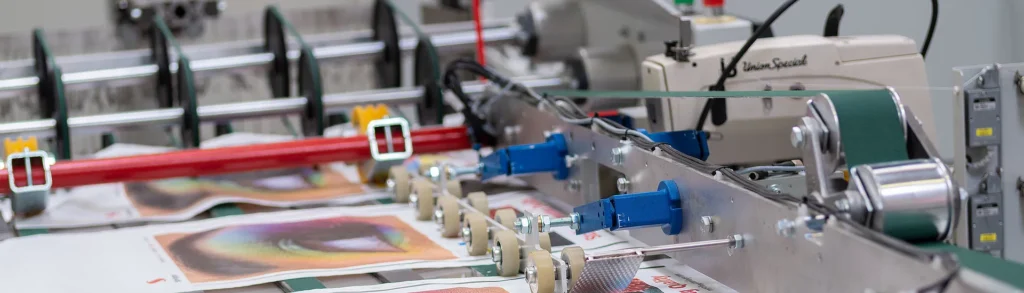
A modern multiwall bag line is an integrated set of machines, usually running 24/7. Important equipment includes:
- Paper Unwind/Feed – Holds large reels of kraft paper and PE film. Tension control (servo or dancer systems) is critical to prevent web breaks.
- Printing Press – Flexographic (web-fed) printing units, often in-line 4–8 colors. Pre-treat (corona) and quick-dry ovens ensure sharp water-based ink prints. Some lines use offset pre-printing.
- Laminator / Extrusion Coater – Applies polyethylene or BOPP laminates between plies. A glue coater or extruder plus laminating nip rollers bond film to paper. Precision calibration (adhesive coat weight, temperature) ensures consistent lamination.
- Tuber (Tube Former/Gusseter) – Forms the flat multi-layer tube with gussets. High-speed tubers (e.g. by W&H, Macchi, Indiana) feed multiple plies over a rigid former, creasing for gussets, and apply adhesive to the lap seam. Typical tuber speeds are 150–250 ft/min (≈45–75 m/min) for multi-layer material. Adjustable guides and creasing wheels control gusset size (often ~100–120 mm gusset for a 25 kg bag).
- Gusset Folder – Often integrated in the tuber, folds the side gussets. Proper folding is needed so the bag will have a square base.
- Bottom Former (Block-Bottomer) – Transforms the flat tube into a square bottom. The tube is cut or fed to the bottoming station, where the end flaps are folded and glue is applied. Block-bottomers use multiple gluing heads or spray guns and pressing shoes to shape and seal the bottom. Speeds at this stage are lower (typically 30–50 bags/min in automatic bottomers). Some machines incorporate an automatic bottom patch feeder.
- Stitcher or Pinch Closer – For added seal, many lines include a high-speed bag closer. This can be a double-needle industrial sewing machine (for sew-top bags) or a hot-air pinch sealer that activates a pre-applied hot-melt strip along the top gusset. Pinch closers can operate at similar speeds to bottomers.
- Cutting/Stacking Table – A flying knife cuts the continuous line of bags to length and places finished bags into stacks. Electronic measuring (photoeyes, encoders) ensures accurate bag length with low tolerance.
- Inspection Station – Inline cameras or manual stations check print registration, bag length, and seam glue. Automated testers (e.g. on a random sample) perform tensile, burst, or leak tests. Non-conforming bags are rejected.
- Palletizer/Packaging – Finished bags are boxed or stretch-wrapped and palletized.
Additional auxiliary machines may include punch units (for hand-opening notches), transfer tables, and conveyors. Many installations (e.g. for large plants) use twin lanes to increase throughput.
Production Process
The production of open-mouth block-bottom multiwall bags follows these main steps:
Material Preparation and Unwinding
Large rolls of kraft paper (and film liner, if used) are loaded onto the unwind stands. Automatic web guides align the webs. Tension control is critical: too much tension causes tearing, too little leads to wrinkles. Sensors and pneumatic brakes maintain steady tension. It is important to check basis weight, moisture content (TAPPI T402), and web width before processing. Starch sizing or coatings should be inspected for consistency.
Printing and Coating
The outer ply is printed first. Flexographic presses (often in a single-pass line) apply logos, instructions, and branding in up to 8 colors. Water-based or soy-based inks are common. Proper plate mounting and ink transfer (anilox rollers) ensure even coverage. Dryers (IR or hot-air) quickly set the ink. Registration marks allow precise tracking so gussets and cuts align with graphics. During printing, optional coatings may be applied: varnishes for scuff resistance or anti-slip primers on the outer face. Accurate drying temperatures and speeds prevent image distortion or paper burns. Regular print sampling ensures ΔE color variation is within tolerance.
Lamination (Adhesive Coating)
If the bag design requires internal liners or additional layers, lamination follows. A glue coater or extruder station applies an adhesive layer (often an EVA or acrylic dispersion) to the paper web. Then a polymer film (e.g. LDPE or BOPP) is nip-laminated onto the paper. For multi-ply construction, the machine may laminate outer-to-inner plies sequentially. The glued laminate passes through a dryer or cool nip to set. Equipment must control glue coat weight (typically 2–5 g/m²) and dwell time. If no film is used, multiple paper plies may simply be wetted with adhesive and pressed together in a laminator (a type of “paper coater”). Bond quality is verified by internal bond tests – any delamination means web tension or glue mix adjustments.
Tube Formation
The laminated web enters the tuber (tube former). Here the multi-ply web is folded along the center to form a continuous tube with overlapping side seam. Simultaneously, flat gussets (folded edges) are created if a gusseted (satchel) profile is needed. The overlapped seam receives a bead of adhesive (often water-based PVA/EVA) and is pressed by a folding jaw or belt to form a lap seam. The machine’s precision (sensors, perforating wheels) ensures the gussets are equal and square, critical for a true block bottom later. The continuous bag tube now resembles a flat, gusseted envelope. Tuber speeds are quite high (150–250 ft/min), so adhesive application and seam bonding must be instantaneous.
Any in-line additions typically occur during tubing: pre-perforations (for valve bags), notches (easy-open), or anti-slip (coatings on the outer ply) can be applied by dedicated rollers or wheels. A common defect at this stage is mis-registration of print to folds – regular camera checks and mark-sensing correct guide rollers if needed.
Gusseting and Creasing
If not done in the tuber, separate creaser/gusset machines fold precise side gussets. These creasers press the paper plies to set a sharp fold (usually about 90–120 mm deep on each side for a typical bag). Correct creasing avoids “bag wings” or misfolds that would prevent the bag from standing square. Equipment settings are adjusted for the selected bag width and depth. Mis-set creasers can cause one side to be larger, resulting in skewed stack formation.
Bottom Formation (Block Bottom Pasting)
For block-bottom bags, the bottom flaps are folded and glued into a square base. The tube is stopped at the block-bottomer (a set of folding jaws or vacuum flaps). Adhesive (typically a hot-melt or cold glue) is applied to designated flaps and the two longer gusseted sides are folded over the shorter ends, then pressed flat. This creates a multi-ply bottom block.
Modern bottomers use multiple spray guns and heated platens to achieve consistent glue coverage and fast setting. For example, machines like the Wity ZB50B use four hot-melt spray guns to ensure even glue application. A pressing roller or plate then compresses the glued layers, removing air pockets and ensuring a flat bottom. The result is a closed square bottom (often with a patch for reinforcement if required). Typical bottoming speeds are lower – around 30–50 bags/min – since glue setting and fold accuracy are vital.
Adhesives for the bottom: Hot-melt EVA or polyamide are most common for their instant bond. Cold (water-based) glues may be used on slower lines; these require longer drying conveyors. Incorrect glue temperature or flow (e.g. too low heat) can cause the bottom layers not to stick, leading to sift issues or bulging. Immediate checks (manual pull tests) on first bags ensure the bottom holds multi-hundred kg loads.
Top Finishing
Open-mouth bags are typically left open at the factory (filler will close them). However, some lines may apply finishing touches: cutting a flush top or attaching easy-open tapes. In pinch-seal open-mouth variants, a strip of hot-melt adhesive is pre-coated near the open end; after filling, heated jaws pinch the top to seal. In sewn open-mouth sacks (not done in-line), bags are just trimmed flush; the end user sews or tapes them closed. Automatic cutters trim the tube to the correct length once the bottom is formed.
Cutting, Inspection, Packing
The continuous tube with bottoms is fed into a flying-knife cutter synchronized to cut each bag at the set length (e.g. 480–600 mm for a 25 kg bag). Trim scrap is minimal (cut tolerances are typically ±1–3 mm). Finished bags drop onto conveyors or stacking tables.
Quality inspection is integrated throughout: inline cameras and sensors verify bag weight, length, bottom alignment and print quality. A common test is a random-bag tensile or burst test (ISO 2758 burst, TAPPI T494 tensile) to ensure strength meets spec. Seam integrity may be checked by a gauge (ASTM D751 seam-burst) to ensure >500 kPa resistance. Moisture content (TAPPI T402) and GSM (TAPPI T410) are sampled from incoming paper. Filled sample bags can undergo drop tests (ASTM D5276) to verify the bag survives handling. Any defect (e.g. a split seam or delaminated patch) triggers an immediate production stop and troubleshooting.
Finally, bags are stacked or palletized for shipping. Care is taken to maintain square stacks (no corner crush due to over-wrapping) and apply stretch-film with proper tension. Anti-slip mats or corner boards may be used on pallets as needed.
Quality Control and Testing
Quality control is continuous and rigorous. Raw materials arrive with certificates (GSM tolerance ±2%, liner melt index, glue specs). In-line QC points include:
- Paper Tests: Basis weight (TAPPI T410) and thickness (TAPPI T411) are checked on each roll. Tensile strength (TAPPI T494) of each ply is measured; a weak ply may cause bag failure. Moisture content is kept ~7–8% to prevent dimension changes.
- Adhesive Calibration: Coat weight (g/m²) for lamination is verified; too little will delaminate, too much causes stiff joints. Hot-melt temperature and spray patterns are checked by sensors.
- Dimensional Control: Registration marks ensure print stays aligned to folds. Bag length and gusset depth tolerances (~±2 mm) are monitored by encoders.
- Seal Strength: Every batch is tested for seam strength (ASTM D751) and bottom burst. For example, VidePak targets >500 kPa seam strength. A simple leak or vacuum test with water can detect pinholes in linings.
- Functional Tests: Filled sacks undergo drop tests (typically 1–1.5 m drops on corners, per ASTM D5276) and compression tests (ASTM D642) to simulate handling. Bag abrasion tests (ASTM D1894 COF) check outer varnish grip. If a bag fails (tears, seam opens, material punctures), production is halted.
Standards like ISO 2758 (burst strength), ISO 5626 (fold endurance), and various ASTM/TAPPI methods are used to certify performance. Incoming batches of liners are tested for Melt Flow Index (ASTM D1238) and permeability to ensure barrier function.
Common Defects and Troubleshooting
Even a small process glitch can cause defects. Common issues include:
- Paper Breaks/Tears – Often due to incorrect tension or low-quality paper. Remedy: Adjust web tension, check for particulates, replace out-of-spec paper.
- Print Misregistration or Smearing – Caused by plate wobble or drying issues. Remedy: Re-calibrate press plates, slow web speed, increase dryer power.
- Lamination Wrinkles/Delamination – Can occur if glue mix is wrong or tension is uneven. Remedy: Check adhesive viscosity, re-sync roll speeds, adjust nip pressure.
- Side Seam Leaks – If the lap seam isn’t fully glued, bag may split. Often from under-applied glue or fast line speed. Remedy: Increase adhesive flow or slow tuber speed.
- Weak Bottom Seal – Bottoms may separate if glue cooled too quickly or bag moved before set. Remedy: Lower line speed at bottomer, use fast-curing adhesive, verify temperature.
- Misfolded Gussets – Results in skewed stacks or incomplete square bottom. Remedy: Inspect creaser wheels, realign folding plates.
- Incomplete Top Seal (in pinch-closed bags) – Usually due to inadequate heater temperature or insufficient dwell. Remedy: Adjust hot-air temperature/time, ensure adhesive activation.
- Moisture Sensitivity – If bags absorb moisture, paper weakens. Remedy: Use higher-grade water-resistant paper or thicker PE liner, add desiccant in packing.
- Edge Crush/Lean (during palletizing) – Caused by too much stretch-wrap tension or poor stacking pattern. Remedy: Reduce wrap force, add corner boards, alternate bag orientation.
For example, VidePak noted that in one case, slight thickness variation in paper plus a weak PE liner caused layer separation under humid transit. Such failures highlight the need for precise material specs and adhesive selection. Regular “gap” scans for dust leaks at valves and consistent pull testing of seams (every few hours) help catch problems early.
A troubleshooting guide can be valuable: symptoms (e.g. torn corners, valve dusting, glue stringing) are systematically traced to causes (warp tension, insufficient hot-melt, etc.) and countermeasures as shown in industry resources. Continuous operator training and maintenance (blade sharpening, sensor cleaning) are also essential to minimize defects.
Production Line Layout and Process Flow
The ideal production line is arranged sequentially: raw material unwinds feed into printing, then laminating, tube forming, bottom forming and finishing, with inspection interspersed. A simplified flow diagram is shown below:
In practice, major units include the Print-Laminate Station, the Tube Former (Tuber), and the Bottomer/Closer Station. For example, a W&H / Sencar integrated line might have a 6- to 9-meter central block including print and lamination, followed by a 24M twin-tube bottom line with gluing, sewing and cutting units.
Below is a typical machine sequence:
- Unwind/Printing/Lamination Section – Paper rolls are unwound and guided through flexo print units and corona treatment. Then the same or a dedicated section glues on any liners or coats plies together. Conveyor dryers or hot-air systems cure inks and adhesives.
- Tube Former (Tuber) – The web enters the tuber where multi-ply creasing and side-seam gluing occur. Automated feeders may insert any valve pieces or reinforcements here.
- Gusset Folder – Integrated or standalone, this folds the side gussets precisely.
- Block Bottomer – The flat tube sections are cut to length (if not done later) and sent to a pasting machine. Flaps are folded and glued into a square bottom. In some plants, an auxiliary bundle feeder collects bundles of gusseted tubes to feed one by one to the bottomer at ~40 bags/min.
- Closer – If used, a pinch or heat sealer closes the top gusset (pinch-bottom bag style) or an in-line sewing machine stitches open-mouth bags (less common on continuous lines).
- Trimmer/Stacker – An ultrasonic or mechanical knife cuts the bags, and a pick-and-place or simple gravity stacker assembles them into bundles.
- Final Inspection Station – Manual or automated QC checks batch samples for weight, dimensions, print quality and seam integrity.
- Packing/Palletizing – Bundles are packed into cartons or strapped, then palletized. Stretch-wrap is applied under controlled tension to avoid crushing corners.
This layout maximizes efficiency: continuous flow (e.g. 100+ m/min web speed) yields thousands of bags per hour. Bottlenecks are often printing (color changes) or bottom setting (glue cure), so manufacturers may parallelize those stations.
References
Key data and guidelines in this report are drawn from industry standards (ISO 2758, ASTM D751, TAPPI series) and the technical literature of multiwall bag manufacturers. For example, PSSMA and VidePak provide detailed process descriptions and test criteria, while equipment suppliers (Wity, Ailu) give machine specs. These ensure the information is both current and practical for procurement and production engineering in the packaging industry.