
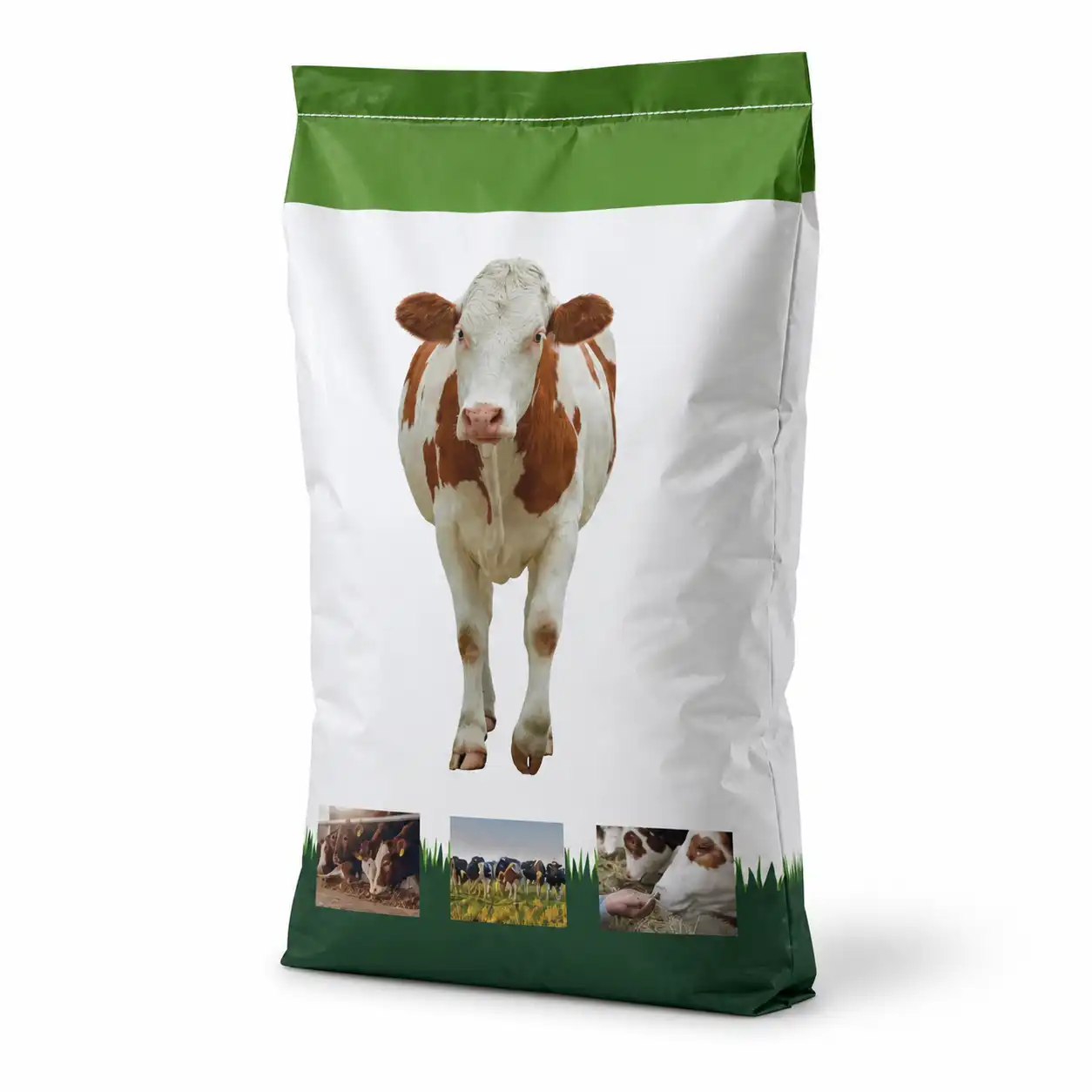
This report is built on: first define multi-ply paper bags, then explain layer structure, then compare Open Mouth and Pasted Valve formats, then compare Pinch Bottom and Block Bottom constructions, and finally show why supplier capability matters. The source page defines multi-ply paper bags as heavy-duty kraft sacks made from two or more paper plies for dry bulk goods such as flour, sugar, cement, feed, and chemicals; related VIDEPAK pages further frame these bags as industrial sacks available in brown, white, valve, and open-top forms.
What Multi-ply Paper Bags Really Are
Multi-ply paper bags, also called Multi-ply kraft paper sacks or multiwall paper bags, are industrial packaging solutions made by bonding or laminating multiple kraft-paper layers into one working structure. The usual job is demanding: contain powders or granules, survive filling pressure, resist puncture and burst, hold shape in storage, and remain stackable through transport. Industry references consistently place these bags in dry bulk sectors such as cement and building materials, food ingredients, feed, seeds, chemicals, fertilizer, minerals, and similar 5–50 kg applications.
The key idea is simple, but the design logic is deeper. In a true Multi-ply bag, each layer does a job and the jobs do not have to be identical. The outer ply is commonly selected for printability, scuff resistance, and handling appearance; the inner plies support burst strength, dimensional stability, filtration of dust migration, or barrier integration; optional PE-coated papers or liners improve moisture performance and closure behavior. In that sense, a Multi-ply sack is closer to a controlled packaging system than to a commodity paper sleeve.
The original article’s emphasis on practical structure is important because buyers often compare bags by price per piece or total GSM alone. That is not enough. International paper and packaging standards show why: paper performance is evaluated through conditioning, tensile behavior, drop resistance, and broader distribution testing, not by grammage only. ASTM D685 covers conditioning of paper and paper products; ASTM D828 covers tensile properties; ASTM D5276 covers free-fall drop testing of loaded containers; ASTM D4169 frames performance testing of shipping units; and ISO/EN paper-sack standards also standardize vocabulary and sack drop testing. In short, real quality lives in performance, not only in paper weight.
Ply Structures, Layer Jobs, and Outer Paper Options
Why ply count matters
Across the industry, the common commercial range for multi-ply paper bags starts at 2-ply, rises through 3-ply and 4-ply, and can move to 5-ply, 6-ply, or even 7-ply in more demanding designs. One VIDEPAK article summarizes the mainstream range as 2-ply to 6-ply or more, and another notes that higher-ply constructions are reserved for heavy or hazardous loads. That is precisely why ply count should be chosen by handling risk, product sensitivity, and packing-line needs, not by habit.
The outer ply and what customers can choose
The outer ply is usually the customer’s first visual and practical decision, because it affects brand appearance, print clarity, rub resistance, and surface feel. For multi-ply paper bags, the common outer-ply choices are Brown Unbleached Kraft Paper and White Bleached Kraft Paper. Industry paper suppliers describe brown and white sack-kraft grades as standard options for both valve and open-mouth industrial bags; brown semi-extensible grades are positioned for high strength and convertibility, while white bleached grades are positioned for high resistance handling, high-speed filling, and strong print performance. VIDEPAK’s own kraft-bag page likewise lists brown, white, and multiwall kraft-paper offerings.
Brown Unbleached Kraft Paper is the pragmatic choice when the bag must look strong because it is strong. Its natural color supports an industrial image, and the grade is commonly associated with demanding handling conditions in building materials, food and feed, and other applications requiring good tensile energy absorption and reliable runnability. It often becomes the preferred outer ply when performance, cost efficiency, and a natural kraft look matter more than bright-white shelf graphics.
White Bleached Kraft Paper, by contrast, is chosen when presentation matters more, or at least matters equally. White sack-kraft grades are widely described as suitable for high resistance handling while also delivering better print contrast and sharper graphics. That makes them valuable for food ingredients, branded agricultural products, premium pet-food applications, and export programs where clean visual identity, coding, and readability are part of the specification. It is not strength versus beauty; it is strength with brighter communication.
Detailed ply-by-ply explanation
2-Ply constructions are the lightest common entry point for true Multi-ply industrial packaging. One VIDEPAK article places them roughly in the 150–200 GSM band and associates them with lighter-duty products such as pet food, bakery mixes, and lighter agricultural additives; related industry guidance also shows that modern high-porosity sack paper can allow 2-ply designs to replace some older 3-ply structures where the product, filling method, and handling route permit it. In real use, a 2-ply bag is selected when the product is not extremely abrasive, storage is controlled, and the buyer wants material efficiency without stepping down to a flimsy bag. The first ply often works as the printable, handling-facing layer, while the second ply adds burst support and shape retention.
3-Ply constructions are the workhorse middle ground. VIDEPAK’s technical summary places them in the medium-duty band and links them to fertilizers, chemical resin pellets, sugar, flour, and similar products, while other industrial sources list 3-pl y constructions as common for PBOM and other multiwall formats. In practical terms, the third ply gives the buyer breathing room: more puncture resistance, better shelf body, better stacking confidence, and improved tolerance for faster lines or rougher movement. A common logic is outer ply for print and abrasion, middle ply for load-sharing, inner ply for product-side integrity. When customers say, “We need a safe, balanced bag,” they are often describing a good 3-ply bag.
4-Ply with PE liner is the point where a standard strength sack becomes a protection-focused sack. A VIDEPAK page specifically notes that four-ply Multi-ply bags can introduce a functional inner PE or PE-coated layer for moisture-sensitive export products; other product and technical pages on the site promote 3–5 ply paper bags with PE liners for improved moisture resistance. Industry descriptions of PBOM and lined multiwall bags also repeatedly mention PE-coated inner plies, free films, or inner liners as solutions for food, chemicals, pet food, spices, salt, and other products that require cleaner sealing and more moisture control. In plain language, the PE layer changes the bag from “strong paper” into “strong paper plus barrier.”
5 to 7-Ply constructions are not the everyday standard, and that is exactly their value: they exist for situations that are not everyday. VIDEPAK’s broader technical guidance describes 5–6+ ply bags as extreme-duty solutions for ultra-heavy loads, abrasion-prone products, or hazardous-goods packaging, and elsewhere refers to “two-ply featherweights to seven-ply fortresses.” The added plies can be used to raise mechanical safety margin, to separate barrier functions across more layers, or to improve damage resistance in harsh logistics chains. These structures are more costly and heavier, so they should not be chosen casually; but when the filling environment is severe, the route is long, the storage climate is unstable, or the product is dense and sharp-edged, a 5–7 ply architecture can be the correct engineering answer.
The deeper lesson is this: each extra ply should have a reason. One extra layer may reduce burst risk. Another may create a better seal interface. Another may protect a liner. Another may improve print or surface friction. Good specification is not “more, more, more.” It is “enough, and in the right place.”
For quick reading, the table below turns the structure logic into a buyer-facing summary. The ranges are drawn from VIDEPAK’s technical descriptions and aligned with mainstream industrial sack practice.
| Ply Structure | Main Job of Each Ply | Typical Product Fit | Best Outer Ply Choice |
|---|---|---|---|
| 2-Ply | Outer ply for print and handling face; inner ply for basic burst support and shape | Light powders, bakery mixes, lighter feed or agri additives | Brown Unbleached for cost and toughness; White Bleached for cleaner graphics |
| 3-Ply | Outer ply for branding; middle ply for load sharing; inner ply for product-side integrity | Sugar, flour, fertilizer, resin pellets, general industrial powders | Both outer-ply options are common |
| 4-Ply with PE liner | Three paper plies for strength plus PE or PE-coated inner layer for moisture and sift control | Moisture-sensitive foods, export powders, spices, salts, chemicals, premium feed | White Bleached when premium print matters; Brown Unbleached when industrial image matters |
| 5 to 7-Ply | Multiple paper plies raise safety margin and may separate barrier, reinforcement, and sealing functions | Extreme-duty, abrasive, long-route, or special-risk applications | Usually chosen by full performance target, not by appearance alone |
Top Styles and Bottom Styles in Multi-ply Paper Bags
Top style begins with the filling method
At the top of the bag, the first strategic split is between Open Mouth and Pasted Valve. Industry manufacturing guides define these as the two basic families of industrial paper sacks: an Open Mouth bag is filled through an open top and then closed after filling, while a valve bag is already closed on both ends and is filled through a valve opening. This seems like a small difference. It is not. It changes machine choice, filling speed, closure method, dust behavior, line automation, and sometimes even customer perception of cleanliness.
Open Mouth
Open Mouth bags are preferred when the product or the production process benefits from a full-width opening. They are widely used for flour, feed, chemicals, and other pourable products, and they can be closed by sewing, gluing, tape, or heat-activated pinch systems depending on the design. Industry references describe Open Mouth bags as reliable, hygienic, and adaptable; they also include self-opening satchel and other variants that stand well during filling. An Open Mouth bag gives the filler more flexibility, and that is often the deciding factor in mixed-product or semi-automatic operations.
Pasted Valve
Pasted Valve bags are built for speed. A standard description across industrial bag sources is that they are filled through a valve on a spout packer, and once filled, the internal pressure of the product helps the valve self-close. High-speed filling, quick de-aeration, good palletization, and efficient use on automated lines are the main advantages. This is why Pasted Valve designs remain central in cement, dry mortar, minerals, chemicals, and other high-volume powder applications. When speed is king and line automation matters, Pasted Valve is often the first candidate.
Pinch Bottom
At the bottom end, Pinch Bottom refers to a construction that supports clean sealing and a stable, attractive filled shape. Industrial references describe Pinch Bottom bags as especially strong in sealing performance, often using pre-applied adhesive and hot-melt closure systems; they are widely used where sift-proof and cleaner closure are important, including food, pharmaceuticals, pet food, and sensitive chemical products. In other words, a Pinch Bottom design wins when dust control, tamper awareness, and neat final presentation matter.
Block Bottom
Block Bottom bags, including self-opening satchel and related square-bottom constructions, are chosen for standing ability and pallet order. Industry descriptions repeatedly note that block-bottom or satchel-bottom bags can stand unsupported, hold a more box-like shape, and create more stable pallet loads. One packaging reference specifically highlights Open Mouth / Block Bottom sacks as well suited to automatic high-speed packing lines and stable square stacking. Said more plainly: Block Bottom is about geometry, and geometry becomes efficiency. A square bag stores better, stacks better, and often photographs better too.
VIDEPAK’s own kraft-paper product pages support all of these choices: the company offers valve and open-top formats; identifies Pinch Bottom Open Mouth as a major type; and notes that block-bottom constructions are especially popular for sewn open mouth and valve bags. In that sense, the range is not theoretical. It is already built into the VIDEPAK product architecture.
The next table translates the structural language into buyer language. It answers one question customers ask again and again: “Which top and bottom should I choose for my product?” The short answer is this: choose the top by filling method, choose the bottom by sealing need and stacking need. The longer answer is in the matrix below.
| Configuration | How It Works | Best For | Buyer Benefit |
|---|---|---|---|
| Open Mouth + sewing/gluing | Filled through full top opening; closed after filling | Flexible operations, multiple SKUs, semi-auto or mixed filling | Easy handling and broad compatibility |
| Pasted Valve | Filled through valve on spout packer; valve self-closes or is further sealed | Cement, dry mix, minerals, automated powder lines | Fast filling, efficient de-aeration, strong pallet shape |
| Pinch Bottom | Heat-activated or adhesive-assisted sealed end | Fine powders, food ingredients, pet food, cleaner fill systems | Dust-tight, tidy appearance, stronger tamper resistance |
| Block Bottom | Square or satchel-formed base supports standing and stacking | Retail-friendly packs, stable pallets, auto lines | Better geometry, better stacking, better shelf posture |
How Customers Should Choose the Right Bag
Choose by product behavior first
The single best way to choose multi-ply paper bags is to begin with the product, not the bag. Does the product flow freely or bridge in the hopper? Is it dusty or relatively clean? Is it moisture-sensitive, odor-sensitive, or grease-sensitive? Is it dense and abrasive, or light and forgiving? These questions directly affect whether a customer should choose a lighter or heavier ply structure, whether a PE liner is needed, and whether Open Mouth or Pasted Valve will perform better. The sources agree on the underlying logic even when they describe different bag families: bag style must match product characteristics and filling method.
Then choose by line speed and closure expectation
If the customer runs a high-speed, automated filling line, a Pasted Valve solution is usually the most natural starting point because it is designed for rapid spout-packer filling and good air release. If the customer uses a wider-top filling method, wants maximum filling flexibility, or prefers visible post-fill closure control, Open Mouth is often the better route. This is not a contest between “old” and “new.” It is simply the difference between a bag optimized for automation and a bag optimized for access.
Then choose by sealing risk and pallet risk
When the real fear is leakage, sifting, or contamination, Pinch Bottom deserves serious attention because the format is repeatedly described as one of the strongest sealing options in the multiwall family. When the real fear is unstable stacking, leaning pallets, or weak shelf posture, Block Bottom usually adds value because its square base improves standing stability and load geometry. One protects the seal; the other protects the shape. Many customers need both, and that is why satchel or square-bottom variants exist between the classic categories.
Finally choose by route, climate, and brand objective
A bag that performs well in a dry domestic route may fail quietly in export humidity. A bag that is strong enough for warehouse use may still underperform if the product must present a clean white premium face at retail. This is where outer-ply choice and liner choice come together. Use Brown Unbleached Kraft Paper when the priority is rugged industrial credibility and efficient specification; use White Bleached Kraft Paper when stronger graphic contrast, premium appearance, or cleaner coding is required; add PE barrier elements when humidity or sift control becomes a real risk, not merely a theoretical one. Good packaging is not overdesign. Good packaging is the right design arriving on time.
The decision guide below condenses that logic into one view. It is intentionally simple, because most bag mistakes come from simple confusion at the start of the project.
| If the customer needs… | Recommended direction | Why |
|---|---|---|
| Lower material use for lighter dry goods | 2-Ply or efficient 3-Ply | Good cost balance when handling risk is moderate |
| All-round industrial reliability | 3-Ply | The most balanced mainstream structure |
| Moisture defense or cleaner product contact side | 4-Ply with PE liner | Adds barrier and sealing confidence |
| Very harsh handling or special-risk loads | 5 to 7-Ply | Higher safety margin, more function separation |
| High-speed automated powder filling | Pasted Valve | Fast filling and efficient de-aeration |
| Flexible filling and post-fill closure choice | Open Mouth | Broader filling and closure flexibility |
| Best sealing and less leakage | Pinch Bottom | Cleaner, tighter closure logic |
| Better standing and squarer stacking | Block Bottom | Improved base geometry and pallet stability |
Why Choose Us
VIDEPAK’s manufacturing base in industrial bags
As a supplier story, VIDEPAK has a clear industrial positioning. The company’s site presents VIDEPAK as a leading industrial bags manufacturer with a product range covering PP woven bags, valve bags, BOPP woven bags, kraft paper sacks, PE sacks, and FIBC bags. In its kraft-paper section and related product pages, VIDEPAK also highlights 17 years of production experience in its bag business, alongside a strong emphasis on customization of size, print, bottom pattern, and structural options. Experience matters here because the difference between a bag that fills smoothly and a bag that causes downtime is usually not marketing language; it is accumulated converting know-how.
German W&H equipment and scalable output
VIDEPAK states that its kraft-paper bag production uses W&H production lines from Germany and that annual kraft-paper bag output exceeds 300 million pieces. That claim matters because W&H is a long-established machinery group with dedicated paper-sack production systems and a long history in industrial paper-sack technology. In packaging, scale alone is not enough and machinery alone is not enough; but scale plus capable sack-converting equipment is exactly what allows repeatability, stable lead time, and consistent structure from trial order to mass order.
Standardized production logic with ASTM and EN references
On quality positioning, VIDEPAK’s kraft-paper page states ISO 9001-compliant manufacturing for its kraft-paper bag operations. For customers serving international markets, that quality foundation can be translated into recognized test language through mainstream paper and packaging standards such as ASTM and EN/ISO methods. In practical project work, that means customers can discuss paper conditioning, tensile behavior, and distribution performance through known references like ASTM D685, ASTM D828, ASTM D5276, ASTM D4169, EN ISO 6590-1, and ISO/EN 7965-1 for paper-sack drop testing. This is important because a bag spec should be measurable, repeatable, and explainable across plants and countries.
Experience: product pages highlight 17 years of bag-production experience.
Equipment: kraft-paper bags are produced on German W&H lines.
Capacity: over 300 million kraft-paper bags annually.
Approach: ISO 9001 production framework, with project communication naturally aligned to mainstream ASTM and EN/ISO testing language for paper sacks and shipping performance.
What that means for the customer
For the customer, the value proposition becomes very concrete. A supplier with real converting depth can help decide whether 2-Ply is enough or whether 3-Ply is safer; whether a 4-Ply with PE liner is worth the added barrier; whether Pasted Valve is the right machine fit; whether Open Mouth is better for a flexible operation; whether Pinch Bottom is necessary for cleanliness; and whether Block Bottom will improve stack stability enough to justify the design. That is why the best suppliers do more than quote. They translate product behavior into bag structure, and bag structure into shipment confidence.
Conclusion
Multi-ply paper bags remain one of the most practical packaging formats in industrial distribution because they do many things at once and do them well: they carry weight, release air, accept print, support sealing systems, and adapt across food, feed, agriculture, chemicals, and building materials. The right design path is clear. Start with product behavior. Match the ply count to risk. Choose Brown Unbleached Kraft Paper or White Bleached Kraft Paper by brand and performance goal. Choose Open Mouth or Pasted Valve by filling logic. Choose Pinch Bottom or Block Bottom by sealing need and stacking need. Then validate the result through standardized testing language.
For VIDEPAK, that story is especially compelling because the company combines broad industrial-bag positioning, a long production track record, German W&H equipment, large annual capacity, and a manufacturing language that can align with mainstream international standards. In markets where customers want bags that fill fast, seal clean, stack square, and travel far, that combination is not a detail. It is the product.
Multi-ply (multiwall) kraft paper bags are heavy-duty paper sacks composed of two or more layers of high-strength kraft paper laminated or stitched together. These bags combine tensile strength, puncture resistance, and stackability to package bulk dry goods such as flour, sugar, cement, animal feed, and chemicals. Their layered construction — often involving virgin and/or recycled kraft paper plies plus optional plastic liners or coatings — allows designers to optimize strength, moisture barrier, and cost. Multi-ply paper bags support bespoke sizing, closures (valve or open mouth), and high-resolution graphics, making them a versatile packaging solution. Throughout this report, we examine their structure, materials, specifications (GSM, ply count, burst/tensile strength, dimensions, gusset, valves, handles, etc.), applications, and market considerations. Detailed tables compare common bag configurations and list typical procurement search terms by intent, while a flowchart illustrates the manufacturing process. We also discuss how engineers and purchasing teams specify these bags by performance data (burst strength, TEA, tear, moisture resistance) rather than weight (GSM) alone.
Paper Valve Woven Bags
High-quality multi-ply kraft paper valve bags with sturdy structure and reliable packaging performance.
Check More →Pasted Open Mouth Paper Bags
Multi-ply kraft paper open mouth bags suitable for bulk packaging of food, chemicals and construction materials.
Check More →Kraft Paper Laminated Woven Bags
Durable multi-ply kraft paper laminated bags with enhanced strength and moisture barrier properties.
Check More →Multiwall Paper Bags Guide
Complete guide to multi-ply kraft paper bags including types, structure, materials and industrial applications.
Check More →- 2-Ply (Lightweight): Total GSM ~150–200. Often used for pet food, bakery mixes, or light agricultural additives. Economical but with lower burst strength.
- 3-Ply (Medium Duty): Total GSM ~250–350. Widely used in fertilizers, chemical resin pellets, sugar, flour, and similar products. Balances strength and cost.
- 4-Ply (Heavy Duty): Total GSM ~400–500. Standard for 50 kg cement bags, large feed bags, or chemical packs. High tear resistance and stackability.
- 5–6+ Ply (Extreme Duty): Total GSM >550. Designed for ultra-heavy loads, abrasion-prone materials, or UN-certified hazardous packaging. Often includes special coatings or tests.
The layered design is not simply “more paper.” For example, adding a ply might introduce a white bleached inner layer (food-safe) or an extra coated film. One 4-ply cement bag might use an inner virgin kraft ply plus a 0.02 mm LDPE film, whereas another uses two test-liner plies for economy. Table 1 (below) summarizes typical specifications by ply count:
| Ply Count | Total GSM Range | Approx. Thickness | Typical Closure | Common Use Examples |
|---|---|---|---|---|
| 2-Ply | 150–250 GSM | ~250–400 μm | Sewn Open Top | Bakery mixes, pet food, flour (5–10 kg) |
| 3-Ply | 250–350 GSM | ~400–600 μm | Sewn or Pasted | Fertilizers, sugar, feed, flour (20–30 kg) |
| 4-Ply | 350–500 GSM | ~600–850 μm | Pasted Valve | Cement (50 kg), chemicals, food ingredients |
| 5-Ply | 450–600+ GSM | ~850–1100 μm | Pasted Valve | Hazardous materials (UN 4G/Y), mining, heavy aggregates |
Explore more about Multi-ply Kraft Paper Bags
References
- TÜV Rheinland Report No. TR‑KPB‑23‑5112, 2023.
- SGS Test Report CN‑2311‑KPB3W, 2023.
- GaBi Life‑Cycle Analysis, Paper Sack Industry, 2024.
- Intertek JP‑AM‑2024‑117 Antimicrobial Assay, 2024.
- Mocon WVTR Report MOC‑24‑0156, 2024.
- CEPI Recycling Statistics, 2024.
- XYZ Slitter Accuracy Whitepaper, 2025.