
What is Sewn Open Mouth PP Bags?
Sewn Open Mouth PP Bags describe a family of polypropylene woven sacks with an open top that is folded and stitched after filling—a deceptively simple closure masking a highly engineered structure. In different regions these are also known as SOM PP woven sacks, sewn‑top PP bags, or open‑mouth woven polypropylene sacks. At their core, Sewn Open Mouth PP Bags are fabricated from oriented PP tapes woven into a fabric that offers an exceptional strength‑to‑weight ratio, then converted into bag formats that run efficiently on sewing lines and survive long, complex supply chains. The format can be left uncoated for breathability or extrusion‑coated/laminated to moderate moisture ingress and improve print fidelity. To the operator they fill fast; to the quality manager they sew clean; to the logistics team they stack safely; to the brand owner they present clearly.
Placing the format in its technical context helps explain why it is so widely specified. Woven polypropylene has a high specific strength due to the alignment of polymer chains during tape drawing, while the cross‑weave architecture shares load across warp and weft. This makes Sewn Open Mouth PP Bags resilient under puncture and pallet compression, particularly important when handling angular minerals or dense pellets. From a branding perspective, corona‑treated surfaces accept high‑linecount flexo, and laminated paper or BOPP faces can be added when photographic reproduction is essential. Horizontally comparing adjacent packaging families clarifies the niche: multi‑wall paper is attractive yet humidity‑sensitive; mono‑film PE FFS tubes are fast yet prone to scuff and creep; FIBCs move tons but overwhelm 10–50 kg SKUs. Sewn Open Mouth PP Bags bridge these worlds—cost‑effective like paper, robust like woven sacks, brand‑ready like laminated films. Viewed vertically through the product lifecycle, the logic is sequential: resin selection → tape drawing → weaving → coating/lamination → printing → conversion → QA. Each stage constrains and enables the next, which is why stable process windows translate so directly into consistent bag behavior in the field. For buyers cross‑shopping woven solutions, Sewn Open Mouth PP Bags are often the practical middle path: not the lightest, not the heaviest, but the most balanced when real distribution hazards are tallied.
What is the features of Sewn Open Mouth PP Bags?
Feature lists can read like inventories; more useful is the rationale behind them—what problems they solve on the line, on the pallet, and on the shelf. Sewn Open Mouth PP Bags combine ease of handling with engineered performance in ways that feel simple to the user and sophisticated to the engineer.
Woven Fabric PP Bags Features
Key features of SOM PP woven bags including durability, customization, and wide industrial applications.
Check More →Heat-Sealed PP Woven Bags
High-quality PP woven bags with secure sealing options, ideal for custom SOM bag production.
Check More →PE Open Mouth Bags
Versatile open mouth packaging solutions comparable to SOM PP bags for various packaging needs.
Check More →Heavy-Duty Woven Bags Guide
Complete guide to heavy-duty SOM PP woven bags with customizable designs for heavy load applications.
Check More →Strong woven substrate. Typical tape denier runs in the 700D–1000D range, with fabric weights around 60–120 g/m². The cross‑weave distributes stress paths, limiting creep in tall stacks and curbing tear propagation from corner impacts. This is not an incidental benefit but an emergent property of orthogonal tape architecture: the load does not hunt for a single failure line; it encounters a net.
Open‑mouth convenience. The open top invites fast, flexible filling—manual for small operations, semi‑auto where cost and speed meet, or fully automated on integrated lines. Closures can be single‑ or double‑fold hems, then stitched with single‑ or double‑needle chain or lock stitches using PP/HDPE threads. The choice is not cosmetic. It tunes seam efficiency, needle hole density, and re‑openability. A bulk pack that must never leak chooses differently from a retail pack that customers may need to open neatly.
Surface choices for function and expression. Uncoated fabrics breathe—an advantage for products that off‑gas or exit the filler hot. Coated or laminated faces control dust, slow moisture pickup, and improve ink holdout. Anti‑slip emboss helps COF sit in a target window (≈ 0.5–0.7) so pallets stand tall without shrink wraps doing all the work. Matte finishes whisper; gloss finishes shout. Both earn a place.
Printing & branding discipline. CI flexo up to six colors on coated fabrics yields saturated solids and clean fine type; with reverse‑printed BOPP lamination, photographic imagery becomes realistic while inks are protected behind film. Registration stability depends on tension control through printing and conversion—get that wrong and images drift; get it right and batches stay visually coherent across lots and months.
Protection packages tailored to exposure. UV‑stabilized tapes and inks support outdoor storage; micro‑perforation patterns vent trapped air without dusting aisles; PE or PP liners (loose or tubed) address hygroscopic powders or aroma retention. Each option is a response to a real hazard: sunlight, gas release, moisture, odor migration. A bag is not only a container—it is a controlled environment in miniature.
Horizontally, set Sewn Open Mouth PP Bags against alternatives and the pattern emerges: paper‑only sacks excel in recyclability and print, yet fibers swell in humidity; mono‑films boast seal integrity but can stretch on tall pallets; woven sacks deliver backbone but may look too industrial. The sewn open‑mouth format reconciles these trade‑offs with a printable façade, a woven spine, and closure simplicity that survives abuse. Vertically, align features with lifecycle gates: receiving (mesh/GSM QC), printing (ink holdout and register), conversion (stitch integrity), filling (de‑aeration and mouth geometry), warehousing (COF and creep), retail (scuff resistance and colorfastness). Each gate tests a different promise—and this format clears them in sequence. Is it a rugged sack or a retail storyteller? Both. That paradox is the product.
What is the production process of Sewn Open Mouth PP Bags?
Manufacturing Sewn Open Mouth PP Bags is not a single operation but a choreography, where process control is identity.
1) Tape extrusion & drawing. Virgin PP resin is extruded to a film, slit into narrow tapes, then hot‑drawn to align polymer chains. Draw ratio governs tensile strength and elongation; stabilizing heaters and chill rolls ensure orientation is uniform along the web. The goal is not merely strength, but predictable strength—batch after batch.
2) Weaving on circular looms. Dozens of shuttles interlace warp and weft tapes into meshes typically 7×7 to 14×14; fabric GSM is matched to the expected drop performance and product bulk density. Weave regularity limits weak points, keeping tear paths from finding easy exits. Loom condition and shuttle tension are not trivia—they are determinants of field failures.
3) Optional coating/lamination. A PE/PP melt of roughly 18–30 g/m² can be extruded onto the fabric to contain fine dust and improve print for coated versions. Premium faces emerge when kraft paper or BOPP film is laminated—BOPP especially enabling reverse‑printed graphics shielded from scuffing. Adhesion windows matter; lamination too cold starves bonds, too hot embrittles paper or distorts fabric.
4) Printing. Corona‑treated surfaces raise surface energy, letting inks wet and anchor. High‑linecount CI flexo or gravure puts down solids, halftones, and microtext. Color management across runs keeps ΔE in check, so the same orange reads as the same orange—across months, across pallets.
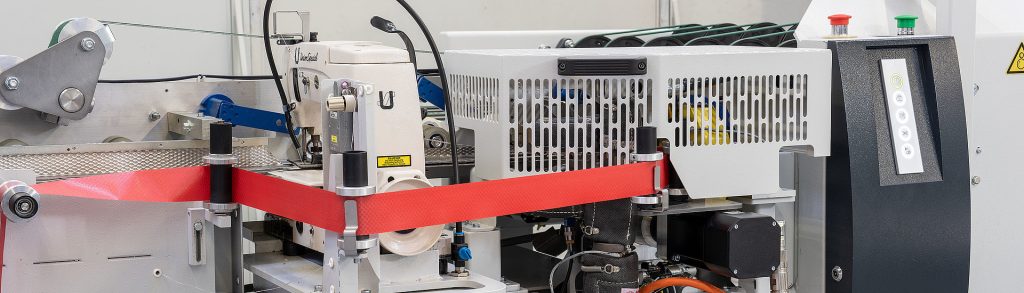
5) Conversion. Fabric becomes bag: lengths are cut; gussets formed for volume efficiency; bottoms sewn or hemmed to spec; edges trimmed; the open mouth folded for clean entry into the customer’s sewing head. Needle choice, stitch density, and fold geometry all tune seam strengths and leak paths. Engineering resides in the millimeters.
6) Quality assurance. Routine checks validate that the intent survives the process: tensile/tear metrics for the fabric; seam strengths for the closure; COF for stack behavior; dimensional tolerances for filler compatibility; color ΔE for brand integrity; drop tests on filled samples for realism. QA is not ornament—it is the contract between specification and shipment.
VidePak integrates this choreography with top‑tier equipment from W&H (Germany) and Starlinger (Austria). With 16 extrusion lines, 100+ circular looms, and 30+ lamination/printing machines, we document process windows and monitor them tightly so adhesion, registration, and stitch integrity sit inside narrow bands. Horizontal learning from adjacent processes—film plants’ SPC on draw ratios, label printers’ color workflows—feeds back into woven conversion; vertical discipline from resin receipt to final inspection preserves lot‑to‑lot continuity. When volumes spike, predictability is an asset; when tolerances narrow, it is a requirement. In that environment, Sewn Open Mouth PP Bags are not manufactured—they are orchestrated.
What is the application of Sewn Open Mouth PP Bags?
Applications are where design meets forklift. In agriculture and staples, rice, grains, flour, sugar, and seeds benefit from breathable or micro‑perforated formats that minimize caking and hotspots after hot fills; anti‑slip textures reinforce tall, secure pallets. In animal nutrition, kibble and premixes demand puncture resistance; optional liners manage aroma and oil migration; bright graphics command attention in busy aisles. For minerals and chemicals—fertilizers, salt, calcium carbonate, titanium dioxide—coated or laminated faces curb dusting and slow moisture ingress during long marine legs. In construction materials, sand and specialty blends push seams hard; UV‑stabilized packages survive yard exposure and repeated handling. Charcoal and wood pellets punish fabrics with abrasion; reinforced bottoms and robust stitches keep failures rare while printed faces carry regulatory and brand marks clearly.
Look laterally across formats and the chessboard appears. A mono‑paper sack may be under‑built for a humid port; PE heavy‑duty FFS may run fast yet undersell brand storytelling; an FIBC may be overkill for 25 kg. In these middle squares, Sewn Open Mouth PP Bags are nimble: compatible with manual fill today and automated sewing heads tomorrow; capable of a natural woven look or a premium laminated face. Where lines evolve toward valve filling for dust control and speed, the journey is not a leap but a step; adjacent technologies inform the choice, and specifications migrate with minimal disruption—many buyers explore upgrades alongside Sewn Open Mouth PP Bags when throughput or cleanliness becomes the critical KPI.
Global routes impose varied stressors. Central Asia brings temperature swings; the MENA coast brings humidity and salt air; high altitudes bring UV intensity; North American warehouses bring mechanized handling and tall stacks. Horizontal thinking maps these environmental loads to design levers—mesh density for tear resistance, lamination weight for humidity, UV packages for sunlight—so Sewn Open Mouth PP Bags are not generic products but tailored responses. Vertical thinking aligns decisions with lifecycle stages: specify (paper vs. film faces, coated vs. uncoated), validate (pilot packs and line trials), qualify (drop and COF testing under worst‑case conditions), and monitor (pallet‑level QA in real shipments). The result is not one bag for every job, but one format flexed intelligently across many jobs.
Typical Parameters for Sewn Open Mouth PP Bags
The ranges below reflect widely available, real‑world specifications. VidePak also provides application‑specific customization.
| Parameter | Typical Range / Option | Notes (for Sewn Open Mouth PP Bags) |
|---|---|---|
| Fabric mesh | 7×7 – 14×14 | Higher mesh counts improve print base and tear resistance |
| Fabric weight | 60 – 120 g/m² | Selected by fill weight and drop performance targets |
| Tape denier | 700D – 1000D | Correlates with tensile strength and puncture resistance |
| Bag width | 350 – 600 mm | Wider formats available for 40–50 kg classes |
| Bag length | 500 – 1100 mm | Tuned to product bulk density and filler setup |
| Closure (mouth) | Single/double fold; chain or lock stitch | PP/HDPE sewing thread; EZ‑open tape optional |
| Finish | Uncoated / Extrusion‑coated / Laminated (BOPP or paper) | Choose breathability vs. moisture/print performance |
| Printing | Flexo up to 6 colors (coated); gravure with film lamination | Registration stabilized by tension control |
| COF (stacking) | ≈ 0.5 – 0.7 | Anti‑slip emboss/spray available to target value |
| UV stability | 200 – 400 hours (typical packages) | Package tailored to outdoor exposure profile |
| Liner options | Loose/tubular PE liner 20–40 µm | For powders, aroma, or moisture control |
| Load capacity | 10 – 50 kg | Depends on fabric GSM, seam type, and safety factor |
Why VidePak
VidePak treats Sewn Open Mouth PP Bags not as commodities but as engineered systems. Established in 2008, led by a core team with 30+ years of woven‑packaging experience, and powered by 568 employees, we operate at a scale where consistency is routine and customization is everyday work. Equipment from W&H and Starlinger anchors our process capability; 16 extrusion lines, 100+ circular looms, and 30+ lamination/printing machines give us the breadth to meet demand spikes without quality drift. We use 100% new raw materials to stabilize mechanical properties and color outcomes and support brands shipping to the US, Europe, Brazil & South America, Southeast Asia, Japan, Korea, Central Asia, the MENA region, and East & South Africa. Annual sales of USD 80 million are the echo of pallets that reached their destinations intact.
Whether your priority is pallet stability, print impact, cleaner filling, or fewer seam failures, specify Sewn Open Mouth PP Bags with VidePak. Share your current dimensions, fill weights, and handling conditions—we will engineer a like‑for‑like match or a measured performance upgrade and furnish the data to prove it.
Introduction
Sewn Open Mouth (SOM) polypropylene (PP) bags have become a cornerstone in various industries due to their durability, versatility, and extensive customization options. These bags are particularly favored for packaging dry, flowable products such as grains, seeds, fertilizers, and animal feed. Their adaptability in design and functionality makes them suitable for a wide range of applications.
Customization Options
- Lamination Variants:
- Matte Lamination: Provides a non-reflective, elegant finish, enhancing print readability and offering a premium appearance.
- Pearlescent Lamination: Imparts a subtle, lustrous sheen, elevating the bag’s visual appeal and making it stand out on retail shelves.
- Transparent Lamination: Allows visibility of the contents, beneficial for products where the appearance is a selling point, while still providing protection.
- Fine Weave Technology:
- Utilizing fine denier tapes with widths ranging from 1.8 mm to 2.3 mm results in a smoother and more refined bag surface. This fine weave enhances print quality and provides a superior tactile experience.
- Printing Capabilities:
- High-Resolution Printing: Supports intricate designs and detailed graphics, enabling brands to effectively convey their message.
- Color Systems: Compatible with various color standards, including CMYK, Pantone, and RAL, ensuring accurate color reproduction to meet brand specifications.
- Full-Bleed Printing: Allows edge-to-edge printing, maximizing the visual impact and providing a seamless design across the entire bag surface.
- Size and Capacity:
- Customizable dimensions to accommodate different product volumes, typically ranging from small 5 kg bags to larger 50 kg sacks, catering to various market requirements.
Applications Across Industries
- Agriculture: Ideal for packaging seeds, grains, and fertilizers, protecting contents from moisture and contaminants.
- Food Products: Suitable for items like flour, sugar, and dry pet food, maintaining freshness and preventing contamination.
- Chemicals: Used for transporting industrial chemicals, offering resistance to various substances and ensuring safe handling.
- Construction Materials: Employed for packaging products such as cement, sand, and aggregates, providing strength and durability during transport.
Technical Specifications
| Parameter | Specification |
|---|---|
| Material | Woven Polypropylene (PP) |
| Fabric Weight | 60 to 120 grams per square meter (GSM) |
| Lamination Thickness | 12 to 18 microns |
| Printing Options | Flexographic or Rotogravure, up to 8 colors |
| UV Protection | Optional, up to 6 months |
| Closure Method | Sewn bottom and top after filling |
| Load Capacity | 5 kg to 50 kg, customizable as per requirements |
| Safety Factor | Typically 5:1, ensuring durability and reliability |
Advantages of SOM PP Bags
- Durability: High tensile strength and resistance to punctures and tears, ensuring product safety during handling and transportation.
- Customization: Extensive options in size, lamination, and printing to meet specific client needs and enhance brand visibility.
- Cost-Effectiveness: Economical production costs compared to alternative packaging materials, offering value without compromising quality.
- Environmental Considerations: Recyclable and reusable, aligning with increasing environmental sustainability efforts and consumer preferences.
Industry Trends and Innovations
The global polypropylene woven bags and sacks market is experiencing significant growth, driven by increasing demand in sectors such as agriculture, construction, and food processing. According to recent market analyses, the market is projected to expand at a compound annual growth rate (CAGR) of approximately 4.1% between 2024 and 2034, reaching a valuation of US$6.67 billion by the end of 2034.
Innovations in sustainable materials, such as the development of biodegradable and recycled PP woven bags, are gaining traction as industries and consumers prioritize eco-friendly solutions.
Frequently Asked Questions (FAQs)
- What products are best suited for SOM PP bags?
- SOM PP bags are ideal for dry, flowable products including grains, seeds, fertilizers, animal feed, and various food products.
- Can these bags be customized for branding purposes?
- Yes, they offer extensive printing options, including high-resolution and full-bleed printing, compatible with color systems like CMYK and Pantone, allowing for effective brand representation.
- Are SOM PP bags environmentally friendly?
- They are recyclable and reusable, contributing to environmental sustainability efforts. Additionally, advancements in biodegradable PP materials are being explored to further enhance eco-friendliness.
- What are the closure options for these bags?
- The bags are typically sewn closed after filling, ensuring secure containment of the contents.
- Do these bags offer protection against UV radiation?
- UV protection can be incorporated upon request, providing resistance for up to six months, which is beneficial for products stored in outdoor environments.
Conclusion
Sewn Open Mouth (SOM) PP bags present a versatile and customizable packaging solution, adept at meeting the diverse needs of various industries. Their adaptability in design, coupled with robust construction, makes them a preferred choice for businesses aiming to combine functionality with effective branding. As the market continues to evolve, innovations in materials and sustainability practices are set to further enhance the appeal and application of these bags.