
What Are Polypropylene Bags? (Also Called PP Woven Sacks and Raffia Bags)
Polypropylene Bags are industrial packaging sacks made from interlaced polypropylene (PP) flat tapes that deliver high tensile strength at low mass. In day‑to‑day use you may hear Polypropylene Bags referred to as PP woven sacks, PP raffia bags, poly woven bags, or PP fabric sacks—different names for the same workhorse structure. The woven fabric creates a robust load path for 25–50 kg duties while staying light enough to optimize freight. Optional coatings or BOPP laminations add moisture defense and a print‑ready surface so hazard icons, barcodes, and branding remain legible across long routes and rough yards.
What Are the Features of Polypropylene Bags?
On a building site or in a warehouse, packaging must do more than contain; it must protect, inform, and stack. Polypropylene Bags meet that brief with a balance of mechanics and design. The oriented PP tapes provide excellent tensile and tear resistance, so the bag survives clamp‑truck pressure, conveyor rub, and edge impacts. Moisture can be managed through PP/PE coatings for beading or BOPP lamination for full‑surface, rub‑resistant graphics; both approaches are common on market listings for cement, dry mortar, salt, and mineral fillers. Panel‑wise friction can be tuned—lower on the machine‑facing panel for smooth travel through formers, higher on the pallet face for secure stacks—so lines run fast while pallets ride safely. Because artwork can be printed in 8–10 colors (reverse gravure or HD CI‑flexo) and protected under film, brands get billboard‑grade clarity without sacrificing durability. The net effect: cleaner docks, tighter cubes, and labels that arrive readable.
What Is the Production Process of Polypropylene Bags?
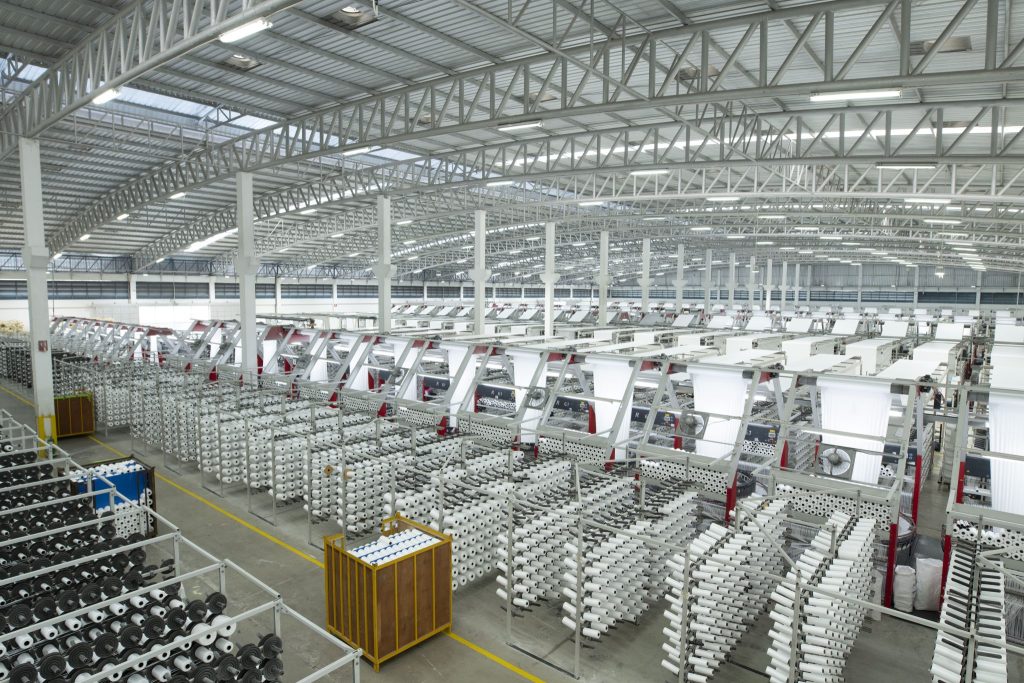
Performance starts upstream. Virgin PP resin is extruded into a sheet, slit into tapes, and drawn to raise tenacity; tape denier and draw ratios govern the final fabric modulus. Circular or flat looms weave the tapes into cloth—common meshes run from 10×10 to 14×14, a range that balances seam capture with face flatness for printing. For moisture management and graphics hold‑out, converters add a PP/PE coating (≈15–30 g/m²) or laminate a reverse‑printed BOPP film (≈12–25 μm). Tubes are then formed and converted into sewn open‑mouth or block‑bottom valve formats depending on the filling method. Finishing steps may include anti‑slip lacquers or emboss on the back panel, engineered venting for fast air discharge during fill, and easy‑open features where needed. Quality control closes the loop with panel‑wise COF (ASTM D1894), tensile and elongation (ASTM D882), tear (ASTM D1922), dart impact (ASTM D1709), rub resistance (ASTM D5264), and filled‑bag drop tests (ASTM D5276). The paperwork—lot traceability for resin, film, fabric, inks, and adhesives—makes audits quick and credible.
Polypropylene Woven Bags Specifications
Complete specifications for versatile PP bags with fully customizable aesthetic and design options.
Check More →BOPP Woven Bags
Premium polypropylene bags offering versatile packaging and customizable visual aesthetics.
Check More →BOPP Laminated PP Woven Bags
Versatile laminated polypropylene packaging bags with customizable aesthetic and printing options.
Check More →BOPP Woven Bags with Transparent Windows
Customizable polypropylene bags with unique aesthetic designs for diverse packaging solutions.
Check More →What Is the Application of Polypropylene Bags?
Because they are strong, printable, and adaptable, Polypropylene Bags are widely used for cement and dry mortar, gypsum/plaster, lime and fly ash, silica sand and aggregates, salt and de‑icing blends, agrochemicals and fertilizers, pet nutrition and seed, and industrial fillers such as calcium carbonate or alumina. Valve (AD‑style) bags enable high‑speed, dust‑controlled filling with square, stackable units for export pallets. Sewn open‑mouth styles suit sands and aggregates or manual dosing. Retail‑adjacent channels benefit from photo‑grade BOPP surfaces that present mixing ratios, hazard pictograms, and multilingual instructions without smudging, even after rain or forklift abrasion.
Product Parameters for Polypropylene Bags (Typical, Real‑World Ranges)
| Parameter | Typical Range / Spec | Technical Note |
|---|---|---|
| Product | Polypropylene Bags | PP woven sacks for 25–50 kg duties |
| Fabric mesh | 10×10 to 14×14 | Higher pick density improves seam capture & print flatness |
| Fabric mass (GSM) | ~60–120 g/m² | Tuned to duty: cement vs. sand vs. admixtures |
| Coating mass | ~15–30 g/m² (PP/PE) | Drives water beading and print hold‑out |
| Laminate film | 12–25 μm BOPP (matte or gloss) | Reverse‑printed for rub‑resistant, full‑bleed graphics |
| Common 25–50 kg size | W 48–55 cm × L 75–95 cm | Block‑bottom valve or sewn open‑mouth |
| COF targets (panel‑wise) | Machine face ~0.25–0.35; Pallet face ~0.45–0.60 | Glide on line, grip on pallet |
| UV stabilization | 200–1000 h xenon‑arc equivalence | For outdoor yard dwell and sun exposure |
| Print colors | Up to 8–10 | HD flexo or gravure; barcode quiet zones maintained |
Values above reflect widely published specifications on manufacturer and trade platforms (e.g., Made‑in‑China, Alibaba, peer supplier datasheets) and are tuned per product density, route climate, and handling style.
Why VidePak Is a Reliable Partner for Polypropylene Bags
Founded in 2008, VidePak’s core team brings 30+ years of field experience and a workforce of 568. We specialize in BOPP‑laminated woven bags, valve bags, and kraft‑paper woven bags serving customers in the United States, Europe, Brazil, South America, Southeast Asia, Japan, Korea, Central Asia, the MENA region, East Africa, and South Africa. To ensure quality and process stability, we operate top‑tier equipment from W&H (Germany) and Starlinger (Austria)—over 100 circular looms, 16 extrusion lines, and 30+ lamination/printing machines. We run 100% virgin raw materials, support custom sizes and multi‑color printing, and scale reliably; annual sales are about USD 80 million.
Beyond capacity, our value is technical governance. We set panel‑wise COF windows, define seam‑pull targets, validate rub and drop on worst‑case solids, and maintain change‑control on inks, adhesives, and coatings. That discipline turns Polypropylene Bags from a commodity into a controlled, auditable component of your supply chain—predictable on the former, durable on the pallet, and legible at the destination.
- What Are Polypropylene Bags? (Also Called PP Woven Sacks and Raffia Bags)
- What Are the Features of Polypropylene Bags?
- What Is the Production Process of Polypropylene Bags?
- What Is the Application of Polypropylene Bags?
- Product Parameters for Polypropylene Bags (Typical, Real‑World Ranges)
- Why VidePak Is a Reliable Partner for Polypropylene Bags
Polypropylene bags are the ultimate choice for businesses seeking durable, customizable, and eco-friendly packaging solutions across industries, combining cost-effectiveness with advanced design capabilities. This versatile product has become indispensable in global markets, providing unmatched functionality for sectors ranging from construction to agriculture and retail.
Why Polypropylene Bags Dominate the Packaging Market
Polypropylene bags excel in balancing strength, adaptability, and sustainability. Key features include:
- High Durability
- Manufactured with woven polypropylene fabric, these bags can withstand significant stress and rough handling.
- Their robust structure ensures longevity, making them ideal for bulk materials like cement, grains, and chemicals.
- Customizable Aesthetic and Functionality
- Modern printing technologies enable precise branding, supporting up to eight-color designs.
- Options for UV protection, anti-static properties, and moisture-resistant PE liners extend their usability in specialized environments.
- Sustainability
- Fully recyclable and increasingly produced with recycled materials, polypropylene bags contribute to global sustainability goals.
- Custom options for biodegradable additives align with eco-conscious consumer demands.
Global Market Insights
United States
- Market Trends: Rising demand for sustainable packaging and reusable solutions.
- Producer Strengths: Advanced compliance with environmental regulations and premium quality standards.
- Use Cases: Widely used in retail and agricultural sectors for high-value goods.
European Union
- Market Trends: Prioritization of regulatory adherence and sustainability certifications.
- Producer Strengths: Innovation in lightweight yet durable designs for food and industrial products.
- Competitive Landscape: Increasing focus on anti-static features for hazardous materials.
Asia-Pacific
- Market Trends: Rapid industrialization driving demand for affordable packaging.
- Producer Strengths: High scalability and cost-effectiveness.
- Regional Dynamics: China, as a dominant player, exports high-quality polypropylene bags to meet diverse global demands.
China’s Leading Role
- Quality Assurance: Strict quality control processes ensure consistent performance across shipments.
- Cost Efficiency: Competitive pricing through economies of scale without compromising standards.
- Supply Chain Superiority: Efficient logistics and robust manufacturing infrastructure enable quick turnarounds for global partners.
Comparative Analysis: Polypropylene Bags vs. Alternatives
| Parameter | Polypropylene Bags | Paper Bags | Plastic Bags (Non-Woven) |
|---|---|---|---|
| Durability | High tensile strength | Moderate | High |
| Moisture Resistance | Excellent with PE lining | Low | High |
| Eco-Friendliness | Recyclable | Biodegradable | Limited |
| Customizability | High (sizes, shapes, prints) | Moderate | High |
| Cost | Cost-effective | Higher | Moderate |
Customization Parameters of Polypropylene Bags
| Specification | Available Range | Example Applications |
|---|---|---|
| Bag Size | 20×30 cm to 100×120 cm | Cement, grains, retail goods |
| Weight Capacity | 5 kg to 50 kg | Construction materials, chemicals |
| Thickness | 40 GSM to 200 GSM | Heavy-duty or lightweight items |
| Printing Options | Up to 8 colors | Brand logos, safety instructions |
| Additives | UV-resistant, anti-static, laminated | Outdoor storage, sensitive products |
Innovations Shaping the Future of Polypropylene Bags
- Sustainability Advances
- Increased use of recycled materials aligns with eco-conscious business practices.
- Biodegradable formulations address regulatory requirements for green packaging.
- Enhanced Customization
- Adoption of digital and flexographic printing provides high-definition, cost-efficient branding solutions.
- Modular design options for bags cater to specific needs like moisture resistance or easy handling.
- Technological Breakthroughs
- Automation in production ensures precision and reduces costs.
- Integration of ultrasonic welding enhances sealing for waterproof applications.
FAQs About Polypropylene Bags
Q1: How strong are polypropylene bags?
Polypropylene bags can carry loads ranging from 5 kg to 50 kg, depending on fabric thickness and design.
Q2: Are polypropylene bags environmentally friendly?
Yes, they are recyclable and can incorporate recycled materials for reduced environmental impact.
Q3: Can these bags protect against moisture?
Absolutely, especially when equipped with a PE liner for enhanced water resistance.
Q4: What customization options are available?
Businesses can choose bag sizes, printing designs, coating types, and special additives to suit their requirements.
Q5: What industries use polypropylene bags the most?
Construction, agriculture, food packaging, and retail are the leading users of polypropylene bags.
Conclusion
Polypropylene bags have redefined packaging efficiency by merging strength, adaptability, and cost-effectiveness. Their versatility spans industries, offering tailored solutions for demanding markets. With China spearheading global production, polypropylene bags remain a vital asset for businesses worldwide.
For further insights, visit Polypropylene Bags: A Versatile Packaging Solution and Custom Printed Woven Bags for comprehensive packaging solutions tailored to your needs.