
What are Printed BOPP Woven Bags?
Printed BOPP Woven Bags are polypropylene (PP) woven sacks laminated with biaxially oriented polypropylene (BOPP) film and finished with photo‑grade artwork. In practice, they are the robust, shelf‑ready packages you see hauling rice, fertilizer, animal feed, seeds, construction powders, and an array of retail bulk goods. Some markets call Printed BOPP Woven Bags by other names—BOPP laminated woven sacks, BOPP laminated PP woven bags, photo‑quality woven sacks—yet the engineering idea remains constant: the woven PP fabric carries the mechanical load; the BOPP film carries the narrative.
Why do Printed BOPP Woven Bags matter right now? Because packaging is being asked to square the circle: be lighter yet stronger, more vivid yet more durable, cost‑efficient yet consistent with circularity goals. Woven PP contributes high specific strength and puncture resistance; BOPP adds a hard, scuff‑resistant, printable skin—glossy for vibrancy or matte for low‑glare readability. When the build remains largely within PP (#5), post‑industrial and, in some regions, post‑consumer recycling pathways are feasible. Strength, shelf impact, and a credible sustainability trajectory—bundled in one format.
The category’s position becomes clearer when viewed across industries. Paper sacks breathe and print warmly, but their wet strength drops in damp yards. Monolayer PE heavy‑duty films seal superbly, but at equivalent tare weights can be more prone to puncture. Printed BOPP Woven Bags sit between these poles, knitting together textile‑like toughness with film‑grade print surfaces. Follow the vertical logic from polymer to pallet: polymer orientation → tape tenacity → fabric modulus → laminate bond → seam efficiency → pallet stability → in‑store presentation. A micron at the laminator can echo as a mile in logistics. For a quick reference on constructions aligned to this family, see Printed BOPP Woven Bags.
What are the features of Printed BOPP Woven Bags?
High strength‑to‑weight efficiency. Oriented PP tapes, woven into fabric, convert molecular alignment into tensile strength and tear resistance at modest grammage. In 5–50 kg formats common to staples, fertilizers, and feed, Printed BOPP Woven Bags withstand chute impacts, clamp handling, and long belt transfers while keeping corners crisp and stacks square.
BOPP Laminated PP Woven Bags
Premium printed BOPP laminated woven bags with vibrant designs for versatile industrial and commercial applications.
Check More →BOPP PP Woven Bag Solutions
Custom printed BOPP woven bags with flexible design options to meet diverse packaging application requirements.
Check More →Localized Printed BOPP Bags
Customizable printed BOPP woven bags with localized design solutions for global and regional market applications.
Check More →BOPP vs PP Woven Bags
Detailed comparison highlighting the design versatility and application advantages of printed BOPP woven bags.
Check More →Moisture moderation with durable images. BOPP’s low‑porosity skin reduces moisture pick‑up and shields inks from abrasion. Where fast filling introduces entrained air, engineered micro‑perforation zones eject that air during fill but leave faces clean afterward. Vent when you need it; protect when you must—no ballooning, no smeared art.
Shelf‑ready graphics that travel. Reverse rotogravure printing on BOPP places the image under the film, protecting it from rub and solvent wipe. Continuous‑tone images, deep solids, small type, crisp GS1 barcodes—Printed BOPP Woven Bags carry all of it, in gloss for sheen, matte for legibility, or a mixed finish for tactile contrast. The package becomes a moving billboard: persuasive at the shelf, resilient in the yard.
Format flexibility for real plants. Open‑mouth gusseted sacks suit manual or semi‑auto lines; block‑bottom (brick‑shape) variants unlock cube efficiency and pallet stability; easy‑open tapes remove the need for knives; anti‑skid textures tune bag‑to‑bag friction; clear “window” panels (where regulations allow) showcase contents.
UV stability and handling resilience. UV‑stabilized tapes and films help maintain strength during outdoor staging. Hemmed tops and edge reinforcements resist snags on hooks and guard rails. Pallets remain tidy; labels stay legible; QA remains calm.
Recyclability‑oriented design. Keeping the build largely mono‑polymer—PP woven fabric + BOPP film + PP‑based tie layers—reduces sorting complexity in polyolefin recovery settings. It’s not recycling theater; it’s design that anticipates infrastructure, region by region.
Look sideways at adjacent options and the trade‑offs crystallize: paper sacks breathe but wilt in rain; PE films seal tight but scuff; Printed BOPP Woven Bags braid woven backbone with film‑grade print durability to stay square, clean, and convincing.
What is the production process of Printed BOPP Woven Bags?
1) PP tape extrusion & orientation. Virgin PP resin is melted, slit, and drawn—typically at 5:1–7:1 ratios—to align polymer chains. Annealing stabilizes orientation for repeatable tenacity. Additive packages (UV stabilizers, slip/anti‑block) are dosed to the storage and handling profile. Stretch to strengthen; cool to set; anneal to keep.
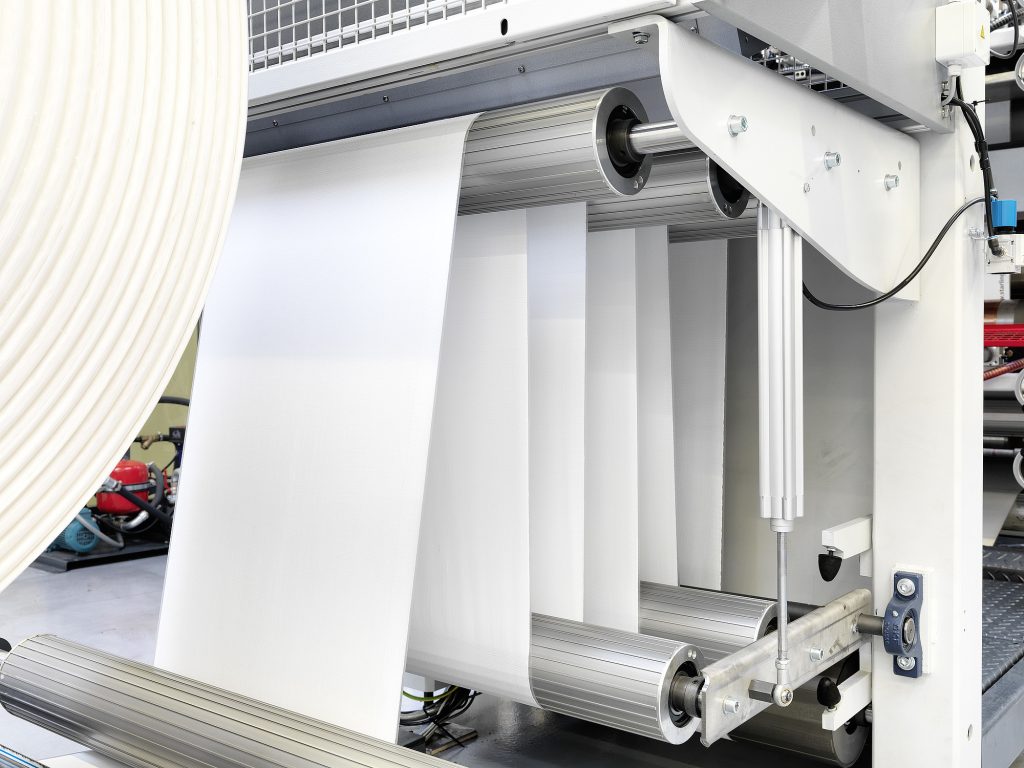
2) Fabric weaving. Tapes run on circular or flat looms to a specified weave density—often 10×10 to 14×14 threads per inch (warp × weft). Loom tension, pick count, and tape width co‑determine modulus, tear path, and surface flatness—preconditions for tight lamination and predictable seam behavior.
3) BOPP film preparation. BOPP is biaxially oriented (tenter or bubble process) for clarity and stiffness, then corona‑treated to raise surface energy for ink anchorage. Films are specified in gloss or matte; thickness typically 15–35 µm depending on desired face durability, hand‑feel, and barrier nuance.
4) High‑fidelity printing. Artwork is reverse‑printed on BOPP via multicolor rotogravure. Because the image lives under the film after lamination, it resists conveyor rub, abrasion, and incidental solvent wipe. Fine text remains readable; QR and barcodes stay scannable through the last mile.
5) Extrusion lamination. Printed BOPP is bonded to the PP woven fabric using PP‑based tie layers. Caliper uniformity controls curl, stiffness, and bond strength; the lamination stack can integrate micro‑perforation pre‑ or post‑bond to suit deaeration needs on high‑speed fillers. The aim: bond that behaves, graphics that endure, pallets that behave.
6) Converting and finishing. Laminated webs are cut, tubed, gusseted, and finished into open‑mouth or block‑bottom formats. Bottoms may be folded and stitched or heat‑sealed depending on the laminate stack and filling line. Optional features—easy‑open bands, anti‑skid coatings, window panels, tear notches—are integrated here.
7) Quality assurance & data feedback. Routine checks include seam efficiency, tensile and burst strength, drop behavior, colorimetric ΔE against proof, ink adhesion/rub resistance, coefficient of friction (COF), and UV retention. Data flows upstream to extrusion, printing, and lamination to keep processes centered; week‑to‑week runs look the same and perform the same.
VidePak anchors this chain with top‑tier assets from Germany’s W&H and Austria’s Starlinger. With >100 circular looms, 16 extrusion lines, and >30 lamination/printing machines, capacity scales without compromising gauge control, color registration, or seam tolerance. Founded in 2008 and led by a core team with 30+ years in woven‑packaging, VidePak tunes draw ratios, weave densities, laminate stacks, and micro‑perf maps to the reality of your powders and pellets—not a theoretical chart.
What is the application of Printed BOPP Woven Bags?
Staple foods & retail grains. Rice, pulses, flour, and sugar value moisture moderation and billboard‑quality artwork. Transparent windows (where allowed) support consumer trust—what you see is what you buy—while GS1 barcodes stay scan‑reliable after cross‑docking.
Fertilizers & soil amendments. Granular NPK, urea, and specialty blends punish weak faces and poor seams. Printed BOPP Woven Bags resist scuffing in bulk handling, retain label legibility, and stack into tidy bricks for container loading.
Animal feed & seeds. Pellets, mash, and premixes benefit from laminates that limit dusting; block‑bottom geometry keeps pallets square in narrow aisles and during long hauls; antiskid textures improve stack stability in warm, humid conditions.
Building materials & minerals. Tile adhesive, grout, gypsum, and calibrated sands need drop‑resistant seams and readable hazard panels. Deaeration maps prevent ballooning on high‑speed fillers; pictograms remain intact after conveyor rub.
Chemical & industrial goods. Where traceability, QR/GS1 coding, and safety icons are paramount, gravure on BOPP presents dense information clearly and survives the “yard test.”
Across geographies—the United States, Europe, Brazil & South America, Southeast Asia, Japan, Korea, Central Asia, the MENA Region, East Africa, and South Africa—VidePak localizes fabric specs, laminate stacks, vent strategies, and COF targets to climate and code. With 568 employees and annual sales near US$80 million, we match enterprise rollout speed with disciplined quality cadence.
Typical Parameters for Printed BOPP Woven Bags
The values below reflect widely used, real‑world specifications for BOPP‑laminated woven sacks found across industry catalogs and peer implementations. Select to match filler design, product rheology, climate, and logistics.
| Parameter | Typical Options / Range |
|---|---|
| Product | Printed BOPP Woven Bags (open‑mouth / gusseted / block‑bottom) |
| Fabric (GSM) | ~70–110 g/m² PP woven (application‑dependent) |
| BOPP Film Thickness | 15–35 µm (gloss or matte; reverse‑printed) |
| Weave Density | 10×10 to 14×14 (warp×weft, threads/inch) |
| Bag Capacity | 5–50 kg common (rice/feed/fertilizer SKUs) |
| Common 50‑kg Size | ~50 × 80 cm (±1–2 cm per filler spec) |
| Micro‑Perforation | Patterned pin/laser micro‑perfs for high‑speed deaeration |
| Printing | Rotogravure multi‑color; barcode/QR capable; spot‑matte/gloss options |
| Closures | Heat‑cut/hemmed top; single/double‑fold bottom; chain/lock stitching |
| Coefficient of Friction | ~0.35–0.55 with anti‑skid textures |
| UV Stabilization | Options up to ≈3,000 h (storage profile dependent) |
| Optional Liners | LDPE/HDPE 20–80 µm loose liners for hygiene/barrier |
Why VidePak for Printed BOPP Woven Bags
- Engineering depth with shop‑floor realism. We align draw ratios, weave density, laminate caliper, seam geometry, and vent mapping with your powder rheology and filler hardware—so seals hold, pallets square, and dust stays inside.
- Top‑tier equipment, repeatable results. German W&H and Austrian Starlinger lines underpin gauge control, registration accuracy, and seam efficiency across long campaigns—week to week, region to region.
- Capacity that flexes with demand. >100 circular looms, 16 extrusion lines, >30 lamination/printing machines—so multi‑SKU launches don’t bottleneck when forecasts spike.
- Materials & customization. 100% virgin raw materials by default; multi‑color gravure/flexo; easy‑open options; anti‑skid tuning; clear windows; micro‑perf maps; and artwork workflows that protect ΔE and small‑type readability.
- Global reach, local nuance. Programs operate across the US, Europe, Brazil, South America, Southeast Asia, Japan, Korea, Central Asia, MENA, East & South Africa, with specifications localized to climate, regulation, and route risk.
Partner with VidePak to specify Printed BOPP Woven Bags that carry your product securely, carry your brand vividly, and carry your sustainability goals forward—without carrying excess cost.
- What are Printed BOPP Woven Bags?
- What are the features of Printed BOPP Woven Bags?
- What is the production process of Printed BOPP Woven Bags?
- What is the application of Printed BOPP Woven Bags?
- Typical Parameters for Printed BOPP Woven Bags
- Why VidePak for Printed BOPP Woven Bags
In today’s packaging industry, the demand for durable, eco-friendly, and customizable packaging solutions has surged across sectors ranging from agriculture to construction and retail. Among the many packaging materials available, Printed BOPP woven bags stand out due to their combination of durability, versatility, and aesthetic appeal. This article delves into the many applications of these bags, exploring the various designs, technological advancements, and customization options available to cater to different market needs.
What are Printed BOPP Woven Bags?
BOPP (Biaxially Oriented Polypropylene) woven bags are made from polypropylene woven fabric that is laminated with BOPP film. The result is a highly durable and visually appealing bag with a broad range of uses in multiple industries. The printed BOPP woven bags come with customizable designs, making them not only functional but also an effective branding tool. These bags are particularly valued for their excellent print quality, which allows businesses to showcase their logos, product information, and colorful branding.
Here’s a quick look at the key features that make these bags so popular:
| Feature | Details |
|---|---|
| Material | BOPP laminated woven polypropylene fabric |
| Durability | Resistant to moisture, tearing, and abrasion |
| Customization | High-quality printing for logos, product details, and colors |
| Applications | Agriculture, construction, retail, food packaging, and more |
| Environmental Impact | Recyclable and eco-friendly alternative to plastic bags |
Key Applications of Printed BOPP Woven Bags
1. Agricultural Packaging
Printed BOPP woven bags are commonly used in the agriculture sector for packaging a variety of products, including grains, seeds, fertilizers, and animal feed. The bags’ durability ensures they can withstand tough conditions, protecting the contents from external damage during transportation and storage.
- Custom Design for Branding: Farmers and agricultural producers often use these bags to promote their brand. The high-quality printability of BOPP allows for vibrant, clear designs that stand out on shelves or during transit.
- Sustainability Focus: With growing concerns over environmental impact, many agricultural businesses are shifting to recyclable BOPP woven bags as part of their sustainability initiatives.
2. Food Packaging
In food packaging, hygiene and safety are paramount. Printed BOPP woven bags meet these criteria while providing excellent shelf appeal. These bags are frequently used for packing flour, rice, sugar, snacks, and pet food.
- Moisture and Puncture Resistance: The laminated structure of BOPP offers enhanced protection against moisture and punctures, ensuring that food products remain fresh and secure.
- Custom Branding: These bags offer superior print quality, which can include vibrant colors, logos, and nutritional information—ideal for product differentiation in competitive markets.
3. Construction and Industrial Use
BOPP woven bags are also extensively used in the construction industry to package materials like cement, sand, and concrete. The heavy-duty nature of the bags ensures that they can withstand the rough handling typical in construction environments.
- Heavy Load Capacity: These bags are designed to handle heavy loads without tearing, making them ideal for bulk packaging in construction.
- Branding and Information: Printed BOPP woven bags are used to display key product information, such as weight, material specifications, and safety guidelines.
4. Retail and Consumer Goods
For retail packaging, printed BOPP woven bags are used for items ranging from clothing to electronics. Their ability to be printed with high-quality images, logos, and text makes them an excellent choice for packaging products in stores.
- Attractive Display: These bags offer an attractive way for retailers to display their products. With full-color printing options, brands can create visually appealing packages that enhance product visibility on shelves.
- Eco-Conscious Consumers: As eco-consciousness increases, many retailers are opting for these recyclable woven bags instead of traditional plastic bags, aligning with sustainability trends.
5. Export and International Shipping
For businesses involved in international trade, BOPP woven bags provide a reliable packaging solution for bulk goods. Whether it’s for chemicals, fertilizers, or consumer goods, these bags ensure the safe transportation of products over long distances.
- Resilience to Rough Handling: Printed BOPP bags are resistant to wear and tear, ensuring that products reach their destination safely.
- Custom Labeling: Exporters can include detailed product information, handling instructions, and branding on these bags, which is essential for international shipping.
Advantages of Printed BOPP Woven Bags
The versatility of printed BOPP woven bags can be attributed to several factors:
- Durability and Strength: Thanks to the strong polypropylene fabric, these bags are built to last. They are resistant to tearing, puncturing, and abrasion, making them perfect for demanding applications.
- High-Quality Printing: The ability to print vibrant, high-resolution images makes BOPP woven bags an excellent marketing tool. The lamination ensures that the print remains intact throughout the bag’s lifecycle.
- Water Resistance: BOPP bags are resistant to water, making them an ideal choice for industries that need to protect their goods from moisture.
- Customizable Sizes and Features: These bags come in a wide variety of sizes and can be customized with features like valve openings, zippers, or reinforced seams, depending on the specific needs of the business.
- Eco-Friendly Options: As consumer awareness of environmental issues rises, BOPP woven bags offer a more sustainable alternative to single-use plastic bags. Many of these bags are 100% recyclable, making them a greener choice.
How to Choose the Right Printed BOPP Woven Bag
Selecting the right printed BOPP woven bag depends on various factors:
| Factor | Consideration |
|---|---|
| Load Capacity | Ensure the bag can handle the weight of your product |
| Size and Dimensions | Choose a size that fits your product and storage requirements |
| Printing Quality | Choose a supplier who can deliver high-quality printing |
| Customization Features | Select the right features, such as valve openings or handles |
| Environmental Impact | Consider choosing recyclable bags to meet sustainability goals |
Trends and Innovations in Printed BOPP Woven Bags
The demand for printed BOPP woven bags is growing, and several trends are shaping the future of this packaging solution:
- Sustainability and Recyclability: As companies and consumers become more eco-conscious, the push for recyclable and sustainable packaging grows. Printed BOPP woven bags are increasingly being made from recycled polypropylene, contributing to a circular economy.
- Smart Packaging Integration: With the rise of IoT (Internet of Things), there is a growing interest in integrating smart features such as QR codes or NFC tags into packaging. These features can provide consumers with additional product information, track products, and offer promotional incentives.
- Advanced Printing Technology: The development of newer printing technologies, such as rotogravure and flexographic printing, allows for even more detailed and vibrant designs on BOPP woven bags, enhancing their appeal to consumers.
FAQs about Printed BOPP Woven Bags
1. Can printed BOPP woven bags be customized for different industries?
Yes, printed BOPP woven bags can be customized to meet the specific needs of various industries, including agriculture, food packaging, retail, construction, and more. Custom features such as size, color, and print design can be tailored to suit the product being packaged.
2. Are printed BOPP woven bags environmentally friendly?
Yes, BOPP woven bags are recyclable and can be made from recycled polypropylene, making them an eco-friendly alternative to single-use plastic bags. Many businesses are using these bags as part of their sustainability initiatives.
3. What is the maximum weight a printed BOPP woven bag can carry?
The load capacity of a printed BOPP woven bag depends on its size, design, and reinforcement. Generally, these bags can carry weights ranging from 5 to 50 kilograms or more, depending on the specific needs of the application.
4. How durable are printed BOPP woven bags?
Printed BOPP woven bags are highly durable, offering excellent resistance to tearing, punctures, and moisture. They are designed to withstand rough handling, making them ideal for heavy-duty applications in various industries.
5. How can I ensure high-quality printing on my BOPP woven bags?
Choosing a reputable supplier who uses advanced printing technologies and high-quality materials is key to ensuring that your printed BOPP woven bags maintain vibrant, clear prints throughout their use.
For businesses looking to explore more sustainable packaging options, the development of BOPP laminated woven bags offers an innovative solution that combines both functionality and environmental consciousness. Additionally, custom printing capabilities allow companies to maximize their brand’s visibility while meeting diverse market demands.
With the flexibility to meet various industrial and commercial needs, printed BOPP woven bags have become an essential tool in modern packaging. Their durability, versatility, and customization options make them a go-to solution for businesses looking to combine functionality with branding in their packaging.