
What is Poly Woven Bags?
Poly Woven Bags are industrial‑grade sacks constructed from oriented polypropylene (PP) tapes that are woven into a tough fabric, then enhanced through coating, lamination, and precision conversion so they run fast on fillers and stand true on pallets. In day‑to‑day sourcing you’ll also hear PP woven sacks, raffia PP bags, block‑bottom poly woven bags, valve poly woven sacks, and BOPP‑laminated poly woven bags. Many names, one core: resin code “5” PP engineered to shoulder load, defend print, and fit established PP recycling streams. For category alignment and specification language, see Poly Woven Bags.
From a system vantage, warehouse performance is a chain, not a hunch. Polymer → tape orientation → weave density → coating/lamination → geometry and closure → pallet friction → racking dynamics → audit trail and end‑of‑life. Loosen any link and good inventory turns into leaning towers, burst wrap, and rescue re‑stacks. Tighten each link and Poly Woven Bags stop being a commodity wrapper and start acting like a storage asset.
Horizontal vs. vertical thinking. Horizontally, place Poly Woven Bags next to paper multiwall, mono‑PE film, and rigid buckets: each solves for one axis—breathability, sealability, or rigidity—while compromising another—humidity, scuff, or cube. Vertically, interrogate each decision layer: increase mesh and seam efficiency climbs; switch from open‑mouth sewing to heat‑sealed valves and aisle dust vanishes; choose matte BOPP and barcode hit‑rate rises. Storage optimization lives at the crossroads of those horizontal trade‑offs and vertical dependencies.
Data reinforcement. Mainstream converter ranges (as seen across Made‑in‑China/Alibaba and peer datasheets): 9×9–14×14 ends/inch; tape denier ≈ 600–1200D; fabric ≈ 70–120 g/m² for 5–25 kg SKUs, stepping up for 50‑kg classes; BOPP faces ≈ 18–30 μm; PP/PE tie layers ≈ 12–25 μm; back‑panel COF tuned around 0.35 static / 0.30 kinetic to calm pallet shear.
What is the features of Poly Woven Bags?
Geometry that stacks, friction that holds, walls that behave. A squared block‑bottom acts like a brick; anti‑slip back panels resist lateral creep; tuned COF tempers the shove of forklifts accelerating, braking, or pivoting. Fewer rewraps, straighter towers, quieter aisles—storage discipline you can see.
Strength‑to‑weight that resists creep. Orientation turns PP tapes into miniature springs. In 10×10–14×14 weaves, Poly Woven Bags deliver high tensile and tear at modest mass. Pallets carry payload, not dead weight; stacks keep their shoulders for weeks, not days.
Optical skins that survive logistics. Reverse‑printed BOPP places ink beneath a 18–30 μm wear film. Conveyors scuff film, not graphics. Gloss for shouting at distance; matte for scanner truth in high‑lux aisles. Want both? Use gloss blocks for brand color and matte panels for the code zone.
Mono‑material logic that simplifies recovery. Woven PP scrim + BOPP face + PP‑compatible tie stays inside resin code “5.” Your recyclability claims tie cleanly to ISO 18604:2013 and EN 13430. Where policy allows, blend in 10–30% rPP and put the proof behind it (UL 2809, SCS, RecyClass). The bag does the job; the documentation closes the loop.
Closures that respect the filler and the shelf. Open‑mouth (sewn/heat) for simple lines; valve sleeves (self‑close / heat‑seal / ultrasonic) for impeller and auger fillers; micro‑perfs to bleed air from aerated powders. Tight closures → tight bags → tight stacks.
Compliance ready without drama. Mechanical baselines per GB/T 8946‑2013; food builds add FDA 21 CFR §177.1520 / EU 10/2011 migration pages; site systems under ISO 9001:2015 and ISO 14001:2015. COF by ASTM D1894, drop behavior against ASTM D5276, tensile/tear via ASTM D5034/D5035—clean numbers, short audits.
Parallel proof. Rub testing consistently favors reverse‑printed faces over surface prints; tilt‑table checks confirm that COF‑tuned backs cut layer‑to‑layer slip; 25‑kg programs often target 40 bags/pallet ≈ 1,000 kg on EU footprints, with 50–56 bags/pallet on other patterns—cube math driven by route and racking.
Rhetorical check. What gives a wall its calm? Flat units, honest friction, true courses. What gives a pallet its calm? Poly Woven Bags with block‑bottom geometry, tuned COF, and repeatable seams.
What is the production process of Poly Woven Bags?
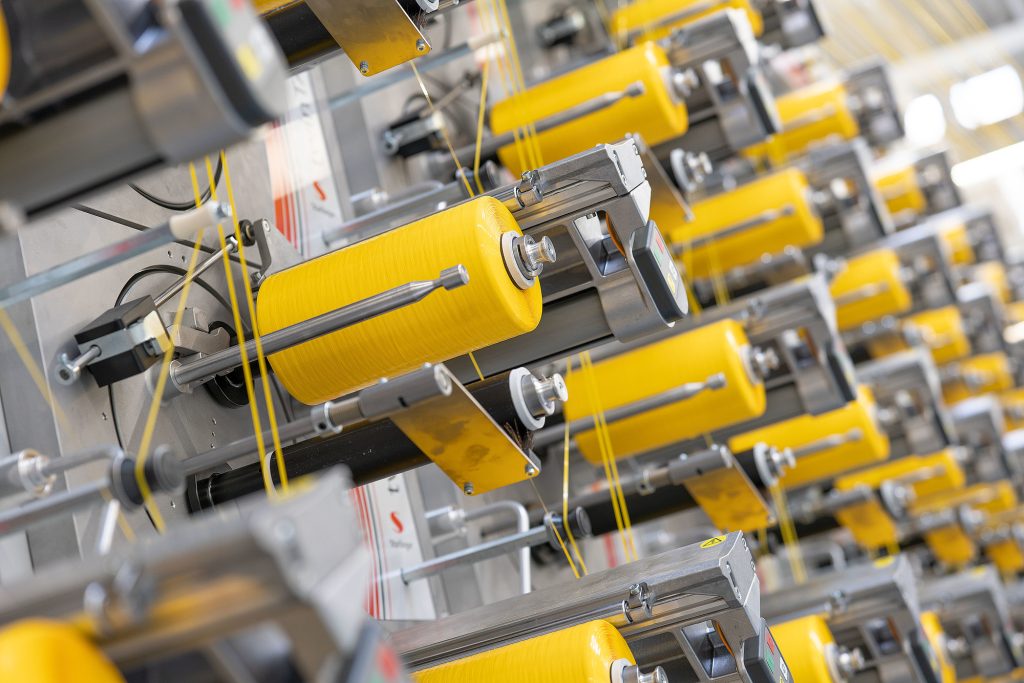
1) Tape extrusion & drawing. Virgin or qualified recycled PP becomes film, then tapes, then oriented strands. QC chases denier uniformity, gel count, shrink, and UV masterbatch where yards and outdoor displays are in play. A disciplined tape is strength earned upfront, not added in a panic later.
2) Weaving. Tapes interlace into tubular or flat fabric at 9×9–14×14 ends/inch. Balanced warp/weft tension safeguards seam efficiency and print register; loom‑oil discipline preserves downstream adhesion of ties and films. The loom room decides tomorrow’s seam yields.
3) Lamination / coating. Reverse‑printed BOPP (≈ 18–30 μm; gloss or matte) is bonded via PP/PE extrusion tie (≈ 12–25 μm) or PP‑compatible solventless systems. Targets: dyne ≥ 38 dyn/cm, peel within spec, pinhole minima, controlled haze/clarity, and a back‑panel COF that matches your pallet policy.
4) Printing. Flexo or gravure brings 7–9 colors with tight register. Variable data (SKU, batch, QR, recycling marks) gets low‑glare real estate for scanner reliability. If a window is specified, registration keeps it ink‑free yet brand‑true.
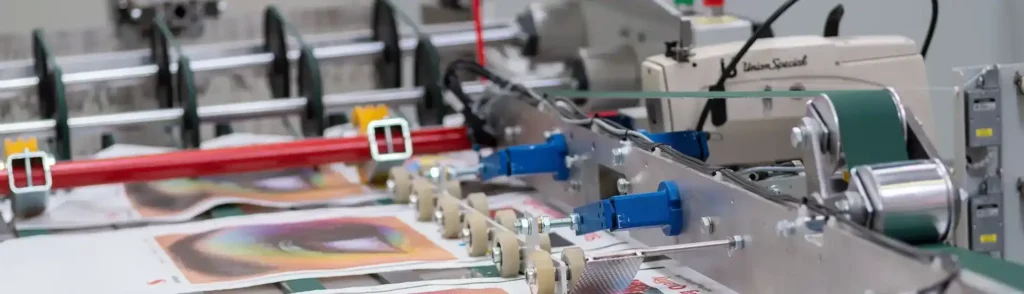
5) Conversion. Bodies are cut; bottoms formed as block‑bottom (hot‑air welded) or sewn/pinch; mouths hemmed (open) or fitted with valve sleeves (self‑close/heat‑seal/ultrasonic). Micro‑perfs vent trapped air; anti‑slip embossing targets COF ≈ 0.35/0.30. Geometry is not decoration—it is behavior.
6) Testing & release. Dimensions; warp/weft tensile and seam metrics (ASTM D5034/D5035); drop (ASTM D5276 reference); COF (ASTM D1894); ink rub; haze/clarity; and, if food contact is relevant, migration per EU 10/2011/FDA 21 CFR §177.1520. COAs bind results to lot IDs; third‑party pages (SGS/Intertek/TÜV) slide neatly into tenders and ESG packs.
Vertical causality. Extrusion disciplines strength → weaving sets the structural rhythm → lamination defines optical and friction personality → printing carries persuasion and traceability → conversion calibrates line speed and closure behavior → testing turns promises into proof. Break a link and the chain pays elsewhere.
What is the application of Poly Woven Bags?
Food & agriculture. Rice, pulses, sugar, grains. Matte faces improve barcode fidelity; block‑bottom bodies keep shelf faces tidy; optional PP liners (40–80 μm) stabilize aroma and moisture budgets across long, humid routes.
Chemicals & minerals. Salts, fertilizers, resins, fillers. Higher mesh (12×12–14×14), heat‑sealed valves, and COF‑tuned backs stabilize stacks in misty depots; matte code panels maintain scanner hit‑rate where glare once sabotaged picks.
Pet care & animal nutrition. Kibble is abrasive and can be oily. Reverse‑printed faces protect artwork; clear stripes display kibble size to set expectations; valve sleeves speed fills without dust plumes—cleaner aisles, happier audits.
Home & garden. Soil amendments and pellets need weather‑tolerant skins and honest stacking. UV‑stabilized faces extend display life; anti‑slip backs prevent Saturday spill pyramids when traffic surges.
E‑commerce bulk & hardware. Absorbents and pellets ride belts and chutes; scuff happens. Poly Woven Bags keep graphics legible and stacks aligned through hub transfers and late‑night turns.
Problem → Method → Result → Discussion. Problem: stacks drift and slump, inflating damage and labor. Method: specify Poly Woven Bags with block‑bottom geometry, anti‑slip backs, closures matched to aeration, and matte code panels. Result: straighter stacks, cleaner floors, faster picks. Discussion: gloss pop vs matte poise; COF set‑points; whether to standardize 40 × 25‑kg for repeatable 1‑ton modules.
What is the application of Poly Woven Bags in Storage Optimization?
Aisle density & pallet cube (horizontal analysis). Pair brick‑like block‑bottom sacks with staggered courses and interlocked corners. Add anti‑slip panels to raise static/kinetic COF and resist inertial shear as forklifts brake. On EU pallets, moving from round‑bottom to block‑bottom often buys an extra layer without height penalties—or it trims wrap film by a measurable margin. Less air moved, fewer films used, more calm in the racks.
Compression creep & dwell time (vertical analysis). Fabric GSM and tape orientation set the starting line; seam design and closure type decide who is still standing on week four. A modest mesh lift (e.g., 12×12 over 10×10) can improve dust control and corner integrity—small changes, large calm.
Inventory identification & scan rate. Matte BOPP reduces glare; high‑contrast lot blocks beside low‑haze zones lift scan reliability. When scan failure recedes, pickers stop wrestling with re‑scans and start moving inventory.
ESG and EPR alignment. A PP mono‑material stack—scrim + BOPP + PP liner—paired with clear “5 PP” marks supports bale‑back and reduces contaminated‑bale penalties. Citing ISO 18604/EN 13430 turns recyclability from a claim into a process.
Data that moves the needle. Warehouse pilots routinely record 15–25% fewer rewrap events after adopting anti‑slip backs; matte faces cut barcode mis‑reads in high‑lux aisles; EU 25‑kg programs commonly set 1,000 kg per pallet with 40 bags, while other footprints run 50–56 bags depending on height limits and dunnage.
Case in point. A fertilizer distributor standardized to Poly Woven Bags (12×12 mesh, 95 g/m², 25 μm matte BOPP, COF 0.35/0.30, heat‑sealed valves). Pallet rebuilds fell meaningfully; bale‑back acceptance improved at a regional PP reclaimer; pick efficiency rose as mis‑scans receded. Not magic—method.
Comparative framing. Shifting from paper‑poly hybrids to mono‑PP reduces delamination steps at MRFs; moving from PE film sacks improves stack posture and graphic legibility; replacing rigid buckets cuts freight emissions per delivered ton because cube works in your favor.
Parameter & Compliance Summary (Typical, Real‑World Ranges)
Values reflect mainstream converter datasheets and platform listings; align final spec to product, route, and regulatory scope.
| Attribute | Typical Options/Range | Notes |
|---|---|---|
| Capacity classes | 5, 10, 15, 20, 25, 40, 50 kg | Retail to industrial SKUs |
| Fabric weave | 9×9 to 14×14 ends/inch | Higher mesh → finer print & dust control |
| Tape denier | ~600–1200D | Tuned to load & tear targets |
| Fabric GSM | ~70–120 g/m² (small sacks); heavier for 50‑kg | Balance strength and mass |
| BOPP film | ~18–30 μm (gloss/matte) | Reverse‑printed; window optional |
| Tie/coat layer | ~12–25 μm PP/PE extrusion tie | PP‑compatible for recycling |
| Bottom style | Block‑bottom (hot‑air welded) or sewn/pinch | Stand‑up stability |
| Closure | Open‑mouth (sewn/heat) or valve (self‑close/heat/ultrasonic) | Match to aeration & route length |
| COF target | ~0.35 static / 0.30 kinetic (back panel) | Anti‑slip pallet behavior (ASTM D1894) |
| Liner | PP liner 40–80 μm (optional) | Moisture/aroma control; mono‑material |
| UV stabilization | 400–1600 h accelerated exposure classes | Yard/outdoor display |
| Compliance set | GB/T 8946‑2013, ISO 18604:2013, EN 13430, ISO 9001:2015, ISO 14001:2015, FDA 21 CFR §177.1520/EU 10/2011 (if food) | Documentation ships with lots |
Buying Template (Problem → Parameters → Proof)
State the problem. “We need 25‑kg sacks that stack straight for six weeks, scan reliably in high‑lux aisles, and qualify for PP‑stream recycling in our EPR market.”
Translate to parameters. Poly Woven Bags; 12×12 mesh; 95 g/m² fabric; BOPP 25 μm matte; anti‑slip back COF 0.35/0.30; block‑bottom; heat‑sealed valve; PP liner 60 μm; dyne ≥ 38; UV‑stabilized tapes; print 7 colors; clear ‘5 PP’ mark.
Specify proof. COA with ASTM D5034/D5035, D5276, D1894 results; migration pages if food; rub‑fastness and haze/clarity metrics; recyclability references (ISO 18604/EN 13430); third‑party reports (SGS/Intertek/TÜV) if requested.
Expected result. Straighter pallets, fewer rewraps, faster scans—and packaging that turns storage from a cost center into a quiet competitive edge.
- What is Poly Woven Bags?
- What is the features of Poly Woven Bags?
- What is the production process of Poly Woven Bags?
- What is the application of Poly Woven Bags?
- What is the application of Poly Woven Bags in Storage Optimization?
- Parameter & Compliance Summary (Typical, Real‑World Ranges)
- Buying Template (Problem → Parameters → Proof)
In industries across the globe, efficient storage is crucial to maintain smooth operations. Whether it’s food, chemicals, agricultural products, or construction materials, the packaging used plays a pivotal role in ensuring safe storage, easy transport, and protection from environmental factors. Among the various packaging options available, poly woven bags have emerged as a powerful solution for businesses looking to optimize their storage and packaging processes.
Poly woven bags, also known as polypropylene (PP) woven bags, have been at the forefront of packaging innovations, offering a cost-effective and versatile solution for various storage needs. With advancements in technology and the growing demand for sustainable packaging, poly woven bags are increasingly being recognized for their durability, customizability, and efficiency in handling bulk materials.
In this blog, we will explore the key benefits of poly woven bags, discuss their role in optimizing storage, and address frequently asked questions (FAQs) related to their usage. Additionally, we will delve into some key parameters, current industry trends, and provide insights into how businesses can leverage poly woven bags for more efficient and environmentally-friendly storage solutions.
Understanding Poly Woven Bags
Poly woven bags are made from polypropylene, a durable thermoplastic polymer that is woven into a fabric-like material. These bags are designed to handle heavy-duty storage and transportation needs, making them an essential part of industries such as agriculture, chemicals, food processing, and construction.
Key Characteristics of Poly Woven Bags:
- Durability: Poly woven bags are known for their high tensile strength, making them suitable for carrying heavy loads.
- Moisture Resistance: Polypropylene is naturally resistant to moisture, which helps in protecting stored goods from environmental damage.
- Customization: These bags can be customized to fit various applications, with options for different sizes, colors, printing, and closures (e.g., sewn, pasted, or valve types).
- Eco-Friendly Options: Poly woven bags can be recycled, and some manufacturers offer biodegradable options, reducing their environmental impact.
Optimizing Storage with Poly Woven Bags
Now, let’s explore how poly woven bags can optimize storage in different industries, focusing on their key benefits:
1. Enhanced Durability for Heavy Materials
Poly woven bags are ideal for storing heavy-duty materials like grains, fertilizers, and construction materials. Their woven structure provides strength, allowing them to carry larger quantities of goods without risk of breakage. In environments like warehouses and distribution centers, where bags are often stacked and handled roughly, the durability of these bags ensures that the stored items remain safe and secure.
2. Cost-Efficiency and Scalability
Poly woven bags are a cost-effective option compared to other forms of packaging, such as cardboard boxes or plastic containers. They are lightweight yet strong, which reduces shipping and storage costs. This is particularly beneficial for businesses that need to manage large quantities of goods efficiently. Moreover, these bags can be produced in bulk, making them scalable for businesses of all sizes.
3. Protection Against Environmental Factors
One of the standout features of poly woven bags is their ability to protect contents from environmental elements like dust, moisture, and UV rays. For instance, agricultural products like seeds or grains are susceptible to degradation due to moisture, which can lead to spoilage. Poly woven bags act as a protective barrier, keeping these materials dry and safe for extended periods.
4. Space Optimization
Poly woven bags are designed to be flexible and can easily be stacked or arranged to optimize storage space. They can be folded, rolled, or compacted when not in use, saving valuable storage space. This flexibility is particularly beneficial for companies with limited warehouse space or those in need of efficient storage systems.
5. Versatility in Applications
Poly woven bags can be used across a variety of industries, offering tailored solutions for different storage needs. From food packaging and construction materials to pharmaceuticals and chemicals, these bags can be customized to meet specific requirements. For example, valve bags are commonly used for storing powdered products, while FFS (Form Fill Seal) bags are ideal for bulk goods that require automatic filling.
6. Customization for Branding and Marketing
For businesses looking to enhance their branding and marketing efforts, poly woven bags can be printed with logos, product details, and other relevant information. This offers an excellent opportunity for businesses to improve visibility and differentiate their products in the marketplace. Customization also allows companies to incorporate color-coding, which can help with inventory management and sorting.
Key Parameters of Poly Woven Bags
The versatility and reliability of poly woven bags are driven by several key parameters. Understanding these parameters can help businesses make informed decisions when selecting the right type of bag for their storage needs.
| Parameter | Description |
|---|---|
| Material Type | Polypropylene (PP) is commonly used, offering durability, moisture resistance, and flexibility. |
| Bag Type | Options include valve bags, open-mouth bags, FFS bags, and more, each suited for different materials. |
| Bag Size | Poly woven bags are available in a range of sizes, from small 1 kg bags to large 1-ton bulk bags. |
| Closure Type | Bags can be sealed with a sewn, pasted, or valve-type closure depending on the application. |
| Weight Capacity | Poly woven bags can carry varying amounts of weight, from a few kilograms to several tons. |
| Printing and Customization | High-quality printing options are available for branding and inventory management. |
| UV Protection | Some poly woven bags are UV treated to protect products from sunlight and degradation. |
| Moisture Resistance | Polypropylene naturally resists moisture, making the bags suitable for moisture-sensitive materials. |
Trends in Poly Woven Bags and the Future of Storage Solutions
As industries evolve, so does the demand for smarter and more sustainable storage solutions. Poly woven bags are at the forefront of this shift, with several emerging trends:
- Sustainability: With growing concerns about environmental impact, many manufacturers are focusing on creating more eco-friendly poly woven bags. These include biodegradable options and those made from recycled polypropylene.
- Automation in Packaging: Automated packaging solutions, such as Form Fill Seal (FFS) systems, are increasingly being adopted in industries like food and agriculture. These systems allow for faster, more accurate filling and sealing of poly woven bags, improving operational efficiency.
- Customizable Features: As businesses look for more tailored solutions, the demand for customized poly woven bags with specific features like tamper-evident seals, enhanced moisture resistance, and advanced printing is on the rise.
- Advanced Production Processes: Innovations in manufacturing processes, such as multi-layer extrusion and ultrasonic welding, are improving the strength and performance of poly woven bags. These advances are ensuring that the bags can meet the rigorous demands of industries like chemicals and construction.
FAQs about Poly Woven Bags
Q1: What are poly woven bags made of?
Poly woven bags are made of polypropylene, a durable plastic polymer that is woven into a fabric-like structure. This material is known for its strength, moisture resistance, and versatility.
Q2: Can poly woven bags be used for food storage?
Yes, poly woven bags are commonly used for food storage, especially in the agricultural and food processing industries. These bags are moisture-resistant and can be customized for food safety regulations.
Q3: How strong are poly woven bags?
Poly woven bags are extremely strong and can carry heavy loads, often ranging from a few kilograms to several tons, depending on the bag’s design and material specifications.
Q4: Are poly woven bags eco-friendly?
Poly woven bags are recyclable, and some versions are made from biodegradable materials or recycled polypropylene, making them an eco-friendly option compared to other packaging materials.
Q5: Can poly woven bags be customized?
Yes, poly woven bags can be customized in various ways, including size, color, and printing. This makes them ideal for businesses that want to incorporate branding or need specific features like UV protection or moisture resistance.
Conclusion
Poly woven bags provide an efficient and sustainable solution for businesses looking to optimize storage and transportation. With their durability, cost-effectiveness, and versatility, these bags are a valuable asset across various industries. Whether you are storing bulk materials or packaging products for sale, poly woven bags offer a reliable, customizable, and eco-friendly option.
As industries continue to embrace sustainable practices and technological advancements, poly woven bags will remain a key player in optimizing storage solutions. By understanding the key benefits, parameters, and trends surrounding these bags, businesses can make informed decisions that improve their storage efficiency and overall operations.
For more information on packaging solutions, you can explore resources like The Versatility of Open-Top PP Woven Bags in Pet Food Packaging or learn about the latest developments in sustainable packaging with Embracing Sustainability with Transparent Woven Bags.