
In the realm of packaging, Printed BOPP Woven Bags have emerged as a crucial solution for efficient storage and management of various products. At VidePak, we specialize in these innovative bags, offering customized solutions to meet the diverse needs of our clients. By incorporating features such as color stripes for categorization, we enhance the functionality and efficiency of warehouse operations.
What is Printed BOPP Woven Bags? (Definition & Aliases)
Printed BOPP Woven Bags are polypropylene (PP) sacks produced by weaving slit PP tapes into a fabric and laminating a biaxially oriented polypropylene (BOPP) film that carries photo‑quality graphics and machine‑readable codes. In procurement and production notes they may appear as BOPP‑laminated PP woven bags, BOPP woven sacks, block‑bottom BOPP bags, or—when designed for ultra‑square stacking—baffled BOPP woven bags. Many labels, one architecture: a mono‑material olefin backbone with a printable, rub‑tough face that remains readable and stack‑stable from filler to racking.
From a field‑knowledge standpoint, Printed BOPP Woven Bags sit at the crossroads of resin rheology (MFI control, antioxidant and UV packages), textile mechanics (mesh/denier/gsm grids and seam architecture), and surface science (corona activation with dyne ≥38 to anchor inks and adhesives). Food‑contact versions reference FDA 21 CFR §177.1520 and EU No 10/2011 (overall migration limit 10 mg/dm² plus SML/NIAS oversight), while Good Manufacturing Practice aligns to EC No 2023/2006 and site hygiene to BRCGS Packaging Materials, Issue 7. Fabric integrity is routinely checked by ASTM D5035 (strip tensile), and woven sack baselines map to GB/T 8946‑2013.
Horizontally, the platform merges textile tenacity, film convertibility, color management, and warehouse physics; vertically, the cause chain runs resin → tape → fabric → laminate → bag geometry → pallet behavior → scanning accuracy. Adjust one knob and the whole orchestra shifts. Raise laminate from 20 μm to 30 μm and gloss, stiffness, and scuff resistance increase; tighten mesh from 10×10 to 12×12 and puncture resistance and halftone smoothness climb; alter back‑panel anti‑slip and inter‑layer friction changes, affecting stack lean and pick safety.
Data reinforcement. Ranges widely listed across Made‑in‑China, Alibaba, and peer catalogs converge around mesh 10×10–14×14, denier 800D–1200D, fabric 70–110 g/m², BOPP lamination 20–35 μm, widths 300–700 mm, common fills 10/15/25 kg. These corridors exist because they balance weight, strength, and manufacturability in real plants, not on whiteboards.
Case analysis. A coastal rice brand re‑specified to Printed BOPP Woven Bags at 12×12 mesh, ~900D, ~90–100 g/m² fabric, 25 μm BOPP, adding oversized QR codes and color spine bars. Picking errors fell 18%, while corner‑scuff claims dropped after switching to a matte topcoat. For a format primer and options overview, see Printed BOPP Woven Bags.
Comparative study. Paper multiwall feels warm in hand but rebounds moisture in monsoon corridors; PE film sacks seal hermetically yet creep at height. Printed BOPP Woven Bags strike the middle course—stack discipline, humidity resilience, and retail‑ready imagery with robust machine‑readability.
What is the features of Printed BOPP Woven Bags? (Performance, Traceability & Shop‑Floor Speed)
High‑definition print and code fidelity. The BOPP face renders photographic panels and durable marks—EAN/UPC, QR, lot IDs—that remain legible under racking glare. Maintaining dyne ≥38 and controlling ink laydown support high ISO/IEC 15416 barcode grades; color ΔE targets keep tones loyal to the brand book. If a code can’t be read, a pallet can’t be shipped; this section makes that risk boring.
Mechanical integrity with fewer stoppages. Properly oriented tapes and tuned stitch patterns convert fabric capacity into system strength. Verified via ASTM D5035 and seam‑strength checks, well‑specified Printed BOPP Woven Bags reduce filler bursts, shorten downtime, and stabilize OEE. Block‑bottom and valve constructions add pallet cube and speed de‑aeration for powders.
Moisture control & scuff resistance. 20–35 μm BOPP layers protect against humidity and offer a rub‑tough surface. Rub durability can be screened with ASTM D5264 (Sutherland rub) while in‑house scuff panels simulate conveyor and chute impacts—because a warehouse tests packaging the way a storm tests a roof.
Food‑contact credibility & hygiene. Polyolefin materials are selected to FDA 21 CFR §177.1520 and EU No 10/2011; GMP sits under EC No 2023/2006; hygiene and hazard controls align to BRCGS Issue 7. NIAS/SML oversight and third‑party migration reports (SGS/Intertek/TÜV) complete the story.
Warehouse‑centric design. Anti‑slip back coatings raise inter‑layer friction; high‑contrast spine bars and color blocks compress visual decision time; oversized quiet‑zones around codes increase scanner tolerance at distance. Faster picks, cleaner stacks, calmer audits—the trifecta operations teams remember.
Circularity path. Mono‑material PP/BOPP constructions support mechanical recycling narratives; where migration and performance allow, rPP can be introduced in the woven layer with GRS v4.0 chain‑of‑custody. Claims are data‑led, not decal‑led.
Data reinforcement. Typical listing bands for 25‑kg SKUs show mesh 10×10–14×14, denier 800D–1100D, fabric 80–110 g/m², BOPP 25–30 μm for retail gloss. Barcode panel contrast ratios ≥40% help scanners in glare‑prone aisles.
Case analysis. A fertilizer distributor added matte BOPP with oversized 2D codes; mis‑picks dropped ~15%, and WMS scans succeeded on first pass under sodium‑lamp glare. In a second site, anti‑slip backs increased stack stability enough to add one pallet layer without lean.
Comparative study. Against paper, Printed BOPP Woven Bags defend graphics and codes in damp corridors; against PE film, woven substrates preserve stack geometry in hot warehouses—taller pallets, fewer reworks, safer aisles.
What is the production process of Printed BOPP Woven Bags? (From Resin to Warehouse‑Ready)
Resin prep & extrusion. Food‑grade PP—optionally with qualified rPP—is compounded and extruded into slit tapes. Melt‑flow is trended under ASTM D1238 to match die pressure and draw windows; antioxidant/UV packages are verified against CoAs.
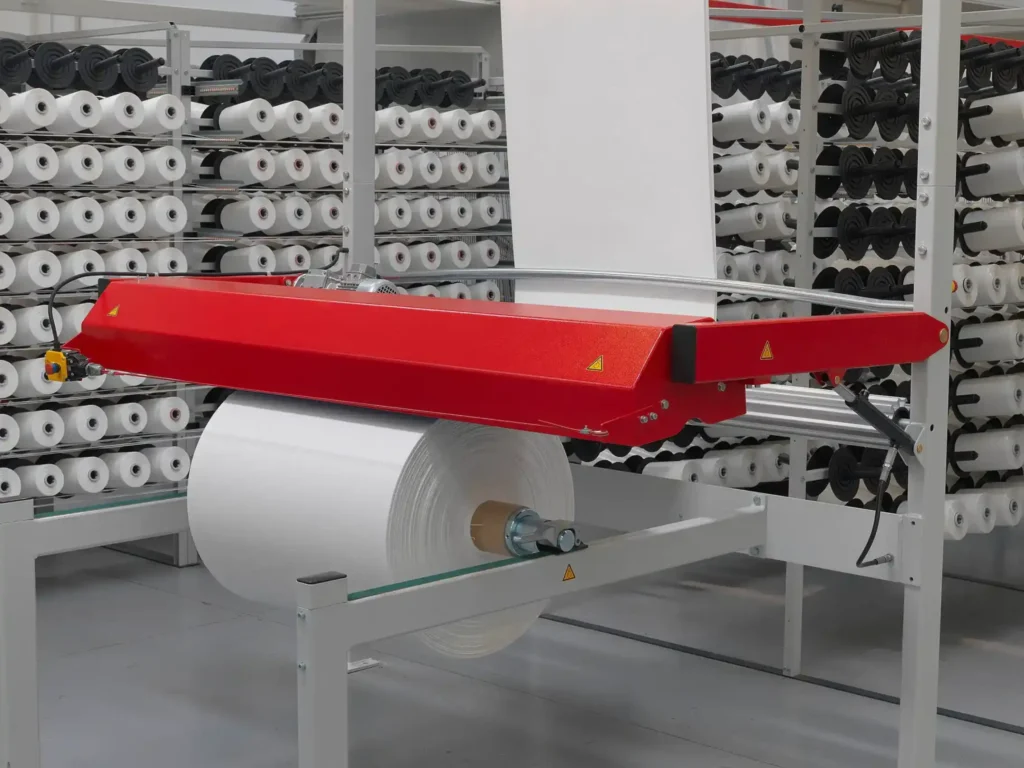
Orientation & weaving. Tapes are stretched to elevate crystallinity and tenacity, then heat‑set to lock dimensions. Circular or flat looms build fabric to target mesh/denier/gsm; pick density and tape uniformity drive puncture resistance and print smoothness.
Surface activation & BOPP lamination. Corona treatment raises surface energy to ≥38 dynes. 20–35 μm BOPP is laminated; bond strength (e.g., peel ≥1.5 N/15 mm) and flatness are tuned for forming speed. Matte/gloss topcoats are chosen with barcode glare and shelf lighting in mind.
Printing & code management. Rotogravure or high‑resolution digital presses deliver artwork, batch data, EAN/UPC/QR, and human‑readables. ΔE dashboards and in‑line spectro checks stabilize color; on‑press verification keeps ISO/IEC 15416 barcode grades at or above B. If a mark is the message, a quiet‑zone is the megaphone—leave it generous.
Cutting, forming & sewing. Heat‑cut tops reduce fray; block‑bottom or valve formats shape fill rate and pallet discipline. Stitch architecture—single/double folds, stitch count per inch—turns fabric capacity into durable seams while managing dust leakage.
Quality & compliance gates. Tensile (ASTM D5035), seam checks, migration tests to EU No 10/2011, hygiene audits to BRCGS Issue 7, and traceability (DoC/CoA) build the technical file. In‑process dyne telemetry and color SPC reduce drift. One failing knob—low dyne, brittle tape, thin topcoat—can ripple into returns; telemetry catches the whisper before it becomes a shout.
Horizontal/vertical analysis. Horizontally, converting borrows peel testing from films, uptime discipline from textiles, and HACCP zoning from food plants. Vertically, process drift propagates: dyne decay → ink pick‑off; over‑drawn tapes → brittleness; under‑stitching → seam splits; incorrect topcoat → barcode glare. The factory is a choir—one flat note spoils the harmony.
Data reinforcement. Installing live dyne telemetry and ΔE dashboards commonly halves print‑related rejects while improving barcode grades; DOE trials often justify stepping laminations from 30 μm to 25 μm without surrendering rub or color.
Case analysis. One VidePak partner trimmed BOPP from 30 μm to 25 μm after controlled trials; rub and ΔE held, glare fell, and annual film usage dropped ~8%.
Comparative study. PP‑only laminations retain mono‑material status and simplify sortation compared with paper/PE composites that complicate recycling streams.
What is the application of Printed BOPP Woven Bags? (Retail & FMCG)
Staples & grains. Rice, flour, sugar, pulses, and salt gain humidity control and billboard‑grade print. Printed BOPP Woven Bags with transparent windows showcase grain quality without surrendering pallet discipline. Color‑coded SKUs shorten pick paths; clear codes trim scan retries.
Pet nutrition & garden. High‑fat kibbles and lawn seeds attack faces with grease and abrasion; matte BOPP and tuned inks protect branding while keeping barcodes crisp. When handlers are tired and shifts are long, high‑contrast panels do the thinking.
Warehouse‑aided merchandising. Spine bars, oversized SKUs, and QR‑linked planograms help store teams execute resets faster. Ceiling‑mounted scanners appreciate matte topcoats—less glare, more certainty, fewer sweeps.
Data reinforcement. Retail‑oriented Printed BOPP Woven Bags frequently run 10/15/25 kg at mesh 10×10–14×14, fabric 80–100 g/m², BOPP 25–30 μm—settings echoed by audited supplier specs.
Case analysis. A pet‑food brand adopted matte BOPP with high‑contrast code panels; scan accuracy rose, and returns from wrong‑SKU shipments fell quarter‑on‑quarter.
Comparative study. Versus paper multiwall, moisture regain tilts the scoreboard toward BOPP/PP; versus PE film, long‑term pallet geometry at heat leans back to woven PP.
What is the application of Printed BOPP Woven Bags? (Industrial, Export & WMS Integration)
Fertilizers & agro inputs. Dusty, abrasive products stress packs and labels alike. Printed BOPP Woven Bags survive rough conveyors while codes remain scan‑clean after rub and dust exposure.
Chemicals & minerals (non‑hazardous). Anti‑slip back coatings increase inter‑layer friction; large human‑readables and color blocks speed manual verification when scanners struggle—because the backup plan should be built in, not bolted on.
Export lanes. Documentation packets—DoC/CoA, EU No 10/2011 migration data, BRCGS hygiene attestations—accelerate retailer acceptance. Near‑square block‑bottom formats and anti‑slip backs tame lean during sea voyages, protecting cube and credibility.
Data reinforcement. Export RFQs routinely ask for tensile/seam certificates, ΔE/adhesion data, barcode grade reports, and lamination confirmations. Typical widths are 300–700 mm for 10–25 kg SKUs—numbers you can verify in the market today.
Case analysis. A fertilizer exporter introduced oversized codes and anti‑slip backs on Printed BOPP Woven Bags; mis‑loads during containerization dropped, and claim rates slid below 0.3% per 10,000 units.
Comparative study. Where hermetic sealing is non‑negotiable, PE film systems may be mandated; where humidity, stacking height, and scuff coexist, the woven/BOPP hybrid stays on the efficient frontier.
Quick Spec Sheet (Typical, Commercially Verifiable)
| Parameter | Typical range / option | Technical note |
|---|---|---|
| Fabric weight (woven PP) | 70–110 g/m² | Select by bulk density & drop targets; keep margin for creep at heat |
| Mesh (warp×weft) | 10×10 – 14×14 | Higher mesh refines puncture resistance and print halftones |
| Denier (tapes) | 800D – 1200D | Balance tensile with forming pliability |
| BOPP lamination | 20–35 μm | 25–30 μm common for retail gloss; matte topcoats reduce barcode glare |
| Width | 300–700 mm | Typical for 10/15/25 kg SKUs and block‑bottom geometry |
| Printing | Rotogravure / digital | Maintain dyne ≥38; manage ΔE; verify rub via ASTM D5264 |
| Barcode/QR quality | Target ISO/IEC 15416 grade ≥B | Use high‑contrast panels and quiet zones for fast scanning |
| Testing | ASTM D5035 tensile; seam strength | Validate seam architecture under realistic loads |
| Sack standard | GB/T 8946‑2013 | General technical requirements for plastic woven sacks |
| Food‑contact | FDA 21 CFR §177.1520; EU No 10/2011; EC 2023/2006 | OML 10 mg/dm²; SML/NIAS controls; GMP documented |
| Hygiene system | BRCGS Packaging Materials (Issue 7) | GFSI‑benchmarked hygiene & hazard control |
| Circularity option | GRS v4.0 (where rPP is used) | Chain‑of‑custody verification; migration‑tested before scale |
Figures reflect ranges commonly listed by reputable suppliers and recognizable standards. Final specs must be proven via tensile, seam, drop, creep, migration, and print‑durability tests tailored to product density, route risk, and line speed.
A Systems‑Thinking Synthesis: VidePak’s End‑to‑End Solution
Sub‑problem A — Compliance without compromising print. Specify PP/BOPP, inks, and adhesives that meet FDA 21 CFR §177.1520 and EU No 10/2011; lock EC 2023/2006 GMP and maintain REACH‑compliant additive inventories. Solution: approved supplier lists, lot‑level DoC/CoA, periodic migration audits, and NIAS risk reviews keep dossiers clean while presses run fast.
Sub‑problem B — Strength vs. weight vs. stack height. Mesh/denier/gsm grids and laminate DOE establish a spec that clears ASTM D5035 tensile, seam tests, and pallet creep at heat. Solution: baselines for 25‑kg duty at 12×12 / 900D / 80–100 g/m² with 25–30 μm BOPP, then tune by bulk density and lane stress.
Sub‑problem C — Code readability vs. scuff and glare. Maintain dyne ≥38, use matte topcoats on code panels, and frame quiet‑zones with high‑contrast bars; target ISO/IEC 15416 grade ≥B. Solution: ΔE dashboards, rub testing, and on‑press grading integrate packaging with WMS reality.
Sub‑problem D — Warehouse ergonomics & WMS fit. Add anti‑slip backs, color‑coded SKUs, and pallet patterns matched to racking and forklift SOPs. Solution: pilot picks with operations, validate with compression trials, then freeze the spec and the SOPs together.
Integrated outcome. A mono‑material, warehouse‑native platform—Printed BOPP Woven Bags—that ships safely, scans quickly, stacks neatly, and tells the brand story without sacrificing line speed or audit confidence. Specification, verification, repetition.
The Advantages of Printed BOPP Woven Bags
Printed BOPP Woven Bags are a versatile and effective packaging solution. Their advantages include:
- Enhanced Branding: The ability to print logos, product information, and branding elements directly onto the bags ensures that your products are easily identifiable and promotes brand visibility.
- Improved Product Identification: With the option to include color stripes—such as blue, red, or green—these bags facilitate quick and easy categorization of contents. This is particularly useful in warehouses where managing various product types is essential.
- Durability and Strength: Made from BOPP (Biaxially Oriented Polypropylene) film, these woven bags offer superior strength and durability, ensuring that they can handle heavy loads and withstand the rigors of transport and storage.
Customizing for Warehouse Efficiency
One of the key benefits of Printed BOPP Woven Bags is the ability to customize them with color stripes. This feature plays a significant role in enhancing warehouse management:
1. Simplified Categorization
Color stripes on Printed BOPP Woven Bags serve as an immediate visual indicator of different product categories. For example:
- Blue Stripes: Could denote a specific product line or category.
- Red Stripes: Might be used for high-priority or urgent items.
- Green Stripes: Could indicate eco-friendly or organic products.
By using these color codes, warehouse staff can quickly sort and locate items, reducing the time spent on manual checks and improving overall efficiency.
2. Enhanced Inventory Management
Proper inventory management is crucial for any business. Printed BOPP Woven Bags with distinct color stripes help in tracking stock levels and managing inventory more effectively. When each category of product has its own color code, it simplifies the process of inventory audits and helps in preventing mix-ups.
3. Streamlined Sorting and Distribution
In large warehouses with diverse product lines, sorting and distributing items can be challenging. Color-coded Printed BOPP Woven Bags make it easier to organize products by type, destination, or priority. This streamlines the workflow and minimizes errors during the sorting and packing processes.
VidePak’s Approach to Printed BOPP Woven Bags
At VidePak, we leverage our extensive experience and advanced technology to produce high-quality Printed BOPP Woven Bags that meet the specific needs of our clients. Here’s how we ensure our bags stand out in the market:
1. State-of-the-Art Printing Technology
We use the latest printing technology to achieve high-resolution, vibrant prints on our BOPP woven bags. This technology ensures that our color stripes are sharp and consistent, making it easy to distinguish between different categories. Our printing process also allows for customization of logos, product information, and other branding elements.
2. Customizable Color Options
Understanding the importance of visual differentiation, we offer a range of color stripe options for our bags. Our clients can choose from various colors to best suit their categorization needs. Whether you require a specific color scheme or a combination of stripes, we can accommodate your requirements.
3. High-Quality Materials
The strength and durability of Printed BOPP Woven Bags depend on the quality of the materials used. At VidePak, we use premium BOPP film to ensure that our bags are not only visually appealing but also robust and reliable. The material choice guarantees that our bags can handle heavy loads and resist wear and tear.
4. Rigorous Quality Control
Quality is a priority at VidePak. We implement strict quality control measures throughout the manufacturing process to ensure that every bag meets our high standards. This includes testing for strength, print clarity, and overall durability to ensure that our bags perform consistently and effectively.
Industry Trends and Future Outlook
As the packaging industry continues to evolve, several trends are shaping the future of Printed BOPP Woven Bags:
1. Increased Demand for Customization
With the growing emphasis on branding and product differentiation, there is an increasing demand for customized packaging solutions. Printed BOPP Woven Bags are at the forefront of this trend, offering businesses the flexibility to tailor their packaging to specific needs and preferences.
2. Focus on Sustainability
Sustainability is becoming a significant concern in packaging. While BOPP bags are durable and efficient, there is a growing push towards incorporating recyclable or eco-friendly materials into the manufacturing process. VidePak is actively exploring sustainable options to align with this trend.
3. Technological Advancements
Advancements in printing and manufacturing technologies are continually improving the quality and functionality of Printed BOPP Woven Bags. Innovations such as enhanced printing techniques and automated manufacturing processes contribute to better performance and efficiency.
VidePak’s Industry Leadership
With over 20 years of experience, VidePak has established itself as a leader in the woven bag industry. Our expertise in producing Printed BOPP Woven Bags reflects our commitment to quality, innovation, and customer satisfaction. By combining advanced technology with a focus on practical solutions, we provide packaging that enhances operational efficiency and meets the evolving needs of our clients.
Whether you are looking for Printed BOPP Woven Sacks for specific product categories or require customized color stripes for better warehouse management, VidePak offers tailored solutions designed to meet your needs. Our dedication to quality and innovation ensures that our bags provide exceptional performance and reliability, supporting your business’s success.