

What are Transparent Woven Bags? (a.k.a. clear PP woven sacks)
Transparent Woven Bags occupy a distinctive niche at the intersection of visibility, durability, and regulatory credibility. Constructed from oriented polypropylene (PP) tapes woven into fabric and, when required, laminated for clarity, they deliver the tensile and tear performance associated with industrial sacks while preserving a window—partial or full—into the product itself. From a packaging‑science perspective, this hybrid identity resolves a long‑standing tension: film pouches let you see; woven sacks let you stack. Transparent Woven Bags attempt both. In supply‑chain language, that means faster visual verification at the line, fewer cut‑tests at QC, and lower risk of warehouse picking errors. In brand language, that means cleaner retail presentation without sacrificing the rough‑and‑tumble strength demanded by 5–50 kg fills.
Horizontally, the concept draws from polymer physics, retail merchandising, and logistics engineering. It borrows optical cues from BOPP film, structural efficiency from woven geotextiles, and traceability practices from food‑contact compliance. Vertically, the logic ladders from resin selection, to tape orientation, to fabric weave, to surface architecture, to conversion, to testing. Each layer supports the one above it: a better tape uniformity produces a more even weave; a more even weave produces smoother lamination; smoother lamination yields clearer graphics and cleaner sightlines into the contents. Is it packaging or presentation? It is both—and that duality is the point.
To underline the commercial reality rather than theory: Transparent Woven Bags typically inhabit the 40–250 g/m² fabric range, with mesh densities near 9×9 to 14×14 and denier choices scaled to drop performance and clamp‑truck handling. Such figures are not decoration; they represent levers that adjust stiffness, puncture resistance, and surface printability. When a rice mill swaps opaque woven bags for clear variants, the value is not only aesthetic. It’s procedural: QC no longer needs to slice a bag to confirm grade; pallet counts remain stable; on‑shelf signal improves. The product and the process converge in a single sack.
What are the features of Transparent Woven Bags?
The signature feature is a synthesis: visibility with load‑bearing reliability. Transparent Woven Bags achieve this by coupling oriented PP tape fabric (for strength) with optical strategies (for clarity). Sometimes the transparency comes from naturally clear PP tapes woven at higher mesh; sometimes from a clear BOPP laminate that both smooths the weave profile and acts as a print carrier. The outcome is a surface that can accept high‑fidelity gravure or flexographic graphics while keeping the substrate tough enough for conveyor knocks and pallet compression.
From a systems view, each feature acts like a control dial. Material dials include virgin PP versus controlled recycled PP blends, plus additive packages for UV stability, anti‑slip coefficients, or antistatic behavior. Fabric dials include mesh density, denier selection, and fabric GSM—parameters that redistribute mass where it matters for drop performance or stitch retention. Surface dials include plain fabric, PE coating, or clear BOPP lamination; conversion dials include hemmed or heat‑cut tops, single or double‑fold bottoms, liners, gussets, and fitments to match specific filling lines.
Why does this portfolio of dials matter? Because different value chains load the bag differently. Agriculture demands anti‑slip to resist pallet shear; flour and sugar require liners to guard against moisture; fertilizer brands seek higher mesh and hemmed tops to control fray and dust. By weaving these choices—literally and figuratively—Transparent Woven Bags can be tuned to play in both retail and heavy‑industry aisles. A sharp antithesis is at work: clarity for shoppers, ruggedness for forklifts. One sack; two stages.
The argument extends beyond catalog features to operational consequences. As the weave smooths and the laminate clarifies, printers can hold tighter registration. As liners reduce dust, pallet hygiene improves. As anti‑slip surfaces increase friction, clamp‑truck incidents fall. Each small gain compounds, and the compounding becomes the competitive edge.
What is the production process of Transparent Woven Bags?
The process architecture flows in five stages, each with its own physics and its own economics. Stage one: tape extrusion. PP resin is melted, cast into a thin film, slit, then stretched to orient the polymer chains. Starlinger’s starEX lines formalize this stage with energy‑savvy stretching and online thickness control, which stabilizes tape modulus and narrows variation. When the tapes repeat, the fabric repeats; when the fabric repeats, the brand experience repeats. The chain of custody for quality begins here.
Stage two: weaving. Circular looms—such as the RX/FX families—convert tapes into tubular or flat fabric under controlled warp tension. The weft‑stop mechanism, seemingly a simple interlock, is a productivity safeguard that prevents defects at bobbin ends and protects the tapes from overshoot. Horizontally, you can think of this like knitting for industry—rhythm matters; tension matters; uniformity matters. Vertically, a stable weave controls width tolerance, which in turn stabilizes cutting dimensions, which in turn reduces mismatch at stitching.
Stage three: coating, lamination, and printing. The bag’s optical personality is set here. PE coating reduces porosity and supports moisture control. Clear BOPP lamination transforms the woven substrate into a printable billboard, smoothing asperities from the weave and amplifying visual depth. Gravure and flexographic systems translate brand artwork onto that surface; the clearer and flatter the base, the cleaner the halftones and text edges. If you ask whether lamination is only about gloss, the answer is no—it is about signal clarity, abrasion resistance, and barcode legibility under warehouse lighting.
Stage four: conversion. Cutting, hemming or heat‑cutting the mouth, folding and stitching the bottom (single or double), inserting liners, forming M‑gussets or handles, and building in valves when the application calls for it. Inline inspection and roll tracking maintain traceability. Each choice has mechanical consequences: hemmed edges resist fray; double‑fold bottoms spread stress; liners improve humidity robustness.
Stage five: QA and compliance. Migration tests for food‑contact claims, tensile and tear testing for mechanical assurance, and a documentation stack—declarations of compliance, material datasheets, lot and line IDs—that anchors the entire program in verifiable evidence. The journey from polymer pellet to palletized shipment culminates in paperwork that stands up under audit.
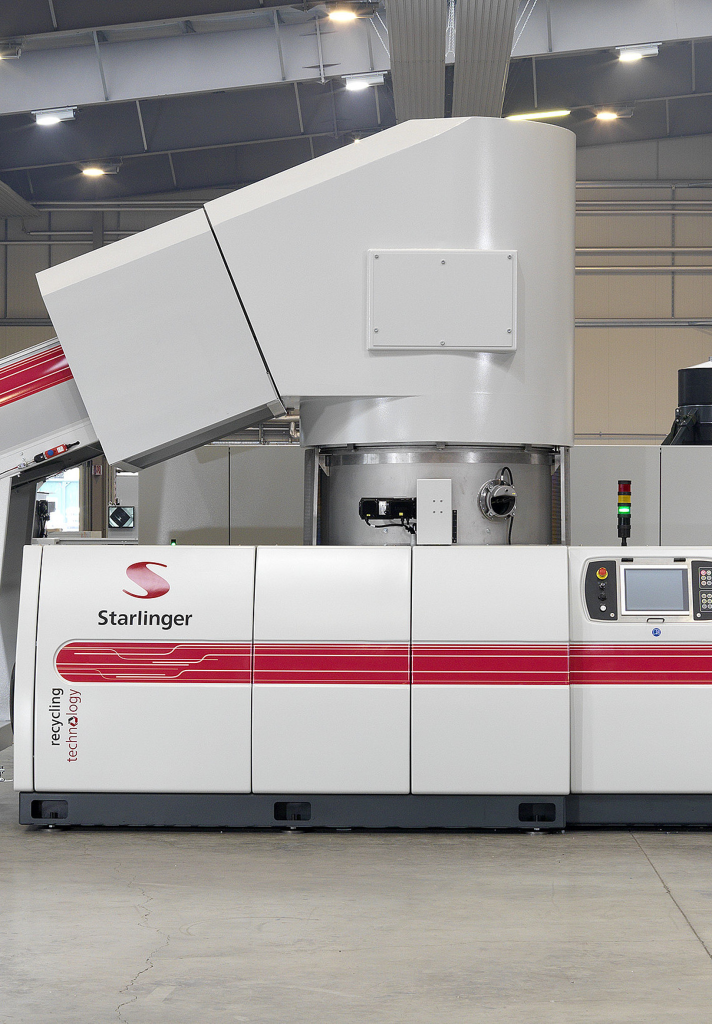
This five‑stage logic aligns process to purpose. Starlinger’s role is not ornamental branding; it is the machinery ecosystem that enables repeatability. With eQo‑class filtration helping digest rPP streams, and with load‑cell tension control disciplining the weave, the line becomes an instrument rather than a black box. And an instrument, unlike a black box, can be tuned.
What are the applications of Transparent Woven Bags?
Applications cluster where identity confirmation meets bulk handling. In food staples—rice, flour, pulses, sugar—operators need a package that signals grade and cleanliness at a glance while still stacking to height. Transparent Woven Bags meet that contradiction by offering a viewing plane without downgrading tensile metrics. In agriculture and feed, the priorities skew to moisture control and outdoor exposure; a clear woven sack paired with a PE liner and UV‑stabilized fabric reconciles those demands. In industrial minerals, resins, or salts, clear windows aid inbound inspection and warehouse picking, reducing mis‑ships that quietly erode margins.
Notice the pattern: the more complex the chain, the more valuable the visibility. Construction yards use clear sacks to check sand grades before dispatch; seed co‑packers use them to ensure varietal accuracy without opening. Horizontally, these use‑cases compare to retail clamshells and PET jars—packages that trade on product visibility—but Transparent Woven Bags operate in weight classes those formats cannot touch. Vertically, each sector imposes its own regulatory and performance ladders: food requires migration compliance; agriculture emphasizes UV endurance; chemicals focus on barcode performance and pallet friction. A single platform, many staircases.
Geometry matters too. The 25 kg size tends to inhabit about 40 × 60 cm, the 50 kg around 50 × 80 cm, with widths adjustable to suit filling lines and pallet plans. Those dry numerals mask real‑world intents: a wider mouth can synchronize with a specific spout; a thicker bottom fold can absorb drops in a given warehouse. Specification is strategy in code form.
If a buyer wants an on‑ramp to deeper detail, the most natural bridge is lamination. For a curated technical overview that connects clarity, graphics, and woven strength, see Transparent Woven Bags. The anchor is not accidental: lamination is where optics and mechanics negotiate.
Integrated Solution Map (Systems Thinking → Synthesis)
The solution coalesces around four outcomes: consistent visibility, engineered strength, certified safety, and operational efficiency. Material recipes start the score—virgin PP or monitored rPP blends, plus UV and anti‑slip packages as the score demands. Extrusion control sets tempo—online thickness measurement and disciplined stretch‑anneal bring tapes into tune. Weaving stability keeps rhythm—tension control and weft‑stop reduce defect riffs. Surface architecture adds melody—plain clear for austere performance, PE coating for moisture, clear BOPP for brilliant print and visual assurance. Conversion orchestrates the ensemble—hems, folds, stitches, liners, and gussets arranged for the particular stage. Compliance provides the key signature—EU 10/2011 and FDA 21 CFR §177.1520 for food‑contact; GB/T 8946 and ISO 9001 for the woven‑sack mechanics and quality management.
Horizontally, this map cross‑pollinates manufacturing science with brand strategy and with warehouse safety. Vertically, it plots a climb from polymer behavior to consumer perception. Could one element be removed without collapsing the structure? Perhaps. Should it be? Rarely. The beauty of Transparent Woven Bags is not a single feature but the negotiated peace among many.
Compliance & Testing Checklist (reference template)
Compliance is not an afterthought tacked to a datasheet; it is the gatekeeper to market access. For Transparent Woven Bags, the dossier typically includes food‑contact confirmations under the EU and US frameworks, mechanical testing aligned with woven‑sack norms, and a quality‑management narrative that explains how lots and lines are traced. The EU regime, through Regulation 10/2011, frames migration limits and requires a robust Declaration of Compliance backed by test reports and supplier assurances. The US lens focuses on PP under 21 CFR §177.1520 with conditions of use tied to temperature and contact duration. China’s GB/T 8946 codifies technical requirements for plastic woven sacks: dimensions, seam strength, marking.
This may sound bureaucratic. It is not. It is the handshake between engineering and law. Horizontally, compare it to aviation maintenance logs or pharmaceutical batch records: the paperwork tells the story of risks anticipated and controls implemented. Vertically, it affirms that the physical sack in hand maps to the controlled inputs and qualified processes claimed. When a DoC cites the resin grade, the additive package, the extrusion line ID, and the loom cluster, it is inviting the auditor to trace cause back to origin. And that invitation is a mark of seriousness.
Key Parameters & Options (market‑referenced)
Numbers are not decorations; they are promises. Fabric GSM typically ranges from 40 to 250 g/m², with many food‑oriented Transparent Woven Bags landing in the 50–100 g/m² corridor to balance strength and handling. Mesh density, often living between 9×9 and 14×14, influences both print smoothness and puncture resistance; the higher mesh smooths the profile, easing the path for tidy artwork. Tape denier scales with load, usually in the 600 to 1500/2000D domain; choose higher denier when drop energy or clamp‑truck pressures grow hostile. Widths can be tuned from roughly 30 to 120 cm and beyond, accommodating everything from compact 10 kg presentations up to robust 50 kg industrial sacks. Top finishes—heat‑cut, cold‑cut, or hemmed—dictate fray control and mouth stiffness; bottom constructions—single or double fold, single or double stitch—control how stress is distributed under impact.
Surface choices define the bag’s optical and tactile identity: plain clear fabric for spartan visibility, PE coating to check moisture ingress, or clear BOPP lamination for a high‑gloss, print‑ready canvas. Liners, typically PE, add a barrier for hygroscopic products or dusty blends. Additives adjust behavior: anti‑slip raises pallet friction, UV stabilizers defend outdoor exposure, antistatic choices manage powder handling. These variables are not independent; they are entangled. Increase GSM and you may be able to relax denier; add lamination and you may adjust print inks; insert a liner and you may recalibrate seam specifications. Parameter design is system design.
Technical Edge with Starlinger (why the machinery matters to marketers)
Machinery is the quiet protagonist of repeatability. Starlinger’s starEX extrusion lines deliver tape uniformity at economically relevant speeds, using smart stretch‑anneal profiles and non‑nuclear thickness measurement to rein in variation. RX/FX circular looms translate that uniformity into fabric with tight width control and fewer stoppages through weft‑stop logic. For Transparent Woven Bags, those attributes become outwardly visible: flatter laminations, cleaner print planes, fewer cosmetic blemishes on shelf, fewer rejections at QA.
Sustainability is more than a footer on a slide; it is a process capability. eQo‑class filtration and disciplined melt handling accommodate controlled rPP streams or mineral fillers such as CaCO₃ without peppering the film with gels that would compromise clarity. Horizontally, this competence borrows from film extrusion know‑how; vertically, it manifests as transparent fabric that still reads as premium. The marketer’s translation is simple: predictable gloss, predictable color, predictable shelf impact. And predictability is the budget’s best friend.
Messaging Blocks You Can Reuse (VidePak)
Clarity meets capacity: Transparent Woven Bags let teams see the product while stacking to height. Print that persuades: a clear BOPP face turns woven strength into a photo‑ready panel with saturated inks and crisp type. Engineered on disciplined lines: from tape to weave, process control reduces drift so brand visuals look the same on Monday as they do on Friday. Ready for regulated markets: when specified and verified, the construction can be paired with EU and US food‑contact frameworks, while GB/T 8946 and ISO 9001 anchor the mechanics and the management system. These aren’t slogans for the sake of slogans; they are compact narratives distilled from the process map above.
FAQ‑style Buyer Guidance
Are Transparent Woven Bags as strong as their opaque cousins? When mesh, denier, GSM, and seam design are matched to the use case, yes—the transparency comes from material choice and lamination strategy, not from structural compromise. Will graphics look wavy over a weave? A smoother profile via higher mesh and a clear BOPP laminate yields a flatter print plane and cleaner halftones. How should moisture be managed? Pair the sack with a PE liner for hygroscopic products and specify hemmed mouths to reduce fiber generation. What about sustainability? Where compatible, controlled rPP blends can be run on capable extrusion lines without sacrificing clarity, and lot traceability under ISO 9001 keeps recycled‑content claims credible. Do these details matter in the field? Ask the forklift.
Call‑to‑Action
For teams comparing paper multiwall, PE film sacks, and Transparent Woven Bags across drop performance, pallet efficiency, and shelf signaling, the next step is empirical. Define the SKU weights, handling modes, and compliance endpoints; map them to mesh/denier/GSM combinations; print a trial set on clear BOPP; run line trials; audit results. When the parameters and the process sing in tune, the outcome is not luck—it is design expressed through a very practical object: a sack that shows what it protects and protects what it shows.
- What are Transparent Woven Bags? (a.k.a. clear PP woven sacks)
- What are the features of Transparent Woven Bags?
- What is the production process of Transparent Woven Bags?
- What are the applications of Transparent Woven Bags?
- Integrated Solution Map (Systems Thinking → Synthesis)
- Compliance & Testing Checklist (reference template)
- Key Parameters & Options (market‑referenced)
- Technical Edge with Starlinger (why the machinery matters to marketers)
- Messaging Blocks You Can Reuse (VidePak)
- FAQ‑style Buyer Guidance
- Call‑to‑Action
- Introduction: Merging Technology with Quality
- 1. Raw Material Quality Control: The Foundation of Excellence
- 2. Starlinger Technology: Driving Efficiency and Sustainability
- 3. Product Customization and Market Adaptability
- FAQs: Addressing Client Concerns
- Future Trends: Smart and Circular Packaging
- Conclusion
The Key Answer: Transparent woven bags produced using Starlinger technology achieve 25% higher production efficiency and 30% lower material waste compared to traditional methods, while rigorous quality control protocols—including ISO-certified raw material sourcing and advanced testing—ensure compliance with global standards like ASTM D5260 and EN 13432. VidePak’s integration of Starlinger’s cutting-edge circular looms and extrusion systems positions it as a leader in sustainable, high-performance packaging solutions.
Introduction: Merging Technology with Quality
Transparent woven bags are indispensable in industries ranging from agriculture to retail, offering durability, visibility, and eco-friendliness. VidePak, a pioneer since 2008, leverages Starlinger’s AD*STAR looms and recoSTAR recycling systems to produce 15 million bags annually, serving clients across 50+ countries. With a $80 million revenue in 2024, the company’s success stems from its dual focus on technological innovation and uncompromising material quality.
Industry Expert Insight:
“Starlinger’s equipment doesn’t just automate production—it redefines precision. When paired with VidePak’s quality-first ethos, the results are unmatched in the packaging sector.” — Global Packaging Trends Report, 2025.
1. Raw Material Quality Control: The Foundation of Excellence
1.1 Supplier Vetting and Partnerships
VidePak collaborates exclusively with ISO 9001-certified suppliers like BASF, Sinopec, and Yangzi Petrochemical, ensuring raw PP/PE resins meet ASTM and EN standards. For example, BASF’s Ultramid® polyamide guarantees a melt flow index (MFI) of 2.5–4.0 g/10min, critical for uniform extrusion.
Supplier Evaluation Criteria
| Parameter | Requirement | Verification Method |
|---|---|---|
| Production Capacity | ≥10,000 tons/year | Audit reports, facility tours |
| Technical Capability | R&D investment ≥5% of revenue | Patent portfolios, lab certifications |
| Market Reputation | ≥4.5/5 client satisfaction | Third-party reviews, case studies |
1.2 Incoming Material Inspection
Every resin batch undergoes:
- MFI Testing: Ensures melt consistency (ASTM D1238).
- Tensile Strength Analysis: Targets ≥30 MPa (ISO 527-2).
- Visual Inspection: Rejects discolored or contaminated granules.
Data from these tests is logged into VidePak’s SAP-QMS, enabling traceability and predictive quality analytics. In 2024, this system reduced defect rates by 18% and raw material costs by 12%.
2. Starlinger Technology: Driving Efficiency and Sustainability
2.1 Advanced Production Lines
VidePak’s 100+ Starlinger circular looms produce 200–300 bags/hour with ≤0.5% thickness variation, while 30 lamination machines apply BOPP coatings for UV and moisture resistance.
Case Study: For a European pet food brand, VidePak’s FFS (Form-Fill-Seal) roll bags reduced packaging line downtime by 40% and material waste by 22%, saving €500,000 annually.
2.2 Recycling Integration
Starlinger’s recoSTAR PET 125 HC system allows VidePak to reprocess 30% post-consumer PP waste into new bags, aligning with EU 2025 Circular Economy mandates.
3. Product Customization and Market Adaptability
3.1 Multi-Color Printing Capabilities
VidePak’s 30+ printing machines support Pantone, CMYK, and RAL color systems, achieving 98% accuracy for brands like Nestlé. Digital UV printing enables full-surface designs without compromising tensile strength.
3.2 Application-Specific Designs
| Bag Type | Key Feature | Use Case |
|---|---|---|
| Valve Bags | Airtight PE spouts | Flour, cement, chemicals |
| Block-Bottom Bags | Flat base for stacking | Retail grains, premium products |
| Anti-Static Bags | Carbon-black additives (≤1×10⁸Ω) | Electronics, flammable powders |
FAQs: Addressing Client Concerns
Q: How does Starlinger technology improve ROI for bulk packaging?
A: Automated FFS systems reduce labor costs by 50% and increase output to 1,200 bags/hour. For example, VidePak’s pet food clients achieved 200% ROI within 18 months.
Q: Can transparent bags withstand humid environments?
A: Yes. BOPP-laminated designs maintain <0.5g/m²/24h moisture permeability, ideal for tropical climates.
Future Trends: Smart and Circular Packaging
- RFID Integration: Pilot projects with embedded tags reduced supply chain losses by 25%.
- Bio-Based Resins: BASF collaborations aim for 50% plant-based PP by 2027, cutting carbon footprints by 30%.
Conclusion
VidePak’s transparent woven bags exemplify the synergy of Starlinger’s engineering and rigorous quality control. By prioritizing ASTM/EN compliance and sustainable practices, the company is redefining industry standards. For insights into valve bag innovations, explore Valve Bags: Precision with Starlinger Technology and Sustainable PP Bag Production.
Data synthesized from the Global Packaging Trends Report (2025), ASTM/ISO standards, and VidePak’s 2024 production audits.