
Sewn Open Mouth Bags — Custom Printing for Versatile Design
As a VidePak marketing specialist, this narrative treats Sewn Open Mouth Bags as a complete system rather than a single SKU. Using systems thinking, it decomposes materials, mechanics, printing, conversion, and compliance into smaller levers, analyzes each with data, cases, and comparisons, then recomposes them into one practical, auditable solution for food and industrial brands.
What are Sewn Open Mouth Bags? (a.k.a. SOM woven sacks / sewn O.M. PP bags)
Sewn Open Mouth Bags are heavy‑duty sacks made from woven polypropylene (PP) or HDPE fabric that are filled through an open top and closed by stitching—single or double stitch, often with a fold‑over hem for stiffness and fray control. Also called SOM woven sacks, sewn O.M. PP bags, or open‑mouth raffia bags, they handle 5–50 kg fills—rice, flour, sugar, pulses, animal feed, fertilizers, salts, resins, and construction powders—where flexibility of filling equipment, generous print area, and robust stacking matter in equal measure.
Background & domain context. In materials science, the product behaves like a tape‑fabric lattice: denier, mesh density, and GSM govern tensile, tear, and puncture resistance. In print science, surface energy (dyne level) and roughness set ink anchorage, dot gain, and barcode contrast. In operations engineering, Sewn Open Mouth Bags function as unit‑load stabilizers that must withstand clamp‑truck pressure and pallet compression without corner failures. Horizontally, the platform borrows geotextile load paths (for strength), oriented‑film optics (for print), and food‑contact governance (for market access). Vertically, the logic climbs resin → tape → weave → surface (PE coating/BOPP lamination) → printing → sewing closure → QA → palletization.
Data reinforcement. Commercial ranges frequently listed by peer converters and marketplaces: fabric ≈60–140 g/m², mesh ≈9×9–14×14, tape ≈600D–1500D; optional PE coating ≈10–30 g/m²; BOPP lamination ≈15–25 μm for premium print; common footprints ≈40×60 cm (25 kg) and ≈50×80 cm (50 kg) with widths ≈35–100 cm. These ranges are widely used because they map cleanly to drop energy, stacking height, and print ambition.
Case analysis. A regional flour mill replacing plain woven sacks with matte‑laminated Sewn Open Mouth Bags and hemmed tops reported cleaner shelves (less fiber shed), faster line‑side SKU verification (graphic cues), and fewer returns linked to label abrasion.
Comparative study. Against paper multiwall: markedly higher wet strength and clamp‑truck survivability. Against tubular PE FFS film: better pallet friction and seam robustness, though peak automation speed may favor film. Against valve bags: slower fill on legacy lines, yet broader filler compatibility and larger front panels for branding.
What are the features of Sewn Open Mouth Bags?
Closure that adapts. Single or double stitching with optional 20–40 mm fold‑over hems tunes mouth rigidity and dust control. Hemming plus heat‑cutting reduces fray—a small detail with outsized retail impact. Where bulk density is high and drop energy punishing, double‑fold/double‑stitch bottom seams with PP multifilament thread distribute loads better than single‑fold patterns.
Surface architectures for print & hygiene. Choose plain woven for breathability, PE‑coated for moisture control and rub life, or BOPP‑laminated (clear/matte) for photographic graphics and improved abrasion resistance. Matte optics cut LED glare; gloss amplifies saturation. Tactile micro‑emboss options create subtle grip without over‑raising COF.
Handling & safety levers. Anti‑slip coatings set bag‑to‑deck COF in the ≈0.40–0.55 window—low enough to feed on conveyors, high enough to lock tall stacks. UV packages extend yard life; antistatic packages moderate charge in powders. Gussets increase volumetric efficiency when racking depth is constrained.
Seam durability that travels. Bottom constructions—single/double fold, single/double stitch—are matched to drop heights and content abrasiveness. Thread selection and stitch pitch distribute strain, improving survival under clamp turns. Where photometric inspection is available, cameras can flag skipped stitches that correlate with later burst events.
Horizontal thinking. Materials engineering smooths the base (denser mesh → flatter surface); printing translates flatness into tighter registration and higher barcode grades; warehouse safety links tuned COF to fewer pallet slides. Different disciplines, one throughput story.
Vertical thinking. Adjust mesh → lamination lay‑flat improves → halftones sharpen → code grades lift → mis‑picks fall. Adjust stitch pitch → bottom strain spreads → drop failures fall → pallet rework shrinks. Cause meets effect from resin to retail.
Data reinforcement. For 50 kg SKUs: substrate ≈90–120 g/m², mesh ≈10×10–12×12, BOPP ≈15–25 μm, COF ≈0.40–0.55, dyne ≈38–42 dynes post‑corona. Variable data remains readable when X‑height is ≥1.2 mm under warehouse lighting.
Case analysis. A feed brand added anti‑slip back coat and moved from single‑ to double‑stitch bottoms. Pallet creep dropped measurably; base ruptures during clamp handling decreased.
Comparative study. Sewn Open Mouth Bags vs. valve bags: simpler closure mechanics and broad filler compatibility win versatility; valve bags still excel in dust‑suppressed, ultra‑high‑throughput fills.
What is the production process of Sewn Open Mouth Bags?
1) PP granules selection & tape extrusion. Start with raffia‑grade PP (MFI ≈2–4 g/10 min at 230 °C/2.16 kg, ISO 1133; density ≈0.90–0.91 g/cm³). Melt → cast film → slit to tapes → stretch/anneal for orientation. Gauge control narrows tape modulus/width dispersion—preconditions for predictable weaving and flat lamination.
2) Weaving (circular or flat looms). Interlace tapes to target mesh/GSM under controlled warp tension. Weft‑stop and warp‑break detection localize defects, preserving width tolerance vital for clean cutting and print register. In high‑mix factories, loom‑to‑loom width dispersion below ±2 mm is the difference between smooth printing and chronic registration drift.
3) Surface architecture (coating/lamination). Extrusion‑coat PE 10–30 g/m² to tighten porosity and lift rub life, or laminate BOPP 15–25 μm (clear or matte) for premium optics. Corona treatment raises dyne to ≈38–42 dynes to stabilize ink/adhesive bonds. Peel curves are checked to avoid face‑pick on aggressive graphics.
4) Printing. Flexo (4–6c) for agile commodity art; gravure (8–10c) for photographic panels. Spectrophotometers track ΔE*ab ≤3 on brand‑critical hues; inline scanners grade barcodes to ISO/IEC 15416. Quiet zones and code placements are mapped to avoid jaw marks and fold lines.
5) Conversion & sewing. Cut bodies to size; add M‑gussets if volume efficiency is needed; finish mouths by heat‑cut or hem (20–40 mm typical); close bottoms with single/double fold and single/double stitch matched to drop energy and abrasiveness. Where dust is problematic, hemmed mouths plus tighter stitch pitch reduce fiber shed.
6) QA & compliance. Mechanics: tensile/tear, seam strength, ASTM D5276 (drop). Friction: ASTM D1894 (COF). Barrier (if laminated): ASTM E96 (WVTR) and ASTM D3985 (OTR for barrier stacks). Food‑contact dossiers cite Regulation (EU) No 10/2011 (overall migration ≤ 10 mg/dm²), FDA 21 CFR §177.1520 (olefin polymers), and GB 4806.7‑2016 where applicable. Governance under ISO 9001:2015; many food brands also request BRCGS Packaging or ISO 22000:2018. Third‑party labs such as SGS or Intertek commonly provide migration, rub, and seam‑strength reports.
Data reinforcement. Clear BOPP/PE stacks routinely achieve WVTR in low single‑digit g/m²·day at standard lab conditions; tightening weave width tolerance by ±2 mm typically reduces registration drift and barcode failure rates.
Case analysis. A spice exporter repositioned variable codes away from seam paths and introduced hemmed mouths. Label over‑stickers dropped; returns tied to unreadable codes fell quarter‑on‑quarter.
Comparative study. Solventless lamination over woven fabric yields clearer optics and uniform bonds for photographic art; extrusion coating excels on speed and ruggedness for commodity layouts—choose by graphics ambition and route severity.
What is the application of Sewn Open Mouth Bags?
Staple foods (10–50 kg). Rice, wheat flour, sugar, and pulses. Matte BOPP fronts carry retail‑grade nutrition panels; optional PE liners improve hygiene and moisture control; woven strength keeps pallets square on long routes. Shelf teams praise hemmed tops for their clean, lint‑free edge.
Feed & agriculture. Seeds and compound feed: UV‑stabilized fabrics and anti‑slip backs withstand yard exposure and clamp‑truck routines. Generous panels accommodate bilingual labeling and QR traceability.
Industrial minerals & chemicals (food‑adjacent). Salt, resins, pigments: antistatic packages moderate charge; matte faces hide rub marks; double‑stitch bottoms resist heavy drops. For abrasive powders, higher denier tapes and tighter stitch pitch curb seam wear.
Construction powders. Sand and aggregates profit from higher GSM, reinforced bottoms, and micro‑perforations calibrated for fill aeration. The open‑mouth format integrates with gravity chutes where valves would bottleneck flow.
Data reinforcement. Typical 50 kg builds: GSM ≈90–120, mesh ≈10×10–12×12, widths ≈50–80 cm, hemmed mouth ≈20–40 mm, and COF ≈0.40–0.55.
Case analysis. A sugar packer introduced matte‑laminated Sewn Open Mouth Bags with inner liners. Clumping reduced; barcode grades stabilized under bright retail lighting.
Comparative study. Laminated woven vs paper multiwall: superior wet‑chain survival and fewer corner ruptures; laminated woven vs plain woven: stronger shelf impression and better face scuff resistance.
What is the application of Sewn Open Mouth Bags? (sector‑specific deployment)
Food‑contact & retail signals. Constructions specified to EU 10/2011/FDA 177.1520 with a complete Declaration of Compliance unlock mainstream retail. Matte optics minimize glare over small type; hemmed tops project a clean shelf edge. QR serialization enables batch recall without visual clutter.
Yard storage & exposure. UV packages maintain fabric integrity; anti‑slip backs raise COF on wood or plastic decks; bold corner marks aid pallet counting in sun glare. When the yard is dusty, matte faces disguise superficial scuffs that don’t affect structural integrity.
High‑drop & abrasive duty. Raise GSM and denier; choose double‑fold/double‑stitch bottoms; prefer matte films/inks to disguise handling scars. For repeated short‑drops on fast lines, consider stitch pitch reduction to spread dynamic strain.
ESD‑sensitive powders. Antistatic additives and liners temper charge compared with plain PE film while maintaining woven strength and COF critical to clamp‑truck safety. Grounding protocols at the filler close the loop.
Cross‑disciplinary lens. Increase GSM and drop endurance rises—but mass and freight follow. Increase COF and stacks grip—but conveyors may need retune. Add a liner and moisture control improves—but seam pitch must be re‑balanced. The winning spec is negotiated by brand, safety, and line engineering—not copied from a template.
Compliance & testing (numbers that open doors)
- EU: Regulation (EU) No 10/2011 (plastics in contact with food; overall migration ≤ 10 mg/dm²; SML/QM as listed); maintain a Declaration of Compliance backed by migration/organoleptic data.
- US: FDA 21 CFR §177.1520 (olefin polymers) for PP/BOPP/PE layers under stated conditions of use.
- CN: GB/T 8946‑2013 (plastic woven sacks—dimensions, seams, marking, inspection rules).
- QMS: ISO 9001:2015 for resin‑to‑pallet traceability; many food brands also request BRCGS Packaging or ISO 22000:2018.
- Test methods: ASTM D5276 (drop), ASTM D1894 (COF), ASTM E96 (WVTR) and ASTM D3985 (OTR if barrier stacks), tensile/tear & seam strength per woven‑sack norms; laminate adhesion verified by T‑peel. Compliance is not ornament; it is the handshake between engineering and law.
Key Parameters & Options (market‑referenced)
| Parameter | Typical Range / Option | Purpose in the Field | Notes |
|---|---|---|---|
| Fabric GSM | ≈60–140 g/m² | Drop/stack strength vs mass | Heavier routes → higher GSM |
| Mesh density | ≈9×9 – 14×14 | Surface smoothness & puncture control | Denser mesh → flatter print base |
| Tape denier | ≈600D – 1500D | Impact tolerance & clamp‑truck survival | Interacts with GSM; validate on line |
| PE coating | ≈10–30 g/m² | Moisture control & rub resistance | Alters stiffness and seam behavior |
| BOPP film | ≈15–25 μm (clear/matte) | Optics & abrasion resistance | Matte hides scuffs; clear boosts gloss |
| Width × Length | ≈40×60 cm (25 kg); ≈50×80 cm (50 kg) | Pallet and filler alignment | Gussets increase volume efficiency |
| Mouth finish | Heat‑cut / hem ≈20–40 mm | Fray control & mouth stiffness | Hemming improves shelf look |
| Bottom seam | Single/double fold; single/double stitch | Impact load distribution | Double‑fold/double‑stitch for heavy drops |
| COF (bag/deck) | ≈0.40–0.55 | Conveyor feed vs stack stability | Set via anti‑slip coat or film texture |
| Dyne level | ≈38–42 dynes (post‑corona) | Ink anchorage & bond strength | Monitor drift on long runs |
| Barcode X‑height | ≥ 1.2 mm | Warehouse scan reliability | Keep codes off seam/clamp zones |
| Additives | UV / antistatic / anti‑slip | Exposure & powder behavior | Tune to climate and route |
Integrated solution (synthesis for VidePak buyers)
Design for reality, not for hope. Start with stabilized PP that draws into uniform tapes; weave to a mesh/GSM that supports lay‑flat; select surface architecture—plain, PE‑coated, or BOPP‑laminated—to balance optics, barrier, and route; print with ΔE and barcode‑grade targets; convert with hemmed mouths and double‑fold/double‑stitch bottoms where drop energy spikes; validate with COF, drop, seam, WVTR/OTR, and migration data under ISO 9001:2015 governance. For a quick category bridge aligned with this spec language, explore Sewn Open Mouth Bags—an intentional anchor linking this playbook to commercially available SKUs ready for line trials.
- Sewn Open Mouth Bags — Custom Printing for Versatile Design
- What are Sewn Open Mouth Bags? (a.k.a. SOM woven sacks / sewn O.M. PP bags)
- What are the features of Sewn Open Mouth Bags?
- What is the production process of Sewn Open Mouth Bags?
- What is the application of Sewn Open Mouth Bags?
- What is the application of Sewn Open Mouth Bags? (sector‑specific deployment)
- Compliance & testing (numbers that open doors)
- Key Parameters & Options (market‑referenced)
- Integrated solution (synthesis for VidePak buyers)
Introduction
In the chemical fertilizer industry, packaging must balance functionality with regulatory compliance. Sewn open mouth bags, characterized by their stitched closures and customizable designs, have emerged as a cornerstone for transporting hygroscopic and corrosive materials like urea, NPK compounds, and ammonium nitrate. For VidePak, a global manufacturer with 30+ years of expertise, the fusion of Starlinger production systems and tailored material configurations ensures these bags meet stringent performance benchmarks. This report explores how VidePak’s solutions tackle moisture control, heat dissipation, and international standardization while enabling brands to leverage印刷 as a strategic tool.
Material Science: Tackling Moisture, Heat, and Corrosion
Polypropylene (PP) remains the material of choice for sewn open mouth bags due to its inherent resistance to chemical degradation and adaptability to functional coatings. VidePak’s innovations include:
- Moisture Resistance: Multi-layer laminations (PP + PE or aluminum foil) reduce water vapor transmission rates (WVTR) to <5 g/m²/day, critical for fertilizers prone to clumping.
- Heat Dissipation: Micro-perforated designs allow controlled airflow, reducing internal temperatures by 10–15°C during storage—key for exothermic compounds like ammonium sulfate.
- Corrosion Resistance: PP’s inertness and anti-static additives prevent reactions with acidic fertilizers, extending bag lifespan by 40% compared to traditional jute.
Case Study: A Brazilian fertilizer supplier reduced spoilage by 30% using VidePak’s 120 GSM laminated bags with double-stitched seams, which withstood 50 kg loads and 85% humidity in tropical climates.
Global Standards: Compliance Across Markets
1. EU Standards (EN 13432)
- Recyclability: Bags must degrade ≥90% within 12 months in industrial composters. VidePak’s “EcoShield” line uses 30% recycled PP and bio-based PE coatings.
- Chemical Safety: Migration limits for heavy metals (e.g., lead <0.01 mg/kg) align with REACH regulations.
2. U.S. ASTM D5639-23
- Load Capacity: Bags must withstand 50+ drops from 1.2 meters without rupture. VidePak’s double-lock stitching achieves a burst strength of ≥40 psi.
- Static Control: Surface resistivity <10¹² Ω/sq for flammable dusts, achieved via carbon-infused PP fibers.
3. China GB/T 8946-2013
- UV Resistance: Post-aging tensile strength retention ≥50%. VidePak’s UV-stabilized inks and BOPP coatings exceed this threshold.
| Parameter | EU (EN 13432) | U.S. (ASTM) | China (GB/T) |
|---|---|---|---|
| Moisture Barrier | ≤5 g/m²/day | ≤8 g/m²/day | ≤10 g/m²/day |
| Load Capacity | 25–50 kg | 30–60 kg | 20–50 kg |
| Recyclability | ≥90% compostable | N/A | ≥85% recyclable |
Customization and Parameter Selection
1. Thickness & Grammage (GSM)
- Lightweight (80–100 GSM): Ideal for non-hygroscopic fertilizers like potassium chloride.
- Heavy-Duty (120–150 GSM): For corrosive or high-moisture compounds (e.g., DAP), paired with PE liners.
2. Printing Technologies
- UV-Resistant Inks: Withstand 12+ months of outdoor storage without fading, critical for tropical markets.
- QR Code Integration: Enables batch tracking and compliance with EU’s CBAM carbon reporting mandates.
Dialogue Example:
Q: “How do we prevent fertilizer clumping in humid regions?”
A: “Our PE-coated bags with silica gel sachets maintain <10% RH internally, complying with GB/T 8948-2008防潮标准.”
VidePak’s Production Capabilities
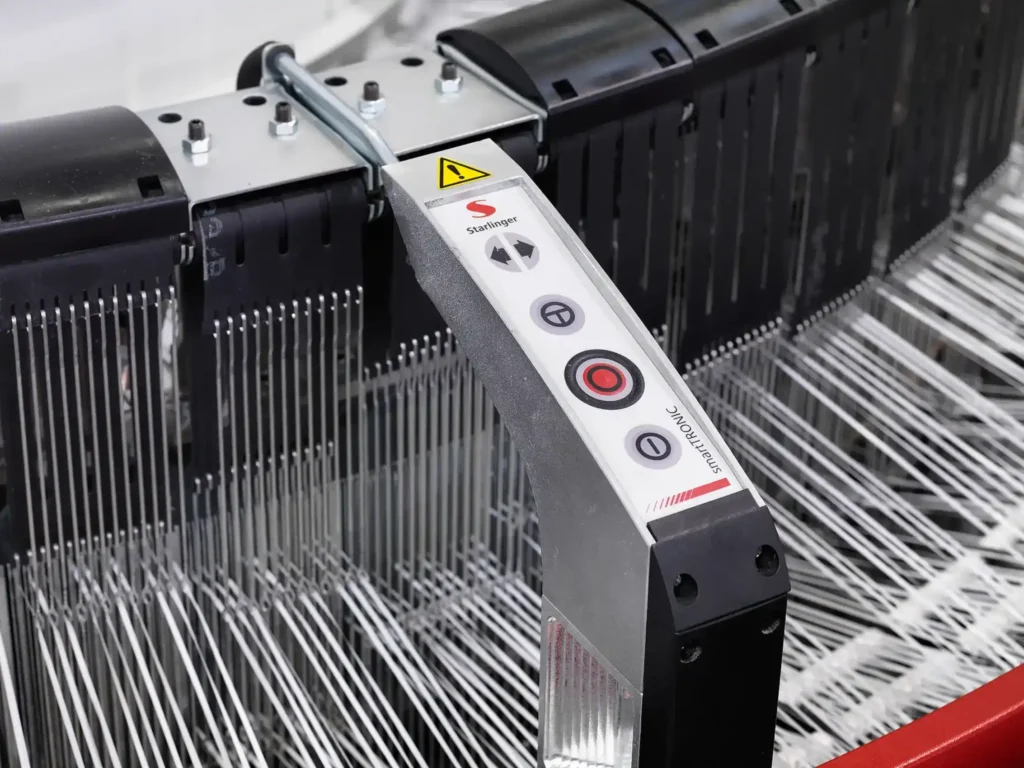
With 100+ Starlinger circular looms and 30+ lamination machines, VidePak achieves:
- Rapid Turnaround: 72-hour prototyping for custom prints (e.g., hazard symbols or multilingual labels).
- Certifications: ISO 9001, FDA, and Sedex compliance for global market access.
- Sustainability: 100% PP recyclability and water-based inks reduce carbon footprint by 25%.
FAQs: Addressing Industry Pain Points
Q1: How to choose between laminated vs. non-laminated bags?
A: Laminated bags (e.g., PP+PE) are essential for hygroscopic fertilizers in humid climates, while non-laminated suits dry, powdered compounds.
Q2: Are colored prints safe for food-grade fertilizers?
A: Yes. VidePak’s inks are ISO 22000-certified and comply with EU 10/2011 migration limits.
Market Applications and Case Studies
1. Compound Fertilizers (NPK)
- Challenge: Heat buildup during storage.
- Solution: Ventilated mesh panels reduce internal temps by 12°C, meeting ASTM D5639 thermal thresholds.
2. Urea Transport
- Challenge: Moisture-triggered caking.
- Solution: Aluminum foil laminations + desiccant liners, achieving WVTR <3 g/m²/day.
Conclusion
Sewn open mouth bags are evolving from passive containers to intelligent systems that enhance safety, compliance, and brand value. VidePak’s integration of Starlinger precision, global-standard materials, and customizable印刷 positions it as a pioneer in the fertilizer packaging sector. As ESG mandates and automation reshape logistics, the company’s commitment to R&D ensures it remains at the forefront of the $18 billion market.
External Links: