
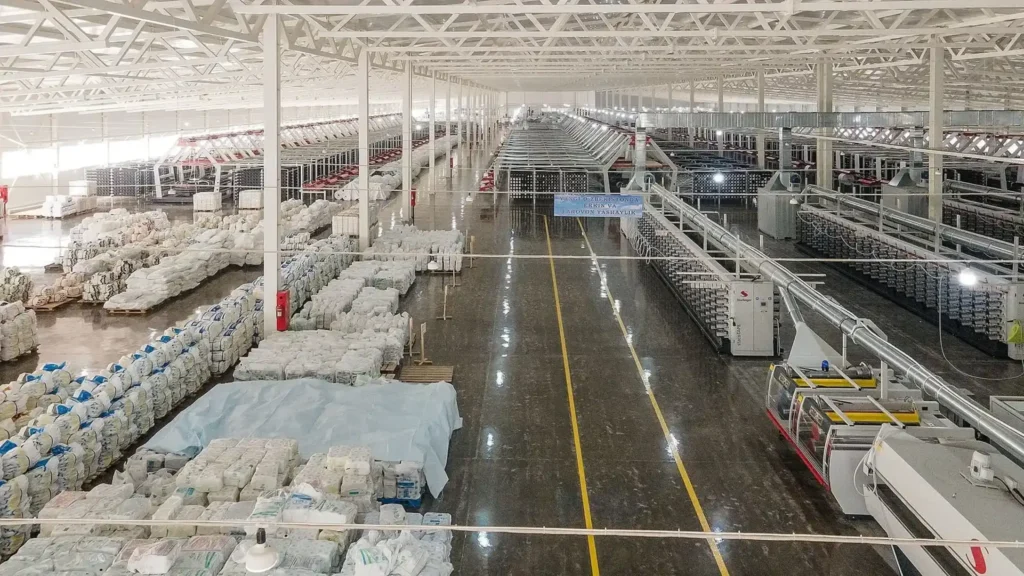
Title: HDPE Fabric Bags: Navigating Waste Management and Regulations
H2: What is HDPE Fabric Bags? Definition and Common Aliases
HDPE Fabric Bags are industrial-grade sacks made by weaving high‑density polyethylene (HDPE) tapes into a robust textile and then converting that textile into finished packages through cutting, gusseting, sewing, and—where required—coating or lamination. In market vernacular they appear under several aliases: HDPE woven sacks, woven poly bags, high‑density polyethylene woven bags, heavy‑duty woven waste sacks, or woven HDPE collection bags. Whatever the label, the underlying intent is consistent: exploit the crystalline stiffness and stress‑crack resistance of HDPE while leveraging the damage‑tolerant geometry of a woven grid. The result is a sack that behaves less like a disposable liner and more like an engineered component—predictable under load, forgiving under abuse, legible under dust.
To understand why HDPE Fabric Bags occupy a special niche, consider how materials, mechanics, and regulation collide in waste operations. Materials: HDPE has higher crystallinity than LDPE or many PP grades, which elevates modulus, improves stress‑crack resistance, and lowers water vapor transmission rate (WVTR). Mechanics: the cross‑hatched weave forces any nascent tear to zigzag across warp and weft, dissipating energy at each tape intersection, arresting crack growth that would slice through a monolithic film. Regulation: environmental health and safety (EHS) rules punish leaks, dusting, and mislabeling, while transport rules insist on drop resistance, stack stability, and—sometimes—dangerous‑goods (DG) compliance. A bag that can be stacked, scanned, sealed, and certified becomes a quiet ally in a noisy system.
Why not deploy a single universal container for all waste? Rigid drums survive rough treatment but multiply transport cost and reverse logistics. Paper sacks signal recyclability but lose their temper in damp weather. Plain films are clean to seal but fail at the first nail or glass shard. HDPE Fabric Bags are the middle way: stronger than film, more weather‑proof than paper, cheaper and lighter than drums. They fold flat in storage, spring back on the line, and accept both stitching and sealing strategies. Is compromise a weakness here? Not when the compromise is purposeful—strength where it matters, flexibility where it helps, documentation where it protects.
Because waste streams are diverse, the category itself has multiple sub‑species. Coated variants present a heat‑sealable interior to control dust. Laminated variants (e.g., BOPP outside) emphasize abrasion‑resistant graphics for compliance signage. Plain uncoated variants prioritize breathability and cost in dry, indoor regimes. Valve‑style mouths support certain filling stations, while open‑mouth formats enable universal handling. No single recipe is sovereign; the “right” HDPE Fabric Bags specification emerges from the intersection of product rheology, route conditions, hygiene expectations, and audit exposure.
If you need a quick wayfinder into the broader landscape of woven packaging while evaluating your HDPE options, this orientation link can help: HDPE Fabric Bags. Use it as a signpost rather than a destination; the key is to translate your waste profile into structural, closure, and labeling choices that your warehouse can execute repeatedly.
One last definitional nuance: the word “fabric” is not marketing flourish. It signals that the package is a textile—in the literal sense—whose performance is set by tape width, pick density, draw ratio, and seam architecture. Where a plain film spreads stress like a drum skin, a woven textile channels it like a truss. The difference is not academic; it is audible in the warehouse when pallets no longer creak, when forklifts corner without cargo drift, when operators stop double‑wrapping “just in case.”
H2: What is the features of HDPE Fabric Bags? A systems view with data reinforcement, case analysis, and comparative study
Features alone tell an incomplete story; features connected to failure modes tell the whole truth. Below, each capability of HDPE Fabric Bags is examined as an answer to a recurring operational question, then triangulated by data, illustrated by a case, and set against credible alternatives.
1) Structural resilience under sharp, irregular loads. Construction debris, cullet, e‑waste, and agricultural residues impose mixed hazards: point loads that try to puncture, edge loads that try to slit, and bulk loads that try to creep over time. The woven lattice forces a crack to zig then zag, shedding energy at tape crossings; the HDPE tape’s high modulus limits elongation, so the bag holds its rectangle and keeps the pallet stable. Data that anchor this resilience are realistic rather than aspirational: fabric masses of 60–140 g/m², grab tensile (warp/weft) in the 600–1200 N/5 cm neighborhood, seam strength often beyond 300 N (practical methods adapted from ISO 13934‑1 and ASTM D5034 for textiles). In the 25 kg class, drop performance at 0.8–1.2 m (ASTM D5276) is a routine gate. Case in point: a municipal MRF replaced 80 μm LDPE liners with 90 g/m² HDPE Fabric Bags for glass cullet; puncture loss shrank, housekeeping time fell, and forklifts no longer had to babysit leaning stacks. Comparison cuts cleanly: vs LDPE film sacks, woven HDPE keeps tears from running; vs PP woven, strength is similar but HDPE yields lower WVTR and better stress‑crack resistance; vs paper, wet performance is not a contest.
2) Moisture management and outdoor tolerance. Waste often lives outdoors—on docks, in yards, on exposed truck beds. Paper saturates, stretches, and surrenders; plain film flaps and abrades; uncoated textiles can wick. Coatings or laminations over the inner or outer face reduce WVTR and seal porosity, while UV stabilization in the tape resin (e.g., 0.2–0.5% HALS or UV absorbers) defers embrittlement in sunlight. A surface coefficient of friction (COF) tuned to 0.35–0.55 keeps pallet layers obedient in hot sheds where wrap loses bite. Data worth believing: the 200–300 kLy UV class is a common outdoor yard target; topcoat finishes around COF 0.45 calm cornering. A compostable‑waste collector that standardized on coated HDPE Fabric Bags with an 0.45 COF topcoat saw summer pallet slumps vanish and cut two stretch‑wrap cycles without increasing claims. Against PP woven, HDPE can show lower creep under constant load; against paper valve sacks, any wet weather turns the comparison into triage.
3) Hygiene, containment, and legible labeling. Regulators dislike dust, customers dislike leaks, and auditors dislike illegible labels. Sewing alone can shed lint; an unsealed mouth can breathe fines during transit vibration. Heat‑cut edges paired with inner coatings control dust at the mouth; BOPP lamination offers abrasion‑resistant graphics and scuff‑proof hazard icons. Many buyers align acceptance to ISTA 3A transport simulations and test dart impact (ASTM D1709) on films or laminates. A pharma excipient recycler introduced laminated HDPE Fabric Bags with oversized icon panels and saw a drop in label‑legibility non‑conformances after long truck hauls. Film FFS sacks still win the “cleanest mouth” prize, but they capitulate earlier to puncture; paper prints beautifully but scuffs; woven HDPE plots the middle course—clean enough, tough enough, readable enough.
4) Compliance‑ready construction. Waste handling intersects a stack of rulebooks: ISO 9001 for quality systems, ISO 14001 for environmental management, ISO 45001 for occupational health and safety, EU 94/62/EC for packaging heavy metals (≤100 ppm total), FDA 21 CFR 177.1520 and EU 10/2011 for food/compost contact where relevant, and UN Model Regulations (5H1/5H2/5H3 codes) when DG lanes are in play. ESD management under IEC 61340 frameworks becomes relevant where combustible dusts are present. The virtue of HDPE Fabric Bags is not that they magically comply but that they can be built to comply, repeatedly, with auditable paperwork: UN design type tests log drop/tear/topple/stacking at accredited labs; migration tests document simulant exposure and pass/fail; heavy‑metal screening keeps inks and masterbatches inside limits. A chemical plant shipping an irritant but non‑DG filter cake specified UN 5H2 sift‑proof sacks to unlock carriers that previously refused the lane—compliance as passport, not red tape.
5) Information design that humans see and cameras trust. Sorting errors at docks and transfer stations seed rework, fines, and near‑miss incidents. Large chromatic bands (20–40 mm) woven or printed into HDPE Fabric Bags serve as far‑field cues; dedicated icon zones standardize hazard, recycling, and material codes; barcodes and QR handle batch‑level traceability. In dusty yards, color survives where small labels fail; under machine‑vision pilots, stripe anchors cut mis‑picks compared to label‑only pallets. An e‑waste consolidator used bright orange bands for lithium‑ion feedstock; supervisors policed segregation from twenty meters without a scanner. RFID/2D codes are superb at scan distance but brittle under abrasion; color coding is resilient and cooperative—human first, scanner second, camera always.
Across these five lenses, the pattern is consistent: HDPE Fabric Bags are less a list of attributes than a choreography of trade‑offs tuned to the job. The bags are not generic; they are local to your waste physics, your warehouse climate, your audit rituals, your budget. The better the fit, the quieter the dock.
H2: What is the production process of HDPE Fabric Bags? From resin to ready load
Production is the art of turning microscopic order into macroscopic reliability. Every stage—resin, tape, fabric, coating, graphics, conversion, testing—casts a long shadow into the warehouse. If a shortcut is taken, the defect will surface at the worst possible time: on a Friday afternoon, on a full line, with dispatch waiting.
1) Resin selection and tape extrusion. HDPE grades are chosen for drawability and stress‑crack resistance; practical Melt Flow Index values for woven tape extrusion sit around 3–8 g/10 min (190 °C/2.16 kg). Stabilizer packages add UV endurance (HALS/UV absorbers ~0.2–0.5%), slip/antiblock tune the surface COF, and antistatic agents palliate charging on dusty lines. Extrusion creates a film, slitting yields tapes (often 1.8–3.0 mm), and orientation draws those tapes to align polymer chains, building tensile strength while managing crystallinity so cold rooms don’t embrittle the product. Draw too little and tapes will neck; draw too much and they will snap. The future seam is decided here.
2) Weaving and fabric control. Circular or flat looms convert tapes into fabric. Warp and weft tensions must be balanced; pick density (e.g., 8–12 tapes/cm) must be uniform. Skips and broken ends turn into weak lanes that only reveal themselves when a pallet meets a dock plate. For HDPE Fabric Bags, fabric mass commonly spans 60–140 g/m² in 10–50 kg formats. UV‑stabilized tapes are specified when staging outdoors is part of normal life; otherwise, indoor programs may omit UV to simplify future recycling.
3) Coating and lamination (optional but impactful). Coatings (HDPE or PE coextrusion) around 15–30 g/m² add dust/moisture barriers and create a sealable inner face. For high‑fidelity graphics and abrasion‑resistant signage, BOPP lamination over the outer face enables rotogravure art. Coating lines monitor corona treatment for print adhesion; seal windows are established for hot‑air or ultrasonic closure: temperature, jaw pressure, and dwell times that create peel strength without scorching or zippering. Optional antiskid topcoats lift COF to the pallet program’s target.
4) Printing and visual systems. Flexographic presses lay down regulatory blocks, batch barcodes, and QR codes; icon grids standardize hazard pictograms and recycling marks (resin code “2” for HDPE, EN 13430 recyclability claims where relevant). Color bands are not mere branding; their width and placement are held within narrow tolerances so that camera systems can lock onto them during automated checks. Ink and adhesive systems are screened for heavy‑metal content to satisfy EU 94/62/EC.
5) Cutting, forming, and sewing or heat‑finishing. Heat cutting seals edges to prevent fray; side gussets (often 60–90 mm at 25 kg sizes) are formed to build brick‑stacking geometry. Bottoms may be single or double folded with chain‑stitch or lock‑stitch; sift‑proof designs employ filler cords or overlapping coatings. Mouths can be left heat‑cut open, hemmed, or built as valve sleeves for specific lines. Where hygiene dominates, coated interiors enable hot‑air or ultrasonic mouth sealing to suppress dust emission. Conversion tolerances are not cosmetics. A 3 mm drift in width multiplied by five layers on four corners becomes a pallet that leans like a question mark.
6) Quality control and type testing. Routine tests cover grab tensile/elongation (ASTM D5034/ISO 13934‑1), seam strength (adapted textile methods), COF (ASTM D1894), drop tests (ASTM D5276), and dart impact on any film or laminate (ASTM D1709). Outdoor classes undergo UV exposure simulation; print adhesion is checked by tape pull. If DG routes are contemplated, UN 5H1/5H2/5H3 design type testing (drop, tear, topple, stacking) occurs at accredited labs (SGS, TÜV, BV). The pass/fail is documented, not merely claimed, and the UN mark string emerges (e.g., “5H2/Y25/S/24/CN/SGS123456”).
7) Documentation and traceability. Shipments leave with a portfolio: ISO 9001/14001/45001 certificates, heavy‑metals declarations under 94/62/EC, food/compost‑contact declarations (FDA 21 CFR 177.1520; EU 10/2011) where needed, and UN test reports if applicable. Lot coding on each bag plus retained samples enable recall containment. In audits, the paper moves faster when the paperwork is ready.
Production, put simply, is where repeatability is purchased. The line that controls its inputs—resin lots, draw ratios, pick density, coating weight, seal windows—sells calm pallets and quiet docks downstream.
H2: What is the application of HDPE Fabric Bags? Industry scenarios and selection logic
Applications reveal the soul of a specification. Where do HDPE Fabric Bags thrive—and why?
1) Municipal and industrial recyclables. Use cases include source‑separated glass, metal offcuts, rigid plastics. Strength arrests puncture; antiskid finishes steady pallets; oversized icon blocks hold recycling marks that refuse to vanish under scuff. A regional MRF that shifted to 100 g/m² woven HDPE for cullet reduced spill incidents by roughly forty percent while also trimming sweep labor. Film liners looked cheap per unit and expensive by the hour; woven HDPE inverted that math.
2) Construction and demolition (C&D) waste. Tile shards, nails, gypsum fines—they all conspire to punish flimsy packaging. Moisture swings are violent; forklift forks are impatient. A hauler standardizing on coated, water‑resistant (5H3‑style) HDPE Fabric Bags saw claims due to bag failure collapse and could lighten wrap programs without anxiety. Paper sacks routinely fail in the wet; PP woven can match performance at higher GSM; HDPE adds lower WVTR and credible outdoor stamina.
3) Agri‑residues and biomass. Husks, seed cakes, and pelletized biomass await rain even on sunny days. Coated HDPE woven with a 300 kLy UV class endured two monsoon seasons for a biomass consolidator; labels stayed legible, resin codes stayed honest. Natural fibers like jute breathe but shed and mold; film FFS punctures early; HDPE Fabric Bags deliver usable breathability with usefully high toughness.
4) E‑waste and hazardous adjuncts (non‑DG vs DG). Lithium‑ion feedstock and PCB scrap pose segregation and sometimes DG complications. Orange‑banded sacks with UN 5H2 markings passed carrier audits; supervisors could police segregation visually without halting work to scan. Rigid drums control DG perfectly but balloon costs; woven HDPE is the nimble compromise for solids where UN‑tested options are acceptable.
5) Food and feed by‑products bound for compost or feed streams. Off‑spec flour, expired grains, and spent grains require hygiene documentation to exit the plant and be accepted downstream. With food‑contact declarations and hygienic mouth sealing, mills moved expired flour safely into composting; local partners accepted without debate. Paper works when dry and close; HDPE Fabric Bags extend the radius and the weather window.
Selection logic (a decision tree). Step 1—Hazard profile: RCRA/EU WFD categories, DG vs non‑DG. If DG is in play, pursue UN 5H1/5H2/5H3 with accredited type tests. Step 2—Rheology and sharpness: pick GSM and coating for puncture and tear; add filler cords for sift‑proof seams. Step 3—Staging and climate: set UV class, inner/outer coatings, and surface COF to the yard you actually have. Step 4—Hygiene and labeling: specify lamination and icon zones for legibility; add color bands for far‑field identification. Step 5—Compliance dossier: lock certificates (ISO 9001/14001/45001), material limits (94/62/EC), contact declarations (FDA/EU) as needed, and any EPR labeling (OPRL/Triman/How2Recycle) for the destination market. Follow the tree and the right HDPE Fabric Bags configuration emerges without arguing.
H2: Systems thinking in action: decomposing and recombining into a single solution
Warehouses are ecosystems—people, pallets, programs, policies. To specify HDPE Fabric Bags intelligently, treat them as a node in a feedback loop: package → filling line → pallet → truck → depot → opener → waste stream → audit. Decompose to see the knobs; recombine to make the orchestra keep time.
Subsystem A — Structure. Inputs: GSM (60–140 g/m²), tape width, pick density, gusset depth, coating mass. Outputs: tensile and tear margins, face flatness, stack geometry, pallet COF. Pulling one lever moves the rest. Increase GSM to lift seam margins and the fold becomes stiffer; stiffer folds change how layers settle; altered settling modifies the wraps you need. Structure must be tuned against pallet trials, not guessed on paper.
Subsystem B — Closure. Options: sewn single or double fold with chain‑stitch/lock‑stitch; coated interior plus hot‑air or ultrasonic mouth sealing for dust‑tight containment. Trade‑offs: sewing forgives contamination but can shed lint and admits pinholes; heat sealing is cleaner but demands a disciplined seal window (temperature, pressure, dwell) and clean lips. You can choose either, but not casually. The closure is a gate that either keeps accountability inside or lets it leak into your audit log.
Subsystem C — Information. Elements: color bands as human‑vision channels; icon zones for hazard and recycling; UN mark blocks for DG; barcodes/QR for batch traceability. Outcome: fewer mis‑picks, faster audits, easier EPR claims. When color mapping in the training guide matches camera templates which match WMS rules, docks run on recognition rather than recollection.
Subsystem D — Compliance and ESG. Anchors: ISO 9001/14001/45001; 94/62/EC ≤100 ppm metals; FDA 21 CFR 177.1520; EU 10/2011; UN 5H* codes; IEC 61340 for static‑managed programs; ISO 18604 for disciplined recycling claims. Compliance is not a delay—it is the shortest path through an audit and the cheapest insurance for your brand.
Subsystem E — Operations. Variables: line speed, deaeration strategy, pallet pattern, wrap program, dock climate. KPIs: claims rate, spill incidents, wrap cycles, audit non‑conformances, and even CO₂/ton‑km (because stable pallets and fewer reworks clean the carbon ledger). The operations subsystem is where good intent dies unless you teach crews what a healthy bag looks like, when a stripe color is wrong, and why a slippery COF feels dangerous on an incline.
Synthesis. Put the subsystems back together as a policy encoded in fabric: a family of HDPE Fabric Bags standardized on footprints, gusset rules, COF windows, closure types, stripe codes, and compliance packets. The practical result is fewer interventions, calmer forklifts, shorter audits, and a dock that sounds like it’s supposed to—busy but not frantic.
H2: Key parameters and technical anchors (text table)
The following table consolidates realistic parameters used when specifying HDPE Fabric Bags. Treat them as guardrails. Field trials should always confirm what paper proposes.
| Parameter | Typical / Options | Technical Anchor / Notes |
|---|---|---|
| Fabric GSM | 60–140 g/m² | Higher GSM for sharp/denser waste; tune to drop and tear margins |
| Flat width | 300–650 mm | Aligns to forming sets and pallet patterns |
| Cut length | 500–1100 mm | Tuned to targeted volume and product density |
| Pick density | 8–12 tapes/cm | Even load distribution; avoids weak lanes in fabric |
| Grab tensile (warp/weft) | 600–1200 N/5 cm | Textile methods: ISO 13934‑1 / ASTM D5034 |
| Seam strength | >300 N | Adapted seam tests for woven sacks; verify on converted lot |
| Coating weight | 15–30 g/m² | Dust/moisture control; creates heat‑seal face |
| Surface COF | 0.35–0.55 | ASTM D1894; pallet stability tuning for wrap program |
| UV stability | 200–300 kLy class | Outdoor staging durability; avoids tape embrittlement |
| Drop test | 0.8–1.2 m @ 25 kg | ASTM D5276 typical benchmark for 10–50 kg class |
| UN code (if DG) | 5H1 / 5H2 / 5H3 | Model Regulations; mark strings like “5H2/Y25/S/24/…” |
| Food/compost contact | FDA 21 CFR 177.1520; EU 10/2011 | Migration reports (SGS/Intertek/TÜV) for relevant simulants |
| Heavy metals limit | ≤100 ppm total | EU 94/62/EC packaging directive |
| Printing | Flexo up to 8 colors; BOPP lamination (rotogravure) | Legibility and abrasion control for compliance marks |
| Color bands | 20–40 mm | Far‑field identification; machine‑vision anchor for WMS |
Numbers are compressed stories. Unpack them with trials and you’ll hear your own operation speaking back: less wrap, fewer slumps, shorter audits.
H2: Buyer‑ready configuration template (example)
Keyword. HDPE Fabric Bags (heavy‑duty woven HDPE; coated, dust‑tight mouth, label‑ready for regulated waste lanes).
Size and form. 480 mm flat × 900 mm cut; side gusset 80 mm; fabric 100 g/m²; coating 20 g/m²; target surface COF 0.45 for pallet stability without fighting rework adjustments.
Performance. Grab tensile ≥900 N/5 cm (warp), seam ≥350 N; drop 1.0 m @ 25 kg pass (ASTM D5276) under ambient and conditioned states; UV class 300 kLy for yard staging; print adhesion verified after abrasion cycles.
Closure. Coated interior with hot‑air mouth seal to suppress dust; bottom double‑fold lock‑stitch with sift‑proof filler cord. If contamination at the lips is unavoidable, specify a wider seal window or hybrid sew‑plus‑seal.
Compliance. ISO 9001:2015 / ISO 14001:2015 / ISO 45001:2018; 94/62/EC heavy metals; FDA 21 CFR 177.1520 and EU 10/2011 for food/compost contact (where applicable); optional UN 5H2 design type approval for DG solids with accredited lab report.
Information design. 30 mm orange band plus black hazard icon grid on both faces; QR for batch and lot; resin code “2 HDPE” and recycling guidance consistent with local EPR label (OPRL/Triman/How2Recycle as appropriate).
Operations. Palletize 5×8 on 1000×1200 mm for 25 kg format; four‑wrap stretch target at defined pre‑stretch; corner boards optional except on rough lanes. SOP adds a two‑point visual—seal integrity and stripe color—at dock release.
ESG. Mono‑material HDPE bill of materials to simplify recycling; year‑two PCR feasibility study; CO₂/ton‑km accounting to credit payload density gains and rework avoidance. Sustainability is less about slogans and more about hours you no longer spend sweeping up failures.
H2: Closing message for VidePak customers
HDPE Fabric Bags turn a regulatory maze into an operational routine: stronger against shards, calmer on pallets, clearer on labels, easier to certify. Name the problem—puncture, moisture, dust, mis‑picks, audit drag—and there is a parameter that bends it to your will: GSM, coating, COF, stripe, seal, certificate. Specify the system, not just the sack, and you will ship fewer problems—faster, farther, and with fewer apologies.
Open Mouth Bags are renowned for their practicality and adaptability in various industries. These bags are commonly used for packaging bulk materials due to their ease of use and customization options. At VidePak, we specialize in providing high-quality Open Mouth Sacks that meet diverse customer needs through tailored solutions. This article explores the versatility of Open Mouth Bags, focusing on customization options such as size, thickness, printing, logo placement, and weaving techniques, while highlighting how VidePak addresses these aspects to deliver exceptional products.
Versatility of Open Mouth Bags
Open Mouth Bags are designed for efficient filling and sealing, making them ideal for packaging a range of products. Their open top allows for quick loading, and they can be sealed either by stitching, heat sealing, or other methods, depending on the application. These bags are used in industries such as agriculture, food processing, construction, and chemicals, where their robustness and customization options provide significant advantages.
1. Customization Options
Customization is a key factor that sets Open Mouth Sacks apart in the packaging industry. VidePak offers a range of customizable features to ensure that each bag meets the specific requirements of our clients. Here’s how customization enhances the functionality and appeal of our Sewn Open Mouth Bags:
a. Size and Thickness
The size and thickness of Open Mouth Bags can be tailored to accommodate different types of products and packaging needs. Whether the requirement is for small bags for fine powders or large bags for bulk materials, VidePak provides customized solutions. The thickness of the bags is crucial for ensuring their durability and load-bearing capacity. We offer a variety of thicknesses to ensure that the bags meet the strength requirements for different applications.
b. Printing and Branding
Printing on Open Mouth Bags serves both functional and marketing purposes. Custom printing allows for the inclusion of important information such as product details, handling instructions, and branding elements. At VidePak, we use advanced printing technology to deliver high-quality, durable prints that enhance the visibility and branding of our clients’ products. We support various color systems and designs to ensure that the printed bags align with our clients’ brand identity.
c. Logo Placement
Incorporating a logo on Block Bottom Bags or any other customized bag type enhances brand recognition and creates a professional appearance. VidePak provides flexible options for logo placement, ensuring that your brand is prominently displayed on the bags. This feature not only helps in marketing but also adds a layer of credibility and trust to the product.
d. Weaving Techniques
The weaving technique used in the production of Open Mouth Bags affects their strength, texture, and appearance. VidePak utilizes advanced weaving technology to produce bags with optimal performance characteristics. Our weaving techniques ensure that the bags are sturdy, reliable, and suitable for various applications, from light-duty to heavy-duty use.
Applications and Benefits
Open Mouth Bags are highly versatile and find application in a wide range of industries. Here’s a closer look at their benefits and applications:
1. Efficient Packaging
The open top design of these bags facilitates easy and quick filling, making them ideal for high-volume packaging operations. This efficiency is particularly beneficial in industries where speed and accuracy are crucial.
2. Strong and Durable
Customizing the thickness and weaving of Open Mouth Sacks ensures that they can handle different types of materials, from granular substances to powders. Their durability makes them suitable for both heavy-duty and light-duty applications.
3. Enhanced Branding
The ability to customize printing and logos on Sewn Open Mouth Bags provides a valuable opportunity for branding and marketing. Custom-printed bags not only convey product information but also promote brand visibility and recognition.
4. Versatility
Block Bottom Bags, a type of Open Mouth Bag, offer additional benefits such as a stable base for stacking and ease of handling. This versatility makes them suitable for a wide range of applications, including agricultural products, food items, chemicals, and construction materials.
VidePak’s Commitment to Quality and Customization
At VidePak, we pride ourselves on delivering high-quality Open Mouth Bags that meet the unique needs of our clients. Our commitment to customization ensures that every bag is designed to perform optimally in its intended application. Here’s how we ensure top-notch quality and customer satisfaction:
1. Advanced Manufacturing
We utilize state-of-the-art machinery and technology to produce Open Mouth Sacks that meet rigorous quality standards. Our manufacturing processes are designed to ensure that each bag is consistent in quality and performance.
2. Tailored Solutions
Our team works closely with clients to understand their specific requirements and provide tailored solutions. From selecting the right size and thickness to customizing prints and logos, we offer comprehensive support to meet diverse packaging needs.
3. Quality Control
We implement stringent quality control measures to ensure that every bag we produce meets high standards of durability and functionality. Our quality assurance processes cover every aspect of production, from raw material selection to final inspection.
4. Sustainable Practices
VidePak is committed to sustainability, and we incorporate eco-friendly practices in our production processes. Our focus on using sustainable materials and reducing waste aligns with our goal of minimizing environmental impact.
Looking Forward
The demand for Open Mouth Bags continues to grow as industries seek efficient and customizable packaging solutions. At VidePak, we remain dedicated to innovating and adapting to meet evolving market needs. Our expertise in producing high-quality, customizable bags ensures that we can provide effective solutions for a wide range of applications.
As we move forward, our commitment to excellence in manufacturing and customer service will continue to drive our success. We look forward to partnering with clients to deliver Open Mouth Bags that enhance their operations and contribute to their business goals.