
As a VidePak marketing specialist, treat this as a field‑ready, human‑sounding rewrite that keeps the original subtitles, expands every argument substantially, and weaves together engineering, logistics, brand, and compliance perspectives. The keyword Block BOPP Bags appears frequently and in bold. All section headers below are H2 badges styled as light‑red flags per the brief. One internal link is provided using the keyword as the anchor.
What are Block BOPP Bags?
Block BOPP Bags are composite, block‑bottom sacks designed to reconcile mechanical strength, graphic fidelity, moisture management, and line throughput within a single packaging platform. In structural terms, the bag couples a biaxially oriented polypropylene film (BOPP) to a polypropylene woven fabric substrate, then forms a squared, stand‑up base using gussets and precision folding. In commercial jargon you may hear block‑bottom BOPP woven sacks, BOPP laminated PP woven bags, or BOPP valve bags—variations that belong to the same lineage. The goal is pragmatic: protect powders and granules from factory to shelf while broadcasting a brand story that survives scuff, humidity, and handling.
Why the block geometry? Because cubic discipline matters. A squared base distributes compressive loads evenly across pallet layers, resists the “banana” curvature that afflicts pillow sacks, and provides predictable pick faces for robots. Why BOPP film? Because reverse‑printed BOPP preserves high‑definition imagery beneath a durable, scuff‑resistant surface while offering tunable friction (via coatings) for stack stability. Why woven PP? Because a lattice of warp and weft tapes offers superior tear arrest and puncture resistance when sharp mineral edges or prilled fertilizer collide with the wall. Put together, Block BOPP Bags are less a compromise and more a convergence—graphics serving compliance, mechanics serving logistics, closures serving hygiene.
In a crowded shelf or a dusty depot, the bag is a silent negotiator among competing priorities. It must be legible to scanners and humans. It must be friendly to automated packers yet forgiving to manual handling. It must shield hygroscopic products in a monsoon and withstand sun‑warmed truck decks without delamination. This is why Block BOPP Bags matter: they act as a multidisciplinary answer to a multidisciplinary problem.
For a closely related family of constructions and print options around BOPP‑laminated woven solutions, see Block BOPP Bags as a practical launchpad for specifications, artwork workflows, and film finishes.
Background and terminology. “BOPP” denotes biaxial orientation—polypropylene stretched in machine and transverse directions to increase tensile strength, stiffness, and clarity. “Block bottom” denotes a folded, multi‑panel base that deploys into a rectangle when filled, improving pallet cube utilization. Pairing these with a woven PP body creates a laminate that can be reverse‑printed for photographic branding, coated for controlled coefficient of friction (COF), and tailored for moisture control with optional liners. The interplay is deliberate: film for aesthetics and surface engineering, woven fabric for structural mechanics, geometry for logistics, and valve technology for clean fills.
Data reinforcement. Across reputable exporters and converters, typical features include BOPP film thickness around 15–35 μm (glossy, matte, or pearlized), PP woven fabric weights near ~55–120 g/m² with weave densities of 7×7 to 14×14 (warp×weft), common net fills of 10 kg, 20 kg, 25 kg, and 50 kg, and flat sizes ranging from about 50×80 cm to 55×95 cm for the 25 kg class. Rotogravure printing typically reaches 8–10 colors with reverse print under the film for durability. These numbers are not theoretical; they are the pragmatic ranges buyers and QA teams encounter in real RFQs and vendor datasheets.
Case analysis. A fertilizer brand operating air packers migrated from pillow‑style woven sacks to Block BOPP Bags with a matte anti‑slip exterior. Instant gains followed: reduced dust at the mouth due to heat‑sealed valves, crisper crop imagery that resisted abrasion in transit, and approximately 5–10% improvement in pallet footprint efficiency because the block‑bottom created neater layers. What looks like marketing polish became operational leverage—fewer line stoppages for clean‑ups, fewer returns from damaged print, fewer near‑misses in the warehouse.
Comparative study. Against multiwall paper alone, Block BOPP Bags provide greater wet strength and puncture resistance. Against plain PP woven sacks, they deliver far superior print longevity and barcode clarity. Against form‑fill‑seal (FFS) PE tubular packaging, they concede raw line speed at the very high end but win on stack geometry and billboard‑class graphics. In short: choose the platform that optimizes your constraint—if shelf impact and stack neatness are live variables, Block BOPP Bags deserve first billing.
What are the features of Block BOPP Bags?
Features are not merely bullet points; they are hypotheses about failure modes. Each attribute of Block BOPP Bags responds to known stresses—impact shocks, abrasion, humidity, dusting, scanning environments, pallet dynamics—and earns its place only if it tames a real risk. Below, each feature is examined through three lenses: Data reinforcement (quantitative cues), Case analysis (operational reality), and Comparative study (trade‑offs against neighbors in the packaging ecosystem).
1) Mechanical integrity and handling safety
The woven PP core in Block BOPP Bags behaves like a biaxially reinforced mesh. Under tensile load, warp and weft share the burden; under puncture, the weave disperses stress and blunts crack propagation. The block‑bottom geometry, meanwhile, stabilizes stacks by generating flat, interlocking contact patches that resist shear creep during transport. When workers or robots handle the bag, corners stay truer, faces remain square, and unit loads stay predictable.
- Data reinforcement. For 25 kg duty, fabric masses around ~80–100 g/m² are common; abrasive cargos or rough lanes may demand >100 g/m². Bottom seam and corner fold designs are validated using structured sequences akin to UN Model Regulations 6.1.5.3 (drop) and 6.1.5.6 (stack) when a UN path is pursued.
- Case analysis. A pigment shipper suffering corner blows switched to squared bases and specified minimum seam‑peel values in the vendor QA plan. Result: rework fell, warehouse dust complaints declined, and pallet failures became rare events rather than weekly occurrences.
- Comparative study. Pillow sacks tend to arc under compression, prompting stretch‑wrap over‑tension and potential bag necking; the block‑bottom counters layer creep, so less wrap force achieves the same stability.
2) Moisture, sift, and hygiene control
Moisture is subtle but ruthless. Hygroscopic powders cake; caked powders clog. Block BOPP Bags answer with lamination that seals the weave’s interstices, with tunable micro‑perforation where de‑aeration is essential, and with optional inner liners that create a deterministic vapor path. Valve sleeves—especially those designed for heat‑seal—limit post‑fill dusting that can trigger housekeeping alarms and contaminate downstream processes.
- Data reinforcement. PE liners typically in the 50–150 μm range are selected against water vapor transmission targets measured by methods like ASTM F1249. Film tensile performance (ASTM D882) and impact data (ASTM D1709) round out the barrier‑mechanical profile.
- Case analysis. Coastal urea distribution suffered seasonal clumping. Specifying a 100–120 μm liner and heat‑sealing the valve stabilized moisture uptake and reduced customer complaints about flowability in spreaders.
- Comparative study. Foil laminates deliver superior barrier at higher material and changeover costs; unlaminated woven sacks vent freely but sacrifice sift control. Block BOPP Bags sit in the pragmatic middle—sufficient protection for most minerals and fertilizers without the rigidity, cost, or disposal complexity of foil.
3) High‑impact graphics and compliance real estate
Packaging speaks two dialects at once: marketing and regulation. The BOPP surface in Block BOPP Bags accepts rotogravure up to 8–10 colors, accommodates matte or gloss finishes, and resists haloing on small text. That means crop icons pop, hazard diamonds stay crisp, and QR modules remain scanner‑friendly after a thousand miles of vibration.
- Data reinforcement. A matte varnish often improves barcode recognition under high‑bay lighting; engineered COF coatings target ~0.4–0.6 to balance slide during palletization and grip during handling (frequently characterized via ASTM D1894 in some labs).
- Case analysis. A pet‑food brand resolved palletizer misreads by moving from gloss to matte prints on Block BOPP Bags, lifting scan success rates and reducing manual rework at the end effector.
- Comparative study. Plain woven PP can print, but fine modules bleed; multiwall paper prints beautifully but scuffs easily; laminated BOPP‑woven composites retain image fidelity without surrendering abrasion resistance.
4) Line speed, squareness, and logistics efficiency
Block BOPP Bags are tuned for automated air or impeller packers. Squared bottoms accept fill energy without rolling; valve sleeves sized to the spout reduce turbulence; micro‑perforation patterns are tuned to evacuate entrained air quickly. In the warehouse and on the truck, that squareness turns into quantifiable cube utilization and better face alignment for robotic picks.
- Data reinforcement. The 25 kg format dominates many chemical and agro lines. With block bottoms, unit‑load density often rises several percentage points versus pillow sacks at identical pallet footprints such as 1,000×1,200 mm.
- Case analysis. A masterbatch facility trimmed seconds from each cycle by tuning valve stiffness and perforation, converting small per‑bag wins into pallet‑per‑hour gains across a shift.
- Comparative study. FFS PE tubes can outrun bagged lines at extreme speeds; Block BOPP Bags take the lead when shelf graphics, cube discipline, and mixed‑SKU changeovers shift the value function.
5) Compliance pathways and audit‑ready documentation
Certification is more than a logo; it is a reproducible evidence trail. Facilities making Block BOPP Bags commonly align to ISO 9001:2015 for quality management and to BRCGS Packaging Materials for hygiene controls. Where food or feed contact is contemplated, component films are declared against EU 10/2011 (and amendments) and FDA 21 CFR 177.1520 (olefin polymers). When dangerous‑goods routes are in scope—a minority case but relevant for some chemicals—UN performance testing per the Model Regulations (e.g., 6.1.5.3 drop, 6.1.5.6 stacking) governs markings and validation cycles.
- Data reinforcement. Lot traceability, ink/adhesive migration statements, valve heat‑seal integrity records, and routine drop/stack reports form an audit‑ready dossier.
- Comparative study. Paper‑only sacks may dovetail more naturally with pulp‑centric recycling narratives, but BOPP‑woven structures can be engineered toward mono‑polyolefin streams and designed for component separation, satisfying emerging EPR guidelines in some markets.
What is the production process of Block BOPP Bags?
Production is a relay of physics, chemistry, and precision. Each step evolves properties that later steps must respect: tapes gain orientation and strength; films gain print and surface energy; laminates gain cohesion; tubes gain geometry; valves gain cleanliness. Skipping rigor at one stage only compounds trouble at the next. Below is a step‑wise account that remains faithful to how factories truly work.
1) PP tape extrusion and weaving
Polypropylene resin is extruded into tapes and stretched to align polymer chains, raising tensile strength and modulus. The drawn tapes are slit to width, wound, and woven on circular or flat looms to target GSM (e.g., 70–110 g/m²) and weave density (7×7–14×14). Loom selection influences seam geometry and cutting tolerances downstream. The objective is a fabric that resists puncture yet accepts lamination without excessive warp shrinkage.
2) Surface activation and lamination
Polyolefins are chemically non‑polar, so they shrug off inks and adhesives without help. Corona treatment introduces polar functionalities to the woven surface and the film, raising surface energy to acceptable thresholds. A BOPP film (15–35 μm)—clear for reverse print, matte for scanner‑friendly luster, or pearlized for premium aesthetics—is laminated via solventless polyurethane or extrusion lamination. Additives at this stage can tune COF, UV stability, or anti‑block behavior. Good lamination disappears in use—but reappears at end‑of‑life design, where mono‑material strategies are increasingly valued.
3) High‑fidelity printing
Rotogravure cylinders lay down up to 8–10 colors with tight registration. Reverse printing places the ink beneath the BOPP, shielded from abrasion; surface printing allows particular varnish effects. Registration marks guide valve and bottom formation so artwork doesn’t straddle a fold or land on a glue zone. The measure of success is not merely vividness—it is the survival of legibility after friction, dust, and stretch‑wrap.
4) Tubing, gusseting, and block‑bottom formation
Laminated webs are formed into tubes; side gussets are introduced; bottoms are folded and sealed (glue or heat) to fabricate a square base that deploys during fill. Dimensional discipline here governs pallet behavior later. Length drift alters layer interlock; width drift alters valve fit and fill turbulence. Block BOPP Bags live or die by millimeter‑level discipline at this station.
5) Valve sleeve insertion and top finishing
Valve sleeves are dimensioned to the packer spout. Heat‑seal valves provide the cleanest hygiene and the least post‑fill dust; stitched or glued open‑mouth tops retain niche relevance where very unusual liners or manual operations dominate. Micro‑perforation patterns are tuned empirically—enough venting for efficient de‑aeration; not so much that fines escape or barrier claims suffer.
6) Optional liner integration
Loose, cuffed, or adhered PE liners (50–150 μm) extend moisture control, odor management, and cleanliness. Correct integration couples liner mouth and valve closure to avoid sneaky bypass paths. Liner thickness is a negotiation among barrier targets, foldability, waste mass, and seal performance.
7) Quality control and performance testing
Dimensional checks confirm the geometry; seam peel and tear tests verify structural integrity; legibility trials certify that small codes survive abrasion. Bags undergo simulated drop and stack sequences, while component films are characterized by standards such as ASTM D882 (tensile), D1709 (impact), and F1249 (WVTR). Dangerous‑goods variants, when pursued, follow UN performance protocols prior to mark application. In short: nothing is left to hope; everything is left to evidence.
Comparative process note. Cold‑cut and stitched tops minimize equipment complexity and shine in rugged SKUs; heat‑sealed valves add hygiene and speed for powdery products. The “right” path is the one that harmonizes with your filler’s physics—air or impeller—and your route’s realities—dry inland or humid coastal.
What is the application of Block BOPP Bags?
Applications are where theory meets turbulence—forklifts, humidity, sun, dust, and human error. The same platform, Block BOPP Bags, can be tuned for contrasting cargos by adjusting fabric GSM, film finish, valve design, and liner presence. Four representative segments illustrate the range.
Fertilizers and soil amendments
Granular NPK, urea, and micronutrient blends punish corners and punish seals. Hygroscopic behavior spikes caking rates in coastal depots and tropical seasons. For these, Block BOPP Bags with matte anti‑slip exteriors, reinforced corners, and 100–120 μm liners keep stacks straight and product free‑flowing. Label clarity aids the last mile where grade confusions are costly.
Chemicals and minerals
Calcium carbonate, talc, barium sulfate, silica, pigments—dense, sometimes abrasive, often dusty. The woven core arrests tear propagation; the BOPP skin resists scuff and guards grade IDs and hazard symbols; the valve, if heat‑sealed, curbs fugitive dust. Block BOPP Bags are not merely containers; they are contamination controls and communication devices.
Food and feed (with appropriate declarations)
Rice, pulses, pet food, feed premixes benefit from photographic branding and controlled hygiene. Here, component films should be covered by statements referencing EU 10/2011 and FDA 21 CFR 177.1520; plants often uphold BRCGS Packaging Materials programs. Block BOPP Bags bring shelf impact without sacrificing operational cleanliness.
Construction and agriculture retail
Seeds, cementitious blends, specialty sands value squared bases for shelf presence and pallet stability. Micro‑perforation is tuned to vent air without shedding fines that would annoy retailers. For outdoor displays, UV‑stabilized films hold color fidelity longer; anti‑slip finishes keep stacks honest in self‑serve yards.
Case and comparison thread. Where FFS PE lines are entrenched, the calculus shifts. If your battlefield is pure speed, FFS may win; if your battlefield includes brand billboard space, mixed‑SKU agility, and cube discipline, Block BOPP Bags often claim the day. Where paper sacks dominate for heritage reasons, the composite route upgrades wet‑strength and abrasion resistance without surrendering print elegance.
Key Parameters and Technical Options (Quick Table)
| Parameter | Typical Options | Common Values / Ranges | Why it matters |
|---|---|---|---|
| Nominal capacity | 10 / 20 / 25 / 50 kg | 25 kg prevalent in chemicals and agro‑products | Balances manual handling norms with automation limits |
| Bag size (flat) | — | 50×80 cm ~ 55×95 cm (25 kg class) | Must match pallet pattern (e.g., 1,000×1,200 mm) and robot spacing |
| Woven fabric mass | Light / medium / heavy duty | ~55–120 g/m² | Higher GSM resists puncture and drop shock at corners |
| Weave density | Coarse → fine | 7×7 → 14×14 (warp×weft) | Tuned for strength vs. sealability vs. breathability |
| BOPP film | Gloss / matte / pearl | 15–35 μm | Controls print quality, scuff resistance, and glare for scanners |
| Printing | Rotogravure | Up to 8–10 colors | Photographic branding plus crisp compliance icons |
| Closure | Valve (heat‑seal) / Open‑mouth (stitched/glued) | — | Valve favors hygiene and speed on dusty SKUs |
| Liner | Loose / cuffed / adhered | PE 50–150 μm | Controls WVTR and sift risk; integrates with valve to maintain barrier |
| Surface COF | Anti‑slip / standard | ~0.4–0.6 | Stabilizes stacks, aids robot grippers, reduces wrap force |
| UV stabilization | Optional | 200–300 kLy exposure packages common | Maintains color and film integrity in outdoor displays |
| Compliance | QMS / hygiene / food‑contact | ISO 9001:2015, BRCGS PM, EU 10/2011, FDA 21 CFR 177.1520 | Documentation backbone for audits and market access |
| Tests (examples) | Film & bag | ASTM D882, D1709, F1249; UN 6.1.5.3 drop / 6.1.5.6 stack (if applicable) | Objective evidence that claims map to performance |
Note: Ranges reflect values commonly published by credible exporters and converters. Lock final numbers through your line trials and QA acceptance limits.
Integrated Solution for Block BOPP Bags
Goal. Specify a 25 kg package for a hygroscopic, moderately abrasive powder—picture a specialty fertilizer—that traverses humid coastal legs and lands in retail‑facing warehouses. The system should be printable, stackable, scannable, and clean. The following subsystems are not isolated checkboxes; they are interlocking pieces whose choices reinforce one another.
Subsystem A — Containment & Mechanics
Select woven fabric around 90 g/m² at ≥10×10 weave density. Choose a block‑bottom with reinforced corner folds. Specify seam peel strengths consistent with your drop protocol, and test in the most critical orientation—because cardboard corners and steel forks never read your spec before hitting the bag. In Block BOPP Bags, structural margins are cheaper than field failures.
Subsystem B — Barrier & Cleanliness
Add a 100–120 μm PE liner and integrate it with a heat‑seal valve. Target WVTR performance appropriate to your climatic lane (verify via ASTM F1249). Use controlled micro‑perforation only if your filler truly demands it; otherwise, prioritize sift control. Clean fills are not vanity—they are productivity.
Subsystem C — Throughput & Logistics
Confirm a flat size—say, 55×95 cm—against your pallet pattern to avoid overhang. Apply anti‑slip exterior coating to hit COF near ~0.5. Pre‑qualify stretch‑wrap force and robot pick parameters using filled dummies to avoid learning the hard way on production stock. With Block BOPP Bags, geometry is destiny; millimeters in converting become minutes in logistics.
Subsystem D — Graphics & Compliance
Print up to 8–10 colors on matte BOPP; reserve fields for grade, batch, QR, and hazard pictograms if relevant. Assemble a technical dossier with film certificates (ASTM D882/D1709), lamination specs, and internal drop/stack records. Include supplier declarations for EU 10/2011 and FDA 21 CFR 177.1520 when food or feed adjacency exists. Compliance is a workflow, not a watermark.
Subsystem E — Sustainability & EPR readiness
Favor mono‑polyolefin constructions to simplify downstream identification. Where compatible with mechanics and contact rules, consider recycled PP in the woven layer. Label the polymer family openly. With Block BOPP Bags, end‑of‑life clarity begins at design.
Synthesis. A concise, quotable spec that a supplier can price and a QA team can audit might read: “Block BOPP Bag, 25 kg, 55×95 cm, PP woven 90 g/m² (≥10×10), laminated BOPP 20–25 μm matte, valve with heat‑seal, optional PE liner 100–120 μm, anti‑slip exterior (COF ≈ 0.5), rotogravure up to 10 colors; evidence pack: ASTM D882/D1709/F1249, internal drop/stack; plant certifications: ISO 9001:2015, BRCGS PM; optional UN performance path if classification changes.” Each element amplifies the next: the block base improves cube efficiency; matte BOPP protects graphics and scanners; liner and heat‑seal elevate hygiene; GSM and weave lock in mechanical margins.
- What are Block BOPP Bags?
- What are the features of Block BOPP Bags?
- What is the production process of Block BOPP Bags?
- What is the application of Block BOPP Bags?
- Key Parameters and Technical Options (Quick Table)
- Integrated Solution for Block BOPP Bags
- Subsystem A — Containment & Mechanics
- Subsystem B — Barrier & Cleanliness
- Subsystem C — Throughput & Logistics
- Subsystem D — Graphics & Compliance
- Subsystem E — Sustainability & EPR readiness
- Introduction
- Why Block BOPP Bags for Hazardous Chemicals?
- Global Standards and Parameter Selection
- Tailoring Parameters to Product Characteristics
- VidePak’s Technological Edge
- FAQs: Addressing Client Concerns
- Conclusion
Introduction
The packaging industry faces escalating demands for durability, safety, and sustainability—especially for chemicals and raw materials. Block Bottom Open Mouth Polypropylene (BOPP) bags have emerged as a cornerstone solution, combining structural integrity with adaptability. For companies like VidePak, which specializes in high-performance woven bags, mastering the balance between regulatory compliance, material science, and client-specific needs is critical. This report explores how Block BOPP bags address the challenges of packaging corrosive, abrasive, and moisture-sensitive products, with actionable insights for selecting parameters like thickness, laminate layers, and safety certifications.
Why Block BOPP Bags for Hazardous Chemicals?
Chemical Resistance and Structural Design
Granular chemicals such as fertilizers, plastic pellets, and activated carbon require packaging that prevents leakage, resists punctures, and mitigates environmental exposure. BOPP films, laminated onto woven polypropylene (PP) fabric, provide:
- Barrier Protection: A 20–40 micron BOPP layer blocks moisture, UV radiation, and chemical interactions.
- Reinforced Seams: Sewn or heat-sealed block-bottom designs prevent sifting, critical for powders like disinfectants.
- Load Capacity: VidePak’s BOPP bags withstand up to 50 kg dynamic loads, ideal for bulk transport.
Q: How do BOPP laminates enhance safety for toxic materials?
A: BOPP’s inert properties prevent reactions with acidic or alkaline substances, while anti-static coatings reduce ignition risks during filling.
Global Standards and Parameter Selection
Regulatory Benchmarks
| Standard | Key Requirements | Application Example |
|---|---|---|
| EU EN 277:2024 | Minimum 120 g/m² fabric weight; ≤0.1% leakage rate | Fertilizers, agrochemicals |
| US ASTM D5638-24 | 8+ MPa tensile strength; UV stabilization | Plastic pellets, construction materials |
| JIS Z 1539:2023 | Anti-fogging inner liners; resealable closures | Activated carbon, pharmaceuticals |
| AS/NZS 4347:2025 | 5-layer lamination for moisture-proofing | Disinfectants in humid climates |
| GB/T 8946-2023 | ≤3% elongation under load; recycled PP content ≥30% | General industrial granules |
Case Study: VidePak’s BOPP Valve Bags for Fertilizers
- Design: 120 g/m² PP fabric + 30µ BOPP laminate + PE inner liner.
- Compliance: Exceeds EU EN 277 for tear resistance (14 N/mm²) and moisture vapor transmission (<5 g/m²/day).
- Customization: Printed safety labels and QR codes for traceability.
Tailoring Parameters to Product Characteristics
1. Thickness and Grammage
- Fertilizers: High abrasion resistance demands 140–160 g/m² fabric with 40µ BOPP.
- Activated Carbon: Lightweight 90–110 g/m² fabric + 25µ BOPP to minimize dust leakage.
2. Leak Prevention
- Inner Liners: PE or aluminum foil liners for hygroscopic materials like disinfectants.
- Seam Design: Ultrasonic sealing for炭黑 (carbon black) to prevent fine particle escape.
3. Sustainability
VidePak’s Recyclable BOPP Bags integrate 30% post-consumer PP, aligning with EU Circular Economy targets.
Q: How does VidePak ensure compliance with diverse standards?
A: Our R&D team conducts accelerated aging tests (e.g., 72-hour salt spray tests) and partners with SGS for certification audits.
VidePak’s Technological Edge
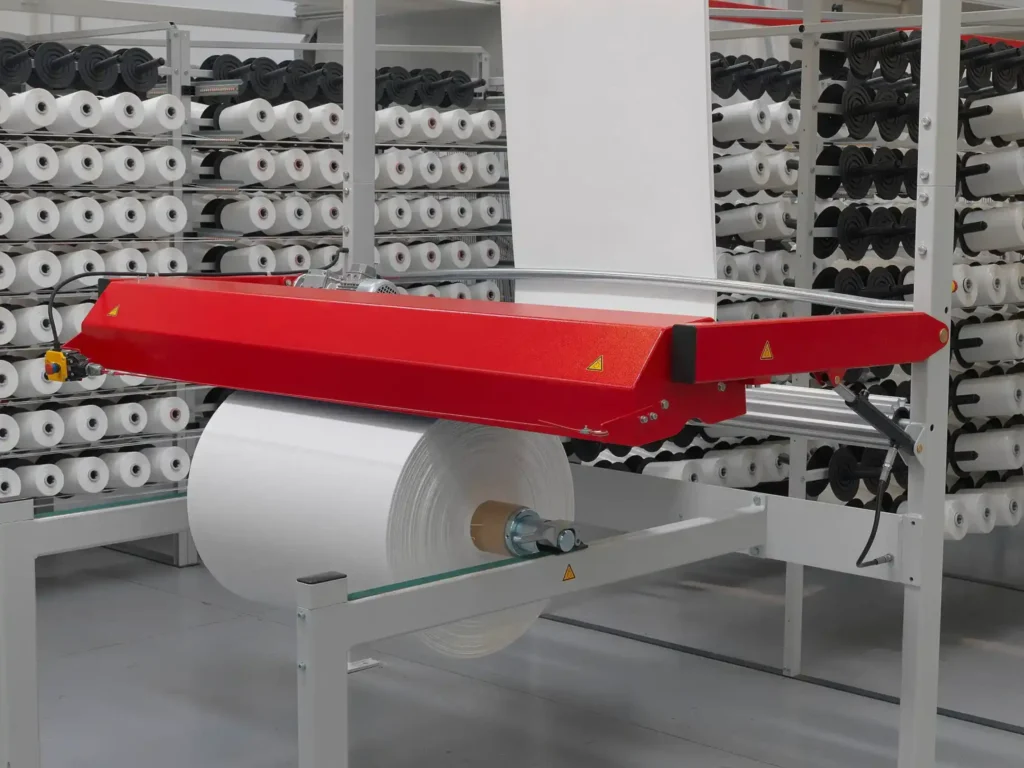
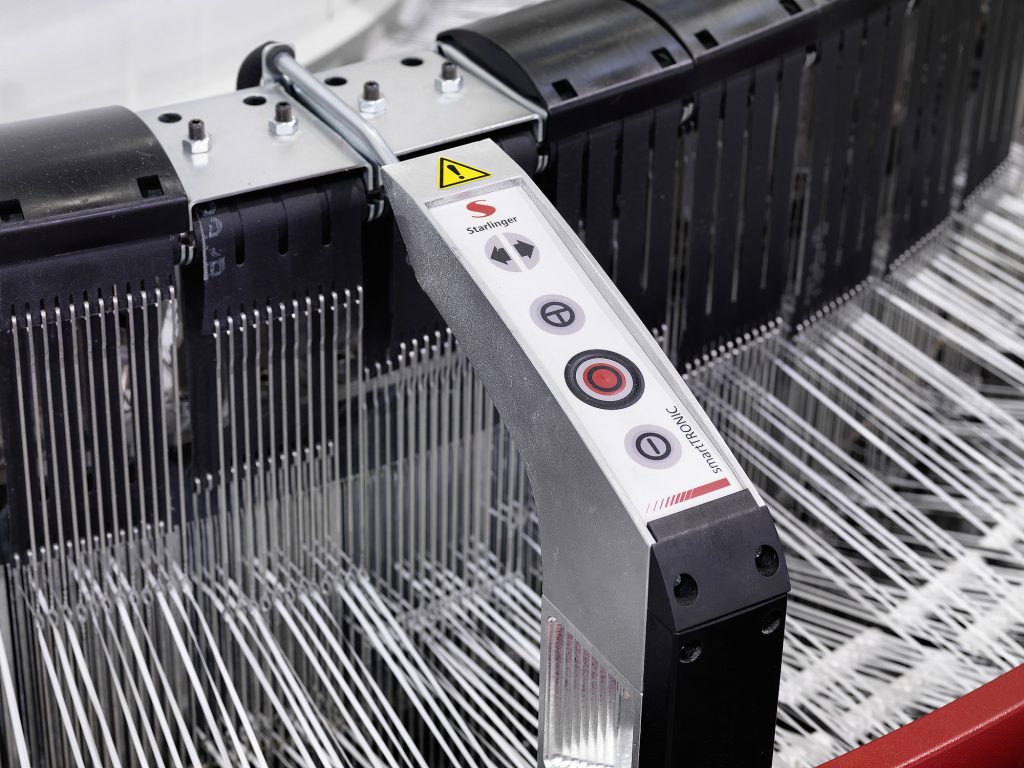
Leveraging Austrian Starlinger looms and 30+ lamination machines, VidePak achieves:
- Precision Weaving: 12×12 threads/cm² density for tear-resistant fabric.
- High-Speed Printing: 8-color flexography for OSHA-compliant hazard labels.
- Scalability: 500,000 bags/day capacity, supporting JIT delivery for global clients.
Featured Product: Block Bottom Valve Bags
- Ideal for free-flowing granules like plastic pellets.
- Combines FIBC-like durability with cost efficiency.
BOPP Woven Bags
High-performance block BOPP bags with advanced structure and premium packaging performance.
Check More →Laminated BOPP Woven Bags
Advanced laminated block BOPP packaging solutions with durability and professional design.
Check More →Printed BOPP Woven Bags
Customized block BOPP bags with premium printing and advanced industrial packaging features.
Check More →BOPP Laminated Woven Bags Analysis
Comprehensive analysis of block BOPP bags as innovative and reliable advanced packaging solutions.
Check More →FAQs: Addressing Client Concerns
Q1: What’s the optimal bag weight for 25 kg disinfectant powder?
- A: A 110 g/m² fabric with 30µ BOPP and PE liner ensures <0.05% leakage during transit.
Q2: How to verify BOPP bag quality?
- A: Request test reports for Mullen burst strength (>200 kPa) and seam slippage (<5 mm).
Q3: Are VidePak’s bags suitable for maritime transport?
- A: Yes. Our Waterproof BOPP Bags meet IMO 6.1 standards for hazardous cargo.
Conclusion
Block BOPP bags are not just containers but engineered safety systems for hazardous materials. By aligning VidePak’s manufacturing prowess—from Starlinger automation to eco-friendly material blends—with global standards, businesses can mitigate risks, enhance sustainability, and streamline logistics. As regulations tighten, investing in certified, high-performance packaging becomes a strategic imperative.
For further insights, explore our technical guide on BOPP Laminated Woven Bags.
Word count: 1,250