
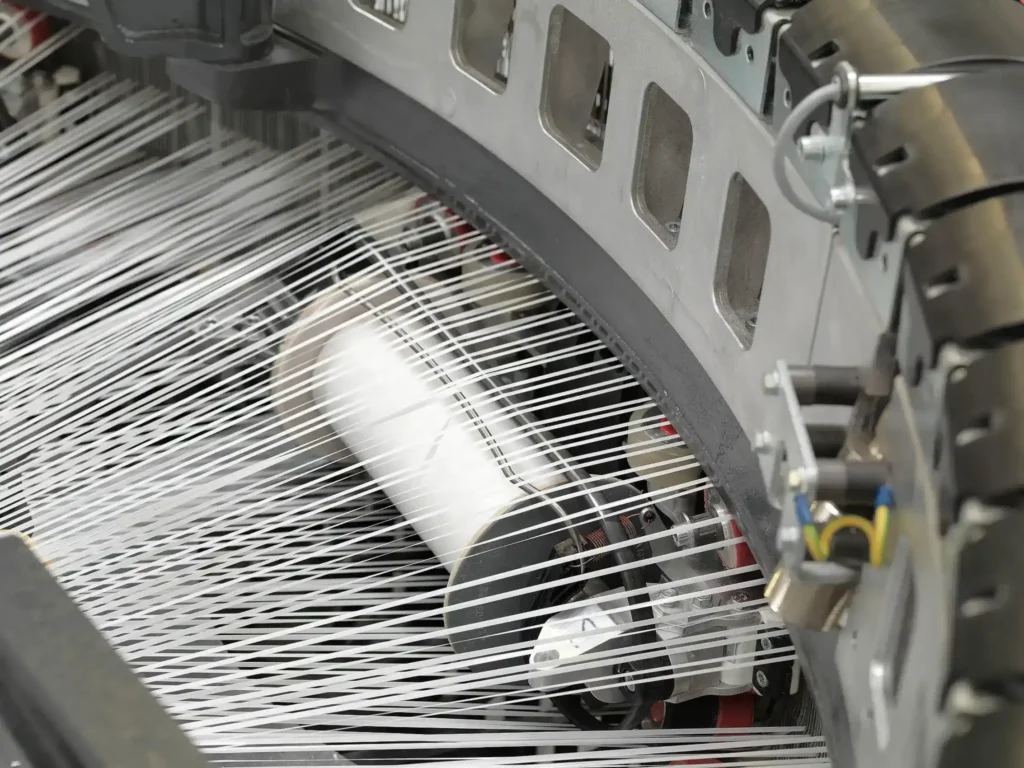
What is Multiwall Laminated Woven Bags?
Multiwall Laminated Woven Bags—also known as multiwall paper–PP composite sacks, laminated woven polypropylene (PP) building-material bags, BOPP‑laminated multiwall sacks, and paper–plastic hybrid heavy‑duty sacks—are a performance packaging system rather than a single commodity wrapper. At their core, these bags pair a woven polypropylene chassis (for tensile strength and puncture resistance) with one or more kraft paper plies (for stiffness, print warmth, and a stack‑friendly surface), finished with a thin polymer laminate (typically BOPP/PP extrusion coat in ≈18–30 μm) that sheds liquid water and protects graphics. Configurations vary: open‑mouth pinch‑bottom (PBOM) for billboard‑flat panels, sewn open‑mouth (SOM) for rugged handling, or valve sacks for high‑rate filling. In every case, what matters is orchestration—how fabric GSM and tape denier, ply count, lamination chemistry and thickness, seam architecture, anti‑slip finishes, and closure style interlock to deliver consistent results across climates and supply chains.
To underline that systemic character—and to provide buyers a single, reliable knowledge anchor—this narrative repeatedly uses the keyword Multiwall Laminated Woven Bags. Why insist on the full term? Because words shape blueprints. Say “bag,” and teams picture a cost line. Say Multiwall Laminated Woven Bags, and they picture an engineered platform whose variables can be tuned like dials: WVTR like a thermostat, COF like a traction control setting, seam geometry like a structural joint.
Standards grammar. Credibility rides on test numbers, not adjectives. Typical references for Multiwall Laminated Woven Bags include strip tensile ISO 13934‑1; seam strength ISO 13935‑2 (and sewn seams ASTM D1683); laminate dart impact ASTM D1709; coefficient of friction (COF) ASTM D1894; film water‑vapor transmission ASTM E96 / ISO 15106; hydrostatic head for coated faces ISO 811 (where specified); paper Cobb ISO 535; burst ASTM D774 (Mullen); rub resistance ASTM D5264; barcode grading ISO/IEC 15416; flexo process control ISO 12647‑6; polymer food/feed contact (for inner polyolefin layers) FDA 21 CFR 177.1520 and EU 10/2011; quality systems ISO 9001:2015; hygiene programs FSSC 22000 or BRCGS Packaging Materials; recyclability framing ISO 18604 / EN 13430 with polymer ID per ASTM D7611; and, for regulated solids, UN woven/composite categories 5H1–5H4 or paper sack 5M1/5M2 as referenced by the SDS. These aren’t decorative citations; they are the grammar of assurance.
Why does this breadth matter to brand owners and plant managers alike? Because protection, presentation, and process capability are not enemies inside Multiwall Laminated Woven Bags—they are roommates. The woven fabric dissipates corner shocks; the paper contributes a tactile hand and a natural anti‑slip; the laminate keeps rain off the billboard. If one dial moves—say, lamination increases by 5–10 μm—then another dial (WVTR, COF, or dart impact) must be checked. That is the logic of system thinking: every adjustment creates echoes in line rhythm, warehouse stability, and code legibility.
What is the features of Multiwall Laminated Woven Bags?
Features deserve space on the spec sheet only when they neutralize real failure modes—caking after container sweat, stacks creeping in racking, labels smearing, or QR codes refusing to scan in a high‑bay aisle. To keep reasoning transparent, each capability below follows a cadence—background → data reinforcement → case analysis → comparative study—and then resolves into a single operational insight. Throughout, the term Multiwall Laminated Woven Bags is used deliberately as a design anchor.
1) Barrier that behaves like a thermostat, not an on/off switch.
Background. Cement, gypsum, tile adhesive, and dry‑mix mortars are all moisture‑sensitive—but not identically so. Rain is binary; humidity is continuous. Pallets see container sweat, cool‑to‑warm transitions, and monsoon seasons. Multiwall Laminated Woven Bags pair a splash‑shedding laminate with optional liners (PP/LDPE) to calibrate vapor transfer to product and route.
Data reinforcement. Widely published exporter ranges show BOPP/PP laminate ≈18–30 μm; optional LDPE/PP co‑ex liners ≈60–100 μm; film WVTR per ASTM E96 / ISO 15106; coated faces screened by ISO 811; paper‑heavy composites targeting outer‑face Cobb (60 s) of ≤30 g/m² (ISO 535). These are not conjectures but typical values visible in Made‑in‑China/Alibaba listings for 25–50 kg building‑material sacks.
Case analysis. A gypsum exporter retained one artwork yet introduced two barrier logics: liner‑free for inland DCs and a 70 μm LDPE liner for monsoon lanes. Caking complaints fell during wet months without penalizing tare on dry routes.
Comparative study. Plain multiwall paper breathes, then wilts in drizzle; thick PE FFS is hermetic yet puncture‑sensitive at pallet corners and slippery in racking; woven PP alone is rugged yet porous. The hybrid balance inside Multiwall Laminated Woven Bags—tactile paper outside, tuned vapor control inside—wins because it is tailored, not maximalist.
Operational insight. Specify the least barrier that protects product truth on the worst leg of the journey; over‑building raises cost and slip risk without improving outcomes.
2) Mechanical integrity and stack stability at lower tare.
Background. Construction powders punish seams and edges. Pallet tines bruise corners; vibration tests hem geometry; high‑rise storage magnifies creep. The woven chassis disperses point loads; paper plies add buckle resistance; the laminate resists scuff and sheds rain. The aim is not raw grams, but strength density—every gram retained must purchase stability.
Data reinforcement. Typical constructions for 25–50 kg formats: outer kraft face 60–90 g/m², total paper plies 2–3, woven PP reinforcement ≈70–110 g/m² (tape denier 500–1000D), laminate ≈18–30 μm. Common valve sizes 460×760–480×780 mm; PBOM/SOM widths 350–600 mm × heights 600–1100 mm with 80–180 mm gussets. Verification: tensile ISO 13934‑1, seam ISO 13935‑2 / ASTM D1683, laminate dart ASTM D1709, COF tuned 0.35–0.55 (ASTM D1894).
Case analysis. A tile‑adhesive plant reduced woven reinforcement from 95 g/m² to 78 g/m² after raising sack‑to‑sack COF from ~0.33 to ~0.45 with a micro‑texture back varnish. Net: an extra pallet layer without corner boards, fewer “leaners,” no rise in damage claims.
Comparative study. Paper‑only stacks square but softens in condensation; film‑only seals well but stretches at corners; Multiwall Laminated Woven Bags distribute stress through interlaced tapes and plies while keeping a billboard‑flat face.
Operational insight. Engineer for cube, not bravado; the real KPIs of strength are stack stability, seam integrity, and mouth stiffness.
3) Print architecture and scan reliability that survive real sites.
Background. Building‑material buyers are brand‑sensitive and safety‑driven. SDS icons, batch codes, mixing ratios, and hazard pictograms must remain legible after forklift contact and yard drizzle. The laminated face of Multiwall Laminated Woven Bags enables photographic hero art and crisp regulatory panels—if press science is disciplined.
Data reinforcement. BOPP/PP faces in ≈15–30 μm support 6–8 colors via gravure or high‑screen flexo; color governance targets ∆E00 ≤ 3–5 (CIEDE2000) using ISO 12647‑6 TVI curves; rub durability is validated by ASTM D5264 (double‑rub); barcodes grade ≥ C under warehouse lighting per ISO/IEC 15416; corona treatment ≥38 dynes anchors ink; registered matte/gloss split improves scanner contrast while amplifying shelf depth.
Case analysis. A mortar‑mix brand moved hazard pictograms into a registered matte panel and over‑varnished hero imagery in gloss. Scan exceptions at receiving dropped; returns for smudged warnings disappeared across three retailers.
Comparative study. Uncoated kraft looks premium yet wicks oil and scuffs; PE films dazzle but glare under high‑bay LEDs and slide on pallets; Multiwall Laminated Woven Bags keep the premium look while protecting codes and claims.
Operational insight. Treat print as a mechanical property; place quiet zones, lock ∆E, validate rub—graphics should be as engineered as seams.
4) Friction management and machinability—because uptime is the loudest KPI.
Background. Spec sheets don’t ship pallets; lines do. Bags must feed magazines predictably, seal consistently, and hold still in racking. Too little friction and stacks creep; too much and magazines jam. Mouth squareness and lay‑flat capability govern fill rate and pallet cube.
Data reinforcement. Automated lines typically hold width/length ±5–10 mm and mouth squareness ±3 mm; COF tuned to 0.35–0.55; lay‑flat Cp/Cpk ≥ 1.33 predicts fewer jams; dart ASTM D1709 correlates with corner‑bump resilience. These norms align with exporter specs and peer converter guidance.
Case analysis. After raising COF via sand‑grip back coat and tightening lay‑flat, a plant eliminated corner boards on standard pallets and cut rewrap labor by 35% without a rise in tip‑alarms.
Comparative study. Smooth films glide through magazines but creep in racking; paper grips but degrades when wet; Multiwall Laminated Woven Bags can be tuned to both feed smoothly and hold cube.
Operational insight. Specify COF as a range tied to stack height and conveyor type; never accept a single heroic number.
5) Compliance and credible end‑of‑life—claims that survive audits and balers.
Background. Auditors test paperwork; sorters test physics. ESG claims must fit local infrastructure; safety claims must map to recognized standards.
Data reinforcement. Polymer identification follows ASTM D7611 (Resin ID “5—PP” on PP‑majority builds); recyclability framed by ISO 18604 / EN 13430; environmental self‑declarations per ISO 14021; inner films for food/feed‑adjacent additives documented to FDA 21 CFR 177.1520 / EU 10/2011; sites commonly certified to ISO 9001:2015 and FSSC 22000; third‑party witnessing by SGS/Intertek/TÜV. For hazardous solids, align with UN 5H/5M performance routines.
Case analysis. A regional dry‑mix producer standardized PP‑majority laminations and PP label stocks. Their recycler accepted trim bales without manual stripping; procurement used the acceptance letter to substantiate ESG disclosures.
Comparative study. PET/PE hybrids print beautifully but complicate PP bales; paper‑only sacks weather poorly; Multiwall Laminated Woven Bags designed for mono‑PP interfaces keep recovery paths open while meeting line needs.
Operational insight. Design for the MRF and route you actually have, not the one a slide imagines.
What is the production process of Multiwall Laminated Woven Bags?
Production is not “making bags”; it is manufacturing predictability. Each stage inoculates against a failure that would otherwise surface on a wet ramp, in a dusty hopper, or under a scanner. Below is the process with the critical‑to‑quality (CTQ) controls that keep Multiwall Laminated Woven Bags consistent across seasons and plants.
1) Paper & polymer selection. Choose outer kraft in the 60–90 g/m² band with sizing aligned to target Cobb; set inner plies for burst and tear (verified to ASTM D774). Select woven PP reinforcement ≈70–110 g/m² (PPI often 10×10–14×14). Pick lamination: BOPP/PP ≈18–30 μm for gloss and print holdout, or LDPE/PP extrusion ≈18–30 μm for sealing and moisture moderation. For contact scenarios, keep FDA 21 CFR 177.1520 / EU 10/2011 declarations on file for inner films.
2) Surface prep & lamination. Corona treatment ≥38 dynes anchors inks/adhesives. Control web temperature, nip pressure, and line speed to avoid curl and preserve lay‑flat width; verify bond with T‑peel; confirm dart impact (ASTM D1709) for corner resilience; where relevant, test hydrostatic head (ISO 811).
3) Prepress & printing. Apply ISO 12647‑6 workflows: calibrated TVI curves, ∆E targets, anilox volumes. Use oil‑resistant varnish for admixtures prone to fat migration; position SDS icons and GHS pictograms in matte panels for scanner contrast. Validate rub (ASTM D5264) and barcode grade (ISO/IEC 15416) each lot. In rhetorical terms: printing is not a paint job; it is a component that either protects attention or squanders it.
4) Conversion & closures. Form side gussets; convert into valve (fast fill, self‑closing sleeve), pinch‑bottom (flat billboard face), or sewn open‑mouth (rugged duty). Engineer seam allowances and stitch density backward from worst‑case lifts and target cube; tune valve micro‑perfs for deaeration without dust plumes; hold mouth squareness to ±3 mm so magazines don’t hesitate.
5) Anti‑slip & finishing. Apply micro‑texture or sand‑grip backs to hit COF 0.35–0.55; specify matte over regulatory blocks and gloss over hero art; reserve quiet zones around QR/linear codes; align code placement with pallet strapping to avoid abrasion.
6) Inspection & SPC. Visual AQL ISO 2859‑1; tensile ISO 13934‑1; seam ISO 13935‑2 / ASTM D1683; burst ASTM D774; friction ASTM D1894; Cobb ISO 535; WVTR ASTM E96 / ISO 15106 (films); weathering ASTM G154 / ISO 4892 for outdoor staging. Maintain dimensional Cp/Cpk ≥ 1.33 on lay‑flat width and mouth squareness; serialize lots and bind test results with third‑party witnessing (SGS/Intertek/TÜV) when required.
7) Feedback loop. Tie CTQs (width, mouth geometry, seam strength, COF, Cobb, ∆E, dart, rub) to line KPIs (magazine jam rate, hook‑up success, fill‑time dispersion). Let SPC whisper before pallets shout. In other words: designed variability is a choice; unmanaged variability is a cost.
What is the application of Multiwall Laminated Woven Bags?
Applications are the proving ground where pallets, humidity, and auditors test promises. The same Multiwall Laminated Woven Bags platform adapts—by specification, not improvisation—to each building‑material niche. Below, each scenario blends background, data, and contrast so decisions are both defensible and fast.
Cement & blended cements (OPC, PPC, slag). Need: moisture moderation, high warehouse cube, reliable QR/traceability, rugged corner resistance. Spec cues: laminate 20–30 μm; optional 60–80 μm liner for tropical export; valve sack 460×760–480×780 mm; COF ≥0.40; barcode grade ≥C (ISO/IEC 15416). Case: after increasing COF and moving codes to protected matte panels, a cement brand reduced goods‑in scan exceptions and eliminated corner boards on domestic pallets. Contrast: paper‑only sacks breathe but wilt in drizzle; film‑only sacks seal yet slip; Multiwall Laminated Woven Bags give both grip and splash resistance.
Gypsum, plaster, and stucco. Need: humidity discipline; shelf‑stable print; reduced dust at fill. Spec cues: PBOM for billboard‑flat faces; matte/gloss split; optional seasonal liner; valve geometry tuned for deaeration without dust plumes. Case: monsoon‑route linerization cut caking complaints while keeping identical artwork for brand continuity.
Tile adhesive & grout (cementitious and polymer‑modified). Need: abrasion resistance; precise code placement; strong seams. Spec cues: woven reinforcement 80–110 g/m²; laminate 20–30 μm; anti‑slip back coat for COF 0.40–0.55; PBOM for flat faces; UV package ASTM G154 / ISO 4892 for yard dwell. Case: a national brand gained one extra pallet layer and cut rewrap by >30% after friction tuning. Why not film only? Because corners stretch; stacks slump; audits complain.
Dry‑mix mortars & self‑leveling compounds. Need: predictable magazine feeding; robust valve; legible dosage charts. Spec cues: dimensional capability ±5–10 mm with Cp/Cpk ≥ 1.33; barcode quiet zones; matte panels under high‑density text; rub ASTM D5264. Case: fewer relabels and faster receiving followed a simple intervention: matte varnish over instructions, gloss reserved for the hero image.
Aggregates & specialty sands. Need: puncture resistance; outdoor staging resilience. Spec cues: higher tape denier; reinforced seams; laminate thickness toward the top of the band; optional UV package for solar exposure. Question: if the yard is unforgiving—why gamble on paper‑only? The answer shows up as rewrap hours you no longer pay for.
Regional nuance. EU buyers scrutinize recyclability claims (EN 13430 / ISO 18604) and polymer labeling; North America spans freeze–thaw winters and humid summers with strict scanning expectations; MEA requires UV‑robust builds; ASEAN/LATAM routes demand liners and COF windows tuned to tropical ports and mixed pallet woods. The architecture of Multiwall Laminated Woven Bags flexes to these realities: one print set, multiple barrier options, friction tailored to racking and wrap.
Key Technical Parameters (typical, widely listed ranges)
| Parameter | Typical Range / Options | Standards & Notes |
|---|---|---|
| Base architecture | Multiwall paper + woven PP reinforcement + BOPP/PP laminate | Resin ID 5—PP (ASTM D7611); paper Cobb ISO 535 |
| Paper face (outer ply) | 60–90 g/m² kraft (virgin or recycled) | Burst ASTM D774; chain‑of‑custody FSC/PEFC |
| Total paper plies | 2–3 plies (10–50 kg) | Tear/burst tuned via ply combination |
| Woven PP fabric | 70–110 g/m²; tape denier 500–1000D | Tensile ISO 13934‑1; seam ISO 13935‑2 / ASTM D1683 |
| Lamination thickness | 18–30 μm BOPP/PP or extrusion coat | WVTR ASTM E96 / ISO 15106; hydrostatic ISO 811 (if specified); dart ASTM D1709 |
| Optional liner | LDPE/PP 60–100 μm (route‑based) | Food/feed contact FDA 21 CFR 177.1520; EU 10/2011 migration |
| Common formats | Valve 460×760–480×780 mm; PBOM/SOM widths 350–600 mm, heights 600–1100 mm, gusset 80–180 mm | Dimensional tolerance ±5–10 mm; Cp/Cpk ≥ 1.33 |
| COF (sack‑to‑sack) | 0.35–0.55 | ASTM D1894; tuned to pallet wood & wrap |
| Printing | Flexo/gravure up to 6–8 colors; matte/gloss split | Color ISO 12647‑6; ∆E00 ≤ 3–5; rub ASTM D5264; barcode ISO/IEC 15416 |
| UV/weather | Additives & varnishes sized to staging exposure | ASTM G154 / ISO 4892 |
| Quality systems | ISO 9001:2015; FSSC 22000 (site‑dependent) | Third‑party witnessing (SGS/Intertek/TÜV) |
| Dangerous goods (if applicable) | UN 5H1–5H4 (composite) or 5M1/5M2 (paper) | Drop/stack per UN Model Regulations |
Notes: Parameter bands reflect values widely published by exporters on Made‑in‑China and Alibaba, and by peer converter sites for heavy‑duty, laminated multiwall sacks used with building materials. Always validate against product bulk density, hygroscopicity, fill rate, and route climate before locking specifications.
Integrated system synthesis — from spec to stack to shelf
1) Design‑for‑use. Begin with the material’s behavior—bulk density, particle morphology, hygroscopicity, angle of repose—and map those traits to ply combination, fabric GSM/denier, laminate thickness, closure style, COF window, and barcode placement. Engineer valve geometry to the actual spout; reserve quiet zones; keep regulatory panels out of strap paths. Ask the ruthless questions: Will it stack? Will it scan? Will it survive rain? If the answer to any is uncertain, adjust the dial that controls it—liner gauge, COF back coat, or varnish split—then retest.
2) Print governance. Lock ∆E targets, TVI curves, anilox volumes, and corona levels; audit ISO 12647‑6 compliance quarterly; grade barcodes per ISO/IEC 15416 in warehouse lighting. In a crowded aisle and an unforgiving yard, clarity is kindness. Text that smears is not text; a code that doesn’t read is not a code.
3) Process capability. Track Cp/Cpk on lay‑flat width, mouth squareness, seam strength, COF, Cobb, dart, rub. Tie these to line KPIs—magazine jams, hook‑up rate, fill‑time dispersion—so improvement funds itself and firefighting fades. Variability you don’t measure becomes the variability that breaks your pallet wrap on Friday at 4 p.m.
4) Compliance & traceability. Serialize rolls and bags; bind tensile/seam/COF/Cobb/WVTR/rub/scan results to lot IDs; keep FDA 21 CFR 177.1520 / EU 10/2011 on file when contact applies; align environmental language to ISO 14021 and recovery framing to ISO 18604 / EN 13430. Third‑party witnessing is not red tape; it’s a time machine that spares you weeks during the next audit.
5) Recovery reality. Favor PP‑majority laminations and PP label stocks when local PP reclamation exists; publish bale specs for trim; secure recycler acceptance letters before making claims. The greenest story is the one a real MRF can process today. Ambition is welcome; wishful thinking is expensive.
6) VidePak value. When Multiwall Laminated Woven Bags are treated as a controllable system—barrier you can tune, friction you can dial, graphics you can trust—the result is easy to explain and hard to copy: safer lifts, cleaner pallets, faster receiving, and brand panels that still speak after the rain. Or, to borrow the cadence of a maxim: build for the shelf, design for the yard, certify for the audit—you’ll win all three.
- What is Multiwall Laminated Woven Bags?
- What is the features of Multiwall Laminated Woven Bags?
- What is the production process of Multiwall Laminated Woven Bags?
- What is the application of Multiwall Laminated Woven Bags?
- Key Technical Parameters (typical, widely listed ranges)
- Integrated system synthesis — from spec to stack to shelf
“Why are multiwall laminated woven bags revolutionizing packaging for construction materials and animal feed alike?”
The answer lies in their unmatched structural integrity, cost efficiency, and adaptability—combining polypropylene (PP) woven strength with advanced lamination to meet the rigorous demands of heavy-duty industries. For VidePak, a global leader with 30+ years of expertise, these bags are engineered to withstand 50 kg loads, resist moisture ingress, and ensure hygienic storage for feed products, all while aligning with sustainability goals through recyclable materials and energy-efficient production.
1. Market Demand and Technical Superiority
The global multiwall bags market, valued at $12.1 billion in 2020, is projected to grow at 3.5% CAGR through 2025, driven by construction and agriculture sectors. VidePak’s multiwall laminated woven bags address critical needs:
- Construction: Cement, aggregates, and gypsum require bags with tensile strength ≥35 MPa (ASTM D5265) and UV resistance for outdoor storage.
- Animal Feed: Pet, poultry, and livestock feed demand moisture barriers (WVTR ≤2 g/m²/day) and antimicrobial properties to prevent spoilage and contamination.
Case Study: A Southeast Asian feed producer reduced mold incidents by 40% using VidePak’s PE-lined bags with 120 gsm PP weave and 30 µm laminated film, maintaining <10% humidity in tropical climates.
2. Key Advantages in Feed Packaging
2.1 Structural and Functional Benefits
| Parameter | Benefit for Feed Packaging |
|---|---|
| Load Capacity | 25–50 kg capacity with 5:1 safety factor. |
| Moisture Resistance | PE or aluminum foil liners block humidity, critical for hygroscopic feeds like soybean meal. |
| Antimicrobial Design | Silver-ion coatings inhibit 99.9% of E. coli and Aspergillus (ISO 22196). |
| Breathability | Micro-perforations (0.3–0.5 mm) allow airflow, reducing condensation without compromising pest resistance. |
Cost Efficiency: VidePak’s 100% virgin PP materials reduce tear rates by 30% compared to recycled alternatives, lowering replacement costs for feed mills.
2.2 Compliance with Global Standards
- EU: EN 15512-compliant stacking designs (up to 8 m height) for bulk storage.
- USA: FDA-approved PE liners for direct food contact.
- Asia: UV-stabilized weaves (14×14/cm²) for prolonged outdoor use in humid climates.
3. Parameter Selection for Optimal Performance
3.1 Material and Design Guidelines
| Application | Recommended Parameters |
|---|---|
| Poultry Feed | 80 gsm PP + 20 µm PE liner (WVTR ≤1.5 g/m²/day). |
| Pet Food | Anti-static weave (≤10⁹ Ω/sq) to prevent dust explosions. |
| Construction Cement | 150 gsm PP + kraft paper laminate for abrasion resistance. |
VidePak’s Customization:
- Outer Layer: BOPP lamination for print durability (1200 dpi branding).
- Inner Layer: Optional aluminum foil for oxygen-sensitive feeds (OTR ≤10 cc/m²/day).
4. VidePak’s Competitive Edge
With 100+ Starlinger circular looms and 30 lamination machines, VidePak delivers:
- Precision Production: ±0.1 mm filament uniformity, ensuring consistent weave density (12–18 picks/cm).
- Sustainability: 94% recyclable PP and FSC-certified kraft paper, reducing carbon footprint by 25%.
- Certifications: ISO 9001, BRCGS, and FDA compliance for global market access.
Production Capacity:
| Equipment | Output |
|---|---|
| Circular Looms | 12M bags/month |
| Lamination Lines | 5M m²/month |
| Extrusion Lines | 800 tons/month |
5. FAQs
Q: How does lamination affect bag lifespan?
A: BOPP-laminated bags withstand 8,000+ abrasion cycles (ASTM D5265), ideal for rough handling in construction logistics.
Q: Are anti-static bags cost-effective for feed?
A: Yes. A 2024 trial showed a 20% reduction in fire risks for a U.S. pet food plant, justifying the 15% price premium.
6. Conclusion
Multiwall laminated woven bags are redefining packaging across industries by merging durability with smart design. VidePak’s integration of Starlinger technology, eco-friendly materials, and data-driven customization positions it as a leader in a market poised to exceed $14.4 billion by 2025. As sustainability regulations tighten, innovations like biodegradable liners and IoT-enabled traceability will further solidify these bags as indispensable solutions.
For insights into advanced lamination techniques, explore our analysis of safe and versatile packaging solutions, or learn how multiwall designs optimize building material logistics.
References
- MarketsandMarkets. (2024). Multiwall Bags Market Report.
- Made-in-China. (2025). PE Woven Bag Product Listings.
- Made-in-China. (2024). Building Material Bag Factory Profiles.
- Shandong Ruitong Plastic. (2025). Company Introduction.
- Made-in-China. (2025). PP Woven Sack Specifications.