

What are Block Bottom Valve Bags? Definitions, aliases, and function
Block Bottom Valve Bags are industrial sacks engineered with a rectangular block base and a self-closing valve sleeve, enabling high-speed filling while forming a stable, brick‑like pack. In procurement glossaries they appear as valve sacks, block-bottom PP valve sacks, BOPP‑laminated woven valve sacks, AD‑style PP sacks, ultrasonic self‑sealing valve bags, and multiwall paper valve sacks. The essential geometry is a square base that stands upright, paired with a valve—side or top—that accepts a filling spout and then closes by product pressure, hot air, ultrasonic energy, or stitching. Why does this combination matter? Because geometry governs stacking, the valve governs dust and dosing, and together they convert loose granules into predictable unit loads.
Square stacks, cleaner fills, and readable faces. If a design fails any one of these, it is not yet an engineered solution—only a shaped container.
In fertilizer logistics—granular NPK, urea, ammonium sulfate, MAP/DAP, potash blends—Block Bottom Valve Bags are favored because they mitigate dust, resist caking through moisture management, and stack with minimal bulge. Their efficiency is systemic: the woven or paper body carries tensile loads; coatings or laminations regulate moisture vapor and sifting; seam geometry translates fabric strength into system strength; the valve module determines fill rate, dust emissions, and in‑bag pressure during palletization.
The materials of Block Bottom Valve Bags: polymers, papers, films, and architecture
The modern portfolio splits into three families: polypropylene (PP) woven bodies (often with PP or BOPP film), multiwall paper valve sacks, and hybrids that fuse woven PP with breathable or barrier films. Selecting among them is not a beauty contest but a climate and chemistry decision: humidity profile, storage realism, granule hardness, and labeling obligations push the specification one way or another.
PP woven constructions
Fabric. Slit‑film PP tapes drawn 5–8×, woven on flat or circular looms, converted on block‑bottom lines. Typical basis weight: 80–140 gsm for 25–50 kg bags, up to 160 gsm for rough handling. Low density (~0.90–0.91 g/cm³) delivers strength per gram and keeps transport mass in check.
Coats/films. Extrusion‑coated PP (12–30 g/m²) or laminated BOPP (15–25 μm). Reverse‑printed BOPP gives billboard‑class graphics shielded from scuff. For blends that need to vent residual humidity, micro‑perforated films or patterned coats preserve a controlled vapor path.
Valve sleeve. PP or PE film, sometimes with low‑slip exterior for spout extraction. Anti‑sift folds and check‑valves limit back‑blow; ultrasonic patches lock under internal pressure.
Threads & seams. High‑tenacity PP threads; double chain‑stitch geometries target 75–90% seam efficiency. Base corner folds and valve‑side seams are the hotspots.
Additives. HALS UV stabilizers for open‑yard storage; slip/anti‑block for machinability; antistatic packages for dusty plants; print primers on BOPP. Prefer light masterbatch colors to support NIR sorting in recycling streams.
Multiwall paper constructions
Ply stack. Two to four plies of kraft (70–90 g/m² each) with optional PE liner or coated ply. Block base formed by folds and glue patterns. Valves in paper or film can self‑seal under product pressure.
Pros/cons. Paper breathes and prints economically, ideal for covered, temperate chains. In humid tropics it loses compressive strength; plies delaminate without shrouds. Many buyers migrate to woven PP with film faces in monsoon climates.
Hybrids & specialty films
Breathable laminates. Micro‑perforated BOPP or breathable PP films balance print fidelity and controlled venting—useful for coastal depots and freshly coated granules.
Barrier options. Where corrosion‑sensitive salts or specialty fertilizers demand it, coextruded films with barrier layers can be used as inner liners rather than permanent skins to keep the outer bag mono‑PP and recycling‑friendly.
Block Bottom Valve Bags also inherit the economics of their feedstocks. Resin prices track propylene and energy; paper tracks pulp. Over the last year, mono‑PP bills of materials (fabric, coat, threads, label films all PP) have gained ground because they simplify sourcing, enable better recycling, and increasingly qualify for favorable EPR fees where PP sortation has expanded.
Features of Block Bottom Valve Bags: why the format wins in fertilizer logistics
Not all sacks are created equal. Some prioritize graphics, others brute strength. Block Bottom Valve Bags chase system performance: clean fills, square stacks, resilient pallets, compliant labels, and a credible route to recycling.
Squareness & pallet efficiency
The block base minimizes voids and bulge. On 1,000 × 1,200 mm pallets, 25‑kg units stack 5×8 or 6×8 with high stability. Forklifts behave better, hooding film usage drops, and trucks carry more active product per trip.
Valve filling & dust control
Pair a tuned valve sleeve with gravity/air assist, impeller, or auger packers and dust falls while throughput rises. Self‑sealing or ultrasonic closures eliminate sewing and stop micro‑leaks that soil pallets.
Moisture management & caking resistance
Moisture in, caking up. Film mass, anti‑wick hems, and localized vent patches balance humidity. Surface friction at the film/product interface is tuned so layers settle without sliding or bridging.
Strength at low mass
Oriented PP tapes deliver tensile per gram. With 100–120 gsm fabric plus ~20 μm film, drop tests at 0.8–1.2 m are routinely met—provided seams are engineered to ≥80% efficiency.
Print surfaces & compliance
Four clean faces carry guaranteed analysis, handling statements, and traceability. Reverse‑printed BOPP preserves legibility through storage, transport, and field use.
Safety & electrostatics
Most fertilizers are benign, but dust suspensions and additives can raise risk. Antistatic measures and, for bulk formats, Type C/D features are available. Regulated oxidizers demand UN‑coded performance packaging.
For valve formats across sizes and constructions, see Block Bottom Valve Bags. This gallery helps procurement compare sleeve geometries, closure modes, and print faces in context.
How Block Bottom Valve Bags are produced: from pellets and paper to ready-to-fill
- Tape extrusion & drawing. PP pellets with UV and pigment are melted, cast as sheet, slit, and drawn 5–8×. Annealing stabilizes orientation; nitrogen-blanketed feeds minimize yellowing when rPP is used.
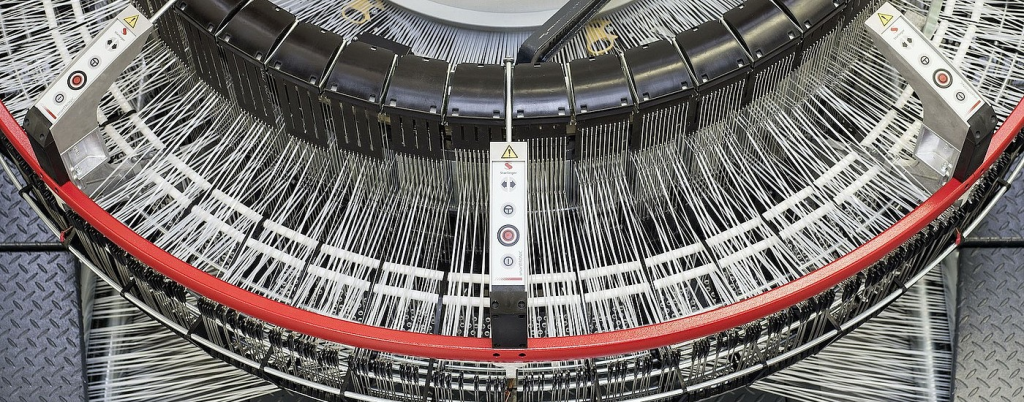
- Weaving. Flat or circular looms set gsm and picks per inch. Flat fabric eases fold predictability; circular fabric is gusseted. Online monitoring flags tape breaks; automatic doffers stabilize variability.
- Coating/lamination. Extrusion coat PP (12–30 g/m²) for sift‑proofing; or laminate BOPP (15–25 μm) with PP adhesives. Vent by micro‑perforation as needed. Keep outer skins mono‑PP when recyclability is a KPI.
- Printing. Flexo on PP coats or reverse‑print on BOPP. Select low‑odor, low‑metal inks with strong scuff resistance. Compliance panels get generous white space for regulatory copy.
- Block‑bottom forming. Precision folds, heat‑seals or glue patterns, and internal patches distribute load over the base seam. This station governs pallet stability more than most realize.
- Valve module assembly. Sleeve length, angle, and slip match the filler spout and product rheology. Ultrasonic patches or hot‑air lips finalize closure behavior; check valves limit back‑flow.
- Final conversion & QA. Bags are cut to register, vent holes added by spec, mouths trimmed. QA hits dimensions (±2–3 mm), seam pulls, base burst, multi‑orientation drops, and air‑leak checks on valves. Serialization ties lots to raw‑material COAs.
- Palletization & inbound readiness. Bundled, strapped, and hooded to the target footprint. In humid or coastal zones, shrouds and desiccants are specified alongside pallet patterns.
Functional card — Where failures originate: corners and valves. Seams at base folds carry complex stresses; valves suffer abrasion and back‑blow. Engineer them first; celebrate graphics later.
Applications for Block Bottom Valve Bags: fertilizer-first, not fertilizer-only
Granular fertilizers
Urea, NPK, DAP/MAP, ammonium sulfate, potash, micronutrient blends. Fast valve fills, square stacks, resilient pallets—across retail, co‑op, and plantation destinations.
Agricultural amendments
Gypsum, lime, biochar, sulfur prills. Dust control and stack integrity recommended the format long before branding did.
Animal nutrition & salts
Mineral premixes and feed salts demand moisture moderation and clean panels for compliance text. Woven PP with film faces keeps fines inside and labels legible.
Building materials
Cement, mortar, tile adhesive, gypsum. Valve bags dominate here; PP block bottoms with BOPP faces outlast paper where humidity is punishing.
Specialty chemicals & seeds
When filling dust must be contained and kernel integrity preserved, the square geometry distributes loads evenly and the valve localizes emissions.
Reverse logistics
Mono‑PP designs bale densely after use (≥250 kg/m³) and move through PP streams where available, turning packaging into a recoverable commodity.
Thinking through Block Bottom Valve Bags: Engineering Solutions for Fertilizer Packaging
The title is a map: geometry (block bottom), process (valve), domain (fertilizer). Start with the failures to avoid—caking, dust, mis‑weights, collapsed pallets—then design backward. The geometry reduces voids and sliding; the valve tunes speed and cleanliness; fertilizer chemistry dictates film mass and venting; compliance and circularity shape marks, materials, and end‑of‑life. The pattern is recursive: decide, test, refine, serialize—then repeat as climates and blends change.
Callout — A practical heuristic: If a change does not improve stack height, reduce dust, stabilize net weight, or raise bale value, it probably belongs in marketing, not engineering.
Systems view of Block Bottom Valve Bags: break down, analyze, recombine
Product–package
Hygroscopic granules pull moisture, cake, and shed heat. Levers: film mass, anti‑wick hems, selective vent patches, inner surface friction. Metrics: moisture gain, caking index, drop/stack pass rate.
Filling & valve
Speed vs. dust vs. accuracy. Levers: sleeve length/angle/slip, check‑valve folds, closure mode. Metrics: dust mg/m³, net‑weight SD, bags/min, leak rate.
Palletization
Bulge and slip defeat stacks. Levers: base folds, pattern, friction skins, corner boards. Metrics: lean after vibration, slip angle, safe layers.
Regulatory
UN codes for regulated solids, electrostatics for dusty plants, labeling for nutrient guarantees. Metrics: pass/fail, decay time, audit scores.
Circularity
Mono‑PP BOMs, removable liners, low‑ash inks, QR and marks, bale density ≥250 kg/m³. Metrics: recyclability grade, bale contamination, recovered kg/1,000 bags.
Recombination yields a program, not a one‑off SKU: permeability window, mono‑PP BOM, seam standard, UV class, pallet plan, labeling and serialization, take‑back contract, KPI dashboard. Quarterly reviews turn field data into parameter updates and lock in learning.
Standards, certifications, and third‑party signals around Block Bottom Valve Bags
Assurance lives in shared rulebooks. 2024–2025 buying cycles commonly reference quality and environment systems for the plant; electrostatic and lift/stack philosophies for bulk analogs; performance‑oriented UN tests for regulated solids; hygiene codes for food‑adjacent lines; and design‑for‑recycling guidance where EPR applies. The mesh of these frameworks transforms opinions into pass/fail outcomes and accelerates onboarding of new suppliers.
- ISO 9001:2015 — quality management discipline for repeatability and corrective action.
- ISO 14001:2015 — environmental management for emissions, solvent handling, and scrap recovery.
- ISO 45001:2018 — occupational health and safety in bag conversion lines.
- ISO 21898:2024 — flexible bulk container testing philosophy (lift, stack, topple, drop); many woven converters align QA cadence with its updated stacking/UV guidance.
- IEC 61340‑4‑4 — electrostatic test methods for flexible bulk containers; informs Type C/D practice in dusty plants.
- 49 CFR 178 (U.S.) — performance‑oriented packaging tests; tie to UN 5H bag codes (5H1–5H4) and 13H series where applicable.
- EU 10/2011 — plastics in contact with food (occasionally relevant where animal salt/premix lines share equipment).
- BRCGS Packaging — hygiene and GMP certification for converting facilities.
- Textile air‑permeability methods (e.g., ISO 9237 equivalents) — practical stand‑ins for breathable hybrid designs.
Technical details for Block Bottom Valve Bags: colored tables & parameter ranges
| Category | Parameter | Typical Range | Engineering Notes |
|---|---|---|---|
| Fabric | Basis weight | 90–140 gsm | Increase for rough chains or long outdoor storage |
| Fabric | Picks per inch | 28–40 | Balance openness and sifting resistance |
| Film | Extrusion coat mass | 12–30 g/m² | Higher in humid regions; keep mono‑PP when possible |
| Film | BOPP thickness (laminated) | 15–25 μm | Reverse print; micro‑perforate where venting is required |
| Valve | Sleeve length / angle | 90–130 mm / 20–35° | Match filler spout OD and flowability |
| Valve | Closure type | Self‑seal, ultrasonic, hot‑air | Choose by dust level and line speed |
| Seams | Seam efficiency | ≥75–90% of fabric tensile | Double chain‑stitch or lock‑stitch with allowances |
| UV | Stabilization target | 200–800 h xenon‑arc equiv. | Tune to climate and storage exposure |
| QA | Drop test height | 0.8–1.2 m | Corner and flat orientations; product hardness matters |
| Logistics | Bale density (post‑use) | ≥250 kg/m³ | Improves reverse‑logistics economics |
Valve & filler compatibility
| Filler type | Best‑fit sleeve | Speed (bags/min) | Dust notes |
|---|---|---|---|
| Air packer | Low‑slip film, check‑valve fold | 6–12 | Tight spout fit; HEPA capture advised |
| Impeller packer | Medium‑slip film, reinforced sleeve | 8–18 | Watch granule breakage at high RPM |
| Auger packer | Long sleeve, anti‑sift patch | 4–10 | For dense powders; manage torque/heat |
| Gravity + air assist | Short sleeve, self‑seal | 8–14 | Clean for free‑flowing granules |
Palletization targets (25‑kg on 1,000 × 1,200 mm pallets)
| Pattern | Layers × Bags | Total | Notes |
|---|---|---|---|
| Interlocked | 5 × 8 | 40 | High stability; easy hooding |
| Column | 6 × 8 | 48 | Higher count; require anti‑slip & corner boards |
| Hybrid | 5 × 9 | 45 | Match regional pallets; validate vibration |
Deep arguments about Block Bottom Valve Bags and their implications
The valve is a process tool, not a part
A sleeve that merely “fits” will fill bags. A sleeve that matches rheology fills accurately, quietly, and cleanly. Length, angle, slip, and check‑folds regulate back‑blow and leak‑down. Observe the line, then spec the sleeve.
Seam engineering defeats the “weak bag” myth
Most field ruptures are seam problems masked as fabric problems. Aim ≥80% seam efficiency with documented patterns and allowances; change film mass or valve details before touching seam standards.
Moisture is the saboteur you cannot see
Caking blooms at pallet cores when cool nights meet warm days and granules still off‑gas. Vent where it counts, lock hems against wicking, and validate with humidity cycles rather than intuition.
Square shapes free truck space and carbon budgets
Block bottoms trim voids and raise safe stack counts; fleets capture 3–6% more product per truck. That is emissions reduction without a single new resin or printer ink.
Circularity is planned, not proclaimed
Mono‑PP bills, removable liners, low‑ash inks, bale density targets, and reprocessor agreements turn recycling from a hope into a habit. QR‑linked lot data simplify EPR reporting and close loops in practice.
Implementation checklist for Block Bottom Valve Bags: from RFQ to steady state
- Define payload and line conditions: granule hardness, hygroscopic behavior, dust content, angle of repose; filler type, spout OD, target speed, dust capture.
- Select base architecture: mono‑PP woven with PP film faces for humid/outdoor chains; paper/hybrids for covered temperate chains. Keep mono‑material wherever possible.
- Engineer the valve: sleeve dimensions and materials, closure mode (self‑seal, ultrasonic, hot‑air). Pilot on the line; bench results lie.
- Set seam standards: stitch pattern, density (2.5–3.5 stitches/cm), thread polymer, allowances. Validate ≥80% seam efficiency on real product.
- Tune moisture management: coat mass, vent zones, anti‑wick hems. Run humidity cycles and caking tests.
- Lock print & compliance: guaranteed analysis, warnings, traceability, recycling marks. Prefer reverse‑printed film for abrasion resistance.
- Define pallet strategy: pattern, max layers, friction skins, corner boards, hood thickness, vibration limits.
- Plan circularity: serialization, QR, bale density targets (≥250 kg/m³), reprocessor MOUs, EPR data capture.
- Launch with KPIs: net‑weight SD, dust mg/m³, drop/stack pass rate, moisture gain, caking index, claim rate, recovery %, bale purity %, CO₂e per delivered ton. Review quarterly.
When tuning Block Bottom Valve Bags, change a single variable per trial (sleeve angle, coat mass, seam density). Multifactor jumps create ghost problems you cannot later trace.
FAQ fragments for Block Bottom Valve Bags (engineer’s edition)
Are they only for fertilizers? No. Cement, mortar, salts, animal nutrition, and select chemicals benefit wherever dust control, stacking, and clean graphics matter.
Paper or woven PP? Climate and shelf life rule. Paper excels in covered temperate logistics; woven PP with film faces wins in humid, abrasive, or outdoor chains.
Most efficient size? 25 kg balances manual handling, pallet height, and transport. 50 kg reduces handling units but can cut stack stability and raise ergonomic risk.
Use of recycled PP? Yes, in non‑contact layers and non‑food chains. Manage odor and UV carefully; food‑adjacent lines follow applicable hygienic frameworks.
Do they cost more? Unit price often exceeds generic circular‑woven sacks, but total cost drops with faster fills, cleaner pallets, tighter stacks, and recoverable materials value.
- What are Block Bottom Valve Bags? Definitions, aliases, and function
- The materials of Block Bottom Valve Bags: polymers, papers, films, and architecture
- Features of Block Bottom Valve Bags: why the format wins in fertilizer logistics
- How Block Bottom Valve Bags are produced: from pellets and paper to ready-to-fill
- Applications for Block Bottom Valve Bags: fertilizer-first, not fertilizer-only
- Thinking through Block Bottom Valve Bags: Engineering Solutions for Fertilizer Packaging
- Systems view of Block Bottom Valve Bags: break down, analyze, recombine
- Standards, certifications, and third‑party signals around Block Bottom Valve Bags
- Technical details for Block Bottom Valve Bags: colored tables & parameter ranges
- Deep arguments about Block Bottom Valve Bags and their implications
- Implementation checklist for Block Bottom Valve Bags: from RFQ to steady state
- FAQ fragments for Block Bottom Valve Bags (engineer’s edition)
H1: Introduction
“Block bottom valve bags are the backbone of modern fertilizer logistics—they’re not just containers, but precision-engineered systems to protect volatile chemicals and streamline operations,” emphasizes Ray, CEO of VidePak, during a recent industry conference. The critical challenges in fertilizer packaging revolve around five pillars: moisture resistance, thermal management, hermetic sealing, chemical durability, and compliance with global standards. This report explores how VidePak leverages advanced materials, Starlinger technology, and data-driven design to address these challenges while aligning with EU, US, and Asian regulatory frameworks.
H2: Challenges in Fertilizer Packaging
Fertilizers such as urea, ammonium nitrate, and compound blends demand packaging that withstands hygroscopicity, heat generation, and corrosive interactions. Common issues include:
- Moisture Absorption: Leading to caking and nutrient loss (e.g., urea loses 15% efficacy at 80% humidity).
- Heat Buildup: Exothermic reactions during storage can degrade bag integrity.
- Chemical Corrosion: Ammonium-based fertilizers accelerate PP degradation by 30% without protective coatings.
VidePak’s block bottom valve bags tackle these issues through multi-layer engineering. For instance, their Starlinger extrusion lines produce PP fabrics with 12×12 strands per inch, minimizing pore size to <0.1 mm, while PE liners block moisture ingress by 95%.
H3: Material Innovations for Fertilizer Applications
H4: Moisture and Corrosion Resistance
- Lamination and Liners: A 25-µm BOPP outer layer combined with 80 g/m² PE inner liners reduces water vapor transmission to <3 g/m²/day, exceeding EU EN 277 standards.
- UV-Stabilized PP: Resins with 2% carbon black additive retain 90% tensile strength after 1,000 hours of UV exposure (per ASTM G154).
H4: Thermal Management
- Ventilation Design: Micro-perforations (0.5 mm diameter) in valve areas allow controlled gas release, reducing internal temperatures by 10°C during storage.
- Heat-Resistant Seams: Ultrasonic sealing ensures seams withstand 60°C without delamination, critical for tropical climates.
H3: Global Standards and Parameter Selection
H4: Regional Compliance Requirements
| Standard | Key Metrics | VidePak’s Compliance |
|---|---|---|
| EU EN 277 | Moisture barrier ≤5 g/m²/day | 3-layer PP/PE/BOPP, 120 g/m² |
| US ASTM D5265 | Burst strength ≥350 kPa | 150 g/m² PP + 30 g/m² PE lamination |
| JIS Z 1539 | Stacking height ≥6 m | Reinforced block bottom design, 140 g/m² fabric |
| AS 2074 | UV resistance (1,000-hour test) | UV-stabilized resins with carbon black |
H4: Customization Based on Fertilizer Type
- Urea and Ammonium Nitrate: Opt for 150 g/m² PP with PE liners to prevent hydrolysis.
- Compound Blends: Use anti-static coatings to reduce dust explosion risks (NFPA 654 compliance).
- Organic Fertilizers: Biodegradable PP blends with 20% starch content, meeting EU EN 13432.
H2: Case Study: VidePak’s Solution for a Southeast Asian Client
A 2024 project required bags to endure monsoons and high-salt coastal air:
- Design: Square-bottom valve bags with 3-layer lamination (PP/PE/BOPP).
- Sealing: Heat-sealed seams with 4 mm overlap, achieving 50 N/cm peel strength.
- Outcome: Zero leakage incidents over 6 months, reducing replacement costs by $200,000 annually.
H2: FAQs on Block Bottom Valve Bags
Q1: How does grammage affect chemical resistance?
Higher grammage (e.g., 150 g/m² vs. 90 g/m²) improves tear resistance by 60% and extends lifespan in corrosive environments by 2 years.
Q2: Why use PE liners for urea packaging?
PE liners reduce moisture absorption by 85%, preventing caking and maintaining free-flowing properties.
Q3: What standards apply to Australian markets?
AS 2074 mandates UV resistance and 8-meter stacking height, achievable via carbon-black PP and reinforced block bottoms.
H2: Future Trends and VidePak’s Roadmap
- Smart Sensors: RFID tags embedded in seams to monitor real-time humidity and temperature (piloted in EU markets).
- Circular Economy: Closed-loop recycling systems targeting 50% recycled PP content by 2030, reducing carbon footprint by 1.5 kg per bag.
H2: Conclusion
Block bottom valve bags are evolving into high-performance systems tailored for fertilizer logistics. VidePak’s Starlinger-powered production lines and ISO 9001-certified processes position them as a leader in compliant, durable solutions. For businesses, prioritizing parameters like lamination, grammage, and regional standards is non-negotiable to ensure safety and efficiency.
External Links:
- Learn how moisture-proof liners enhance fertilizer shelf life.
- Explore sustainable PP blends for organic fertilizer packaging.
This report synthesizes data from EN, ASTM, and JIS standards, alongside VidePak’s operational insights, to provide actionable strategies for chemical manufacturers and logistics providers.