
What are Leakproof Woven Bags? — Definition, Synonyms, and Practical Boundaries
Leakproof Woven Bags are engineered textile-based sacks designed to contain powders, fines, and small granules without measurable sifting during filling, storage, or transport. In practice, “leakproof” denotes a packaging architecture that interrupts every probable escape route—needle holes from sewing, inter-yarn pores in the fabric, interfacial gaps at seams, and imperfect valve closures—while still running at industrial speeds on open‑mouth, valve, or hybrid form‑fill‑seal equipment. Across procurement catalogs, similar solutions appear as anti‑sift woven sacks, sift‑proof PP woven bags, leak‑tight woven poly sacks, sealed‑seam PP woven sacks, or hermetically finished woven packages. Although the word suggests liquids, the dominant use-case is dry goods: cementitious blends, refined mineral fillers, flours and starches, fertilizers, feed premixes, and polymer powders where weight accuracy and hygiene matter.
Functionally, Leakproof Woven Bags sit between paper multiwall sacks (excellent print and dosing panels, limited moisture resilience) and mono‑film FFS bags (superior heat‑sealability, lower edge‑abrasion resistance). The hybrid advantage comes from a woven polypropylene (PP) substrate that carries load at low mass, plus an exterior skin—extrusion‑coated polyethylene (PE) or biaxially oriented polypropylene (BOPP)—that smooths the surface, tightens water‑vapor ingress, and provides a stable canvas for codes and branding. Add a liner where needed, specify closures that truly seal, and you have a package that can run fast, stack square, and arrive clean.
The Materials of Leakproof Woven Bags — Resin Choices, Layer Roles, and Cost Logic
Leakproof performance is not a single feature but a system outcome. Every constituent in Leakproof Woven Bags exists to close a specific leak path, absorb a predictable impact, or create a wider process window on the line. Below, the architecture is decomposed into load‑bearing textile, sealing and barrier skins, internal liners, and closures—each discussed with its function, trade-offs, and cost consequences.
1) Woven substrate (structural backbone)
Polymer: Polypropylene homopolymer is standard for flat tapes; selected random‑copolymer PP can be blended to improve low‑temperature impact without sacrificing drawability. Typical melt‑flow for tape extrusion sits around 2–6 g/10 min (230 °C/2.16 kg), a range that supports stable slitting and orientation.
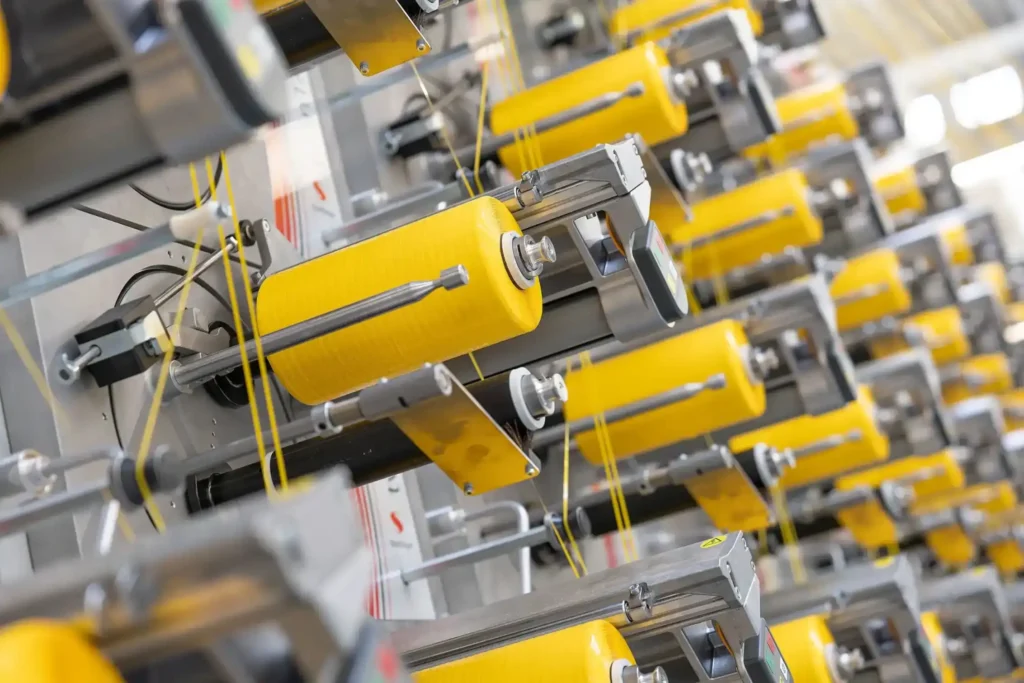
Tape extrusion & draw: A PP sheet is extruded, quenched, slit into ribbons, then drawn about 5–7×. Orientation aligns molecular chains, multiplying tensile strength while moderating elongation. The result: lightweight “micro‑cables” that behave predictably under pallet compression and fork‑truck contact.
Weave density & GSM: For 10–50 kg formats, base fabric weights often range 70–110 g/m² with warp×weft densities of 10×10 to 14×14 per 10 cm. Higher GSM improves puncture resistance and seam security but raises stiffness and unit cost; the optimum is lane‑dependent (yard storage vs. controlled warehouses, export vs. local routes).
UV program: Hindered amine light stabilizers (HALS) and UV absorbers are added when outdoor storage is expected. Target exposures commonly span 200–600 kLy, matched to latitude and dwell time in yards.
2) Coatings and laminations (closing fabric pores)
Extrusion coating (15–40 μm LDPE/LLDPE/PP): Fills inter‑yarn pores, drops WVTR, and provides a predictable coefficient of friction (COF) for forming shoulders and conveyors. LDPE/LLDPE blends widen seal windows when heat‑sealing is used downstream.
BOPP lamination (12–25 μm): Reverse‑printed or clear films add scuff resistance, optical quality for branding, and a smooth surface for high‑contrast codes, while maintaining a mono‑polyolefin identity (PP/PP) to ease recycling logistics.
Breathable configurations: If de‑aeration is essential (aerated powders, fast fills), micro‑perforations or vent stripes are added away from seal zones, balancing fill‑rate with leakproofing.
3) Liners and inner barriers (sift‑path elimination)
Loose or cuffed liners (30–60 μm LDPE/LLDPE): Liners create a continuous, low‑defect barrier for fines and humidity. Cuffs guarantee capture in the top closure; spot‑tacking stabilizes the liner during filling so it cannot fold into the seam and create leak channels.
Antistatic variants: For powders with high tribocharging (vitamin premixes, TiO₂, carbon black), antistatic masterbatch mitigates nuisance shocks and reduces dust pick‑up on inner surfaces.
4) Closure systems (seam integrity)
Over‑tape sewing: A chain or lock stitch through crepe‑tape closes needle holes and remains the simplest path to sift‑resistant open‑mouth closures.
Pinch‑top / heat‑seal: Where hybrid FFS is used, a seal‑friendly inner skin (LLDPE/mLLDPE) enables hermetic transverse seals with high hot‑tack, reducing peel‑open failures as bags leave the jaws under load.
Valve sleeves: For valve formats, sleeve width, lead‑in angle, and flap overlap control self‑seal. A short heat‑seal or ultrasonic weld finishes the job for dusty SKUs.
5) Surface activation and print systems
Corona/flame treatment to ≥ 38–42 dyn/cm anchors inks for flexographic or gravure systems; varnishes or matte bands add scuff armor and localized friction for pallet stability. Thermal inkjet or laser serialization supports recall‑ready traceability from lot to pallet and shipment.
Cost logic: Remaining within PP/PE controls volatility and preserves recycling routes. Distributing barrier across shell, seam, and liner avoids brittle, over‑thick monolayers that crack at edges and leak at the worst moment—on the customer’s floor.
What are the Features of Leakproof Woven Bags? — Mapping Attributes to Failure Modes
Feature lists only persuade when they connect directly to plant realities—housekeeping dust, returns from caking, toppled pallets on rough routes. The following attributes of Leakproof Woven Bags are framed as answers to those recurring pains.
- Sift‑proof closures: Over‑tape sewing blocks the classic needle‑hole path; pinch‑top sealing delivers hermetic transverse seams; valve sleeves collapse under head pressure, then accept a brief thermal or ultrasonic weld. Success is audited via seam strength (ISO 13935‑2 / ASTM D1683) and post‑vibration sift mass loss.
- Barrier at practical gauges: PE coatings or BOPP laminations reduce WVTR at manageable thicknesses; optional liners protect aroma and curb humidity in monsoon or coastal climates. Targets of ≤ 2–6 g/m²/day at 38 °C/90% RH (ASTM F1249 context) are realistic for many powders.
- Impact and puncture survival: Oriented PP tapes distribute stress like cables; balanced warp/weft tear prevents zippering after drops. Typical floors: index puncture (ASTM D4833) ≥ 150–250 N; dart impact (ASTM D1709) ≥ 400–600 g.
- Machine‑friendly friction: A global static COF around 0.40–0.55 ensures glide over forming shoulders and conveyors; matte or textured lanes where bag‑to‑bag shear is highest anchor stacks without jamming the line.
- Print fidelity and code permanence: BOPP skins and dyne‑stable coats hold regulatory text and serialized IDs that remain scannable after scuffing and strap rub. Barcode grades stay above common acceptance (≥ C/2.0) when tested post‑handling.
- Mono‑polyolefin recyclability: PP fabrics with PP or PE skins keep the structure within a single polymer family—simpler material declarations, simpler waste segregation.
- Worker safety and hygiene: “Leakproof” also means calmer air near fillers, fewer nuisance shocks with antistatic liners, and smooth exteriors that wipe down in GMP/5S programs.
What is the Production Process of Leakproof Woven Bags? — From Pellet to Pallet
Leakproof behavior emerges from disciplined conversion—not guesswork. The following process map outlines how Leakproof Woven Bags are built and validated so their performance is repeatable across rolls, shifts, and plants.
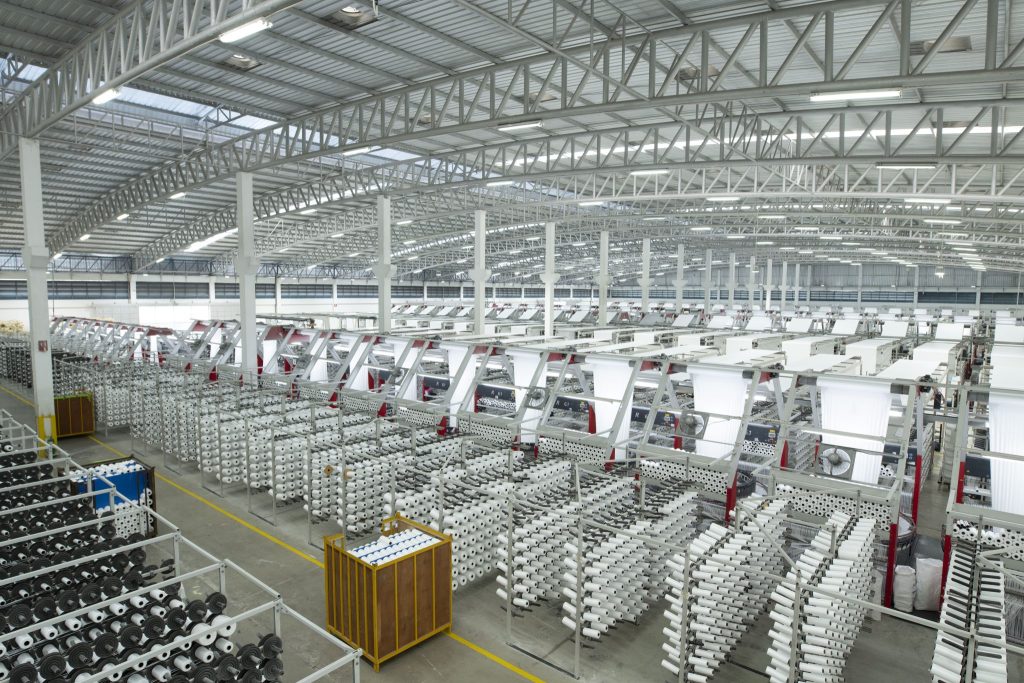
- Substrate manufacturing: Tape extrusion → quench → slit → draw (5–7×) under closed‑loop tension control. Weaving on circular/flat looms to target ends/picks; optional heat‑setting to stabilize dimensions before coating.
- Surface engineering: Extrusion coating or BOPP lamination; bond confirmed by peel/adhesion tests. Corona/flame treatment to ≥ 38 dyn/cm; dyne retention checked after storage. Optional micro‑perfs placed away from seal zones.
- Printing and identification: Flexographic or gravure systems with registration that survives gusset folds; thermal inkjet/laser serialization; vision systems verify presence and grade of 1D/2D codes.
- Bag conversion & closures: Cutting, gusseting, and bottom forming (sewn or pinch‑bottom). Liner insertion (loose, spot‑tacked, or cuffed). Mouth closure: over‑tape sewing for open‑mouth; valve insertion plus heat‑seal/ultrasonic finishing for valve formats; transverse thermal seals for FFS hybrids.
- Quality plan: Mechanical (ASTM D5034, D5733/D2261, D4833, D1709); barrier/friction (ASTM F1249; ASTM D1894/ISO 8295); seam/valve (ISO 13935‑2 / ASTM D1683; post‑vibration sift loss); surface/codes (dyne, tape test, barcode grade).
Inline Controls
Draw ratio Cpk, loom stop frequency, coat weight SPC, peel strength sampling, dyne audit, hot‑tack sampling at start‑up and every roll change.
Traceability
Roll‑to‑pallet mapping, bag‑level lot codes, printer vision confirmation, ERP/MES linkage for complaint triage.
Release Criteria
Tensile/tear/puncture floors, WVTR target, COF window, seam strength and sift‑loss acceptance, barcode grade after scuff simulation.
What is the Application of Leakproof Woven Bags? — Sector‑by‑Sector Fit
Because their leak paths are engineered shut, Leakproof Woven Bags thrive anywhere dust control, net‑weight accuracy, or low housekeeping are non‑negotiable.
- Cement and mineral fillers: Use over‑tape sewing or valve designs plus liners; specify anti‑slip lanes for tall stacks and heavy pallets.
- Fertilizers and salts: Moisture sensitive; require WVTR control and UV stabilization for yards. A liner is often the cheapest insurance against monsoon seasons.
- Flour, semolina, starches: Dusty and food‑adjacent; pair clean closures with compliant liners and scuff‑resistant print zones for lot codes.
- Animal feeds & premixes: Valve options reduce airborne dust; aroma‑sensitive blends benefit from liners and quick‑seal valves.
- Resin powders & additives: Antistatic liners and tight seals prevent loss and contamination; keep codes crisp for batch segregation.
Leakproof Woven Bags: Optimizing Storage and Handling — Reasoned Walkthrough
The phrase Leakproof Woven Bags: Optimizing Storage and Handling promises measurable improvements: fewer leakers, cleaner pallets, calmer warehouses, clearer traceability. To turn the promise into practice, we decompose the challenge into five nested problems—moisture ingress, dust egress, mechanical abuse, pallet stability, and governance—then assign design levers and acceptance metrics to each before recombining them into a coherent bill of materials.
1) Moisture ingress
Context: Hygroscopic contents cake and bridge, upsetting downstream flow and customer dosing. Levers: PE coatings or BOPP laminations plus an LDPE/LLDPE liner where climate risk is high; seam geometries that avoid wicking; storage standards. Targets: WVTR ≤ 2–4 g/m²/day for salt/fertilizer; ≤ 3–6 g/m²/day for flours/feeds (38 °C/90% RH).
2) Dust egress
Context: Sifting at seams or sleeve mouths drives rework and safety incidents. Levers: Over‑tape sewing on open‑mouth; valve sleeves with quick heat‑seal; antistatic liners; micro‑vent patterns away from seal zones. Metrics: Sift mass loss post‑vibration ≤ product‑specific limit; ambient dust readings around fillers trending down after conversion.
3) Mechanical abuse
Context: Forklift tines and pallet edges are routine. Levers: GSM selection; reinforced corners; puncture/dart floors; balanced tear. Metrics: ASTM D4833 ≥ 150–250 N; D1709 ≥ 400–600 g depending on route abuse.
4) Pallet stability
Context: Low COF topple stacks; high COF jams conveyors. Levers: Global static COF 0.40–0.55; localized matte lanes; block‑bottom shaping; wrap/hood recipes. Metrics: Incline hold ≥ 8–10°; route‑specific ISTA vibration passes at target stack height.
5) Traceability and governance
Context: Faster root‑cause analysis compresses complaint cost. Levers: Dyne‑stable BOPP print zones; serialized 2D codes; MES/ERP linkages; documented roll‑to‑pallet mapping. Metrics: Barcode grade ≥ C/2.0 after scuff; 100% presence verified by vision.
Standards, Certifications, and Identifiers — Making Performance Auditable
To keep conversations precise and auditable, specifications for Leakproof Woven Bags cite shared test methods and compliance frameworks:
- ASTM D5034 (grab tensile); ASTM D5733 / D2261 (tearing strength); ASTM D4833 (index puncture); ASTM D1709 (free‑falling dart impact)
- ASTM F1249 (water‑vapor transmission using modulated IR)
- ASTM D1894 / ISO 8295 (coefficient of friction)
- ISO 13935‑2 / ASTM D1683 (seam strength for sewn/stitched closures)
- 21 CFR 177.1520 (US) and EU 10/2011 (EU) for food‑contact layers (liners or inner skins)
- ISTA 3A/3E (transport simulation) for pallet patterns and wrap settings
- BRCGS Packaging Materials / FSSC 22000 / ISO 22000 for hygiene schemes in plants serving food/adjacent markets
- Where applicable: UN performance packaging authorization for dangerous goods under 49 CFR Part 178 / UN Model Regulations
Engineering Heuristics and Calculation Frames
Numbers turn preferences into decisions. The following frames translate risk profiles into gauges, seals, and friction windows the line can actually hold.
Gauge selection
Domestic, gentle routes often succeed with 80–90 g/m² fabric and 20–30 μm coating. Export or rough yards justify 100–120 g/m² and reinforced corners. If a liner is added, keep shell gauges steady and let the liner carry incremental barrier and sift control.
Seal window mapping
Plot seal initiation, peak strength, and hot‑tack versus jaw temperature and dwell. Operate on the plateau—away from ragged edges—so routine thermal drift does not convert to leakers. Correlate hot‑tack pass/fail to transfer loads between the sealer and checkweigher.
COF tuning
Hold global static COF in the 0.40–0.55 window; add 30–50 mm matte lanes where bag‑to‑bag shear is highest (typically mid‑panel). Validate with incline tests and pallet shear on your actual pattern and wrap program.
Venting logic
For fast fills of aerated powders, begin with 6–12 micro‑vents of 0.3–0.5 mm in the upper third. Confirm pillow reduction and checkweigher stability before widening patterns. Never intrude vents into seal zones.
Parameter and Options Table — Quick Reference
| Parameter | Typical / Recommended Range | Why It Matters |
|---|---|---|
| Fabric GSM | 80–120 g/m² | Strength vs. cost and stiffness; edge durability |
| Ends × picks (per 10 cm) | 10×10 to 14×14 | Coverage, tear arrest, print base quality |
| Coating/lamination | 20–30 μm PE coat or 12–25 μm BOPP | WVTR, graphics, machinability |
| Liner thickness | 30–50 μm LDPE/LLDPE | Added barrier; food‑contact compliance |
| WVTR target (38 °C/90% RH) | ≤ 2–6 g/m²/day | Caking control in humid storage |
| Dart impact (ASTM D1709) | ≥ 400–600 g | Drop and corner‑hit survival |
| Index puncture (ASTM D4833) | ≥ 150–250 N | Yard‑abuse resilience |
| COF (static) | 0.40–0.55 | Conveyor glide vs. pallet grip |
| Dyne level | ≥ 38 dyn/cm | Print/coding adhesion and permanence |
| UV stability | 200–600 kLy | Outdoor durability for yard storage |
Implementation Roadmap — From Pilot to Plant‑Wide Rollout
- Segment SKUs: Hygroscopicity, particle size distribution, dust profile, bulk density, and route risk.
- Select candidates: Two GSM levels × coated vs. laminated × liner/no‑liner; include a valve and an open‑mouth variant if both machine families exist.
- Map seal windows: On production jaws, record initiation/peak/hot‑tack and define a plateau operating zone; verify against simulated transfer loads.
- Validate pallets: Tune COF and anti‑slip lanes; run compression and ISTA vibration at target stack height; document wrap/hood parameters.
- Lock codes: Specify dyne retention, ink systems, and barcode grade; add vision checks with reject logic.
- Quality agreement: Numeric floors for tensile, tear, puncture, dart, WVTR, COF, seam strength, and allowable sift loss after a defined vibration profile.
- Training & SOPs: Valve alignment, sewing tension, liner cuff management, vent audits, pallet inspection, and corrective‑action loops.
Worked Scenarios — Data‑Anchored Examples
A) 25 kg fertilizer blend (outdoor storage)
Structure: 100–110 g/m² fabric + 25–30 μm PE coat; optional 40 μm LDPE liner; UV ≥ 400 kLy.
Targets: WVTR ≤ 2–4 g/m²/day; dart ≥ 600 g; puncture ≥ 200 N; COF 0.42–0.52.
Outcome: Reduced caking, clean pallets, export‑ready loads.
B) 25 kg flour (dusty fill)
Structure: 90 g/m² fabric + BOPP lamination; crepe‑tape overlock; optional 30–40 μm liner.
Targets: Sift loss after vibration ≤ internal limit; barcode grade ≥ C/2.0; WVTR ≤ 3–5 g/m²/day.
Outcome: Cleaner pack area, fewer returns, legible labels throughout distribution.
C) 20 kg mineral filler (sharp particles)
Structure: 110–120 g/m² fabric; reinforced corners; PE coat; valve format with heat‑sealed close.
Targets: Puncture ≥ 250 N; dart ≥ 600 g; COF tuned for pallet interlock.
Outcome: Lower spill rate, faster line speed, stable stacks.
Buyer’s Question Set — Clarifying the Right Spec
- Which failure modes dominate today (caking, sifting, punctures, pallet slip, code loss)? Rank them with current data.
- How many outdoor months and what climate? What UV stability is required?
- Which packers and closures are installed (open‑mouth sewing, valve packers, hybrid FFS)? What cycles per minute are mandatory?
- Are liners necessary for barrier or compliance? Which thickness and cuff style are preferred?
- What pallet pattern and wrap/hood protocol do you run? What is the maximum stack height?
- Which test methods and numeric floors will appear in the quality agreement (tensile, tear, puncture, dart, WVTR, COF, seam strength, barcode grade)?
- What reject rate is acceptable during ramp‑up, and how will near‑miss data be captured into corrective actions?
Concluding Position — Why Leakproof Woven Bags Optimize Storage and Handling
Leakproof Woven Bags convert chronic failure modes—humidity ingress, seam sifting, punctures at edges, slippery stacks, scuffed or unreadable codes—into controllable variables with numeric acceptances. By staying in the PP/PE family, distributing barrier across shell, seams, and liners, and engineering closures that truly seal, this format delivers cleaner lines, better net‑weight control, calmer warehouses, and easier audits. In logistics terms, the best package is the one nobody notices: quiet on the line, steady on the pallet, uneventful in transit.
- What are Leakproof Woven Bags? — Definition, Synonyms, and Practical Boundaries
- The Materials of Leakproof Woven Bags — Resin Choices, Layer Roles, and Cost Logic
- What are the Features of Leakproof Woven Bags? — Mapping Attributes to Failure Modes
- What is the Production Process of Leakproof Woven Bags? — From Pellet to Pallet
- What is the Application of Leakproof Woven Bags? — Sector‑by‑Sector Fit
- Leakproof Woven Bags: Optimizing Storage and Handling — Reasoned Walkthrough
- Standards, Certifications, and Identifiers — Making Performance Auditable
- Engineering Heuristics and Calculation Frames
- Parameter and Options Table — Quick Reference
- Implementation Roadmap — From Pilot to Plant‑Wide Rollout
- Worked Scenarios — Data‑Anchored Examples
- Buyer’s Question Set — Clarifying the Right Spec
- Concluding Position — Why Leakproof Woven Bags Optimize Storage and Handling
H1: Introduction
“In logistics and storage, a single leak can cost thousands—VidePak’s leakproof woven bags, engineered with Starlinger technology and customizable PE/Aluminum foil liners, reduce spillage risks by 95% while cutting handling costs by 30%, redefining reliability in global supply chains.” — Ray, CEO of VidePak.
The global leakproof packaging market is projected to reach $42 billion by 2030, driven by demand for contamination-resistant solutions in industries like agriculture, chemicals, and food storage. VidePak, a leader in woven bag manufacturing since 2008, leverages Austrian Starlinger machinery and advanced material science to produce leakproof woven bags that balance durability, cost-efficiency, and compliance. This report explores customizable packaging configurations and client-centric design strategies, supported by technical data, case studies, and insights into VidePak’s $80M/year operational ecosystem.
H2: Technical Foundations of Leakproof Woven Bags
H3: Material Selection and Production Workflow
VidePak’s leakproof bags combine polypropylene (PP) outer layers with inner liners (PE or Aluminum foil), manufactured through a precision-driven workflow:
- Extrusion & Filament Drawing: PP granules (MFI 8–12 g/10min) are melted at 200–220°C using Starlinger’s AD-STM extrusion lines, producing uniform tapes with tensile strength ≥45 MPa.
- Weaving: 100+ circular looms weave PP tapes into fabric at 120 rpm, achieving 12×12 strands/inch density. Automated defect detection reduces material waste by 15%.
- Lamination: BOPP or PE coatings are applied via 30+ laminators at 180–190°C, achieving moisture permeability <3 g/m²/day (vs. 8–10 g/m²/day for non-laminated bags).
- Sealing & Valve Integration: Heat-sealed valves withstand 15 N/mm peel force (ISO 527-3), enabling automated filling at 1,500 bags/hour.
Table 1: Key Performance Metrics
| Parameter | VidePak Standards | Industry Average |
|---|---|---|
| Tensile Strength | ≥45 MPa | 35–40 MPa |
| Moisture Permeability | <3 g/m²/day | 8–10 g/m²/day |
| Filling Speed | 1,500 bags/hour | 1,000 bags/hour |
| Leakage Rate | <0.5% | 1.5–2% |
H2: Customizable Packaging Solutions
H3: Lamination and Inner Liner Options
- BOPP Lamination: Ideal for UV-sensitive products (e.g., fertilizers), blocking 99% of UV rays and reducing moisture ingress by 70%.
- PE Inner Liners: Cost-effective for general-purpose storage (e.g., grains), offering 150–200 kJ/m² impact resistance (ASTM D1709).
- Aluminum Foil Liners: Critical for pharmaceuticals or hygroscopic materials, achieving oxygen transmission rates <5 cm³/m²/day.
H3: Client-Centric Design Choices
- Valve vs. Open-Mouth: Valve bags suit automated filling systems (e.g., pet food), reducing labor costs by 40%, while open-mouth designs optimize manual loading for SMEs.
- Reinforced Edges: Double-stitched seams increase load capacity by 20%, as validated in a 2024 trial with Sinotrans.
FAQs: Addressing Key Concerns
- Q: How to choose between PE and Aluminum foil liners?
A: PE suits moderate moisture protection (e.g., animal feed), while foil is essential for oxygen-sensitive products (e.g., coffee beans). - Q: Does lamination affect recyclability?
A: VidePak’s re:claim technology recovers 92% of laminated PP/PE waste, converting it into FDA-compliant pellets.
H2: Industry Applications and Case Studies
H3: Agricultural Storage
A 2023 partnership with COFCO reduced maize spoilage by 28% using UV-stabilized BOPP bags, validated under 50°C/80% RH conditions.
H3: Chemical Logistics
VidePak’s anti-static bags (surface resistivity <10¹² Ω/sq) minimized dust explosion risks for BASF, cutting incident reports by 45% in 2024.
H3: Food-Grade Compliance
PE-lined bags achieved 98.5% microbial barrier efficiency for Nestlé’s powdered milk, complying with FDA and EU No. 10/2011 standards.
H2: Sustainability and Cost Optimization
H3: Closed-Loop Manufacturing
VidePak integrates 30% recycled PP without compromising strength, reducing carbon emissions by 22% per ton. Starlinger’s Videomat 4.0 systems automate quality checks, achieving a defect rate of 0.2%.
H3: Logistics Efficiency
Lightweight designs (40–50% lighter than traditional bags) cut transportation costs by 25%, as demonstrated in a 2024 Walmart pilot.
H2: Conclusion
VidePak’s leakproof woven bags exemplify innovation in storage optimization, merging material science, automation, and sustainability. By tailoring solutions to client needs—whether through foil liners, valve designs, or UV-resistant laminates—they address critical challenges in global logistics while setting benchmarks for reliability and ESG compliance.
External Links for Further Reading:
- Explore aluminum foil composite bag innovations.
- Learn about moisture-proof woven bag applications.
This report integrates data from ASTM/ISO standards, peer-reviewed studies, and VidePak’s operational metrics to provide a holistic analysis of leakproof woven bags’ role in modern supply chains.