
What Are FFS Roll Woven Bags in Real Operations?
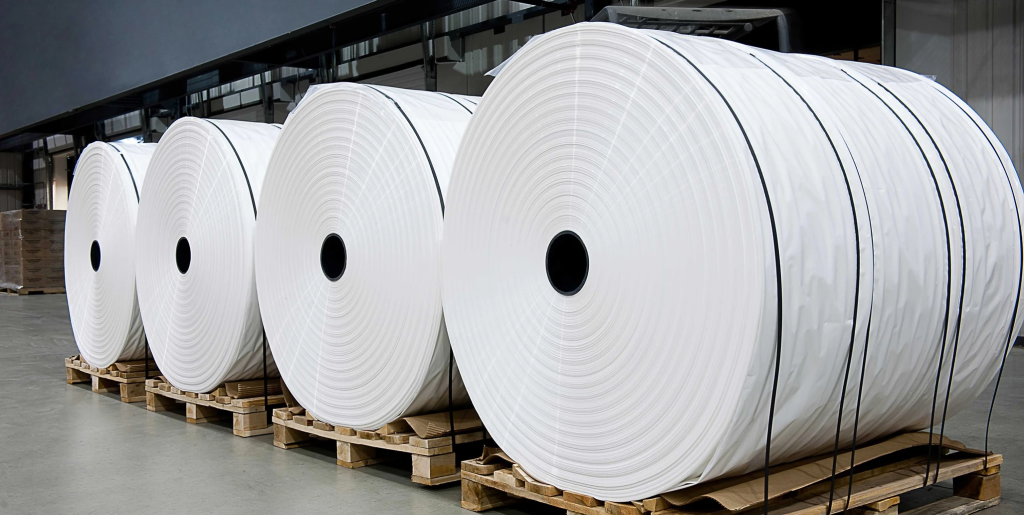
When packaging managers talk about speed, uptime, and pallet integrity in the same breath, they are usually thinking about FFS Roll Woven Bags. The term describes woven polypropylene (PP) fabric supplied as a continuous roll web that is automatically formed, filled, and sealed on an FFS line. In daily speech you may hear names like PP woven FFS rollstock, woven sack roll web, or woven roll film. The idea is consistent: a textile spine created from oriented PP tapes, surfaced with a sealable skin so the web can be tube‑formed and hermetically sealed at industrial pace.
Why does this matter? Because FFS Roll Woven Bags fuse two traditionally separate virtues—textile strength and film machinability. They behave like rugged sacks under fork‑truck abuse and like disciplined films under heat‑bar jaws. This duality unlocks unusual combinations: lighter tare yet tougher pallets; finer graphics yet fewer scuffs; faster lines yet cleaner seals. To anchor your mental model, imagine a hybrid between a high‑tenacity fabric and a well‑behaved film that tolerates real‑world logistics without asking for constant operator forgiveness.
Aliases aside, the functional promise does not change: FFS Roll Woven Bags deliver repeatable forming, stable sealing, and high abuse tolerance for dense, abrasive, or hygroscopic goods—fertilizers, salts, sugars, polymer pellets, animal feeds, minerals, and more. They also reduce touches. Continuous webs run longer between changeovers; splice‑ready rolls keep rhythm; and job codes printed sharply on BOPP skins make warehouse scanning less of a gamble.
Materials and Architecture: From Tape to Tuned Web
Every performance claim of FFS Roll Woven Bags rests on its bill of materials. The woven substrate supplies structure; the skin governs sealing and print; liners (when present) police moisture and fines; additives finesse COF, ESD, and UV. Understanding who does what—and what costs what—turns guesswork into specification.
Woven PP Substrate (Structural)
The spine of FFS Roll Woven Bags is isotactic polypropylene drawn into tapes and interlaced into fabric. Orientation aligns chains; crystalline lamellae thicken; tensile strength and modulus rise as creep falls. Mesh (e.g., 10×10–14×14 per 10 cm) and GSM (often 75–95 g/m² for sack‑class) tune stiffness and surface relief. Cost lives here: +5 g/m² across millions of units is not a rounding error, so right‑weighting matters.
Sealable Skin (Coating or BOPP Lamination)
An extrusion‑coated PP/PE skin (≈20–30 µm) reduces porosity and gives the heat‑sealable interface FFS jaws require. For premium print and scuff resistance, a printed BOPP (≈25–35 µm) is extrusion‑laminated to the fabric with a PP tie. Both options build all‑polyolefin structures that maintain PP recyclability in many regions. Gauge control here governs both sealing latitude and pallet friction.
Liners (Optional, Situation‑Driven)
Hygroscopic sugars and salts; dusty mineral powders; oxygen‑sensitive ingredients—each may justify a PE liner. On roll webs, liners are often introduced as a second web at the bagger rather than pre‑attached; in bulk FIBCs, a form‑fit liner is common. Liners raise cost and affect filling friction, so specify them only when the route and commodity demand the extra barrier.
Functional Masterbatches, Inks, and Fresh Air
Slip and antiblock tailor COF; antistatic tames nuisance ESD on fast fillers; UV stabilizers defend yard stacks; pigments carry brand language. Printing inks—water or solvent—must anchor to treated surfaces (≥38 dynes) and cure without odor. Lamination via extrusion ties avoids liquid adhesives and their residuals. Less chemistry often means fewer headaches; simplicity is a compliance strategy.
Put together, these layers converse. The skin must melt across fabric knuckles without starving bond lines; the fabric must carry loads without telegraphing too much texture into seals; the additive package must deliver friction bands without tripping pallet conveyors. In short, FFS Roll Woven Bags are not a stack of parts but a negotiated truce among functions.
Feature Set: Strength, Sealing, Speed, and Storytelling
The oriented lattice in FFS Roll Woven Bags spreads impact loads and resists zipper‑tears. Pallets survive corner bumps with fewer corner splits at equivalent mass than many monolithic films.
Coated and laminated skins build continuous seals over textile reliefs at practical dwell and pressure. Heat‑bar jaws can be profiled to bridge valleys and avoid pinholes.
Tight gauge; stable COF; crisp eye marks; tension‑controlled wind: the web behaves on VFFS and, when required, HFFS. Operator interventions decline.
When food or feed is in scope, recipes and rooms follow good manufacturing practice; low‑migration inks and clean packing keep declarations credible.
All‑PP architectures (BOPP/PP/PP) align with PP streams in many regions. Paper labels should lift off cleanly; inks should not seed gels in reprocessing.
Gravure on BOPP carries brand and barcodes with clarity. In industrial yards, legibility is safety; in retail aisles, it is persuasion.
Manufacturing Flow: From Resin Receipt to Roll Passport
- Resin receipt and screening — Approved PP (and PE if used) arrives with statements of suitability where relevant. QC checks MFR, moisture, and appearance. Change control triggers mini‑runs when lots switch.
- Extrusion and tape drawing — Sheet, slit, draw. Orientation sets tensile properties and creep behavior. Masterbatch additions (slip, antistat) are dosed gravimetrically; overdosing shows up later as COF drift.
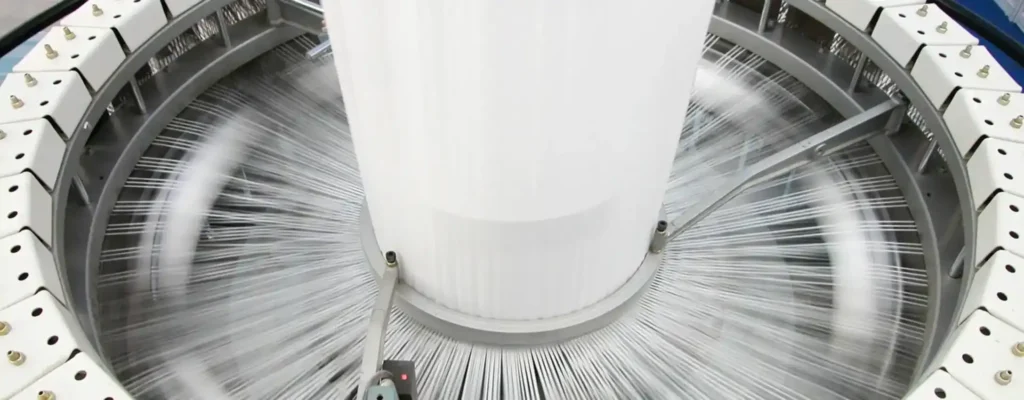
- Weaving — Circular or flat looms interlace tapes to target mesh and GSM. Inline inspection catches broken ends and width creep early.
- Surface finishing — Choose extrusion coat for cost‑balanced sealing and print, or BOPP lamination for premium graphics and scuff resistance. Monitor coat weight, dyne, bond, and residuals.
- Printing — Flexo for coated webs; gravure for BOPP. Shade control and solvent or dryer discipline keep odor and color in check.
- Slitting and winding — Slit to layflat; trim edges for straightness; re‑treat if needed. Wind with controlled hardness; add leader cards and splice tabs so changeovers do not steal minutes.
- Hygiene controls — Clean areas, filtered air, tool accountability, and metal detection reduce foreign matter. Rolls are bagged or wrapped to stay clean to the filler.
- Release and documentation — Mechanical tests, COF, bond, and—if food/feed contact is in scope—migration tests. A one‑page roll “passport” summarizes GSM, COF, dyne, layflat, bond strength, and job IDs.
Where They Shine: Sector‑Specific Uses
- Fertilizers and soil amendments — Pallet stability, puncture resistance, and humidity resilience make FFS Roll Woven Bags a reliable export choice.
- Polymer pellets and masterbatches — Abrasive, heavy, corner‑wearing cargos run safer in woven than in thin film; antistatic levels keep lines calm.
- Salt and sugar — Hygroscopic goods demand tight seals and optional liners; coated or laminated webs reduce caking claims.
- Animal feeds and grains — BOPP graphics carry brand stories while the fabric survives yard life. EZ‑open and reclose options improve user experience.
- Construction materials — Dry mortar and tile adhesives punish packaging; woven webs resist edge scuff and tolerate venting windows for trapped air.
- Minerals and water‑treatment salts — Dense fills (20–50 kg) benefit from tuned COF and strong bottom seals on vertical FFS.
System Thinking: Five Subsystems, One Coherent Spec
Complexity becomes manageable when decomposed. Map FFS Roll Woven Bags into five subsystems—mechanical, barrier, machinability, hygiene/chemical safety, and information—and assign measurable targets. Then reassemble with evidence.
Inputs: GSM, mesh, draw ratio, tube and bottom seal geometry. Failure modes: zipper tears, creep, edge scuff. Controls: tensile, Elmendorf, instrumented drops, pallet compression.
Inputs: skin gauge, liner presence, venting plan. Failure modes: caking, odor uptake, dusting. Controls: WVTR surrogates, sift tests, humidity soaks.
Inputs: COF MD/CD, gauge tolerance, edge straightness, tension profile, eye marks. Failure modes: mis‑registration, tube seal voids, length drift. Controls: COF tests, camera checks, OEE logs.
Inputs: polymer and additive listings, low‑migration inks, clean areas. Failure modes: odor/taint, migration exceedance, foreign matter. Controls: migration tests, GMP/PRP records, metal detection.
Inputs: job IDs, 2D codes, roll passports, ERP mapping. Failure modes: recall delays, certificate gaps. Controls: code legibility audits, doc versioning, retention samples.
Parametric Tables You Can Use Tomorrow
| Use case | Fabric GSM | Mesh | Skin | Liner | Notes |
|---|---|---|---|---|---|
| Fertilizer (20–50 kg) | 80–95 | 11×11–12×12 | BOPP 25–35 µm or PP coat 20–30 µm | 0–40 µm | Matte friction bands for pallets |
| Polymer pellets (20–25 kg) | 80–90 | 10×10–12×12 | PP coat 20–30 µm | 0 µm | Antistatic and traction lanes |
| Animal feed (10–25 kg) | 75–90 | 10×10–12×12 | BOPP 30–35 µm | 0–30 µm | Retail print; EZ‑open options |
| Sugar/Salt (10–50 kg) | 80–95 | 11×11–12×12 | PP coat 20–30 µm | 30–60 µm | Sift‑proof seams; humidity focus |
| Machine‑Facing Parameter | Typical Target | Why it matters |
|---|---|---|
| Gauge tolerance | ±2% | Stabilizes dwell heat and bag length |
| COF (MD/CD) | 0.30–0.45 | Balances speed and pallet stability |
| Dyne level | ≥38 dynes | Ink anchorage and code legibility |
| Layflat tolerance | ±2–3 mm | Prevents re‑threading and tube ovality |
Machine Integration: VFFS, HFFS, and the Seal Window
Will woven webs run on your existing filler? In most plants, yes—when the skin seals within your jaw’s temperature and dwell window and when COF lives inside conveyor limits. Vertical FFS loves free‑flowing granules; horizontal FFS appears where product geometry demands. Either way, success looks like short changeovers, quiet registration, and seals that survive drops without starburst pinholes.
- Forming — Polished radii on forming shoulders prevent knuckle drag; layflat tightness avoids tube ovality.
- Sealing — Serrated profiles can bridge fabric texture; seal initiation for PP‑rich skins typically sits in the mid‑140s °C, with dwell tuned to jaw pressure and line speed.
- Registration — High‑contrast eye marks and stable web tension keep panel alignment repeatable; camera checks curb drift.
- Changeovers — Leader cards and pre‑applied splice tabs routinely cut changeovers from ten minutes to four. Across a year, that’s days of output.
Worked Blueprints (Ready for Trials)
Construction: BOPP 30 µm over woven PP 85–90 g/m²; optional PE liner 35–40 µm in monsoon months. COF 0.35–0.45; matte lanes for pallet contact. Validate with 1.0 m drops after humidity soak and pallet compression to spec.
Construction: PP‑coated woven PP 80–85 g/m²; antistatic masterbatch; no liner. Emphasize low slip for conveyor climbs; monitor abrasion zones and add scuff patches if needed.
Construction: BOPP 30–35 µm gravure 8‑color over 80–85 g/m²; EZ‑open; optional reclose tape. Test odor/taint panels and scuff under shipping simulation.
Construction: PP coat 25–30 µm; woven PP 90–95 g/m²; liner 50–60 µm. Tight tube and bottom seals; sift‑proof options; clean area packing.
Troubleshooting Atlas: Symptom → Likely Causes → Fix
| Symptom | Likely causes | Practical fixes |
|---|---|---|
| Seal pinholes | Low dwell/pressure; knuckle highs; contamination | Raise dwell; change jaw profile; clean seal zone; confirm coat weight |
| Length drift | Tension variation; winding hardness | Stabilize unwind brake; verify roll hardness; edge‑guide alignment |
| Pallet slippage | COF too low; gloss in contact zones | Add matte lanes; adjust slip level; revise wrap pattern |
| Print scuff | Under‑cured inks; weak OPV | Increase dryer time/temp; add scuff‑resistant varnish |
| Dusting/leaks | Weak tube/bottom seals; seam fines | Widen seals; add sift‑proof options; confirm liner alignment |
ROI Model: Why the Numbers Often Favor Woven
Take a plant running 25 kg fertilizer on vertical FFS, two shifts, 300 days per year. Baseline on film: 1,200 bags/hour, four changeovers/day at 12 minutes, scrap 1.2% on seals. With tuned FFS Roll Woven Bags: 1,350 bags/hour, splice‑assisted changeovers at five minutes, scrap 0.6%. Annualized, that’s roughly 140 additional production hours, ~141,000 extra bags, and thousands fewer rejects. Even if lamination adds a few dollars per thousand, the line and quality deltas generally swamp the material premium.
Sustainability and End‑of‑Life: Pragmatic Choices
Mono‑PP constructions simplify sortation and reprocessing compared with mixed laminates. Right‑weighting saves resin and emissions, but only when validated under real drops and compression—“lightest that passes” beats “lightest on paper.” Where regulations allow, use recycled PP for non‑contact overwraps while keeping the primary web virgin to protect compliance. Above all, design to the recycling infrastructure you actually have, not the one you wish for.
Frequently Asked, Answered Without Spin
Are FFS Roll Woven Bags recyclable? In many PP‑capable streams, yes. Keep labels compatible, avoid heavy inks that create gels, and communicate disposal guidance.
Do they work for direct food contact? When built from compliant polymers with low‑migration print and made under disciplined PRPs, they do. Confirm through migration testing and keep declarations current.
Will they run on my existing machine? If your jaws can seal PP‑rich skins and your shoulder accepts the layflat, very likely. Trial rolls tuned to your COF window answer this quickly.
Implementation Checklist You Can Reuse
- Scope states FFS Roll Woven Bags explicitly; jurisdictions and contact conditions are declared.
- Construction defined: GSM, mesh, skin type/gauge, liner gauge, matte lanes, tube and bottom seal geometry.
- Machine parameters set: COF window, dyne level, layflat tolerance, eye‑mark repeat, roll length/diameter for changeover cadence.
- Compliance file ready: declarations, migration tests if applicable, GMP/PRP evidence, job‑ID mapping to resin and ink lots.
- Validation complete: drop/stack/humidity, seam efficiency, OEE before/after with roll passports attached.
- Palletization defined: wrap recipe, slip‑sheet decisions, matte‑zone alignment to stack contact areas.
- Change control clear: triggers, re‑validation plan, and who signs off.
- What Are FFS Roll Woven Bags in Real Operations?
- Materials and Architecture: From Tape to Tuned Web
- Feature Set: Strength, Sealing, Speed, and Storytelling
- Manufacturing Flow: From Resin Receipt to Roll Passport
- Where They Shine: Sector‑Specific Uses
- System Thinking: Five Subsystems, One Coherent Spec
- Parametric Tables You Can Use Tomorrow
- Machine Integration: VFFS, HFFS, and the Seal Window
- Worked Blueprints (Ready for Trials)
- Troubleshooting Atlas: Symptom → Likely Causes → Fix
- ROI Model: Why the Numbers Often Favor Woven
- Sustainability and End‑of‑Life: Pragmatic Choices
- Frequently Asked, Answered Without Spin
- Implementation Checklist You Can Reuse
- 1. Application-Specific Advantages of FFS Roll Woven Bags
- 2. Technical Parameters for Optimal Customization
- 3. VidePak’s Competitive Edge
- 4. Market Trends and Strategic Insights
- FAQs
- 5. Future Outlook
“Why should feed manufacturers prioritize customization in FFS roll woven bags?”
The answer lies in three critical advantages: cost-efficiency through bulk production, superior load-bearing capacity (up to 50 kg), and enhanced product safety via anti-microbial and breathable designs. These factors position VidePak’s FFS roll woven bags as a strategic tool for optimizing feed packaging across poultry, livestock, and pet food industries.
50kg PE FFS Roll Films
Customized FFS roll woven bags optimized for 50kg industrial packaging efficiency.
Check More →PE FFS Films Solutions
High-performance FFS roll bags enhancing product management and packaging efficiency.
Check More →Heavy-Duty FFS Packaging
Durable customized FFS roll woven bags for industrial bulk material handling.
Check More →Multi-Layer PE FFS Bags
Custom multi-layer FFS roll bags improving product protection and operational efficiency.
Check More →1. Application-Specific Advantages of FFS Roll Woven Bags
1.1 Cost Efficiency and Scalability
FFS (Form-Fill-Seal) roll woven bags streamline production by integrating forming, filling, and sealing into a single automated process. VidePak’s high-speed Starlinger equipment enables the production of over 100 million bags annually, reducing per-unit costs by 15–20% compared to traditional stitching methods. For example, poultry feed producers can leverage bulk customization to align bag sizes (e.g., 10–50 kg) with farm consumption rates, minimizing waste.
1.2 Load-Bearing and Durability
Polypropylene (PP) woven fabrics offer tensile strengths of 8–12 N/mm², ensuring structural integrity even under dynamic transport conditions. In trials, VidePak’s 90 g/m² bags with laminated coatings demonstrated zero ruptures during 1,500 km trucking simulations for cattle feed, outperforming non-woven alternatives.
1.3 Safety and Preservation
Feed spoilage due to moisture and microbial growth costs the global industry $2.3 billion annually (FMI, 2023). VidePak addresses this by:
- Anti-fungal treatments: Inner liners coated with food-grade PE inhibit mold growth.
- Controlled breathability: Micro-perforations (≤5 µm pores) reduce condensation while blocking pathogens.
- UV-resistant outer layers: Critical for outdoor storage of pig feed in tropical climates.
2. Technical Parameters for Optimal Customization
Selecting the right specifications ensures performance alignment with application needs:
| Parameter | Considerations | Recommended Range |
|---|---|---|
| Thickness | Thicker layers (≥0.12 mm) for abrasive feeds like minerals in poultry supplements | 0.08–0.15 mm |
| Grammage | Higher grammage (≥100 g/m²) for heavy-duty livestock feed | 70–120 g/m² |
| Size | Align with automated filling systems (e.g., 50 cm width for pet food lines) | 30–100 cm (width), 50–150 cm (height) |
| Lamination | BOPP lamination for moisture-sensitive fish feed | Optional PE/PP coatings |
| Inner Liners | Multi-layer liners for hygroscopic ingredients (e.g., soybean meal) | 2–4 layers |
3. VidePak’s Competitive Edge
3.1 Advanced Manufacturing Capabilities
With 100+ circular looms and 30 lamination machines, VidePak supports rapid prototyping and large-scale orders. For instance, a recent project for a U.S. pet food brand involved delivering 5 million custom-printed bags (25 kg capacity, BOPP laminated) within 45 days—a feat enabled by modular production lines.
3.2 Sustainability Alignment
VidePak’s recyclable PP bags reduce carbon footprints by 40% compared to multi-material packaging. Collaborations with European agrochemical firms highlight their compliance with EU REACH and FDA standards.
4. Market Trends and Strategic Insights
The global polywoven bags market is projected to grow at 4.8% CAGR (2023–2033), driven by demand for automated packaging in the feed sector. Key trends include:
- Smart printing: QR codes for traceability in poultry supply chains.
- Lightweighting: 70 g/m² bags with reinforced seams for cost-sensitive markets.
FAQs
Q1: How does breathability prevent feed spoilage?
A: Controlled airflow reduces humidity buildup, inhibiting mold—critical for poultry feed in humid climates.
Q2: When is outer lamination necessary?
A: Essential for moisture-prone environments (e.g., marine transport of fish feed). Learn more about moisture-proof solutions.
Q3: Can bags withstand freezing temperatures?
A: Yes, VidePak’s PP material retains flexibility at -20°C, ideal for frozen pet food storage.
5. Future Outlook
Innovations like biodegradable PP blends and IoT-enabled batch tracking are reshaping the industry. VidePak’s R&D team is piloting antibacterial nano-coatings to address salmonella risks in poultry feed—a $120 million opportunity by 2027.
For automated packaging workflows, explore VidePak’s FFS roll bags for pet food, designed for speeds of 1,200 bags/hour.
In Conclusion
Customized FFS roll woven bags are not just packaging—they are a strategic asset for feed producers. By aligning technical parameters with operational needs and leveraging VidePak’s scalable solutions, businesses can achieve 20–30% efficiency gains in packaging logistics while ensuring product integrity.