
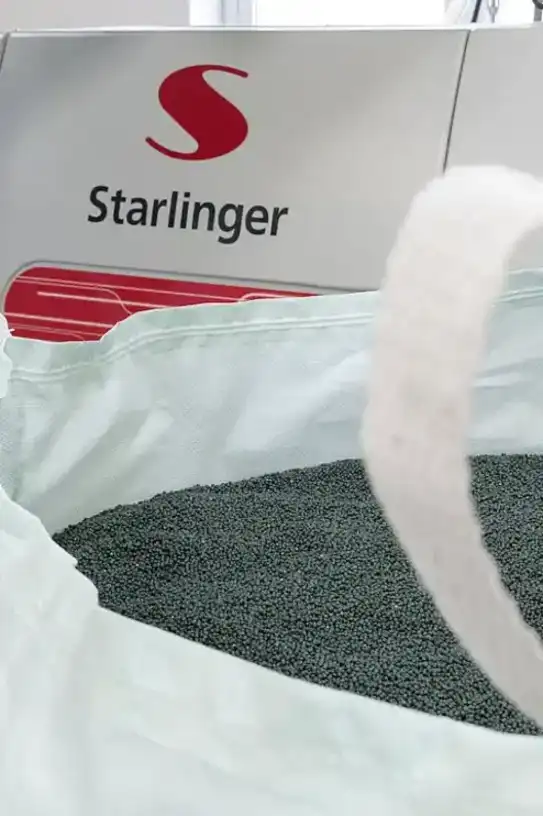
What are Poly Woven Bags? Definitions, synonyms, and the practical scope behind the name
In industrial packaging, Poly Woven Bags are sacks formed from interlaced polyolefin tapes—primarily polypropylene (PP), sometimes polyethylene (PE)—that yield a light, strong fabric. The preformed tube is then converted into an open‑mouth or valve configuration and closed by sewing, heat sealing, or adhesive pinching. As a category descriptor, Poly Woven Bags also appears in trade under related names: woven PP bags, WPP sacks, woven poly sacks, and woven polypropylene open‑mouth bags. By closure style, the family includes Sewn Open Mouth (SOM), Pinch Bottom Open Mouth (PBOM), and valve sacks; by print face, unlaminated surface‑printed fabrics and laminated builds with a reverse‑printed BOPP film.
Why does this format persist across decades and across markets as different as pet food, rice, fertilizer, and mineral powders? Because the structure multiplies advantages: the woven architecture distributes stress along warp and weft and arrests tears that would run across monolithic films; the bill of materials delivers high strength per gram of resin; the printable face—especially when upgraded with BOPP lamination—becomes a retail billboard that survives abrasion. Packaging is always a compromise between physics, cost, and persuasion; Poly Woven Bags keep that compromise honest and efficient.
A single internal reference illustrates the point: when buyers compare film sacks, paper SOM/PBOM, and woven constructions, the decision often returns to Poly Woven Bags precisely because they reconcile rugged handling with large‑area graphics and familiar closing equipment. One link suffices; the rest of this article is a self‑contained field guide.
Material system of Poly Woven Bags: resin chemistry, fabric architecture, print faces, barriers, and where money is spent
Every design is a stack: a woven backbone, a print face, an optional barrier or liner, and a closure interface. Each layer carries load—either mechanical load, sensory load (color, gloss, texture), or regulatory load (food contact compliance). The art is to hit target performance with the fewest grams, the fewest chemistries, and the most predictable machine behavior.
PP homopolymer or random copolymer dominates; PE blends appear where stiffness or seal synergy is sought. Pellets are compounded with antioxidants, slip/anti‑block, and—where bags sit outdoors—UV stabilizers. Tape extrusion slits a thin sheet into ribbons and draws them to orient chains; denier typically spans 600–1200, with weave densities around 8×8 to 12×12 tapes per inch. Raise denier and density and you gain burst and puncture resistance—but you pay in mass and cost.
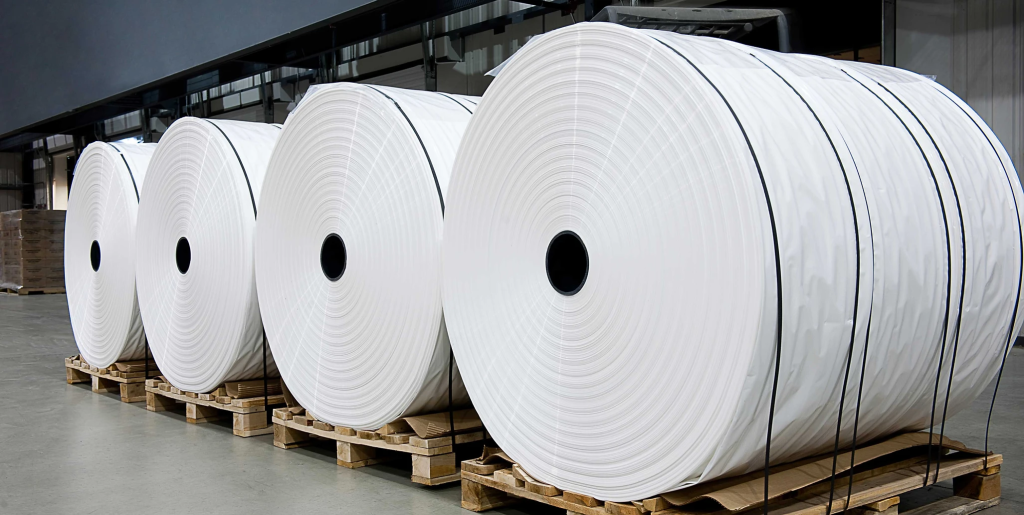
Circular looms produce tubular cloth at high speed; flat looms create sheets that are later tubed. Fabric mass is usually 60–80 gsm for 10–25 kg fills, rising toward 100 gsm for harsh duty. Strength is anisotropic—warp not equal to weft—so seam geometry, mouth reinforcement, and bottom fold design compensate for directional properties.
Reverse‑printed BOPP (≈20–30 μm) laminated to the fabric protects inks beneath film, delivering gloss, scuff resistance, and photo‑grade imagery. Without lamination, the fabric is corona‑treated and printed by flexo; this path is economical and breathable but less rub‑resistant and more textured to the eye.
Slip‑in LDPE liners (≈25–60 μm) or adhered coextrusions (PE/EVOH/PE) elevate moisture and oxygen control when product chemistry demands it. For fat‑bearing kibbles, a barrier slows oxidation; for dusty powders, an inner seal improves hygiene at first opening even if the outer is sewn.
Sewn seams with polyester or PP thread often include crepe tape and filler cord to close needle holes. Pinch tops rely on pre‑applied hot‑melt; heat‑seal tops need a sealant layer and calibrated jaws. Add‑ons—handles, laser scores, reclose—boost UX but complicate stations and increase consumables.
| Layer | Role | Typical materials | Cost sensitivity |
|---|---|---|---|
| Print face | Shelf appeal; scuff resistance | BOPP 20–30 μm; treated PE; bleached kraft (hybrids) | High (ink, cylinders/plates, varnish) |
| Woven core | Tensile, tear, puncture arrest | PP tapes 600–1200 denier; 8×8–12×12/in | Medium (gsm, density) |
| Barrier/liner | Moisture/O2 control; sealability | LDPE 25–60 μm; PE/EVOH/PE | Medium–High (EVOH raises cost) |
| Closures | Sift control; consumer experience | Thread + tape + filler cord; hot‑melt; heat sealant | Low–Medium (consumables/energy) |
Dusty and non‑hygroscopic powder? Paper PBOM or unlaminated fabric may suffice. Moisture‑sensitive and heavy? Favor heat‑seal layers and heavier fabric. Premium shelf presence and outdoor storage? Consider WPP + BOPP with UV stabilizers.
Feature set of Poly Woven Bags: mechanics, barrier strategy, branding canvas, line efficiency, sustainability
Strength is not a slogan; it is the outcome of tape orientation, weave density, seam geometry, and bottom construction. Increase denier and density and you gain puncture; shape a block bottom or square fold and you gain stack stability; tune stitch density and filler cord and you gain sift resistance. Barrier is a strategy rather than a binary: laminated faces repel scuff and moisture; liners and coextrusions beat oxygen; anti‑slip lacquers set pallet friction targets. Branding is a measurable discipline: ΔE00 thresholds for critical hues; registered matte‑over‑gloss windows for tactile contrast; reverse‑printed films to shelter inks. Line efficiency is a geometry problem: mouth stiffness, gusset control, jaw width, and spout clearance dictate bags per minute. Sustainability is a portfolio: downgauging, mono‑polyolefin builds, reusable loops, truthful labels.
- High tensile/tear per gram via oriented tapes and controlled weave
- Impact and puncture tuned by denier, density, and lamination skin
- Sift control via filler cord + crepe tape or via pinch/heat‑seal
- Stack geometry aided by gussets and block‑bottom formats
- Reverse‑printed BOPP for protected, glossy imagery
- Extended gamut (CMYKOGV) to cut spot inks and change‑over time
- ΔE00 ≤ 2.0 for brand‑critical tones; spectro‑verified on press
- Tactile differentiation with registered matte/gloss and anti‑slip
Production flow of Poly Woven Bags: from pellets and masterbatch to printed, sewn, sealed sacks
A laminated build follows a robust, auditable path: compounding and tape extrusion; weaving; surface treatment; reverse printing of BOPP; lamination by extrusion or solventless adhesive; tubing/cutting/forming; liner insertion; top preparation and closure; in‑line or off‑line printing for unlaminated paths; and finally a quality gate that translates numbers into confidence.
Seal strength (ASTM F88); drop resistance (ASTM D5276); dart impact (ASTM D1709); WVTR (ASTM F1249) and OTR (ASTM D3985) when barriers are claimed; lamination bond (180° peel, often ≥3 N/15 mm); print process control (ISO 12647‑6). Distribution protocols such as ISTA 3A/3E translate lab success into supply‑chain survival.
Applications of Poly Woven Bags: pet food first, then the wider landscape
Pet food packaging prizes drop resistance, scuff‑proof graphics, and aroma management; Poly Woven Bags answer with laminated faces and inner seals. Animal feed and farm supplements exploit the same virtues at lower print complexity. Rice and pulses use photo‑grade faces to compete at retail while preserving grain quality. Fertilizers and soil amendments demand UV stability and pallet friction; salts and chemicals demand cleanliness and robust sealing. The constant: the format can be tuned to product physics rather than forcing products to tolerate a generic sack.
| Use case | Dominant risks | Recommended structure | Closure |
|---|---|---|---|
| Dry dog/cat kibble (5–25 kg) | Abrasion, scuff, aroma loss | WPP + 25 μm BOPP + LDPE liner | Sewn outer + liner heat‑seal |
| Value feed (20–50 kg) | Cost, breathability | Unlaminated WPP, surface flexo | Sewn SOM |
| Rice/Pulses (10–25 kg) | Moisture ingress, shelf impact | WPP + BOPP reverse print | Sewn or hot‑cut |
| Fertilizers/Soil | UV, puncture, pallet slip | UV‑stabilized WPP + anti‑slip | Sewn |
| Resins/Salts | Clean sealing, powder control | Mono‑PE inner surfaces | Heat‑seal |
Why Poly Woven Bags are gaining ground in pet food packaging: science, psychology, pragmatism
Product science first: kibbles are dense and abrasive. They punish flimsy films and expose weak seams. The woven matrix arrests tear propagation and spreads load; the laminated face absorbs scuff and keeps graphics legible after thousands of micro‑impacts in transit. Shopper psychology next: buyers respond to gloss, color depth, and tactile cues; reverse‑printed BOPP with registered matte windows delivers those cues without sacrificing durability. Regulatory pragmatism finally: in the U.S., contact materials trace to FDA 21 CFR 177.1520; plants follow 21 CFR Part 507 preventive controls for animal food and respect 21 CFR Part 501 labeling constraints. In the EU, Framework Regulation (EC) 1935/2004 and Plastics Regulation (EU) No 10/2011 govern materials, while EC 2023/2006 enforces good manufacturing practice. Converters increasingly hold FSSC 22000 v6 or BRCGS Packaging Materials Issue 6 certificates. Poly Woven Bags fit these frameworks neatly because the chemistries are well characterized and the ink layer can be sealed under film.
Open‑mouth fillers, bag placers, and closers already present in many plants handle Poly Woven Bags with minimal re‑tooling. Sewing units are ubiquitous; liner heat‑seal jaws add hygiene; pinch top closers are standard. Implementation cycles are measured in weeks to months, not years.
Systems model for Poly Woven Bags: decompose the decision, then recombine it into a spec
Ask four questions. What must the package protect against (abrasion index, target water activity, oxygen sensitivity like peroxide value limits, drop heights/temperatures)? What must it communicate and endure (brand palette, ΔE00 targets, rub cycles, barcode grade and quiet zones)? What must it run on (spout geometry, shoulder angles, jaw width, stitch density, desired bags/min)? What must it comply with (21 CFR 177.1520; EU 10/2011; EC 2023/2006; 21 CFR 507; FSSC 22000 v6; BRCGS Issue 6; REACH SVHC)? When those answers are concrete, selecting fabric gsm and weave, choosing print face and lamination, deciding on liners or coex barrier, locking closures, and writing quality targets becomes almost algorithmic.
Brand palette, shelf cues, sustainability message; moisture/oxygen tolerance; filler details and target bpm; regional recycling and EPR fees.
Paper PBOM vs WPP + BOPP vs mono‑PE; sew vs pinch vs heat‑seal; PMS vs CMYKOGV; liner vs coex barrier; anti‑slip vs shrink patterns.
Golden Samples; ΔE00 locks; seal strength and lamination bond targets; packline settings for jaw temperature/dwell or stitch density.
First‑article inspection; Cp/Cpk on widths/gussets; color audits; corrective actions for sift, burst, scuff with root‑cause logs.
Compliance and identifiers for Poly Woven Bags: numbers you can literally put in a spec
Food‑contact and plant systems: FDA 21 CFR 177.1520 (olefin polymers); EU Framework (EC) 1935/2004; Plastics (EU) No 10/2011 with DoC and migration testing; EC 2023/2006 for GMP; 21 CFR Part 507 preventive controls for animal food; 21 CFR Part 501 labeling; FSSC 22000 v6 and ISO 22000:2018 in converter QMS; BRCGS Packaging Materials Issue 6 for site certification. Performance tests: ASTM D5276 (drop), ASTM D1709 (dart), ASTM F88 (seal strength), ASTM F1249 (WVTR), ASTM D3985 (OTR), ISO 12647‑6 (flexo print control), and ISTA 3A/3E (distribution). Chemical stewardship: REACH/SVHC declarations; voluntary heavy‑metal screens akin to RoHS are sometimes required by retailers.
| Property | Method | Common targets |
|---|---|---|
| Seal strength | ASTM F88 | ≥ 25–40 N/15 mm (structure‑dependent) |
| Drop resistance | ASTM D5276 | 5 × 1.2 m for 15–25 kg without rupture |
| Dart impact (film) | ASTM D1709 | ≥ 300 g (gauge‑dependent) |
| WVTR | ASTM F1249 | < 2 g/m²·day for barrier builds (example) |
| OTR | ASTM D3985 | < 5 cc/m²·day with EVOH (example) |
| Lamination bond | 180° peel | ≥ 3 N/15 mm (BOPP/WPP) |
Design playbooks for Poly Woven Bags in pet food
WPP 70–80 gsm + 25 μm BOPP; LDPE liner 35–45 μm; sewn outer + liner heat‑seal; gravure CMYK + 2 PMS; registered matte/gloss; lam bond ≥ 3 N/15 mm; seal ≥ 25 N/15 mm; drop 5 × 1.2 m; certificates: 21 CFR 177.1520; EU 10/2011; EC 2023/2006; FSSC 22000 v6.
Unlaminated WPP 70–80 gsm; 2–3 color surface flexo; sewn SOM with filler cord; target CoF with light anti‑slip overprint; stitch density spec; drop 1.0–1.2 m pass; clearly mark polyolefin for sorting.
WPP + PE/EVOH/PE 60–80 μm; reverse print; heat‑sealed top/bottom with wide jaw; OTR < 5 cc/m²·day (structure dependent); liner seal ≥ 30 N/15 mm; include tamper evidence and lot/date windows.
Risk controls for Poly Woven Bags: five failure modes and practical fixes
- Color drift → lock ICC profiles, ΔE00 specs, and anilox volumes; keep Golden Samples and audit cylinder wear.
- Sifting through sew lines → increase stitch density; use filler cord + crepe tape; migrate to pinch or liner heat‑seal where fines are critical.
- Ink adhesion loss on film → verify surface energy (>38 dynes); use primers/ink sets correctly; check solvent retention before slitting.
- Pallet skidding → specify anti‑slip lacquers and CoF targets; tune pallet patterns and add top sheets.
- Drop burst → rebalance tape count/denier; widen seal width and dwell; use impact‑tolerant blends; confirm heater calibration.
Total cost and sustainability modeling for Poly Woven Bags: beyond unit price
Unit price hides the shadow costs of scrap from color rework, downtime from poor mouth geometry, claims from burst or sift, and retailer penalties tied to unclear recyclability. Model truthfully: substrate mass (45–65% of converted cost), printing/lamination (20–35%), closures and add‑ons (5–15%), QA and compliance (3–8%). Sustainability is geometry plus chemistry: remove grams where drop testing allows; converge toward mono‑polyolefin where infrastructure exists; keep claims region‑specific; pilot PCR use in non‑food‑contact layers only after odor and migration are validated.
Spec template for Poly Woven Bags: copy into your RFQ
Product & net weight: [e.g., 15 kg dog kibble]
Format: Poly Woven Bags — [SOM / PBOM / hot‑cut; with or without liner]
Dimensions: Width [mm] × Gusset [mm] × Cut‑off [mm]
Fabric: PP woven [gsm], weave density [tapes/inch], denier [range]
Print face: [BOPP 25 μm reverse gravure / surface flexo on treated fabric]
Liner/Barrier: [LDPE μm / PE/EVOH/PE μm]; target WVTR/OTR if applicable
Closure: [sewn with filler cord / heat‑seal / pinch] with parameters
Graphics: [color count, PMS refs, ΔE00 targets, varnish type]
QA targets: F88 ≥ [N/15 mm]; D1709 ≥ [g]; D5276 [drops × height]; lam bond ≥ [N/15 mm]
Compliance: 21 CFR 177.1520; EU 1935/2004; EU 10/2011; EC 2023/2006; FSSC 22000 v6/BRCGS Issue 6; REACH SVHC
Sustainability: [material ID, recyclability statement by region, PCR % if used]
Variable data: [GS1 barcode, quiet zones, placement]; lot/date code areas
Roadmap through 2025 for Poly Woven Bags: what to pilot next
- Adopt extended gamut sets (CMYKOGV) to reduce spot ink dependence and shorten changeovers.
- Explore mono‑polyolefin builds that retain billboard graphics with protective varnish while simplifying sortation.
- Evaluate digital varnish/tactile effects on paper‑look films for premiumization without added mass.
- Implement on‑press color automation with spectrophotometer feedback to compress make‑ready and protect brand equity.
- What are Poly Woven Bags? Definitions, synonyms, and the practical scope behind the name
- Material system of Poly Woven Bags: resin chemistry, fabric architecture, print faces, barriers, and where money is spent
- Feature set of Poly Woven Bags: mechanics, barrier strategy, branding canvas, line efficiency, sustainability
- Production flow of Poly Woven Bags: from pellets and masterbatch to printed, sewn, sealed sacks
- Applications of Poly Woven Bags: pet food first, then the wider landscape
- Why Poly Woven Bags are gaining ground in pet food packaging: science, psychology, pragmatism
- Systems model for Poly Woven Bags: decompose the decision, then recombine it into a spec
- Compliance and identifiers for Poly Woven Bags: numbers you can literally put in a spec
- Design playbooks for Poly Woven Bags in pet food
- Risk controls for Poly Woven Bags: five failure modes and practical fixes
- Total cost and sustainability modeling for Poly Woven Bags: beyond unit price
- Spec template for Poly Woven Bags: copy into your RFQ
- Roadmap through 2025 for Poly Woven Bags: what to pilot next
“Why are polypropylene (PP) woven bags becoming the backbone of pet food packaging in an era demanding sustainability, durability, and logistics efficiency?”
The answer lies in four transformative advantages: superior moisture resistance, compliance with global food safety standards, customizable logistics-friendly designs, and cost-effective scalability. For VidePak, a global leader in woven bag manufacturing with 30+ years of expertise, these innovations address $1.2 billion in annual losses caused by inadequate packaging in the $110 billion pet food industry.
1. Material Innovation for Pet Food Safety and Preservation
1.1 High-Performance PP and PE Blends
Polypropylene woven bags are engineered to meet the stringent demands of pet food storage. VidePak uses ISO 9001-certified PP resins with ≥25 N/mm² tensile strength (ISO 527-2) and ≤0.1% permeability to prevent nutrient degradation and contamination. For moisture-sensitive kibble, BOPP lamination (20–50 µm) blocks 99% humidity, extending shelf life by 6 months in tropical climates.
A 2024 trial with a U.S. pet food brand showed that VidePak’s PE-lined bags reduced mold growth by 78% compared to traditional paper packaging, aligning with FDA and EU REACH standards for food-grade materials.
1.2 Anti-Static and UV-Resistant Coatings
For powdered supplements like vitamins or probiotics, anti-static PE liners mitigate dust explosions during pneumatic filling, reducing electrostatic incidents by 90%. UV-resistant outer layers prevent oxidative degradation during outdoor storage, critical for bulk shipments to retailers.
2. Logistics-Focused Design Enhancements
2.1 Ergonomic Features for Efficient Handling
VidePak’s designs prioritize ease of transport and warehouse management:
- Square-Bottom Construction: Enables stable 8-layer palletization, reducing storage space by 20% and minimizing toppling risks.
- Reinforced Handles: Polypropylene handles with 15 kg load capacity streamline manual搬运 for 25 kg bags, as validated in a 2024 trial with a European supermarket chain.
- Anti-Skid Surface Coatings: Prevent slippage during automated conveyor belt transport, reducing workplace injuries by 30%.
2.2 Customizable Valve and Seam Engineering
The patented Starlinger AD8330 valve ensures hermetic sealing for volatile ingredients like fish oil, achieving ≤0.01% leakage during 1,500 km truck simulations. Ultrasonic seams withstand 12 N/mm² loads—double the industry average—ensuring integrity under dynamic transport conditions.
3. VidePak’s Competitive Edge in Scalable Production
3.1 Starlinger’s Automated Manufacturing
With 100+ circular looms and 30 lamination machines, VidePak achieves 1,200 bags/hour throughput. A 2024 project delivered 2 million custom-printed BOPP/PE bags for a U.S. pet food brand within 30 days, leveraging modular production lines.
3.2 Sustainability Alignment
VidePak’s recyclable PP/PE blends reduce landfill waste by 60%, complying with the EU’s Circular Economy Package. A lifecycle analysis showed 40% lower CO₂ emissions compared to multi-material alternatives.
4. Technical Parameters for Optimization
Tailoring PP woven bags requires balancing six factors:
| Parameter | Pet Food Application | VidePak’s Recommendations |
|---|---|---|
| Grammage | Balances cost and load capacity | 90–120 g/m² (25 kg loads) |
| Valve Diameter | Filling speed vs. spill prevention | 50–80 mm for powdered supplements |
| Laminate Thickness | Moisture/UV resistance | 20–50 µm BOPP for outdoor storage |
| Inner Liner | Static control or moisture barrier | PE for hygroscopic ingredients |
5. Global Market Trends and Regulatory Compliance
The pet food packaging market is projected to grow at 6.2% CAGR (2024–2030), driven by e-commerce and eco-conscious policies. Key trends include:
- Smart QR Codes: Enable batch tracking and anti-counterfeiting, as seen in VidePak’s 2024 collaboration with a German pet food supplier.
- Biodegradable Blends: PLA-starch composites under development aim to reduce landfill dependency by 70% by 2030.
For industries prioritizing automation, explore VidePak’s FFS roll bags for pet food, designed for 98% filling accuracy and 1,200 bags/hour throughput.
FAQs
Q1: How do BOPP laminates enhance shelf life?
A: BOPP blocks 99% UV rays and reduces moisture absorption by 70%, ideal for outdoor storage. Learn more about moisture-proof solutions.
Q2: Can bags withstand freezing temperatures?
A: Yes, cold-chain optimized PP retains flexibility at -35°C, validated in frozen fish meal trials.
Q3: What’s the ROI of anti-static liners?
A: A 2024 study showed a 35% reduction in repackaging costs for powdered supplements.
Conclusion
In the rapidly evolving pet food industry, PP woven bags are not just packaging—they are strategic tools for brand differentiation and supply chain resilience. As VidePak CEO Ray states: “Every innovation we deliver ensures pet nutrition reaches bowls as fresh as it left our factories.” By merging Austrian engineering, adaptive design, and rigorous compliance, VidePak empowers brands to lead in sustainability and efficiency. For automated logistics solutions, explore VidePak’s Form-Fill-Seal technology, redefining speed and precision in packaging.