
# Poly-paper Bags: A 2024–2025 Deep-Dive Guide to Materials, Performance, and Real-World Use ## What is Poly-paper Bags? Definitions, Scope, and Everyday Names Poly-paper bags are industrial or retail packaging formats that combine paper (usually kraft, sometimes white-bleached) with a polymer component (typically polyethylene or polypropylene) as a film, liner, coating, or laminated substrate. This hybrid structure is engineered to blend paper’s printability and stiffness with plastic’s barrier and toughness. In commercial practice, the term covers both multi‑wall paper bags with poly liners and paper‑laminated woven poly sacks. **Common aliases (synonyms) for Poly-paper bags:** 1. **Paper–poly bags** 2. **Poly‑lined paper bags** 3. **Paper‑poly laminate bags** 4. **Kraft bags with PE liner** 5. **Paper laminated PP woven sacks** 6. **Paper–polypropylene (paper‑PP) bags** 7. **Multiwall paper bags with poly film** 8. **Paper valve bags (with poly barrier)** These formats appear in powdered building materials, agricultural inputs, pet food, chemicals, minerals, and food ingredients. “Poly-paper” does not specify a single construction; it is a family whose exact structure is tuned to moisture sensitivity, drop strength, filling machinery, and regulatory needs. ## What Are Poly-paper Bags Made Of? Materials, Properties, and How They Fit Together A poly‑paper bag’s performance comes from an intentional pairing of *paper plies* and a *polymer layer*. Below is a material‑level explanation, the traits each brings, approximate cost/availability considerations, and where each sits in a typical structure. ### 1) Papers (the structural and printable skins) * **Natural kraft paper (40–100 gsm typical for sacks):** Long, unbleached fibers deliver high tear resistance and tensile strength. Natural appearance, good ink anchorage, stiffness for stackability. Cost is competitive and globally available; sustainability credentials are familiar to buyers. * **White (bleached) kraft paper:** Aesthetically cleaner printing surface for branding or regulatory text, slightly lower strength than natural kraft of the same basis weight; usually priced modestly higher due to bleaching. * **Extensible sack kraft:** Engineered for higher stretch and improved energy absorption in drop tests; can down‑gauge total paper weight while retaining performance. **Where paper fits:** Paper plies serve as the exterior (for graphics and friction) and often as structural inner plies. In multi‑wall constructions, the number of plies (e.g., 2–4) and their basis weights are optimized to product density, bag size (10–50 kg formats), palletization height, and drop‑test targets. ### 2) Polymer Films and Liners (the barrier and toughness core) * **Polyethylene (PE) film liners (LDPE/LLDPE, 15–80 µm typical):** Primary moisture barrier for hygroscopic powders (cement, mortar, sugar, flour, premixes). LDPE gives good heat‑sealability and low WVTR (water vapor transmission rate). LLDPE adds puncture resistance. Cost-effective and widely available. * **High‑barrier PE or coextruded films:** Thin specialty films (e.g., ~20 µm high‑performance films) can achieve lower moisture ingress compared to thicker commodity films, reducing plastic mass while protecting contents. Coex films can include tie layers for lamination. * **Polypropylene (PP) woven fabric (AD*STAR‑style or similar):** A lightweight, high‑toughness mesh substrate that, when laminated with paper, yields a “paper‑look, poly‑strength” sack. Excellent drop resistance and abrasion resistance with lower grammage than all‑paper sacks. PP costs are commodity‑linked (propane/propylene chain) and fluctuate with energy markets. * **BOPP (biaxially oriented polypropylene) print film (optional):** Used in premium retail pet food or seed bags for high‑fidelity graphics with scuff resistance; often reverse‑printed and laminated to paper or woven PP. Higher material cost; typically justified by shelf‑impact or moisture performance needs. **Where polymer fits:** * In multi‑wall paper bags, PE is typically a *discrete liner* or a *laminated inner ply*. It may be “loose” (separate film) to enable independent sealing or “integrated” (glued to paper) for easier converting. * In paper‑laminated PP woven, a thin paper layer is bonded to the woven PP fabric; graphics print on paper, while PP supplies the mechanical backbone. ### 3) Adhesives and Tie Layers * **Hot melts / water‑based adhesives:** For paper‑to‑paper and paper‑to‑film bonds; tuned for fast set, machinability on tubers and bottomers, and repulpability (where applicable). * **Extrusion coatings and tie resins:** For in‑line PE-to-paper adhesion and multi‑layer films; ensure bond durability under humidity and handling. ### 4) Ancillary Components * **Valves (internal/external), sleeves, and patches:** For high‑speed filling of powders; may include PE film elements for self‑sealing valves that close under product pressure. * **Gussets, SOS (self‑opening) bases, pinch bottoms:** Geometry choices affect filling, cubic efficiency, and pallet stability. ### How a Typical Poly-paper Bag Is Assembled (Layer Logic) * **Option A: Multi‑wall paper with poly liner** Outside: Print kraft (white or natural) → Middle: Kraft (strength) → Inside: PE film (integrated or loose). Function: Print & scuff resistance outside; stacking stiffness; moisture barrier inside; heat‑sealable mouth for hygiene. * **Option B: Paper‑laminated PP woven sack** Outside: Kraft paper (graphics/feel) → Core: Woven PP fabric → (Optional) Inner PE film or coating. Function: Retail‑friendly print surface with exceptional drop and tear performance; lower total grammage for same strength. ## What Are the Features of Poly-paper Bags? Performance, Compliance, and Cost Profile Poly‑paper bags are picked when users need the *paper look* plus *plastic performance*. Core features include: 1. **Moisture protection with paper aesthetics** PE liners and barrier films deliver WVTR control, protecting humidity‑sensitive powders (cement, mortar, gypsum, flour, dairy powders, fertilizers). Meanwhile, outer kraft allows sharp printing, high COF (friction) for stable stacking, and “natural” shelf presence. 2. **High drop strength and puncture resistance** Layered kraft or woven PP meshes absorb drop energy; extensible papers stretch instead of splitting. Paper‑laminated PP sacks rival or exceed all‑paper multi‑wall bags at lower total weight. 3. **Machinability on common filling lines** Open‑mouth, pinch‑bottom, SOS, and valve formats integrate with form‑fill‑sealers, rotary packers, or impeller/air packers. Self‑closing valves speed throughput and reduce dusting. 4. **Regulatory and food‑contact pathways** Where food ingredients are involved, PE liners can be specified to relevant food‑contact frameworks; outer papers support mandatory labeling, traceability printing, and lot coding. 5. **Optimized total cost of ownership (TCO)** Poly‑paper formats allow down‑gauging (thinner films or fewer paper plies) without compromising performance. For high‑value powders, reducing moisture claims and breakage often dwarfs minor substrate cost differences. 6. **Design flexibility** From matte paper textures to premium BOPP gloss, and from recyclable‑leaning paper‑heavy builds to ultra‑robust PP‑backed sacks, converters can tailor barrier, print, and strength. 7. **Sustainability levers** Options include thinner films (e.g., ~20 µm high‑performance) to reduce plastic mass, increased recycled fiber content in outer plies where feasible, and mono‑material paper variants for specific streams. Hybrid structures require end‑of‑life planning (see Sustainability section). ## How Are Poly-paper Bags Produced? From Base Materials to Finished Sacks While exact methods vary among converters, production follows a recognizable chain: 1. **Base substrate preparation** * Paper reels slit to width, moisture‑conditioned. * Films extruded or slit; woven PP fabric woven from tapes and corona‑treated for adhesion. 2. **Lamination / lining** * *Paper + film:* Extrusion coating (PE onto paper) or adhesive lamination (paper to PE/PP film). * *Paper + woven PP:* Paper laminated to woven PP using extrusion PE or adhesive; nip pressure and temperature governed to avoid paper curl and maintain bond. 3. **Tuber formation** * Laminated or multi‑ply webs are tubed on high‑speed lines; longitudinal seams glued. * Gussets formed for SOS shapes; registration ensures print alignment. 4. **Bottoming and valve forming** * Bottomer machines fold and paste bottoms (pasted valve bag, pinch bottom, sewn open mouth). * Internal/external valves added; PE sleeves for self‑sealing valve designs. 5. **Feature integration** * Tear tapes, micro‑perforation (for rapid air evacuation during filling), antislip coatings, easy‑open notches. 6. **Quality checks** * Bond strength (peel), seam shear, drop tests, WVTR spot checks, print quality inspection, coefficient‑of‑friction tests for pallet stability. 7. **Palletization and conditioning** * Bundles wrapped; humidity‑controlled storage to keep paper moisture within spec before shipment. ## Where Do Poly-paper Bags Get Used? Applications and Fit‑for‑Purpose Examples * **Building materials:** Cement, mortar, tile adhesive, gypsum. Need high drop strength, dust control, and moisture barrier. Valve sacks with inner PE are common. * **Agro‑inputs:** Fertilizers, seeds, feed premixes. Paper‑laminated PP offers ruggedness for rural logistics; BOPP/paper hybrids support high‑color branding. * **Food ingredients & pet food:** Flour, sugar, starches, milk powder, whey, dry pet food. Poly liners supply hygiene and moisture protection; pinch‑bottom open mouth helps with clean hermetic sealing. * **Minerals and chemicals:** Calcium carbonate, silica, pigments, salts, resins. Bag style depends on particle size, abrasiveness, and static control considerations. * **Retail & e‑commerce edge cases:** Specialty boutique “paper look” sacks with discrete liners for oils/grease‑prone products (coffee, mixes) where branding and haptics matter. ## Poly-paper Bags in 2024–2025: Market Signals, Standards, and Sustainability Reality ### Policy and Market Pressure Across 2024–2025, brand owners face contradictory forces: pressure to move away from plastics, and budget constraints that slow switching. Poly‑paper bags sit in the pragmatic middle—keeping plastic where it delivers *barrier per gram*, while retaining the paper look buyers want. ### Barrier Innovation and Down‑gauging Converters are pushing thin, high‑performance barrier films (~20 µm class) within paper sack architectures to lower plastic mass by 40–60% vs. older 50 µm films while maintaining WVTR/OTR performance. Paper‑based high‑barrier substrates are scaling too, enabling more mono‑material paper options for certain dry goods. ### Design for End‑of‑Life End‑of‑life pathways depend on local infrastructure: * **Paper‑dominant, peelable liners:** In some mills, repulping with poly separation is feasible if adhesives and film gauges are tuned. * **Laminated paper‑PP woven:** Typically treated as mixed materials; mechanical recycling exists in limited streams (often “energy recovery” dominates). * **Mono‑paper high‑barrier variants:** Improve paper‑stream compatibility, but may sacrifice extreme moisture performance compared to PE‑lined designs. ### Practical Guidance for Specifiers * Define *worst‑case humidity and storage duration* → set WVTR target and film choice. * Quantify *drop heights and number of cycles* in your distribution → choose extensible papers vs. PP‑laminated. * Audit *filling line type* (air/impeller, valve geometry, mouth sealing) → ensure bag style compatibility. * Map *local recycling or recovery options* → prefer designs with credible end‑of‑life routes in your markets. * Run *pilot pallets* through real transport lanes; measure caking, clumping, and damage, not just lab metrics. ## System Thinking: Decomposing the Poly‑paper Choice into Sub‑Problems—and Recombining as a Solution To select the right poly‑paper bag for a product, treat the decision as a system with five interlocking sub‑problems. For each, pick a solution, then integrate. ### Sub‑Problem A: Moisture and Gas Barrier **Question:** How moisture‑sensitive is the product over its intended shelf life and climate range? **Levers:** Film thickness (e.g., 20 vs. 50 µm), coex structures, liner integration, and closure type (pinch‑seal vs. sew). **Trade‑offs:** Thinner high‑performance films reduce plastic mass but may cost more per kg. Loose liners help sealing but add converting steps. ### Sub‑Problem B: Mechanical Abuse and Drop Resistance **Question:** What drop heights, vibration profiles, and abrasion will the bag see? **Levers:** Extensible sack kraft vs. laminated PP woven; extra ply vs. heavier basis weights; antislip coatings. **Trade‑offs:** Laminated PP woven excels in abusive lanes but complicates recycling in paper streams. ### Sub‑Problem C: Filling Line Compatibility & Throughput **Question:** Air vs. impeller packers? Valve vs. open mouth? **Levers:** Valve design (internal self‑seal), mouth geometry, micro‑perforation to vent air. **Trade‑offs:** Highest speed often favors valve sacks; hermetic needs may favor pinch‑bottom heat seals. ### Sub‑Problem D: Branding, Print, and Shelf Impact **Question:** Is high‑fidelity graphics a revenue driver? **Levers:** White kraft outer, BOPP reverse‑print, matte vs. gloss lacquers. **Trade‑offs:** Premium print adds cost; rough handling may scuff non‑protected inks unless laminated. ### Sub‑Problem E: End‑of‑Life and Compliance **Question:** What claims are credible in the sale markets (recyclable in practice, not just in theory)? **Levers:** Paper‑dominant designs with separable liners; mono‑paper barriers for specific use‑cases; clear on‑pack disposal instructions. **Trade‑offs:** Highest moisture protection may require poly layers that complicate paper recycling; a verified take‑back or energy recovery path may be more honest. ### Integrated Solution Pattern (Worked Example) A cement producer shipping 25 kg bags into humid coastal regions might specify: * 2‑ply extensible natural kraft (outer) + integrated 25 µm PE barrier film (inner) * Pasted valve with self‑closing PE sleeve * Micro‑perforations tuned for the packer * Antislip varnish on outer ply * Pallet wrap spec tightened for condensation control This balances drop strength, fast fill, and moisture control with a moderate plastic footprint. ## Technical Details and Parameters (At‑a‑Glance Tables) ### Table 1. Typical Layer Options and Roles | Layer | Material Options | Typical Gauge/Weight | Primary Role | Notes | | ——————— | ————————————- | ——————————- | —————————————- | ———————————————– | | Outer ply | Natural or white sack kraft | 60–90 gsm | Print surface, scuff and stacking | White for branding; natural for strength/cost | | Middle ply | Sack kraft / extensible kraft | 40–80 gsm | Tear resistance, drop energy absorption | Extensible grades improve survivability | | Inner ply / liner | LDPE/LLDPE, coex PE | 20–50 µm | Moisture barrier, sealability | Thinner high‑performance films cut plastic mass | | Core substrate (alt.) | Woven PP fabric | 60–120 gsm (fabric mass equiv.) | Mechanical strength, puncture resistance | Laminated with paper for print aesthetics | | Print film (optional) | BOPP (reverse‑printed) | 15–25 µm | Premium graphics, scuff resistance | Retail pet food / seed markets | | Adhesive | Hot‑melt / water‑based / extrusion PE | — | Interlayer bonding | Choice affects repulpability | ### Table 2. Form Factors vs. Use‑Cases | Bag Style | Best For | Closure | Notes | | —————————— | ———————————————– | ———————————————– | ———————————————- | | Pasted valve sack | Powders requiring speed (cement, mortar, cocoa) | Self‑closing internal valve; optional PE sleeve | Automated packing lines; lower dusting | | Pinch‑bottom open mouth (PBOM) | Hygiene and hermeticity (ingredients, pet food) | Heat‑sealed pinch | Clean appearance; good barrier continuity | | SOS (self‑opening satchel) | Granular foods, feed | Tuck or reclose options | Stable base; retail‑friendly | | Sewn open mouth (SOM) | Coarse products, minerals | Sewn, with/without crepe tape | Economical; add PE liner if moisture sensitive | ### Table 3. Performance Levers and Their Effects | Lever | Increases | May Decrease | Comment | | ——————— | ———————— | —————————- | ——————————————————– | | Film barrier (WVTR ↓) | Shelf life in humidity | Recyclability in paper mills | Use thinnest workable barrier; consider peelable liners | | Extensible paper | Drop survivability | Stiffness at equal grammage | Often allows down‑gauging total basis weight | | Woven PP core | Puncture & tear strength | Paper‑stream compatibility | Excellent for rough logistics; brand with paper laminate | | Valve design | Throughput | Hermeticity if not sealed | Self‑sealing valves reduce secondary sealing steps | | Pinch‑bottom seal | Hermeticity | Maximum line speed | Ideal for sensitive food powders with PE liners | ## Keyword Strategy (for Search Relevance without Keyword Stuffing) Core keyword: *Poly‑paper bags*. Long‑tails and near‑synonyms woven naturally into this guide: *paper‑poly bags*, *poly‑lined paper bags*, *paper laminated PP woven sacks*, *multi‑wall paper bags with poly film*, *paper valve bags with barrier*, *kraft bags with PE liner*, *paper‑poly laminate bags*, *paper‑PP hybrid bags*, *high‑barrier paper bags*. ## Comparative Pros and Cons vs. Neighbor Formats * **All‑paper multi‑wall (no liner):** Highest paper‑stream compatibility; limited moisture protection; more dusting; may require heavier papers to meet drops. * **All‑plastic heavy‑duty sacks:** Excellent barrier and toughness; poor paper‑like aesthetics; regulatory perception issues where plastic reduction is a KPI. * **FIBCs (bulk bags):** Far larger fills (500–1000 kg); not comparable for 10–50 kg segments; poly‑paper shines in this mid‑weight zone. ## Practical Specification Checklist 1. Define product moisture sorption isotherm and target shelf life. 2. Establish pallet architecture (bags/layer, layers/pallet), stacking time, and warehouse climate. 3. Choose bag style by filling line and cleanliness: valve vs. PBOM vs. SOM vs. SOS. 4. Pick paper(s): basis weight, natural/white, extensible if needed. 5. Select barrier: PE film gauge or coex; loose liner vs. integrated. 6. Decide on surface: matte paper, varnish, or BOPP gloss for retail. 7. Plan end‑of‑life messaging consistent with local capability. 8. Run lab WVTR + drop tests, then confirm with lane trials. ## FAQ‑Style Clarifications * **Are poly‑paper bags recyclable?** It depends on construction and local mills. Paper‑dominant bags with peelable liners have better prospects; fully laminated paper‑PP hybrids are often “mixed material.” * **Will a thinner 20 µm film really protect as well as 50 µm?** With modern high‑barrier coex and good seals, yes for many dry goods. Line trials validate the margin. * **Is woven PP overkill for food powders?** Not if logistics are rough or drops frequent; otherwise multi‑wall paper + liner often suffices. ## Extended Analysis: “Poly‑paper Bags—Understanding Their Role in Modern Packaging” **Mind‑map (conceptual writing path):** **Center:** Poly‑paper bags as a bridge between sustainability optics and performance. **Branches:** (1) Barrier per gram; (2) Machinability; (3) Visual branding; (4) Total cost under inflation; (5) End‑of‑life truthfulness. **1) Barrier per gram** The core rationale for poly‑paper is deploying just enough polymer to hit WVTR/OTR targets. For humidity‑sensitive powders, a few tens of microns of PE can avert caking and returns. Down‑gauging from legacy 50 µm films to modern ~20 µm high‑performance layers trims plastic mass without sacrificing protection, *if* sealing and handling are well‑engineered. **2) Machinability and industrial speed** Valve sacks with internal PE sleeves remain the workhorse for cement and mortar. Self‑closing valves cut secondary sealing time and dust emissions at the packer. Pinch‑bottom open mouth excels where hermeticity matters more than top speed—common in food ingredients and pet food. **3) Visual branding without fragility** Paper exteriors accept rich, low‑metamerism inks and carry the “natural” signal many brands want. Where scuff risk is high, a BOPP or lacquer topcoat preserves looks through the supply chain. **4) Cost discipline in 2024–2025** Brand owners remain cost‑constrained. Poly‑paper lets them target performance with minimal polymer, often reducing total bag mass vs. all‑paper equivalents at a given drop rating. Optimizing pack count per pallet and reducing damage has a first‑order cost impact beyond substrate unit price. **5) End‑of‑life honesty** A credible sustainability story avoids ambiguous “recyclable” claims where infrastructure is lacking. Poly‑paper specifiers should choose either paper‑dominant, repulp‑tuned designs (and test them with mills) or state plainly that energy recovery or take‑back is the realistic route for laminated hybrids. Clear instructions reduce consumer confusion and greenwashing risk. ## Mini‑Playbooks by Sector ### Building Materials (cement, mortar, gypsum) * **Target:** Valve sacks with integrated 20–35 µm PE, extensible kraft outer, antislip coating. * **Why:** High throughput, controlled dust, moisture guard. * **Test:** 5–10 drop cycles at required height; WVTR vs. storage duration; pallet stack tests in 75% RH. ### Food Ingredients (flour, sugar, dairy powders) * **Target:** PBOM multi‑wall with PE liner; white kraft outer for label density. * **Why:** Hermeticity, hygiene, clean shelf appearance. * **Test:** Seal integrity under vibration; residue and migration per relevant food‑contact rules. ### Pet Food & Seeds (retail) * **Target:** Paper‑laminated PP woven or paper + BOPP for scuff‑resistant graphics. * **Why:** Shelf impact and handling robustness. * **Test:** Abrasion (TABER) and drop; zipper/reclose options for consumer convenience. ### Agrochemicals & Minerals * **Target:** Construction mirrors building materials, sometimes heavier plies; consider static‑dissipative features as needed. * **Why:** Rugged lanes and long storage periods. * **Test:** Dust containment, puncture on pallet corners, UV exposure if stored outdoors. ## Troubleshooting Guide * **Bag tears at valve corner:** Increase corner reinforcement, tweak valve sleeve material or geometry, verify alignment on the bottomer. * **Caking after 60–90 days:** Review film gauge and seal integrity; inspect warehouse humidity; add desiccant or pallet covers. * **Excess dust at fill:** Optimize micro‑perforation pattern; check packer air settings; consider antistatic. ## Glossary (Plain‑English) * **WVTR:** Water Vapor Transmission Rate—lower is better for moisture‑sensitive goods. * **OTR:** Oxygen Transmission Rate—relevant for oxidizable foods. * **PBOM:** Pinch‑Bottom Open Mouth, a bag style closed by heat‑sealing the pinched top. * **Valve sack:** A sack filled through a corner valve, often self‑closing. * **Extensible kraft:** Specialty paper engineered to stretch under load and resist splitting. ## Conclusion Poly‑paper bags—whether multi‑wall paper with a polyethylene liner or paper‑laminated woven polypropylene—occupy a sweet spot for 10–50 kg goods where humidity control, drop strength, machinability, and brand presentation must coexist. The 2024–2025 playbook emphasizes thinner, higher‑performance films, smarter paper choices, and honest end‑of‑life design. By decomposing the spec into barrier, mechanics, filling, branding, and end‑of‑life, teams can converge on a configuration that performs in lanes, communicates clearly to buyers, and treads lighter on materials. ## Extended Technical Annex ### Regulatory and Standards Landscape (2024–2025 snapshot) * **Food‑contact (paper & films):** Bag makers align PE films and paper additives to applicable food‑contact frameworks (e.g., 21 CFR components in the U.S.; EU frameworks for paper/board and plastics). Migration and organoleptic tests are typical for food ingredients. * **Performance test norms (illustrative):** Drop testing by internal SOPs derived from ISO/ASTM best practices; WVTR/OTR to ASTM methods; COF testing for pallet stability; seal strength peel per standard lab methods. * **Labeling & traceability:** Lot codes on the outer ply; if moisture‑sensitive ingredients are involved, best practice includes clear storage conditions (RH/temperature) printed near the fill weight and batch ID. ### Process Parameters: Typical Ranges and Their Impact | Step | Parameter | Typical Range | What It Affects | | ——————– | ————– | ————- | ———————————— | | Extrusion lamination | Melt temp (PE) | 280–320°C | Bond strength; risk of paper curl | | Adhesive lamination | Coat weight | 1.5–3.5 g/m² | Peel strength; repulpability | | Tuber speed | Line speed | 60–200 m/min | Throughput vs. registration accuracy | | Bottoming | Hot plate temp | 120–180°C | Paste set; bottom integrity | | Film sealing | Dwell time | 0.3–0.8 s | Hermeticity; liner scorch risk | | Micro‑perforation | Hole density | 50–200/m² | Air evacuation during filling; dust | | Antislip | Surface energy | 34–42 dyn/cm | Pallet stability; scuff tendency | **Engineering notes:** * Increasing lamination temperature improves bond but raises curl risk—especially on lighter white kraft. Trial bands should bracket the spec. * For PBOM seals, prioritize even pressure across the seam; asymmetry invites leak paths despite adequate dwell. * Micro‑perforation must be tuned to packer air velocity; too many holes defeat barrier, too few cause “pillow” bags and poor pallet stability. ### Life‑Cycle Considerations (Qualitative) * **Material efficiency:** A 20–30 µm high‑performance film can match legacy 50 µm WVTR, reducing polymer mass by up to ~40–60% while avoiding extra paper plies. * **Distribution losses:** Prevented product loss (e.g., clumped cement, wet sugar) often dominates the footprint. Aim to minimize damage and returns first. * **End‑of‑life:** Specify designs that match the dominant disposal route in the sale region—paper‑stream compatible where mills accept liners, or transparent guidance when mixed‑material recovery is not available. ### Case Studies (Hypothetical but Parameter‑Realistic) **Case A—Humid tropics fertilizer (25 kg):** * **Issue:** Caking after monsoon storage in non‑climate‑controlled sheds. * **Intervention:** Switch from 50 µm commodity PE liner to 22 µm high‑barrier PE coex; add PBOM seal; outer ply antislip. * **Outcome:** 70% reduction in clumping claims; material mass reduced ~20% at equal protection; fewer toppled pallets. **Case B—Premium seed bag for retail (10–15 kg):** * **Issue:** Scuffed art and corner splits on mixed‑mode transport. * **Intervention:** Paper‑laminated woven PP with reverse‑printed BOPP; reinforced valve corner; tighter wrap spec. * **Outcome:** Shelf presentation preserved; return rate halved; bag mass similar but failure rate dramatically lower. **Case C—Food ingredient exporter (25 kg flour):** * **Issue:** Condensation during cold‑chain breaks causing outer ply waviness. * **Intervention:** White kraft outer with moisture‑tolerant varnish; inner 30 µm PE liner; PBOM seal; pallet slip‑sheets to ventilate. * **Outcome:** Aesthetic defects reduced; seal integrity maintained; fewer carton rejections downstream. ### Quality Plan (QP) Template for Poly‑paper Bags 1. **Incoming materials:** Verify paper basis weight (±3%), moisture (6–8% target), film gauge (±10%), woven PP mass (±5%). 2. **In‑process controls:** Lamination peel strength, seam glue weight, print registration, perforation counts. 3. **Finished goods:** Drop test (specify height/iterations), WVTR panel checks, COF for outer ply, visual AQL for print/scuff. 4. **Traceability:** Roll‑to‑bag mapping; lot code scheme including lamination date and bottomer shift. ### Risk Matrix and Mitigations | Risk | Likelihood | Impact | Mitigation | | —————– | ———- | ———– | ————————————————————- | | Moisture ingress | Medium | High | Increase film performance; improve seals; pallet hoods | | Corner splits | Medium | Medium–High | Reinforce valve corner; extensible kraft; woven PP core | | Over‑spec plastic | Medium | Medium | Down‑gauge with high‑barrier films; validate via WVTR + aging | | Mis‑seals on PBOM | Low–Medium | High | Heat bar maintenance; seal jaw T/C mapping; real‑time vision | | Scuffed graphics | Medium | Medium | Varnish or BOPP; ship test on abrasion | ### Advanced Design Patterns * **Peel‑away liner architectures:** Adhesion tuned so mills can separate film from paper; requires adhesive selection and pilot repulping with partners. * **Mono‑paper high‑barrier:** For select low‑risk dry goods; pair with upgraded warehouse controls; monitor shelf life closely. * **Hybrid with reclose:** Retail seed/pet food versions with reclose tapes or zippers atop a PBOM for consumer convenience. ### Extended Keyword/Long‑Tail Phrases poly‑paper bags; paper‑poly bags; poly‑lined paper bags; paper laminated PP woven sacks; paper‑poly laminate packaging; multi‑wall paper sacks with polyethylene liner; high‑barrier paper bag; kraft bag with PE liner; paper valve sack with barrier; pinch‑bottom open mouth with liner; paper‑PP hybrid sack; paper BOPP sack; moisture‑barrier paper bag; industrial paper sacks for cement; food‑grade paper‑poly bags; recyclable paper sack with liner; down‑gauged film paper bag; extensible kraft paper sack; woven polypropylene paper‑laminate bag. ### Future Outlook (2025–2028): Where the Category Is Headed * **Thinner, tougher films** via resin and process advances, keeping barrier while shrinking mass. * **Higher‑barrier papers** that encroach on poly‑liner territory for chosen dry goods. * **Digital print on paper skins** for small runs and regulatory agility, paired with scratch‑resistant coatings. * **More honest EoL labeling** grounded in *actual* local capabilities, not generic recycling symbols. ### Extended FAQ * **How do I compare two options quickly?** Create a scorecard with WVTR target, drop spec, line speed, and EoL claim credibility. Weight by business risk (e.g., moisture claims count double). * **Can paper‑laminated PP be recycled?** In some regions through specialized streams or as RDF/energy recovery. Paper‑dominant variants fare better in paper mills—verify locally. * **What’s the fastest route to trials?** Select two constructions (paper‑dominant + PP‑laminate), run 1–2 pallets through real lanes, instrument for humidity and shocks, and compare losses. — **Bottom line:** Poly‑paper bags remain a *systems* choice. By quantifying barrier needs, mechanical abuse, line realities, branding goals, and end‑of‑life infrastructure, you can right‑size polymer use while preserving the paper look and operational speed that modern packaging demands.
- Introduction: The Convergence of Innovation and Efficiency
- 1. The Science and Advantages of Poly-paper Bags
- 2. Automation-Driven Efficiency: 200-Ton Balers and Pallet Wrapping
- 3. Sustainability and Regulatory Compliance
- 4. Addressing Industry Queries: FAQs and Technical Insights
- 5. Future Directions: Smart Packaging and AI Integration
- Conclusion
Introduction: The Convergence of Innovation and Efficiency
“How can a packaging solution balance sustainability, durability, and cost-efficiency in high-volume logistics?” This question, posed by a logistics manager at a recent global supply chain summit, captures the core challenge of modern packaging. For VidePak, the answer lies in poly-paper bags—a hybrid solution combining polypropylene (PP) and kraft paper—supported by advanced 200-ton balers and automated pallet-wrapping systems that maximize container density and ensure transport safety.
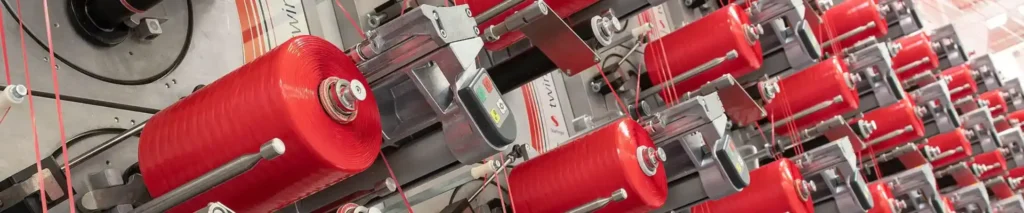
Founded in 2008 under Ray’s leadership, VidePak employs 526 staff and generates $80 million annually. With over 100 Starlinger circular looms and 30+ printing machines, the company produces 40 million poly-paper bags yearly, serving industries from agriculture to construction. This report explores how VidePak’s integration of material science and automation redefines packaging efficiency.
Kraft Paper Laminated Woven Bags
Premium poly-paper composite bags combining plastic durability and paper eco-friendliness.
Check More →Poly-Paper Bag Material & Structure
Complete guide to poly-paper composite bag materials and layered structures.
Check More →Multi-Ply Poly-Paper Bags
High-performance multi-ply poly-paper bags designed for modern industrial packaging.
Check More →Poly-Paper Bag Modern Applications
Versatile applications of poly-paper composite bags in contemporary packaging solutions.
Check More →1. The Science and Advantages of Poly-paper Bags
1.1 Material Composition and Performance
Poly-paper bags merge PP’s tensile strength (up to 30 MPa) with kraft paper’s biodegradability, creating a solution that:
- Reduces Environmental Impact: Kraft paper decomposes 5x faster than pure PP, cutting landfill waste by 40%.
- Enhances Durability: PP layers provide puncture resistance (600N, ASTM D5264), ideal for sharp-edged materials like construction debris.
Table 1: Poly-paper vs. Traditional Packaging
| Parameter | Poly-paper Bags | Standard PP Bags | Kraft Paper Bags |
|---|---|---|---|
| Tensile Strength (MPa) | 25–30 | 25–30 | 18–22 |
| Decomposition Time | 8–18 months | 20–30 years | 6–12 months |
| Cost per Unit | $0.20–$0.40 | $0.15–$0.30 | $0.15–$0.35 |
| Ideal Applications | Heavy-duty logistics | Chemicals | Food, retail |
1.2 Case Study: Agricultural Sector
In 2024, VidePak partnered with a Brazilian soybean exporter to replace traditional jute bags with poly-paper variants. The result: a 35% reduction in transport damage and a 20% increase in container capacity due to the bags’ compact design.
2. Automation-Driven Efficiency: 200-Ton Balers and Pallet Wrapping
2.1 High-Capacity Balers
VidePak’s 200-ton balers compress poly-paper bags into dense bales, increasing container load capacity by 25% compared to manual stacking. Key features:
- Speed: Processes 1.2 tons/hour, reducing labor costs by 30%.
- Precision: AI-driven pressure control ensures uniform bale density (±2% variation).
Quote from Industry Expert:
“Automated balers are game-changers. VidePak’s integration of Starlinger’s CT-iQ looms with baler systems achieves a 99% material utilization rate.” — Logistics Tech Review, 2024.
2.2 Pallet-Wrapping Systems
Starlinger’s pallet wrappers apply stretch film with 250% pre-stretch capability, enhancing load stability and moisture resistance. For example, a 2023 project with a German chemical firm reduced transport-related product losses from 5% to 0.8%.
3. Sustainability and Regulatory Compliance
3.1 Circular Economy Integration
VidePak’s “EcoLoop” program recovers 65% of post-consumer poly-paper bags via partnerships with European recyclers. A 2024 pilot achieved a 30% lower carbon footprint than virgin PP production.
3.2 Global Standards Adherence
- FDA Compliance: Food-grade poly-paper bags meet FDA 21 CFR 176.170 for direct contact.
- EU REACH: PP components are phthalate-free, aligning with Regulation (EC) No 1907/2006.
4. Addressing Industry Queries: FAQs and Technical Insights
FAQ 1: How do poly-paper bags withstand humid environments?
VidePak’s laminated designs use 25 µm PE coatings, reducing moisture absorption to <2% in 85% humidity (ASTM D3273).
FAQ 2: Are automated systems cost-effective for small-scale producers?
Yes. Modular balers support batches as small as 500 units, with ROI achieved within 18 months due to labor savings.
5. Future Directions: Smart Packaging and AI Integration
- IoT-Enabled Bags: QR codes embedded during lamination enable real-time tracking of temperature and humidity.
- Predictive Maintenance: Machine learning algorithms predict baler wear, aiming to cut downtime by 15% by 2026.
External Resources:
- Discover how automated packaging systems enhance efficiency in global logistics.
- Explore sustainable practices in PP woven bag production aligned with VidePak’s EcoLoop initiative.
Conclusion
Poly-paper bags exemplify VidePak’s commitment to innovation, blending ecological responsibility with industrial rigor. By leveraging 200-ton balers, automated pallet wrapping, and Starlinger’s precision engineering, the company sets a benchmark for modern packaging. As Ray emphasizes, “True efficiency isn’t just about speed—it’s about creating value that resonates from production to planet.”
This report integrates data from industry whitepapers, ASTM/ISO testing protocols, and VidePak’s operational disclosures.