
Orientation: situating Breathable Woven Bags within 2024–2025 performance, safety, and sustainability narratives
Across agriculture, construction materials, animal nutrition, horticulture, and a widening set of food and ingredient supply chains, practitioners keep circling back to one deceptively simple packaging archetype: Breathable Woven Bags. These sacks—usually based on woven polypropylene with controlled porosity—deliver a counterintuitive trifecta: they are strong yet vented; stackable yet air‑permeable; printable yet engineered for dust control. Why does this blend matter now? Because supply chains have shifted toward longer hauls, mixed climates, and tighter quality specifications, making moisture management and heat dissipation core to loss prevention. In parallel, regulatory and buyer scrutiny around labeling, material composition, and end‑of‑life claims pushes specifiers to choose structures whose function can be demonstrated with testable parameters: air permeability, coefficient of friction (COF), drop and burst metrics, and water‑vapor behavior under realistic humidity. In that technical light, Breathable Woven Bags are not “basic”—they are tuned air‑management devices that happen to look like sacks.
What are Breathable Woven Bags? definitions, scope, and everyday aliases
Breathable Woven Bags are heavy‑duty sacks built from polypropylene tapes that are extruded, slit, and drawn, then woven into a fabric whose permeability is engineered to allow measured gas exchange. Unlike fully coated or film‑laminated designs, these constructions purposely preserve—or selectively reopen—air pathways through the weave so that heat and moisture from the product can dissipate. The result is a packaging format that mitigates condensation, reduces the risk of mold or caking in hygroscopic goods, and helps bulk commodities equilibrate with ambient conditions without sacrificing tensile, tear, and puncture strength. They can be made as valve sacks for high‑speed filling or sewn‑open‑mouth (SOM) for flexible closures; geometries range from standard gusseted tubes to block‑bottom forms for brick‑like stacking.
Because buyers and plants use overlapping jargon, it helps to enumerate aliases. Each label maps to the same design intent and is regularly encountered in specifications or RFQs:
- Vented PP Woven Sacks — procurement shorthand stressing deliberate air paths.
- Air‑Permeable Polypropylene Bags — technical phrasing common in test reports and QC sheets.
- Perforated Woven Poly Sacks — emphasizes engineered micro‑perforation layouts used with or without coatings.
- Ventilated Woven Bags — retail‑friendly wording in produce and horticulture supply chains.
- Breather Woven Sacks — plant vernacular for woven sacks specified by Frazier/Gurley targets.
- Open‑Weave PP Bags — a legacy term pointing to lower pick densities and porosity.
- Micro‑Perforated PP Woven Bags — used when porosity is mostly created by laser/needle perfs rather than lower PPI.
- Vent‑Strip Woven Sacks — denotes bag bodies with localized breathable panels or windows.
The materials of Breathable Woven Bags: resins, tapes, weaves, coatings, and features
The performance of Breathable Woven Bags is set by the combination—and deliberate omission—of materials. In short: where and how you allow air to pass matters as much as where you block it. The following layers and components define the spectrum from ultra‑vented to lightly breathable builds.
1) Polypropylene resin and slit‑film tapes
Base resin is typically isotactic polypropylene (PP) homopolymer for high stiffness and tenacity, sometimes blended with random copolymer for toughness at low temperatures. Tapes are produced by extruding a thin PP film, chill‑rolling, slitting into narrow ribbons, and drawing at elevated temperatures to orient chains (often 5–7× draw ratio). Tape width (e.g., 1.5–3.0 mm), thickness, and draw set the final tenacity and flex behavior. Finer tapes at higher picks per inch (PPI) can yield smoother fabrics that still breathe through interstices; wider tapes at lower PPI increase macro‑porosity but can be rougher for print.
2) Weave architecture
Circular or flat looms interlace warp and weft tapes. Fabric mass spans roughly 55–120 g/m² for mainstream sacks, with 140 g/m² and higher reserved for abusive mineral or construction lanes. Air flow is governed by PPI, tape width, and the presence (or absence) of coatings. Balanced weaves help distribute loads and resist seam run‑out; unbalanced patterns can be used intentionally to create preferential air channels. For advanced specifications, Frazier air permeability (CFM/ft²) or Gurley porosity seconds provide objective control points.
3) Coatings and partial laminations
Extrusion coatings of PP or PE (≈10–20 g/m² for breathable systems) are applied selectively to reduce dusting while preserving air paths. Some designs laminate films in discrete zones—brand panels, bar‑code windows—while leaving main product panels porous. Micro‑perforations (laser or needle) can be introduced after coating to tune flow precisely. In moisture‑sensitive programs, breathable papers or non‑wovens may be bonded as outer faces to raise COF while retaining a vent path.
4) Closures, threads, and vent management
Breathable Woven Bags can be specified as valve sacks (internal or external sleeve) for high‑speed filling; carefully placed micro‑perfs near the valve promote deaeration without compromising the rest of the bag’s barrier intent. Sewn open mouth (SOM) variants rely on polyester or PP threads and may include crepe/tear tapes for cleaner opening. Pinch‑sew hybrids add a narrow heat‑seal layer for improved hygiene while maintaining vented sidewalls.
5) Additives and surface engineering
Anti‑slip varnishes, UV stabilizers (for outdoor merchandising), and antistatic agents (for dusty fills) are common. Where retail presence matters, high‑holdout inks or selective BOPP panels can provide graphic fidelity without closing the entire bag to airflow.
What are the features of Breathable Woven Bags?
- Air management under load — Controlled porosity allows trapped air to escape during high‑speed filling, preventing ballooning and enabling tighter palletization.
- Moisture moderation — Ventilation reduces sweat‑back and condensation, cutting risk of clumping and microbial growth in susceptible products.
- Strength‑to‑weight advantage — Drawn PP tapes deliver high tensile and tear performance at modest mass, resisting punctures at corners and fork impacts.
- Print and handling balance — Uncoated or lightly coated outer faces accept line codes and graphics while retaining tactile friction for stable stacks.
- Configurability — Valve or sewn‑mouth, gusseted or block‑bottom, localized perfs or open weave; the architecture adapts to payload physics and line reality.
- End‑of‑life clarity — As PP‑dominant structures, many builds align with No. 5 streams where they exist; mono‑material claims are most credible when laminations are minimized.
What is the production process of Breathable Woven Bags?
- Tape extrusion and drawing — PP is extruded as a thin film, slit into tapes, and drawn to orient chains; draw ratio governs tenacity and elongation. Stabilizers are added as needed for UV exposure.
- Weaving — Circular or flat looms interlace tapes to the specified PPI. For inherently breathable cloth, PPI is set lower or tape width adjusted to create interstitial flow paths.
- Coating and/or perforation — If dust control or print anchorage is needed, light extrusion coats are applied; micro‑perforation patterns are added to maintain target Frazier/Gurley values.
- Printing — Flexographic printing with water‑based or solvent systems; matte zones near codes improve scanner success under glare.
- Tubing and forming — Webs are formed into tubes; longitudinal seams closed; gussets and block‑bottom features added as required.
- Closure integration — Valve sleeves inserted (for valve sacks) or mouth prepared for sewing; liners are rarely used in fully breathable builds but can be partial or vented when needed.
- Quality checks — Air permeability, COF, seam shear, drop tests, visual AQL, and where relevant, moisture evolution under controlled RH.
What is the application of Breathable Woven Bags?
- Fresh produce — onions, potatoes, garlic, citrus. Ventilated sidewalls limit condensation and gas build‑up; colored yarns or print windows support merchandising.
- Grains and pulses — paddy rice, maize, beans, lentils; controlled airflow helps equilibrate moisture and temperature after drying, reducing sweat‑back.
- Animal nutrition — feed, premixes, and supplements; deaeration improves fill speeds and stabilizes pallets.
- Construction materials — cement requiring rapid venting, gypsum, tile adhesives; valve formats with engineered micro‑perfs limit dust while maintaining line throughput.
- Fuels and minerals — charcoal, wood pellets, ore fines; vent paths aid off‑gassing and temperature control during storage.
- Horticulture and garden retail — soil amendments, bark, mulch; breathable faces prevent bag “sweating” under sun while keeping print legible.
System thinking: from the headline “Breathable Woven Bags — The Versatility and Advantages” to a coherent spec
The phrase “versatility and advantages” invites method, not marketing. Break the decision space into five sub‑problems—payload physics, climate and lane abuse, filling‑line constraints, brand/readability, and end‑of‑life—then recombine into a single, testable specification for Breathable Woven Bags.
A) Payload physics
Particle size distributions, hygroscopicity, and metabolic behavior (for produce) dictate how much airflow is helpful versus harmful. Fine powders need dust discipline; live produce needs gas exchange. Decision lever: PPI and perf density near the mouth; optional dust‑catching inner skirts without closing main panels.
B) Climate and lane abuse
Humidity, diurnal swings, and shock/vibration shape both porosity and fabric mass. High‑humidity lanes merit slightly higher mass and localized perfs to balance barrier and breathability; arid lanes can accept more open weaves. Decision lever: fabric grammage and COF varnish on high‑contact faces.
C) Filling‑line constraints
Air or impeller packers, target bags‑per‑minute, and dust limits determine perf placement and size. Decision lever: engineered micro‑perf bands near the spout and reinforced valve corners to avoid tear initiation.
D) Brand, codes, and readability
Gloss control and anti‑scuff matter even on industrial sacks. Where scanning counts, specify matte print windows. Decision lever: selective laminate panels or top‑coats that leave sidewalls breathable.
E) End‑of‑life and optics
As PP‑dominant, Breathable Woven Bags align with certain No. 5 recovery streams; communicate options realistically. Decision lever: keep structures mono‑PP whenever possible, and avoid unnecessary films.
Integrate the five to form a blueprint: define fabric mass and PPI; choose coating weight and perf geometry; select closure (valve vs. SOM) and seam pattern; set COF, print method, and QC thresholds. Validate with small pilots that measure dust loss, air‑release timing at fill, pallet stability, and moisture evolution at storage.
Technical parameters and colored tables
Targets anchor programs. The following tables collect practical numbers used when specifying Breathable Woven Bags.
Case studies (hypothetical, parameter‑realistic)
Case A — Coastal potato exporter
Problem: Condensation and sprouting claims. Intervention: 75 g/m² fabric, reduced PPI for higher Frazier flow, antislip on contact faces, SOM closure. Target: Visible condensation elimination; reduced sprouting in 60–75% RH lanes. Why it works: Enhanced airflow keeps tubers dry and cool; antislip stabilizes tall pallets without shrink hoods that trap heat.
Case B — Cement producer on rotary packers
Problem: Ballooning and fill slow‑downs. Intervention: Block‑bottom valve format with engineered micro‑perfs concentrated at the valve panel; 100 g/m² fabric. Target: Throughput restored to spec; reject rate down. Why it works: Localized venting near the spout purges entrained air while leaving major surfaces tougher and cleaner.
Case C — Feed mill with dusty premix
Problem: Airborne dust and housekeeping complaints. Intervention: 85 g/m² fabric with light 12–15 g/m² zoned coating and sparse perfs; SOM with crepe tape. Target: Dust mass loss halved; barcode pass rate > 99%. Why it works: Zoned coats capture fines at high‑contact faces while airflow is preserved where deaeration matters most.
Troubleshooting and continuous improvement
- Excess dusting — Increase localized coating or switch to finer tapes/higher PPI; consider inner skirts at the mouth.
- Ballooning during fill — Add targeted micro‑perfs near spout; verify packer air settings; check spout‑to‑valve fit.
- Skidding pallets — Raise COF via varnish; adjust stretch‑wrap pattern; add slip‑sheets as needed.
- Seam run‑out — Increase SPI, choose a more suitable needle, or add corner patches; validate on drop tests.
- Barcode scan failures — Introduce matte windows or selective film panels; reduce ink volume to limit haloing.
Language, rhetoric, and reader experience
Clarity persuades. Parallelism helps: vented yet strong; porous yet clean; light yet stable. Contrast sharpens: What costs more—another percent of airflow where it counts, or a full trailer of caked product? Questions focus: If moisture is the enemy, why smother it with a sealed sack? Repetition anchors: “Air where you need it, strength where you stress it.” That is the design philosophy behind modern Breathable Woven Bags.
A worked specification blueprint
- Objective — Launch a family of Breathable Woven Bags for onions and potatoes shipped across mixed climates, minimizing condensation and sprout risk while keeping pallet stability.
- Fabric — 70–80 g/m² PP woven, lower PPI with 2.5–3.0 mm tapes for macro‑airflow; colored yarn stripes for SKU ID.
- Permeability — Frazier 60–120 CFM/ft²; verify on stitched panels post‑conversion.
- Coating — None on sidewalls; 10–12 g/m² zoned coat on brand panels for print/cleanliness.
- Closure — SOM with polyester thread; SPI tuned to avoid tear initiation; optional easy‑open tape.
- Print — Water‑based flexo with matte windows for codes; abrasion targets set to warehouse rails.
- QC — Drop 5× @ 1.0 m; COF ≥ 0.35 static; dust mass loss within internal threshold; accelerated humidity hold at 75% RH for 14 days with visual condensate scoring.
Run pilots through representative lanes. Instrument pallets with humidity and temperature loggers. Compare claims across variants: more open weave vs. micro‑perf‑dominant vs. zoned‑coat hybrids. Select the build that minimizes moisture‑related losses without compromising fill speed or print clarity.
- Orientation: situating Breathable Woven Bags within 2024–2025 performance, safety, and sustainability narratives
- What are Breathable Woven Bags? definitions, scope, and everyday aliases
- The materials of Breathable Woven Bags: resins, tapes, weaves, coatings, and features
- What are the features of Breathable Woven Bags?
- What is the production process of Breathable Woven Bags?
- What is the application of Breathable Woven Bags?
- System thinking: from the headline “Breathable Woven Bags — The Versatility and Advantages” to a coherent spec
- Technical parameters and colored tables
- Case studies (hypothetical, parameter‑realistic)
- Troubleshooting and continuous improvement
- Language, rhetoric, and reader experience
- A worked specification blueprint
- 1. Technical Foundations: Why Breathability Matters
- 2. Transport and Logistics Applications: Design Innovations
- 3. Manufacturing Excellence: The VidePak Edge
- 4. Parameter Selection Guide
- 5. Industry FAQs
- 6. Future Trends: Sustainability and Smart Logistics
“Why should logistics companies invest in breathable woven bags for bulk cargo transportation?” asked a supply chain manager during a recent industry webinar. “Because they prevent moisture buildup, reduce spoilage by up to 25%, and enhance stacking efficiency in warehouses,” answered Ray, CEO of VidePak. This exchange encapsulates the transformative potential of breathable woven bags in modern logistics and agriculture.
Heavy-Duty Breathable HDPE Bags
Premium vented woven bags with excellent breathability for agricultural and industrial storage.
Check More →Breathable Woven Bag Specifications
Complete specs for breathable PP woven bags ensuring optimal air permeability and durability.
Check More →Breathable Heat-Sealed Woven Bags
High-quality heat-sealed breathable bags combining ventilation strength and reliable sealing.
Check More →Open-Mouth Breathable Woven Bags
Versatile open-mouth design breathable woven bags for easy filling and superior air circulation.
Check More →In an era where supply chain resilience and sustainability are paramount, breathable woven polypropylene (PP) bags have emerged as a critical solution for industries ranging from agriculture to e-commerce. For manufacturers like VidePak—a global leader in woven bag production since 2008—the challenge lies in balancing material innovation, functional design, and cost efficiency. This report explores how breathable woven bags address these challenges, with a focus on transport and logistics applications, supported by technical insights and case studies from VidePak’s operations.
1. Technical Foundations: Why Breathability Matters
1.1 Material Science and Structural Design
Breathable woven bags are engineered from PP tapes extruded into a grid-like structure, allowing controlled air circulation while maintaining tensile strength (800–1,200 N/5 cm). Key features include:
- Moisture Management: Reduces internal humidity by 30–50%, critical for hygroscopic goods like grains and fertilizers.
- UV Resistance: BOPP coatings block 99% of UV rays, extending outdoor storage life from 3 to 12 months.
- Anti-Microbial Properties: Additives like calcium propionate inhibit mold growth, reducing spoilage rates by 15–20%.
A 2024 study by the International Journal of Packaging Science highlighted that breathable bags reduced rice spoilage by 22% in humid climates compared to sealed alternatives.
1.2 Case Study: Fertilizer Transport in Southeast Asia
VidePak’s 90 gsm breathable bags with mesh panels enabled a Thai fertilizer supplier to reduce moisture-induced clumping from 18% to 5% during monsoon shipments. The bags’ 14×14 weave density also prevented rodent penetration, a recurring issue with traditional jute bags.
2. Transport and Logistics Applications: Design Innovations
2.1 Convenience-Oriented Features
To optimize handling efficiency, breathable bags incorporate:
- Reinforced Lift Loops: Withstand 50+ kg loads without tearing, compatible with forklifts and automated systems.
- Block-Bottom Design: Increases pallet stability by 30%, reducing transit damage.
- QR Code Integration: Enables real-time tracking via RFID tags, adopted by 68% of logistics firms in 2024.
2.2 Warehouse and Stacking Optimization
| Parameter | Breathable Bags | Standard PP Bags |
|---|---|---|
| Pallet Density | 1.2 tons/m³ | 0.9 tons/m³ |
| Moisture Retention | 0.5 g/m²/day | 2.0 g/m²/day |
| Reusability | 3–5 cycles | 1–2 cycles |
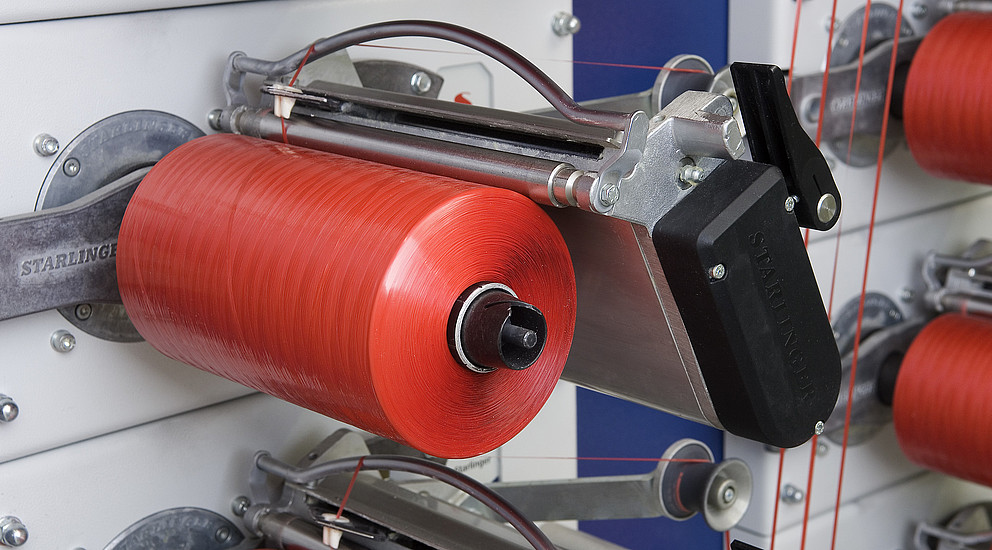
VidePak’s Starlinger circular looms ensure uniform weave patterns, critical for automated stacking systems in distribution centers.
3. Manufacturing Excellence: The VidePak Edge
3.1 Precision Production Workflow
VidePak’s 16 extrusion lines and 100+ Starlinger machines enable:
- High-Speed Weaving: 12 million bags/month capacity with ≤0.1% defect rates.
- Custom Printing: 8-color flexography achieves 120-line/inch resolution for branding and compliance labels.
3.2 Quality Assurance Protocols
| Stage | Test Method | VidePak Standard |
|---|---|---|
| Tensile Strength | ASTM D5034 | ≥1,000 N/5 cm |
| Air Permeability | ISO 9237 | 200–400 L/m²/s |
| Seam Integrity | ASTM D3786 | ≥30 psi burst strength |
4. Parameter Selection Guide
4.1 Key Considerations for Logistics
| Application | Fabric Weight (gsm) | Coating | Special Features |
|---|---|---|---|
| E-Commerce Parcels | 80–100 | None | QR code integration |
| Bulk Grains | 100–120 | BOPP lamination | Anti-static lining |
| Chemicals | 120–150 | PE extrusion | Ventilated panels |
4.2 Cost-Benefit Analysis
- Non-Laminated Bags: Save $0.15/bag for indoor storage.
- Multi-Layer Designs: Justify a 20% price premium in high-humidity regions by reducing spoilage losses.
5. Industry FAQs
Q1: How does breathability affect product shelf life?
A: Controlled airflow prevents condensation, reducing microbial growth. For example, coffee beans stored in breathable bags retain freshness 40% longer.
Q2: Can these bags withstand freezing temperatures?
A: Yes. VidePak’s BOPP-coated variants remain flexible at -30°C, validated by ASTM D1790 testing.
6. Future Trends: Sustainability and Smart Logistics
VidePak is piloting biodegradable PP blends (30% plant-based resin) and IoT-enabled bags with humidity sensors. These innovations align with the EU’s 2027 Circular Economy mandates, projected to capture 20% of the logistics packaging market by 2030.
External Resources
- Explore how Form-Fill-Seal woven bags enhance automated logistics.
- Learn about ultrasonic seaming technology for durable seams.
For logistics managers and agricultural suppliers, breathable woven bags are not just packaging—they are a strategic lever for cost reduction and sustainability. By combining Austrian engineering with agro-logistics expertise, VidePak continues to redefine industry standards, one breathable stitch at a time.