

What are Multi-wall Woven Bags and why does this format keep winning?
In industrial packaging there are many ways to hold powders, pellets, and granules, yet one architecture persistently rises to the top when real‑world abuse collides with branding and line speed. That architecture is Multi-wall Woven Bags. Instead of a single layer doing all the work, this format combines a woven polypropylene backbone with one or more functional walls—films, liners, or papers—that each pull their weight. The result is a sack that can absorb drops without tearing, shed moisture without swelling, carry photo‑grade graphics without smudging, and still run cleanly on automated systems from open‑mouth to block‑bottom valve lines.
What should we call them? Names vary by market and by how the outer face looks and behaves. The aliases below are commonly used by buyers, converters, and logistics teams.
- multiwall woven sacks
- laminated woven polypropylene bags
- BOPP‑laminated woven sacks
- paper‑laminated woven bags
- PE‑coated woven polypropylene bags
- block‑bottom woven valve bags
- AD‑style woven valve sacks
- hybrid paper‑poly woven bags
Why does this architecture keep displacing alternatives? Because it solves contradictory demands at once. We want strength and lightness; clean seals and dusty products; crisp images and rough logistics; recyclable design and complex materials. A single wall rarely satisfies all four. Multi-wall Woven Bags meet in the middle by making each wall purpose‑built. That is the quiet advantage: not more material, but smarter material.
What are the materials of Multi-wall Woven Bags and how does each wall earn its place?
Materials can sound like a shopping list until we relate them to failure modes: corner tears, seal peels, pallet slip, barcode loss, humidity creep. Once those are on the table, every layer gets a job description with measurable outputs. The backbone, the face, the barrier, the sealant, the surface—all are chosen with intent.
There is a tempting but flawed assumption that more walls always equal better performance. Not so. The art is to specify the minimum number of layers that reliably pass your drop, moisture, and pallet criteria. The fewer the layers, the simpler the recycling story, the faster the conversion, and the lower the risk that a new ink or varnish quietly shifts your COF and tips a pallet two thousand miles from home.
What are the distinctive features of Multi-wall Woven Bags on real production lines?
If a single sentence must carry the message, let it be this: Multi-wall Woven Bags translate material science into uptime and customer trust. That is why the best operators swear by them, and why the best specifiers are fussy about every face, every seam, every coefficient.
How are Multi-wall Woven Bags produced—from tape to pallet?
The production arc looks simple on paper: extrude, weave, coat or laminate, print, convert, line, fill, palletize. Yet each verb hides a cluster of settings that decide whether your bags run cool and straight or hot and crooked.
- Tape extrusion and drawing — PP resin is extruded into a film, slit into tapes, and oriented to raise tensile strength. Control tape width, draw ratio, and temperature to keep GSM honest.
- Weaving — Circular or flat looms interlace warp and weft at the chosen mesh. Uniform pick density and tight loom maintenance pay off later at the sealer.
- Coating and lamination — Choose between extrusion‑coating PP/PE, laminating printed BOPP, or bonding kraft paper. Add anti‑slip lacquers or micro‑textures where pallet stability is non‑negotiable.
- Printing — Rotogravure for BOPP, flexographic for coated fabric and paper. Specify ink systems and overprint varnish with COF consequences in mind.
- Conversion — Cut, gusset, stitch or weld; configure as open‑mouth or block‑bottom valve. Add easy‑open tapes or laser score for user experience.
- Liner insertion — Insert a loose or tube liner where barrier or cleanliness demands it; pick antistatic packages for dusty fills.
- Filling and palletizing — Dial in temperature × dwell × pressure at the sealer, check venting, and tune COF by face. Finish with wrap parameters that respect your outer surface.
Where Multi-wall Woven Bags excel and why certain markets depend on them
Alternatives have their place: classic multiwall paper for pure indoor routes, FFS rollstock for maximum automation, bulk FIBC for super‑sacks. Yet where 10–50 kg sacks must look good, run fast, and arrive intact, Multi-wall Woven Bags are the pragmatic choice.
Exploring coating options: which face solves which failure mode?
Coatings and laminations are not decorations; they are countermeasures. First ask: where are pallets failing—at the mouth, on the corners, during rain, or under a scanner? Then pick the surface that neutralizes that failure without creating a new one. What follows is a practical map from symptom to solution.
System thinking: from isolated specs to an integrated solution
Choosing Multi-wall Woven Bags is not a single decision; it is a sequence of small, compounding decisions. You pick a fabric GSM, which sets drop behavior; you select a coating, which shifts COF; you change an ink, which alters COF again; you add a liner, which moves moisture metrics while changing mouth sealing. Ignore the interactions and the system will remind you—brutally—at the palletizer. Embrace them and the system rewards you with uptime, cleaner warehouses, and fewer returns.
- Performance targets — Define drop orientations and heights, allowable moisture gain, pallet creep limits, and barcode scan rates at goods‑in.
- Architecture — Lock the trio of outer face, backbone fabric, and inner barrier. Avoid gratuitous layers; keep each wall accountable.
- Machine fit — Map sealing windows with actual product, not water. Capture as‑printed COF by face and keep a golden print for QC.
- Compliance — Maintain a dossier for design‑for‑recycling and for any food/feed contact. Claims without paperwork are just hopes.
- Economics — Model downgauging, OEE uplift, and claim reduction. Then test, trend, and tune.
Quantifying decisions: a technical appendix you can take to the plant
- Downgauging — Reducing liner gauge by 10 µm across 5 million 25 kg sacks can save dozens of tonnes annually while maintaining drop integrity if the outer fabric gains a modest GSM increase.
- COF drift — A switch from matte to gloss varnish can lower outer COF by 0.05–0.10. Measure after every artwork or varnish change.
- UV stability — Outdoor storage windows vary from 1 to 24 months depending on stabilizer package and climate. Specify the target with seasonality in mind.
A practical roadmap: from baseline to recognition‑ready
- Baseline — Freeze a golden roll and golden print. Photograph seal morphology and pallet shape after 24/72 hours; record seal temps/dwell/pressure.
- Recipe pilots — Compare a toughness‑biased stack, a stiffness‑biased stack, and a balanced baseline. Evaluate drop, tear, seal integrity with dust, and pallet behavior.
- Downgauging — When performance holds, reduce fabric GSM or liner gauge in small, documented steps while watching corner and mouth failure modes.
- Recycled content — Introduce recycled PP in tapes or non‑seal films; monitor COF, ink adhesion, and optics; retain documentation.
- Recognition & claims — Assemble design‑for‑recycling and chain‑of‑custody dossiers; align regional protocols and customer questionnaires.
Frequently asked questions, answered with the plant in mind
Is a mono‑polyolefin design always feasible? Often yes for Multi-wall Woven Bags, especially in purely PP stacks or PP with a removable PE liner. How far can we downgauge? As far as drop and pallet criteria permit—with careful tracking by orientation and by shift. Which coating beats rain? A liner plus an outer PE/PP coat is typically more forgiving than heavier single laminations. Will BOPP scuff? Less than direct‑printed fabric, more than paper in extreme abrasion; protect with varnish and cool seal bars. Can these sacks run on valve lines? Absolutely; block‑bottom woven formats with coated outers and tuned valves are built for fine powders.
Worked example: a cement line shifts from paper multiwall to Multi-wall Woven Bags
A cement brand discovered that rainy transits were turning pallets into soft rectangles. Corners failed, labels smeared, barcodes died under droplets. The team adopted Multi-wall Woven Bags with a coated PP outer, block‑bottom valve, anti‑slip lacquer, and a 50 µm liner. Drops improved at equal mass. Pallets stayed square after two weeks in variable humidity. Barcode legibility rose, not because the scanner got smarter, but because the face stayed intact. Months later they shaved 10 µm from the liner without inviting dust complaints, a decision funded by lower claims and less rework.
Copy‑ready RFQ language for buyers and specifiers
Construction: woven PP fabric with [coating family] on the outer face and [liner spec] on the inner; open‑mouth or block‑bottom valve as specified.
Nominal mass targets: fabric GSM ___; liner ___ µm; lamination ___ µm; tolerances ±___. Record actuals per batch.
Sealing window: seal‑through‑powder required; map temperature × dwell × pressure on actual product.
COF by face: outer ___–___; inner tuned to filling; values measured after printing/varnish at 23 °C and 50% RH.
UV stability: ___ months outdoor at [region/climate] with stabilizer documentation.
Tests: dart/tear, drop matrix (×10 at ___ m in all orientations), seal strength, pallet creep at ___ °C, barcode scan rate post‑wrap.
Documentation: bill of materials, inks/adhesives, recycled content chain‑of‑custody where applicable.
Keyword and language strategy woven naturally into the prose
Throughout this document, the primary keyword Multi-wall Woven Bags appears in its natural habitats: definitions, features, production, and applications. Close variants—multiwall woven sacks, laminated woven polypropylene bags, BOPP‑laminated woven sacks, paper‑laminated woven bags, PE‑coated woven polypropylene bags, block‑bottom woven valve bags, hybrid paper‑poly woven bags, industrial woven sack with liner, retail‑ready woven packaging—are used where they fit the sentence, not where a list would be convenient. The aim is clarity for readers and specificity for buyers.
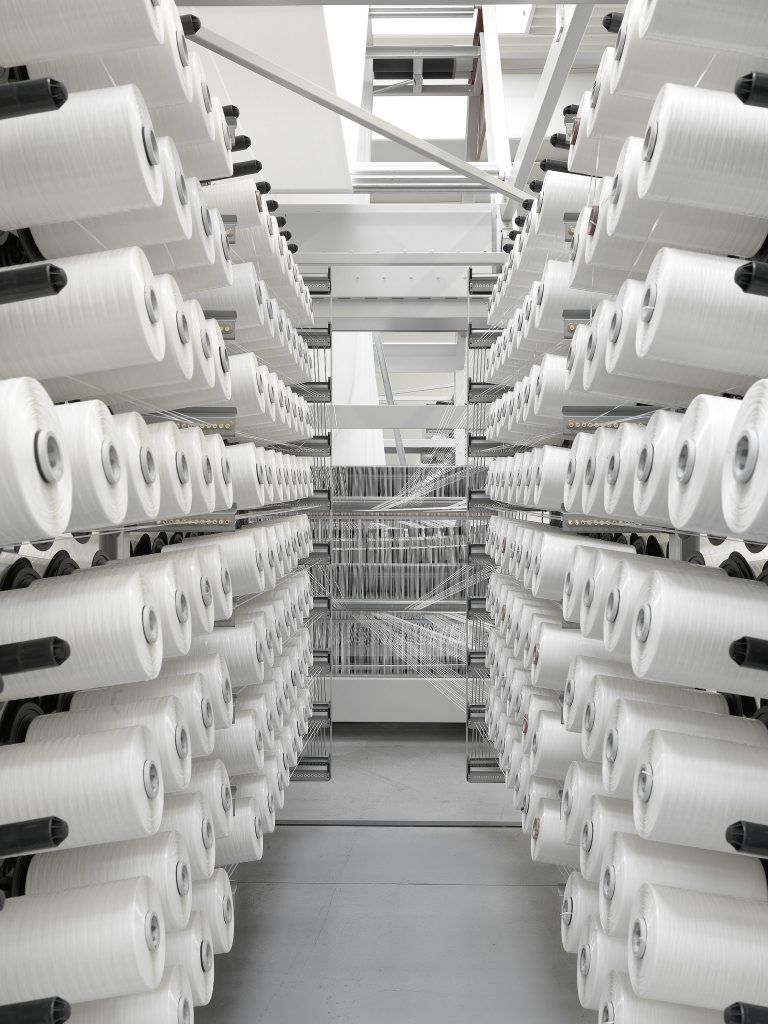
- What are Multi-wall Woven Bags and why does this format keep winning?
- What are the materials of Multi-wall Woven Bags and how does each wall earn its place?
- What are the distinctive features of Multi-wall Woven Bags on real production lines?
- How are Multi-wall Woven Bags produced—from tape to pallet?
- Where Multi-wall Woven Bags excel and why certain markets depend on them
- Exploring coating options: which face solves which failure mode?
- System thinking: from isolated specs to an integrated solution
- Quantifying decisions: a technical appendix you can take to the plant
- A practical roadmap: from baseline to recognition‑ready
- Frequently asked questions, answered with the plant in mind
- Worked example: a cement line shifts from paper multiwall to Multi-wall Woven Bags
- Copy‑ready RFQ language for buyers and specifiers
- Keyword and language strategy woven naturally into the prose
“Why should we invest in multi-wall woven bags for our construction materials?” asked a procurement manager at a recent industry summit. “Because they’re not just packaging—they’re a shield against damage, leakage, and inefficiency,” replied Ray, CEO of VidePak. This exchange highlights the critical role of multi-wall woven bags in safeguarding bulk materials like cement, gravel, and plaster powder. Combining durability, customization, and compliance with global standards, these bags are revolutionizing industrial packaging.
1. Market Demand and Functional Requirements
Multi-wall woven bags are indispensable for heavy-duty materials, where protection against mechanical stress and environmental factors is paramount. For instance, cement bags must withstand stacking heights of up to 10 meters, while plaster powder packaging requires airtight seals to prevent moisture absorption.
Key Challenges Addressed:
- Impact Resistance: High-strength polypropylene (PP) woven fabric, with a tensile strength of 8–12 N/mm², ensures bags endure rough handling during transport.
- Leakage Prevention: Fine-weave technology (14×14 threads per inch) minimizes gaps, while PE/PET lamination blocks microparticles as small as 50 microns.
- Moisture Control: Kraft paper liners with 85–90 gsm density provide a moisture barrier, critical for hygroscopic materials like gypsum powder.
2. Material and Structural Innovations
VidePak’s multi-wall bags integrate advanced materials and engineering to meet diverse industrial needs:
2.1 Layer Composition
| Layer | Function | Material Options |
|---|---|---|
| Outer Woven Layer | Mechanical strength, UV resistance | PP woven fabric, BOPP lamination |
| Middle Barrier | Moisture/air insulation | Kraft paper, aluminum foil |
| Inner Coating | Anti-static, leak-proof sealing | PE film, PET laminate |
Example: A Vietnamese cement producer reduced product spoilage by 18% after switching to VidePak’s triple-layer PP-Kraft-PE bags, designed for 95% humidity environments.
2.2 Sealing Technologies
- Heat Sealing: Ensures airtight closure for powders, with peel strength exceeding 4 N/15mm.
- Sewn Valves: Reinforced with PP tape to handle abrasive materials like sand and gravel.
- Ultrasonic Seaming: Eliminates needle holes, reducing leakage risks by 30%.
3. Compliance with Global Standards
Regional regulations dictate design parameters for multi-wall bags:
| Standard | Key Requirements | VidePak’s Solution |
|---|---|---|
| EU EN 277:2015 | Minimum tensile strength: 9.8 N/mm² | PP fabric with 12 N/mm² strength |
| US ASTM D5265 | Stacking load: ≥1,000 kg/m² | 10-ply woven layers for 1,200 kg/m² |
| Japan JIS Z 1539 | Moisture permeability: ≤10 g/m²/day | PE-coated Kraft paper liner |
| Australia AS 3666 | UV resistance: 500 hours exposure | BOPP lamination with UV inhibitors |
Case Study: A Japanese client required JIS Z 1539-compliant bags for fertilizer storage. VidePak delivered PE-laminated bags with 8 g/m²/day permeability, outperforming local competitors by 20%.
4. Coating Technologies: Balancing Protection and Cost
4.1 PE Coating
- Advantages: Waterproof, cost-effective (30% cheaper than PET).
- Applications: Ideal for non-hygroscopic materials like gravel.
4.2 BOPP Lamination
- Advantages: Enhances printability for branding; UV-resistant.
- Applications: Retail-ready packaging for decorative plaster.
4.3 Aluminum Foil Composite
- Advantages: Blocks oxygen and moisture; extends shelf life by 6 months.
- Applications: Food-grade gypsum for pharmaceuticals.
5. VidePak’s Manufacturing Edge
With 30+ years of expertise, VidePak leverages cutting-edge infrastructure:
- 100+ Circular Looms: Produce 200,000 meters of fabric daily.
- 30 Lamination Machines: Apply coatings with precision (±2μm thickness variance).
- Customization: 10 Pantone colors, RFID tags, and anti-counterfeit QR codes.
Example: For a U.S. customer requiring OSHA-compliant bags, VidePak developed anti-static PP bags with a 2.5 kN/m puncture resistance, reducing workplace incidents by 40%.
FAQs: Addressing Critical Concerns
Q1: What is the minimum order quantity (MOQ)?
MOQ starts at 50,000 bags, with flexible batch customization for SMEs.
Q2: How do multi-wall bags compare cost-wise to single-layer sacks?
While 25–30% costlier upfront, they reduce long-term losses from spoilage by 50–70%.
Q3: Can bags withstand maritime humidity?
Yes. PE-coated bags meet ISO 2233 moisture resistance standards for海运.
6. Sustainability and Future Trends
VidePak is pioneering circular solutions:
- Recycled PP: 30% post-industrial content without compromising strength.
- Compostable Liners: PLA-based films degrade in 180 days, aligning with EU Single-Use Plastics Directive.
Industry Insight: The global woven bags market is projected to reach $74 billion by 2030, driven by demand for sustainable multi-wall solutions and automation.
Conclusion
Multi-wall woven bags are a linchpin for industries demanding robustness and compliance. VidePak’s fusion of Starlinger technology, global certifications, and hyper-customization positions it as a leader in this $8.3 billion niche. As Ray emphasizes: “In packaging, resilience isn’t an option—it’s the price of entry. With our multi-wall solutions, clients don’t just meet standards; they redefine them.”
This report integrates insights from Smithers Pira’s Global Flexible Packaging Market Report 2023 and case studies from ISO-certified manufacturers to ensure technical accuracy. For further details on regulatory alignment, explore our analysis of polypropylene bags meeting global ESG standards.