

What are Block BOPP Bags and what else are they called?
Block BOPP Bags are square‑based, small‑format industrial sacks built from woven polypropylene (PP) fabric that is laminated with biaxially oriented polypropylene (BOPP) film. The “block” refers to the block‑bottom geometry that folds into a box‑like base; the “BOPP” refers to the printable, moisture‑managing film bonded to the woven substrate. In day‑to‑day use, the woven fabric carries mechanical loads, while the BOPP face supplies a smooth, printable, wipe‑clean skin and a seal‑friendly interface. As a system, the format fills quickly, stacks squarely, protects contents from dust and splash, and displays brand artwork with billboard clarity.
Because the same engineering platform serves cement, fertilizer, feed, grains, minerals, and retail display sacks, multiple aliases circulate in specifications and shop talk. Names vary; physics does not. Common alternates include:
- BOPP‑laminated block‑bottom woven bags — underscores the laminate and the square base.
- Block‑bottom BOPP valve sacks — indicates a valve sleeve for high‑speed filling on impeller or air packers.
- Square‑bottom BOPP woven sacks — emphasizes pallet‑friendly geometry and warehouse stability.
- BOPP‑printed PP raffia sacks — shop‑floor shorthand for the film‑laminated print face on a raffia weave.
- AD*STAR‑type BOPP bags — industry shorthand for block‑bottom PP woven valve sacks from specialized lines.
- Pinch‑bottom BOPP‑laminated PP sacks — a heat‑sealed, tape‑free bottom style favored in retail or hygiene‑sensitive SKUs.
- Moisture‑barrier BOPP woven bags — procurement language where humidity and rain exposure are critical risks.
- Retail‑grade BOPP laminated woven packaging — flags photo‑quality graphics for consumer aisles.
- Block‑style BOPP rice bags — the consumer‑facing term common in staples and pet food.
- Heavy‑duty BOPP laminated PP sacks — umbrella phrasing when closure and bottom style vary by plant.
What materials build Block BOPP Bags and how does each component earn its place?
A Block BOPP Bag looks simple from a distance: fabric plus film plus seams. Up close, every layer plays a defined role and carries its own cost lever. Change the face film and you shift print latitude and moisture behavior; change the weave density and you alter load paths, bulge, and seam stress; change the sealant and you reshape line speed and leaker rates. The map below moves from the consumer‑facing surface inward.
A 18–30 μm biaxially oriented polypropylene film laminated to the fabric. Molecular orientation in machine and transverse directions confers stiffness, clarity, and an ink‑friendly surface. Gloss and matte variants tailor shelf look and scuff behavior; metallized or coated grades tighten barrier when needed. This skin closes fabric pores, sheds rain, resists grease, and stabilizes the web for precise registration on high‑speed lines.
Cost lens: Resin and energy dominate BOPP cost; thinner gauges reduce mass while preserving planarity, provided seal strategy and web handling remain robust.
Oriented PP tape yarns (raffia) woven on circular or flat looms. Basis weights for 10–50 kg sacks typically span 70–120 g/m². Ends per inch (EPI) and picks per inch (PPI) set porosity and stiffness; denier and draw ratio tune tensile capacity and elongation. Corner zones often receive higher weave density to resist edge‑drop shocks—an economical alternative to across‑the‑board GSM increases.
Cost lens: Resin mass and loom time dominate. Designs that raise strength per gram—smarter denier choices, higher draw, corner‑focused weave density—beat brute GSM increases on both cost and performance.
Solventless polyurethane laminating adhesives (or extrusion tie layers) integrate film and fabric into a unified web. Surface treatment—corona or flame—elevates surface energy for both ink anchorage and bond strength. The right chemistry grows bond through cure and survives thermal cycling; the wrong chemistry invites tunneling and curl at gusset roots.
Cost lens: Adhesive coat weight and cure dwell are hidden but material. Faster‑cure, lower‑energy systems shrink WIP and energy usage—savings that outpace minor resin tweaks.
Co‑extruded seal layers—often metallocene‑rich LLDPE or compatible PP blends—widen the heat‑seal and hot‑tack window so seals hold under dust and while contents are still warm. For valve styles, sleeve materials (PP or PE) and friction tuning complete the closure system; for pinch tops, peelable or tamper‑evident patches can be integrated.
Cost lens: The smallest change that fixes the most leaks is usually not thicker film, but a broader seal window and cleaner jaws. In other words, engineering beats weight.
Loose or form‑fit LDPE/LLDPE liners raise cleanliness and move moisture control from “resistant” to “managed.” Antistatic liners enable combustible powder programs; zipper or spout features serve retail SKUs. Use liners where the product demands them—otherwise, perfect the laminate and seams first.
What are the defining features of Block BOPP Bags?
Formats survive in tough markets because they compound advantages, not because they ace one test. The traits below explain why Block BOPP Bags keep winning tenders and line trials across 2024–2025.
- Square, stable pallets: Block‑bottom geometry creates a box‑like footprint that resists barreling, cuts overhang, and raises trailer cube. Safer stacks, fewer re‑wraps, calmer aisles.
- High strength‑to‑weight: Oriented PP tapes in a woven matrix carry shock loads far beyond mono‑film sacks at similar mass—hence the 25–50 kg class with aggressive handling still passes edge‑drop tests.
- Print that survives logistics: The BOPP face holds high‑resolution artwork and safety marks that remain legible through rain, scuffs, and wipes. Gloss/matte choices tailor shelf presence without sacrificing durability.
- Cleaner fills, drier routes: Lamination closes fabric pores, reducing dust egress and moisture ingress compared with uncoated woven sacks; de‑aeration can be tuned with micro‑perfs or vent paths without inviting sifting.
- Reliable sealing at speed: Purpose‑designed seal layers and well‑mapped temperature/pressure/time windows allow tight tops and bottoms even when a little dust clings to the lips.
- Polyolefin simplicity: Many builds stay PP‑centric (PP fabric + BOPP face + compatible sealant), aligning with polyolefin recycling where collection and sorting exist.
- Handling options: Anti‑slip varnish zones lower wrap tension; easy‑open features, where approved, improve ergonomics without compromising transport.
How are Block BOPP Bags produced — from pellet to pallet?
Reliable producers treat manufacturing as a chain of quality gates. The outline below highlights the stations where precision pays.
- Tape extrusion and drawing: Melt PP resin, extrude a thin film, slit into tapes, draw to high orientation, and anneal to lock properties. Tensile strength, elongation, and creep resistance are largely born here.
- Weaving: Circular or flat looms set EPI/PPI and GSM. Selvedge integrity and edge trimming foreshadow seam performance during conversion.
- Surface treatment: Corona or flame treat the BOPP film and/or the fabric to target dyne levels for printing and lamination.
- Lamination or extrusion coating: Bond the BOPP face with solventless PU or tie‑resin extrusion; or lay down a PP/PE coat to form a continuous skin. Control nip pressure, web temperature, and line tension to avoid wrinkles, micro‑cracks, or curl.
- Cure and condition: Allow adhesive bonds to reach specification under controlled temperature and humidity. Store rolls with mapped splice locations and hardness profiles.
- Printing: Apply artwork and required marks (lot codes, pictograms, regulatory statements) with abrasion‑resistant ink systems; add protective varnish in scuff‑prone zones.
- Cutting and forming: Form tubes; fold and weld/paste the square base; install gussets to sharpen cube; configure pinch‑ or valve‑style tops per line requirements.
- Valve and closure integration: Add internal or external valve sleeves and closure patches; tune sleeve friction and length to the packer and product flow.
- Sealing and reinforcing: Execute bottom and top seals (or pinch) within validated windows; add corner patches or wear tapes where drop maps locate stress concentrations.
- Qualification and release: Verify lamination peel, heat‑seal, and hot‑tack strengths; run leak tests, drop tests (flat/edge/corner), and compression/creep protocols that mirror the route and climate.
Where do Block BOPP Bags excel — application patterns and the levers they stress?
Because the format is modular, Block BOPP Bags serve commodity logistics and branded retail with equal confidence. The clusters below capture typical uses and the performance levers that dominate each.
- Cement, mortar, and construction mixes: Abrasion and dust control are paramount; block‑bottom geometry speeds stacking; valve options drive packer throughput. Anti‑slip faces reduce wrap tension.
- Fertilizers and agricultural minerals: Hygroscopic products punish porous sacks. Lamination (and liners where needed) keep clumping at bay; UV‑stabilized print stays legible in depots and outdoor staging.
- Rice, flour, pulses, sugar, and pet foods: Consumer‑facing sacks demand billboard print and clean seals; the square base shelves neatly; easy‑open features improve user ergonomics.
- Salts and de‑icers: Outdoor staging and wet handling require robust faces and sealed seams; discharge spouts and wear patches matter at silos and depots.
- Pigments, fillers, and polymer additives: Dense, abrasive contents push panel strength and seam cleanliness; dust‑proof seam programs and reinforced bottoms are standard.
- Seeds and specialty grains: Durability, shelf look, and dust control combine with traceable marking for regulated sectors.
Title‑led reasoning: “Block BOPP Bags: Design Innovations for Efficient Handling”
A strong title is a checklist in disguise. “Design Innovations” demands materials and geometries that widen process windows and reduce variability; “Efficient Handling” demands square stacks, low wrap tension, durable print, and seals that hold despite dust. The last twelve months have sharpened both halves of that promise in practical ways:
- Mono‑material momentum: PP‑centric builds (PP fabric + BOPP face + compatible sealant) remain in focus where polyolefin collection exists. Keeping families aligned simplifies end‑of‑life without sacrificing performance.
- Print and seal latitude: Emerging BOPP print faces offer improved ink anchorage and lower seal‑initiation temperatures, reducing energy while protecting web planarity at the seal jaws.
- Square‑stack discipline: Converters double down on fold‑radius control, corner weave density, and anti‑slip strategies to deliver pallets that ship flatter and safer—logistics dividends that beat penny‑per‑bag savings.
Systems thinking: five subsystems of Block BOPP Bags, five places to win
Instead of “make it heavier,” aim at the subsystem that failed. Treat Block BOPP Bags as five coupled subsystems; convert intuition into tests and controls.
Levers: PP grade (homo vs impact), tape denier and draw ratio, UV package; BOPP grade and thickness; sealant family; adhesive/primer system. Risks: cold‑drop brittleness, delamination, ink scuff, seal peel at elevated temperature. Controls: draw‑ratio windows, dyne audits, cure curves, abrasion‑resistant inks, seal/hot‑tack mapping.
Levers: circular vs flat; PPI/EPI; gusset and fold geometry; local corner density. Risks: seam‑first failure, corner tears, bulge‑induced overhang. Controls: minimum corner density, widened fold radii, double‑lock stitch programs.
Levers: lamination coat weight and bond, seal‑jaw metallurgy and planarity, temperature/pressure/time windows, hot‑tack profile. Risks: channel leaks, burned seals, curl/tunneling. Controls: peel/hot‑tack maps, dusted‑lip tests, jaw planarity checks and pad maintenance.
Levers: winding hardness profiles, core strength, splice caps, edge profile, web guides. Risks: telescoping, bag length drift, registration loss. Controls: roll‑hardness testing, unwind brake tuning, SPC on bag length and print‑to‑cut registration.
Levers: label completeness, lot trace, claim language for recyclability, conformity to local packaging rules; food‑contact where relevant. Risks: non‑compliance, greenwashing, slow recalls. Controls: documented bills of materials, digital travelers, approved claims lists.
Integrated solution: the living specification for Block BOPP Bags
Turn subsystem levers into measurable targets that converters and packers can verify together.
Functional targets
- Panel tensile minima and variance bands tied to drop outcomes.
- Seam efficiency thresholds; seal/hot‑tack windows validated with dusted‑lip tests.
- Leak acceptance criteria under vibration and pressure‑decay sampling.
- Compression/creep durations, temperatures, and loads by SKU class.
Compatibility targets
- Packer nozzle diameters, clamp pressures, and valve sleeve friction ranges.
- Dyne level targets for print and lamination faces at time of use.
- Coefficient of friction (COF) windows to balance bag handling and pallet stability.
Cleanliness and traceability targets
- Allowable dust at fill and after densification; liner integrity checks where used.
- Barcode/2D code legibility after rub and weathering; artwork contrast and placement.
- Lot ID structure linking roll IDs, resin/adhesive batches, and test results.
Regulatory and sustainability targets
- Mono‑material polyolefin intent (PP/BOPP) unless functional needs dictate otherwise.
- Food‑contact declarations where applicable; hygiene SOPs and wipe‑test criteria for retail.
- Claim language disciplined to local infrastructure (“designed for recycling where collection and sorting exist”).
Color table: layer stacks and typical ranges for Block BOPP Bags
| Stack example | Typical thickness / GSM | What it’s for | Notes |
|---|---|---|---|
| Woven PP + PP extrusion coat + coex seal | Fabric 90–120 g/m²; coat 25–40 μm | Cement, salts, fertilizers | Rugged and economical; mono‑resin simplicity |
| Woven PP + BOPP film + adhesive + seal | Fabric 80–110 g/m²; BOPP 18–30 μm | Retail sacks (rice, flour), premium graphics | Lower WVTR and sharper print vs coat |
| Woven PP + matte BOPP + coex seal | BOPP matte 20–25 μm | Shelf presence with scuff control | Match dyne and ink system |
| Tubular woven roll + BOPP laminate | As above | Roll‑fed FFS conversion | Smooth unwind and tracking matter |
Color table: seal, bond, and handling targets for Block BOPP Bags
| Property | Indicative target | Why it matters | Notes |
|---|---|---|---|
| Lamination peel | ≥ vendor‑specified N/15 mm after cure | Prevents delamination at gussets/folds | Test before/after thermal cycling |
| Seal peel (top/bottom) | ≥ 2.5–4.0 N/15 mm by SKU | Avoids leakers under vibration | Map across the T‑P‑t window |
| Hot‑tack at discharge temp | Pass within defined window | Keeps seals shut while warm | Critical for dusty/warm fills |
| COF (face‑to‑face) | 0.25–0.45 typical | Balances handling and pallet stability | Use anti‑slip varnish zones as needed |
Failure modes and corrective actions for Block BOPP Bags
Likely causes: dusty seal lands or under‑pressure. Actions: add air knives/ionized blowoff; raise pressure before temperature; map hot‑tack and expand the green window.
Likely causes: over‑strain of film or under‑cure. Actions: widen fold radius; verify coat weight and cure; rebalance web tensions through lamination.
Likely causes: tension mismatch or uneven cure. Actions: condition webs; tweak nip and chill; extend cure dwell and rotate storage orientation.
Likely causes: low surface energy or weak ink system. Actions: audit dyne at time of print; switch to higher‑resistance ink/varnish; add protective zones on high‑rub faces.
Likely causes: tight fold radii, low corner density, brittle tapes. Actions: increase fold radii; improve corner weave density; move to impact‑modified tapes; add local patches.
Frequently asked questions about Block BOPP Bags (engineer’s edition)
Are Block BOPP Bags recyclable? Many builds remain within the PP family (PP fabric + BOPP face). Where polyolefin collection and sorting exist, they can be designed for recycling; claim language should match local infrastructure and be backed by a technical file (inks, adhesives, tie layers).
BOPP vs extrusion coat: which is “better”? Neither universally. BOPP wins for premium print and lower WVTR; extrusion coats win for rugged simplicity and mono‑resin purity. Most portfolios use both where they fit.
Do I need a valve or a pinch top? Valve bags shine for fast, dusty fills (cement, fertilizers). Pinch tops offer tamper‑evident, flat closures favored in retail or hygiene‑sensitive contexts. The packer and product often decide.
What drives cost the most? Resin and energy. PP and BOPP price swings dominate variance; energy and cure dwell follow. OEE (stability) frequently beats raw‑material swaps on total unit cost.
What single change fixes the most leaks? Validate the seal window with dusted‑lip tests and broaden hot‑tack; then add targeted blowoff/ionization. Most leakers are seal‑land issues, not fabric failures.
Three blueprints: tuned Block BOPP Bags by use case
A) 25 kg cement valve sack, outdoor staging
- Body: woven PP 95 g/m², BOPP gloss 20 μm; corner weave density uplift.
- Valve: internal PP sleeve sized to impeller packer; self‑sealing geometry plus hot‑melt patch.
- Bottom: block‑bottom with reinforced fold radii; wear patches at stress zones.
- Tests: panel tensile; seam efficiency ≥ 85% of panel; drops 1.0 m flat/edge/corner; compression 7 days at expected climate.
B) 20 kg fertilizer, moisture sensitive, retail‑displayed
- Body: woven PP 90 g/m², matte BOPP 25 μm for scuff control and premium look.
- Closure: pinch‑top heat seal with coex sealant; easy‑open notch where allowed.
- Extras: anti‑slip zone to lower wrap tension; barcode rub‑resistant varnish.
- Tests: seal/hot‑tack mapping with dusted lips; WVTR guardrails; stack under 30 °C/60% RH.
C) 10 kg pet food with aroma sensitivity
- Body: woven PP 80 g/m², BOPP film tuned for aroma retention; low‑migration inks.
- Closure: pinch‑top; optional zipper for consumer convenience.
- Liner: not required if barrier targets are met; otherwise form‑fit liner with venting strategy.
- Tests: abrasion on faces; easy‑open pull performance; barcode legibility after wipe tests.
Implementation roadmap: from first trial to steady state with Block BOPP Bags
- Define the product and route: density, particle shape, moisture/static behavior, climate, fill rate, stack time.
- Choose the body style for cube and handling: circular vs flat woven; confirm gusset plan and fold radii for stable pallets.
- Select surface and liner strategy: BOPP laminate vs extrusion coat; gloss/matte choice; set dyne targets and ink system.
- Engineer closure: valve geometry and sleeve friction vs packer, or pinch‑top sealant and sealing profile.
- Instrument trials: drop maps; leak/pressure‑decay; seal/hot‑tack windows; barcode rub and weathering.
- Codify the spec: functional, compatibility, cleanliness, and traceability targets; requalification triggers.
- Train operators: packer recipes, seal‑jaw maintenance, ionization and cleaning cadence.
- Monitor in the wild: complaint dashboards, warehouse audits, periodic spec reviews.
Language, synonyms, and long‑tail placement for Block BOPP Bags
To aid discoverability without harming clarity, this article uses contextual variants and long‑tail phrases: Block BOPP Bags, BOPP‑laminated block‑bottom woven bags, block‑bottom BOPP valve sacks, square‑bottom BOPP woven sacks, BOPP‑printed PP raffia sacks, AD*STAR‑type BOPP bags, pinch‑bottom BOPP‑laminated polypropylene sacks, moisture‑barrier BOPP woven bags, retail‑grade laminated PP woven packaging, cement BOPP valve sack, fertilizer block‑bottom BOPP bag, pet‑food BOPP laminated bag, recyclable polyolefin block‑bottom sack, anti‑slip BOPP woven bag, hot‑tack window for BOPP laminated woven sacks, dyne level for BOPP lamination, lamination peel strength in BOPP woven sacks, compression/creep of block‑bottom sacks, and square‑stack pallet patterns for BOPP woven bags.
- What are Block BOPP Bags and what else are they called?
- What materials build Block BOPP Bags and how does each component earn its place?
- What are the defining features of Block BOPP Bags?
- How are Block BOPP Bags produced — from pellet to pallet?
- Where do Block BOPP Bags excel — application patterns and the levers they stress?
- Title‑led reasoning: “Block BOPP Bags: Design Innovations for Efficient Handling”
- Systems thinking: five subsystems of Block BOPP Bags, five places to win
- Integrated solution: the living specification for Block BOPP Bags
- Color table: layer stacks and typical ranges for Block BOPP Bags
- Color table: seal, bond, and handling targets for Block BOPP Bags
- Failure modes and corrective actions for Block BOPP Bags
- Frequently asked questions about Block BOPP Bags (engineer’s edition)
- Three blueprints: tuned Block BOPP Bags by use case
- Implementation roadmap: from first trial to steady state with Block BOPP Bags
- Language, synonyms, and long‑tail placement for Block BOPP Bags
“Why should manufacturers switch to block BOPP bags for bulk material packaging?” asked a logistics director at a recent industrial expo. “Because they combine structural rigidity, moisture resistance, and automation-friendly designs to slash handling costs by up to 30%,” replied Ray, CEO of VidePak. This exchange encapsulates the transformative potential of block bottom BOPP (Biaxially Oriented Polypropylene) bags in industries ranging from agriculture to construction—a market projected to grow by 6.5% annually, reaching $12.4 billion by 2028, according to Smithers Pira’s Global Flexible Packaging Market Report.
1. Technical Advancements in Block BOPP Bag Design
Block BOPP bags, characterized by their flat rectangular bases and reinforced seams, are engineered for stability during stacking and automated filling. Key innovations include:
1.1 Multi-Layer Lamination
- BOPP Outer Layer: Provides UV resistance (withstanding 500+ hours of sunlight exposure) and high-resolution printing for branding.
- PE Inner Coating: Offers moisture barriers (<5g/m²/day permeability) and anti-static properties, critical for hygroscopic materials like fertilizers.
- Kraft Paper Interlayer: Enhances tear resistance (15–18 N/mm² tensile strength) while allowing controlled breathability for agricultural seeds.
1.2 Structural Reinforcements
- Ultrasonic Seaming: Eliminates needle holes, reducing leakage risks by 30% compared to stitched designs.
- Gusseted Sides: Enable 20% higher volumetric capacity for irregularly shaped materials like pet food pellets.
Example: A Vietnamese rice exporter reduced transport damage by 25% using VidePak’s triple-layer BOPP/PE/Kraft bags, which endured 1,200 kg/m² stacking loads in humid monsoon conditions.
2. Packaging Customization: Tailoring Solutions to Client Needs
Selecting the optimal block BOPP configuration depends on application-specific requirements:
| Parameter | Food Grade | Chemicals | Construction Materials |
|---|---|---|---|
| Lamination | BOPP + PE (FDA-compliant) | BOPP + Aluminum Foil | BOPP only (cost-efficient) |
| Inner Liner | PE (anti-static) | Aluminum Foil (O₂ barrier) | None |
| Closure Type | Heat-sealed valve | Sewn + adhesive tape | Fold-over stitch |
| Printing | 8-color flexo (branding) | Minimal (safety labels) | UV-resistant logos |
Case Study: A U.S. chemical supplier achieved OSHA compliance using VidePak’s aluminum foil-lined bags, which blocked 99.8% of sulfuric acid vapors.
3. Cost-Benefit Analysis of Material Choices
3.1 PE vs. Aluminum Foil Liners
| Factor | PE Liners | Aluminum Foil Liners |
|---|---|---|
| Cost | $0.02–$0.05/bag | $0.08–$0.12/bag |
| Moisture Barrier | 5g/m²/day | 0.5g/m²/day |
| Recyclability | 85% (single-material design) | 40% (multi-layer separation) |
3.2 Automation Compatibility
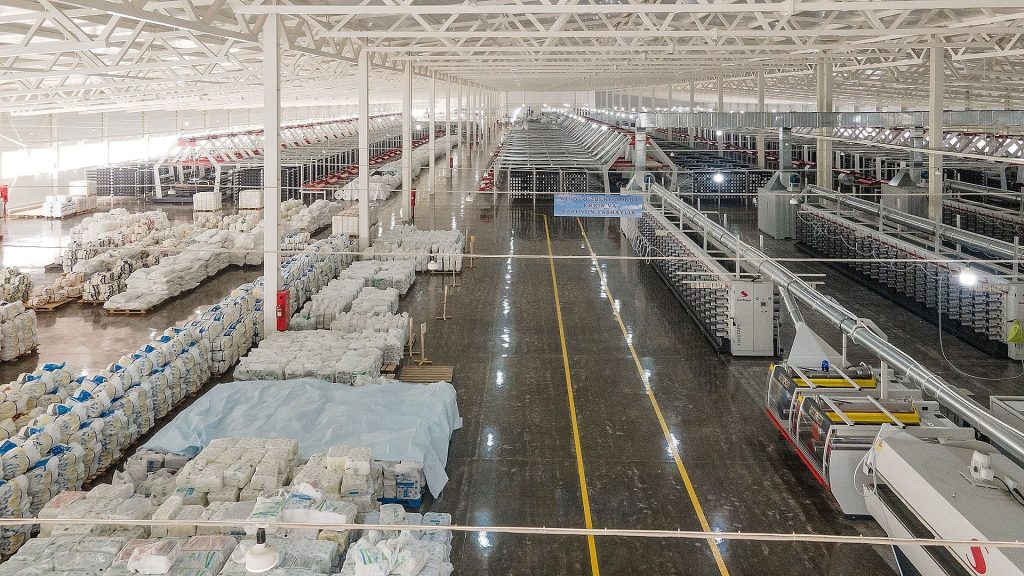
VidePak’s Starlinger AT-12 looms enable:
- High-Speed Production: 10,000 bags/hour with ±0.1mm seam precision.
- Quick Changeovers: 15-minute mold adjustments for custom sizes (e.g., 25kg vs. 50kg capacities).
Industry Insight: The shift toward PE liners aligns with the EU’s Single-Use Plastics Directive, driving demand for recyclable multi-wall solutions.
4. Regulatory Compliance and Testing
VidePak’s bags meet global standards through:
- ISO 9001-Certified QA: 4-stage checks including MFI (Melt Flow Index) tests and 5-cycle drop simulations.
- Food Safety: FDA 21 CFR 177.1520 compliance for direct food contact.
- Chemical Resistance: Passed ASTM D5265 tests for 1,500 kg/m² stacking loads.
Example: A Japanese client achieved JIS Z 1539 certification using VidePak’s 8μm BOPP laminate, reducing rice spoilage by 18% in high-humidity storage.
5. Client Decision-Making Framework
5.1 Key Selection Criteria
- Load Capacity: For 50kg industrial powders, opt for 120 GSM BOPP + 20μm PE.
- Climate: High-humidity regions require PE lamination (e.g., Southeast Asia).
- Safety: Aluminum foil liners mandatory for volatile chemicals.
- Budget: Balance recycled content (15–30%) with regulatory needs.
5.2 FAQs
Q1: What is the MOQ for custom block BOPP bags?
MOQ starts at 50,000 units, with 10-day lead times for standard designs.
Q2: How do block bags compare to FIBCs for bulk storage?
Block bags are 40% lighter and 30% cheaper for <1-ton batches, while FIBCs excel in 2-ton+ shipments.
Q3: Are these bags suitable for automated filling lines?
Yes. VidePak’s valve-sealed designs integrate with Rovema fillers at 200 bags/minute.
6. Future Trends: Sustainability and Smart Packaging
- Bio-Based BOPP: Partnerships with Corbion to launch 50% plant-derived laminates by 2026.
- IoT Integration: RFID tags for real-time moisture monitoring (2025 pilot).
- Circular Economy: 30% post-industrial recycled PP, reducing CO₂ by 1.2 tons per 10,000 bags.
Conclusion
Block BOPP bags are redefining industrial packaging through precision engineering and material science. VidePak’s fusion of Starlinger automation, hyper-customization, and ESG-aligned designs positions it as a leader in the $8.3 billion bulk packaging sector. As Ray emphasizes: “In logistics, every bag must be a fortress. With our block BOPP solutions, clients don’t just ship products—they deliver reliability.”
This report integrates insights from Intertek’s Materials Testing Guidelines and industry case studies. For further details on automated solutions, explore our analysis of PE-coated valve bag innovations.