
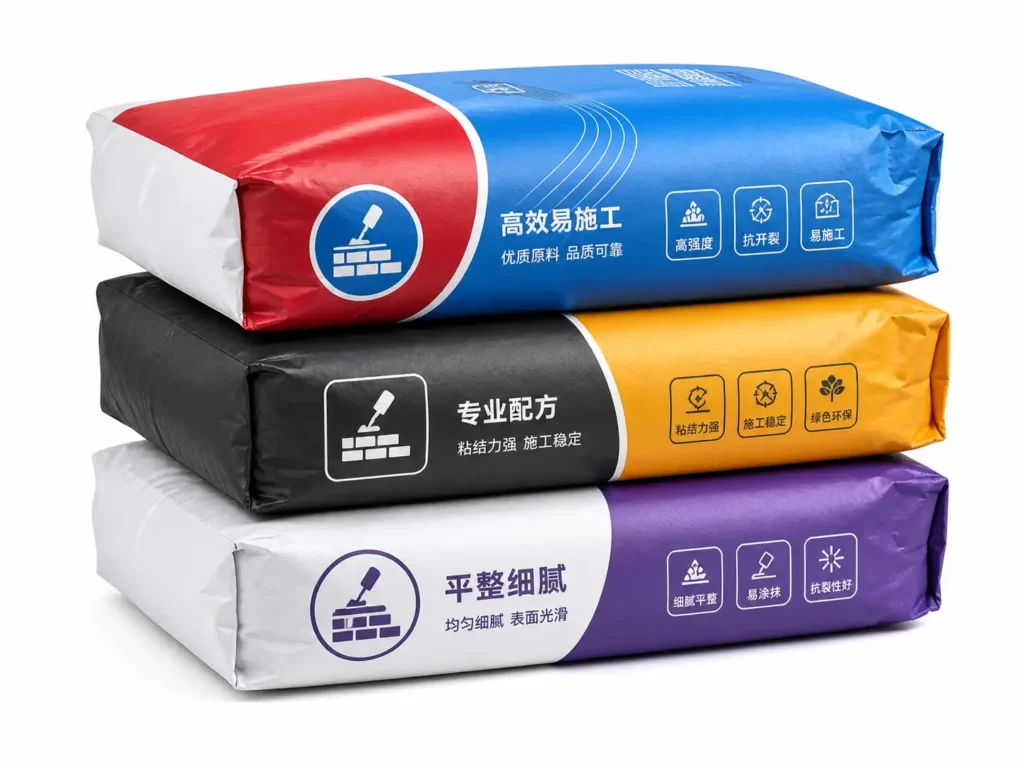
VIDEPAK Valve Bags: A Practical Product Guide to PP valve bags, PE valve Bags, and Paper Valve Bags
Industrial powders are demanding products to pack. They flow, yet they trap air. They look dry, yet many absorb moisture. They may seem light, yet a full pallet creates heavy pressure at every corner. VIDEPAK valve bags are designed around these opposing forces: fast filling but controlled dust, strong protection but efficient material use, tight closure but enough air release to keep the bag flat.
Core idea: A valve bag is not simply a sack with a small opening. It is a complete packaging system in which the bag body, valve sleeve, filling spout, powder behavior, air-release path, closure method, pallet pattern, and transport route must work together.
Why Valve Bags Matter in Construction and Industrial Packaging
Valve bags are filled through a sleeve positioned at a corner of the bag, normally near the top. The filling spout enters the sleeve, product moves into the bag, and the valve then closes by internal pressure, folding, tucking, or a thermal sealing step. This format supports rapid filling while avoiding the long open mouth that must later be sewn or sealed. In cement, gypsum, mortar, tile adhesive, grout, putty, mineral powder, chemical powder, and resin applications, that difference can mean cleaner equipment, lower product loss, more regular bag shape, and better pallet use.
The block-bottom form adds another benefit. When dimensions, fill density, and air release are correctly matched, the filled package develops a compact, brick-like shape. A square package stacks better than a soft, rounded package; a stable pallet moves better than a leaning pallet; a clean pallet sells better than a dusty pallet. This is why valve packaging must be judged by the whole route, not only by bag price.
Faster Filling
A stable valve presents a repeatable opening to the filling spout and supports automated bag placement.
Cleaner Handling
A controlled sleeve and planned vent path can reduce blowback, sifting, and dust around the filler.
Better Pallets
Block-bottom geometry creates broad faces, sharper edges, and more regular pallet layers.
More Choice
Material, valve, barrier, print, friction, and venting can be tuned for each product and filling line.
The Real Design Balance: Barrier Versus Breathability
Powder filling introduces air into the package. If air cannot escape, the bag can swell, fill slowly, fall from the spout poorly, or form an unstable pillow shape. If the package releases air too freely, fine product may sift and moisture resistance may fall. Good design therefore does not maximize barrier or ventilation in isolation. It balances both. Porous paper, micro-perforation, under-valve venting, mapped vent zones, coated layers, and valve geometry are selected as one system.
Three Material Families, Three Different Strengths
VIDEPAK organizes the valve-bag portfolio into three practical material families: PP valve bags, PE valve Bags, and Paper Valve Bags. All three can serve powders or granules, but they do not solve the problem in the same way. PP valve bags rely on woven tape strength and can combine low package weight with excellent resistance to tearing. PE valve Bags rely on flexible film structures and strong moisture protection. Paper Valve Bags rely on multiwall kraft construction, natural air release, familiar handling, and a paper-led appearance.
Important: Material choice comes first, but valve choice can change the result just as much. A strong bag with the wrong sleeve may fill slowly. A high-barrier bag with poor venting may balloon. A clean-closing sleeve that does not match the filling spout may leak before it ever reaches the pallet.
Indicative Customization Windows
For early project discussion, common engineering menus include woven PP fabric around 55–110 g/m², optional film facing in the tens-of-microns range, multiwall paper structures of two to four plies, and PE films that may be built as robust monolayer or co-extruded structures. Fill formats often range from smaller specialty packs to conventional industrial sacks around 10–50 kg. These are not universal promises; final values depend on product bulk density, drop requirement, pallet plan, filling speed, climate, and local handling.
PP valve bags: Four Valve Types for Strength, Speed, and Control
PP valve bags are built from oriented polypropylene tapes woven into a strong fabric. The fabric can remain breathable, receive a thin coating, carry a paper layer, or be laminated with printed film. This architecture gives PP valve bags a useful combination: the bag can be light in relation to the load, yet resistant to tearing, abrasion, and rough handling. For construction materials that travel through ports, open yards, regional warehouses, and job sites, this strength-to-weight balance is often decisive.
Heat Seal Valve
In heat-seal PP valve bags, the sleeve includes a sealable thermoplastic surface. After filling, controlled heat and pressure fuse the sleeve layers and create a positive closure. Depending on the line, energy may be applied by hot air, heated bars, or another validated thermal method. The value is certainty: instead of depending only on product pressure to hold the valve shut, the packer creates a measurable seal. This is useful for fine powders, moisture-sensitive products, cleaner retail packs, and routes where vibration may work loose product into an unsealed opening.
The seal is only as good as its process window. Sleeve composition, contamination in the sealing zone, temperature, pressure, and dwell time must be controlled together. Too little energy produces a weak bond; too much may thin or distort the film. For this reason, VIDEPAK recommends testing heat-seal PP valve bags with the actual powder and actual filling equipment, not only with empty laboratory samples.
Internal Valve
An internal valve sits mainly inside the bag rather than projecting as a long external sleeve. During filling, the spout opens the passage. After the bag leaves the spout, the internal flap or sleeve collapses, and product pressure helps press it against the inner wall. The design is simple, fast, and compatible with automated bag placement because no operator must fold a long extension. Industry filling guidance describes this as the most common self-closing arrangement for many valve-bag operations.
Internal-valve PP valve bags work best when the product has enough body and friction to support closure. Coarser powders and granules usually close more easily than extremely fluid or ultra-fine powders. When the product is very dusty, the design may need a tighter insert, longer overlap, added anti-sift features, or a secondary sealing option.
Tuck-In Sleeve
A tuck-in sleeve extends outside the bag after filling. The operator folds the sleeve and pushes it into the valve pocket. It is mechanical rather than welded, easy to understand, and useful when the customer wants better containment than a basic internal valve but does not have an automatic sealing unit. A thumb notch or shaped edge can improve presentation and make the sleeve easier to handle.
Tuck-in PP valve bags offer a strong practical closure, but they add a manual step. That trade-off is clear: lower equipment investment, higher labor input; flexible operation, greater dependence on operator training. For moderate-speed lines, contract packing, or products that change often, this can be a smart balance.
Poly-Lock Valve
A Poly-Lock valve uses a thermoplastic film insert in the valve opening to create a more rigid and sift-resistant passage. The film has more flexibility than a plain paper insert and can trap product more effectively as the filled bag settles. In PP valve bags, the insert can be engineered around the spout diameter, powder fineness, desired stiffness, and recycling strategy.
Poly-Lock PP valve bags are especially useful where customers want a self-closing format with stronger resistance to leakage during vibration. Correct sizing matters. If the valve is too loose, powder can sift; if it is too tight, the spout may damage the sleeve or restrict product flow. The winning specification is not “the tightest valve.” It is the valve that fills freely, releases air in a controlled way, and closes reliably after spout withdrawal.
Best Fit for PP valve bags
Choose heat seal for positive closure, internal valve for simple automation, tuck-in sleeve for flexible manual finishing, and Poly-Lock for stronger self-closing sift control. Then tune coating, perforation, anti-slip treatment, and print to the product and route.
PE valve Bags: Four Valve Types for Moisture Defense and Clean Automation
PE valve Bags are made from polyethylene film, often through multilayer co-extrusion. Different PE grades can be combined to balance stiffness, impact resistance, sealability, surface grip, and puncture performance. Printing can be placed beneath a clear outer layer, protecting graphics from abrasion and rain. These features make PE valve Bags attractive for chemicals, engineered minerals, salts, resins, masterbatch, and products that must remain clean through wet or abrasive logistics.
Internal Valve
The internal valve in PE valve Bags uses the memory and flexibility of the film to collapse after filling. Product pressure pushes the sleeve against the bag wall, while the film layers create a narrow, folded path that resists return flow. There is no long sleeve to manage and no separate closure cycle, so this option supports clean, high-speed production for free-flowing granules and many medium-fine powders.
The limitation is also simple: self-closing is not the same as hermetic sealing. Very fine, fluid, or valuable powders may migrate into the valve fold. When zero visible sifting or strong tamper evidence is required, a sealable sleeve is normally the safer choice.
Tuck-In Sleeve
Tuck-in PE valve Bags use an external film sleeve that is folded and inserted after filling. The smooth PE surface can produce a neat closure, while the extended sleeve gives the operator more material to fold than a short internal valve. This format works well on semi-automatic lines and for plants that need improved closure without investing in ultrasonic equipment.
The sleeve dimensions should match the operator’s movement as well as the spout. A sleeve that is too short can be hard to tuck; one that is too long can slow work or create a bulky corner. Small design details—thumb access, fold line, film stiffness, and pocket depth—often decide whether the closure feels easy or frustrating.
Sonic Seal Sleeve
A sonic seal sleeve is an external film valve designed for ultrasonic welding. After the target weight is reached, the bag moves from the filling position to the sealing position. A horn and anvil press the sleeve, ultrasonic vibration generates localized heat, and the compatible film surfaces fuse. The result is a compact, fully closed valve with strong dust control and clear evidence that the opening has been sealed.
Sonic-seal PE valve Bags are a strong choice for very fine powders, hygroscopic materials, export routes, and automated plants where manual tucking would limit output. Yet seal-zone cleanliness remains essential. Good valve geometry guides product away from the weld area, good venting prevents pressure from pushing powder back into the sleeve, and good controls confirm that each closure received the correct energy.
Reduced Valve
A reduced valve has an opening narrower than the full top or bottom width of the bag. It is used when the filling spout is smaller, when bag geometry requires a compact valve pocket, or when the customer wants to limit the open flow path after filling. Industry valve guides note that reduced sleeves can be made from paper or polyethylene and may support fine-powder applications when correctly matched to the filler.
Reduced-valve PE valve Bags must be engineered with care. A smaller opening can improve control, but it can also reduce filling speed or increase back pressure. The right decision depends on spout diameter, product aeration, target bags per minute, and the available vent area. Smaller is not automatically cleaner; smaller and correctly balanced is cleaner.
Best Fit for PE valve Bags
Choose internal valve for simple self-closing speed, tuck-in sleeve for semi-automatic flexibility, sonic seal sleeve for automated positive closure, and reduced valve when a smaller spout or controlled opening is part of the filling strategy.
Paper Valve Bags: Three Valve Types for Fast De-Aeration and Familiar Handling
Paper Valve Bags are commonly made from two to four plies of sack kraft paper. Individual plies can be selected for strength, stretch, print quality, slip, and porosity; an optional PE film, coated paper, or liner can add moisture protection. Because paper naturally allows controlled air movement, Paper Valve Bags have a long record in cement, gypsum, plaster, mortar, food ingredients, and mineral powders.
Internal Valve
The internal valve in Paper Valve Bags is normally formed from a paper insert, a film-assisted insert, or a layered sleeve positioned inside the corner pocket. The filling spout opens the valve; after withdrawal, the sleeve flattens and the packed product presses it shut. This is economical, fast, and well suited to automated bag placers because no external fold is required.
For coarse or moderately fine products, a simple paper insert may be enough. For finer products, a film component, trap layer, longer overlap, or tighter construction may be needed. Paper porosity helps the bag release air, but the valve itself still has to stop product. Air should leave through designed paths; powder should stay inside.
Tuck-In Sleeve
Tuck-in Paper Valve Bags carry an external sleeve that is manually folded into the valve pocket after filling. Among non-welded options, this can provide very strong sift resistance because the operator creates a deep mechanical closure. The design can include a thumb notch, shaped flap, or reinforced sleeve so it opens cleanly on the spout and folds easily afterward.
The price of that control is labor. Tuck-in Paper Valve Bags are ideal where line speed is moderate, changeovers are frequent, or the plant prefers a robust manual method. They are less suitable where every second counts and the goal is full automation without operator contact.
Sonic Seal Sleeve
A sonic seal sleeve on Paper Valve Bags is normally an extended outer valve with a thermoplastic coating or film layer. The paper provides structure and presentation; the polymer surface provides weldability. After filling, ultrasonic energy fuses the inner sealable faces and creates a highly secure closure. This combination keeps the paper-led package while adding the cleanliness and automation of a welded valve.
Sonic-seal Paper Valve Bags are especially valuable for fine construction chemistry, premium ingredients, and dusty products that would otherwise creep from a self-closing paper insert. However, the valve area must remain flat and free of heavy contamination. Bag dimensions, sleeve coating, sealing energy, and air release should be validated together on the customer’s line.
Best Fit for Paper Valve Bags
Choose internal valve for economy and automatic placement, tuck-in sleeve for strong manual containment, and sonic seal sleeve when a paper-led package needs automated, positive valve closure.
How to Select the Right Material and Valve
The correct valve bag begins with the product, not with a catalog picture. Buyers should define particle size, bulk density, flow behavior, air content, moisture sensitivity, temperature at filling, contamination risk, target weight, filling method, bags per minute, pallet dimensions, storage climate, transport distance, and expected drops. Only then should the team compare PP valve bags, PE valve Bags, and Paper Valve Bags.
A Practical Selection Flow
Measure powder flow, particle size, bulk density, and trapped air.
Define moisture, odor, grease, and contamination protection.
Match spout, filler type, closure equipment, and target speed.
Run filled-bag trials, drop tests, sift checks, and pallet tests.
Freeze dimensions, materials, valve, print, venting, and QC limits.
| Customer Priority | Strong Starting Point | Valve Direction | Trial Focus |
|---|---|---|---|
| Rough export handling | PP valve bags | Poly-Lock or heat seal | Drop, vibration, valve sifting, pallet friction |
| High moisture exposure | PE valve Bags | Sonic seal or reduced valve | Seal integrity, vent rate, puncture, print durability |
| Fast natural air release | Paper Valve Bags | Internal or tuck-in sleeve | De-aeration, seam strength, humidity aging |
| Fine powder and clean pallet | Any family after line testing | Positive heat or sonic seal | Seal-zone contamination, dust escape, closure repeatability |
Common Specification Mistakes
The first mistake is copying dimensions from an old bag without checking current bulk density. The second is adding a strong barrier without creating a new air-release path. The third is selecting a valve name without confirming its exact geometry. The fourth is testing empty bags but not filled bags. The fifth is optimizing each bag alone while ignoring pallet friction, stretch-wrap settings, and route vibration. In valve packaging, details do not add up; they multiply.
VIDEPAK Product Engineering, Quality Control, and Customization
VIDEPAK develops PP valve bags, PE valve Bags, and Paper Valve Bags as customer-specific packaging systems. Product work can include substrate selection, bag dimensions, bottom geometry, valve location, sleeve construction, vent mapping, barrier layers, anti-slip treatment, artwork, print protection, pallet pattern, and packing method. The goal is repeatable performance from the first bag on the filler to the last bag unloaded at the destination.
From Raw Material to Finished Pallet
For PP valve bags, production typically includes resin preparation, tape extrusion and orientation, weaving, optional coating or lamination, printing, block-bottom conversion, valve formation, finishing, and inspection. For PE valve Bags, the chain typically includes film extrusion or co-extrusion, surface treatment, printing, valve and bottom conversion, welding, perforation or vent creation, and final quality release. For Paper Valve Bags, the process typically includes paper and barrier selection, printing, multi-ply tube formation, bottom pasting, sleeve insertion, vent design, curing, and dimensional inspection.
Quality Checks That Connect to Real Failures
VIDEPAK quality plans can be built around the risks of each application: fabric or film tensile performance, paper strength, seam and bottom integrity, valve pull and closure behavior, seal strength, dimensional tolerance, print registration, color difference, coefficient of friction, filled-bag drop performance, sifting, and pallet stability. Incoming materials, in-process controls, and outgoing inspection create a traceable chain rather than a final visual check alone.
Line Compatibility
Valve width, sleeve depth, bag stiffness, and mouth presentation are checked against the filling spout and bag placer.
Containment
Sift behavior is evaluated after filling, settling, handling, and vibration—not only immediately after closure.
Pallet Performance
Bag shape, friction, print finish, and pallet pattern are tuned to prevent slide, lean, and corner damage.
Brand Protection
Artwork, warnings, batch codes, and scanning areas are protected through appropriate print and surface choices.
A Better RFQ Produces a Better Bag
A useful request should state the packed product, particle size, bulk density, fill temperature, target net weight, current bag size, valve and spout dimensions, bags per minute, closure equipment, storage time, climate, pallet size, stack height, transport route, print colors, and known failure points. Samples of the product and the present bag can shorten development because they turn assumptions into measurements.
VIDEPAK product promise: choose the material for the route, choose the valve for the line, choose the venting for the powder, and prove the combination with filled-bag testing. Strong where it must be strong. Open where air must escape. Closed where product must stay.
PP valve bags, PE valve Bags, and Paper Valve Bags are not competing answers to one simple question. They are three engineering platforms for different combinations of strength, barrier, air release, closure, automation, appearance, and cost. With the right valve—Heat Seal, Internal Valve, Tuck-In Sleeve, Poly-Lock, Sonic Seal Sleeve, or Reduced Valve—the package becomes more than a container. It becomes part of the production line, part of the logistics system, and part of the customer’s experience.
Valve Bags and Its Valve Types
Comprehensive introduction to various valve bag types, suitable for building materials and construction industry packaging.
Check More →Kraft Paper Valve Bags Solutions
Heavy-duty kraft paper valve bags specially designed for construction raw material packaging and industrial use.
Check More →Paper Valve Bags VS PE Valve Bags
Compare different valve bag materials and performance to meet diverse construction industry packaging demands.
Check More →PE Valve Bags
Durable PE valve bags with stable structure, widely used for powder and granular materials in construction field.
Check More →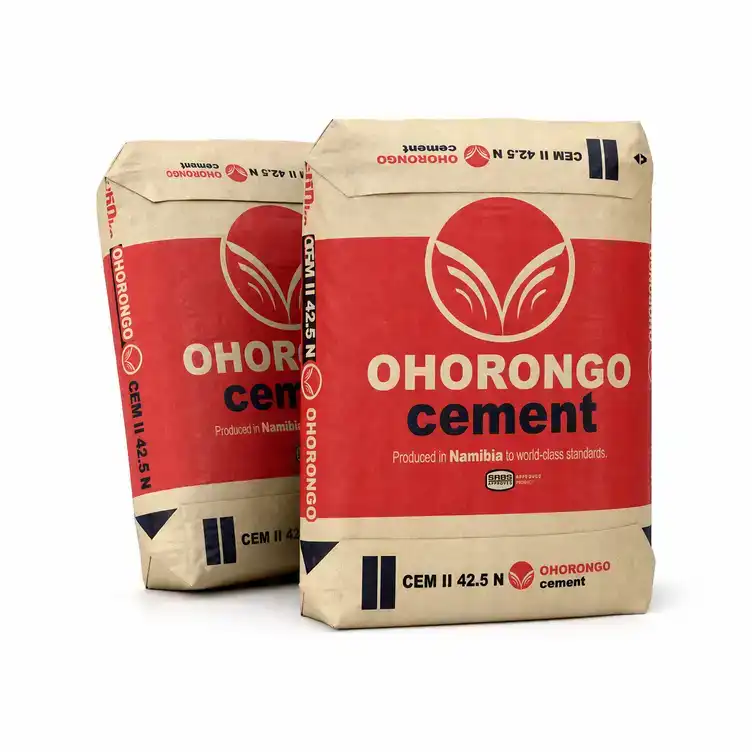
- VIDEPAK Valve Bags: A Practical Product Guide to PP valve bags, PE valve Bags, and Paper Valve Bags
- Why Valve Bags Matter in Construction and Industrial Packaging
- Three Material Families, Three Different Strengths
- PP valve bags: Four Valve Types for Strength, Speed, and Control
- PE valve Bags: Four Valve Types for Moisture Defense and Clean Automation
- Paper Valve Bags: Three Valve Types for Fast De-Aeration and Familiar Handling
- How to Select the Right Material and Valve
- VIDEPAK Product Engineering, Quality Control, and Customization
- From Raw Material to Finished Pallet
- Quality Checks That Connect to Real Failures
- Line Compatibility
- Containment
- Pallet Performance
- Brand Protection
- A Better RFQ Produces a Better Bag
- Understanding Valve Sacks
- Types of Valve Openings
- Applications in the Construction Industry
- Considerations for Choosing Valve Sacks
- Customizing Valve Sacks
- Advantages of Using Valve Sacks
- Summary of Key Points
- Selecting the Right Valve Sacks
- Conclusion
Understanding Valve Sacks
Valve Bags are specialized packaging solutions that feature a unique filling mechanism through a valve at the top. This design allows for quick and easy filling, ensuring that the bags are filled to capacity while minimizing dust and waste. Commonly made from woven polypropylene (PP) or paper, Valve Woven Sacks are highly durable and suitable for a variety of applications.
Types of Valve Openings
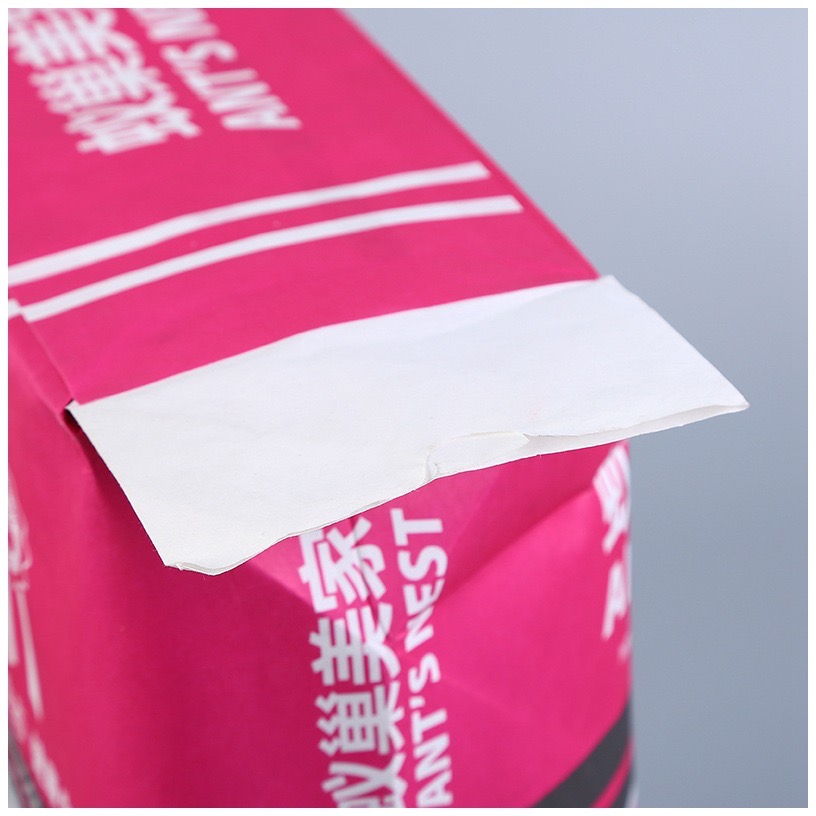
When it comes to Valve Sacks, the type of valve opening plays a critical role in their functionality and suitability for specific applications. Here are the main types of valve openings:
- Single Valve Opening:
- This is the most common type of valve opening, allowing for quick filling from a single point. It is widely used for products that require rapid filling without the need for a secondary closure.
- Multi-Valve Openings:
- Multi-valve openings offer flexibility in filling and can accommodate multiple filling stations. This type is ideal for operations that require simultaneous filling from different sources.
- Flat Valve:
- The flat valve design is characterized by a more extensive opening area, facilitating easier filling of thicker materials like mortar or adhesives. This type can be customized to suit specific application needs.
- Dome Valve:
- The dome valve features a rounded top, which allows for better compaction of the material during the filling process. This design is particularly useful for powdery materials that need to be densely packed.
Applications in the Construction Industry
Valve Sacks are extensively used in the construction industry due to their efficiency and strength. Key applications include:
- Cement Packaging: Valve PP Sacks are a popular choice for packaging cement because they can withstand the weight and pressure of the material. The design also helps in reducing dust during filling and transport.
- Putty Powder: The smooth filling and secure closure of Valve sacks make them ideal for putty powder, which requires protection from moisture and contamination.
- Gypsum Powder: Similar to putty, gypsum powder requires durable packaging that can maintain the integrity of the material. Valve Woven Sacks are designed to meet these requirements effectively.
- Joint Compound: For products like joint compounds used in drywall applications, Valve Sacks provide the necessary barrier to prevent moisture ingress and maintain product quality.
Considerations for Choosing Valve Sacks
When selecting Valve Sacks for construction materials, several factors should be considered to ensure the right choice for your specific application:
- Material Compatibility: Ensure that the bag material is compatible with the product being packaged. For instance, a waterproof material may be necessary for products sensitive to moisture, such as cement.
- Weight Capacity: Different valve Sacks come with varying weight capacities. It’s essential to choose a bag that can handle the weight of the contents without tearing or bursting.
- Filling Method: Consider the filling process of the product. For products that require quick filling, single valve openings may be sufficient, while multi-valve openings might be needed for high-volume operations.
- Storage Conditions: Evaluate where the packaged materials will be stored. If they will be exposed to moisture, selecting bags with moisture-resistant properties is crucial.
- End Use: Understanding how the packaged material will be used can influence the bag choice. For example, if the material requires a specific presentation or branding, customization may be necessary.
Customizing Valve Sacks
Customizing Valve Sacks can enhance their functionality and ensure they meet specific requirements. Here are some parameters to consider when customizing:
- Size and Dimensions: Determine the optimal size and dimensions for the Sacks based on the quantity of material being packaged. This is essential for maximizing storage efficiency.
- Valve Design: Depending on the filling equipment used, the valve design can be customized to fit various machines or manual filling processes.
- Printing and Branding: Custom printing can be added to promote brand identity and provide essential product information. This feature is particularly useful for companies looking to enhance their market presence.
- Material Thickness: The thickness of the bag can be adjusted based on the weight of the contents and the level of protection required during transport and storage.
- Closure Options: While most Valve Sacks come with a self-closing mechanism, additional closure options can be implemented for extra security, particularly for sensitive materials.
Advantages of Using Valve Sacks
Utilizing Valve Sacks in the construction industry provides several advantages, including:
- Efficiency: The valve design allows for rapid filling, reducing downtime during production processes.
- Reduced Waste: These bags minimize dust and spillage, leading to lower product waste during packaging and transport.
- Durability: Constructed from robust materials, Valve PP Sacks offer excellent protection against physical damage and environmental factors.
- Versatility: Valve sacks can accommodate a wide range of products, making them suitable for various applications in the construction sector.
Summary of Key Points
The following table summarizes the key points discussed in this article regarding Valve Sacks and their applications in the construction industry:
| Key Point | Description |
|---|---|
| Types of Valve Openings | Single, multi-valve, flat, and dome valve designs, each suitable for different filling requirements. |
| Construction Applications | Used for packaging cement, putty powder, gypsum, and joint compounds, ensuring product integrity and minimizing waste. |
| Considerations for Selection | Material compatibility, weight capacity, filling method, storage conditions, and end use all influence bag selection. |
| Customization Options | Size, valve design, printing, material thickness, and closure options can be tailored to meet specific needs. |
| Advantages | Efficiency in filling, reduced waste, durability, and versatility make Valve Sacks ideal for construction materials. |
Selecting the Right Valve Sacks
To ensure optimal performance in your application, it is crucial to select the right Valve Sacks. Engaging with a reputable Valve Sacks manufacturer can provide valuable insights into which products will best suit your needs. Manufacturers often offer consultations to help determine the best options based on the specific characteristics of your materials.
Conclusion
In conclusion, Valve Sacks serve as a vital packaging solution in the construction industry, offering various valve types to accommodate different materials. With careful consideration of application needs and the ability to customize bag parameters, businesses can significantly improve their packaging efficiency and product integrity. Embracing these solutions not only enhances operational effectiveness but also contributes to sustainability in the packaging sector. As industries continue to evolve, the role of Valve Woven Sacks will undoubtedly expand, providing robust support to various applications.