
What are Recyclable PP Bags?
Recyclable PP Bags are industrial sacks engineered so that, after a demanding life of protecting powders, granules, and components through rough handling and long transit, the outer package can still enter a recognized polypropylene recovery pathway. In manufacturing terms, the body is a woven lattice of oriented PP tapes; the moisture and dust defenses are provided by PP‑friendly skins (extrusion coatings or film laminations) and, when needed, removable or PP‑based liners; the seams and closures are chosen to keep fines inside without introducing foreign materials that would compromise recycling. The result is a mono‑material‑forward system that behaves like classic woven sacks on the line yet finishes its life with a credible route into code‑5 PP streams where collection exists. It looks familiar; it runs familiar; the difference lies in the disciplined bill of materials, the labeling, and the test plan behind it.
In tenders and plant meetings you will hear a constellation of names that all orbit the same idea. For clarity, the most common aliases are listed here:
- Recyclable polypropylene woven bags
- Recyclable PP woven sacks
- Mono‑material PP woven packaging
- Recyclable BOPP‑laminated PP bags
- Recyclable woven poly sacks
- Circular PP fabric bags
- Closed‑loop PP woven packaging
The word “recyclable” here is not a slogan but a specification. It implies that substrates, tie layers, inks, and accessories are matched to a practical end‑of‑life scenario, and that instructions on the package guide users toward the correct stream. In short: design for the stream you actually have, not the one you wish you had.
The materials of Recyclable PP Bags
A woven bag is not a single material; it is a system. A credible recycling story emerges only when each layer contributes its function without undermining mono‑material intent. The outline below links each part to its job, its trade‑offs, and its cost signals, so decisions are grounded rather than guessed.
1) Woven fabric: the structural lattice
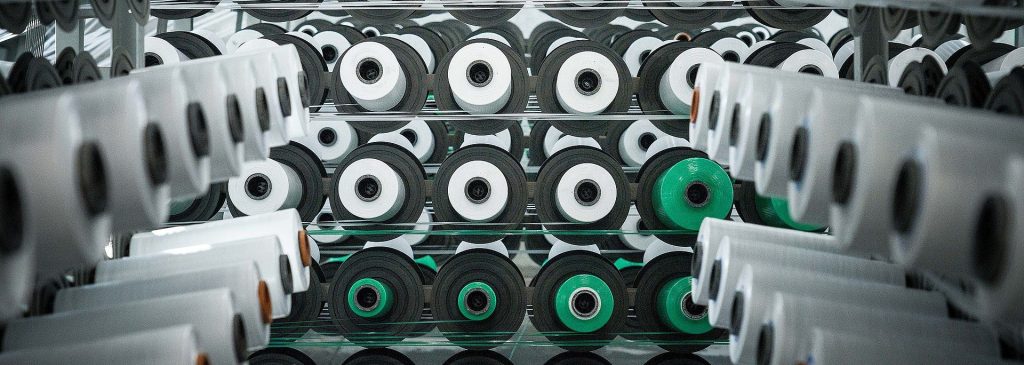
At the core of Recyclable PP Bags sits a textile made from slit‑film polypropylene tapes. Pellets are extruded into a thin sheet, slit into ribbons, and hot‑drawn to align polymer chains. Orientation is the quiet hero: it delivers high tensile and tear strength per gram. Circular‑woven bodies remove side seams and distribute load uniformly; U‑panel and four‑panel bodies create boxier shapes that improve face flatness for pallet stability. Typical basis weights for chemical and minerals duty land in the 60–120 g/m² window; the winning specification is the lightest workable GSM that still passes drop and stack plans with margin. Impact‑modified PP grades can be selected for winter toughness without leaving the PP family.
2) Outer skin: coatings or laminations that stay compatible
Two mainstream strategies create the “skin” that controls dust and moisture and carries graphics:
- Extrusion coatings of PP or PE at roughly 20–40 μm. Coating closes weave interstices, cuts sifting, and furnishes a printable face for flexography. For strict mono‑PP aims, PP‑rich formulations are preferred.
- BOPP laminations (≈18–30 μm, reverse‑printed). Biaxially oriented polypropylene is, chemically, PP. Laminating a reverse‑printed film to the fabric gives premium abrasion resistance and lower surface WVTR while staying within the PP family. Tie layers and adhesives should be PP‑friendly to keep the outer structure reclaimable as PP.
Coating is lighter, cheaper, and perfectly adequate for many industrial SKUs; lamination elevates abrasion, stiffness, and print fidelity for retail‑visible or long‑dwell routes. Both can be kept PP‑compatible; the art is choosing the one that serves the route and the brand without inflating mass or cost.
3) Liners: barrier where barrier belongs
Not every product requires a liner, but hygroscopic, odor‑critical, or oxygen‑sensitive loads often do. In Recyclable PP Bags, the liner strategy comes in two flavors:
- Separable PE liners (LDPE/LLDPE/HDPE): loose or tabbed, clearly labeled for removal before recycling the outer. This keeps the woven shell in a clean PP stream and, in many markets, the liner in a compatible PE stream.
- PP‑family liners (cast PP or oriented PP): preferred where mono‑PP claims are essential and PP‑flexible collection exists. They are stiffer and need tighter sealing windows but keep the entire package in the PP family.
When extreme barrier is required (EVOH or foil), place it inside a separable liner rather than bonding it permanently to the outer. Barrier belongs next to the product, not locked onto the pallet skin for the next decade.
4) Small parts with large consequences
Threads, crepe tapes, filler cords, labels, and easy‑open features decide day‑to‑day cleanliness and end‑of‑life credibility. The rule is simple: like with like. Prefer PP threads and PP filler cords; avoid foreign polymers that complicate reclaim. Where laminated bags can be hot‑air welded, stitchless walls and bottoms eliminate needle holes (clean docks) and foreign threads (clean reclaim).
5) Cost and sustainability signals
Fabric mass is the dominant cost driver, as it follows resin indices; coatings/laminations add resin and energy but cut claims; liners add barrier cost while reducing product loss. The sustainability signal rides alongside: every gram you remove from the outer fabric lowers both cost and the mass that must be recycled. Right‑weighting is therefore economic and environmental at once.
If your market requires clear proof of recyclability, maintain a concise dossier: composition by mass, adhesives/tie layers used, ink sets, liner strategy (separable or PP‑family), and the labeling artwork shown on pack. Auditors do not argue with data they can see.
What are the features of Recyclable PP Bags?
Features mean nothing until they touch the line, the pallet, and the baler. The set below is organized by where value appears in the journey from filling to recovery.
A) Strength per gram that keeps pallets honest
Oriented PP tapes produce high tensile and tear values at modest GSM, enabling tall stacks without a weight penalty. You protect the product, preserve cube, and reduce resin usage—all while keeping the outer in an attractive PP stream.
B) Tunable moisture barrier without permanent penalties
With PP‑rich coatings or BOPP laminations, and with liners only when needed, Recyclable PP Bags meet moisture‑vapor targets realistically. The barrier sits where it should (near the product), while the outer stays PP‑forward for reclaim.
C) Sift‑proof seams for clean docks
Stitch density, bite depth, thread type, and the use of filler cord or felt are the details that separate dusty pallets from clean ones. Stitchless welds on laminated builds raise the bar further by eliminating needle holes altogether.
D) Print surfaces that survive the road
Coated faces carry durable flexography; laminated faces unlock reverse‑printed BOPP that shrugs off conveyor abrasion. Barcodes and QR codes remain legible; handling pictograms stay visible; brand colors remain consistent when color is treated as measured data rather than a guess.
E) Clear end‑of‑life instructions
Visible PP code‑5 marks and a short instruction block—often linked to a QR—turn recyclability from an intention into an action. When liners are separable, the text says so. When local guidance differs by region, the QR bridges the gap.
| Feature in Recyclable PP Bags | Operational benefit | Circularity impact |
|---|---|---|
| PP‑friendly coating or BOPP laminate | Dust control, improved moisture resistance, abrasion‑tough print surface | Outer remains PP‑family, maintaining stream compatibility |
| Separable liner with printed removal cue | Barrier tuned to product risk without altering outer runnability | Clean PP outer stream; PE or barrier stream handled separately |
| Sift‑proof seam recipe or stitchless weld | Clean pallets, fewer returns | Less product loss; fewer contaminated bales |
| QR + code‑5 PP icon | Faster training of warehouse staff | Higher probability of correct sorting |
What is the production process of Recyclable PP Bags?
Treat production as a closed‑loop control system: select, convert, assemble, verify, release. Each node has a measurable target; each target has a failure mode. Keeping that loop tight is how you get bags that run fast, arrive clean, and recycle well.
A) Upstream controls — raw materials and incoming tests
- Resins: vendor‑approved PP grades (homo‑ and impact‑copolymer) matched to draw ratios; verify MFI, density, ash, and pellet moisture on every lot.
- Masterbatches: UV packages sized to outdoor dwell; antistatic dosage tuned to powder behavior; colorants in line with restricted‑substance policies.
- Films: BOPP films for lamination and/or PP‑friendly coating resins; check thickness, haze, dart/drop, and bond receptivity.
- Liners: specify separable PE or PP‑family, with clear instructions printed for removal where applicable; verify mic gauge and seal strength.
- Ancillaries: threads, crepe tapes, filler cords, labels—prefer PP; verify thread tenacity, tape adhesion, and cord compression fit.
B) Core converting — from pellet to printable fabric
- Tape extrusion and orientation: extrude sheet, slit into tapes, hot‑draw to high tenacity with tight width CV; keep fibrillation low.
- Weaving: circular or flat looms set pick density for balanced tensile, controlled elongation, and low interstice size.
- Coating/lamination: apply PP‑rich coating or laminate BOPP; monitor thickness, bond uniformity, and surface energy for print adhesion.
- Printing: flexo on coated faces, gravure (reverse) on laminates; define color as data (profiles and tolerances), not as memory.
- Cutting and forming: tight cut‑length control, double‑fold bottoms, hemmed mouths; filler cords where stitched.
- Liner insertion: loose, tabbed, or form‑fit; when used, provide an extended lip for heat sealing and print a short removal cue on the panel.
- Finishing: easy‑open features, lot/QR codes, corner boards, and a wrap recipe that stabilizes stacks without face crush.
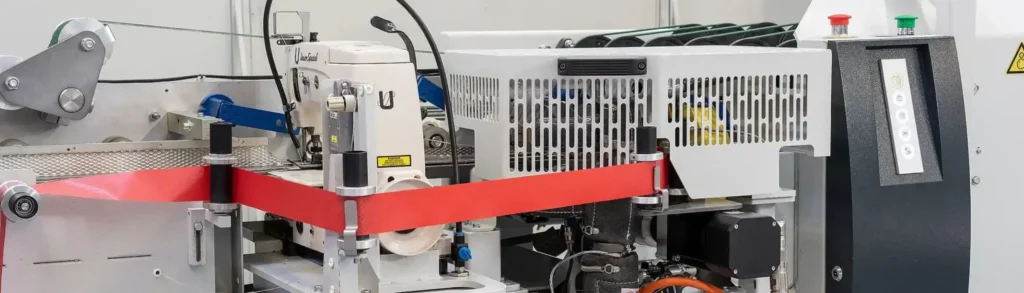
Consistency is not luck. VidePak operates on European platforms end‑to‑end: Starlinger (Austria) for tape lines, circular looms, coating/lamination, and sack conversion; Windmöller & Hölscher, W&H (Germany) for high‑end extrusion and printing/automation. The practical outcomes are tighter capability on tape strength, coating/lamination thickness, bond uniformity, and print registration—variables that directly govern cleanliness, run speed, and recyclability credibility.
C) Downstream QA — verifying the promise
- In‑process controls: tape tensile/elongation; GSM and pick density; coating/lamination thickness; bond/print adhesion; seam stitch density and bite depth.
- Product validation: dimensions; filled‑bag drop testing; sifting trials with representative powders; MVTR where linered; pallet compression; accelerated UV exposure for outdoor dwell; abrasion for barcode durability.
- Documentation: a concise design‑for‑recycling bundle per SKU (composition, liners, inks/adhesives, labeling) kept alongside mechanical test data. Repeatability lives here.
What is the application of Recyclable PP Bags?
Because they combine rugged mechanics, tunable barrier, and plausible end‑of‑life routes, Recyclable PP Bags serve a broad industrial map:
- Inorganic salts and minerals — sodium chloride, soda ash, gypsum, calcium carbonate: coated or laminated outers; separable liners for humid routes; sift‑proof seams for fine fractions.
- Fertilizers and agrochemicals — urea, NPK blends, ammonium phosphate: UV‑stabilized fabric; robust coating/lamination; form‑fit liners where caking is a risk; clear labeling for liner removal.
- Pigments and fillers — titanium dioxide, carbon black, silica: laminated faces for scuff; antistatic strategies; restrained venting; sift‑proof details; separable barrier liners for oxygen/odor control.
- Detergents and builders — abrasion‑resistant faces; easy‑open features; odor‑barrier liners where needed; recycling cues printed near the mouth.
- Construction chemicals — tile adhesives, grouts: boxy geometries for stack stability, laminated faces for job‑site abrasion, and removal instructions for liners.
- Retail‑visible commodities — premium seed and feed: BOPP‑laminated show panels; QR for traceability and recycling guidance.
How VidePak controls and guarantees the quality
Quality is designed in, not inspected in. VidePak aligns its approach with how auditors and line leads actually work. The steps are simple to state yet rigorous in practice:
- Standards‑aligned design, production, and testing — Engineering references mainstream norms (ISO/ASTM/EN/JIS families where applicable) and, where dangerous‑goods rules apply, woven plastic bag codes with documented tests. Validation covers drop, sifting, MVTR for linered SKUs, pallet compression, UV aging, and barcode abrasion.
- Virgin raw materials from major producers — Resins and masterbatches are vendor‑approved; incoming lots carry COAs and are verified against internal specs for MFI, density, ash, pigment concentration, and moisture.
- Best‑in‑class equipment — End‑to‑end converting runs on Starlinger and W&H platforms that stabilize tape strength, GSM/pick density, coating/lamination thickness, bond uniformity, and print registration.
- Complete test funnel — Incoming inspection → in‑process SPC → finished‑goods validation, all lot‑traceable. The funnel prevents drift and proves performance.
A short internal checklist transforms audits: specification sheet, incoming COAs, in‑process SPC charts, finished‑goods test records, recycling dossier, and pallet maps. Keep them together and traceable to each production lot of Recyclable PP Bags.
Recyclable PP Bags: An Eco‑Friendly Solution with Customizable Features — a thinking framework
A headline promises, but a framework delivers. To translate the title into a build that works in the plant and at the baler, proceed as practitioners do: define the eco claim, pick the feature set that helps rather than hurts, and lock the proof points.
1) Define the eco claim with precision
- Which stream will accept the bag body? PP code‑5 with flexible PP collection? If yes, mono‑PP outers and PP‑friendly bonds are justified.
- Is a liner necessary? If so, will it be separable PE with printed removal instructions, or PP‑family for mono‑PP claims?
- How will users know what to do? Reserve panel space for a QR and a one‑line instruction block; test abrasion so those marks survive the trip.
2) Choose customizable features that solve real risks
- Outer skin: coating for rugged, cost‑tight SKUs; lamination for long routes and brand‑visible SKUs.
- Liner plan: separable PE for maximum process freedom; PP liner for mono‑PP claims where PP‑flexible recovery exists.
- Seams: stitchless hot‑air welded walls/bottoms on laminates; disciplined stitch + filler cord on coated builds.
- Anti‑skid textures: embossed laminates or patterned coatings to keep tall stacks stable.
- Traceability: QR/GS1 for lots and returns; serialized IDs speed investigations and recyclers’ workflow.
3) Lock the plan and the proof
Write a one‑page construction spec (fabric GSM, skin, seam, liner, markings) and a one‑page test plan (drop, sifting, MVTR where linered, pallet compression, UV, abrasion). Run a pilot, measure, iterate. The proof is a packet you can hand to a customer, a regulator, or a new hire without needing a speech.
Systems thinking: decompose, optimize, integrate
When choices pile up—fabric weights, barrier stacks, seam styles, liner types—complexity can feel like fog. Systems thinking cuts through it. Break the bag into subsystems, optimize each with data, and then stitch them back together with an integrated test plan. The map below is a practical prompt set.
- Fabric mechanics: pick density, GSM, tape tenacity. Objective: the lightest workable GSM that passes drop and stack with margin.
- Barrier strategy: coating vs lamination vs liner. Objective: WVTR/OTR targets met without permanent incompatibilities on the outer.
- Seams and closures: stitch recipe or stitchless weld; mouth geometry; liner lip heat‑seal sequence. Objective: cleanliness and hermeticity at target line speed.
- Print and identification: art engineered to surface; abrasion‑resistant inks; reserved zones for codes and labels. Objective: legibility after the route.
- End‑of‑life: code‑5 marking; QR; liner removal cue. Objective: convert “technically recyclable” into “likely recycled.”
| Subsystem | Decision levers | Failure signals | Verification |
|---|---|---|---|
| Fabric mechanics | GSM, pick density, draw profile | Drops fail; leaning stacks; creep at pallet edges | Tensile/tear tests; pallet compression; stack dwell trials |
| Barrier strategy | Coating/lamination thickness; liner type and mic | Caking; odor uptake; moisture claims | WVTR/OTR; climate‑relevant shelf tests |
| Seams and closures | Stitch density, filler cord, weld parameters | Dusty pallets; frayed mouths; loose bottoms | Sifting rigs; seam audits; drop after conditioning |
| Print and identification | Process choice, ink set, scuff zone design | Unreadable barcodes; brand color drift | Barcode abrasion; ΔE color checks; inline inspection |
| End‑of‑life | Labeling, QR, liner cue | Wrong binning; contaminated bales | Warehouse sorting trials; recycler feedback |
Technical tables for quick specification
Table 1 — Construction options
| Element | Main options | When to use | Notes |
|---|---|---|---|
| Fabric type | Circular‑woven; U‑panel; four‑panel | Circular to avoid side seam; panels for boxier stacks | Circular improves burst; panels ease face control |
| Fabric GSM | 60–120 g/m² typical | Heavier for export/stacking; lighter for domestic | Validate by drop + pallet compression |
| Outer skin | PP/PE coating 20–40 μm; BOPP lamination 18–30 μm | Coating for cost/toughness; lamination for abrasion/graphics | Keep bond systems PP‑friendly |
| Liner | Separable LDPE/LLDPE/HDPE; PP liner; EVOH/foil only in separable liners | Moisture/odor/oxygen‑sensitive products | Print removal cue when separable |
| Seam | Double‑fold + filler cord; stitchless hot‑air welded | Fines and long routes; laminated builds | Sift‑proofing needs rig validation |
| Printing | Flexo 2–6 colors; gravure up to 10 on BOPP | Industrial vs premium channels | Reserve scuff‑protected zones for codes |
Table 2 — QA plan (non‑exhaustive)
| Gate | Checks/tests | Purpose |
|---|---|---|
| Incoming | Resin MFI/density/ash; MB loading; film thickness/dart; thread tenacity; bond on retains | Admit conforming lots; protect process stability |
| In‑process | Tape tensile/elongation; GSM/pick density; coat/lam thickness; bond/print adhesion; seam stitch density; register | Hold CTQs in control; prevent drift |
| Finished goods | Dimensions; drop test; sifting with product; MVTR (liner builds); barcode abrasion; pallet compression; UV exposure if relevant | Validate field performance; keep audit trail |
Table 3 — Scenario→spec quick picks (circular design emphasis)
| Scenario | Recommended Recyclable PP Bag spec | Rationale |
|---|---|---|
| Hygroscopic fertilizer, humid export | 80–100 g/m² circular fabric; PP‑rich coating 25–30 μm; separable LDPE liner 60–80 μm; filler‑cord seams; UV package; printed removal cue | Moisture defense with clean PP outer stream |
| Fine pigment (<45 μm), ESD concern | 90–110 g/m² laminated outer; antistatic in tapes and liner; stitchless walls; restrained venting; separable HDPE/EVOH liner | Dust governance + barrier without polluting PP outer |
| Retail‑visible seed/feed | BOPP laminate 20–25 μm reverse‑printed; anti‑skid emboss; QR/GS1 traceability; mono‑PP outer | Durable graphics + clean reclaim |
| Domestic salt | 70–80 g/m² coated fabric; separable LDPE 50–60 μm; standard seam with filler cord; easy‑open feature | Cost‑cleanliness balance with clear recycling path |
A practical baseline you can issue tomorrow
When time is short and stakes are high, start here and tune:
- Body: circular‑woven PP fabric, 75–90 g/m², UV‑stabilized to climate.
- Outer: PP‑rich coating 25–30 μm or BOPP lamination 20–25 μm (reverse printed) with PP‑friendly bonds.
- Seam: coated build with double‑fold bottom and filler cord; laminated build with stitchless hot‑air‑welded bottom/sidewalls.
- Liner: separable LDPE 50–70 μm with printed removal instructions (upgrade to PP liner for mono‑PP claims where PP‑flexible collection exists).
- Closure: heat‑seal liner lip, then sew; tape‑over‑sew for dusty routes if needed.
- Print: flexo 4–6 colors on coated fabric; gravure up to 8–10 on BOPP laminates; abrasion‑resistant inks; scuff‑protected barcode zone.
- Marking: PP code‑5 symbol; QR to localized disposal guidance; lot/GS1 codes for traceability.
- Validation: filled‑bag drop tests; sifting trials with your powder; MVTR at 38 °C/90% RH when linered; barcode abrasion; pallet compression to stack plan; accelerated UV exposure for outdoor dwell.
For a broader view of adjacent families and how they interface with circular design, explore industrial polypropylene woven packaging options that share core converting steps and can be specified with PP‑friendly skins and separable liners.
Frequently asked questions (practical and short)
Are Recyclable PP Bags truly recycled today? In regions where flexible PP is collected and sorted, yes—the mono‑PP outer is a fit. Where it is not, the design still prevents contamination by keeping barriers removable and by clearly labeling the outer for PP.
Will a BOPP‑laminated bag remain recyclable? Yes. BOPP is PP. Use PP‑friendly bonds and avoid gluing complex barriers to the outer. Keep those inside separable liners.
Can I claim mono‑material if a PE liner is used? Not strictly. You can claim a mono‑PP outer with a separable PE liner and direct users to remove the liner prior to recycling the outer. In many markets, that liner has its own PE stream.
Does stitchless welding help? It reduces needle holes (less dust) and removes foreign threads (cleaner reclaim). On laminated builds, it is a strong choice.
October 22, 2025
- What are Recyclable PP Bags?
- The materials of Recyclable PP Bags
- What are the features of Recyclable PP Bags?
- What is the production process of Recyclable PP Bags?
- What is the application of Recyclable PP Bags?
- How VidePak controls and guarantees the quality
- Recyclable PP Bags: An Eco‑Friendly Solution with Customizable Features — a thinking framework
- Systems thinking: decompose, optimize, integrate
- Technical tables for quick specification
- A practical baseline you can issue tomorrow
- Frequently asked questions (practical and short)
“Why should businesses prioritize recyclable PP woven bags in their sustainability strategies?”
This question, posed by a supply chain manager at a global agricultural conglomerate, underscores the urgency of balancing operational efficiency with environmental responsibility. The answer lies in polypropylene’s recyclability, customizable engineering, and advanced manufacturing technologies—three pillars that position VidePak’s PP woven bags as a benchmark in sustainable packaging.
1. The Science of PP Yarn: Fine vs. Coarse Filaments
1.1 Defining Fine and Coarse Filaments
In PP woven bag production, filament width determines structural and functional outcomes. Industry standards classify filaments as:
- Fine Filaments: ≤50 microns (e.g., 30–50 microns), ideal for high-resolution printing and lightweight applications.
- Coarse Filaments: ≥80 microns (e.g., 80–120 microns), optimized for heavy-duty use.
VidePak’s Austrian Starlinger circular looms extrude PP tapes with precision tolerances of ±2 microns, ensuring consistent filament dimensions. For instance, fine filaments produced on Starlinger’s S-TYPE machines achieve 45 N/cm² tensile strength at 40 microns, while coarse filaments reach 65 N/cm² at 100 microns.
1.2 Comparative Analysis: Performance and Applications
| Parameter | Fine Filaments | Coarse Filaments |
|---|---|---|
| Flexibility | High (ideal for curved surfaces) | Moderate (rigid structure) |
| Weight | 80–100 gsm | 120–150 gsm |
| Surface Smoothness | Smooth (≤0.5 µm roughness) | Textured (≥1.2 µm roughness) |
| Print Resolution | 1200 dpi achievable | 600 dpi max |
| Tensile Strength | 35–45 N/cm² | 60–75 N/cm² |
| Abrasion Resistance | Moderate (500 Martindale cycles) | High (1,200+ Martindale cycles) |
| Cost | 15–20% lower | 10–15% higher |
Applications:
- Fine Filaments: Food-grade packaging (e.g., flour, sugar) requiring FDA-compliant smooth surfaces and vibrant branding.
- Coarse Filaments: Construction materials (e.g., cement, sand) demanding tear resistance and UV stability.
2. Engineering Excellence: The Role of Advanced Manufacturing
2.1 Starlinger & W&H Equipment: Precision at Scale
VidePak’s 16 extrusion lines and 100+ circular looms from Starlinger and Windmöller & Hölscher (W&H) enable:
- Filament Uniformity: Coarse filaments maintain ±1% thickness variation, critical for FIBC bags holding 1-ton loads.
- Energy Efficiency: W&H’s Varex II extruders reduce energy consumption by 25% compared to conventional systems.
A 2024 case study with a European chemical distributor demonstrated that bags produced on Starlinger looms reduced fill-line jams by 30% due to superior yarn consistency.
2.2 Customization Through Lamination and Printing
VidePak’s 30 lamination machines apply BOPP/PE coatings to enhance functionality:
- Moisture Barrier: PE-laminated fine-filament bags achieve ≤3 g/m²/day vapor transmission, ideal for hygroscopic spices.
- UV Resistance: BOPP coatings block 90% of UV radiation, extending outdoor storage life by 6 months.
3. Sustainability: Closing the Loop with PP Recycling
3.1 The Recyclability Advantage
PP’s linear polymer chain allows 7–9 recycling cycles without significant degradation. VidePak’s closed-loop system recovers 85% of post-consumer PP, reprocessing it into non-food-grade bags or automotive components.
Case Study: A U.S. retailer reduced landfill waste by 40% after switching to VidePak’s 100% recycled coarse-filament bags for garden soil packaging.
3.2 Regulatory Compliance and Certifications
VidePak’s bags meet:
- EU REACH: Heavy metal-free pigments and <0.1% phthalate content.
- FDA 21 CFR: Direct food contact approval for fine-filament bags.
4. Technical Specifications & FAQs
VidePak’s PP Bag Parameters
| Feature | Fine Filament | Coarse Filament |
|---|---|---|
| GSM Range | 80–120 | 120–200 |
| Recyclability Rate | 85% | 80% |
| Max Load Capacity | 25 kg | 50 kg |
| Print Color Support | 8-color HD | 6-color |
FAQs
Q: Can recycled PP match virgin PP’s performance?
A: VidePak’s proprietary blending achieves 95% of virgin PP’s tensile strength in recycled filaments.
Q: How does filament width affect printing costs?
A: Fine filaments reduce ink consumption by 20% due to smoother surfaces.
Q: Are these bags suitable for freezing?
A: Yes, PP retains flexibility at -30°C, making them ideal for frozen food additives.
5. Conclusion: Leading the Sustainable Packaging Revolution
Recyclable PP woven bags are not just packaging—they are a statement of corporate responsibility. VidePak’s integration of precision engineering, advanced recycling technologies, and customizable solutions positions it at the forefront of the $150B global flexible packaging market. As industries pivot toward ESG goals, PP bags will remain indispensable for brands seeking durability without compromising planetary health.
For insights into BOPP lamination techniques, explore our guide on BOPP Laminated Woven Bags. To learn about sustainable innovations, visit Eco-Friendly Woven Bags.
VidePak: Where Sustainability Meets Precision.