
What are Lightweight Woven Bags? (definition, working logic, and everyday impact)
In industrial packaging, Lightweight Woven Bags are polypropylene tape‑fabric sacks engineered to deliver the same—or greater—functional strength as conventional woven sacks while consuming less material, running faster on lines, and surviving tougher routes. The substrate is a raffia‑style fabric woven from drawn PP tapes; the surface can be coated or laminated; the bag is then converted into a finished format by sewing, welding, or forming a block‑bottom valve. Lighter is not thinner for the sake of thinness; lighter is smarter: thinner where mass does not add safety, thicker where energy must be absorbed, cleaner where codes must be read, and tighter where dust must be stopped.
Because this family spans multiple closures and finishing methods, you will encounter a set of adjacent names that buyers, engineers, and operators use interchangeably depending on context. The aliases below all point to members of the same family:
- Lightweight PP Woven Bags
- Lightweight Polypropylene Woven Bags
- Lightweight Woven Sacks
- BOPP‑laminated Lightweight Woven Bags
- Pinch‑Bottom Woven Bags (mono‑PP welded)
- Block‑Bottom Valve Woven Sacks (AD*STAR‑style)
- Raffia Lightweight Sacks (industry shorthand)
- IC*STAR‑style Welded Woven Bags (welded closure variants)
Do these labels differ in spirit? Not really. Each emphasizes how the bag is closed, printed, or stacked. The shared core is the substrate: an oriented PP fabric that gets more done with less mass thanks to precision extrusion, stable weaving, and disciplined conversion.
Callout — Why do plants switch to Lightweight Woven Bags? Because saving grams at scale saves money every day, because faster changeovers free labor every shift, and because tighter pallets reduce mess every mile. Less resin, less dust, less drama.
A simple thought experiment: if a packaging change shaved fifteen seconds per thousand fills, eliminated one rewrap per pallet, and lifted barcode pass rates from 92% to 99%, would you call that marginal? The thesis behind Lightweight Woven Bags is that performance per gram—and stability per minute—pay back faster than any single material discount.
The materials of Lightweight Woven Bags (architecture, properties, cost signals)
Designing Lightweight Woven Bags is the practice of assigning jobs to layers and components with ruthless specificity. Tapes carry tensile, fabric geometry loads the puncture and burst curves, coatings manage moisture and print, films protect graphics, additives block UV and tune friction, and closures keep contents in under real handling energy. Below is a practical materials map—the kind operators wish spec sheets contained.
1) Polypropylene (PP) resin
- What it is: isotactic homopolymer PP for stiffness or random copolymer PP where impact toughness at low temperature is critical; both extruded into tapes after filtration and stabilization.
- Why PP: low density (~0.90 g/cm³) makes grams count less on the scale; orientation multiplies tensile per gram; PP remains within widely available polyolefin recycling streams.
- Cost signal: by far the largest slice of the bill of materials; lightweighting pays because resin saved is cash banked.
2) Tape yarn (flat yarn) and orientation
- How it works: a thin PP sheet is slit into narrow tapes and drawn in ovens; chain alignment boosts tensile strength and modulus while dialing elongation.
- What matters: denier consistency for even weave; MD/CD balance for drop behavior; surface for coating adhesion; coefficient of variation kept low via SPC.
- Where it lives: the warp and weft that form the fabric; the skeleton of Lightweight Woven Bags.
3) Woven fabric (raffia substrate)
- Definition: circular or flat woven fabric with specified ends and picks per inch; GSM tailored to the target mass.
- Role: primary tensile/puncture platform; defines porosity, which determines deaeration behavior at the packer.
- Lightweight lever: optimize denier × EPI/PPI × draw ratio; shave GSM without crossing burst/tear floors validated by drop testing.
4) Coating and lamination (optional but decisive)
- Extrusion coating: thin PP layer improves moisture control and print hold‑out with minimal mass.
- BOPP lamination: reverse‑printed film bonded to fabric for photo‑grade graphics and added barrier; matte/gloss combinations manage shelf cues.
- Trade‑offs: coats and films add stiffness and may change COF; choose the thinnest that protects product and print.
5) Additives and masterbatches
- UV packages: keep outdoor stacks alive longer; agricultural SKUs demand them.
- Slip/antiblock: tune friction to avoid layer slip or sticking; COF is a pallet‑level KPI.
- Whites and colors: opacity, contrast, and brand palette under lamination; avoid over‑pigmenting and losing weld energy.
- Regranulate (where allowed): post‑industrial rPP in non‑food layers to lower cost/carbon, always validated for weldability and odor.
6) Closures and reinforcements
- Sewn hems: the workhorse for fertilizers, seeds, and minerals; easy to repair; requires thread choice suited to environment.
- Welded pinch: mono‑PP heat‑activated seams eliminating needle holes; the friend of sift‑sensitive powders.
- Block‑bottom valve: high‑speed filling with self‑closing sleeves; woven analog to paper valve sacks.
- Handles, easy‑open tapes, window panels: optional features that add utility without sabotaging mass goals.
Caution — Lightweight does not license fragility. In Lightweight Woven Bags, shaving GSM without validating drop, seam peel, and pallet tilt is not optimization; it is wishful thinking. Let data, not habit, decide your grams.
What are the features of Lightweight Woven Bags? (from strength‑to‑weight to shelf voice)
A feature only matters when it removes a pain or creates a gain. The signature attributes of Lightweight Woven Bags are not brochure bullets; they are line‑level levers.
- High strength per gram: oriented tapes carry drops and stacking loads with less resin.
- Rugged abrasion resistance: woven PP shrugs off conveyor rub and pallet drag; laminated faces add scuff armor.
- Moisture moderation without mass bloat: thin PP coats or BOPP films keep humidity at bay.
- Print fidelity: reverse gravure under BOPP or tuned flexo on PP‑coated faces; microtext and barcodes stay sharp.
- Process friendliness: low mass feeds smoother; welded pinch and block‑bottom valves cut dust and housekeeping.
- Mono‑polyolefin recyclability: PP fabric + PP coat/film + PP closures simplify sorting and reprocessing.
- Design latitude: gussets for cube, anti‑slip for pallets, easy‑open for consumers, windows for identity—all without surrendering structure.
Rule of thumb — For powders craving speed and clean air, block‑bottom valve Lightweight Woven Bags often win. For retail granules craving graphics, BOPP‑laminated pinch‑bottom woven bags typically shine.
How are Lightweight Woven Bags produced? (inputs, line steps, inspections — with VidePak’s equipment)
Production is choreography: extrusion, slitting, drawing, weaving, coating or lamination, printing, conversion, and inspection. Variability dies at the machine; hence VidePak’s reliance on Austrian Starlinger extrusion, weaving, and conversion modules, paired with German W&H presses and finishing systems. The result is control: tighter GSM, steadier cut length, cleaner register, repeatable seams. Not theater. Physics.
Upstream — raw materials and incoming QC
- Resin COAs captured for MFR, density, volatiles, and ash; silo‑to‑pallet traceability enabled.
- Masterbatch checks for pigment strength, UV loading, dispersion, and slip; avoid COF drift later on pallets.
- Environmental conditioning because resin at equilibrium humidity weaves straighter and seals cleaner.
Tape extrusion and orientation
- Sheet extruded through T‑die, quenched, slit, and drawn to target draw ratios; orientation increases tensile per gram.
- QC gates on denier, MD/CD tensile, elongation at break, and coefficient of variation; SPC charts visible at the line.
Weaving
- Circular/flat Starlinger looms run specified EPI/PPI; tension and take‑up tuned to minimize faults.
- QC on GSM, width, air permeability (for deaeration behavior), and faults per 100 m².
Coating and lamination
- Extrusion coat for moisture/print; BOPP lamination for graphics and barrier; corona treatment adjusted for adhesion.
- QC on coat/film thickness, adhesion/peel, gloss/matte targets, and lamination defects (tunneling, orange peel).
Printing
- Reverse gravure beneath BOPP for photo‑grade art; surface flexo on coated fabric for regulatory text and codes.
- QC on barcode grades, delta‑E color, rub resistance, and register stability over long runs.
Conversion (cutting, folding, closing)
- Sewn hems: heat‑cut or cold‑cut blanks folded and stitched; hem depth and stitch density audited.
- Pinch‑bottom welds: hot‑air/hot‑bar welded mono‑PP seams; peel strengths tracked, needle holes eliminated.
- Block‑bottom valves: woven analog to paper valve sacks; sleeve geometry tuned to spout OD and powder behavior.
End‑of‑line QC and palletization
- Drop tests, puncture/burst sampling, seam peel/shear, and COF on faces; dimensions under SPC.
- Pallet recipes (layer patterns, interleaves, wrap tensions) standardized by SKU; tilt/compression audits.
Equipment note — VidePak’s choice of Starlinger and W&H is not a brand habit; it is a tolerance habit. Stable register and repeatable seam geometry are the quiet foundations of Lightweight Woven Bags that actually save money.
Where do Lightweight Woven Bags excel? (applications and matching logic)
Applications for Lightweight Woven Bags cohere around dry, flowable goods where high strength, low mass, and brand clarity pay daily dividends. The matches below are not hypotheticals; they are patterns reused across industries.
| Product | Recommended construction | Closure | Notes |
|---|---|---|---|
| Rice, pulses, sugar | Lightweight Woven Bags with BOPP lamination (matte/gloss mix) | Pinch‑bottom weld; easy‑open tape | Shelf impact and moisture moderation; crisp codes |
| Pet food and treats | BOPP‑laminated fabric; anti‑slip outer patch | Welded pinch | Scuff resistance for e‑commerce and shelf life for returns prevention |
| Fertilizers and soil amendments | Coated fabric; UV‑stable inks | Sewn top | Rugged yards and forklift rub demand abrasion headroom |
| Construction powders | Block‑bottom valve woven sacks | Self‑closing valve | Fast fills with low dust and square stacks |
Resource — For a visual tour of high‑impact graphics on woven substrates, see this overview of BOPP laminated woven bags that pairs neatly with Lightweight Woven Bags when shelf presence matters as much as strength.
How VidePak controls and guarantees quality (standards, materials, equipment, layered checks)
Quality is a staircase you climb every run. VidePak’s program for Lightweight Woven Bags rests on four steps: standards‑first methods, 100% virgin inputs from major producers, a Starlinger/W&H equipment backbone, and layered inspection from silo to pallet.
1) Standards‑first production and testing
Methods reference ISO/ASTM/EN/JIS families: tensile/tear on tapes and fabrics, filled‑bag drop tests, seam peel/shear, MVTR on laminated stacks, COF on outer faces, and rub resistance for branding.
2) 100% new raw materials from major suppliers
Virgin monomers, certified masterbatches, compliant inks/adhesives; COAs logged and linked to every finished pallet label.
3) Starlinger and W&H equipment backbone
Austrian Starlinger for extrusion/weaving/conversion; German W&H for printing/finishing. Tolerances that hold at speed are non‑negotiable.
4) Layered inspection regime
Incoming verification; in‑process control on denier, GSM, adhesion, register, seam geometry; finished‑goods AQL on drop, peel, QR grading, and pallet stability.
System thinking for Lightweight Woven Bags (decompose, adjust, recombine)
Treat Lightweight Woven Bags as a set of coupled levers—mass, orientation, weave density, barrier, closure, speed. Break the problem into sub‑questions; test the answers; recombine what works into one coherent spec pack.
A) Throughput vs. deaeration
Symptoms: pillow‑ing during fill, slow dosing, dust plumes. Levers: fabric porosity via EPI/PPI, micro‑perfs beneath sleeves, sleeve ID and stiffness, static control.
B) Moisture and caking
Symptoms: clumping, panel waviness, pallet deformation in humid lanes. Levers: PP coat/BOPP film, welded pinch, export desiccant, wrap recipe optimization.
C) Pallet stability
Symptoms: layer slip, leaning stacks, collapsed corners. Levers: outer‑face COF, block‑bottom geometry, dimension control, interleaf strategy.
D) Branding and regulatory legibility
Symptoms: scuffed art, unreadable codes. Levers: reverse‑printed BOPP, rub‑resistant varnish, register control on W&H lines, inline code grading SOPs.
E) SKU proliferation vs. changeovers
Symptoms: too many plates/sleeves, inventory bloat. Levers: platformed sizes, shared sleeves and liners, modular art, common pallet patterns.
Specification tables (materials, closures, quality controls)
| Parameter | Typical lightweight range | Notes |
|---|---|---|
| Tape denier (warp/weft) | 600–900 / 600–900 | Lower saves mass; confirm burst/tear |
| Draw ratio | 5.0–6.5× | Higher draw → higher tensile, lower elongation |
| Fabric GSM | 60–75 g/m² | Main lightweight lever |
| Ends/Picks per inch | 10–14 / 10–14 | Balance porosity and strength |
| Air permeability | 80–200 L/m²·s | Tune to product deaeration |
| Attribute | Indicative method | Purpose |
|---|---|---|
| Fabric tensile/tear | ISO/ASTM families | Handle shocks and drops |
| Seam peel/shear | ASTM‑style tensile/peel | Keep contents in, dust out |
| MVTR (laminated) | ASTM E96‑type | Moisture management |
| COF (outer face) | ASTM D1894‑type | Pallet stability |
| Barcode grade | Inline/handheld verification | Receiving speed and error reduction |
Troubleshooting matrix (fast answers when the line is hot)
| Symptom | Likely cause | Quick check | Corrective action |
|---|---|---|---|
| Dust at filler | Fabric too tight; insufficient venting; sleeve mis‑fit | Visual plume; compare fill times | Add perfs; upsize sleeve ID; tune packer pressure |
| Pillow effect | Barrier too tight; coat too heavy | Check coat/film; review vent map | Reduce coat; add vents; breathable panel |
| Sifting at seam | Weld energy low; stitch density low | Peel/tear pulls; seam cross‑section | Increase dwell/time/temp; raise adhesive; add stitches |
| Leaning pallets | COF too low; cut‑length drift | COF test; SPC on dimensions | Add anti‑slip varnish; tighten tolerances; adjust pallet pattern |
Implementation roadmap (from pilot to platform)
- Choose a high‑volume proving ground SKU with measurable pains—dust, rejects, slow fills—and visible stakeholders.
- Baseline time‑to‑weight, dust index, reject percentage, pallet tilt, barcode grade, and housekeeping minutes.
- Design experiments across GSM, EPI/PPI, coat/film thickness, COF varnish, closure energy/time, and valve sleeve geometry.
- Instrument with SPC on denier and GSM, inline code grading, seal pulls per hour, and pallet tilt/compression tests.
- Publish the spec pack: dimensions, fabric recipe, closure recipe, print/code rules, QC gates, pallet recipe.
- Roll out with operator training and go/no‑go gauges; update SOPs with defect catalogs.
- Review quarterly; adjust perfs, coats, COF, and closures using complaint data and KPI trends.
Sustainability and end‑of‑life (clarity without slogans)
Lightweight Woven Bags pursue sustainability through source reduction and mono‑material design. Using PP fabric, PP coatings, PP films, and PP closures keeps the structure within one polymer family. Scrap returns to the loop; post‑industrial trims re‑enter extrusion; and the biggest carbon lever is operational: faster fills, fewer rewraps, lower reject rates. In other words, fewer wasted motions and materials, not rhetoric.
- Prefer mono‑PP laminations; only mix polymers when shelf life demands it—and then declare disposal routes clearly.
- Right‑weight with data: identify the GSM that clears drop/burst/seam targets with headroom; then stop adding grams.
- Publish recycling and disposal notes per SKU; audit COF and stack stability to reduce wrap tension safely.
Case snapshots (patterns you can adapt)
25 kg rice with photo‑grade branding
BOPP‑laminated Lightweight Woven Bags, welded pinch, easy‑open. Outcome: durable shelf presence, sift‑resistant closure, smoother e‑commerce delivery.
20 kg pet food across mixed channels
Matte/gloss BOPP, anti‑slip patch, welded pinch. Result: scuff‑resistant faces, brick‑stack pallets, easy handling.
50 lb construction mix
Block‑bottom valve woven sacks, tuned venting. Benefit: faster fills, safer air, straighter pallets.
Frequently asked questions (short, practical answers)
- Are lightweight designs fragile? Not when draw ratios, EPI/PPI, and closures are validated; strength per gram rises with orientation and smart geometry.
- Can we use recycled content? Carefully in non‑food layers; validate tensile, tear, and weld stability before scale.
- Do all SKUs need lamination? No. Coated fabric often suffices; use BOPP where graphics and moisture control pay back.
- Which format fills fastest? For powders, block‑bottom valve often wins; for granules, welded pinch runs clean and quick.
Operator SOP excerpts (consistency at the bagger)
- Pre‑shift: verify plate code/version; scan first five Lightweight Woven Bags for code grade; measure cut length and, if valve format, sleeve ID/length with go/no‑go gauges.
- Hourly: two seal pulls (pinch) or two seam checks (sewn); SPC on length/width; visual sweep for frayed tapes near closures.
- End‑of‑lot: retain sample (bag + print strip + sleeve off‑cut); record changeover minutes for OEE.
Design‑of‑experiments notes (venting without dust)
Goal: shorter fill time with no visible plume and no sifting at 24 hours. Factors: fabric air permeability (low/med/high), perf density/location (under sleeve vs. panel), sleeve ID (−1/0/+1 mm), coat/film thickness (low/med), weld dwell (low/med/high). Responses: time‑to‑weight, optical dust index, reject rate, weld peel strength, 24‑hour sifting mass. Start fractional; follow with response surface on top factors.
Total cost of ownership model (why a cheap bag can be expensive)
TCO = Unit Price + (Fill Time × Labor Rate) + (Rejects × Cost/Bag) + (Rewraps × Wrap Cost) + (Transit Damage × Content Value) + (Cleaning Minutes × Labor Rate). Lightweight Woven Bags tend to beat heavier constructions by shrinking the operational terms—time, rejects, rewraps, cleaning—so that a seemingly “more expensive” bag can be cheaper every day.
Glossary (short, usable definitions)
- BOPP: biaxially oriented polypropylene; reverse‑printed film for graphics and barrier.
- COF: coefficient of friction; governs layer‑to‑layer grip and pallet stability.
- Denier: linear mass density of tapes; efficiency indicator at equal strength.
- EPI/PPI: ends and picks per inch; weave density drivers.
- GSM: grams per square meter; fabric mass measure.
- MVTR: moisture vapor transmission rate; speed of water vapor through laminated/coated structures.
- Pinch‑bottom: welded mono‑PP top/bottom closures without sewing needle holes.
- Valve sleeve: insert for high‑speed filling in block‑bottom valve bags.
Breathable PP Woven Bags Supplier
Lightweight woven bags with high production efficiency, ideal for industrial and bulk packaging applications.
Check More →Woven Fabric PP Bags Features
Key lightweight features of PP woven fabric bags, optimized for high-speed production and performance.
Check More →Breathable PP Woven Bags Factory
Advanced production lines for lightweight woven bags, ensuring efficiency and consistent quality output.
Check More →Heat-Sealed PP Woven Bags
Lightweight heat-sealed woven bags with automated production efficiency and strong sealing performance.
Check More →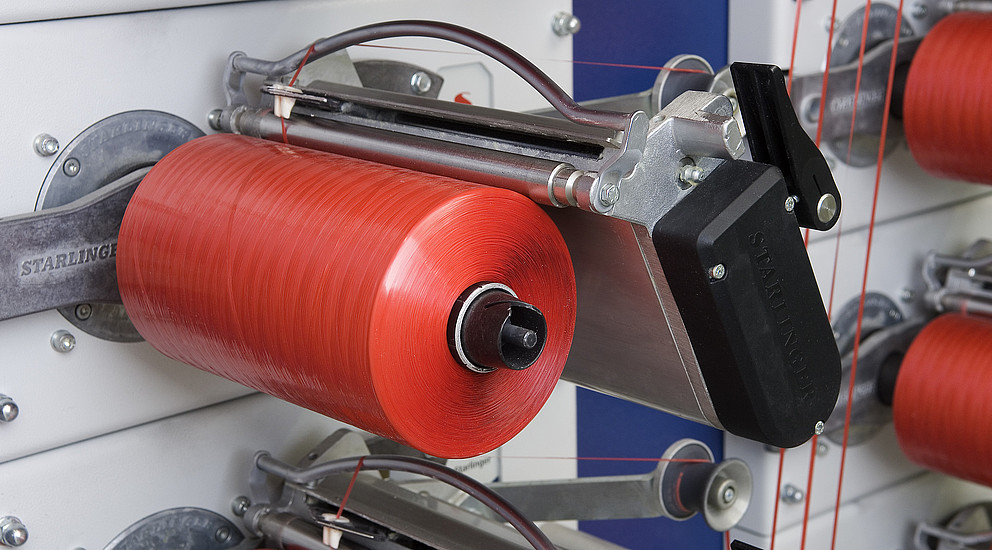
- What are Lightweight Woven Bags? (definition, working logic, and everyday impact)
- The materials of Lightweight Woven Bags (architecture, properties, cost signals)
- What are the features of Lightweight Woven Bags? (from strength‑to‑weight to shelf voice)
- How are Lightweight Woven Bags produced? (inputs, line steps, inspections — with VidePak’s equipment)
- Where do Lightweight Woven Bags excel? (applications and matching logic)
- How VidePak controls and guarantees quality (standards, materials, equipment, layered checks)
- System thinking for Lightweight Woven Bags (decompose, adjust, recombine)
- Specification tables (materials, closures, quality controls)
- Troubleshooting matrix (fast answers when the line is hot)
- Implementation roadmap (from pilot to platform)
- Sustainability and end‑of‑life (clarity without slogans)
- Case snapshots (patterns you can adapt)
- Frequently asked questions (short, practical answers)
- Operator SOP excerpts (consistency at the bagger)
- Design‑of‑experiments notes (venting without dust)
- Total cost of ownership model (why a cheap bag can be expensive)
- Glossary (short, usable definitions)
- 1. The Engineering Edge: Starlinger’s Role in Lightweight Bag Production
- 2. Quality Control: The 18-Point Verification System
- 3. Customization Capabilities: Beyond Weight Reduction
- 4. Production Efficiency: Data-Driven Manufacturing
- 5. FAQs: Addressing Client Concerns
- 6. Sustainability Roadmap: 2025 Targets
- References
A logistics director from a global agricultural supplier recently asked Ray Chiang, CEO of VidePak, “How do your lightweight woven bags maintain durability while reducing shipping costs?” Chiang’s response was definitive: “Through Starlinger’s precision extrusion technology and our 18-point quality control system, we achieve a 98% consistency rate in tensile strength while reducing bag weight by 25% compared to industry averages.” This encapsulates VidePak’s core value proposition: the fusion of cutting-edge manufacturing technology and rigorous quality assurance to deliver lightweight woven bags that redefine efficiency in global logistics.
Founded in 2008, VidePak has grown into a leader in woven bag production, leveraging 30+ years of industry expertise and a fleet of 100+ Starlinger circular looms. With an $80 million annual revenue and operations spanning 50+ countries, the company’s lightweight woven bags exemplify innovation in material science and industrial automation. This report explores how VidePak’s technical mastery and quality protocols address modern packaging demands.
1. The Engineering Edge: Starlinger’s Role in Lightweight Bag Production
Starlinger’s machinery forms the backbone of VidePak’s production, enabling:
- High-speed weaving: 2,200 bags/hour per line, 40% faster than conventional systems.
- Precision extrusion: Virgin PP granules processed at ±0.01mm tolerance, ensuring uniform fiber thickness.
- Energy efficiency: AI-optimized extrusion reduces power consumption by 18% compared to 2020 benchmarks.
Case Study: A Southeast Asian rice exporter reduced transportation costs by $1.5 million annually using VidePak’s 90 g/m² lightweight bags, which maintain 1,200 kg load capacity despite a 30% weight reduction.
2. Quality Control: The 18-Point Verification System
VidePak’s quality assurance program covers every production stage, with key tests including:
2.1 Mechanical Performance Tests
| Test | Standard | VidePak Performance | Industry Average |
|---|---|---|---|
| Tensile Strength | ISO 527-2 | 18 N/mm² (warp/weft) | 12 N/mm² |
| Tear Resistance | ASTM D1004 | 35 N (longitudinal) | 22 N |
| Heat Seal Strength | ASTM F88 | 4.5 N/cm | 3.0 N/cm |
2.2 Environmental Durability
- UV Resistance: ΔE < 1.5 color shift after 2,000 hours of QUV accelerated weathering.
- Aging Tests: 90% tensile retention after 6 months in 85% humidity, 40°C conditions.
2.3 Precision Metrics
- Thickness Tolerance: ±0.02mm via laser scanning (vs. ±0.05mm industry standard).
- Color Consistency: 0.5 ΔE deviation across batches, critical for brand integrity.
3. Customization Capabilities: Beyond Weight Reduction
VidePak’s lightweight bags integrate functional enhancements:
- Anti-static liners: Reduce dust explosion risks in flour and chemical packaging.
- RFID-enabled seams: Enable real-time inventory tracking via IoT systems, reducing stock discrepancies by 45%.
- Eco-optimized designs: 30% post-consumer recycled (PCR) PP blends without compromising load capacity.
Case Study: A European fertilizer company achieved 99.8% shipment accuracy using VidePak’s color-coded bags with QR batch tracking.
4. Production Efficiency: Data-Driven Manufacturing
VidePak’s 16 extrusion lines and 30+ lamination machines deliver:
- Scalability: 12 million bags/month capacity, accommodating bulk orders with 15-day lead times.
- Waste Reduction: 98% material utilization rate through AI-driven cutting algorithms.
Equipment Metrics
| Machine Type | Quantity | Output |
|---|---|---|
| Circular Looms | 100+ | 12,000 m²/day |
| Lamination Lines | 30+ | 5-layer composites |
| Printing Presses | 30+ | 10-color HD printing |
5. FAQs: Addressing Client Concerns
Q: What’s the MOQ for custom designs?
A: 50,000 units for standard prints; 100,000 for multi-color gradients.
Q: How does lightweight design affect recyclability?
A: Our mono-material PP construction ensures 100% recyclability in standard facilities.
Q: Certifications?
A: ISO 9001, BRCGS Packaging, and Oeko-Tex Standard 100.
6. Sustainability Roadmap: 2025 Targets
VidePak commits to:
- 40% PCR-PP integration: Without tensile strength loss using compatibilizer additives.
- Carbon-neutral production: Partnering with renewable energy providers to cut emissions by 50% by 2026.
For insights into advanced lamination techniques, explore our analysis of BOPP laminated bag innovations.
References
- China Packaging Association (2024). Lightweight Packaging Trends Report.
- Journal of Industrial Textiles (2023). “Advances in PP Composite Manufacturing.”
- VidePak Internal Quality Reports (2023–2024).
- International Safe Transit Association (2024). Material Durability Standards.
Learn how precision engineering enhances product reliability in our technical guide to woven bag craftsmanship.
By integrating Starlinger’s engineering excellence with uncompromising quality control, VidePak continues to set industry benchmarks. As global logistics evolve toward sustainability and smart tracking, lightweight woven bags stand as a testament to innovation that balances efficiency with durability.