
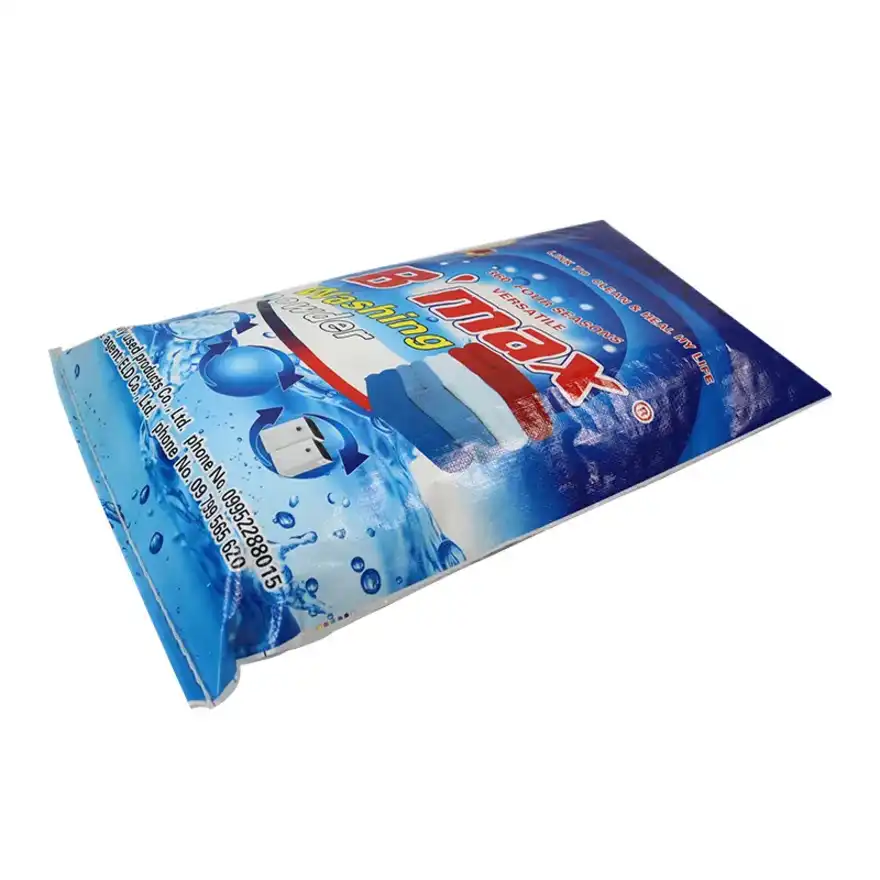
VIDEPAK BOPP Woven Bags: Strong Packaging, Sharp Branding, and Flexible Finishing for Modern Supply Chains
Packaging has to do more than hold a product. It has to survive filling, stacking, transport, storage, handling, and display, while also carrying a brand clearly from the factory floor to the final point of sale. That is the commercial idea behind VIDEPAK BOPP Woven Bags. By combining a woven polypropylene structure with a printable biaxially oriented polypropylene film, these bags bring together two qualities that buyers often need at the same time: industrial strength and high-impact presentation. VIDEPAK’s current product range lists custom sizes, a typical overall thickness of 90–130 microns, grammage of 100–180 GSM, and packaging programs optimized for about 5–40 kg.
For food, animal feed, rice, seeds, fertilizer, chemicals, building materials, and other dry products, ordinary woven packaging can be strong but visually simple. Printed film alone can look attractive but does not provide the same woven load-bearing backbone. VIDEPAK BOPP Woven Bags are designed to close that gap. The woven PP fabric carries the load; the BOPP film creates a smoother printable face, supports vivid graphics, and adds a cleaner outer surface with better moisture-facing performance than an unlaminated woven sack.
PACKAGING IN ONE LINE: VIDEPAK BOPP Woven Bags are built to carry like an industrial sack, present like a retail package, and adapt like a custom-made packaging system. Strength outside the warehouse is important; brand clarity on the shelf is important; choosing the right structure for both is what creates value.
What Makes BOPP Woven Bags Different?
The basic construction of BOPP Woven Bags is easy to understand. Polypropylene resin is converted into tapes, the tapes are woven into fabric, and a printed BOPP film is laminated to that fabric. The woven layer provides tensile strength, puncture resistance, seam support, and dimensional stability. The film layer provides the smoother surface needed for high-quality graphics and can be selected in a matte finish or a glossy finish. In many reverse-print structures, the image is printed on the film before lamination, so the ink sits under the film rather than directly on the exposed bag surface. That helps protect the artwork during normal transport and handling.
This is also where the market term bopp coated woven bags needs a useful explanation. Buyers often use bopp coated woven bags as a broad search term for woven polypropylene bags with a BOPP outer layer. Technically, many of these products are better described as BOPP-laminated woven bags, because a BOPP film is bonded to the PP woven base through a controlled lamination process. The name is less important than the actual layer structure. A serious specification should state the woven fabric weight, film gauge, printing method, lamination, liner requirement, closure, finish, and filling application rather than relying only on the phrase bopp coated woven bags.
Core Structure and Working Parameters
VIDEPAK develops BOPP Woven Bags as configurable packaging rather than as one fixed sack. On the current product page, the standard commercial window includes 90–130 microns in overall thickness, 100–180 GSM in grammage, custom dimensions, and 5–40 kg optimized capacities. The company also lists flat and gusseted forms, fold-over stitched constructions, taped stitching, heat-sealed tape stitching, and block-bottom options. Surface choices include micro-perforation, anti-slip treatment, transparent windows, matte finish, and glossy finish. Printing can reach up to 10 colors depending on the program.
These numbers are design windows, not promises that every product should use the same construction. A 5 kg premium retail pack, a 20 kg animal feed sack, and a 40 kg fertilizer bag do not face the same stresses. For that reason, a capable BOPP Woven Bags Manufacturer should not begin with “Which bag do you want?” It should begin with “What product, filling line, route, storage period, pallet pattern, and market will the bag face?” At VIDEPAK, customization can include mesh, denier, tape width, color, size, closure type, surface treatment, and structural format.
Printing is one of the biggest reasons buyers move from plain woven sacks to BOPP Woven Bags. The laminated film creates a more uniform face for detailed artwork, fine text, product photography, barcodes, instructions, and multi-language information. VIDEPAK lists up to 10-color printing for this product family, while its technical guidance explains that reverse printing can place the ink beneath the BOPP face for greater protection from rubbing. This matters in real distribution: the bag is touched, stacked, dragged, wrapped, unwrapped, and displayed many times before it is opened. A print surface that stays readable helps the package keep doing its marketing and information job throughout that journey.
The film also gives designers more control over visual hierarchy. Brand name, product name, grade, weight, usage instructions, safety information, and origin details can be separated with scale, contrast, and color instead of being forced into a simple one- or two-color layout. With bopp coated woven bags, the package can communicate from several meters away and still remain useful at arm’s length. That is a small design difference with a large commercial effect: the same bag can attract, identify, explain, and protect. For branded products, packaging is not only a container around the product; it is part of the product experience.
BUYER ALERT: Do not judge bopp coated woven bags only by a sample’s appearance. Ask what is under the print: fabric GSM, film layer, lamination quality, seam style, opening, bottom design, airflow strategy, and whether an inner liner is needed. Good graphics attract attention. Good engineering keeps the package working after the attention is won.
VIDEPAK as a BOPP Woven Bags Manufacturer
A professional BOPP Woven Bags Manufacturer is not simply a printer, a weaver, or a bag converter. It has to control the chain from raw material selection through tape extrusion, weaving, printing, lamination, cutting, sewing or sealing, inspection, packing, and shipment. VIDEPAK states that it was founded in 2008, employs more than 500 people, exports to more than 70 countries, operates more than 100 circular looms, 16 extrusion lines, and more than 30 lamination and printing machines, and follows an ISO 9001:2015 quality management framework alongside referenced ASTM, JIS, and EN requirements.
Scale matters because BOPP Woven Bags are repeat-production products. A customer may approve one beautiful sample, but the commercial challenge is to reproduce the same structure, dimensions, print registration, finish, seam quality, and handling behavior across thousands or millions of bags. VIDEPAK’s product page states annual production capacity above 300 million pieces and a standard minimum order quantity of 10,000 pieces per specification. For bulk orders, the same page lists a typical lead time of about 15–25 business days, depending on order size and requirements.
From Resin to Shipment: How the Packaging System Is Built
Polypropylene resin is checked before production.
PP is formed into tapes that will carry the mechanical load.
Tapes become woven fabric with controlled density and weight.
Artwork, film, and woven fabric are combined into the branded composite.
Cutting, gusseting, sewing, sealing, valve, or block-bottom work creates the final bag.
Dimensions, print, strength, surface, seam, and application-related checks are completed before release.
The flow is linear, but the thinking is circular: each stage affects the next. Poor tape consistency can weaken fabric. Poor fabric control can create an uneven lamination surface. Poor lamination can produce curl or delamination. Weak print registration can damage brand value. A closure that does not match the filling system can slow the entire packing line. That is why VIDEPAK’s quality-control description includes incoming raw-material sampling and batch testing such as impact, tensile, and UV-weathering-related checks according to the standards required for the project.
For buyers comparing one BOPP Woven Bags Manufacturer with another, the strongest question is therefore not “What is your lowest bag price?” but “How do you control variation?” Unit price is visible on the purchase order; variation appears later as filling interruptions, weak seams, pallet movement, print complaints, or damaged goods. A well-specified program tries to reduce those hidden costs before the first production run. VIDEPAK also offers existing reference samples and custom mock-up samples so buyers can evaluate material, printing, size, and features before mass production.
Commercially, this manufacturing control also changes how buyers should think about cost. The cheapest bag on a quotation is not always the lowest-cost package after filling and delivery. A stronger lamination bond can reduce surface failures; more stable dimensions can support machine handling; better closure accuracy can reduce rework; more consistent friction can improve pallet behavior; and more durable graphics can reduce appearance complaints. These outcomes depend on the exact product and route, so they should be validated rather than assumed. Still, the purchasing principle is sound: evaluate BOPP Woven Bags by total delivered performance, not only by price per piece. A capable BOPP Woven Bags Manufacturer should help the customer define the variables that matter, then make those variables repeatable.
matte finish or glossy finish: Two Different Brand Languages
The surface of BOPP Woven Bags does more than change shine. It changes how a customer reads the pack. A matte finish produces a lower-glare, more restrained look, while a glossy finish produces a smoother, more reflective surface that can make colors appear especially bright and energetic. VIDEPAK lists both options for its BOPP product family. Independent BOPP-film technical pages also show that matte BOPP films are specifically engineered to provide a matte appearance, while BOPP product families can combine matte and glossy surfaces for different converting needs.
Choose a matte finish when…
You want lower glare, a calm premium appearance, strong text readability under bright retail lighting, or a visual style that feels controlled rather than flashy. For pet food, specialty grains, seed brands, garden products, and premium dry goods, a matte finish can make the bag feel more considered and less reflective. VIDEPAK also describes its matte surface as low-glare and premium in appearance.
Choose a glossy finish when…
You want high shine, vivid visual energy, strong color impact, and an easy-to-notice retail face. A glossy finish works especially well when the artwork uses bright product photography, strong gradients, or large color fields and the brand wants the bag to catch light instead of avoiding it. VIDEPAK describes the glossy option as smooth and highly reflective with vivid printing.
Neither finish is automatically superior. The right finish is the one that matches the brand, the product, and the route. A matte finish can signal restraint; a glossy finish can signal energy. One softens reflection; the other uses reflection. One can make typography feel quieter; the other can make photographic color feel louder. This contrast is useful because BOPP Woven Bags are not only protective packages. They are large printed surfaces that may sit in a warehouse, a distributor, a farm store, a supermarket, or a customer’s home. The surface becomes part of the message.
There is also a practical point. Finish selection should be coordinated with anti-slip needs, pallet pattern, stacking height, and expected handling. VIDEPAK lists anti-slip treatment as a separate functional option intended to improve friction between bags and reduce movement during transport. A brand should not assume that “matte” automatically means “anti-slip,” or that “gloss” automatically means “slippery.” Surface appearance and coefficient-of-friction targets are related design choices, but they should be specified and tested deliberately.
Where bopp coated woven bags Create the Most Value
The strongest case for bopp coated woven bags appears when packaging must perform several jobs at once. In agriculture, seed and rice brands may need toughness, moisture resistance, clear instructions, and strong shelf identity. In animal nutrition, the bag may need to show ingredient information and feeding guidance while surviving repeated handling. In fertilizer and chemical programs, durability, dust control, print clarity, and pallet stability can matter together. In construction and garden products, the bag may have to move through rough distribution and still look clean enough for retail. VIDEPAK lists animal feed, rice, sugar, pulses, seeds, fertilizer, sand, and cement among common applications for its BOPP Woven Bags.
APPLICATION LOGIC: PRODUCT FIRST, BAG SECOND
For free-flowing granules, focus on filling speed, seam integrity, and pallet shape. For fine powders, add attention to sift control, valve or sealing design, and liner needs. For moisture-sensitive goods, define the full barrier structure rather than relying on the outer film alone. For retail-visible products, invest in artwork, matte finish or glossy finish, and features such as a transparent window only when they support the buying decision.
Airflow is another example of why customization matters. A laminated surface closes much of the natural porosity of woven fabric, but some products and filling systems need trapped air to escape quickly. VIDEPAK therefore offers micro-perforation as an option for BOPP Woven Bags. The company describes micro-perforation as a way to release trapped air during filling and settling, helping reduce ballooning and improve pallet stability. This can be especially useful where high filling speed and stable stack shape are both priorities.
Openings and bottoms should also be chosen by process, not habit. VIDEPAK lists sewn open mouth, valve opening, pinch-bottom open mouth, pasted open mouth, and self-opening sack formats, while bottom choices include folded stitched bottoms, block bottoms, pinch-bottom sealed constructions, and hemmed bottoms with tape. A block bottom can give a more box-like, self-standing shape. A valve can support faster automated filling for suitable products. A heat-sealed or pinch-style closure can help reduce sifting for fine materials. In other words, the best BOPP Woven Bags Manufacturer does not merely decorate a sack; it helps connect the sack to the customer’s filling and logistics system.
Transparent windows can add another layer of communication by allowing buyers or operators to see the product. Gussets can increase usable volume and help form a more rectangular pack. Anti-slip treatment can support pallet stability. PE liners can be considered when the packed material or route needs extra moisture or hygiene protection. These features are not ornaments. Each one should solve a specific problem. A useful rule is simple: add a feature because it reduces risk or improves selling power, not because it is available.
This is particularly important for bopp coated woven bags used across export routes. The same product may face hot filling rooms, humid ports, long ocean transit, high warehouse stacks, rough truck vibration, and then bright retail lighting. The package must therefore balance fabric strength, lamination, closure, barrier, airflow, friction, and graphics. The words “heavy duty” are not enough. The specification has to define what heavy duty means for that route.
How to Specify the Right VIDEPAK BOPP Woven Bags
A good purchasing conversation for BOPP Woven Bags can be organized around six questions: What is being packed? How much does each bag hold? How is it filled? What must the package resist? How will it be stacked and transported? What should the customer see and feel? These questions turn a general inquiry into a workable specification. They also make it easier for a BOPP Woven Bags Manufacturer to recommend fabric weight, film, finish, perforation, liner, gusset, opening, bottom, printing, and quality checks with less guesswork.
From a sustainability perspective, structure discipline matters as well. Because the woven base and BOPP film are both polypropylene-based, BOPP Woven Bags can be designed around a largely PP structure, although actual recyclability depends on the full pack, including inks, adhesives, liners, closures, local collection, sorting, and recycling infrastructure. Current CEFLEX guidance for flexible plastic packaging continues to emphasize design choices that support established recycling streams and careful control of all packaging components. For buyers, the practical lesson is to discuss the entire structure with the BOPP Woven Bags Manufacturer, not simply ask whether “PP is recyclable.”
That same discipline applies to quality. VIDEPAK states that raw material is sampled before production and that finished programs can be evaluated with tests linked to impact, tensile strength, UV weather resistance, dimensions, and other required standards. For bopp coated woven bags, buyers should additionally make print registration, lamination bond, surface quality, seam integrity, cut accuracy, and bag flatness part of the agreed control plan when they are important to the application. The aim is not testing for the sake of testing. The aim is to test what can actually fail in use.
WHY VIDEPAK?
Because a reliable BOPP Woven Bags Manufacturer should connect material, machinery, graphics, conversion, testing, and commercial service in one production system. VIDEPAK combines in-house woven-bag capabilities, BOPP lamination and printing capacity, custom sample support, multiple bag constructions, and export experience across more than 70 countries. The result is not one standard answer for every customer; it is a platform for building BOPP Woven Bags around the real product and the real route.
For a buyer seeking premium BOPP Woven Bags, the final decision should be clear but not simplistic. Choose the woven strength your payload needs. Choose the barrier your route needs. Choose the opening your filling line needs. Choose a matte finish when a lower-glare, controlled visual style fits the brand; choose a glossy finish when brightness and shine should lead the visual message. Add micro-perforation, anti-slip treatment, a transparent window, gussets, liners, or special bottoms only when they serve a defined purpose. Then lock those choices into a measurable specification.
That is the value VIDEPAK brings to bopp coated woven bags: not decoration without strength, not strength without communication, but a deliberate balance of both. Strong enough to move. Clear enough to sell. Flexible enough to customize. As a global BOPP Woven Bags Manufacturer, VIDEPAK builds packaging for the full journey—from filling line to pallet, from pallet to market, and from first glance to final use.
- VIDEPAK BOPP Woven Bags: Strong Packaging, Sharp Branding, and Flexible Finishing for Modern Supply Chains
- What Makes BOPP Woven Bags Different?
- VIDEPAK as a BOPP Woven Bags Manufacturer
- matte finish or glossy finish: Two Different Brand Languages
- Where bopp coated woven bags Create the Most Value
- How to Specify the Right VIDEPAK BOPP Woven Bags
- What is BOPP Woven Bags?
- United States — Parameters, Grammage, and Printing Expectations
- European Union — Parameters, Grammage, and Printing Expectations
- China — Parameters, Grammage, and Printing Expectations
- Japan — Parameters, Grammage, and Printing Expectations
- United Kingdom — Parameters, Grammage, and Printing Expectations
- References
What is BOPP Woven Bags?
BOPP Woven Bags are engineered flexible packages in which a reverse-printed Biaxially Oriented Polypropylene (BOPP) film is laminated onto a polypropylene (PP) woven fabric. The top film delivers the billboard—high-definition artwork, gloss or matte aesthetics, moisture protection—while the raffia fabric supplies the backbone—tensile strength, puncture resistance, and dimensional stability. People call them by many names: BOPP laminated PP bags, BOPP coated woven sacks, BOPP–PP raffia bags, BOPP rice bags, BOPP feed bags, even PP woven sacks with BOPP. Different labels, same core architecture.
Features of BOPP Woven Bags
• High strength-to-weight, enabling net fills from 5 kg to 50 kg without resorting to metal clips or multi-material shells.
• Moisture management: the BOPP layer slows vapor ingress; optional micro‑perforation lets gases escape when the product demands it.
• Superb print fidelity (6–10 colors) with rotogravure or HD CI‑flexo; matte/gloss, spot varnish, and metallic accents possible.
• Mono‑material story: where recycling streams allow, BOPP Woven Bags can enter PP mechanical recycling with minimal pre‑sorting.
How BOPP Woven Bags are produced
- Raffia tape extrusion and weaving — PP homopolymer is melted, slit into tapes, orientation-stretched for strength, then woven via circular or flat looms.
- BOPP printing — a 18–35 μm BOPP film is reverse‑printed to protect inks after lamination.
- Lamination — printed film is bonded to the fabric using PP/PE extrusion tie (≈12–25 μm) or solventless PU adhesive for low odor and strong bonds.
- Conversion — tubing, side gusset, cut, stitch or hot‑air weld; add valve tops, easy‑open tapes, or a PE liner if needed.
- Quality control — GSM checks, dimensional control, peel strength, rub/scuff, and line‑side drop/stack tests to certify logistics readiness.
Primary uses of BOPP Woven Bags
Staple foods, rice, flour, sugar, animal feed, pet food, fertilizers, seeds, building materials (e.g., putty, dry mix), industrial chemicals (resins, pigments), and retail display packs that must look premium yet survive rough handling.
Looking for a quick reference? See this resource anchored on BOPP Woven Bags: BOPP Woven Bags.
United States — Parameters, Grammage, and Printing Expectations
Why do U.S. buyers so often ask for robust drop performance and coast‑to‑coast moisture stability? Freight distances are long; climate swings are real; warehouses vary. Thus BOPP Woven Bags in the U.S. tend toward slightly heavier fabrics for 25–50 kg fills and consistent lamination bonds that won’t delaminate in heat.
Localizing BOPP Woven Bags
Professional customized BOPP woven bags with localized production and design solutions.
Check More →BOPP Laminated PP Woven Bags
High-quality BOPP laminated woven bags with glossy surface and excellent printing effect.
Check More →BOPP Laminated PP Woven Bags Solutions
Complete packaging solutions for durable and customizable BOPP woven bags.
Check More →BOPP Woven Bags with Transparent Windows
Premium BOPP woven bags with clear window design for product display and packaging.
Check More →Regulatory framing
Food‑contact layers must satisfy FDA pathways (PP under 21 CFR 177.1520; adhesives under 175.105). Packaging heavy metals are capped by TPCH‑model state rules (total Pb+Cd+Hg+Cr(VI) ≤ 100 ppm). Retailers may ask for letters of guarantee and, when no inner liner is used, migration screening to support risk management. Do these rules dictate exact GSM, color count, or matte vs. gloss? No. But they shape material choices and ink/adhesive selection.
Spec tendencies
• Fabric GSM: ≈70–110 g/m² for 10–25 kg; ≈90–120 g/m² for 25–50 kg.
• BOPP film: ≈20–30 μm; gloss or matte; micro‑perforation for breathability when the fill off‑gasses.
• Printing: 6–10 colors, rotogravure common; HD flexo gaining ground for agile runs.
• Documentation: FDA letters for resin, film, adhesive; TPCH heavy‑metals certificate; ink supplier statements when the food‑facing risk warrants it.
Why it matters
When shipments travel from humid Gulf states to arid deserts or chilled distribution centers, the same BOPP Woven Bags must not scuff, block, or sag. U.S. graphs rarely forgive weak seams; pallet drops expose any shortcuts. A bag that looks beautiful but fails a stack test is a marketing failure disguised as a QC issue.
European Union — Parameters, Grammage, and Printing Expectations
EU buyers bring a document‑first mindset. Not because they love paperwork, but because regulations expect a Declaration of Compliance chain across every plastic layer. BOPP Woven Bags destined for the EU therefore carry robust DoC files, NIAS risk assessments, and ink GMP declarations.
Regulatory framing
EU 10/2011 governs plastics for food contact, supported by Framework 1935/2004 and GMP 2023/2006. The Packaging & Packaging Waste Directive keeps heavy metals in check (≤100 ppm total). While the EU has no ink‑specific law, EuPIA GMP and, frequently, Swiss‑Ordinance alignment are buyer expectations, especially for high‑coverage designs.
Spec tendencies
• Fabric GSM: ≈65–100 g/m² for 10–25 kg foods; ≈80–110 g/m² for premium 25 kg rice/flour.
• BOPP film: ≈18–25 μm; matte top‑coats favored for upscale textures.
• Printing: 7–9 colors; gravure or high‑line CI‑flexo with clean halftones.
• Documentation: Full DoC with SMLs, test simulants, conditions; EuPIA GMP statements; heavy‑metals declaration on the finished pack.
Why it matters
A beautiful bag failing a set‑off test can contaminate pallets; a missing NIAS rationale can stall audits. In the EU, compliance isn’t a gate at the end—it’s the road itself. BOPP Woven Bags that travel this road smoothly tend to repeat orders with fewer debates and lower audit friction.
China — Parameters, Grammage, and Printing Expectations
China mixes speed with scale. Domestic and export buyers often share lines, yet standards differ. The latest GB updates around inks and composites push converters toward cleaner chemistries and clearer DoCs.
Regulatory framing
The GB 4806 family applies: GB 4806.7‑2023 (plastics), GB 4806.13‑2023 (composites), GB 4806.14‑2023 (printing inks), GB 4806.1‑2016 (general). Migration tests follow GB 31604 series. Non‑food sectors (fertilizers, building materials) reference GB/T 8946 and GB/T 8947 for mechanicals and dimensions.
Spec tendencies
• Fabric GSM: ≈70–120 g/m² across 10–50 kg fills.
• BOPP film: ≈20–35 μm; both extrusion and solventless adhesive lamination in use.
• Printing: 6–10 colors; ink sets moving toward GB 4806.14‑2023 compliance (low PAA, heavy‑metal limits).
• Documentation: GB 31604 reports; GB‑anchored DoCs for each layer.
Why it matters
A single plant may run BOPP Woven Bags for domestic chemicals at dawn and export food at noon. Clean separations—ink kitchens, solvent rooms, QC protocols—are how schedules keep pace without compromising audits.
Japan — Parameters, Grammage, and Printing Expectations
Japan prizes precision: in tolerances, in odor, in print. If a spec says 85 g/m², expect 85± tight. If a design calls for deep matte with a gloss logo, register must be exact.
Regulatory framing
The MHLW Positive List (PL) defines admissible substances for resins, additives, and monomers. Ink practice is steered by the JPIMA Negative List. BOPP Woven Bags therefore prioritize PL compliance tables and low‑odor adhesive/ink systems.
Spec tendencies
• Fabric GSM: ≈60–95 g/m² for 5–25 kg premium retail.
• BOPP film: ≈18–25 μm; matte/gloss in register; solventless adhesive is mainstream.
• Printing: up to 10‑color photorealistic gravure; blocking control essential for oily or sticky fills.
• Documentation: PL conformance, migration by Japanese simulants, organoleptic checks.
Why it matters
In a market where consumers handle the bag on the shelf, subtle odor or slight scuff can break the spell. BOPP Woven Bags succeed when design intent meets technical discipline: exact dyne, correct curing windows, disciplined rewinding tension.
United Kingdom — Parameters, Grammage, and Printing Expectations
Post‑Brexit, GB mirrors EU 10/2011 for plastics in practice. Importers carry legal responsibility, so their document requests can seem relentless. Deliver, and life is easier.
Regulatory framing
Retained EU 10/2011 applies, enforced via the Materials and Articles in Contact with Food (England) Regulations. Heavy‑metal thresholds align with EU practice. BOPP Woven Bags for GB need EU‑style DoCs formatted for GB and clear importer roles stated.
Spec tendencies
• Fabric GSM: ≈65–100 g/m² for 10–25 kg; ≈80–110 g/m² for 25 kg premium.
• BOPP film: ≈18–25 μm; solventless adhesive favored.
• Printing: EuPIA‑aligned ink sets; NIAS conversations increasingly common.
• Documentation: GB‑formatted DoCs; importer traceability details.
Why it matters
When a GB retailer queries a migration limit, the fastest answer is a complete DoC pack. The second fastest? A converter who already predicted the question and attached the test report when sending first articles of the BOPP Woven Bags.
References
Framework Regulation (EC) No 1935/2004;
GMP Regulation (EC) No 2023/2006.
U.S. FDA 21 CFR 177.1520 (Olefin Polymers, incl. polypropylene);
21 CFR 175.105 (Adhesives);
21 CFR 178.2010 (Antioxidants and stabilizers for polymers).
GB 4806.1‑2016 (General Safety Requirements),
GB 4806.7‑2023 (Plastics),
GB 4806.13‑2023 (Composite materials),
GB 4806.14‑2023 (Printing inks);
GB 31604 series (migration testing) — China.
MHLW Positive List (Japan) Notification No. 196 of 2020;