
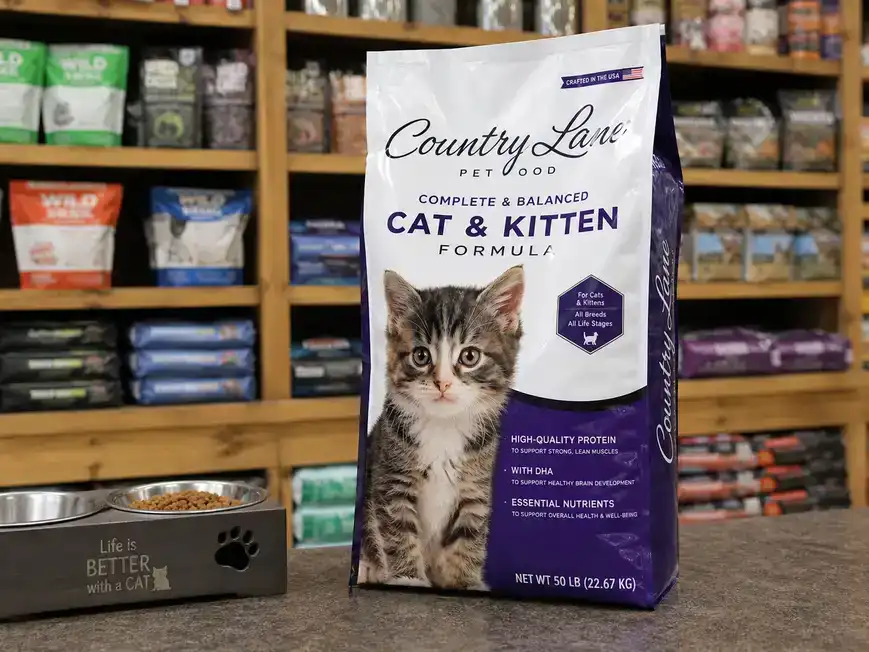
At VIDEPAK, the conversation around laminated woven sacks usually offers two options: Paper laminated PP woven sacks and BOPP laminated PP woven sacks. They share the same structural logic, because woven polypropylene carries the mechanical load, yet they do not serve the market in the same way. One speaks the language of kraft paper, pallet friction, and a natural industrial appearance. The other speaks in sharp graphics, glossy or matte retail presence, and stronger film-face barrier performance. Which one is “better”? That is the wrong question. Which one is better for your product, your filling line, your shelf, and your transport lane? That is the question that actually saves money.
The material logic behind laminated woven sacks
In modern bulk packaging, laminated woven sacks are engineered as layered systems rather than single-material bags. The woven PP layer provides tensile strength, tear resistance, and puncture resistance; the laminate layer bonds dissimilar surfaces and tunes moisture performance; the outside face, whether paper or BOPP film, determines printing behavior, surface feel, and how the bag behaves in warehouses and at the point of sale. Add an inner liner, and the bag can move from “strong enough” to “strong and clean enough” for powders, hygroscopic goods, or food-adjacent products. Packaging is not one thing. It is several things, working at once.
| Layer in the structure | Main job |
|---|---|
| PP Woven fabric | Carries weight, resists tearing, supports stacking |
| Lamination or tie layer | Bonds layers, moderates moisture, supports sealing strategy |
| Outer paper or BOPP face | Defines print quality, appearance, friction, and surface protection |
| Optional inner liner or coating | Improves moisture, dust, grease, or aroma barrier |
This layered logic explains why buyers should not select by appearance alone. A handsome bag that delaminates at the seam is a failure. A very strong bag that cannot hold registration, cannot run on the filling line, or cannot satisfy the brand team is also a failure. Good sacks are not chosen by romance; they are chosen by balance.
Paper laminated PP woven sacks
What they are and how the structure works
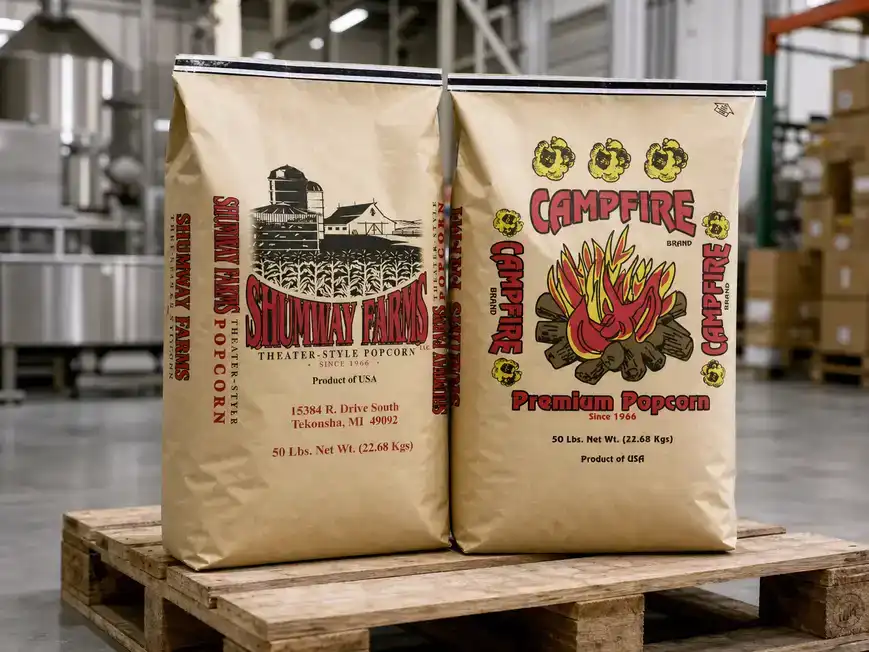
Paper laminated PP woven sacks combine an outer kraft paper layer with an inner woven polypropylene fabric, typically bonded by a polyolefin lamination layer and, when needed, complemented by an inner PE liner. In practical terms, the paper face gives the bag a traditional, paper-first look with good printability and naturally higher surface friction, while the woven PP layer adds the strength and puncture resistance that ordinary multiwall paper bags struggle to match under rough handling. That is why this structure sits in the middle ground so effectively: stronger than plain paper, more tactile and “paper-like” than a pure film-faced sack.
Commercial specifications vary by product density, climate, and filling method, but the ranges below are representative starting points used across industrial references, standards, and supplier specifications. They are starting points, not universal commandments. A 25 kg resin bag, a 25 kg flour bag, and a 25 kg mineral powder bag do not punish the bag in the same way.
| Component | Typical commercial range | Why it matters |
|---|---|---|
| PP tape width | about 2.5–3.2 mm | Affects weave tightness, strength, and sifting behavior |
| PP tape thickness | roughly 0.04–0.12 mm | Influences flexibility, fabric weight, and toughness |
| Woven PP fabric mass | roughly 60–120 gsm, often 75–110 gsm in paper hybrids | Governs carrying strength and puncture resistance |
| Lamination / tie layer | roughly 20–40 μm | Creates bond stability and moderates moisture transfer |
| Kraft paper grammage | commonly 60–120 gsm | Determines print face stiffness, appearance, and handling feel |
| Approximate paper caliper | often around 70–150 μm depending on grade and finish | Thickness rises and falls with fibres, coatings, and calendering |
| Optional PE liner | often 15–30 μm | Used when extra dust, oil, or moisture control is required |
Within the paper family itself, buyers usually choose among three mainstream paper options. Unbleached natural color kraft paper delivers the classic brown appearance associated with industrial and “natural” packaging, and it is often selected when a rugged paper look matters more than white-background brightness. Bleached white color kraft paper makes graphics, fine text, and compliance labeling look cleaner and sharper, which is useful for premium feed, seed, or retail-adjacent dry goods. PE coated Kraft Paper adds a polyethylene-coated surface or ply when the bag needs a stronger moisture or grease barrier than plain sack paper can provide on its own. A paper look, then, does not mean a simple paper structure. Often, it means paper plus engineered reinforcement.
Open-top options
The open-top design decides how the bag meets the filling machine and how it will later be closed or opened by the operator or end user. In bulk packaging, the mouth is not an afterthought; it is the place where productivity, dust control, and user experience collide.
Valve
A valve construction uses a small sleeve or opening, usually at the corner, so the bag can be filled through a spout packer. After filling, the internal flap or sleeve geometry helps the valve self-close, and tuck-in or heat-sealable versions can be specified when extra sift resistance is needed. This style is ideal for powders and granular products that run on automated high-speed filling lines, because it reduces post-fill sealing work and helps keep the filling area cleaner. Fast, controlled, efficient. But it does require compatible valve-filling equipment.
Sewn Open Mouth
Sewn Open Mouth (SOM) bags are factory-closed on one end and left fully open on the other, then sewn shut after filling. This is the familiar, flexible, and cost-effective solution for manual and semi-automatic operations. When the product is coarse, dry, and not especially prone to sifting, SOM is often the simplest answer. Yet simplicity has a trade-off: the needle holes created by sewing can become leakage paths for very fine powders unless the design also includes liners, compounds, or tape-over-sew upgrades. Easy to fill. Easy to understand. Not automatically the cleanest option for powders.
Pinch Bottom Open Mouth
Pinch Bottom Open Mouth (PBOM) bags keep the top open for filling, but rely on a stepped-end or pre-treated top area that is closed with heat-activated adhesive or sealing media after filling. This gives a cleaner, more sift-resistant finish than ordinary sewing and is especially useful for products that need tighter closure logic, better presentation, or more retail-ready geometry. When powder cleanliness matters, PBOM becomes very attractive. When the bag also needs a neat square profile, it becomes more attractive still.
EasyOpen Mouth
EasyOpen Mouth should be understood less as a separate filling architecture and more as a usability upgrade to an open-mouth bag. The concept usually relies on an integrated tear strip or opening strip so the user can open the bag quickly, safely, and cleanly without knives. It sounds like a small feature. It is not. In pet food, feed additives, or store-level handling, an easy-open feature can improve safety, prevent contamination, and create a better end-user impression without changing the fundamental carrying structure of the bag.
Pasted Open Mouth
Pasted Open Mouth (POM) bags are open at the top for filling and factory-pasted at the bottom. In flat-tube versions, this is often described as a satchel-bottom sack; in gusseted self-opening versions, the bottom can expand into a more rectangular footprint. After filling, the top may be closed by gluing, sewing, stapling, tying, or tape, depending on the product and filling method. POM is often chosen when buyers want a more paper-oriented industrial appearance with a factory-made bottom and controlled filling behavior.
Bottom types
The bottom takes the first blow during drop, drag, and pallet vibration. Ask any plant engineer where failures begin, and the bottom will often enter the conversation within seconds.
Double Folded stitched Bottom
The Double Folded stitched Bottom is essentially an economical reinforcement strategy: the bottom edge is folded over, sometimes twice, then sewn with one or two parallel stitch lines. This improves strength and gives a robust base for general-purpose bulk goods. It remains one of the most common constructions because it is scalable and practical. Its weakness is also obvious: stitched seams create perforations. For coarse granules that may be acceptable. For very fine powders, it may not be.
Block Bottom
A Block Bottom creates a rectangular, self-supporting base. This improves pallet cube utilization, stacking stability, and the visual “stand-up” quality of the sack, which matters both in warehouse stacking and on retail shelving. It is especially valuable when the buyer wants a bag that looks controlled and squared rather than rounded and slumped. Shape, here, is not cosmetic. Shape is logistics.
Pinch Bottom
A Pinch Bottom uses folded and bonded closure logic rather than relying mainly on sewing. In paper-based industrial bags, the stepped plies and hot-melt activation create a tighter, more sift-resistant seal, and modern pinch-bottom concepts can also support attractive, box-like presentation. If the product is powdery, sensitive, or premium enough that cleanliness matters, pinch bottom deserves serious consideration.
Double stitched Bottom with PP tapes
A double stitched Bottom with PP tapes upgrades the stitched seam with tape reinforcement, often by laying PP or multilayer sealing tape over the seam to reduce water ingress and leakage through stitch holes. In practice, this is the middle path between low-cost stitching and fully bonded closure: the bag keeps the economics and familiarity of sewing while gaining better seam protection for demanding transport or humid storage. Neither extravagant nor primitive, it is often simply sensible.
Shape options
Flat type
A flat type bag has no gussets. It offers a straightforward tube profile, a large uninterrupted front and back panel for printing, and relatively simple production. This is often the right choice when the product fills evenly and the buyer values simplicity and printable area more than stand-up geometry.
Gusset M-side
A gusset (M-side) construction adds side folds so the bag expands into a boxier filled shape. This increases effective volume, improves stacking behavior, and gives the package more structure during transport and display. For dense powders and products that would otherwise bulge awkwardly, M-side gussets help the bag behave with more discipline.
Back seam
A back seam construction typically uses flat woven fabric that is folded and joined along a longitudinal seam, rather than relying only on circular tubular weaving. This offers converters more dimensional control and can be useful when precise panel width, print registration, or specific bag geometry is required. The seam is visible, yes, but the dimensional freedom can be worth it. A back seam is not a defect. It is a design choice.
BOPP laminated PP woven sacks
What they are, and how the layers are counted
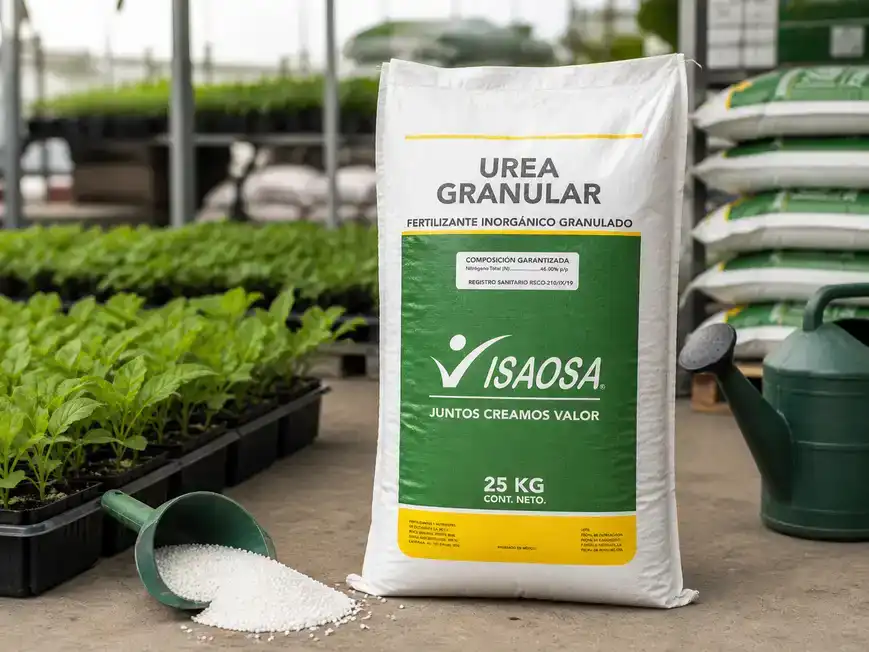
BOPP laminated PP woven sacks combine a woven polypropylene fabric with an outer BOPP face, usually reverse-printed so the graphics sit beneath the outer surface and are better protected from abrasion. Their main commercial promise is clear: strong mechanics from the woven substrate, high-impact branding from the BOPP film, and improved surface durability and moisture resistance from the laminated polymer face. If Paper laminated PP woven sacks feel more natural and tactile, BOPP laminated PP woven sacks feel more polished and more visually aggressive. Not louder for the sake of loudness; sharper for the sake of shelf competition.
Here is one subtle but important buying point: layer counting in the market is not perfectly standardized. Some suppliers count only the visible functional layers. Others count the extrusion tie layer or the internal barrier layer separately. So when a seller says “2-layer” or “3-layer,” the right response is not blind acceptance; it is a request for the actual layer sequence.
| Common market term | What it often means in practice | Role of each layer |
|---|---|---|
| 2-layer structure | Woven PP + BOPP outer face, with bonding resin treated as part of the lamination process rather than a separately advertised layer | PP carries the load; BOPP provides graphics and outer-face protection |
| 3-layer print-ready structure | Woven PP + extrusion/tie lamination + printed BOPP | Woven PP gives strength, tie layer bonds, BOPP delivers print and surface barrier |
| 3-layer barrier-focused structure | Outer BOPP + woven PP + inner PE or PP sealing/barrier layer | Strong outside branding plus an added inside barrier for moisture, dust, or hygiene control |
A typical BOPP-faced structure therefore begins with woven PP fabric, adds a tie or extrusion layer for bonding, and finishes with the BOPP film; where the product sensitivity is higher, an internal liner or coating can be added as well. The number matters less than the function. A “three-layer” bag that solves no real problem is worse than a “two-layer” bag specified intelligently.
BOPP film options
BOPP is not a single visual finish. It is a family of finishes, and each finish changes the commercial message of the bag.
| BOPP option | Typical visual effect | Typical reason to choose it |
|---|---|---|
| Gloss / clear transparent | Bright colors, sharp contrast, premium shine | High-impact branding and vivid shelf presence |
| Matte | Softer, low-glare, more premium or paper-like look | Premium appearance, reduced glare, more understated branding |
| Pearlized Glossy | Pearlescent, opaque, visually rich, typically lower density | Premium look, good light barrier, good yield |
| White opaque / pigmented | Clean bright white base with high opacity | Better graphic contrast, hides background and contents |
| Metallized / specialty | Metallic appearance and stronger barrier potential | Specialty retail packs where appearance and barrier both matter |
Official BOPP film portfolios describe clear films as high-clarity and high-gloss, matte films as elegant and low-glare, pearlized films as low-density with a pearlescent look and improved light barrier, white opaque films as bright and highly printable, and metallized films as higher-barrier specialty solutions with shelf standout. For woven sacks, gloss, matte, and opaque white are the most commonly discussed; metallized structures are possible, but they are far more specialized than mainstream feed, grain, or fertilizer sacks.
Common open-top options
Valve
In BOPP laminated PP woven sacks, the Valve format is especially attractive when filling speed and dust control matter. The bag fills through the sleeve, then self-closes or is further sealed by sonic, heat, or ultrasonic methods depending on the required containment level. When paired with block-bottom geometry, valve bags become highly efficient for automated filling of powdery bulk goods.
Sewn Open Mouth
Sewn Open Mouth (SOM) remains common in BOPP-laminated sacks because many products do not need the higher conversion complexity of pinch or block-bottom solutions. It works well for manual and semi-automatic filling and benefits from the tougher, cleaner outer face created by the BOPP film. Yet the same caution applies here as in paper-faced sacks: stitches are useful, but stitches are also holes. Fine powders do not respect optimism.
Pinch Bottom Open Mouth
PBOM in a BOPP-faced sack is often chosen when the buyer wants a stronger seal, a cleaner retail silhouette, or better sift resistance. Because these sacks already use a protected printed film face, PBOM works particularly well in consumer-facing products such as pet food, rice, sugar, or premium agricultural goods where both appearance and closure quality matter.
EasyOpen Mouth
The EasyOpen Mouth concept is highly relevant in BOPP retail sacks because consumer goods often live or die on convenience as much as on barrier performance. Easy-open strips, tear tapes, or laser-defined opening features enable tool-free opening and reduce the need for knives or scissors. What looks like a small convenience feature is often a brand-protection feature as well: a premium sack should open like a premium sack.
Common bottom types
Double Folded stitched Bottom
The Double Folded stitched Bottom is still the baseline industrial answer in many BOPP sacks. It is cost-effective, familiar, and strong enough for a wide range of dry goods. But because BOPP sacks are often selected for better powder control and better presentation, buyers frequently upgrade the plain seam with tape reinforcement or move to more advanced bottom systems when the product is finer or the branding value is higher.
Block Bottom
A Block Bottom gives BOPP sacks their classic “brick-like” look and their stacking discipline. It helps the bag stand upright, improves pallet efficiency, and aligns naturally with valve filling and retail-facing presentation. When brands want bags to look neat on shelf and stable on pallet, block bottom is often the geometry that reconciles those two goals.
Pinch Bottom
In BOPP sacks, the Pinch Bottom often represents a shift away from needle-dependent sealing toward bonded closure logic. This improves sifting control and creates a neater silhouette, especially for premium dry bulk goods. It also matches well with the attractive, abrasion-protected outer BOPP face and is therefore widely associated with retail-ready dry goods.
Double stitched Bottom with PP tapes
A double stitched Bottom with PP tapes or over-tape seam combines the economy of sewing with additional seam protection. The tape helps bridge the stitch line, reducing water entry and product leakage while preserving familiar bag-making economics. For many buyers, this is the practical compromise: not the cheapest seam, not the most advanced seam, but often the smartest seam.
Shape options
Flat type
A flat type BOPP sack keeps the body simple and maximizes the front and back printable panels. It works well when uninterrupted graphics matter, or when the product fill is uniform enough that no extra side geometry is needed.
Gusset M-side
A gusset (M-side) structure improves volume efficiency and makes the filled sack more box-like, which is valuable for stack stability and shelf presentation. In BOPP sacks, gussets also allow the converter to create a more premium retail profile without giving up the large printable film surfaces that brands want.
Back seam
A back seam design uses flat woven fabric that is tubed and joined with a seam, offering more dimensional flexibility than purely circular tubular constructions. It is a useful option where bag width control, print registration, or specific converting logic matter more than a seamless tube. Seen properly, it is not merely a seam on the back; it is a method of design control.
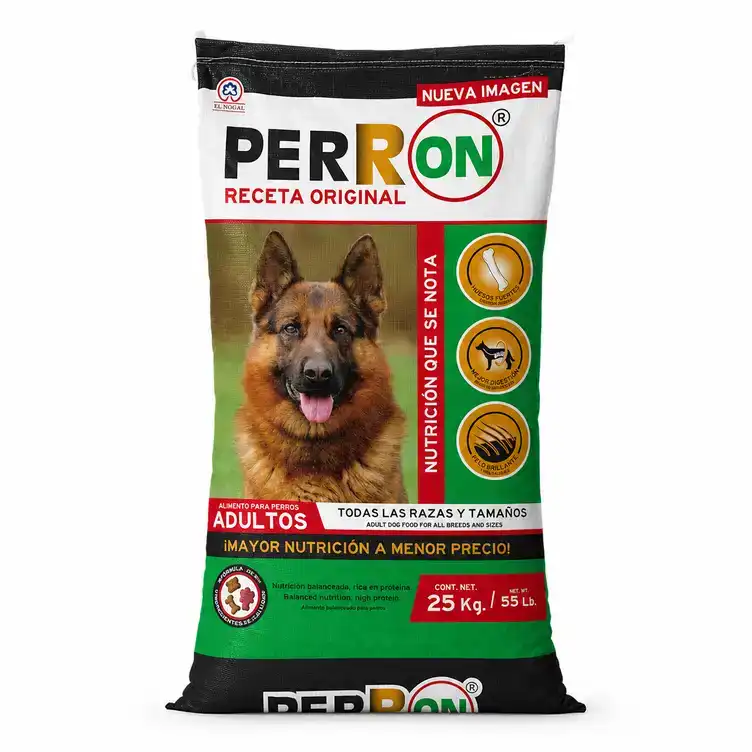
How buyers choose between paper laminated and BOPP laminated PP woven sacks
The comparison below is best treated as a commercial and engineering guide, not a simplistic scorecard. The right bag is rarely the bag with the most features. It is the bag whose features match the risks.
| Decision factor | Paper laminated PP woven sacks | BOPP laminated PP woven sacks |
|---|---|---|
| Visual character | Natural, kraft-forward, more traditional industrial look | Sharper, more vivid, more premium retail look |
| Print style | Strong printability on paper, especially with white grades | Excellent reverse printing and protected graphics |
| Surface friction | Naturally better pallet friction from paper face | Can need matte or anti-slip tuning for stable stacking |
| Moisture / grease barrier | Moderate to high depending on tie layer, PE-coated kraft paper, and liners | Usually stronger outer-face barrier and better scuff resistance |
| Typical applications | Chemicals, masterbatch, minerals, feed, seed, building materials, products wanting a paper-first look | Pet food, rice, sugar, cereals, fertilizer, branded agri goods, dry consumer-facing bulk goods |
| Best geometry pairing | SOM, valve, POM, PBOM, block bottom when paper look matters | SOM, valve, PBOM, block bottom, easy-open retail formats |
| Brand message | Practical, natural, reliable | Premium, colorful, shelf-driven |
From an application angle, Paper laminated PP woven sacks are especially compelling when the buyer wants a kraft paper face, better pallet friction, a more established industrial-paper appearance, or a hybrid structure that feels tougher than multiwall paper while still looking paper-based. They frequently fit chemicals, color masterbatch, minerals, building materials, feed, seed, and other dry bulk goods where ruggedness and handling behavior matter more than glossy branding. BOPP laminated PP woven sacks, by contrast, become the stronger answer when branding is central, when graphics must survive abrasion, or when the product is sold in channels where shelf impact influences purchase. Pet food, rice, sugar, cereals, fertilizer, and packaged agricultural goods are classic fits.
From a feature standpoint, the contrast is crisp. Paper laminated PP woven sacks win on tactile paper feel, natural appearance, and inherent surface friction; BOPP laminated PP woven sacks win on image resolution, surface cleanliness, moisture resistance at the outer face, and more dramatic visual differentiation. Does that mean paper-faced hybrids are old-fashioned? Not at all. In many industrial markets, “less glossy” can mean “more trustworthy.” And does it mean BOPP sacks are only for retail? Also no. Their technical value in scuff resistance, controlled barrier, and high-speed branded supply chains is real.
Cost is where buyers often want a simple answer and rarely get one. As an engineering and sourcing inference from the layer stacks and conversion methods above, Paper laminated PP woven sacks can be commercially attractive when graphic requirements are moderate and the buyer values the paper-facing effect more than photo-grade film printing. But white paper, PE-coated paper, liners, PBOM conversion, and high-end finishes all move the cost upward. BOPP laminated PP woven sacks may cost more than simpler paper-faced hybrids when branding is minimal, yet they often become the more rational investment when a brand would otherwise need high-quality print, better scuff resistance, and stronger moisture-facing performance in a single pack. Material price is only one cost. Product loss, repacking, dusty lines, poor shelf appeal, and pallet instability are costs too.
There is also the question of recyclability and material identity, and here nuance matters. A paper-faced hybrid is not the same thing as an all-paper sack; it is still a mixed-material structure. A BOPP/PP woven sack, on the other hand, can sit within a mono-polypropylene logic more easily at the material-design level, especially in constructions where all functional layers are polypropylene-family materials. Yet practical recyclability still depends on local collection and processing infrastructure, not just on what the specification sheet promises. A buyer who asks only “paper or plastic?” is not asking deeply enough. The better question is: “What recycling path actually exists in the markets where this bag will be used?”
So how should a customer choose? If the priority is a kraft paper appearance, stronger pallet friction, and a paper-first industrial identity, choose Paper laminated PP woven sacks. If the priority is premium brand presentation, vivid print, stronger outer-face moisture and abrasion protection, or a clearly retail-facing package, choose BOPP laminated PP woven sacks. If the product is a fine powder, step up the closure logic regardless of face material: PBOM, reinforced seams, valve designs, liners, or sealed constructions matter more than appearance. If the line is highly automated, start with filling equipment and closure system, then work outward to graphics and shape. Why start with the artwork if the bag cannot run on the filler? Why start with the cheapest seam if the product will find every needle hole? The smart specification is never chosen in the design room alone. It is chosen where sales, quality, logistics, and filling all meet.