
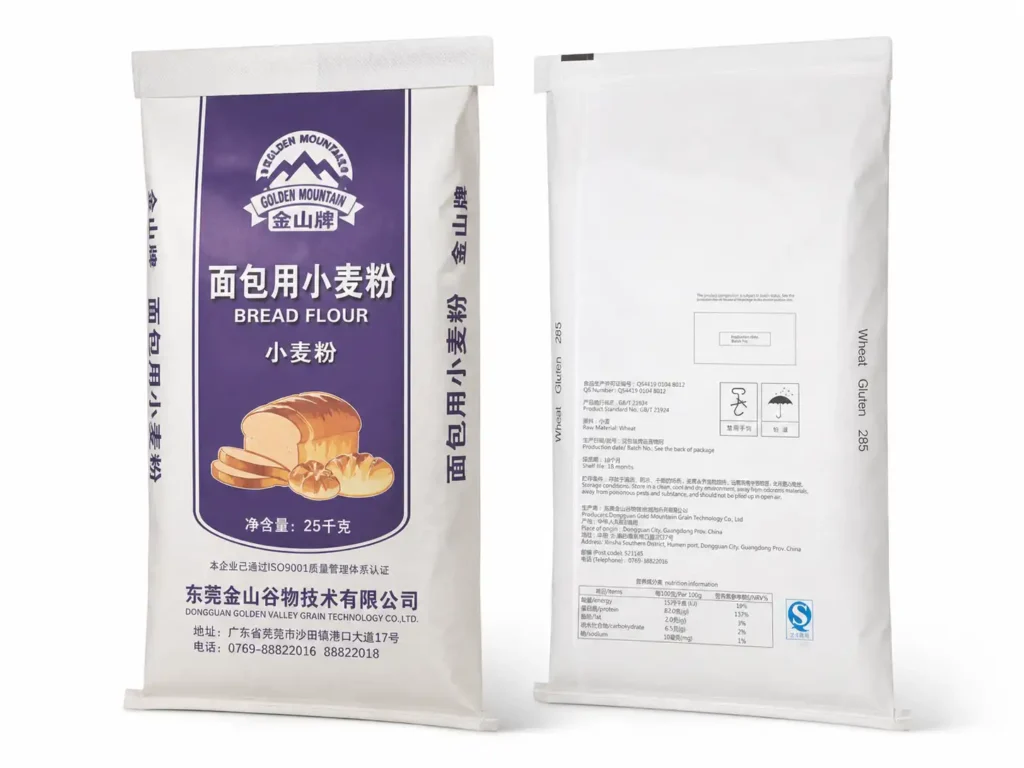
Poly Paper laminated Bags Product Analysis: Strength, Shelf Impact, and Smarter Industrial Packaging
Core market message: a well-designed poly-paper sacks does not force a buyer to choose between a natural paper look and industrial strength. It combines a printable paper face, a load-bearing polypropylene structure, and selected barrier or sealing layers so the package can protect, communicate, and run efficiently. For importers seeking a reliable Poly Paper Bags Supplier, the real question is not “paper or plastic?” It is “which material does each job best?”
What Poly Paper Bags Are and Why the Hybrid Matters
A layered product, not a single material
Poly paper bags are composite industrial sacks that place paper and polymer-based elements in one engineered structure. In the most common format, the outer paper gives a clean, warm, premium surface; a polypropylene tape fabric carries tensile and impact loads; and an extrusion coating, adhesive layer, film, or liner adds bonding, moisture control, grease resistance, or heat-sealing ability. The result is a family of Paper Poly Laminated Bags that can look refined in a retail aisle yet remain tough in a warehouse, truck, container, or filling plant. VIDEPAK’s published range describes capacities commonly extending from about 5 kg to 50 kg, with the final size, layer weight, closure, and print process customized to the packed product and line conditions.
The structural idea is simple, but the design work is not. Paper is strong in print communication and stiffness. Polypropylene tape fabric is strong in tension and tear control. Polyethylene can bond layers, block liquid water, and form sealable surfaces. BOPP film can protect reverse-printed graphics and raise gloss or scuff resistance. Each layer has a role; each gram should earn its place. That is why an experienced Poly Paper Bags Supplier must begin with the customer’s product, filling system, climate, transport route, pallet pattern, and brand goal rather than offering one “standard” sack for every use.
The market problem these bags solve
Traditional multiwall paper sacks can provide excellent print quality and strong shelf appeal, yet humidity, repeated drops, sharp product particles, and rough handling may expose their limits. Plain woven polypropylene sacks are rugged and economical, but some formats can look highly industrial, show the tape texture, or offer less tactile warmth. Heavy polyethylene sacks can deliver sealing and moisture protection, but may not provide the same paper-like stiffness or brand feel. Poly-paper design connects these strengths instead of treating them as rivals. Paper speaks. Polymer protects. The woven core carries.
Product Architecture and Technical Parameters
Layer-by-layer engineering
A useful specification starts from function and moves inward. The paper face should support the required print process, fold without cracking, and keep enough stiffness at the bag mouth. The Woven Fabric should provide the tensile, tear, and puncture reserve needed for filling, dropping, pallet compression, and transport. The bonding layer must hold the paper and polypropylene together through creasing and impact. An inner liner may be added when the product is hygroscopic, oily, dusty, fine, or directly exposed to a food-contact surface. An optional BOPP film can be introduced when reverse printing, high gloss, strong color protection, or added surface durability is more important than a pure paper touch.
VIDEPAK’s published product guidance places paper faces commonly around 80–120 gsm for kraft-paper woven formats, polypropylene textile structures broadly around 70–120 gsm depending on duty, lamination layers in an indicative 16–35 micron-equivalent range, and BOPP films often around 18–25 microns for premium decorated woven sacks. These are design windows, not promises for every project. A 10 kg pet-food bag, a 25 kg rice bag, and a 40 kg building-powder valve sack should not share the same construction merely because their outer dimensions appear similar.
| Component | Indicative design range | Main job | Questions to confirm |
|---|---|---|---|
| Kraft paper face | About 70–120 gsm, project-specific | Print surface, stiffness, touch, opacity | Natural or bleached? Smoothness? Wet-strength need? FSC claim? |
| Woven Fabric core | Often about 70–120 gsm | Load bearing, tear control, puncture resistance | Fill weight? Drop height? Tape denier? Weave density? UV exposure? |
| Bonding or coating layer | Often about 16–35 micron-equivalent | Layer adhesion, liquid-water resistance, fold integrity | Peel target? Heat exposure? Crease pattern? Recycling route? |
| Optional PE liner | Commonly selected by barrier and sealing need | Moisture, grease, hygiene, sift control, sealing | Loose or attached? Food contact? Perforated? Sealable? |
| Optional BOPP film | Often about 18–25 microns | Reverse print, gloss or matte effect, scuff protection | Full bleed? Window? Finish? Anti-slip? Outdoor light? |
Geometry, mouth design, and closure
Paper Laminated PP woven bags can be supplied as open-mouth sacks, side-gusseted sacks, pinch-bottom formats, pasted-bottom designs, or valve sacks. The closure may use sewing with crepe tape, hot-melt systems, heat sealing through a compatible inner layer, or a valve that closes by product pressure and optional sealing. Each option changes speed, dust control, leak risk, opening convenience, and capital needs on the customer’s line. Open-mouth sewing is widely understood and flexible. Heat sealing can improve sift control, but it demands a stable seal layer and controlled temperature, pressure, and dwell time. Valve formats can support fast powder filling, yet valve length, sleeve material, air release, and packer-spout fit must be tested as one system.
Specification rule: never approve bag dimensions by empty-bag measurements alone. Confirm filled shape, bulk density, deaeration, headspace, closure allowance, pallet footprint, and the way the package settles after vibration. A bag can be “within tolerance” and still perform poorly if the geometry does not fit the product.
Performance Analysis from Strength to Shelf
Mechanical strength: light in hand, strong in use
The main structural advantage of Paper Poly Laminated Bags comes from how the polypropylene tapes cross each other in warp and weft directions. A tear that starts in paper can meet a tougher textile network. A point load can spread across more than one tape. A corner impact can be carried by the core rather than by the paper surface alone. This does not make every hybrid sack unbreakable; poor seam design, low tape strength, weak lamination, sharp contents, or insufficient headspace can still create failure. It does, however, give the engineer more tools to control where stress travels.
Performance should be proven on filled packages, not inferred only from raw-material data. ASTM D5276 covers free-fall drop testing of loaded bags and sacks, while ISO 12048 addresses compression and stacking tests for complete filled transport packages. For paper sacks specifically, ISO 7965-1:2024 provides a vertical-impact drop method. These standards support a practical validation sequence: condition samples, fill with actual or well-matched product, test faces, edges, corners, seams, and valves, then inspect not only catastrophic breaks but also leakage, delamination, print damage, and pallet stability.
Moisture, grease, and sift control
Paper responds to humidity; many dry products do too. Flour can cake, salt can attract moisture, fertilizer can harden, pet food can release oils, and fine mineral powders can escape through small paths. The barrier strategy must therefore match the real threat. A bonded outer layer can reduce liquid-water wetting and slow vapor movement, but a high-barrier target usually needs a properly specified film or liner. Water-vapor transmission rate is measured under stated temperature and relative-humidity conditions; ASTM F1249 is one recognized method for flexible barrier materials, and its results should never be compared without matching the test conditions.
Venting creates a deliberate trade-off. Powders often need air to leave quickly during filling and pallet settling, yet every perforation can become a path for moisture or dust. The answer is not “more holes” or “no holes.” It is controlled hole diameter, pattern, location, and count, combined with the right closure and liner design. The best Poly Paper Bags Supplier will trial this balance on the customer’s filling equipment because laboratory barrier data cannot fully predict bag inflation, packer pressure, product dust, or post-fill deaeration.
Print performance and brand value
Packaging is a silent salesperson, but industrial bags must sell while being dragged, stacked, rubbed, and shipped. Paper-side flexographic or offset printing can deliver clean type, strong spot colors, and a natural finish. Reverse-printed BOPP can protect ink beneath the film and support full-bleed photography, high gloss, matte effects, and detailed graphics. VIDEPAK’s published product information describes premium woven constructions using multi-color gravure or high-definition printing, while ISO 12647-6 provides process-control guidance for flexographic printing.
Protect
Use the Woven Fabric core, seam, liner, and closure as one load-and-barrier system.
Promote
Choose paper texture, ink system, color control, finish, and artwork around the buying environment.
Perform
Control friction, flatness, opem mouth, venting, valve fit, and seal behavior for stable line speed.
How VIDEPAK Builds and Controls the Product
An integrated manufacturing flow
VIDEPAK states that it was founded in 2008, employs more than 500 people, exports to more than 70 countries, uses virgin raw materials, and operates high-end extrusion, weaving, printing, laminating, and bag-making equipment. Its home page also states annual capacity of up to 800 million pieces across its wider industrial-bag portfolio. For buyers, the value of scale is not scale alone. The real value is process control: stable tapes, even fabric weight, repeatable coating, accurate registration, square conversion, consistent valves, and traceable lots.
Product, line, route, market
Paper, core, tie, liner
Color, bond, finish
Cut, gusset, valve, close
Test, inspect, trace, release
The workflow begins with resin, paper, film, ink, and additive approval. Polypropylene is melted, extruded into film, slit into tapes, drawn to build strength, and woven to a controlled width and density. Paper and optional printed film are prepared under controlled tension. Lamination bonds the face to the woven core. The web is then cut, gusseted, folded, sewn, pasted, sealed, or fitted with a valve. Finally, samples are checked against agreed specifications and the lot is released with the required documents. Every step affects the next: uneven tapes create uneven fabric; uneven fabric creates uneven coating; uneven coating creates curl; curl creates feeding trouble. Quality is a chain.
Validation that connects laboratory and line
ISO 9001:2015 provides a framework for a quality management system focused on consistent outputs, customer expectations, and continual improvement. VIDEPAK identifies ISO 9001:2015 as part of its quality approach. For food-contact applications, the compliance file must go further: the European Union’s Regulation No 10/2011 sets specific rules for plastic materials and articles intended to contact food; U.S. 21 CFR 177.1520 covers qualifying olefin polymers such as polypropylene; and 21 CFR 176.170 addresses specified components of paper and paperboard in food-contact use. Compliance belongs to the finished intended use, not merely to a generic resin certificate.
| Control point | What to measure | Why it matters | Useful evidence |
|---|---|---|---|
| Incoming materials | Identity, gsm, thickness, melt flow, moisture, compliance status | Prevents hidden variation entering production | Supplier CoA, declaration, incoming inspection |
| Fabric and lamination | Width, gsm, weave density, tensile, coating weight, peel behavior | Controls strength, flatness, and delamination risk | In-process records and retained samples |
| Print and conversion | Color, registration, rub, dimensions, gusset, valve, stitch or seal | Protects brand consistency and machine fit | Approved proof, dimensional report, visual standard |
| Finished package | Drop, stack, leakage, seal strength, WVTR where required | Shows whether the whole pack works as designed | Test report, lot CoA, traceability code |
Application Fit and Buyer Configuration
Different products ask different questions
The strongest marketing claim is not “one bag fits all.” It is “one platform can be tuned many ways.” Rice needs puncture strength, humidity control, clean graphics, and often easy carrying. Flour needs sift control, food-contact confidence, and carefully designed air release. Pet food needs oil resistance, aroma protection, scuff-resistant branding, and a reliable easy open or reclosure concept where required. Fertilizer needs strength, moisture control, chemical compatibility, and clear safety printing. Cement, mortar, tile adhesive, and gypsum powders need fast deaeration, dust control, tough corners, and a valve or closure that works with abrasive fines.
| Application | Main risk | Recommended design focus | Commercial value |
|---|---|---|---|
| Rice, grains, pulses | Puncture, humidity, route damage | Woven Fabric strength, liner option, gusset shape, handle option | Lower damage risk plus premium shelf identity |
| Flour, starch, sugar, salt | Caking, sifting, contamination | Food-contact liner, controlled venting, sift-resistant closure | Cleaner handling and more stable product quality |
| Animal feed and pet food | Oil, aroma, scuff, consumer perception | Barrier liner, premium print, rub protection, easy opening | Technical protection with stronger brand presence |
| Seeds and fertilizer | Moisture, weight, handling, labeling | Tough core, barrier choice, stable seams, clear coding | Reliable logistics and trustworthy information display |
| Cement and dry building mixes | Dust, air trapping, abrasion, fast filling | Valve geometry, micro-perforation, anti-sift design, drop testing | Cleaner filling and fewer damaged packs |
A practical configuration method
Buyers should define the packed product first: bulk density, particle size, sharpness, oil level, moisture sensitivity, temperature, and direct-contact status. Next comes the process: filling speed, spout size, air volume, sewing or sealing method, metal detection, checkweighing, and palletizing. Then comes distribution: bags drop points, stack height, container humidity, route length, outdoor exposure, and retail handling. Finally comes the market face: paper tone, print colors, language versions, date coding, legal marks, finish, carrying features, and opening method.
This sequence prevents a common mistake: starting with artwork and treating engineering as a later step. Artwork matters, but a beautiful bag that leaks is a failure; a strong bag that jams a line is a failure; a low-price bag that arrives scuffed and unreadable is a failure. A capable Poly Paper Bags Supplier connects design, operations, compliance, and marketing from the first brief.
Sustainability, Compliance, and Total Cost
Sustainability without simple slogans
Poly-paper bags is a multi-material system, so environmental claims must be specific. Paper can come from certified sources; polypropylene can provide high strength at relatively low mass; right-weighting can remove unnecessary layers; and stronger packs may reduce product loss. At the same time, paper-plastic combinations can be harder to sort or recycle than a well-designed mono-material package in markets that lack delamination or specialist recovery. The right claim therefore depends on material mass, recycled or certified content, product protection, transport efficiency, local collection, and the real end-of-life route.
FSC chain-of-custody certification is designed for organizations producing or distributing forest-based products and can support verified claims for certified paper and packaging. It does not, by itself, make the full composite bag recyclable or lower-carbon. Likewise, replacing material is not automatically an improvement if the new structure increases breakage or food loss. VIDEPAK’s role as a Poly Paper Bags Supplier should be to offer evidence-led choices: certified kraft where requested, lean layer design, recyclable alternatives where local systems support them, and clear documentation instead of vague green language.
Better sustainability question: not “Does this bag contain paper?” but “Does the complete pack use only the material needed, protect the product through its route, use responsible inputs, and have a credible end-of-life path in the target market?”
Total cost is broader than unit price
The purchase price of Paper Laminated PP woven bags is visible. The hidden costs are scattered: line stops, slow filling, leaking powder, rebagging labor, damaged pallets, claims, rejected print, excess inventory, weak shelf impact, and emergency air freight. A proper total-cost model should calculate cost per accepted, filled, shipped, and saleable unit. This changes the conversation. A slightly higher bag price may be justified when it reduces breakage, raises line speed, improves pallet density, prevents moisture damage, or strengthens retail presentation. The reverse is also true: premium decoration adds no value when the product never reaches a customer-facing channel.
For a fair trial, run the current bag and candidate bag under the same product, operators, line settings, pallet pattern, storage conditions, and transport route. Measure bags per minute, stoppage minutes, waste, seal or seam defects, dust, filled dimensions, pallet lean, transit damage, customer complaints, and visual scuff. Compare facts, not impressions. That is how Paper Poly Laminated Bags move from a marketing idea to an operational business case.
Why VIDEPAK and How to Build a Buyer-Ready Specification
A supplier should reduce uncertainty
VIDEPAK positions itself as a broad industrial-bag manufacturer covering PP woven sacks, laminated woven sacks, valve bags, kraft paper sacks, polyethylene sacks, and FIBC products. That range matters because the best recommendation is sometimes a poly-paper hybrid, sometimes a BOPP laminated woven sack, sometimes a paper valve sack, and sometimes a simpler mono-material design. A supplier with several process routes can compare structures around the buyer’s need rather than forcing every project into one machine platform. VIDEPAK also states that it uses virgin materials, exports to more than 70 countries, and manages production under ISO 9001:2015 principles.
From a marketing perspective, the VIDEPAK promise should be expressed in three linked words: clarity, control, continuity. Clarity means a specification that states materials, dimensions, tolerances, print targets, tests, and compliance documents. Control means repeatable manufacturing and traceable inspection. Continuity means the ability to reproduce the approved bag across repeat orders, artwork changes, seasonal demand, and market expansion. Buyers do not only purchase sacks. They purchase fewer surprises.
The specification checklist
Product & Route
Fill weight, bulk density, particle size, moisture and grease risk, temperature, shelf life, handling points, climate, and transport mode.
Structure
Paper grade and gsm, Woven Fabric gsm and density, bonding layer, liner, optional film, perforation, UV need, and food-contact layer.
Bag Format
Width, length, gusset, tolerances, open mouth or valve, sewing or sealing, handle, easy-open feature, and filled shape.
Print & Brand
Artwork version, colors, Pantone references, proof method, finish, barcode, date-code area, rub target, legal text, and language control.
Line Performance
Packer type, spout, target speed, friction, mouth opening, deaeration, seal window, stitch type, dust limits, and palletizer needs.
Tests & Documents
Drop and stack plan, seal or seam strength, barrier testing, migration evidence, CoA, declaration of compliance, traceability, and approved sample.
Frequently asked buyer questions
Are Paper Poly Laminated Bags waterproof? The answer depends on the construction. A laminated face can resist splashes and reduce wetting, while a suitable liner or film improves vapor and liquid protection. No supplier should use the word “waterproof” without a stated test method, exposure time, closure condition, and pass criterion.
Can Paper Laminated PP woven bags run on an existing sewing line? Many open-mouth formats can, provided dimensions, mouth stiffness, friction, and sewing allowance match the machine. Heat-sealed or pinch-bottom formats may need different equipment, materials, and process settings. A production trial remains essential.
Can these bags be used for food? They can be designed for food applications, but the entire intended food-contact system must be reviewed. Resin, additives, ink set-off risk, liner, paper components, adhesives, manufacturing hygiene, migration conditions, and declarations all matter. EU Regulation No 10/2011 and relevant U.S. FDA provisions provide key legal frameworks for plastic and paper components, while BRCGS Packaging Materials Issue 7 provides a certification framework for safe packaging-material production sites.
What should be approved before mass production? Approve the written specification, material stack, dimensions and tolerances, print proof, color standard, filled mock-up, closure, test protocol, compliance list, packing method, and a signed production sample. For a new product or line, approve a filled trial rather than only an empty bag.
Final assessment
VIDEPAK’s poly-paper platform is most valuable where customers need several outcomes at once: the natural communication of paper, the structural reserve of a polypropylene textile core, the barrier choice of films or liners, and the process fit of a custom closure. The advantage is not a single feature. It is the combination—strong but presentable, technical but easy to understand, customized but controlled. For buyers evaluating a long-term Poly Paper Bags Supplier, VIDEPAK offers a product path built around application engineering, scalable manufacturing, documented quality, and market-ready design.
- Poly Paper laminated Bags Product Analysis: Strength, Shelf Impact, and Smarter Industrial Packaging
- What Poly Paper Bags Are and Why the Hybrid Matters
- Product Architecture and Technical Parameters
- Performance Analysis from Strength to Shelf
- How VIDEPAK Builds and Controls the Product
- Application Fit and Buyer Configuration
- Sustainability, Compliance, and Total Cost
- Why VIDEPAK and How to Build a Buyer-Ready Specification
- References
What is Poly-paper bags
Poly-paper Bags are hybrid packaging structures that fuse a polymer layer—often oriented polypropylene (BOPP) or polyethylene (PE)—with kraft paper. This marriage of materials yields a sack that looks like paper, behaves like a technical laminate, and survives like woven plastic. In industry catalogues you may also see the aliases paper–poly laminated bags, kraft paper laminated PP woven sacks, or BOPP‑laminated paper woven bags. The common thread is simple: paper on the outside for print and feel, polymer and woven reinforcement where strength, barrier, and sealing are needed.
The features of Poly-paper bags
At a glance, Poly-paper Bags deliver high tensile and tear resistance, better scuff hold‑up, humidity resilience, and show‑ready graphics—full‑bleed, photo‑quality, the kind that wins shelf space. They run on both form‑fill‑seal and conventional sewing lines, and they can be built as open‑mouth or valve designs, with or without inner liners, from 5 to 50 kg net contents.
Manufacturing process of Poly-paper bags
A typical stack is: woven PP fabric (e.g., 70–120 g/m²) for backbone strength → an extrusion‑laminated PE tie layer (≈15–30 g/m²) to bond layers and block moisture → a printable outer (BOPP film or kraft paper, e.g., 60–90 g/m²) to deliver the brand canvas and surface stiffness. Constructions vary—paper//PE//PP‑woven, or BOPP//PP‑woven without paper—depending on print ambition, barrier targets, and machinery on the filling line.
Where they are used and why that matters. Poly-paper Bags carry dry foods (rice, flour, pulses, sugar), animal feeds and pet foods, fertilizers and seeds, cement and tile adhesives, gypsum, resins, charcoal, and assorted bulk retail. When a brand needs two things at once—rugged logistics and premium shelf appeal—this hybrid earns its keep.
Looking for a quick reference page to share with your team? See this internal anchor that points to a related category overview: Poly-paper Bags.
Kraft Paper Woven Bags Producer
Professional manufacturer of poly-paper composite bags with paper and PP woven lamination for strong packaging.
Check More →Kraft Paper Laminated Woven Bags
Premium poly-paper bags combining kraft paper and PP woven material for durability and barrier performance.
Check More →Multiwall Paper Bags with PE Liner
High-performance poly-paper composite bags with multi-ply paper and PE lining for moisture-proof packaging.
Check More →PP Woven Fabric Bags Analysis
Complete analysis of poly-paper composite materials and woven bags for industrial and food bulk packaging.
Check More →References
- Smith, J. (2023). “Hybrid Laminates in Packaging: A Review of Polymer-Paper Composites.” Journal of Packaging Science, 45(2), 123–139.
- Doe, A., & Lee, K. (2024). “Moisture Barrier Performance of Laminated Packaging Materials.” International Journal of Food Packaging, 12(1), 45–67.
- Brown, R. (2022). “Color Management and Print Quality in Rotogravure Systems.” Graphic Arts Monthly, 18(4), 78–89.
- O’Neil, S., et al. (2021). “Sustainable Sourcing: FSC/PEFC in Paper Packaging.” Environmental Packaging Journal, 9(3), 201–215.
- Miller, T., & Wang, L. (2025). “Total Cost of Ownership Models in Industrial Packaging.” Logistics Insights, 7(6), 90–104.
- Original Article: Poly‑Paper Bags: A Systems-Level Product Introduction for Buyers and Engineers. Canvas ID: 689193491e588191a81dc17f4055dbbe
- This Revision: Poly-paper Bags: Structured Problem-Solution Copy with Subtitles. Canvas ID: 68919xxxxxxx