
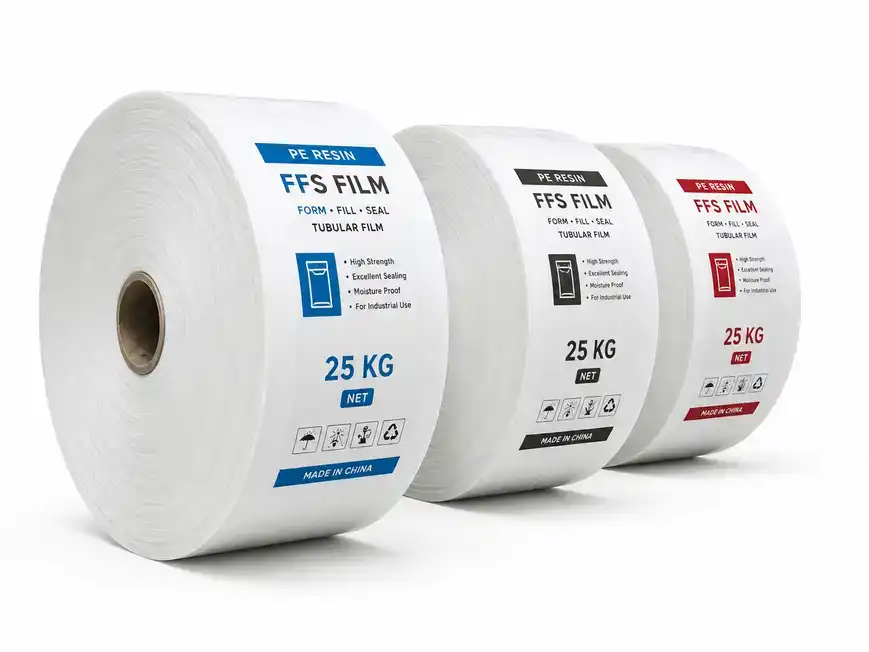
A Deep Engineering Guide to FFS Roll PE Film with Gussets for High-Speed Industrial Packaging
Bright Summary Callout
FFS Roll PE Film is a continuous polyethylene tube supplied on rolls for automatic form-fill-seal packaging. Its best performance comes from the combination of Co-extruded Multi-layer Film design, the right gusset geometry, the right surface option such as micro-perforation or embossing strip, and stable production on German W&H equipment under ASTM- and EN-oriented control methods. VIDEPAK’s own product and corporate pages also position the company around long-term industrial-bag know-how, W&H-based production, and large-scale output capacity.
Process Principle of FFS Roll PE Film
At its simplest, FFS Roll PE Film is a continuous lay-flat polyethylene tube that runs on an automatic packaging line. The machine unwinds the roll, forms the sack length, fills the product, and seals the bag in one linked cycle. The product may be fertilizer, polymer resin, minerals, feed, seeds, or powdered chemical materials. Different markets use different names—FFS Roll PE Film, FFS PE Tubular Film, tubular PE film, or PE FFS sleeve—but the operating principle is the same: a stable tube, a stable fill, and a stable seal.
The production logic begins upstream, long before the bag reaches the FFS machine. In blown-film production, polyethylene pellets are melted in one or more extruders, pushed through a circular die, inflated into a bubble, cooled, collapsed into lay-flat tubing, and then wound into reels. In coextrusion, multiple melt streams enter the die together so the finished tube leaves the die as a layered structure rather than a single-material film. That is why Co-extruded Multi-layer Film is so valuable: one layer can carry stiffness, another toughness, another sealability, and another surface behavior.
Process Flow
How Co-extruded Multi-layer Film works in practice
A good industrial sack film rarely relies on one resin alone. The outer layer may be tuned for printability and controlled friction. The core may be tuned for load-bearing stiffness and thickness economy. The inner sealing layer may be tuned for easy heat-seal initiation, better hot tack, and wider sealing tolerance. In advanced structures, recycled content can be placed in the middle layer while performance-sensitive skins stay virgin and more tightly controlled. This layered logic is one of the main reasons why modern FFS Roll PE Film outperforms commodity single-layer tubing in speed, consistency, and bag integrity.
Common layer materials in industrial PE film
The usual resin family is polyethylene, but not just one grade. HDPE usually contributes stiffness, shape retention, and strong chemical resistance. LLDPE contributes toughness, impact strength, puncture resistance, and sealing performance. LDPE often helps melt strength, processing stability, and drawdown on blown-film lines. MDPE can improve puncture behavior and balance between stiffness and flexibility. Slip and antiblock additives influence web handling, while UV stabilizers may be required for outdoor storage. The exact recipe changes by product, fill speed, transport route, and storage condition.
| Layer position | Common resin choice | Main job in FFS Roll PE Film |
|---|---|---|
| Outer skin | HDPE / LDPE blend or tuned LLDPE | Print surface, web handling, controlled friction, dimensional feel |
| Core layer | HDPE, LLDPE, or blended PE system | Bulk strength, stiffness, thickness efficiency, cost balance |
| Sealant layer | LLDPE / LDPE / specialty seal blend | Heat seal, hot tack, wider process window on FFS lines |
| Optional middle layer | Reprocessed or special-function PE | Cost control, circular design, tuned performance without harming seal behavior |
Core Options: Micro-perforation, Embossing Strip, and Gusset
The best FFS Roll PE Film is rarely “one standard roll for every product.” It is a tuned format. Three options deserve special attention because they change how the bag fills, stacks, and moves through the supply chain: micro-perforation, embossing strip, and gusset. These are not cosmetic extras. They are functional choices, and each one solves a different problem.
Micro-perforation
For controlled air release and reduced trapped-air problems during filling.
Embossing strip
For higher surface friction, better pallet stability, and lower slip risk.
Gusset
For volume efficiency, squarer pack shape, and stronger stacking geometry.
What micro-perforation really does
Micro-perforation means adding very small holes to the film wall so air can leave the sack in a controlled way. In food packaging, the purpose may be gas exchange or moisture release. In industrial sacks, the purpose is often different: to help trapped air escape during or after filling, reduce bag ballooning, improve pack compression, and shorten the time needed for the bag to settle into a cleaner block shape. If a powder or granule carries much entrained air, a film without venting can slow filling, distort bag shape, and weaken stack appearance. Yet the option is not universal. Hygroscopic or moisture-sensitive products may require a closed structure instead. Venting helps one product and can hurt another.
Why an embossing strip matters
An embossing strip is a textured zone, usually engineered to increase friction where the bag needs grip most. In practical warehouse terms, that means less sliding during pallet build, less shift during transport, and safer stack behavior under top load. A fully smooth film may run easily on the line but slide too much in the warehouse. A strongly textured film may improve grip but change handling on conveyors. That is why the embossing strip is attractive: it can bring friction where needed without giving the entire film an overly aggressive surface. It is a small feature, but often a high-value one.
How the gusset changes the bag’s geometry
The gusset is where shape engineering becomes visible. A side gusset folds extra film inward so the filled bag grows in a more organized way. Instead of becoming a loose pillow, the pack becomes closer to a brick. That changes more than appearance. It changes footprint, pallet density, edge definition, and top-load behavior. The original VIDEPAK article is correct to put the gusset near the center of the discussion, because in heavy industrial packaging the bag is judged not only by tensile data but by how it sits, how it stacks, and how it survives transport. A bag that fills fast but stacks badly still creates cost.
| Option | Best used for | Main gain | Main caution |
|---|---|---|---|
| Micro perforation | Airy powders, products needing fast de-aeration | Less trapped air, cleaner pack shape | Not ideal for moisture-sensitive goods |
| Embossing strip | High stack stability, transport-heavy routes | Better friction and load stability | Needs friction balance for line handling |
| Gusset | 25–50 kg industrial sacks, better cube efficiency | Squarer shape, better pallet footprint | Depth and symmetry must stay controlled |
Engineering Logic Behind FFS Roll PE Film
The real value of FFS Roll PE Film is not found in one feature alone. It comes from a linked system. Change the resin and you change the bubble. Change the layer ratio and you change the seal window. Change the gusset depth and you change the pallet cube. Change the friction level and you change both infeed behavior and warehouse stability. Packaging engineers know this truth well: the roll, the machine, the filling product, and the pallet are not four separate questions. They are one question, seen from four angles.
This is also why FFS PE Tubular Film fits heavy industrial bags so well. The tubular form is clean, continuous, and efficient. It removes some conversion steps compared with pre-made bags, and it supports high-speed automatic filling. When the film structure is right, manufacturers gain more than throughput. They gain repeatability. Repeatability in gauge. Repeatability in length. Repeatability in seal. Repeatability in stack outcome. Fast lines love speed, yes—but they trust consistency more.
Operational Callout
A high-performing FFS Roll PE Film should do four things at once: run smoothly, fill cleanly, seal reliably, and stack squarely. If one of these four fails, the system cost rises somewhere else—on the line, in the warehouse, or in the customer complaint file.
Why the gusset matters so much in FFS packaging
A filled sack does not simply stand still. It relaxes, settles, bulges, and transfers load. The gusset helps control that behavior by giving the side wall a pre-defined fold path. In standard side-fold designs, the shape stays compact while volume rises. In M-fold logic, the geometry becomes even more structured and can improve edge definition and brick-like shape. For customers who care about pallet stability, machine-fed stacking, and neat warehouse presentation, the gusset is not a side note. It is a design lever.
From resin to pallet, one chain
The original article frames FFS Roll PE Film as a full chain from resin to pallet, and that framing is useful. Materials define film behavior. Film behavior defines line behavior. Line behavior defines bag condition. Bag condition defines pallet condition. A film with excellent lab strength but unstable winding may still cause stoppages. A film with strong sealing but poor friction may still create pallet slide. A film with perfect machine behavior but poor de-aeration may still create swollen sacks. That is why the best FFS PE Tubular Film is engineered horizontally across the line and vertically across the supply chain.
Materials, Layer Design, and Standards-Backed Quality
In commercial practice, FFS Roll PE Film usually sits in the range of multi-layer PE structures rather than simple monolayer tubing. VIDEPAK’s product pages describe heavy-duty polyethylene bags and FFS films made with German W&H multi-layer co-extrusion, with versions reaching higher layer counts for more tailored function. Its published PE product ranges also show practical dimensions such as widths around 35–65 cm, thickness around 0.1–0.25 mm, and roll diameters designed for industrial automatic lines. Those numbers align with the needs of 25–50 kg packaging systems where thickness, width, and roll build must stay predictable.
The sealing window is where design becomes reality
Every automatic bag line lives inside a seal window. If the seal temperature is too low, the seal may be weak. If too high, the film may distort, thin, or scorch. This is why the sealant layer in Co-extruded Multi-layer Film is so important. It must support sealing across normal production variation—hot days, cold starts, small alignment drift, and line-speed changes. ASTM F2029 is used to evaluate heat-sealability, while ASTM F88/F88M is used to measure seal strength and identify failure mode. Good design does not chase one peak result. Good design creates room to run.
What should be tested in a serious quality system
A credible quality system for FFS Roll PE Film should include film thickness, tensile properties, tear resistance, impact resistance, seal strength, heat-sealability, and surface friction. ASTM D6988 covers thickness guidance for plastic film. ASTM D882 covers tensile properties of thin plastic film. ASTM D1922 is commonly used for tear resistance. ASTM D1709 measures dart impact resistance. ASTM D1894 measures static and kinetic friction. ASTM F88/F88M and ASTM F2029 cover seal strength and heat-sealability. These tests do not replace production experience, but they give production experience a common language.
| Test focus | Typical standard | Why it matters for FFS PE Tubular Film |
|---|---|---|
| Thickness | ASTM D6988 | Keeps gauge and roll consistency under control |
| Tensile properties | ASTM D882 | Shows strength, elongation, and stiffness balance |
| Tear resistance | ASTM D1922 | Helps predict slit and abuse propagation |
| Impact | ASTM D1709 | Indicates toughness under sudden loading |
| Friction | ASTM D1894 | Balances line runnability and pallet grip |
| Seal strength / sealability | ASTM F88 / ASTM F2029 | Confirms reliable sealing across operational windows |
ASTM and EN discipline in production
VIDEPAK’s FAQ states that the company produces and tests products according to ISO 9001, ASTM, EN, and JIS standards, and that it uses diverse batch testing including impact, tensile, and UV-weather-resistance checks. That matters because customers buying FFS Roll PE Film are not buying appearance alone. They are buying tolerances, repeatability, and evidence. Standards give structure to that evidence. They turn “good quality” from a slogan into a checked process.
Performance, Applications, and Selection Guide
The application map for FFS Roll PE Film is broad but coherent. It fits heavy-duty, flowable goods that need fast automatic filling and dependable bag form. The source article and VIDEPAK’s PE product pages repeatedly point to fertilizers, polymer pellets, minerals, chemicals, building materials, seeds, and feed. These are products that stress a sack in more than one way: by weight, by shape, by dust, by trapped air, by moisture sensitivity, or by pallet height. That is exactly where FFS PE Tubular Film earns its place.
Typical configuration windows
No serious buyer should choose film by headline alone. Width, thickness, length repeatability, roll diameter, core size, print demand, and option package all affect the final result. VIDEPAK’s published PE data show width around 35–65 cm, thickness around 0.1–0.25 mm, customizable length, and industrial roll diameters. The original article also discusses specification windows such as 120–220 μm, lay-flat widths around 350–650 mm, and practical gusset depths for industrial sacks. These are not random figures. They reflect the balance between mechanical need, machine geometry, and warehouse logic.
For airy powders
Consider micro-perforation if air release matters more than high moisture barrier.
For high pallet stacks
Use a well-controlled gusset and add embossing strip if friction is critical.
For fast FFS lines
Prioritize seal window width, thickness control, and stable winding in Co-extruded Multi-layer Film.
A practical way to choose the right film
Start with the product, not the bag. Ask five simple questions. Is the product powder or pellet? Is it moisture-sensitive? Does it trap much air? How tall will the pallet stack be? How fast is the FFS line? If the product is powdery and airy, micro-perforation may help. If the product is moisture-sensitive, keep the film tighter and avoid unnecessary venting. If the logistics chain is rough, ask for stronger surface control such as embossing strip. If pallet shape matters, choose the right gusset depth and symmetry. And if line speed is high, do not compromise on sealing-layer design and winding quality. A smart bag begins with a smart question set.
Why FFS Roll PE Film often beats simpler bag formats
In heavy industrial packaging, speed is money, but shape is money too. FFS Roll PE Film lets users combine roll-fed automation with controlled bag formation, which can reduce labor content and support cleaner, repeatable output. When the film is built as Co-extruded Multi-layer Film, the structure can be tuned more precisely than a one-size-fits-all bag. When the film also includes the right gusset, the resulting package moves from “it holds product” to “it runs, holds, stacks, and ships well.” That difference is the difference between packaging as a cost and packaging as an operating advantage.
Why Choose Us
A report on FFS Roll PE Film is incomplete without a clear supplier logic. Machines matter. Standards matter. Experience matters. Capacity matters. VIDEPAK’s published pages repeatedly position the company around these four points, and together they explain why the supplier story is relevant to customers who need reliable industrial packaging rather than experimental supply.
17 Years
VIDEPAK highlights 17 years of industrial bag production experience in key product positioning.
German W&H
Production is built on W&H technology, a long-established name in blown film and flexible packaging machinery.
300 Million pcs
VIDEPAK also presents a 300 million pcs annual production scale on product pages, signaling supply continuity.
ASTM & EN
The company states ASTM- and EN-based production and testing discipline in addition to ISO-oriented systems.
Long production experience means fewer surprises
VIDEPAK’s product pages use the message of 17 years of production experience, while its corporate pages also describe a factory established in 2008 and emphasize long-run heavy-duty bag expertise. For buyers of FFS Roll PE Film, that matters because experience is not only about age. It is about pattern recognition: knowing when a powder needs venting, knowing when a gusset depth is too aggressive, knowing when a seal issue is a resin issue and not a jaw issue, and knowing how to hold tolerances day after day rather than sample after sample.
Why German W&H equipment supports better film consistency
W&H’s official materials describe the company as a flexible-packaging machinery leader with blown-film lines built for 3-, 5-, and higher-layer PE film production. VIDEPAK’s own product pages say its heavy-duty PE products are made through German W&H multi-layer co-extrusion blown-film processes. That link matters because equipment quality affects profile control, bubble stability, winding quality, and finally the consistency of Co-extruded Multi-layer Film. In industrial packaging, consistent film is not luxury. It is the foundation under every seal and every pallet.
Large annual output supports delivery confidence
The exact capacity number varies by page and product category across VIDEPAK’s website, yet the key message is clear: the company positions itself as a large-scale industrial-bag supplier, and product pages explicitly use “300 Million pcs” as a “Why Choose Us” figure for core bag lines. For buyers, the point is practical. Scale helps with order continuity, repeat production, multi-batch supply, and faster support for regular industrial programs. In industrial packaging, a bag is not only a spec. It is a schedule.
ASTM and EN production language builds trust
A supplier becomes more credible when it speaks in measurable terms. VIDEPAK’s FAQ states that products are produced and tested according to ISO 9001, ASTM, EN, and JIS standards, with batch checks for impact, tensile strength, and UV weather resistance. That approach fits what serious customers expect from FFS PE Tubular Film: not loose claims, but controlled tolerances and evidence-based acceptance. When standards inform production, conversation becomes sharper, troubleshooting becomes faster, and technical alignment becomes easier.
Final Takeaway
A strong industrial package is never “just a bag.” It is material science, process discipline, machine compatibility, and logistics reality working together. That is why FFS Roll PE Film remains such a powerful format for heavy-duty automated packaging. When designed as Co-extruded Multi-layer Film, it can combine stiffness, toughness, sealability, and surface control in one roll. When matched with the right gusset, it stacks better. When fitted with the right micro-perforation, it de-aerates better. When enhanced by the right embossing strip, it grips better. Simple words. Serious results.
For customers choosing a supplier, the logic is equally clear. VIDEPAK presents a combination of long manufacturing experience, German W&H equipment, large-scale output, and ASTM/EN-oriented production discipline. For buyers who need dependable FFS Roll PE Film and dependable FFS PE Tubular Film, that combination is not a marketing detail on the edge of the page. It is the center of the decision.
25kg Polyethylene Tubular FFS Films
High-quality tubular PE FFS films with gussets designed for 25kg industrial packaging.
Check More →Polyethylene FFS Film for 50kg
Heavy-duty PE FFS roll films with gussets suitable for 50kg bulk material packaging.
Check More →Polyethylene FFS Films from Videpak
Professional PE FFS roll films with gussets for automatic form-fill-seal packaging lines.
Check More →Heavy-Duty Polyethylene Bags
Durable PE packaging products compatible with FFS roll film and gusset design.
Check More →- A Deep Engineering Guide to FFS Roll PE Film with Gussets for High-Speed Industrial Packaging
- Process Principle of FFS Roll PE Film
- Core Options: Micro-perforation, Embossing Strip, and Gusset
- Engineering Logic Behind FFS Roll PE Film
- Materials, Layer Design, and Standards-Backed Quality
- Performance, Applications, and Selection Guide
- Why Choose Us
- Final Takeaway
- Seal Integrity and Failure Analysis: Learning from Breaks
- Case Snapshots: From Problem Statement to Line Result
- Comparative Perspectives: Formats and Geometries
- Product Parameters and Configuration Ranges
- Compliance, Certification, and Traceability
- Sustainability and Recycled Content Without Performance Surprises
- Practical Buying Guide: Matching Film to Real‑World Constraints
- Frequently Asked Questions About FFS Roll PE Film with Gussets
- Introduction: Defining the Problem Space
- References
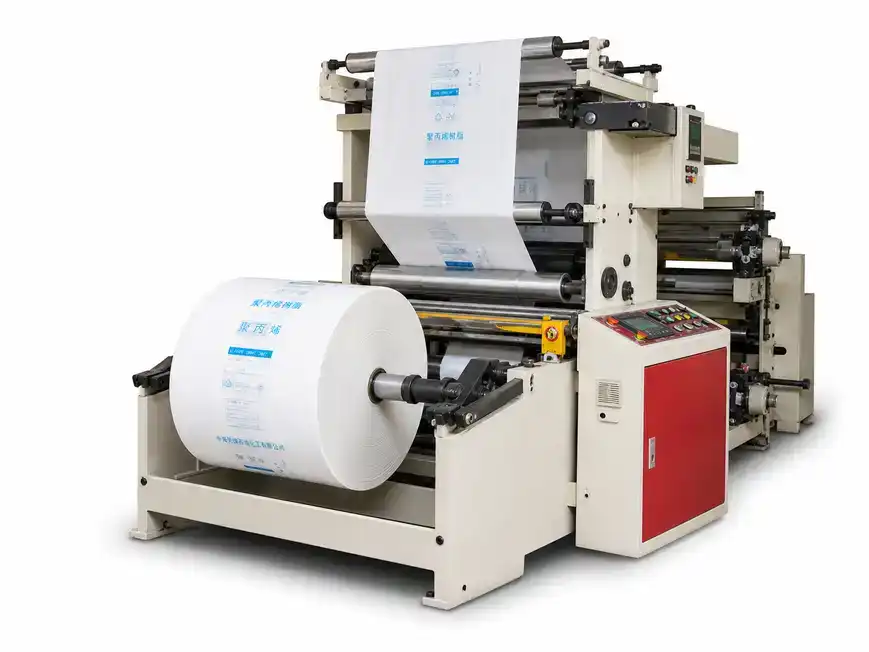
Seal Integrity and Failure Analysis: Learning from Breaks
Why do seals fail? Sometimes because the interface is under‑developed—low peel values and classic “adhesive” failure. Sometimes because the interface is too strong—high numbers but “film tear” next to the seal, a brittle win that loses in the field. Dye tests (F1929) reveal channels; bubble emission (F3039/F2096) exposes gross leaks. Magnified photos of the fracture surface tell you if you are peeling a seal or tearing a film, and that directs corrective action: adjust sealant blend, jaw profile, temperature bias, or dwell.
A useful practice is to overlay your seal‑strength curve with your line’s actual temperature variation over a shift. If your process drifts 8 °C and your window’s plateau is only 10 °C wide, you will live at the edge. Widen the chemistry, not the operator’s stress.
Case Snapshots: From Problem Statement to Line Result
Mineral salts exporter. The problem: mouth‑of‑bag opening during pallet vibration and a rash of leakers in hot weather. The intervention: switch to a broader‑window sealant, raise jaw temperature by ~8–10 °C, keep dwell constant, and introduce a low‑density vent pattern. The result: 70% fewer leakers after 30 days at 35 °C and a 2% throughput gain.
Polymer pellet manufacturer. The problem: unstable pallets on long export lanes. The intervention: move from flat to M‑type gusset, lift static COF via anti‑slip chemistry, and tighten TD Elmendorf minimums. The result: higher stack columns and lower wrap consumption, with fewer corner damages.
Cement additive packer. The problem: profile drift causing bag‑length variation and print mis‑register. The intervention: enforce Cp/Cpk gates on gauge, quarantine out‑of‑control reels, and recalibrate scanners to D6988. The result: smoother runs and fewer rejections at QA.
These are typical, not exceptional. The thread that runs through them is the same: measure, adjust, verify.
Comparative Perspectives: Formats and Geometries
FFS vs. pre‑made sacks. FFS excels where automation, speed, and cost per unit dominate. Pre‑made bags remain useful for very low volumes or manual operations. If a line wants 18 bags/min, FFS Roll PE Film with Gussets is the natural partner.
M‑type vs. flat gusset. The former shines with high‑density powders and long, rough lanes; the latter serves well for moderate densities and shorter supply chains. You can change wrap tension; you cannot change physics. Choose geometry accordingly.
HDPE‑rich vs. LLDPE‑rich sealants. Stiffer cores carry print beautifully and resist creep; richer sealants buy wider windows and hot‑tack. A balanced tri‑layer often delivers the best of both worlds.
Product Parameters and Configuration Ranges
While every SKU is tuned, market‑proven windows for FFS Roll PE Film with Gussets look like this:
- Thickness: 120–220 µm typical for 25–50 kg, with custom 80–300 µm available when the product and route justify it.
- Lay‑flat width: commonly 350–650 mm, aligned to bag weight and fill density.
- Gusset depth: 60–120 mm, in flat or M‑type forms to achieve target cube and stack stability.
- Roll supply: OD around 1000–1500 mm with 76 or 150 mm cores, splice maps available.
- Printing: 6–8 colors by gravure or flexo using compatible inks.
- Surface: anti‑slip targets (e.g., static COF ≥ 0.5) or low‑slip for high‑speed infeed; emboss options on request.
- Options: vented designs (micro or labyrinth), antistatic packages, UV‑stabilized grades for outdoor yards, recycled‑content constructions aligned with local EPR schemes.
These ranges are grounded in common FFS machine envelopes and unit‑load realities, not guesswork.
Compliance, Certification, and Traceability
Professional buyers do not simply “buy film”; they buy a documented, auditable process. Our quality management follows ISO 9001:2015 principles, and every reel of FFS Roll PE Film with Gussets carries a lot ID linking raw materials, extrusion conditions, inline profile data, and all lab results. Certificates spell out the standard numbers used—ASTM D882, ISO 527‑3, ASTM D1922/D1938, ASTM D1709, ASTM F2029, ASTM F88/F88M, ASTM F1929/F3039/F2096, ASTM D3895, ASTM D3045, ASTM G154 / ISO 4892‑3, ASTM D1894, ASTM D6988, ISO 4593, ASTM E1164, ASTM E313, ISO 2859‑1—so your auditors can trace methods to outcomes. When a customer requires third‑party verification, recognized labs such as SGS or TÜV test to these same standards; their reports reference your PO and our lot IDs to close the loop.
If you need declarations for food‑contact or RoHS‑compliant inks, region‑specific documents are prepared to your regulatory framework. Traceability is not an afterthought; it is the spine that carries trust from our extruder to your line and on to your customer.
Sustainability and Recycled Content Without Performance Surprises
Markets increasingly ask for post‑consumer (PCR) or post‑industrial recycled (PIR) content. In FFS Roll PE Film with Gussets, multilayer design allows recycled streams to be placed in non‑seal layers while preserving seal integrity and impact strength. That is the structural advantage of co‑extrusion: you can put the green where it is safest and the strength where it matters most. Performance is validated the same way—tensile, tear, impact, seal window, and aging/UV—and released only when the numbers meet the risk‑based acceptance plan.
Sustainability also means using less where you can. A carefully engineered switch from flat to M‑type gusset can reduce film thickness at equal or better stack height—cutting plastic use without cutting safety. That is conservation by design, not by decree.
Practical Buying Guide: Matching Film to Real‑World Constraints
When you specify FFS Roll PE Film with Gussets, start with the product, not the package. What is the bulk density? How abrasive is the material? How long is the lane to the customer and what climate will pallets traverse? From those answers, geometry and metrics fall into place.
- High‑density, sharp‑edged powders on long export lanes → M‑type gusset, higher TD tear threshold, strong static COF, robust UV plan.
- Medium‑density pellets on fast lines → widen the seal window and hot‑tack, moderate COF, lighter gauge if drop tests allow.
- Outdoor storage risk → enforce OIT minimums and UV retention targets; consider carbon black or HALS packages tuned to your geography.
Ask for certificates that show lot‑linked results and standard numbers. Request the seal‑strength curve, not just a single value. Insist on Cp/Cpk for gauge profile. You will feel the difference in line uptime and in customer complaints that never arrive.
Frequently Asked Questions About FFS Roll PE Film with Gussets
Is the M‑type gusset always better? No. It is better when pallet cube and column strength govern success—typically dense powders, tall stacks, long lanes. For general‑purpose fills, a flat gusset may be simpler and entirely sufficient.
How wide should my seal window be? Wide enough to cover your line’s normal thermal drift, plus a safety buffer. Map it with F2029 and validate with F88. If operators are forever chasing temperature, widen the chemistry rather than tightening the tolerance.
Why do some reels run beautifully while others fight the line? Because gauge profile and winding hardness vary. Reels that pass Cp/Cpk gates, have uniform hardness, and present clean edges simply run better. It is cause and effect, not luck.
Do recycled content films always sacrifice performance? Not when the layer architecture is smart. Keep PCR in non‑seal layers, tune tear/impact with layer ratios, confirm with the same test suite, and release only if targets are met.
What visible defects should I reject? Persistent cut‑edge burrs, gel clusters, black specks, severe mis‑register, blocked vents. ISO 2859‑1 AQL plans make this objective rather than personal.
This analysis is written to help engineers, buyers, and operations leaders evaluate and specify FFS Roll PE Film with Gussets with confidence. If you require a version tailored to a specific resin system, bag weight, or machine model, the parameters and test windows can be adjusted accordingly.
Introduction: Defining the Problem Space
Bulk powders and pellets must travel far, stack high, and survive rough handling without leaking or deforming. FFS Roll PE Film with Gussets addresses this challenge by combining a robust multilayer polyethylene structure with engineered side pleats that shape the filled pack into squarer, more stable “bricks.” On automated form‑fill‑seal lines, FFS Roll PE Film with Gussets forms, fills, and seals in seconds, turning a continuous reel into consistent 10–50 kg sacks. The market asks for three things—speed, safety, and repeatability. This format is built to deliver all three. For configuration details and examples, see FFS Roll PE Film with Gussets.
References
• ASTM D882 — Standard Test Method for Tensile Properties of Thin Plastic Sheeting.
• ISO 527‑3 — Plastics — Determination of tensile properties — Part 3: Test conditions for films and sheets.
• ASTM D1922 — Standard Test Method for Propagation Tear Resistance of Plastic Film and Thin Sheeting by Pendulum Method (Elmendorf).
• ASTM D1938 — Standard Test Method for Tear‑Propagation Resistance (Trouser Tear) of Plastic Film and Thin Sheeting.
• ASTM D1709 — Standard Test Methods for Impact Resistance of Plastic Film by the Free‑Falling Dart Method.
• ASTM F2029 — Standard Practice for Making Heatseals for Determination of Heatsealability of Flexible Webs.
• ASTM F88/F88M — Standard Test Method for Seal Strength of Flexible Barrier Materials.
• ASTM F1929 / F3039 / F2096 — Integrity test methods for flexible packaging.
• ASTM D3895 — Oxidative‑Induction Time of Polyolefins by DSC.
• ASTM D3045 — Standard Practice for Heat Aging of Plastics Without Load.
• ASTM G154 / ISO 4892‑3 — Fluorescent UV exposure of non‑metallic materials.
• ASTM D1894 — Standard Test Method for Static and Kinetic Coefficients of Friction of Plastic Film and Sheeting.
• ASTM D6988 / ISO 4593 — Standard Guide for Determination of Thickness of Plastic Film / Plastics—Film and sheeting—Determination of thickness by mechanical scanning.
• ASTM E1164 / ASTM E313 — Spectrophotometric color and Yellowness/Whiteness Index methods relevant to printed PE film.
• ISO 2859‑1 — Sampling procedures for inspection by attributes.
• Industry application notes and producer datasheets for heavy‑duty FFS polyethylene sack films (HDPE/LLDPE architectures, M‑type and flat gusset formats).