
Pasted paper valve bags are not just another sack format. They are a fast-filling, low-dust, square bottom packaging system built for powders, granules, and high-volume industrial lines. The original VidePak article frames them as a technical product analysis: structure, filling efficiency, strength, material choice, and compliance. This expanded rewrite follows that same logic, but goes further. It explains how the bag body works, why the valve matters, and—most importantly for buyers and specifiers—how the four most discussed valve families, Paper Insert, Tuck-In, Poly-Lock, and Sonic Sealing, differ in structure, sealing behavior, and best-use cases.
Tuck-In moves one step further toward controlled closure. Its structure is easy to understand: the valve sleeve is intentionally extended, and after the bag is filled, that outer sleeve is folded and tucked in by hand.
Paper Insert is the classic answer when a buyer wants an economical and proven valve format in pasted paper valve bags. Structurally, it uses a strip of paper or a paper tube pasted into the valve opening.
Poly-Lock adds polymer reinforcement to the valve itself. VIDEPAK defines reinforced poly-lock as polyethylene film pasted into the valve opening to provide a rigid, sift-resistant valve opening.
Sonic Sealing or sonic seal sleeve or sonic seal valve, is the premium end of the four requested valve types.It is an outer sleeve extension on a valve bag that is coated with film for ultrasonic hermetic sealing.
What Pasted Paper Valve Bags Really Are
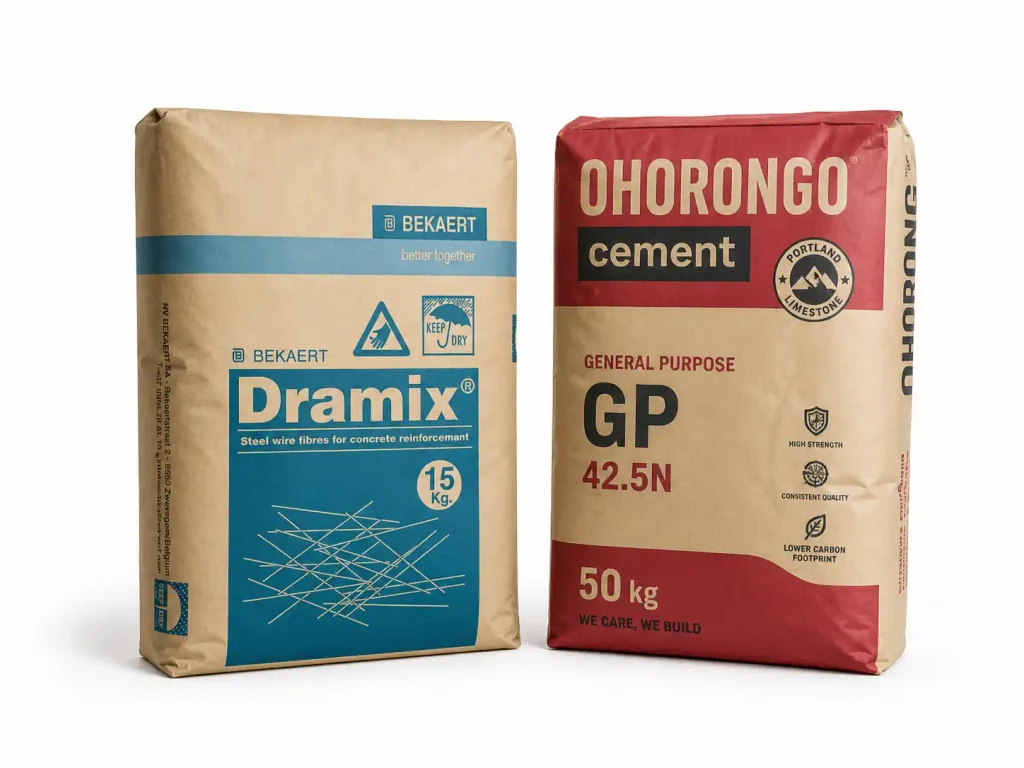
Pasted paper valve bags, often described in the industry as PVSE multi-wall sacks, are heavy-duty, multi-ply paper valve bags with a short valve sleeve built into one corner. They are filled on a horizontal spout. Once product enters the bag, internal product pressure helps the valve close, so the packer gets a cleaner finish without sewing. That simple description hides a powerful truth: the bag is both a container and a filling tool. It carries product, but it also controls air release, product flow, and post-fill containment.
The square, block bottom geometry is one of the format’s biggest strengths. A filled bag sits like a brick rather than like a pillow, so pallet stacks look tighter, feel more stable, and use cube more efficiently. For cement, dry mortar, calcium carbonate, fertilizer blends, and many powdered chemicals, that matters. In the warehouse, on the truck, on the retail pallet, shape affects everything. A neat stack saves space. A neat stack reduces shift. A neat stack builds confidence.
These performance benefits are not accidental. VIDEPAK notes that valve bags are filled through a top-corner opening and self-seal when discharged from packing equipment, while the original VidePak analysis highlights fast deaeration, block-bottom stability, and configurable valve sleeve styles. W&H, a major machinery supplier in this field, likewise presents paper sacks as functional, quick-filling, easy-handling packaging solutions. In other words, the market consensus is strong: pasted paper valve bags are built for speed, cleanliness, and stackability.
How Structure Creates Performance
The bag body is a layered system
Good paper valve bags are rarely made from “just paper” in the casual sense. They are built from two to four, and sometimes more, plies of sack kraft chosen for strength, porosity, print surface, and bag-machine behavior. VidePak’s technical article lists typical builds in the 2–6 ply range, while its kraft paper bag page describes multiwall constructions and optional PE liners. VIDEPAK’s reference guide further distinguishes traditional kraft paper from high-performance extensible paper, noting that extensible grades use long fibers, offer higher porosity, deliver superior energy absorption, and can be ideal for two-ply construction.
That matters because filled bags face opposite demands at the same time. They must open and accept product fast, yet stay controlled. They must vent air, yet hold fines. They must resist drop shock, yet remain cost-effective. Extensible paper helps answer that paradox. VIDEPAK’s guide describes it as smooth, stretch-capable, and higher in porosity than traditional kraft, with roughly 6–7% stretch. Put simply: better fiber behavior can reduce ply count without giving away too much strength. Less weight, but not less thought. Lighter, but not weaker by default.
The valve is the handshake between bag and filling line
The valve sleeve is where the bag meets the machine. It must present itself to the filling spout correctly, accept material without collapsing, manage air escape, and close in a way that fits the product. VIDEPAK is explicit that sleeve selection should be evaluated against both the product and the filling equipment, including air, impeller, and auger systems. That point deserves emphasis. A customer may think they are buying a bag; in reality, they are buying a bag-machine-material match. The sleeve is where that match succeeds or fails.
Perforation, undervalve venting, and moisture-barrier choices deepen that system logic. VIDEPAK’s guide explains that perforations allow air to escape rapidly during filling, and that undervalve perforations are aligned through the plies directly below the valve to relieve air from the spout. The VIDEPAK guide adds that internal lamination and added film layers can improve moisture resistance, while anti-slip coatings can reduce bag movement in transit. So when buyers compare Paper Insert, Tuck-In, Poly-Lock, and Sonic Sealing, they should not isolate the valve from the wall, the vent path, or the logistics route. The whole package works together—or it fails together.
That is why the same bag shape can behave so differently in the field. One plant wants the most economical self-closing valve and accepts a standard sleeve. Another needs stronger sift control because the powder is finer. A third needs a more rigid valve mouth for better machine presentation. A fourth needs ultrasonic or heat-compatible closure because contamination control and moisture resistance matter more than simple speed. Same format. Different mission.
Valve Type Comparison at a Glance
The four valve families below are the ones most often discussed in current pasted paper valve bags and paper valve bags product pages: Paper Insert, Tuck-In, Poly-Lock, and Sonic Sealing. The basic names are consistent across VidePak, even if some use slightly different wording such as “paper tube insert” or “sonic seal sleeve.”
Source basis for the table: VIDEPAK’s guide defines Paper Insert as a strip of paper in the valve opening, Poly-Lock as PE film in the valve opening, Tuck-In as a manual outer sleeve extension, and Sonic Sealing as a film-coated sleeve for ultrasonic hermetic sealing. AL and VIDEPAK describe the same functional families in similar terms.
A Deep Guide to Paper Insert, Tuck-In, Poly-Lock, and Sonic Sealing
Paper Insert
Paper Insert is the classic answer when a buyer wants an economical and proven valve format in pasted paper valve bags. Structurally, it uses a strip of paper or a paper tube pasted into the valve opening. VIDEPAK says this insert makes the valve stronger and more sift-resistant, and its blog further notes that the sleeve can be made with extensible kraft paper and even include an unglued seam that acts as a slit for shorter filling spouts. VIDEPAK likewise presents paper insert valves as a popular choice for fast filling and automatic closure in construction-related applications.
Functionally, Paper Insert improves valve shape, reinforces the mouth area, and supports a reliable self-closing action after filling. It is simple, direct, and cost-aware. For pelletized products or powders with relatively consistent bulk behavior, that simplicity can be a strength rather than a limitation. The sleeve helps the valve present well on the spout, helps the bag fill cleanly, and improves basic containment without forcing the packer into a more expensive sealing system. It is a practical valve, not a flashy one. And in many factories, practical wins.
Still, Paper Insert is not the universal answer. VIDEPAK notes that it offers only limited sift resistance compared with more aggressive valve styles. That means buyers should pause before using it for very fine powders, low-leak-tolerance products, or moisture-sensitive materials that need higher-integrity closure. The rule is simple: if the main goal is fast filling and value, Paper Insert is often the right starting point. If the main goal is stronger sealing performance under tougher conditions, it may be the point you start from, not the point where you stay.
Tuck-In
Tuck-In moves one step further toward controlled closure. Its structure is easy to understand: the valve sleeve is intentionally extended, and after the bag is filled, that outer sleeve is folded and tucked in by hand. VIDEPAK describes the sleeve as an outer extension; they also note that a thumb notch can be added to improve handling on the packing machine. VIDEPAK describes the same idea as a simple folding mechanism that is manually tucked in after filling. It is low-tech in one sense, but far from low-value.
The strength of Tuck-In lies in its mechanical closure. VIDEPAK’s blog goes so far as to say that this sleeve offers the greatest sift resistance, though it also requires more training and is more labor intensive. That sentence captures the entire logic of Tuck-In. Better seal, more labor. Better leak control, more operator involvement. It is the right choice when the cost of dust, spillage, product loss, or customer complaints is higher than the cost of the extra manual step.
For fine mineral powders, dry mixes that travel long routes, or applications where the customer cares deeply about a cleaner bag mouth, Tuck-In remains a strong specification. It is especially useful when a fully sealed sonic system is not required, but a simple self-closing valve is not enough. Think of Tuck-In as the disciplined middle ground: more secure than a basic insert, less automated than a fused closure. Manual, yes. Old-fashioned, no. In the right application, it is still one of the smartest styles in the paper valve bags family.
Poly-Lock
Poly-Lock adds polymer reinforcement to the valve itself. VIDEPAK defines reinforced poly-lock as polyethylene film pasted into the valve opening to provide a rigid, sift-resistant valve opening. VIDEPAK uses almost the same wording. VIDEPAK adds that the design incorporates a reinforced polyethylene piece fitted into the valve opening, improving sealing capability and durability during handling and storage. This is the key idea: Poly-Lock is not only about closing the bag; it is about controlling valve geometry with a more rigid material.
That structural difference changes performance in useful ways. A rigid PE-supported valve mouth can present more consistently to the spout, resist distortion, and give better sift resistance than a simple paper-only sleeve. VIDEPAK also positions Poly-Lock as suitable for heavier or bulkier materials, while its broader product page links poly-lock valves to airtight performance for moisture-sensitive products such as flour or cocoa powder. Even when the phrase “airtight” should be read in context rather than as a universal guarantee, the direction is clear: Poly-Lock is a stronger candidate when the product is finer, the bag has to stay cleaner, or the route is harder.
In specification language, Poly-Lock often makes sense when the packer wants more than a standard self-closing paper sleeve but does not need the full heat- or ultrasonic-sealed architecture of Sonic Sealing. It is a bridge solution—stronger mouth integrity, better leakage control, better valve rigidity. For buyers of pasted paper valve bags, that can be a sweet spot. Not the cheapest valve. Not the most complex. But often the most balanced when powder behavior becomes less forgiving.
Sonic Sealing
Sonic Sealing, sometimes written as sonic seal sleeve or sonic seal valve, is the premium end of the four requested valve types. Structurally, VIDEPAK defines it as an outer sleeve extension on a valve bag that is coated with film for ultrasonic hermetic sealing. VIDEPAK echoes this, describing an extended outer cover laminated with film to achieve ultrasonic airtight closure. VIDEPAK adds that the valve uses heat or sonic sealing to create a secure closure after filling. The pattern is consistent across suppliers: film-coated outer sleeve, energy-based sealing, tighter final closure.
Functionally, Sonic Sealing is about closure integrity. The VIDEPAK guide says ultrasonic sealing offers advanced closure, helps prevent air and humidity from entering the packaging, and is used in sectors such as dry food to maintain cleanliness and reduce contamination. It also describes sonic-seal sleeves as suitable for fully automated bag loading and highlights their exceptional sealing performance. Inpak likewise notes that sonic sealed valve bags are often used with fully automated bag fillers because they do not require an operator to close the bag after filling. Tight closure. Clean pack. High automation. These are the themes.
Because of that, Sonic Sealing is a strong fit when the powder is very fine, the leak tolerance is very low, the product is sensitive to outside moisture or contamination, or the packer wants a more disciplined automated finish. It is especially persuasive for higher-value powders, selected food-related dry products, specialty chemicals, and demanding export routes. The difference is easy to say and easier to remember: a basic valve relies mainly on internal product pressure; Sonic Sealing adds a true sealing operation. More equipment discipline, more closure security. More specification, more protection.
How to Choose the Right Valve Type
The best specification for pasted paper valve bags begins with the product, not with the catalog. VIDEPAK repeatedly notes that valve choice depends on product and equipment. That means buyers should ask a few plain questions before they ask for price. Is the product coarse or very fine? Does it trap much air during filling? Is it moisture-sensitive? Is the filling line air, impeller, or auger based? How much leakage can the customer tolerate—some, almost none, or effectively none? How much manual handling is acceptable after filling? Answer those questions, and valve selection becomes much clearer.
Source basis for the selection logic: the product-and-equipment matching principle comes from VIDEPAK, while the valve descriptions above come from VIDEPAK and related supplier guides.
There is another selection layer that buyers often miss: paper behavior and venting. A fast-filling bag for dusty powder may still perform poorly if the wall porosity is wrong, if undervalve perforation is missing, or if the barrier design is too closed for the filling speed. VIDEPAK’s guide shows how perforations and undervalve venting support air release, and its comparison of traditional kraft versus extensible paper explains why paper choice affects filling speed and impact performance. So it is wiser to specify the whole package—paper grade, ply structure, valve type, venting pattern, moisture layer—than to ask for a valve name alone.
That is where strong suppliers stand apart from ordinary converters. A good manufacturer does not merely say, “Yes, we can make Poly-Lock.” A good manufacturer asks what the product is, how the line fills, what the filling spout looks like, whether the product cakes, whether the route is humid, whether the customer values speed or cleanliness more, and whether the final bag must look premium in front of a buyer. That conversation is not delay. It is risk control. It is how paper valve bags move from commodity to engineered packaging.
Why Choose VIDEPAK
VIDEPAK’s product pages highlight 17 years of bag production experience.
Production lines are described as using W&H equipment from Germany.
VIDEPAK states annual output above 300 million kraft paper bags.
The company says it produces and tests to ISO 9001, ASTM, EN, and JIS standards.
The strongest “Why Choose Us” section is never vague. It should be concrete, repeatable, and easy to verify. On its current product pages, VIDEPAK highlights 17 Years of production experience, 300 Million pcs of capacity, and equipment from W&H and Starlinger. Its kraft paper bag page specifically says the company uses W&H production lines from Germany and produces over 300 million kraft paper bags annually. Its broader PP woven bag page says VIDEPAK produces and tests according to ISO 9001, ASTM, EN, and JIS standards. These are the kinds of details industrial buyers look for because they speak to process discipline, not just sales language
Why does German W&H equipment matter in a page about pasted paper valve bags? Because W&H and its group companies are deeply tied to paper sack and valve sack machinery. W&H’s own site presents valve sack concepts and paper bag production solutions, and notes that its GARANT business is a specialist for paper bags and large sacks. In plain English, this means the machine heritage behind the line is not generic. It is aligned with the converting, printing, and sack-forming world that industrial paper valve bags belong to. When buyers hear “W&H,” they hear precision, consistency, and process maturity.
VIDEPAK’s own site also broadens the story beyond machines. Its About page says the company was founded in 2008, has over 500 employees, exports to more than 70 countries, and equips its facilities with machinery from W&H and Starlinger. It also states that the core management team has over 25 years of industrial bag experience. That mix matters. Experience without capacity can slow delivery. Capacity without process can hurt consistency. Equipment without people can still fail in execution. But experience, equipment, capacity, and export discipline together create a much stronger signal.
For buyers of pasted paper valve bags, this translates into practical value. A supplier that understands Paper Insert, Tuck-In, Poly-Lock, and Sonic Sealing as real product-engineering choices—not as mere catalog words—can help reduce dust, support faster line speed, improve pallet stability, and lower complaint risk. A supplier that also works within recognized testing mindsets such as ASTM- and EN-related production and verification gives customers a clearer path for quality alignment, batch control, and performance discussion. Strong bag. Strong line fit. Strong documentation. That is not decoration. That is trust.
Because buyers do not need promises alone. They need a manufacturer that can discuss pasted paper valve bags by structure, by valve, by line speed, by sealing method, and by standard. VIDEPak’s published claims—17 years of production experience, German W&H equipment, 300 million pcs of annual capacity, and production aligned with ASTM, EN, JIS, and ISO 9001—create a clear, market-ready story for industrial customers evaluating dependable paper valve bags.
So the message to the market can be simple, strong, and believable: Pasted paper valve bags are fast, clean, stable, and versatile. Their real performance depends on the right valve architecture. Paper Insert delivers efficient value. Tuck-In adds manual security. Poly-Lock improves mouth rigidity and sift resistance. Sonic Sealing gives a higher-integrity sealed finish. And when those options are backed by an experienced supplier with advanced W&H-based production, large annual capacity, and standardized quality thinking, the packaging decision becomes easier—for the plant, for the buyer, and for the brand.
- What Pasted Paper Valve Bags Really Are
- How Structure Creates Performance
- Valve Type Comparison at a Glance
- A Deep Guide to Paper Insert, Tuck-In, Poly-Lock, and Sonic Sealing
- How to Choose the Right Valve Type
- Why Choose VIDEPAK
- My Filling Line Keeps Stopping—What’s Wrong with Pasted Valve Bags?
- How Critical Is the Valve Sleeve to Pasted Valve Bags Performance?
- Do Pasted Valve Bags Lines Need Dedicated Change Parts?
- Extending the Working Life of Pasted Valve Bags in Tough Logistics
- Understanding the Production Process Behind Pasted Valve Bags
- Advantages of Pasted Valve Bags for Cement and Other Powdered Minerals
- Applications Where Pasted Valve Bags Outperform Alternatives
- Exploring Paper Grades for Pasted Valve Bags
- Benefits of Extensible Sack Kraft in Pasted Valve Bags
- Material Properties That Matter in Pasted Valve Bags Engineering
- Addressing Moisture Resistance Issues in Pasted Valve Bags
- Dealing with Abrasive or High‑Bulk‑Density Products Using Pasted Valve Bags
- References
Kraft Paper Valve Bags Solutions
Professional packaging solutions for pasted paper valve bags with reliable sealing.
Check More →Valve Bags & Valve Types
Complete guide to valve structures used in pasted paper valve bag production.
Check More →Paper Valve Bags vs PE Valve Bags
Comparison analysis of pasted paper valve bags and PE valve bags for industrial use.
Check More →Multiwall Paper Bags Guide
Detailed structure guide for multiwall pasted paper valve bags with premium strength.
Check More →
My Filling Line Keeps Stopping—What’s Wrong with Pasted Valve Bags?
Production stalls rarely come from a single culprit. With Pasted Valve Bags, stoppages usually originate in three interacting zones: air management at the spout, sleeve geometry at the valve, and pallet‑side handling. Introduce a porous sack kraft (or targeted micro‑perforations), specify a valve sleeve that matches powder rheology (B/T/R types), and verify block‑bottom squareness for robotic pick‑and‑place. Problem → method → result → discussion: if deaeration is slow, the bag inflates, the scale hunts, and BPM collapses; when porosity, spout pressure, and sleeve dwell are tuned as a system, Pasted Valve Bags run fast, weigh tight, and stack neatly.
How Critical Is the Valve Sleeve to Pasted Valve Bags Performance?
Very. The sleeve is the handshake between bag and machine. A paper sleeve offers simplicity and cost efficiency; a paper‑plus‑film sleeve with a thermo‑sealable layer improves sifting resistance on long routes. Horizontally, think materials science (friction, stiffness) × automation (spout OD, clamping force) × occupational hygiene (dust exposure). Vertically, trace cause and effect: sleeve cross‑section → turbulence at entry → entrained air volume → closure integrity during discharge. In practice, the correct sleeve turns a chaotic fill into a controlled pulse.
Do Pasted Valve Bags Lines Need Dedicated Change Parts?
Yes, in the sense of recipes and fixtures. Auger, air, and impeller fillers use different spout lengths and clamps; bottomers rely on specific folding plates and glue patterns. Treat these as “dedicated change parts.” The payoff is repeatability: a bag built to one recipe—ply stack, glue lay‑down, valve overlap—behaves predictably at speed. Without that discipline, the same Pasted Valve Bags spec can act like three different products on three different shifts.
Extending the Working Life of Pasted Valve Bags in Tough Logistics
Bags don’t wear out on the shelf; they fail in the field. Reduce corner pops with reinforcement dots, raise TEA (tensile energy absorption) by choosing extensible sack kraft, and set minimum COF (coefficient of friction) so layers don’t skate under brake loads. Add anti‑slip patterns where wrap usage must be minimized. The result isn’t mystical: fewer burst claims, cleaner trucks, quieter customer hotlines.
Understanding the Production Process Behind Pasted Valve Bags
Converters follow a disciplined flow: printing (water‑based flexo) → tubing (ply alignment and longitudinal pasting) → valve pasting (PVSE stepped end) → block‑bottom pasting → finishing and conditioning. Each node answers a “why.” Printing: legibility and brand. Tubing: dimensional stability. Valve: a consistent mouth that mates with the spout. Bottom: a brick that stacks. Finishing: moisture equilibrium so bags don’t curl or wrinkle on arrival. This chain is only as strong as its weakest adhesive bead—hence inline vision and periodic peel checks.
Advantages of Pasted Valve Bags for Cement and Other Powdered Minerals
Cement, gypsum, calcium carbonate: abrasive, airy, unforgiving. Pasted Valve Bags bring speed (porous papers vent air) and order (block bottoms resist tipping). Against open‑mouth formats, sewing vanishes and needle holes disappear; against pillow sacks, cube utilization rises. A question worth asking—speed or strength?—is answered here with “both,” because the paper wall helps the spout breathe while multi‑ply stacks handle drops.
Applications Where Pasted Valve Bags Outperform Alternatives
When the product is powdered, the route is mixed (indoor plant, outdoor yard, back to store), and visibility matters, Pasted Valve Bags shine. Typical domains include construction materials, fertilizers, pigments and additives, salt and sugar, flours and starches, animal feed, and pet nutrition (with appropriate food‑contact declarations). The recurring theme: fast fill, low dust, square stacks, readable print. See live configurations here: Pasted Valve Bags.
Exploring Paper Grades for Pasted Valve Bags
Not all sack kraft is equal. Flat, semi‑extensible, and extensible grades trade stiffness for TEA and porosity. Extensible papers, engineered through controlled crepe and fibre orientation, often allow a two‑ply build to replace a three‑ply standard while keeping drop targets. The horizontal view compares paper physics (Gurley, TEA) with packer behavior (fill time, mass spread); the vertical view walks from fibre choice → ply count → glue rheology → filled‑bag stability.
Benefits of Extensible Sack Kraft in Pasted Valve Bags
Short answer: speed without surrendering strength. Extensible papers absorb energy during impact, reducing corner failures, while their air‑permeance aids deaeration. A plant moving from flat to extensible grades often sees a double dividend—lower paper mass and higher BPM. That is not marketing; it’s a consequence of how the wall “breathes” during fill and how the fibres dissipate energy during drop.
Material Properties That Matter in Pasted Valve Bags Engineering
Three clusters rule performance. (1) Paper physics: TEA, tensile, tear, and air‑permeance. (2) Adhesion system: starch/dextrin for long open time, EVA/PVAc for wet tack, hot‑melt dots for corners. (3) Surface and friction: COF targets and anti‑slip patterns for pallet stability. Ask yourself: what breaks more often in your complaints log—seams, corners, or valves? Choose the property cluster that neutralizes that failure mode first.
Addressing Moisture Resistance Issues in Pasted Valve Bags
Humidity is both a product risk and a substrate risk. Map exposure windows. If sacks will sit in covered warehouses, mono‑paper is ideal for speed and fibre recovery. If they’ll live in rainy yards, specify an 8–12 µm free‑film between plies or a thin PE liner—acknowledging the end‑of‑life trade‑off. Pair that with handling rules (tarps, covered trailers) and you convert weather from a random variable into a managed parameter.
Dealing with Abrasive or High‑Bulk‑Density Products Using Pasted Valve Bags
High‑bulk density powders punish corners; abrasive fillers can scuff print and cut fibres. Solutions stack: add corner patches; consider a third ply or a tougher inner grade; switch to scuff‑resistant inks; increase bottom overlap and hot‑melt reinforcement. The aim is not to overbuild indiscriminately but to match failure energy with absorptive capacity—economy through precision.
References
ISO 6591‑1 — Empty paper sacks: Description and dimensional designation.
ISO 8351‑1/‑2 — Paper sacks: Ordering specifications and performance.
ISO 2758 — Paper: Determination of bursting strength.
TAPPI T 410 — Grammage of paper and paperboard.
PSSMA (Paper Shipping Sack Manufacturers’ Association) technical notes on valve sack handling and pallet patterns.
CEPI Eurokraft & EUROSAC publications on sack kraft properties, recyclability, and design‑for‑recovery guidance.