
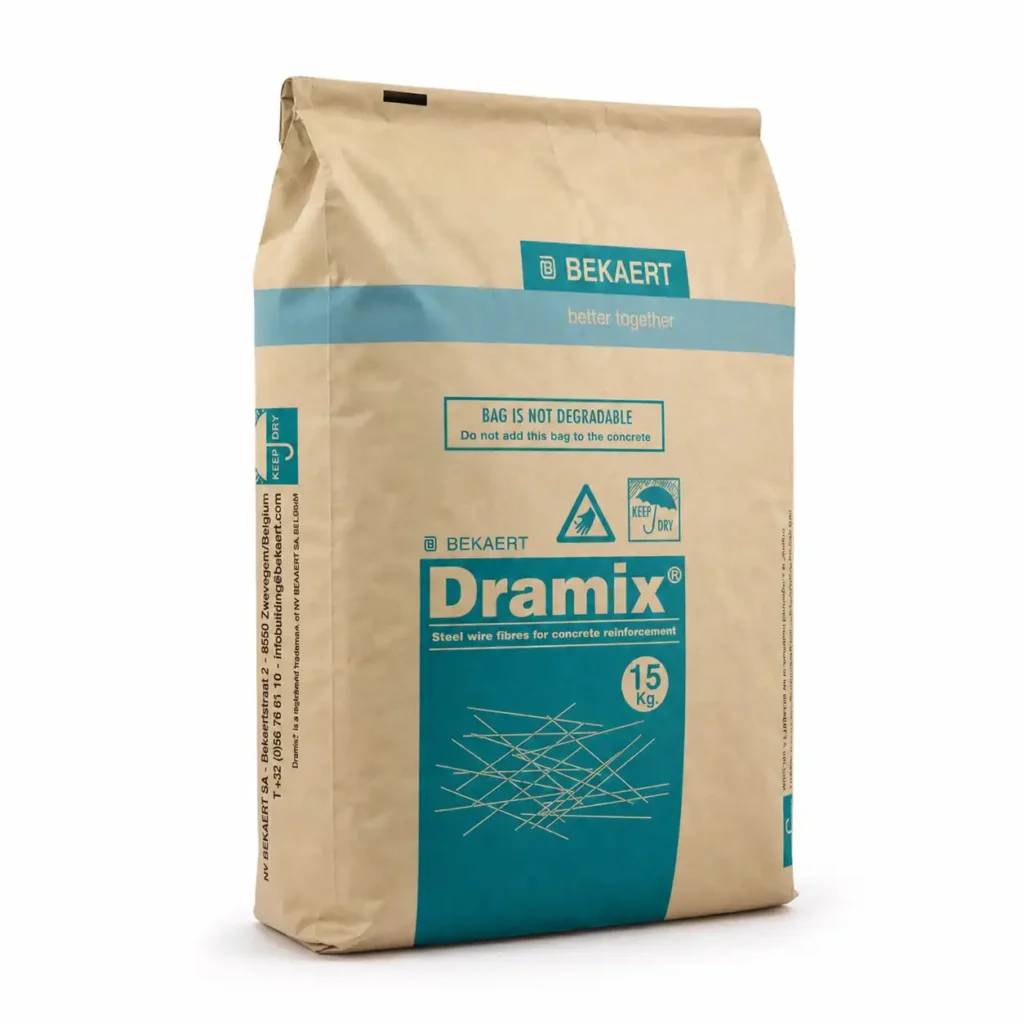
Product Analysis on Multiwall Paper Bags
In industrial packaging, a Multiwall Paper Bag is never “just a paper bag.” A good Multiwall Paper sack must fill fast, close cleanly, stack safely, hold shape under pressure, and protect the product from dust, humidity, and loss. That is why multiwall paper bags matter. They are engineered shipping sacks built from more than one wall, or ply, of sack kraft paper, and they can also incorporate films, coatings, or liners when extra moisture control, sift resistance, or hygiene is required. In other words, they are not ordinary retail paper bags. They are transport tools, process tools, and brand tools at the same time.
Open Mouth Multiwall Paper Bags
Designed to fill through a fully open top, then close by sewing, gluing, adhesive tape, or a more specialized end-seal method.
Valve Multiwall Paper Bags
Closed on both ends and filled through a valve sleeve, usually on spout packers for fast automated filling.
Block Bottom Multiwall Paper Bags
Built to form a square, brick-like base that stands better, stacks better, and presents better.
Pinch Bottom Multiwall Paper Bags
Use a stepped end and adhesive-based pinch seal to create a clean, tight, premium-looking closure.
This analysis follows a practical path. First, it explains the main types of multiwall paper sacks. Then it looks at structure: two-ply, three-ply, multi-ply, and PE inner bag designs. After that, it connects structure to performance through multiwall paper bags manufacturing, because the final result depends not only on materials, but also on printing, tubing, bottoming, sealing, and quality control. Finally, it explains why VIDEPAK is a serious option for buyers who need consistency at scale.
Key point: the best multiwall kraft paper bags do not win by thickness alone. They win by balance: strength and porosity, speed and cleanliness, stiffness and sealability, shelf presentation and warehouse efficiency. When that balance is right, the bag works quietly; when it is wrong, the filling line slows down, pallets lean, powder leaks, and customer trust drops.
What multiwall paper bags are really designed to do
At the material level, sack performance starts with sack kraft paper. Industry sources emphasize two properties again and again: strength and porosity. Strength helps the sack resist tear, burst, and rough handling during palletizing, storage, and transport. Porosity helps air escape during filling, which matters greatly for fine powders. When porosity is too low, filling slows and dust control can worsen. When it is too high, the structure may lose containment or absorb moisture more easily. High-performance sack grades are therefore designed to keep the balance, and some high-porosity grades even reduce the need for perforations, which can otherwise weaken the bag.
The phrase multiwall paper bags simply means that more than one ply is used in the body of the sack, yet the practical meaning is much richer. Extra plies can increase puncture resistance, make the bag stiffer, improve stack shape, create better print surfaces, or provide room for barrier layers. Some constructions remain all-paper; others add PE-coated layers or free-film liners. Some are built for manual or semi-automatic top filling; others are built for high-speed valve packers. Some are meant to breathe; others are meant to block bottom. Some are meant to stand tall like bricks on a pallet; others are meant to seal tight and stay quiet on the line.
| Performance Lens | What Buyers Usually Need | What the Structure Changes |
|---|---|---|
| Filling behavior | Fast, clean, repeatable filling | Porosity, valve design, sleeve layout, and mouth geometry |
| Barrier control | Protection from humidity, rain, dust, or grease | PE liner, coated ply, film tube inliner, or tighter closure style |
| Warehouse stability | Stable stacks, low shifting, neat pallet faces | Block bottom geometry, bag stiffness, bottoming precision |
| Brand presentation | Clear printing, cleaner surfaces, shelf-ready shape | Outer ply selection, flexographic printing quality, bag shape control |
This at-a-glance framework synthesizes standard sack kraft and converting references.
Types of multiwall paper bags buyers should know
When customers compare multiwall paper sacks, they often mix “bag type,” “bottom style,” and “closure style” into one discussion. That is understandable, because these features work together. Still, clear thinking helps. Open mouth and valve are mainly about filling method. Block bottom and pinch bottom are mainly about geometry and closure behavior. In real projects, these features can overlap: a bag may be open mouth block bottom, or valve and block bottom, or open mouth pinch bottom. The right choice depends on product flow, line speed, dust sensitivity, pallet demands, and the visual impression the brand wants to create.
Open Mouth multiwall paper bags
Open mouth multiwall paper bags are the most intuitive format. One end is already closed by the converter, while the other remains open so the customer can fill the product from the top and then close it after filling. Industry descriptions note that open mouth sacks are used for both manual and automated filling and are especially common for products such as sugar, flour, animal feed, and similar dry goods. Their value is practical and direct: they are flexible on the shop floor, easy to inspect before final closure, and adaptable to several closing methods.
From a design view, open mouth multiwall kraft paper bags are a strong choice when the filler wants control after the product enters the bag. If the product is coarse, flowable, or filled on a semi-automatic station, the open mouth design is often straightforward, economical, and easy to integrate. It is also a useful platform for side gusset, block bottom, or reinforced top closures. The trade-off is equally clear: because the top is closed after filling, line speed and closure consistency depend more on the customer’s own equipment and process discipline than in a self-closing valve format. Open when the process needs flexibility. Close when the process needs speed. That is the contrast.
Valve multiwall paper bags
Valve multiwall paper bags are engineered for automation. They are closed bags, filled through a valve or opening that connects to a spout packer, and they are widely used for powdered or granular products in construction materials, food, minerals, and chemical lines. Industry guidance describes valve sacks as shaped to stand during filling and to optimize palletization, while high-speed packer references emphasize their role in fast, accurate line performance. For operations packaging cement, plaster, dry mortar, fine minerals, or dense powder blends, valve bags are often the first serious candidate.
The reason is simple. The valve turns the bag into part of the machine rhythm. Product enters under pressure or assisted flow, air escapes through the structure or designated pathways, the bag fills quickly, and the valve can self-close or be further sealed depending on the design. The result is usually faster filling, better dimensional repeatability, and cleaner warehouse handling. For fine powders, that is not a small advantage; it is the difference between a controlled process and a dusty one. The trade-off is that valve multiwall paper sacks require a filling line built for them. They reward automation, but they ask for it too.
Block bottom multiwall paper bags
Block bottom multiwall paper bags are chosen when shape matters as much as strength. Their square bottom or block bottom creates a self-supporting base, improves pallet order, and reduces the “soft bag” look that often causes unstable stacks. Industry references repeatedly link block bottom or satchel bottom constructions with standing ability, stable square stacking, and better transport behavior. In practical terms, this means cleaner pallet faces, less leaning, easier warehouse counting, and a stronger shelf impression where retail or semi-retail presentation matters.
A block bottom does not exist in isolation; it is a structural choice that can appear in both open mouth and valve formats. In valve applications, it supports brick-like storage and transport. In open-mouth applications, it adds standing performance and packing-line order. For buyers shipping products that must stack high, travel far, or look tidy from pallet to warehouse to point of use, block bottom multiwall kraft paper bags can create visible operational value. They look disciplined because they are disciplined. Geometry becomes performance.
Pinch bottom multiwall paper bags
Pinch bottom multiwall paper bags use a stepped-end construction and a pinch-style adhesive seal to create a flat, neat closure. Industry references describe pinch bottom bags as strong solutions for medium and large contents, with a stable bottom formed when the bag is filled, plus excellent sealing properties and multiple barrier options. This design is often preferred when a cleaner external appearance and tighter sealed end are desired, especially for products that benefit from a more finished, more display-ready look.
In filling terms, pinch bottom open mouth designs keep one end factory sealed and the top open for customer filling, after which the top flap is pinched and sealed. That makes them highly suitable for products where clean closure, controlled presentation, and good sift resistance matter. Compared with sewn tops, they provide a more polished face. Compared with valve sacks, they may fill more slowly on some lines, but they offer more post-fill closure control and can support barrier-driven builds. Elegant yet industrial, precise yet practical, pinch bottom multiwall paper sacks sit at a useful middle point between line efficiency and finished-pack appearance.
| Type | How It Fills | Why Buyers Choose It | Best-Fit Products |
|---|---|---|---|
| Open mouth | Top fill, then close | Flexible filling and closure options | Flour, sugar, feed, dry food ingredients |
| Valve | Spout packer through valve sleeve | High-speed automated filling, better dust control | Cement, plaster, dry mortar, powders, minerals |
| Block bottom | Depends on open mouth or valve build | Standing ability, square stacking, pallet order | Products needing cleaner stacking and display |
| Pinch bottom | Top fill, then pinch seal | Clean closure, strong seal, premium presentation | Fine powders, dry mixes, branded ingredient packs |
Comparison synthesized from standard open-mouth, valve, block bottom, and pinch bottom references.
Structure analysis from two-ply to PE inner bag builds
If type tells you how the bag behaves on the line, structure tells you how the bag survives the journey. Ply count is the first structural language buyers hear. Two-ply, three-ply, four-ply, five-ply. Yet the smart question is not “How many plies?” but “What does each ply need to do?” In multiwall paper bags, a ply can provide strength, stiffness, printability, friction, or barrier support. One layer carries. Another smooths. Another protects. Another seals. The best structure is therefore not simply thicker; it is better assigned.
Selection principle: choose the lowest-complexity structure that still delivers the needed burst strength, puncture resistance, porosity, and barrier performance. Too little structure creates failure. Too much structure creates cost, weight, and sometimes slower deaeration. Balance wins again.
Two-Ply multiwall paper bags
Two-ply multiwall paper bags use two layers of sack kraft paper. This is often the cleanest starting point for buyers who need more strength than a light single-wall bag but do not need a complex barrier build. Industry descriptions present two-ply structures as practical for lighter-duty dry products, lower-density goods, or applications where fast converting, good printability, and efficient material use matter. In current industrial bag references, two-ply designs are often associated with lightweight to medium-duty uses such as bakery mixes, pet food, and selected agricultural additives.
The advantage of two-ply multiwall kraft paper bags is efficiency. Less material can mean lower bag weight, lower freight burden, and easier conversion—provided the product is not too abrasive, too moisture-sensitive, or too demanding in stack height. When combined with strong sack grades, especially high-porosity grades, a two-ply design can still deliver fast filling and good handling. But this is not the format to choose blindly for heavy powders under hard logistics conditions. It is lean, not limitless.
Three-Ply multiwall paper bags
Three-ply multiwall paper bags are often the market’s middleweight champion. A third layer gives more durability, more stiffness, and, depending on the exact build, better moisture resistance and stronger stack shape than a basic two-ply bag. VIDEPAK’s own category literature describes three-ply kraft bags as offering increased durability and moisture resistance, while broader industry guidance shows two-to-three-layer constructions as common in food and industrial applications, often with optional PE liners or coated paper.
For many fillers, three-ply multiwall paper sacks sit at the sweet spot between cost and confidence. They suit fertilizers, sugar, flour, resin pellets, feed ingredients, and many mainstream dry powders and granules where warehouse stress is real, but a heavy multi-ply barrier build would be more than necessary. In purchasing terms, this is often the format that solves ordinary industrial problems very well: not too light, not too heavy, not too simple, not too expensive. Three plies rarely shout; they simply work.
Multi-Ply multiwall paper bags
The category “multi-ply” usually refers to structures beyond the basic two- or three-ply level. Industry references describe multiwall paper bags as commonly ranging from two to six plies, while specialized commercial references discuss four-ply, five-ply, and even heavier-duty constructions for more demanding loads. These structures are used when the application asks for higher burst strength, better puncture resistance, stronger stackability, or more room to integrate barrier elements without sacrificing the outer print surface.
In practical buying logic, multi-ply multiwall kraft paper bags are most suitable when one or more conditions become severe: the product is abrasive, the nominal fill weight is high, transport is rough, pallet heights are demanding, or the powder requires better sift control. Industry references connect heavier four-ply builds with products such as cement, larger feed bags, and chemical packs. Still, more plies are not a magic charm. If the filling line requires faster deaeration, a badly matched heavy structure can underperform a smarter lighter one. Strong paper, correct porosity, and disciplined converting matter as much as ply count.
PE Inner Bags in multiwall paper bags
PE inner bags, PE tube liners, and PE-coated components are used when the product needs protection that plain kraft paper alone cannot deliver. Industry references for food sacks note that open mouth valve sacks often use two to three layers of paper together with a polyethylene free-film tube inliner and/or coated paper. Other industrial references highlight moisture-sensitive valve bags that rely on HDPE barrier layers to protect against rain, moisture, and dust during extended storage.
A PE inner bag changes the role of the whole sack. The outer kraft body still provides stiffness, printability, and handling strength, but the inner PE layer provides a moisture shield, better anti-leak behavior for fine powders, improved hygiene for sensitive goods, and in some cases better shelf-life control. This is especially useful for powders that cake under humidity, ingredients that must stay clean, or products whose fines can sift through more breathable all-paper structures. The trade-off is obvious: barrier can improve protection, yet it may complicate recycling pathways and must be matched carefully to filling-line ventilation needs. For that reason, PE liner builds are best chosen by application, not by habit.
| Structure | What It Looks Like | Best Applications | Main Strength |
|---|---|---|---|
| Two-ply | Two sack-kraft walls, simple and efficient | Lighter dry goods, selected food and agricultural uses | Good economy and converting efficiency |
| Three-ply | Three kraft walls with better stiffness | Mainstream powders and granules | Balanced cost-performance |
| Multi-ply | Four or more plies, sometimes with special barrier layers | Heavy-duty cement, chemicals, demanding logistics | Higher puncture and stack performance |
| PE inner bag build | Kraft outer body with PE liner, tube inliner, or coated layer | Humidity-sensitive, hygiene-sensitive, or fine-powder goods | Barrier and anti-leak control |
Selection matrix synthesized from commercial bag-structure references and sack kraft guidance.
How multiwall paper bags manufacturing creates performance
The performance of multiwall paper bags is decided twice: first in design, then in manufacturing. A good structure can be weakened by poor converting, just as a modest structure can be lifted by excellent process control. Standard manufacturing references describe a four-step flow for multiwall paper bags manufacturing: printing, tubing, bottoming, and palletizing or drying. Each stage changes the final bag. Printing affects brand clarity and ink behavior. Tubing affects dimensional consistency. Bottoming affects how the package opens, fills, seals, and stacks. Final handling affects cleanliness and shipment readiness.
Process flow based on standard converting descriptions.
In printing, flexographic systems are commonly used because they suit high-speed in-line production and fast-drying ink systems. In tubing, multiple rolls of kraft paper and other components are joined into flat or gusseted tubes with controlled adhesive placement. In bottoming, the converter forms the correct end construction for the selected bag style, whether open mouth, pasted end, valve, or pinch-related design. Then the finished sacks are dried, palletized, and prepared for shipment; standard manufacturing references also note steps such as metal detection in finishing operations. Every millimeter matters here. A poor seam can cause sift. A poor cut can distort the body. A poor bottom can ruin an otherwise strong bag.
Why this matters for buyers: when a supplier controls converting well, you buy more than sacks. You buy smoother filling, lower downtime, more uniform pallets, and fewer complaints from warehouses and distributors. That is the silent value of disciplined multiwall paper bags manufacturing.
| Stage | Technical Job | Business Effect |
|---|---|---|
| Printing | Transfers graphics with high-speed flexographic systems | Clear branding, traceable marking, better shelf impression |
| Tubing | Joins plies into flat or gusseted tube | Dimensional consistency and better line feeding |
| Bottoming | Forms valve, pasted, block-bottom, or pinch-related end | Better fill behavior, closure quality, and pallet stability |
| Drying & palletizing | Stabilizes finished bags for shipment | Cleaner delivery and fewer handling issues |
Why choose VIDEPAK for multiwall paper bags
A buyer choosing a supplier for multiwall paper bags should ask four questions. Does the supplier understand industrial bag applications deeply? Does it run reliable converting equipment? Can it scale without losing consistency? And does it build and test to recognizable standards? VIDEPAK gives credible answers to all four. Across its product pages, the company presents itself with 17 years of production experience, while its broader company profile states that the factory was founded in 2008 and that the management team brings over 25 years of industrial-bag experience. Its profile also notes more than 500 employees and exports to more than 70 countries. That combination signals not a newcomer, but an operation with depth, memory, and manufacturing maturity.
Experience that is factory-based, not only sales-based
VIDEPAK’s product pages repeatedly position the company at 17 years of production experience, while the company profile adds a 2008 founding and over 25 years of management know-how in industrial bags. That matters because bag performance is learned through years of filling behavior, customer feedback, and failure prevention.
German W&H equipment for converting precision
VIDEPAK states that it uses German W&H production lines for kraft bag production. W&H, in its own company description, presents itself as a market and technology leader in flexible-packaging machinery. For buyers, that means better confidence in process stability, conversion accuracy, and output discipline.
Scale that supports supply security
VIDEPAK’s kraft bag page states that the company produces over 300 million kraft paper bags annually, and other product pages repeat a 300 million-piece production-capacity message. Large capacity does not guarantee quality by itself, but it does reduce the risk that growth, seasonality, or larger programs will overwhelm the supplier.
Standards-led production and batch testing
VIDEPAK states that it produces and tests products according to ISO 9001, ASTM, EN, and JIS standards, and describes batch-level checks such as impact, tensile-strength, and UV-resistance testing. For industrial buyers, this matters because standardized production converts quality from a promise into a process.
There is another reason VIDEPAK stands out in this category: fit between capability and product need. Its official kraft bag offering already covers brown, white, and multiwall kraft paper bags, PE-coated paper bags, valve designs, open-top designs, and liner options. That means the company is not limited to one narrow bag family. It can discuss type, ply, barrier, and closure together, which is exactly how industrial buyers think when they are solving real-world packaging problems. A supplier that can only sell one structure will always try to make one structure fit everything. A more complete supplier can match the bag to the product instead of forcing the product to adapt to the bag.
So the “Why Choose Us” answer becomes clear. Choose VIDEPAK for experience that has been earned on industrial lines. Choose VIDEPAK for German W&H equipment that supports process precision. Choose VIDEPAK for the scale of 300 million pieces per year that supports continuity. Choose VIDEPAK for ASTM- and EN-aligned quality systems that reduce guesswork. Choose VIDEPAK not because the words sound large, but because the operating logic is strong. Long experience, modern equipment, large volume, recognized standards: four pillars, one supplier.
Final buying view for multiwall paper sacks
For customers evaluating multiwall paper bags, the decision can be simplified into three layers. First, choose the type by filling method and storage goals: open mouth for flexibility, valve for automation, block bottom for stack discipline, pinch bottom for a cleaner sealed presentation. Second, choose the structure by product risk: two-ply for efficient lighter-duty uses, three-ply for well-balanced mainstream applications, multi-ply for harder logistics and heavier loads, and PE inner bag builds for humidity-sensitive or fine-powder goods. Third, choose the manufacturer by process discipline, not by quotation alone. A bag that is cheap on paper may become expensive on the line.
In that framework, VIDEPAK is well positioned. The company’s own published information shows breadth in bag types, depth in industrial-bag experience, use of German W&H machinery, 300 million-piece annual capacity, and standardized production aligned with ASTM and EN expectations. That combination makes VIDEPAK a credible manufacturing partner for customers who need multiwall paper bags manufacturing with scale, control, and application awareness—not chaos, not guesswork, not improvised conversion.
Closing insight: the best multiwall paper bags do three jobs at once. They protect the product. They support the filling line. They strengthen the brand. When structure, process, and supplier capability move in the same direction, the bag stops being a cost item and becomes a performance asset. That is the real value behind strong multiwall paper sacks, and it is the standard buyers should use when they evaluate VIDEPAK.
- Product Analysis on Multiwall Paper Bags
- What multiwall paper bags are really designed to do
- Types of multiwall paper bags buyers should know
- Structure analysis from two-ply to PE inner bag builds
- How multiwall paper bags manufacturing creates performance
- Why choose VIDEPAK for multiwall paper bags
- Final buying view for multiwall paper sacks
Multiwall Paper Bags With PE Liner
High-quality multi-ply multiwall paper bags with premium structure, materials and professional manufacturing process.
Check More →Pinch Block Bottom Multiwall Bags
Specialized multiwall paper bags with unique bottom structure, stable design and refined production technology.
Check More →Pasted Paper Valve Bags
Durable multiwall composite paper bags featuring optimized structure and high-standard manufacturing excellence.
Check More →Kraft Paper Sacks Guide
Complete introduction to multiwall kraft paper bag types, structural features and professional production.
Check More →By offering different configurations of these layers, manufacturers can design multiwall paper bags tailored to specific industry needs. The quality of these layers is key to ensuring the bag’s ability to withstand the rigors of transportation and storage.
The Role of Advanced Technology in Multiwall Paper Bag Production
The production of high-quality Multiwall Paper Bags requires precision, consistency, and innovation. Manufacturers like VidePak are employing state-of-the-art equipment from leading manufacturers such as Starlinger (Austria) and W&H (Germany) to produce packaging solutions that offer superior performance and aesthetics.
- Starlinger Equipment: Known for its advanced plastic extrusion and woven fabric manufacturing technologies, Starlinger enables VidePak to produce bags with consistent material thickness and weave quality. The use of circular looms and extrusion lines ensures that the bags have uniform weave structures and accurate dimensions, contributing to the overall performance and aesthetic appeal of the final product.
- W&H Equipment: With W&H’s cutting-edge printing and lamination technology, VidePak can achieve precise printing quality and high-quality laminated layers that enhance the appearance and durability of the bags. This equipment ensures minimal production variance and helps maintain a high standard of consistency across the entire production process.
These advanced technologies allow VidePak to create Multiwall Paper Bags with superior strength, smooth textures, and consistent performance, providing an edge in markets where precision and quality control are essential. Moreover, by using new materials and manufacturing processes, these companies are able to reduce waste, improve production efficiency, and maintain sustainability standards.
Product Parameters and Performance Specifications
Understanding the key parameters and performance specifications of Multiwall Paper Bags can help businesses make informed decisions about packaging options. Here’s a comparison table of the performance characteristics for various types of bags:
| Feature/Parameter | Single-Ply Kraft Paper Bags | Two-Ply Kraft Paper Bags | Three-Ply Kraft Paper Bags | Multi-Ply Laminated Paper Bags | Kraft Paper Woven Bags |
|---|---|---|---|---|---|
| Weight Capacity | Light to Medium | Medium to Heavy | Heavy | Heavy to Very Heavy | Heavy |
| Puncture Resistance | Low | Medium | High | Very High | Very High |
| Moisture Resistance | Low | Medium | High | Very High | High |
| Durability | Moderate | High | Very High | Excellent | Excellent |
| Aesthetic Appeal | Basic | Moderate | High | Very High | High |
| Customization Options | Limited | Moderate | High | Very High | High |
| Common Applications | Light powders, seeds | Chemicals, food products | Fertilizers, pet food | Cement, chemicals, fertilizers | Heavy industrial goods |
Conclusion
Multiwall Paper Bags are an essential packaging solution for a wide variety of industries, offering strength, moisture resistance, and versatility. The use of advanced equipment from Starlinger and W&H in the production process ensures that manufacturers like VidePak can meet the growing demands for consistent and high-quality packaging. By understanding the different types of multiwall bags, their structure, and the role of innovation in their production, companies can select the most appropriate packaging for their products.
For more detailed insights into Multiwall Paper Bags, Multiwall Paper Sacks, and top-tier Multiwall Paper Bags Manufacturers, feel free to explore these resources: