

Primary product focus: Polypropylene Bags (also appearing as PP Woven Bags, Polypropylene woven bags, PP sacks, Woven PP bags). Supporting long‑tails used naturally throughout: BOPP‑laminated polypropylene bags, PE‑liner PP woven sacks, block‑bottom PP valve bags, anti‑static PP packaging for powders, heavy‑duty polypropylene sacks for minerals, printed polypropylene woven bags for retail display.
What Are Polypropylene Bags?
In the fast, frictive, imperfect world of bulk powder logistics, a package is more than a container; it is a control surface. Polypropylene Bags—fabricated from slit, drawn, and woven polypropylene tapes—turn a lightweight polymer into a textile‑like fabric that resists tears, carries heavy loads, and tolerates rough handling. By themselves, they are strong; with lamination films, liners, and tuned closures, they become complete systems capable of protecting hygroscopic powders, abrasive minerals, and food staples through long routes and unpredictable climates.
Because teams and regions use different labels, you will commonly see Polypropylene Bags referred to by several aliases that all signal the same functional family:
- PP Woven Bags
- Polypropylene woven bags
- PP sacks
- Woven PP bags
- Polypropylene woven sacks
Whatever the name, the engineering premise stays constant: the woven PP substrate delivers tensile strength and tear resistance; films and liners adjust barrier and print performance; closures and geometry make the package runnable, sealable, and stackable. Each element earns its place; remove one, and something else must work too hard.
Guiding principle: treat Polypropylene Bags as a system, not a shell. Fabric carries load, films protect and signal, liners govern vapor flow and dust containment, closures erase leak paths, and geometry stabilizes pallets. When the pieces cooperate, claims shrink and confidence grows.
The Materials of Polypropylene Bags
A reliable package is a thoughtful bill of materials. Each component in Polypropylene Bags contributes a discrete, measurable function—strength, barrier, print clarity, friction management, or safety. The craft is to give each layer a job and keep it from doing someone else’s.
1) Woven polypropylene fabric — the tensile backbone
Extruded PP sheet is slit into tapes, then drawn to orient polymer chains. Those tapes are woven on circular or flat looms into fabrics typically ranging 70–140 g/m² with densities of 10×10 to 14×14 tapes per inch. This woven grid is what lets Polypropylene Bags handle high drops and forklift abuse without turning heavy. Orientation provides strength; weaving localizes damage; low mass keeps freight efficient.
2) Lamination films — BOPP skins and extrusion coats
Biaxially oriented polypropylene (BOPP) films (18–35 μm typical) are often laminated to the outer face by extrusion or adhesive systems. They harden the surface against abrasion, protect graphics via reverse printing, tune the outer coefficient of friction (COF), and shave water‑vapor transmission. In other builds, thin PP/PE extrusion coats provide a printable surface and add cohesion to the woven grid.
3) Polyethylene liners — primary vapor and dust shield
LDPE/LLDPE/HDPE liners (50–120 μm) are the decisive barrier for hygroscopic goods and the last wall against fugitive fines. They enable heat‑sealed closures even when the exterior is stitched, and they can be anti‑static or slip‑modified to fit combustible dust or pallet‑handling requirements. Small gauge changes (10–20 μm) measurably move MVTR and sealing dwell time, so this is a dial to turn with data, not guesswork.
4) Additives and options — tuning to route and risk
UV stabilizers for yard storage, anti‑static packages where dust ignites, anti‑slip finishes for safer pallets, color masterbatch for instant SKU recognition, and micro‑perforation in those rare cases when controlled breathability beats sealed perfection. The right option is the one your product and route can actually exploit.
5) Inks, adhesives, and varnishes — the quiet chemistry
Low‑migration inks protect food and pharma builds; hot‑melt or extrusion tie layers bridge paper/film to PP fabric; over‑varnishes add scuff insurance on long routes. If your hazard pictograms, nutrition panels, or barcodes go unreadable, the package fails long before the sack breaks.
Procurement tip: the biggest cost levers are fabric GSM, film thickness, and liner gauge. The best Polypropylene Bags are not the heaviest ones; they are the ones that hit your risk targets while running fast on your line.
What Distinguishes Polypropylene Bags?
Any feature list makes sense only when tied to a failure you want to prevent. The practical value of Polypropylene Bags comes from how they neutralize moisture drift, mechanical shock, abrasion, label loss, and pallet instability—simultaneously.
- High strength at low mass — woven PP converts resin into tensile capacity more efficiently than thick monolithic film, giving drop survival without freight penalties.
- Tear resistance and seam retention — the grid stops cracks from unzipping; well‑chosen denier and weave density keep closures intact under pallet pressure.
- Moisture management — liners take the heavy lift; films contribute incremental barrier; seals erase needle‑hole leaks; pallets and wraps complete the system.
- Print durability — reverse‑printed BOPP guards barcodes, QR codes, hazard icons, and instructions against conveyors and pallets.
- Closure versatility — sewn open‑mouth, pinch‑bottom open‑mouth, heat‑sealed, or valve formats match different fillers and hygiene regimes.
- Stable stacks — block‑bottom geometry, tuned COF, and consistent cut length reduce shear and topples in real warehouses, not just in CAD drawings.
- Smart‑package readiness — clear, flat faces simplify QR/RFID placement and scanning, turning sacks into data‑carrying assets.
If humidity dominates
Favor thicker liners and inner heat seals; add pallet top sheets during damp dwell; treat film as incremental help, not the hero.
If abrasion dominates
Reverse print under BOPP; consider over‑varnish; tune COF to avoid scuff from high‑speed conveyors.
If dust dominates
Valve geometry sized to the powder; liners long enough to heat‑seal; minimize needle‑hole paths in stitched builds.
Production Process of Polypropylene Bags (and Why Equipment Matters)
Reliability is manufactured upstream, stabilized in process, and proven downstream. VidePak’s lines are anchored by precision platforms from Austria’s Starlinger and Germany’s W&H—machines that compress tolerance bands exactly where real‑world failures are born: tape draw ratios, weave geometry, lamination gauge, print registration, and seal energy delivery.
Upstream — raw‑material selection and incoming tests
- Virgin PP resin: melt‑flow index, moisture, ash; sieve for gels that weaken tapes.
- BOPP/PP/PE films: gauge tolerance (±2–5%), corona level, COF; optical defects audited.
- PE liner resins: melt index, density, haze; anti‑static/slip packages verified per safety plan.
- Additives: UV packages stable at process temperatures; anti‑static systems compatible with liners.
- Inks/varnishes/adhesives: rub resistance, migration performance, adhesion to PP fabric.
Core stages — tapes to laminates
Extrude and draw PP tapes; weave to target GSM and density (10×10–14×14/inch) with stable loom tension. Laminate films to fabric by extrusion or adhesive bonding; control nip pressure, temperature, and line speed to avoid micro‑channels that become moisture highways.
Graphics and surface protection
Reverse printing under BOPP makes graphics scuff‑proof; registration and dot gain are verified; over‑varnish added selectively for conveyor‑intense routes. Finish (matte vs. gloss) doubles as a COF tuning knob for pallet safety.
Conversion — cutting, liners, closures, geometry
Cut length/width to tight tolerances; integrate liners (loose insert, stitched‑in, or form‑fit); select sewn, pinch‑bottom, heat‑sealed, or valve closures; validate seal dwell/pressure/temperature on the actual filler with the actual powder.
Downstream — inspection, testing, lot release
Dimensions and GSM; seam peel/shear; burst and drop tests at agreed heights; WVTR on liner films; vacuum‑decay or dye penetration at closures; Sutherland rub and barcode legibility. Traceability ties materials, machines, and operators into one auditable line.
Equipment advantage: capability beats capacity. Precision extrusion/weaving (Starlinger) and robust converting/printing (W&H) reduce scatter in GSM, lamination gauge, registration, and seal energy—the very places field failures are born.
Applications: Where Polypropylene Bags Earn Their Keep
One platform, many missions. The modular build of Polypropylene Bags adapts to the product’s behavior, the route’s stress, and the filler’s cadence.
| Category | Dominant risk | Recommended configuration | Notes |
|---|---|---|---|
| Food & staples (rice, flour, sugar) | Hygiene & moisture drift | PBOM with PE liner; optional window; reverse‑printed film | Favor tamper‑evident seals and high‑contrast labeling |
| Chemicals & minerals (TiO₂, CaCO₃, talc) | Abrasive & dense | Higher GSM; valve; anti‑slip exterior; strong graphics protection | Protect wordmarks; white pigments expose scuffs |
| Construction (cement, dry mortar) | Rough handling, weather | Reinforced seams; UV package; block‑bottom | Define drop orientations and acceptance criteria |
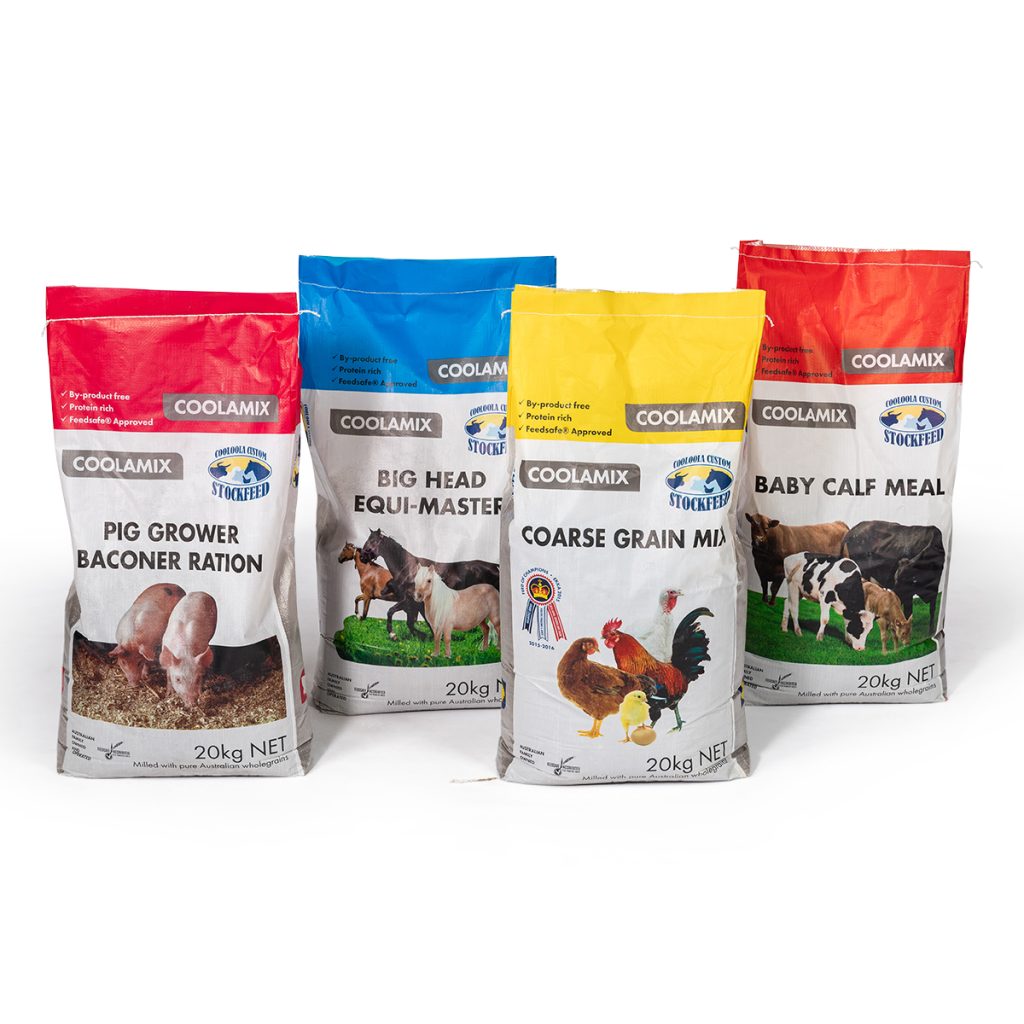
| Feed & pet food | Abrasion & odor containment | BOPP skins; block‑bottom; robust seals | Color coding and barcode protection reduce errors |
Related resource: For an overview of formats, sizes, and use cases, see a concise guide to polypropylene woven bags.
How VidePak Controls and Guarantees Quality
Quality is a stack of reinforcing behaviors. VidePak’s control plan for Polypropylene Bags rests on four pillars that turn specifications into reality.
- Standards‑aligned production & testing — Procedures reference mainstream norms such as ISO/ASTM/EN/JIS as applicable; tensile, seam, drop, WVTR, migration, rub, and barcode tests have written methods and trained operators.
- Virgin materials from major producers — Stable MFI for PP tapes; predictable BOPP/PE gauges; compliant inks/adhesives; consistent paper when used—variance is fought at the source.
- Best‑in‑class equipment — Starlinger extrusion/weaving and W&H converting/printing deliver repeatability rather than lucky averages.
- Layered inspections — Incoming verification → in‑process audits (GSM, gauge, registration, seal dwell) → lot release metrics → periodic sampling to catch drift.
Callout — the reliability economy of Polypropylene Bags
Uniform tape draw, steady weave geometry, accurate lamination gauge, clean registration, predictable seals—each appears modest alone. Together they form the invisible safety net beneath worker safety, product quality, and brand promises.
System Thinking: Decompose the Risks, Compose the Spec
Generalities create general failures. The disciplined way to specify Polypropylene Bags is to split the challenge into solvable parts and then recombine them into a coherent, runnable solution.
A. Moisture sensitivity & failure mode
Does the product cake, clump, lose potency, or alter flow at specific RH/time windows? Convert this into a WVTR budget and assign most of it to the liner.
B. Mechanical handling & stacking
Bulk density, pallet height, drop orientations, conveyor abrasion—these set fabric GSM, seam design, and whether block‑bottom geometry earns its keep.
C. Filler compatibility & closures
Gravity vs. auger, valve vs. open‑mouth, stitching vs. heat‑seal. Pick for speed and hygiene, then validate seals on the actual line.
D. Regulatory & labeling persistence
Food‑contact status for liners/inks/adhesives; barcode reliability after rub testing; multilingual layouts that stay scannable after abrasion.
E. Sustainability & end‑of‑life
Optimize mass first; prefer compatible materials; prevent product loss above all.
F. Documentation & acceptance
Freeze drawings, materials, and process windows; set sampling and CAPA so corrections are routine, not heroic.
Technical Parameters and Colored Tables
Numbers turn intent into control. The following colored tables capture typical ranges and consequences for Polypropylene Bags. Adapt them to the powder and the route—not the other way around.
Table A — Baseline specification matrix
| Parameter | Typical range | Function | Notes |
|---|---|---|---|
| Fabric mass (GSM) | 70–140 g/m² | Load bearing | Scale with bulk density and route roughness |
| Weave density | 10×10–14×14/inch | Dimensional stability | Flatter laminate bed; cleaner cuts |
| BOPP thickness | 18–35 μm | Abrasion + incremental barrier | Reverse printing protects graphics |
| PE liner thickness | 50–120 μm | Primary vapor barrier | Step test in 10–20 μm increments |
| Outer COF | Tuned by finish | Pallet stability vs. line speed | Matte/gloss & anti‑slip packages |
| Seam/Seal strength | Application‑specific | Prevent burst/leak | Peel & shear after aging |
| Electrostatics (if used) | 10^6–10^11 Ω/sq | Dust ignition control | Verify per safety study |
Table B — Failure symptom → likely cause → countermeasure
| Symptom | Likely cause | Countermeasure |
|---|---|---|
| Caking after humid dwell | Liner too thin; weak seals | Increase liner gauge; inner heat seal; pallet top sheets |
| Unreadable hazard icons | Surface print scuffed | Reverse print; add varnish; tune COF |
| Dust around filler | Valve misfit; short liner; needle‑hole leaks | Optimize valve; extend liner; prefer heat‑sealed closures |
| Pallet shear/collapse | Low COF; inconsistent geometry | Anti‑slip finishes; block‑bottom forms; tighter length tolerance |
Table C — Layer roles in Polypropylene Bags
| Layer | Primary role | Secondary role | Risks if neglected |
|---|---|---|---|
| Woven PP fabric | Tensile & tear | Puncture resistance | Burst failures; seam creep |
| PE liner | Vapor barrier | Dust containment | Caking; contamination |
| BOPP film | Abrasion skin | Incremental barrier | Graphics damage; COF drift |
| Adhesive/tie | Cohesion | Micro‑void fill | Moisture channels; delamination |
Scenario Cards: Fast Patterns That Travel
Patterns compress experience. When someone asks, “What configuration should we use?”, these cards offer quick, defensible defaults for Polypropylene Bags.
Card 1 — Hygroscopic salt, monsoon route
≥100 μm PE liner; inner heat seal; robust laminate; pallet top sheets. Goal: zero needle holes and redundant sealing.
Card 2 — Abrasive mineral pigment, urban warehouses
Higher GSM; anti‑slip outer; valve format for cadence; reverse printing to protect branding. Goal: clean labels and safer stacks.
Card 3 — Masterbatch with ESD concern
Anti‑static liners; grounded fillers; seal audits. Goal: fewer ESD alarms, cleaner bays.
Card 4 — Dry mortar on rough rail
Reinforced seams; UV packages; defined drop orientations; block‑bottom geometry. Goal: intact pallets after long inland hauls.
Implementation Roadmap: From RFQ to First Article
A disciplined launch sequence shortens the distance between pilot and success and clarifies accountability at every gate.
- Define the use case: product behavior, bulk density, route climate, shelf‑life, compliance surface.
- Draft the baseline: fabric GSM, film/liner gauges, closure type, geometry, print layout, traceability marks.
- Pilot on the real filler: measure cadence, dust, seal time, pallet stability, barcode readability.
- Lab qualification: tensile, seam, drop, abrasion, WVTR/migration as applicable.
- Freeze and document: drawings, materials, process windows, acceptance criteria, sampling plans, CAPA.
- First article approval: verify conformance; retain samples; lock pack‑out schemes.
- Ongoing control: SPC on GSM/gauge/seal dwell; periodic re‑qualification; field feedback loop.
Troubleshooting Checklist
Symptoms point to causes; causes point to dials you can turn. Keep this list nearby when running new SKUs of Polypropylene Bags on fresh routes or fillers.
- Powder caking → raise liner thickness; audit seal integrity; manage pallet wrap and warehouse RH.
- Label rub‑off → switch to reverse printing; add varnish; tune outer COF.
- Dusting at fill → resize valve; extend liner; prefer heat‑sealed closures where feasible.
- Pallet slide → adopt anti‑slip finishes; consider block‑bottom; standardize stack patterns.
Safety, Electrostatics, and Worker Well‑Being
Health and safety are not generic boxes to tick; they are specific behaviors: fewer airborne fines at the filler, lower static on the sack, better signal for the scanner. Polypropylene Bags help by combining dust‑tight closures with stable surfaces that keep codes readable all the way to the line where the powder is used.
- Anti‑static liners and grounding keep charge within safe bounds in combustible dust zones.
- Heat‑sealed inner closures remove needle‑hole leak paths in stitched exteriors.
- Large, flat faces and protected film graphics improve compliance clarity and speed audits.
Sustainability That Respects Physics
Durability is sustainability. A sack that preserves product quality and enables safe handling prevents the largest waste of all—product loss. Beyond that, Polypropylene Bags can lean toward compatible materials, optimized grammage, and clear marking to support recovery streams where they exist.
FAQ — Quick Answers for Real Buyers
- Is the film only cosmetic? No. It protects graphics, hardens the surface, and contributes incremental barrier.
- Do stitched closures still make sense? Yes for economy—provided the inner liner heat‑seals separately. For strict hygiene, use pinch‑bottom or fully heat‑sealed formats.
- How do I choose liner thickness? Start from acceptable moisture gain. Convert to a WVTR budget; step‑test 10–20 μm increments while measuring seal time.
- Are these sacks recyclable? Where PP/PE streams exist, compatible builds and clear marking help. The largest environmental win remains preventing product loss.
Keyword Strategy: Synonyms and Long‑Tail Phrases
Language consistency helps real buyers find real solutions. This article repeatedly and naturally uses Polypropylene Bags, PP Woven Bags, Polypropylene woven bags, PP sacks, and Woven PP bags. Complementary phrases include BOPP‑laminated polypropylene bags, PE‑liner PP woven sacks, anti‑static polypropylene packaging, block‑bottom PP valve bags, and printed polypropylene woven bags for retail display.
2025-10-25
- What Are Polypropylene Bags?
- The Materials of Polypropylene Bags
- What Distinguishes Polypropylene Bags?
- Production Process of Polypropylene Bags (and Why Equipment Matters)
- Applications: Where Polypropylene Bags Earn Their Keep
- How VidePak Controls and Guarantees Quality
- System Thinking: Decompose the Risks, Compose the Spec
- Technical Parameters and Colored Tables
- Scenario Cards: Fast Patterns That Travel
- Implementation Roadmap: From RFQ to First Article
- Troubleshooting Checklist
- Safety, Electrostatics, and Worker Well‑Being
- Sustainability That Respects Physics
- FAQ — Quick Answers for Real Buyers
- Keyword Strategy: Synonyms and Long‑Tail Phrases
“Why should businesses prioritize polypropylene (PP) woven bags in an era of evolving packaging demands?” The answer hinges on three transformative pillars: unmatched durability, cost-efficiency at scale, and integration with smart technologies for traceability. At VidePak, with over 30 years of industry expertise and a global network of 526 employees, we’ve harnessed cutting-edge technology to redefine PP woven bags as not just containers, but as intelligent solutions for modern supply chains. Below, we explore how advanced manufacturing and emerging innovations like RFID and QR code traceability position PP bags as the future of industrial and agricultural packaging.
Core Advantages of Polypropylene Woven Bags
Polypropylene’s molecular structure—a semi-crystalline thermoplastic—provides inherent benefits that synthetic alternatives struggle to match:
- Tensile Strength: PP fabrics achieve 30–45 N/cm², outperforming polyethylene (PE) by 40% in load-bearing tests (ASTM D5035).
- Chemical Resistance: Inert to acids, alkalis, and solvents, making PP ideal for fertilizers, chemicals, and hazardous materials.
- Moisture Barrier: Laminated PP bags exhibit water vapor transmission rates (WVTR) as low as 0.1 g/m²/day (ISO 2528).
VidePak’s Starlinger extrusion lines and 30+ lamination machines ensure these properties are consistently delivered across 200 million bags produced annually.
Advanced Manufacturing: Precision Meets Scalability
VidePak’s production process integrates Austrian engineering with ISO 9001-certified quality control:
1. Extrusion & Weaving
- Virgin PP Resins: Using Sabic PP 512MN (MFI 3.5 g/10min), our 16 extrusion lines produce uniform tapes with ±0.02mm thickness tolerance.
- Circular Looms: 100+ Starlinger looms weave fabrics at 250–300 rpm, achieving 12×12 strands/cm² density for 50 kg dynamic load capacity.
2. Lamination & Printing
- BOPP Lamination: Enhances moisture resistance (≤0.05% WVTR) and enables high-definition graphics via 12-color rotogravure printers (Pantone ΔE < 2).
- Anti-Static Coatings: Applied for explosive powder storage, meeting IEC 61340-5-1 standards.
3. Smart Packaging Integration
- QR Codes: Laser-etched QR labels enable batch tracking from farm to shelf, reducing recall times by 70% (GS1 Global Traceability Standard).
- RFID Tags: Embedded UHF RFID chips (ISO 18000-6C) provide real-time inventory management, cutting warehouse labor costs by 25%.
The Future: Intelligent Packaging & Traceability
By 2027, the smart packaging market is projected to reach $26.7 billion (Grand View Research, 2023). VidePak is pioneering this shift with:
- Blockchain Integration: QR codes linked to blockchain platforms (e.g., IBM Food Trust) for immutable agricultural supply chain records.
- Condition Monitoring: RFID sensors track temperature and humidity during transit, critical for pharmaceuticals and perishables.
- Sustainability Tracking: Tags verify recycled content (30% PCR PP) and carbon footprint data for ESG compliance.
Case Study: A Brazilian coffee exporter reduced spoilage by 18% using VidePak’s RFID-enabled bags to monitor humidity in real time.
VidePak’s Technological Edge
Founded in 2008 under CEO Ray Chiang, VidePak combines scale with agility:
- Global Certifications: BRCGS, ISO 22000, and OEKO-TEX® for cross-border compliance.
- Customization: 50+ bag designs, including FIBC, valve, and block-bottom styles.
- Sustainability: Energy-efficient production cuts CO₂ emissions by 30% since 2020.
Technical Specifications: Excellence Defined
| Parameter | VidePak Standard | Industry Average |
|---|---|---|
| Tensile Strength | 38–42 N/cm² | 28–35 N/cm² |
| Print Durability | 4+ (Sutherland Rub Scale) | 3 |
| RFID Read Range | 8–10 meters | 3–5 meters |
| Recyclability | 100% (Virgin PP) | 70–80% |
FAQs: Bridging Knowledge Gaps
Q: How does RFID integration affect bag cost?
A: RFID adds 10–15% to unit costs but reduces logistics expenses by 20–30% through automated tracking.
Q: Can QR codes withstand harsh environments?
A: Yes. Laser-etched codes endure UV exposure, abrasion, and temperatures from -30°C to 80°C.
Q: Are smart bags compatible with existing filling systems?
A: Absolutely. VidePak designs tags and codes to avoid interference with pneumatic or auger fillers.
Conclusion: Innovating Today, Leading Tomorrow
Polypropylene woven bags are evolving from passive containers to data-driven assets. VidePak’s fusion of Starlinger precision, smart technology integrations, and global regulatory expertise ensures your business stays ahead in sustainability and efficiency. Whether storing grains, chemicals, or high-value goods, our solutions are engineered to protect your products and amplify your brand’s intelligence.
Explore our innovations in Smart Packaging for FIBC Bags or discover how BOPP Lamination Enhances Durability.
References
- Grand View Research. (2023). Smart Packaging Market Size Report.
- GS1 Global. (2024). Traceability Standards for Agricultural Supply Chains.
- International Electrotechnical Commission. (2023). IEC 61340-5-1: Electrostatic Protection.
- IBM Corporation. (2025). Blockchain Solutions for Food Safety.
- Sabic. (2025). Technical Datasheet: PP 512MN Resin.
Word count: 1,150