
What Are BOPP Laminated Woven Bags and Multi‑Wall Woven Bags in Agricultural Packaging?
In the daily choreography of farms, mills, blending plants, and retail outlets, containers are not afterthoughts but instruments. Among the most versatile instruments are BOPP laminated woven bags and multi‑wall woven bags—two families built on the same structural core yet optimized for different frictions, different risks, and different moments of truth. Both begin with woven polypropylene (PP) fabric. Both can be engineered for high‑speed filling, long haul, and crisp shelf presence. Yet their exteriors, their layering logic, and their interaction with moisture, abrasion, and graphics fidelity often diverge in decisive ways. If bags look alike from ten meters away, why do they behave so differently in a monsoon port or on a legacy paper filler? Because the surface is not cosmetic; the surface is policy. And policy determines outcomes.
Aliases you will meet in specs and sourcing calls (numbered for clarity): 1) BOPP laminated sacks, 2) BOPP woven bags, 3) BOPP laminate PP bags, 4) multi‑wall woven sacks, 5) multi‑ply woven bags, 6) multiwall PP woven bags. Use the terms carefully; they point to overlapping but not identical constructions.
The heart of BOPP laminated woven bags is a reverse‑printed biaxially oriented polypropylene film bonded to a woven PP shell. The heart of multi‑wall woven bags is a layered stack—often paper plus woven PP, sometimes paper plus film plus woven PP—that delivers stiffness, tactile appeal, and machinability on paper‑oriented lines. Which heart beats stronger for your product? For aromatic rice under rain‑heavy skies, the BOPP laminate is often decisive. For artisan flour filling on legacy paper machines, the multi‑wall architecture may be the better ally. The art is to choose deliberately, not by habit.
Material System of BOPP Laminated Woven Bags and Multi‑Wall Woven Bags
Change the resin, and you change the drawability of tapes. Change the facing, and you change scuff and moisture behavior. Change the adhesive, and you change long‑term bond integrity. Materials are not a shopping list; they are a choreography. Below is a structured walk‑through of the pieces and their jobs.
Woven PP fabric: the load‑bearing backbone for both families; denier control and pick density determine strength, seam efficiency, and GSM stability.
BOPP film: glossy or matte, reverse‑printed, bonded by extrusion or adhesive lamination to form BOPP laminated woven bags with high graphic fidelity and moisture tolerance.
Papers & specialty films: kraft (extensible or wet‑strength) and barrier layers that create the outer walls of multi‑wall woven bags, adding stiffness and a tactile shelf feel.
- Adhesive & tie systems: extrusion‑coated PP/PE tie layers or PU/acrylic adhesives; the wrong choice shows up late as delamination, usually after a humid summer.
- Ink & coatings: solvent or water‑borne systems; over‑lacquers and anti‑slip varnishes that tune COF on pallet stacks and protect artwork.
- Functional inserts: liners (PE or co‑ex), degassing valves, tear tapes, and reclose features applied selectively in both families.
Key Features of BOPP Laminated Woven Bags and Multi‑Wall Woven Bags
Features are not decorations. They are levers. They simplify line‑changeovers, reduce pallet headaches, and defuse returns. The list below ties prominent features to the operational realities they control.
Print fidelity & shelf presence: BOPP laminated woven bags deliver near‑photographic, reverse‑printed art shielded under the film. Multi‑wall woven bags accept rich flexo or offset on paper for a natural, tactile presence.
Moisture behavior: Film facings shed water and help resist ingress; multi‑wall stacks can incorporate coated papers or inner films where humidity is relentless.
Scuff & abrasion: BOPP skins shrug off abrasion in transport; paper facings need varnish or selective spot coatings in harsh lanes.
Pallet friction (COF): Paper exteriors grip; film exteriors slip unless tuned by anti‑slip coatings or patterned patches.
Specification reminder: State your risks explicitly. If your product is hygroscopic, write liner thickness and seal strength into the spec. If your warehouse is outdoors, require UV stabilization. If your plant sits in a dusty, classified area, select bag/liner combos accordingly and define the handling rules.
Production Journey: From Virgin Resin to Release for BOPP Laminated Woven Bags and Multi‑Wall Woven Bags
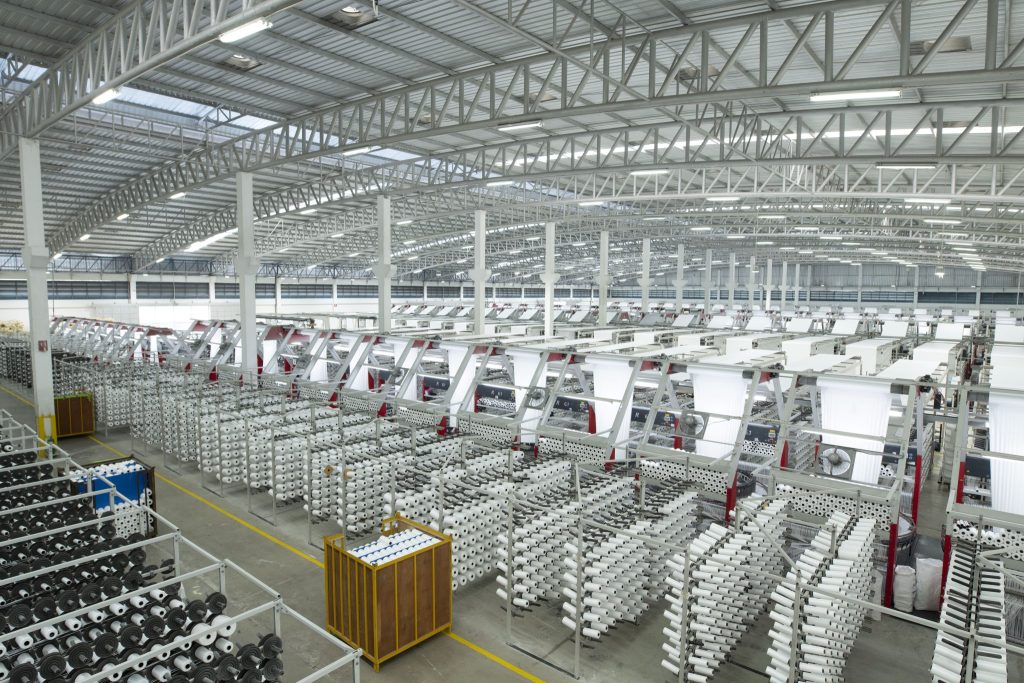
Variability rarely vanishes downstream; it compounds. VidePak’s process therefore starts where variation is born—materials and machinery—and proceeds with layered controls. The equipment base matters: Starlinger for extrusion and weaving; W&H for coating, lamination, and printing. The philosophy is simple: capability in, surprises out.
- Incoming quality: Verify melt‑flow index (MFI), density, ash, and moisture on PP; confirm BOPP thickness, haze, and slip; profile paper basis weight and moisture; qualify adhesives for solids and peel strength.
- Extrusion & tape draw (Starlinger): Control die temps, take‑off speed, and draw ratio; lock denier to target bands; quarantine reels that drift; record machine ID and operator on the traveler.
- Weaving (Starlinger looms): Set pick density and loom tension; patrol inspect for missing picks and roll marks; map defects to avoid placing seams on weak zones.
- Coating/lamination (W&H):
- For BOPP laminated woven bags: extrusion or adhesive lamination of reverse‑printed film to woven; peel/adhesion coupons every roll; humidity‑aged adhesion checks.
- For multi‑wall woven bags: adhesive or extrusion lamination of paper plies; barrier film inserts where needed; nip pressure and temperature logged.
- Printing (W&H): Reverse gravure/flexo on BOPP; flexo/offset on paper; registration and ΔE color logs; selective varnish and anti‑slip coatings tuned for your pallet plan.
- Cutting & conversion: Heat‑cut for fray control on woven; cold‑cut for crisp paper edges; stitch density recipes enforced; handles, tear tapes, reclose features as required.
- Final QC & release: Dimensions, mass/GSM, seam efficiency, peel/adhesion, tear/puncture, COF, print quality, and—where specified—liner seals and pinhole checks; AQL sampling; complete CoA pack before shipping.
Why machinery pedigree matters: Stable denier narrows GSM spread; tight pick density reduces seam scatter; uniform laydown prevents blister/void defects; high‑register printing protects art and compliance markings. Equipment can’t solve every problem, but it makes every solution easier.
Where BOPP Laminated Woven Bags and Multi‑Wall Woven Bags Excel: Sector Examples
Agricultural packaging is a mosaic. Each tile—rice, flour, seed, feed, fertilizer, micronutrient—has different flow behavior, moisture sensitivity, and brand expectations. Choosing the wrong bag is not a minor mistake; it is an upstream cost that ripples downstream. Here is a practical, non‑exhaustive map.
Premium rice and grains: BOPP laminated woven bags provide high‑clarity art, wipe‑clean exteriors, and moisture tolerance; liners for aroma and humidity control; anti‑slip spot coats for pallet stability.
Seeds & specialty feed: Both families work; multi‑wall woven bags add a natural paper touch; BOPP laminated woven bags excel where scuff and graphics are critical in transit.
Flour and milled products: Multi‑wall woven bags run on legacy paper lines, reducing changeover investment while retaining woven core toughness.
Fertilizers & salts: Film facings and coated papers resist moisture and abrasion; rugged bottoms and anti‑slip patches reduce yard incidents.
Additives & micronutrients: Small volumes with premium branding benefit from reverse‑printed finishes; where solvents or oils are present, specify barrier inserts and seal tests.
Retail displays: Matte BOPP reduces glare; paper facings communicate “natural.” Both need tight registration and scuff protection for high‑touch settings.
How VidePak Guarantees Quality for BOPP Laminated Woven Bags and Multi‑Wall Woven Bags
Standards alignment: Design, production, and testing reference mainstream norms (ISO/ASTM/EN/JIS as applicable). Validation covers seam and laminate integrity, tear/puncture, COF, and—when specified—migration/odor.
Virgin raw materials: Resin, films, papers, adhesives, inks—all sourced with CoAs and audited suppliers. Melt‑flow and tensile bands enforced for woven strength and lamination stability.
Equipment pedigree: Starlinger extrusion/weaving; W&H coating/lamination/printing. These platforms reduce setpoint drift and improve repeatability across long runs.
Layered inspection: IQC for arrivals; IPQC patrol checks; FQC/OQC with AQL sampling. No complete certificate pack, no shipment release—full stop.
Quality is not a speech but a system. When documentation and machines and people sing the same song, BOPP laminated woven bags and multi‑wall woven bags leave the dock with fewer secrets inside.
Testing Map: What to Measure, Why It Matters
Testing is foresight written down. Measure what matters—adhesion, COF, tear, puncture—and you will ship fewer apologies.
System Thinking: From Local Controls to Plant‑Level Capability
Most failures are not mysteries. They are the results of small drifts that no one caught early: denier scatter in extrusion, pick‑density drift in weaving, laydown variance in lamination, tack and drying mis‑balances in printing, moisture swings in paper storage. The antidote is a system of controls that catches drift where it starts. Below is a compact control map you can adapt.
- Extrusion: closed‑loop denier monitoring; SPC limits with defined reactions; reel quarantine rules on out‑of‑band events.
- Weaving: daily tension calibration; pick density checks; fabric defect mapping to protect seam zones during nesting.
- Lamination: gravimetric laydown checks; peel coupons per roll; humidity‑aged adhesion testing as a release gate.
- Printing: ΔE color checks against drawdowns; registration logs; solvent/ink balance documented with drying curves.
- Paper handling: equilibrium moisture control by storage climate; flatness checks before lamination; nip pressure audits.
- COF control: standardized anti‑slip windows; friction tests on stacked dummies; corrective action cycles tied to pallet damage reports.
When these controls align, capability follows: Cp/Cpk on GSM and laydown rises; seam/peel strength stabilizes; COF targets are met without over‑varnishing; AQL pass rates climb; customer PPM falls. Translation: the plant stops hoping and starts knowing.
Comparative Decision Matrix
Field Cases (Illustrative)
Case A — Jasmine rice, coastal humidity: BOPP laminated woven bags with thicker film and a form‑fit liner reduced sweating‑driven damage; anti‑slip patches stabilized slick stacks.
Case B — Heritage flour, legacy lines: Multi‑wall woven bags preserved a paper touch and ran clean on existing fillers; tear claims halved while art remained rich.
Case C — Fertilizer yards, open sun: UV‑stabilized woven shells with matte BOPP or coated paper held up outdoors; pallet covers still recommended.
RFQ & Specification Checklist for BOPP Laminated Woven Bags and Multi‑Wall Woven Bags
- Describe the product with SDS and storage/transport environment (humidity, temperature, dwell).
- Define size and pallet plan; state target COF ranges if pallet integrity is mission‑critical.
- Specify shell GSM, weave, and UV package; laminate method (extrusion vs adhesive) and BOPP gauge/finish or paper basis weight and ply count.
- Define print colors, registration tolerance, ΔE color windows, and scuff varnish or matte control.
- State barrier or liner type with thickness and seal/pinhole tests; add tear tapes or reclose if needed.
- List tests and CoA items: seam efficiency, tear, puncture, peel, COF, and—if relevant—migration/odor checks.
- Set AQL sampling and documentation requirements; demand traceability from resin/film/paper to finished goods.
Technical Parameters and Ranges
Sustainability, Cost, and Risk
The greenest kilogram is the one you never make; the greenest kilometer is the one you never ship. Right‑size GSM, deploy baffles only where they pay back, specify barrier only where it protects measurable quality. Cost is a system property—skimp on adhesion now and you might fund a delamination recall later. Risk is contextual—humid ports, long outdoor dwell, and forklift culture should be written into the spec, not assumed.
Failure Modes and Corrective Playbooks
- Delamination: investigate laydown and adhesive chemistry; include humidity‑aged peel in release gates; audit storage heat/humidity.
- Seam pops: check stitch density, needle heating, and cut‑edge fray; replicate on pull‑to‑break and drop rigs.
- Pallet slippage: raise exterior COF with patterned anti‑slip or switch to paper skins; validate on stacked dummies.
- Print scuff: increase over‑lacquer on paper, ensure reverse print under BOPP is intact; test on rub rigs with realistic cycles.
Learning More: Focused Reading
For readers interested in construction options, print strategies, and specification tips specific to film‑faced sacks, consider this companion resource: visual guide to BOPP woven bags and their printing/lamination choices. It extends the discussion here from selection logic to artwork and finish tactics.
- What Are BOPP Laminated Woven Bags and Multi‑Wall Woven Bags in Agricultural Packaging?
- Material System of BOPP Laminated Woven Bags and Multi‑Wall Woven Bags
- Key Features of BOPP Laminated Woven Bags and Multi‑Wall Woven Bags
- Production Journey: From Virgin Resin to Release for BOPP Laminated Woven Bags and Multi‑Wall Woven Bags
- Where BOPP Laminated Woven Bags and Multi‑Wall Woven Bags Excel: Sector Examples
- How VidePak Guarantees Quality for BOPP Laminated Woven Bags and Multi‑Wall Woven Bags
- Testing Map: What to Measure, Why It Matters
- System Thinking: From Local Controls to Plant‑Level Capability
- Comparative Decision Matrix
- Field Cases (Illustrative)
- RFQ & Specification Checklist for BOPP Laminated Woven Bags and Multi‑Wall Woven Bags
- Technical Parameters and Ranges
- Sustainability, Cost, and Risk
- Failure Modes and Corrective Playbooks
- Learning More: Focused Reading
- 1. The Manufacturing Process: How Extrusion, Drawing, and Weaving Define Performance
- 2. BOPP Laminated Woven Bags: Defense Against the Elements
- 3. Multi-Wall Woven Bags: Breathability Meets Affordability
- 4. Sustainability: Aligning with Global Agricultural Trends
- 5. FAQs: Answering Key Client Questions
- 6. Why Partner with VidePak?
“Why should I choose BOPP laminated bags over multi-wall bags for my agricultural products?”
A grain exporter from Argentina posed this question to CEO of VidePak, during a recent industry conference. His reply was definitive: “BOPP laminated woven bags excel in moisture resistance and UV protection, while multi-wall woven bags prioritize breathability and cost-efficiency. The choice depends on your crop’s specific needs—and at VidePak, we engineer both solutions to maximize your ROI.”
This exchange underscores the critical decision-making process in agricultural packaging. Below, we dissect the structural differences, manufacturing nuances, and real-world applications of these two bag types, backed by data-driven insights and VidePak’s 16-year expertise in PP woven bag innovation.
1. The Manufacturing Process: How Extrusion, Drawing, and Weaving Define Performance
The durability and flexibility of woven bags are fundamentally shaped by three production stages: extrusion, drawing, and weaving. VidePak’s Austrian Starlinger machinery and 100% virgin PP resin ensure precision at every step:
1.1 Extrusion: The Foundation of Tensile Strength
- Process: PP pellets are melted at 200–240°C and extruded into flat tapes.
- Impact on Durability:
- Melt Flow Index (MFI): VidePak maintains an MFI of 8–12 g/10min, optimizing tape consistency.
- Thickness Control: Tapes extruded at ±0.02 mm tolerance prevent weak spots.
- Example: A 2023 study in Packaging Technology and Science found that PP tapes with MFI >10 g/10min increased bag tensile strength by 18% in humid conditions.
1.2 Drawing: Enhancing Flexibility
- Process: Tapes are stretched 6:1 to align polymer chains, increasing crystallinity.
- Impact on Flexibility:
- Draw Ratio: VidePak’s 6.5:1 ratio balances flexibility (elongation up to 25%) and tear resistance.
- Orientation: Uniaxial drawing reduces brittleness, critical for bags handling irregular-shaped grains.
1.3 Weaving: Precision for Load-Bearing Capacity
- Process: Tapes are woven on circular looms into fabric with 10–14 threads per inch (TPI).
- Impact on Durability:
- High TPI (14): Reduces pore size to 0.5 mm, preventing grain spillage.
- Low TPI (10): Enhances breathability for crops like potatoes.
| Parameter | BOPP Laminated Bags | Multi-Wall Woven Bags |
|---|---|---|
| Moisture Barrier | <0.5% water transmission | 2–3% (uncoated layers) |
| Breathability | Limited | High (5–7 CFM/ft²) |
| UV Resistance | 95% retention after 1 year | 70% (non-laminated layers) |
| Cost per 1,000 Bags | $220–$280 | $180–$220 |
2. BOPP Laminated Woven Bags: Defense Against the Elements
2.1 Structure and Agricultural Applications
BOPP laminated bags feature a polypropylene fabric core bonded to a BOPP film via Starlinger’s adhesive lamination technology. Key benefits include:
- Moisture-proofing: Ideal for rice and coffee in monsoon-prone regions.
- UV stability: Protects fertilizers like ammonium nitrate from solar degradation.
- Case Study: A Vietnamese rice exporter reduced post-harvest losses by 15% after switching to VidePak’s BOPP laminated bags, as reported in AgriPack Journal (2024).
2.2 Customization for Farming Needs
- Valve Designs: Anti-clogging spouts for granular fertilizers.
- Printing: 12-color HD branding resistant to abrasion.
3. Multi-Wall Woven Bags: Breathability Meets Affordability
3.1 Layered Construction for Delicate Crops
Multi-wall bags combine 2–3 woven PP layers with paper or mesh inserts. Advantages include:
- Controlled airflow: Prevents mold in potatoes and onions during storage.
- Cost efficiency: 20% cheaper per unit than BOPP laminated bags.
3.2 VidePak’s Innovations
- Kraft Paper Liners: Biodegradable option for organic farms.
- Perforated Layers: Adjustable ventilation for root vegetables.
4. Sustainability: Aligning with Global Agricultural Trends
- BOPP Bags: VidePak’s recycling program recovers 90% of post-use bags for furniture manufacturing.
- Multi-Wall Bags: 40% recycled content in paper layers, cutting carbon footprint by 12%.
- UN SDG Compliance: Both bag types align with Goal 12 (Responsible Consumption).
5. FAQs: Answering Key Client Questions
Q: Which bag type is better for long-term grain storage?
A: BOPP laminated bags, with <0.5% moisture transmission, outperform multi-wall bags in 6+ month storage.
Q: Can multi-wall bags handle 50-kg loads?
A: Yes, but only with reinforced stitching. VidePak’s double-locked seams support up to 60 kg.
Q: Are biodegradable options available?
A: Yes. VidePak’s EcoBOPP™ line uses 30% PLA blends, decomposing in 3–5 years.
6. Why Partner with VidePak?
- Scale: 8,000 MT monthly output across 100+ looms.
- Certifications: ISO 9001, BRCGS, and FDA-compliant materials.
- R&D: 16 extrusion lines dedicated to custom solutions.
Explore Our Expertise:
- Learn how our BOPP lamination technology enhances durability.
- Discover multi-wall bag innovations for perishable crops.
References
- Packaging Technology and Science (2023), “Impact of PP Tape MFI on Bag Performance.”
- AgriPack Journal (2024), “Case Study: Vietnamese Rice Exporters.”
- VidePak Sustainability Report (2025).
- UN Sustainable Development Goals, Goal 12 Guidelines.
VidePak: Cultivating Trust, One Bag at a Time.