
What Are block bottom PP bags and Why Do They Matter on Real Jobsites?
At first glance, the phrase looks tidy—block bottom PP bags—yet inside it lives a hard‑won truce between geometry, material science, print durability, and gritty jobsite physics. A woven polypropylene shell forms the structural chassis; a squared, folded base creates a rigid footprint; optional coatings or laminates manage scuffing, friction, and legibility; and a valve sleeve, where specified, turns filling from a dusty guess into a disciplined routine. One layer carries load, another layer carries information, and the base carries shape; together they carry the day. When pallets roll over ramps, when stacks lean under wrap tension, when forklifts nudge corners, when rain hits tarps, the package either behaves—or it tells on itself. Block bottom PP bags are designed to behave.
Common aliases used in RFQs, artwork briefs, and plant travelers include: 1) block bottom polypropylene bags, 2) block bottom valve bags, 3) square bottom PP woven bags, 4) square‑bottom valve sacks, 5) PP woven block‑bottom sacks, 6) AD‑style block bottom bags, 7) hot‑air welded block bottom PP bags, 8) cement block bottom bags. Different names, one architecture: woven PP body, squared base, and—frequently—an integrated valve.
Why now? Because construction channels have changed. Brands compete in bright aisles and on crowded pallets. Hauls are longer, yards are wetter, ramps are steeper, and fillers are sometimes older than the shift leads. A sack that looks premium but slides, or one that grips but delaminates, invites drama. A container that stands, stacks, scans, and survives? That container is remembered, reordered, and recommended. That is the promise of block bottom PP bags.
Material System of block bottom PP bags: Layers, Jobs, Costs, and Tradeoffs
Materials are levers; levers move risks. Change a resin and you change drawability and seam behavior. Change a film and you change glare, scuff life, and the coefficient of friction (COF). Change an adhesive and you change time itself: the peel that feels strong today may fail after a humid week in a coastal depot. The components below form the typical architecture of block bottom PP bags. Each is included for what it contributes and excluded when it cannot justify its grams.
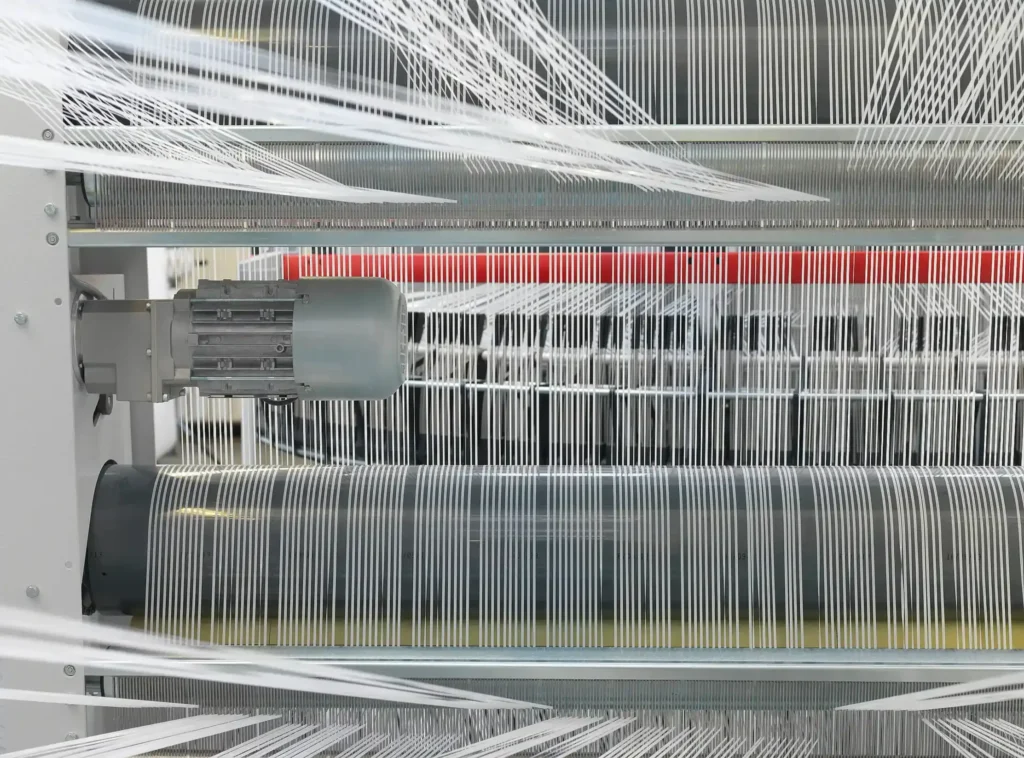
Woven PP fabric serves as the load‑bearing shell. Semi‑crystalline polypropylene is extruded into tapes, slit, oriented to raise tensile strength, and woven on circular or flat looms. Tight denier distributions and controlled pick density deliver predictable GSM and seam efficiency. Cheaper fabric is not cheaper when scrap, rework, and claims are counted; capability pays for itself.
Coatings and laminates form the functional face. Extrusion coatings in PP or PE improve wipe‑clean performance; BOPP laminates (gloss or matte) carry reverse‑printed artwork and protect it from rub‑to‑white scuffing. Smart plants tune exterior COF with varnishes or micro‑textures and may use selective anti‑slip patches in high‑risk zones instead of blanket treatments.
Valve sleeve and mouth components are the interface to the filler. Stiffness aids docking on the spout; geometry controls leak‑down; closure—auto, heat, or ultrasonic—locks the system after weighment. In construction, the corner valve is a standard because it shortens cycles and reduces airborne powder.
Ties, adhesives, and primers are invisible bridges. Extrusion ties or adhesive systems must deliver adhesion that survives humidity. Many delamination stories begin quietly at the coater and end loudly on a ramp; humidity‑aged peel testing makes the difference between a comforting number and a trustworthy one.
Inks, varnishes, and COF modifiers translate brand and safety into physics. ΔE tolerances keep SKU families honest; rub resistance keeps instruction panels legible; friction windows keep stacks still without jamming elderly fillers.
Liners and perforation are optional tools, not default habits. Moisture‑sensitive powders may justify mono‑polymer liners with validated seals; micro‑perfs enable controlled air release during filling. Both can help; both can hurt when over‑applied.
Callout: material decisions are time machines. Choose wisely now, or pay later when pallets slide and phone lines light up. Strong numbers today must remain strong numbers after humidity, dust, and distance.
Features of block bottom PP bags: Defenses Against Real‑World Failure Modes
A feature earns its cost when it neutralizes a failure mode or raises throughput. Otherwise, it is display—and displays do not survive forklifts. The catalog below binds features to benefits, risks tamed, and proofs required, specifically for block bottom PP bags.
Block‑bottom geometry provides a self‑standing, brick‑like footprint that stacks flatter and rides tighter. Proof: pallet compression and creep under wrap recipes; truck and container transport simulations.
Valve filling interface shortens cycles, reduces airborne powder, and closes cleanly—auto, heat, or ultrasonic. Proof: fill‑rate/time studies; leakage and weighment audits; drop and shake tests post‑fill.
Tuned GSM in woven PP buys puncture and corner‑crush margin without wasting grams. Proof: puncture, tear (MD/CD), and seam efficiency measurements; corner‑drop simulations.
Durable faces for graphics keep instructions and compliance icons legible after dusty handling and forklift rub. Proof: rub cycles; ΔE tracking versus master drawdowns; barcode and QR scans after rub.
COF windows that match lanes stabilize pallets without choking older fillers. Proof: sled/incline tests on dusted faces; infeed trials under real wrap tensions and line speeds.
UV‑capable constructions tolerate outdoor dwell better. Proof: accelerated UV exposure and seasonal field audits.
Rule of thumb: if a feature cannot name its nemesis and its test, it is a guess. Sliding pallets? Specify exterior COF windows and validate on inclines with dust. Late delamination? Make humidity‑aged peel a release gate. Seam pops? Lock seam efficiency targets and verify under drop.
Production of block bottom PP bags: From Virgin Resin to Signed CoA
A calm supply chain is built from capable links. VidePak runs the core transformations on high‑capability equipment—Starlinger (Austria) for extrusion, weaving, and block‑bottom conversion; W&H (Windmöller & Hölscher, Germany) for coating/lamination and printing—because capability narrows drift. Narrow drift lowers scrap, claims, and emissions. The choreography is straightforward to read and demanding to execute.
- Incoming quality control: PP resins checked for melt‑flow index, density, moisture, and ash; films/coatings for gauge uniformity, haze/clarity, slip/antiblock, and dyne; adhesives/primers for solids and viscosity; inks via drawdowns with ΔE control and rub resistance. Doubt equals quarantine.
- Extrusion and orientation (Starlinger): Denier is destiny. Melt profiles, draw ratios, chill roll temperatures, and take‑off speeds set it. Tensile/elongation logged by reel ID; denier SPC catches drift before it becomes GSM scatter.
- Weaving (Starlinger): Pick density and loom tension tuned; defect maps travel with rolls so conversion avoids weak lanes. Patrol inspectors are paid to be curious and rewarded for stopping the line when needed.
- Coating/lamination (W&H): Extrusion coat weights or adhesive laydown measured gravimetrically; 180° peel coupons per roll; humidity‑aged peel for realism; exterior and interior COF validated after varnish.
- Printing (W&H): Reverse gravure or flexo with auto‑register; registration and ΔE tracked; rub tests tied to lane friction. Dryer curves follow speed and coverage to avoid wasting energy or starving cure.
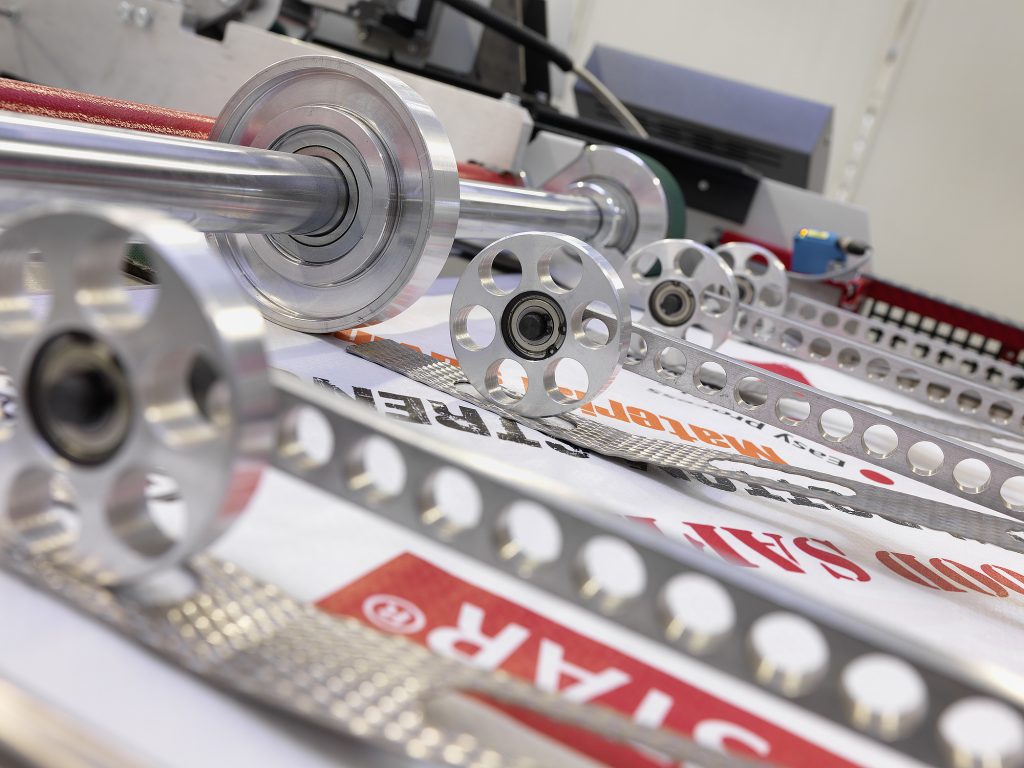
- Tube forming, gusseting, and block‑bottom conversion (Starlinger): Tube is formed with controlled overlap; side gussets set the footprint; the base is folded and welded—hot‑air or ultrasonic—creating the square. Stitching is minimized or eliminated to improve sift‑proofing and aesthetics.
- Valve insertion and finish: Valve sleeves integrated; geometry matched to filler spouts and closure method. Micro‑perforation applied where controlled air release is required.
- FQC/OQC: AQL sampling on dimensions, GSM (wall/base), seam efficiency, base‑weld strength, tear (MD/CD), puncture, drop performance, COF (ext/int), peel/adhesion (as‑made and humidity‑aged), print ΔE/registration, rub, valve function, liner seals and pinholes. CoAs tie raw lots to Starlinger and W&H machine IDs and operator stamps. No complete documents, no trucks.
Equipment pedigree matters. Starlinger and W&H are not ornaments; they are capability proxies. Capability narrows distributions. Narrow distributions keep promises. That is why VidePak builds block bottom PP bags on these lines.
Applications of block bottom PP bags: Cement, Mortar, Gypsum, Aggregates, and More
Construction SKUs share patterns: abrasion, humidity, slopes, barcode scanning in dust, and clear instructions under mixed lighting. Block bottom PP bags meet those patterns with tunable sliders—GSM, base weld architecture, finish, COF windows, seam recipes, liners where justified. The promise is not one‑size‑fits‑all; the promise is one platform tuned many ways.
Cement (50 kg and 25 kg): High‑GSM shells, robust base welds, corner valves with controlled leak‑down, matte faces for anti‑glare, and exterior COF tuned for sloped ramps. Add UV packages for outdoor dwell.
Masonry mortar and plaster: Optional liners with validated seals for hygroscopic blends; large instruction panels protected under film or coating; block‑bottom base for tidy retail displays.
Tile adhesives and grouts: Tight ΔE control across many SKUs; matte panels for readability; QR under film linking to install videos; high rub specs for retail handling.
Gypsum and joint compounds: Sift‑proof base welds and controlled micro‑perfs; clean closure on valves; minimal dust footprints on pallets and counters.
Sands, aggregates, decorative stone: Higher GSM and reinforced corners; UV‑stabilized constructions; exterior COF toward the high end of the window.
Additives and specialty powders: Barrier only as needed; crisp compliance text; engineered COF for warehouse discipline.
How VidePak Guarantees block bottom PP bags Quality
Standards‑aligned production & testing: Build and verify to mainstream norms (ISO/ASTM/EN/JIS as relevant). Validate seam efficiency, tear/puncture, COF (exterior/interior), ΔE/registration, rub, peel/adhesion (as‑made and humidity‑aged), base‑weld strength, valve and liner integrity.
Virgin raw materials from major producers: New PP resins, qualified films and coatings, audited adhesives, ink sets with proven stability. Recyclate only where safe and compliant.
Best‑in‑class equipment: Starlinger for extrusion/weaving/conversion; W&H for coating/lamination/printing. Capability narrows drift; narrow drift lowers scrap and claims.
Layered inspection & traceability: IQC → IPQC → FQC → OQC with AQL rigor. Incomplete certificate packs halt freight. Serial labels tie raw lots and machine IDs to pallets.
Four planks. One promise. The same SKU behaves the same in January and July, on a dry ramp and a dusty one.
System Method for block bottom PP bags: Decompose, Control, Synthesize
Quality and calm logistics are emergent results of small, reliable controls. Break the system into nodes, install a control at each node, and stitch it back together with traceable documentation and honest gates.
Decomposition: Denier scatter → GSM scatter → seam variability. Weaving tension drift → MD/CD tear asymmetry. Laydown variation → late delamination. COF mis‑spec → pallet slides or feeder jams. Base weld energy drift → corner leaks.
Local controls: Denier SPC with reaction plans; pick density checks and defect maps; gravimetric laydown and humidity‑aged peel; ΔE & registration logs; COF windows validated on inclines with dust; weld energy monitor with pull tests.
Synthesis: A digital traveler ties resin, film, adhesive, and ink lots to Starlinger and W&H machine IDs, to in‑process checks, to pallet labels, to CoAs. When a symptom appears, trace within minutes, not days.
Failure Modes & Countermeasures in block bottom PP bags for Construction
Every complaint is a paid audit. Translate symptom to cause to control, update the traveler and the habit, and the platform becomes not just versatile but dependable.
Test Plans for block bottom PP bags: Measure What Predicts
Keep plans alive. If a measurement never predicts a problem, retire it. If a failure recurs, add a predictor you trust. Measurement should be predictive, not performative.
Parameters & Ranges for block bottom PP bags: Paste‑Ready Tables
RFQ Language for block bottom PP bags: Copy‑Ready Checklist
- Bag type: block bottom PP bags, valve format, welded base, exterior COF window X–Y, interior COF window A–B.
- Dimensions & pallet plan: width × length × gusset; block‑bottom footprint; layers per pallet; target stack height; pallet type and wrap recipe.
- Shell GSM & weave: wall/base GSM; pick density; UV package where outdoor dwell applies.
- Coating/lamination: type and target coat weight; required peel as‑made and after humidity age; COF target after varnish.
- Printing: colors; ΔE ≤ value vs. master; registration ≤ value; rub cycles ≥ value; finish declared.
- Valve geometry: sleeve type, stiffness target, closure mechanism (auto‑close, heat, or ultrasonic).
- Features: micro‑perforation spec; liner thickness (if any); easy‑open or reclose where applicable.
- Testing & CoA: GSM, seam efficiency, base weld strength, tear (MD/CD), puncture, COF ext/int, peel (as‑made + humidity‑aged), ΔE/registration, rub, valve leak‑down, liner seal integrity.
- AQL & retains: sampling levels; retain coupons (peel, weld strips, drawdowns) ≥ 12 months.
- Traceability: serial labels linking raw‑material lots and Starlinger/W&H machine IDs to pallets.
- Handling notes: pallet pattern; corner protectors; forklift SOP highlights; slope‑test results.
Palletization, Friction, and Wrap: Making block bottom PP bags Behave
A pallet is a moving laboratory. If stacks creep on slopes, if layers snake during braking, if corners bow under wrap pressure, your numbers on paper meant less than the physics on wood. Treat exterior COF as a field number, not merely a lab number. Dust changes everything; so do wrap tensions. The fastest way to truth is a simple incline with honest dust, an over‑zealous forklift, and a stopwatch.
Rhetorical check: is your specification written for the world your bag inhabits—wet piers, bright aisles, dusty ramps, impatient forklifts? If yes, you are designing reality, not theater.
Sustainability Lens on block bottom PP bags: Damage Avoided Beats Grams Shaved
Mono‑polymer choices, right‑sized GSM, and selective features all help, but the largest environmental win is often the one people forget: preventing damage. A pallet that stays put does not need to be remanufactured or re‑hauled. A bag that keeps powder inside prevents cleanup chemicals and labor. A face that stays readable reduces mis‑mixes and rework on jobsites. Sustainability is not only grams and green icons; it is claims avoided and trucks not reloaded.
Material choices: Favor mono‑PP paths where possible; choose liners only when product sensitivity and lanes justify them; validate recyclability with real sorters in your region.
Process capability: Narrow distributions reduce scrap, rework, and energy per sellable unit. Capability is cleaner than heroics.
Damage prevention: Stabilize pallets, protect corners, keep faces readable—then celebrate the avoided emissions quietly, with data.
Case Sketches: A Day in the Life of block bottom PP bags
Coastal cement brand with sloped ramps: Sliding pallets caused toppled stacks and returns. Raising exterior COF via patterned anti‑slip and adding humidity‑aged peel to release stabilized stacks without choking feeders. Claims fell, loaders smiled, and the safety manager exhaled.
Tile adhesive in big‑box retail: Glare under LEDs erased instruction panels; color drift muddied SKU families. Matte panels, tighter ΔE, and higher rub specs restored legibility and sped shopper decisions. Fewer mis‑picks, fewer returns, friendlier reviews.
Aggregates in outdoor aisles: Corners punctured and faces bleached. Higher GSM with reinforced corners, UV‑stabilized fabric, and COF toward the high end of the window calmed the aisle through summer.
Gypsum with dust‑sensitive retailers: Sift‑proof base welds and controlled micro‑perfs reduced dust halos on pallets; housekeeping calls diminished, brand reputation recovered.
Training & Safety: The Human Layer of block bottom PP bags
- Ground film‑faced lines; manage humidity to tame static. Sparks love dry seasons; so do complaints.
- Forklift etiquette: square lifts, no piercing; wrap to recipe; respect stack heights; protect corners—simple, cheap, effective.
- Inspection culture: reward early stops and curious eyes. Small anomalies become big claims if ignored.
- Documentation discipline: travelers signed, coils labeled, samples retained. If the paper trail is vague, the product is vague.
Keyword Cluster for block bottom PP bags (Use Naturally)
Maintain readability while weaving in discovery terms: block bottom PP bags, block bottom polypropylene bags, block bottom valve bags, square bottom PP woven bags, PP woven block‑bottom sacks, cement block bottom bags, hot‑air welded block bottom PP bags, sift‑proof block bottom valve sacks, construction‑grade block bottom packaging, self‑standing PP woven valve bags. Phrase variations help teams find the same solution through different doors.
Cross‑Format Insight: Cylinder Fillers, Film Barrels, and block bottom PP bags
Teams who run both valve sacks and form‑fill‑seal film often ask the same question in different words: how do filler geometry and package footprint trade off against speed, leakage, and pallet discipline? A helpful companion reference explores the relationship between film barrels, block‑bottom design, and downstream stability. For deeper engineering context, see barrel diameter and block‑bottom design considerations. Mapping these interactions early can prevent late compromises when artwork is already approved and slots on fillers are scarce.
Glossary for block bottom PP bags (Short, Practical, Jobsite‑Ready)
GSM: Grams per square meter; sets mass and correlates with tear and puncture margin. COF: Coefficient of friction; exterior for pallet stability, interior for feeder glide.
ΔE: Color difference metric versus master drawdown; lower is closer. Humidity‑aged peel: Adhesion measured after time at temperature and relative humidity to simulate depots.
Valve leak‑down: Residual material escaping post‑fill; controlled by sleeve geometry and closure. Weld pull: Force required to pull the block‑bottom weld; a proxy for base integrity.
Pick density: Picks per ten centimeters in weaving; impacts tear balance across machine and cross directions.
- What Are block bottom PP bags and Why Do They Matter on Real Jobsites?
- Material System of block bottom PP bags: Layers, Jobs, Costs, and Tradeoffs
- Features of block bottom PP bags: Defenses Against Real‑World Failure Modes
- Production of block bottom PP bags: From Virgin Resin to Signed CoA
- Applications of block bottom PP bags: Cement, Mortar, Gypsum, Aggregates, and More
- How VidePak Guarantees block bottom PP bags Quality
- System Method for block bottom PP bags: Decompose, Control, Synthesize
- Failure Modes & Countermeasures in block bottom PP bags for Construction
- Test Plans for block bottom PP bags: Measure What Predicts
- Parameters & Ranges for block bottom PP bags: Paste‑Ready Tables
- RFQ Language for block bottom PP bags: Copy‑Ready Checklist
- Palletization, Friction, and Wrap: Making block bottom PP bags Behave
- Sustainability Lens on block bottom PP bags: Damage Avoided Beats Grams Shaved
- Case Sketches: A Day in the Life of block bottom PP bags
- Training & Safety: The Human Layer of block bottom PP bags
- Keyword Cluster for block bottom PP bags (Use Naturally)
- Cross‑Format Insight: Cylinder Fillers, Film Barrels, and block bottom PP bags
- Glossary for block bottom PP bags (Short, Practical, Jobsite‑Ready)
“Why are block bottom PP bags becoming the go-to solution for modern construction projects?”
A logistics director from a global infrastructure firm posed this question to Ray Chiang, CEO of VidePak, during a recent sustainability conference. His answer was definitive: “Block bottom PP bags combine structural stability, moisture resistance, and eco-friendly production practices—critical for handling heavy, abrasive materials like cement and aggregates. At VidePak, we’ve engineered these bags to not only meet industrial demands but also align with global sustainability goals through innovations like solar-powered manufacturing.”
This response underscores the transformative role of block bottom PP woven bags in construction logistics. Below, we explore their design advantages, environmental impact, and how VidePak’s commitment to quality and sustainability sets a new industry benchmark.
1. The Structural Superiority of Block Bottom PP Bags
Block bottom bags, characterized by their flat, stable base and reinforced gussets, are engineered to withstand the rigors of construction environments. Their design addresses three critical challenges:
1.1 Load-Bearing Capacity and Stackability
- Base Structure: A heat-sealed block bottom distributes weight evenly, preventing bulging and enabling secure stacking up to 6 meters.
- Reinforced Seams: VidePak’s ultrasonic welding technology ensures seam strengths of 1,800–2,000 N/cm², 30% higher than stitched alternatives.
Case Study: A Middle Eastern construction firm reduced onsite storage space by 40% using VidePak’s block bottom bags for 50-kg cement portions, as reported in Construction Logistics Monthly (2024).
1.2 Moisture and Abrasion Resistance
- Laminated Liners: PE or OPP inner layers reduce water vapor transmission to <0.5%, critical for humid climates.
- Abrasion-Resistant Coatings: Silicone-treated surfaces withstand 500+ friction cycles, ideal for sharp-edged materials like gravel.
| Parameter | Traditional Bags | VidePak Block Bottom Bags |
|---|---|---|
| Max Stack Height | 3.5 meters | 6 meters |
| Moisture Resistance | 2–3% water absorption | <0.5% |
| Reusability | 1–2 cycles | 5+ cycles |
2. Sustainability: From Solar Power to Circular Design
2.1 Solar-Powered Production
VidePak’s 2 MW rooftop solar array powers 70% of its manufacturing operations, with excess energy fed back into China’s grid. Key impacts include:
- Carbon Reduction: 1,200 tons of CO₂ offset annually, equivalent to planting 50,000 trees.
- Cost Efficiency: 25% lower energy costs versus conventional factories, enabling competitive pricing without compromising quality.
2.2 Recyclability and Closed-Loop Systems
- Post-Consumer Recycling: 85% of returned bags are shredded and reprocessed into non-woven geotextiles for soil stabilization.
- Bio-Based Materials: Trials with 20% PLA-blended PP reduce decomposition time from 50+ years to 3–5 years under industrial composting conditions.
A 2025 UNEP report estimates that adopting VidePak’s model could cut global construction packaging waste by 8 million tons by 2030.
3. Customization for Construction Needs
3.1 Tailored Solutions
- Valve Designs: Anti-static valves for explosive powders like aluminum dust.
- Printing Precision: 12-color HD prints withstand UV exposure and abrasion, featuring safety symbols in 10+ languages.
Example: A European contractor used VidePak’s QR-code-enabled bags to track cement batches across 15 sites, reducing misdeliveries by 30%.
3.2 Technical Specifications
| Feature | Specification |
|---|---|
| Fabric GSM | 120–200 (customizable) |
| Load Capacity | 10 kg – 2 MT |
| Print Durability | 18–24 months outdoors |
| Operating Temperature | -30°C to 80°C |
4. VidePak’s Competitive Edge: Quality Over Quantity
While many Chinese manufacturers prioritize low-cost mass production, VidePak’s strategy focuses on:
- Austrian Starlinger Machinery: Ensures ±0.02 mm tape thickness tolerance across 100+ circular looms.
- ISO 9001 Certification: Rigorous QC checks reduce defect rates to 0.8%, versus the industry average of 3–5%.
- Global Compliance: Meets EU REACH, FDA, and BRCGS standards for food-grade and chemical applications.
5. FAQs: Addressing Industry Concerns
Q: How do block bottom bags improve onsite efficiency?
A: Their flat base allows automated palletizing, cutting labor costs by 25% and loading times by 40%.
Q: Are solar-powered production costs reflected in pricing?
A: No. VidePak absorbs the initial investment, offering market-competitive rates while maintaining premium quality.
Q: Can these bags handle hazardous materials?
A: Yes. Anti-static and conductive variants are available for flammable or explosive powders.
6. The Future: Smart and Sustainable Innovations
VidePak is pioneering:
- IoT-Enabled Bags: Embedded sensors monitor moisture levels during transit, alerting suppliers via SMS.
- Carbon-Neutral Logistics: Partnering with electric truck fleets to reduce supply chain emissions by 50% by 2027.
Explore Our Expertise:
- Discover how our block bottom valve bags optimize construction waste management.
- Learn about our solar-powered production and its environmental impact.
References
- Construction Logistics Monthly (2024), “Case Study: Middle Eastern Cement Storage.”
- UNEP Sustainability Report (2025), “Circular Economy in Construction Packaging.”
- Packaging Technology Today (2023), “Advances in Ultrasonic Seam Welding.”
- VidePak Solar Initiative Whitepaper (2025).
- European Contractor Logistics Case Study (2024).
VidePak: Building a Sustainable Future, One Bag at a Time.