
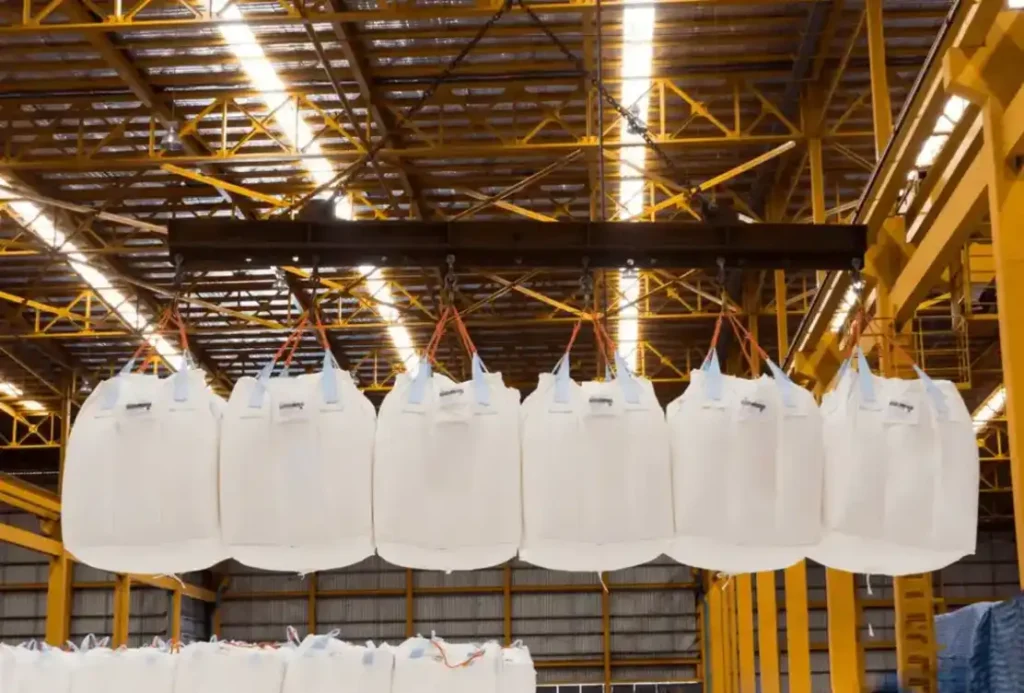
What Are block BOPP bags and How Did They Become a Branding Engine in China?
To the untrained eye, a bag is a bag. Yet the moment a forklift nudges a pallet, the moment rain taps a tarp, the moment a customer squints at instructions under bright LED aisles, differences announce themselves. Block BOPP bags—square‑bottom, self‑standing woven polypropylene sacks laminated with biaxially oriented polypropylene film—were engineered for those moments. Geometry contributes balance; BOPP film safeguards art and text; woven polypropylene provides tensile backbone; optional valve sleeves invite fast, clean filling. When these ingredients are orchestrated with care, a container becomes an asset: it stacks straight, scans fast, ships safely, and sells confidently. That is how block BOPP bags evolved from a mere package into a branding engine across China’s construction, agri‑inputs, and consumer heavy‑duty channels.
Aliases and near‑synonyms you may encounter in RFQs and artwork notes: 1) block bottom BOPP bags, 2) BOPP block bottom valve bags, 3) square bottom BOPP woven sacks, 4) BOPP laminated block‑bottom PP bags, 5) BOPP valve woven bags (block style), 6) AD‑style BOPP block bottom bags, 7) BOPP laminated woven valve sacks, 8) BOPP pinch/block bottom woven bags. Different labels, one architecture: a woven PP chassis, a laminated BOPP face, and a brick‑like base.
Why this format, and why now? China’s packaging marketplace moves fast, scales faster, and tolerates little drama. Retail pallets must look precise; jobsite sacks must remain readable; logistics must be predictable. Block BOPP bags thrive because they answer three questions better than alternatives: Will my stacks stay put? Will my print stay legible? Will my filler run without fuss? The first is geometry and friction; the second is film and varnish; the third is the valve and the interior COF. Together, these turn physics into brand equity.
The Materials of block BOPP bags: What Each Layer Does, Costs, and Risks
Every layer in block BOPP bags is a lever. Pull it, and you move a risk: sliding pallets, late delamination, seam pops, color drift, feeder jams. Below is a practical atlas of the material system: what it is, why it’s used, where it sits, and how it alters budget and recyclability.
Woven polypropylene fabric is the structural shell of block BOPP bags. Semi‑crystalline polypropylene is extruded into tapes, slit, oriented for tensile strength, and woven into fabric with controlled pick density. Denier scatter shows up later as GSM scatter and seam variability; which is cheaper: tight extrusion control now, or claims later? Experience answers that question emphatically.
BOPP film (gloss or matte) is the protective and communicative face. Reverse printing shields artwork, while varnish or micro‑texture tunes glare and friction. Choose finish to match use: matte panels for readability where instructions matter; gloss fields where shelf allure matters. Either way, rub resistance must be measured, not wished for.
Tie layers, adhesives, and primers are the invisible bridges. Laydown too low or cure too light, and late delamination appears after humidity and compression. Good plants test 180° peel as‑made and again after humidity aging; great plants quarantine doubt.
Inks, varnishes, and COF modifiers translate brand and physics into behavior. Stable ΔE keeps families coherent; high rub life keeps panels readable; exterior COF windows keep pallets trustworthy while interior COF keeps fillers flowing. The right friction in the right place avoids both sliding stacks and starved feeders.
Valve sleeves and mouth components give block BOPP bags their speed. A stiffer sleeve docks cleaner; a tuned leak‑down curve keeps weighment accurate; heat or ultrasonic closure locks consistency. In construction powders, the corner valve is king.
Optional liners and micro‑perforation are tools, not habits. Hygroscopic products may justify mono‑polymer liners and validated seals; micro‑perfs enable air release during filling. Use either with intention and with tests.
Callout: material decisions are time machines. The peel that looks strong today may not survive a monsoon depot; the COF that feels safe in a lab may slide on dusty ramps. Test the future, not just the present.
Features of block BOPP bags: Turning Physics into Brand Trust
A feature earns its keep when it neutralizes a failure mode or raises throughput. Otherwise, it is theater. The following catalogue binds features to the risks they tame, with the proofs required before an auditor—or a skeptical forklift operator—will believe you.
Block‑bottom geometry provides a self‑standing footprint that creates brick‑like stacks and cleaner wrap cycles. Proof: compression and creep under real wrap recipes; transport simulations and post‑trip lean checks.
Valve filling interface shortens cycles, reduces airborne powder, and tightens weighment accuracy. Proof: fill‑rate time studies; leak‑down audits; drop tests after closure.
Tuned GSM in woven PP buys puncture and corner‑crush margin without wasting grams. Proof: puncture, tear (MD/CD), and seam efficiency metrics; corner‑drop simulations and field trials.
Durable BOPP faces keep instruction panels legible after rub, dust, and drizzle. Proof: rub cycles, ΔE tracking, barcode/QR scans after rub and dust exposure.
COF windows that match lanes stabilize pallets without choking older fillers. Proof: sled/incline tests on dusted faces; infeed trials at line speed under real wrap tensions.
UV‑capable constructions tolerate outdoor dwell better across seasons. Proof: accelerated UV exposure programs and field audits tied to climate.
Rhetorical check: who pays when a pallet slides, when a barcode won’t scan, when a seam pops? The bag, the brand, the buyer—all three. That is why features belong to failure modes, not fashion.
Production of block BOPP bags: From Virgin Resin to Signed Certificates
Capability is the shortest path from promise to proof. VidePak runs core transformations on Starlinger (Austria) for extrusion, weaving, and block‑bottom conversion, and on W&H (Windmöller & Hölscher, Germany) for coating/lamination and printing. These are not ornaments; they are capability proxies. Capability narrows distributions; narrow distributions keep promises.
- Incoming quality control: PP resins tested for MFI, density, moisture, and ash; films/coatings for gauge, haze/clarity, slip/antiblock, and dyne; adhesives/primers for solids and viscosity; inks by drawdowns with ΔE control and rub resistance. Doubt equals quarantine.
- Extrusion and orientation (Starlinger): Denier is destiny; melt profiles, draw ratios, chill roll temperatures, and take‑off speeds set it. Tensile/elongation logged by reel ID; denier SPC catches drift before it becomes GSM scatter.
- Weaving (Starlinger): Pick density and loom tension tuned; defect maps travel with rolls so conversion avoids weak lanes. Patrol inspectors are paid to be curious and rewarded for stopping the line when needed.
- Coating/lamination (W&H): Extrusion coat weights or adhesive laydown measured gravimetrically; 180° peel coupons per roll; humidity‑aged peel for realism; exterior and interior COF validated after varnish.
- Printing (W&H): Reverse gravure or flexo with auto‑register; registration and ΔE tracked; rub tests tied to lane friction. Dryer curves follow speed and coverage to avoid wasting energy or starving cure.
- Tube forming, gusseting, and block‑bottom conversion (Starlinger): Tube is formed with controlled overlap; side gussets set the footprint; the base is folded and welded—hot‑air or ultrasonic—creating the square. Stitching is minimized or eliminated to improve sift‑proofing and aesthetics.
- Valve insertion and finish: Valve sleeves integrated; geometry matched to filler spouts and closure method. Micro‑perforation applied where controlled air release is required.
- FQC/OQC: AQL sampling on dimensions, GSM (wall/base), seam efficiency, base‑weld strength, tear (MD/CD), puncture, drop performance, COF (ext/int), peel/adhesion (as‑made and humidity‑aged), print ΔE/registration, rub, valve function, liner seals and pinholes. Certificates tie raw lots to machine IDs and operator stamps. No complete documents, no trucks.
Equipment pedigree matters. Starlinger and W&H lines do not just look good on a website; they keep distributions tight, which keeps pallets upright and brand teams calm. That is why VidePak builds block BOPP bags on these lines.
Applications of block BOPP bags: Construction, Agri‑Inputs, Feed, Seeds, Sugar, and More
Where do block BOPP bags deliver outsized value? Wherever stacks must remain square, faces must remain readable, and powders must be filled fast without dust drama. China’s channel breadth—from cement to pet food—makes this platform especially potent.
Cement and mortar: High‑GSM shells, robust base welds, corner valves with controlled leak‑down, matte faces for anti‑glare, exterior COF tuned for sloped ramps, and UV packages for outdoor dwell.
Tile adhesive and grout: Tight ΔE control across many SKUs; matte instruction tiles for legibility; QR codes under film linking to guides; high rub specifications for retail handling.
Fertilizers and soil amendments: Optional liners with validated seals; selective anti‑slip that preserves machinability; robust rub life to protect regulatory text.
Feed and pet food: Reverse‑printed BOPP for color depth paired with matte instruction panels; open‑mouth variants with easy‑open features; shelf‑friendly COF behavior.
Seeds, rice, sugar: Long storage plus anti‑counterfeit; serial QR, microtext cues; varnish strategies to keep scannability intact across seasons.
Specialty chemicals and industrial minerals: Sift‑proof block‑bottom welds; corner valves; high‑contrast compliance panels and durable barcodes.
How VidePak Guarantees block BOPP bags Quality: Four Planks, One Promise
Standards‑aligned production & testing: Build and verify to mainstream norms (ISO/ASTM/EN/JIS as relevant). Validate seam efficiency, tear/puncture, COF (exterior/interior), ΔE/registration, rub, peel/adhesion (as‑made and humidity‑aged), base‑weld strength, valve and liner integrity.
Virgin raw materials from major producers: New PP resins, qualified films and coatings, audited adhesives, ink sets with proven stability. Recyclate only where safe and compliant.
Best‑in‑class equipment: Starlinger for extrusion/weaving/conversion; W&H for coating/lamination/printing. Capability narrows drift; narrow drift lowers scrap and claims.
Layered inspection & traceability: IQC → IPQC → FQC → OQC with AQL rigor. Incomplete certificate packs halt freight. Serial labels tie raw lots and machine IDs to pallets.
Four planks. One promise. The same SKU behaves the same in January and July, on a dry ramp and a dusty one.
The Evolution of block BOPP bags and Brand Building in China
China’s ascent in block BOPP bags is a story of capability, speed, and design discipline. Factories began as OEM suppliers, learned under demanding export buyers, and then stepped into OBM—own‑brand manufacturing—where predictable quality meets narrative control. Along the way, color systems matured, QR serialization spread, and the package became a billboard and an instruction manual in one. Why did brands choose this format? Because it lets them speak loudly (vivid art), clearly (matte instruction tiles), and reliably (stacks that behave) without the fragility and moisture anxiety of paper under tough lanes.
Shelf signaling: Gloss for allure, matte for instructions, bold blocks for quick recognition. In crowded aisles, clarity converts.
Jobsite readability: Dust and glare attack attention. Matte instruction tiles and high‑contrast icons fight back.
Logistics discipline: Block‑bottom geometry plus tuned COF windows keep stacks tight and safety managers calm.
System Method for block BOPP bags: Decompose, Control, Synthesize
Quality is not a slogan; it is a map of small controls that prevent big surprises. Break the bag’s lifecycle into nodes, install a control at each node, then stitch it together with paperwork that tells the truth fast.
Decomposition: Denier scatter → GSM scatter → seam variability. Laydown variation → late delamination. COF mis‑spec → pallet slides or feeder jams. Base weld energy drift → corner leaks. QR discipline drift → traceability gaps.
Local controls: Denier SPC with reaction plans; pick density checks and defect maps; gravimetric laydown and humidity‑aged peel; ΔE & registration logs; COF windows validated on inclines with dust; weld energy monitor with pull tests; QR serialization audits.
Synthesis: A digital traveler ties resin, film, adhesive, and ink lots to machine IDs, to in‑process checks, to pallet labels, to certificates. When a symptom appears, trace within minutes, not days.
Failure Modes & Countermeasures in block BOPP bags
Every complaint is a paid audit. Translate symptom to cause to control, update the traveler and the habit, and the platform becomes not just versatile but dependable.
Test Plans for block BOPP bags: Measure What Predicts
Keep test plans alive. If a measurement never predicts a field problem, retire it. If a failure recurs, add a predictor you trust. Measurement should be predictive, not performative.
RFQ Language for block BOPP bags: Copy‑Ready Checklist
- Bag type: block BOPP bags, valve format, welded base, exterior COF window X–Y, interior COF window A–B.
- Dimensions & pallet plan: width × length × gusset; block‑bottom footprint; layers per pallet; target stack height; pallet type and wrap recipe.
- Shell GSM & weave: wall/base GSM; pick density; UV package where outdoor dwell applies.
- Coating/lamination: type and target coat weight; required peel as‑made and after humidity age; COF target after varnish.
- Printing: colors; ΔE ≤ value vs. master; registration ≤ value; rub cycles ≥ value; finish declared.
- Valve geometry: sleeve type, stiffness target, closure mechanism (auto‑close, heat, or ultrasonic).
- Features: micro‑perforation spec; liner thickness (if any); easy‑open or reclose where applicable.
- Testing & CoA: GSM, seam efficiency, base weld strength, tear (MD/CD), puncture, COF ext/int, peel (as‑made + humidity‑aged), ΔE/registration, rub, valve leak‑down, liner seal integrity.
- AQL & retains: sampling levels; retain coupons (peel, weld strips, drawdowns) ≥ 12 months.
- Traceability: serial labels linking raw‑material lots and machine IDs to pallets.
- Handling notes: pallet pattern; corner protectors; forklift SOP highlights; slope‑test results.
Keyword Cluster for block BOPP bags (Use Naturally)
Blend discovery terms without breaking readability: block BOPP bags, block bottom BOPP bags, BOPP block bottom valve bags, BOPP laminated woven bags, BOPP valve woven bags, square bottom BOPP woven sacks, construction‑grade BOPP block bottom packaging, sift‑proof BOPP valve sacks, hot‑air welded BOPP block bottom bags, retail‑ready BOPP laminated PP bags. Phrase variations help teams find the same solution through different doors.
Cross‑Reference for block BOPP bags: From Film Barrels to Woven Sacks
If you manage both film‑based and woven‑based packaging, understanding how barrel diameter, COF, and block‑bottom geometry interact will save time and curb claims. For a broader view of woven‑BOPP systems, explore this companion resource: complete guide to BOPP woven bags. Comparing these families early prevents late compromises when artwork is approved but physics disagrees.
Case Sketches: A Day in the Life of block BOPP bags
Coastal cement brand with sloped ramps: Sliding pallets caused toppled stacks and returns. Raising exterior COF via patterned anti‑slip and adding humidity‑aged peel to release stabilized stacks without choking feeders. Claims fell, loaders smiled, and the safety manager exhaled.
Tile adhesive in big‑box retail: Glare under LEDs erased instruction panels; color drift muddied SKU families. Matte panels, tighter ΔE, and higher rub specs restored legibility and sped shopper decisions. Fewer mis‑picks, fewer returns, friendlier reviews.
Fertilizer through monsoon supply chains: Moisture ingress and caking spiked. Optional mono‑PP liners with validated seals, selective micro‑perfs for fill rate, and corner‑valve closure recipes calmed the season.
Seed brand fighting counterfeit: Cloned art confused farmers. Serialized QR, microtext, and analytics alerted distributors to anomalies and shifted counterfeit attention elsewhere.
Training & Safety: The Human Layer of block BOPP bags
- Ground film‑faced lines; manage humidity to tame static. Sparks love dry seasons; so do complaints.
- Forklift etiquette: square lifts, no piercing; wrap to recipe; respect stack heights; protect corners—simple, cheap, effective.
- Inspection culture: reward early stops and curious eyes. Small anomalies become big claims if ignored.
- Documentation discipline: travelers signed, coils labeled, samples retained. If the paper trail is vague, the product is vague.
- What Are block BOPP bags and How Did They Become a Branding Engine in China?
- The Materials of block BOPP bags: What Each Layer Does, Costs, and Risks
- Features of block BOPP bags: Turning Physics into Brand Trust
- Production of block BOPP bags: From Virgin Resin to Signed Certificates
- Applications of block BOPP bags: Construction, Agri‑Inputs, Feed, Seeds, Sugar, and More
- How VidePak Guarantees block BOPP bags Quality: Four Planks, One Promise
- The Evolution of block BOPP bags and Brand Building in China
- System Method for block BOPP bags: Decompose, Control, Synthesize
- Failure Modes & Countermeasures in block BOPP bags
- Test Plans for block BOPP bags: Measure What Predicts
- RFQ Language for block BOPP bags: Copy‑Ready Checklist
- Keyword Cluster for block BOPP bags (Use Naturally)
- Cross‑Reference for block BOPP bags: From Film Barrels to Woven Sacks
- Case Sketches: A Day in the Life of block BOPP bags
- Training & Safety: The Human Layer of block BOPP bags
- Understanding Block BOPP Bags
- The Development Path of Block BOPP Bags in China
- VidePak's Unique Approach to Brand Development
In the realm of packaging solutions, Block BOPP Bags have carved out a significant niche due to their unique structural features and versatility. As the market continues to evolve, particularly in China, understanding the developmental trajectory and branding trends of such products becomes essential. This article will delve into the characteristics of Block BOPP Bags, their applications, and the importance of brand building in an increasingly competitive landscape, highlighting how VidePak differentiates itself in this context.
Understanding Block BOPP Bags
What Are Block BOPP Bags?
Block BOPP Bags are a type of packaging made from Biaxially Oriented Polypropylene (BOPP) film. These bags are characterized by their block bottom design, which provides stability and facilitates easy filling and stacking. This structure is particularly beneficial for products that require secure and reliable packaging.
Key Features of Block BOPP Bags
- Durability: Block BOPP Bags are resistant to tearing and puncturing, making them ideal for heavy-duty applications. This durability ensures that the contents are well-protected during transportation and storage.
- Moisture Resistance: The BOPP material is inherently moisture-resistant, which is crucial for products sensitive to humidity, such as food items and agricultural products.
- Excellent Printability: These bags offer a high-quality surface for printing, allowing brands to display their logos and product information effectively. This is essential for marketing and consumer recognition.
- Versatility: Block BOPP Bags can be used across various industries, including food, agriculture, chemicals, and construction, making them a versatile packaging solution.
Table: Key Features of Block BOPP Bags
| Feature | Description |
|---|---|
| Material Composition | Biaxially Oriented Polypropylene (BOPP) |
| Design | Block bottom for stability and stacking |
| Durability | High resistance to tearing and puncturing |
| Moisture Resistance | Protects contents from humidity |
| Print Quality | High-quality surface for vibrant printing |
| Versatility | Suitable for multiple industries |
The Development Path of Block BOPP Bags in China
Current Market Trends
In the Chinese market, Block BOPP Bags have seen significant growth due to the increasing demand for sustainable and efficient packaging solutions. With a focus on both domestic consumption and export opportunities, manufacturers are continuously adapting to meet diverse market needs.
- Sustainability Focus: As environmental concerns grow, there is a push towards eco-friendly packaging solutions. Block BOPP Bags, especially when produced with recyclable materials, align with this trend.
- Technological Advancements: The integration of advanced manufacturing technologies has improved the production efficiency and quality of Block BOPP Bags. This has allowed manufacturers to produce high-quality bags at competitive prices.
- Customization: Brands are increasingly seeking customized packaging solutions to differentiate themselves in the market. Block BOPP Bags can be tailored in terms of size, design, and print, making them appealing to a wide range of industries.
Future Brand Development Trends
The future of the Block BOPP Bag market in China will likely see a stronger emphasis on brand development. Many manufacturers have traditionally focused on production volume rather than brand identity. However, as competition intensifies, the importance of building a reputable brand cannot be overstated.
- Building Trust and Reputation: In a market flooded with options, consumers are more likely to choose brands that they trust. Establishing a positive reputation through consistent quality and customer service will be crucial.
- Innovation and Adaptability: Brands that prioritize innovation—whether through new materials, designs, or production techniques—will be better positioned to meet the evolving needs of consumers.
- Quality First Philosophy: Emphasizing a “quality first” approach will distinguish brands from those that compromise quality for cost. This commitment to quality can enhance brand loyalty and attract repeat customers.
VidePak’s Unique Approach to Brand Development
At VidePak, we understand that our long-term success hinges on our ability to build a strong brand. Unlike many manufacturers in China, we prioritize brand reputation and customer satisfaction over short-term gains. Our approach includes several key strategies:
- Commitment to Quality: We adopt stringent quality control measures at every stage of production. This includes comprehensive testing for durability, moisture resistance, and print quality. Our products consistently meet international standards, ensuring customer confidence.
- Investing in Technology: By utilizing state-of-the-art equipment and techniques, we enhance our production capabilities. This investment not only improves efficiency but also enables us to innovate continuously.
- Customer-Centric Approach: We value our customers’ feedback and work closely with them to understand their needs. This collaborative approach helps us to develop products that truly meet market demands.
- Sustainability Initiatives: We are committed to producing eco-friendly Block BOPP Bags that align with global sustainability trends. Our focus on recyclable materials demonstrates our dedication to environmental responsibility.
Conclusion
Block BOPP Bags are a critical component of the packaging landscape, offering numerous benefits in terms of durability, moisture resistance, and versatility. As the Chinese market continues to evolve, the focus on brand development and quality assurance will become increasingly important.
At VidePak, we recognize the significance of these trends and are dedicated to setting ourselves apart through a commitment to quality, innovation, and sustainable practices. By prioritizing long-term brand development, we are not just meeting the demands of today but also positioning ourselves for success in the future.
References
- “Sustainable Packaging: Trends and Innovations” by Green, T. S.
- “The Future of BOPP Packaging” by Wang, J.
- “Brand Building in Competitive Markets” by Li, X.