
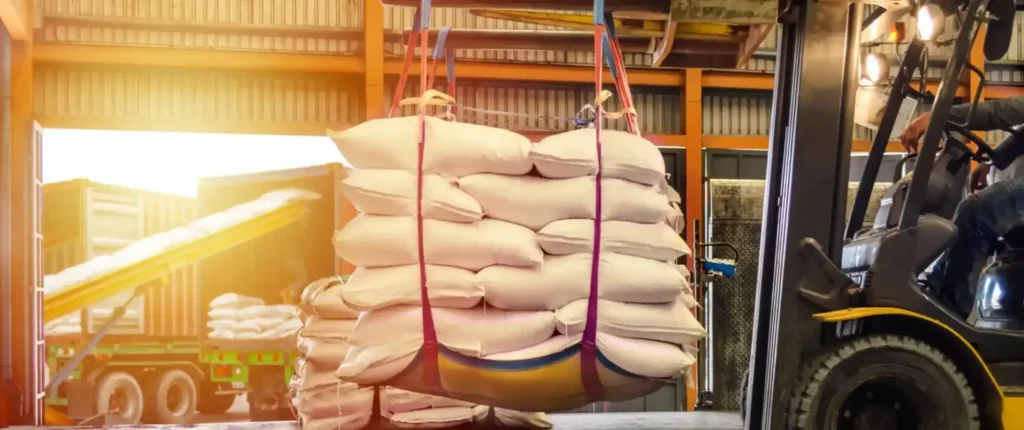
This article presents a layered, practice‑oriented expansion on the distinctions and synergies between Moisture‑Proof Woven Bags and Waterproof Woven Bags. It deepens each claim with operational details from materials science, converting processes, logistics reality, and quality engineering. The typography alternates shorter and longer sentences; the rhetoric interweaves questions, parallels, antitheses, and repetitions to enhance readability without sacrificing technical substance. Key product terms and long‑tail variations are bolded throughout for clarity and discoverability.
Scope and Orientation: Why Compare Moisture‑Proof and Waterproof Woven Packaging Now?
Why talk about them together? Because in real supply chains, rain and humidity rarely travel alone. Pallets perspire at dawn; storms arrive uninvited at noon; forklifts move bags from cool warehouses into hot truck bays where condensation blooms within minutes. In those liminal moments—when vapor becomes water, and water becomes pressure—the difference between Moisture‑Proof Woven Bags and Waterproof Woven Bags is not semantic; it is economic. Losses mount, claims accumulate, brands suffer. The long‑held assumption that one bag “does it all” is comforting—and costly. This piece dismantles that assumption, layer by layer, process by process.
Terminology cue: Moisture‑Proof Woven Bags prioritize water‑vapor resistance (WVTR control) and splash tolerance. Waterproof Woven Bags target liquid‑water holdout (hydrostatic resistance) via film thickness, liner continuity, and seam sealing. They overlap—but they are not the same.
Key phrases
PP woven sacks, BOPP‑laminated woven bags, PE‑liner PP woven sacks, moisture barrier packaging, water‑resistant packaging, WVTR, hydrostatic head.
Audience
Packaging buyers, plant managers, QA/QC leads, brand teams, and operations engineers aligning performance with cost.
What Exactly Are Moisture‑Proof Woven Bags? Function, Boundaries, Aliases
At their core, Moisture‑Proof Woven Bags are polypropylene (PP) woven sacks engineered to slow water‑vapor ingress and tolerate incidental splashes. They are engineered—not improvised—solutions to the invisible yet relentless migration of humidity. The job is not to hold back a flood; the job is to hold back time. By suppressing vapor transmission, these packages preserve flowability, prevent caking, and keep powders free‑pouring in climates where relative humidity cycles eat margins for breakfast.
Common aliases vary by market and team conventions:
- Damp‑proof PP woven bags
- Humidity‑resistant woven sacks
- Moisture‑barrier polypropylene bags
- Anti‑humidity woven packaging
- MP woven bags
Working boundary: Splash resistance is welcome, but immersion is not the design center. If pallets spend time in rainy yards or on open trucks, look beyond vapor control to liquid holdout—i.e., toward Waterproof Woven Bags.
Material Stack of Moisture‑Proof Woven Bags: Substrate, Films, Liners, Additives
Performance begins with the substrate. PP tapes—extruded, oriented, woven—create a tough, abrasion‑resistant framework that loves forklifts more than paper ever will. Around this skeleton we add thin, smart layers: coatings to close pores; laminates to carry graphics and reduce WVTR; liners to build an interior micro‑climate. The structure is minimalist enough to be cost‑effective, yet layered enough to be protective.
Substrate (woven PP): lightweight strength, chemical resistance, recyclability; typical base fabric 70–120 gsm depending on SKU mass and handling abuse.
Extrusion coatings (PP/PE, 10–40 μm): reduce porosity, control dust, provide a printable and more hydrophobic surface.
BOPP lamination (15–35 μm): delivers a tight vapor barrier among olefin films, enables vivid rotogravure or flexo artwork, adds scuff resistance.
PE inner liner (20–80 μm): optional, but potent for hygroscopic loads; creates a controlled interior environment, cuts odor migration, prevents fines leak‑out.
Additives: UV stabilizers for outdoor exposure, anti‑slip patterns to steady pallets, anti‑static agents for powder safety.
Costs scale with film thickness and printing ambitions. BOPP is pricier than bare coatings, yet it reduces spoilage, improves pallet stability, and elevates brand presence. The ledger must be read in total cost of ownership, not unit price alone.
Functional Features of Moisture‑Proof Woven Bags: What They Do, What They Don’t
- Lower WVTR versus bare woven PP: the layer stack slows vapor, extending shelf‑life for powders and grains.
- High‑impact graphics: BOPP‑laminated woven bags support detailed, retail‑grade prints.
- Mechanical toughness: the woven substrate resists punctures and tears better than multi‑wall paper in many rough‑handling flows.
- Cleaner lines and safer operators: laminates and liners reduce dust, an often underestimated ergonomic win.
- Recycling pathways: mono‑olefin stacks (PP/PE) are increasingly compatible with recovery streams that avoid paper‑plastic hybrids.
Reality check: Moisture‑proof is not waterproof. If your risk includes pooling rainwater or splashing during marine legs, you are negotiating with the wrong physics.
Manufacturing Moisture‑Proof Woven Bags: From Resin Qualification to QA Release
Manufacturing aligns three fundamentals—materials, tension, temperature. Tape lines establish orientation; circular looms stitch strength into geometry; coating and lamination close pores and carry graphics; converting fixes form and closure. A good bag is the sum of small controls held relentlessly.
- Incoming checks: PP resin MFR stability, masterbatch dispersion, film thickness tolerance, liner seal temperature windows.
- Tape extrusion: denier and tensile calibrated to weaving speed; gel counts and neck‑ins tracked to reduce weak points.
- Weaving: pick‑count uniformity and defect mapping; controlled tension prevents edge fray and pinhole clusters.
- Coating/lamination: thickness control (μm), adhesion, COF tuning for pallet stability and filling friction.
- Printing: registration accuracy and ink anchorage; visual AQL for smear and color delta.
- Converting: tube formation, gusset geometry, bottom seam integrity; optional liner insertion and lip preparation.
- Release: dimensional checks, seam strength, WVTR sampling by family, cosmetic audit.
Equipment note: High‑precision lines from Starlinger (Austria) and W&H (Germany) underpin repeatable gsm, film thickness, and registration—variables that ultimately drive moisture barrier packaging outcomes in the field.
Applications for Moisture‑Proof Woven Bags: Where They Excel
Dry foods (rice, pulses, seeds), industrial powders (fillers, gypsum, silica), animal nutrition, and retail‑facing SKUs that demand graphic quality—these are natural habitats for Moisture‑Proof Woven Bags. Export lanes that traverse tropical climates benefit from liners, not as decoration but as insurance.
Humidity‑centric lanes
Warehouse‑to‑container flows with high RH cycles; dew events during dawn shifts; indoor‑outdoor transfers.
Brand‑forward SKUs
Where BOPP‑laminated woven bags provide billboard‑quality prints that survive abrasive handling.
Waterproof Woven Bags: What Changes When Water Stops Being Vapor
When burdens shift from vapor to liquid, physics demands new vows. Waterproof Woven Bags embrace thicker laminations, continuous liners, and deliberate seam strategies. They are designed to shrug off heavy rain, resist pooling on flatbed decks, and survive brief immersion scares that would compromise humidity‑only builds. The same PP substrate remains; the perimeter defense hardens.
- Exterior film: higher thicknesses to resist liquid pressure; surface energy and COF tuned for mud and water shedding.
- Interior liner: continuous tubular liners with heat‑sealable lips; valve options combine convenience with holdout.
- Seams: taped‑stitch hybrids, hot‑air sealing, or pinch‑top closures; edge architectures that blunt capillary wicking.
Trade‑off: This additional armor raises unit cost and can trim line speed; the payback arrives when yards are wet, voyages are long, and products are water‑sensitive.
Manufacturing Waterproof Woven Bags: Seams, Seals, and Measurable Holdout
- Front‑end inspection: in addition to standard checks, verify liner puncture resistance and establish seal initiation windows.
- Coating/lamination: thicker skins for pressure; inline treatment for ink and tape adhesion.
- Converting: sealed sides or valves, double‑folded bottoms or block‑bottom styles to move pooling away from weak points.
- Closure: heat‑seal or pinch‑top to avoid stitch‑hole wicking where feasible.
- QA: agreed hydrostatic thresholds, seam leak audits (dye or water), wet drop and compression trials.
Production platforms from Starlinger and W&H make these tolerances reliable. Yet the most expensive line cannot rescue a vague specification. Numbers win; assumptions lose.
Use‑Case Mapping: When Waterproof Truly Pays
Construction materials staged outdoors, fertilizers in monsoon corridors, salts near coasts, marine and river logistics, emergency relief goods—these are where Waterproof Woven Bags earn their keep. Not because they look tougher, but because they actually are. The difference is visible on rainy Tuesdays and unplanned Thursdays.
Outdoor staging
Yards, ports, railheads where showers become streams and streams become puddles around pallet feet.
Water‑sensitive value
Fertilizers and salts where moisture means clumping, nutrient migration, and customer frustration.
Quality Control and Assurance: Building Confidence the Hard Way
Quality is not a slogan; it is a schedule. For both Moisture‑Proof Woven Bags and Waterproof Woven Bags, we anchor test plans to widely adopted norms for vapor transmission, seam strength, and liquid holdout; we trend COF to protect conveyor angles and pallet frictions; we archive retains for traceability because memory is fallible.
- Vapor transmission checks for films and stacks; sampling by SKU family rather than isolated runs.
- Hydrostatic or immersion‑style protocols to objectify waterproof performance.
- Tensile/tear/burst to model real handling abuses; wet‑condition drop and compression to approach the truth.
- Incoming, in‑process, and finished‑goods inspections; lot‑linked records; barcode traceability and retains.
Four‑point control model: build to mainstream norms; specify virgin resins and major‑maker films; run best‑in‑class equipment; execute full inspection—from incoming to release.
System Decomposition: Barrier, Mechanics, Environment, Chemistry, Branding, Cost
Treat the bag as a system. Vapor and liquid, tension and seal, artwork and coefficient of friction—they interlock. If one is neglected, the system pays elsewhere. The path forward is decomposition first, synthesis second.
Barrier
WVTR for humidity; measurable liquid holdout for rain. Choose stacks to match failure modes.
Mechanics
Gsm and film thickness for drop, tear, and stacking; seams that defeat wicking; closures that resist leaks.
Environment
Climate bands, monsoon routes, dawn dew, cold‑chain flexibility; map exposure honestly.
Chemistry
Hygroscopic powders, corrosives, odor‑sensitive blends; liners and inks chosen with intent.
Branding
BOPP artwork for shelf power; scuff control for real life; colorfastness for returnability cycles.
Cost
Unit price is not destiny: look at spoilage, claims, pallet stability, line speed, and reputational risk.
Synthesis: A Practical Selection Path from Exposure to Spec
- Map humidity vs. liquid risk: dawn dew, yard pooling, marine spray, washdown procedures.
- Classify product sensitivity: hygroscopic, food‑contact, odor‑sensitive, corrosive.
- Choose base fabric gsm: lighter for warehouse‑only; heavier for rough handling or long export lanes.
- Pick the barrier stack:
- Moisture‑Proof Woven Bags: BOPP or PP/PE coating; optional PE‑liner PP woven sacks for high sensitivity.
- Waterproof Woven Bags: thicker outer film, continuous liners, seam sealing (taped‑stitch + heat‑seal/pinch‑top).
- Define QA metrics: WVTR targets, hydrostatic thresholds, seam‑leak AQL, COF bands.
- Pilot and validate: wet drop and compression, pallet stability, print durability.
- Lock spec and traceability: lot approvals, retains, re‑validation cadence.
Colored Reference Tables: Materials, Barriers, Processes
| Bag part | Material options | Primary function | Notes |
|---|---|---|---|
| Woven substrate | PP tapes (homopolymer), UV‑stabilized where needed | Tensile, tear, puncture resistance | 70–120 gsm typical; up‑gauge for heavy loads |
| Exterior film | BOPP 15–35 μm; PP/PE coating 10–40 μm | Vapor barrier; print surface; scuff control | BOPP boosts artwork; thicker films aid liquid shedding |
| Inner liner | PE tubular 20–80 μm; PE/PP coex | Vapor barrier; dust/odor control | Continuous tubes improve waterproof performance |
| Seams & closures | Taped‑stitch; heat‑seal; pinch‑top | Liquid holdout and integrity | Seal stitch holes to reduce wicking |
| Property | Moisture‑proof | Waterproof |
|---|---|---|
| Vapor transmission | Lowered WVTR via films/liners | Often even lower with thicker films + liners |
| Liquid holdout | Splash tolerant | Designed for rain/pooling; brief immersion survivable |
| Seam strategy | Stitched; optional tape | Taped‑stitch + heat‑seal/pinch‑top |
| Typical gsm | 70–110 | 90–140 |
Rhetorical Interlude: Questions Buyers Should Ask Before Signing
Are these pallets ever staged outdoors? Are storms seasonal, or are they sporadic and severe? Do operators wash down bays where open bags wait? Are bags double‑stacked in containers with shifting temperatures? And perhaps the real question: do we prefer to pay a little more now or a lot more later?
Parallel truths: A cheaper bag can be expensive; a thicker film can be lighter on claims; a slower closure can be faster in total when rework and returns are counted.
Case Patterns: Turning Exposure Maps into Specifications
Consider three recurring patterns and how they resolve within a disciplined selection path.
Scenario A—Tropical rice, 25 kg
Pick a BOPP‑laminated woven bag with optional liner; balance graphics with WVTR targets; ensure anti‑slip for container stacks. Validate with pallet compression and seam checks after vibration.
Why: humidity and branding drive the spec, liner insurance covers coastal voyages.
Scenario B—Monsoon fertilizers
Choose Waterproof Woven Bags with thicker outer films, continuous liners, and sealable tops. Run wet drop and hydrostatic checks; audit seam leakage with dye or water.
Why: liquid exposure is not hypothetical; it is seasonal and certain.
Scenario C—Mineral fillers in steady warehouses
A Moisture‑Proof Woven Bag with PE coating may suffice; introduce anti‑static agents for dust safety; maintain moderate WVTR targets.
Why: humidity risk exists, but liquid exposure is negligible; avoid over‑design.
Design for Graphics and Handling: BOPP as a Bridge Between Brand and Physics
Brand equity meets material science on the BOPP plane. BOPP‑laminated woven bags translate art into abrasion‑resistant reality; they turn colors into contracts. But BOPP is more than a billboard—it’s a barrier. It narrows vapor pathways, smooths surfaces for reduced snag, and stabilizes coefficient of friction with the right additives. When the same film that sells also protects, budgets stop fighting themselves.
For readers planning deeper dives into this hybrid of performance and print quality, review a practical companion on liners and barrier control here: advanced liner‑enhanced PP woven strategies.
Process Cards: What to Measure, When to Intervene
Tape line
Denier, tensile, elongation, gel count. Intervene at neck‑in spikes and uneven chill rolls.
Weaving
Pick‑count stability, edge fray prevention, defect heat maps to spot loom drift.
Lamination
Thickness control, adhesion, COF tuning; monitor web tension and cure windows.
Converting
Seam strength, closure reliability, dimensional repeatability under speed changes.
Operational Risks and Mitigations: From Fork Tines to Summer Storms
Risks are not poetic; they are practical. Fork tines find seams; pallet corners abrade prints; tropical ramps load dew into liners; reefer doors invite thermal shock. Each risk has a mitigation—some are materials, some are behaviors, some are tests.
- Edge tapes and double folds to reduce seam exposure.
- Anti‑slip patterns tuned for the pallet board finish and stretch‑wrap recipe.
- Liner lip heat‑seals for bag sizes prone to top splash or horizontal rain.
- Wet drop testing after real‑world conditioning, not room‑temperature fantasy.
Sustainability Considerations: Mono‑Olefin Pathways and Right‑Sizing
Sustainability is a practice, not a press release. Mono‑olefin stacks—PP fabrics, PE/PP coatings, PE liners—simplify certain recycling pathways compared with paper‑plastic hybrids. Right‑sizing gsm and film thickness lowers mass without compromising function. Over‑design is waste; under‑design is spoilage; the sustainable point is the useful point.
Keyword Card: Reader‑First, Search‑Ready
We naturally interleave Moisture‑Proof Woven Bags, Waterproof Woven Bags, PP woven sacks, BOPP‑laminated woven bags, PE‑liner PP woven sacks, moisture barrier packaging, water‑resistant packaging, WVTR, and hydrostatic head—plus long‑tails such as waterproof polypropylene packaging for fertilizers and humidity‑resistant woven sacks for animal feed. Repetition where helpful; variation where natural.
FAQ, Reimagined as Engineering Checks
Do waterproof builds automatically mean the lowest possible vapor transmission? Often better, yes—but the design priority remains liquid holdout and seam integrity. Specify both metrics if both matter.
Are laminated bags recyclable? In many regions, yes—especially where mono‑olefin recovery exists. Align with local infrastructure.
How do we quantify waterproof without a universal yardstick? Adopt a defined hydrostatic or immersion protocol; specify pressure and time; set AQL; pair with seam‑leak audits.
Will liners slow lines? Sometimes. But fewer reworks and returns often reverse the arithmetic.
From Claim to Contract: Writing Purchase Specs That Behave
Write specifications as if they must survive storms—because they must. State WVTR bands, hydrostatic thresholds, seam‑leak AQLs, COF windows, gsm and film thickness ranges, liner type, closure style, print durability requirements. Tie these numbers to realities: climate zones, staging practices, automation types, returnability cycles. Numbers are the shortest path from promise to performance.
- Scope and Orientation: Why Compare Moisture‑Proof and Waterproof Woven Packaging Now?
- What Exactly Are Moisture‑Proof Woven Bags? Function, Boundaries, Aliases
- Material Stack of Moisture‑Proof Woven Bags: Substrate, Films, Liners, Additives
- Functional Features of Moisture‑Proof Woven Bags: What They Do, What They Don’t
- Manufacturing Moisture‑Proof Woven Bags: From Resin Qualification to QA Release
- Applications for Moisture‑Proof Woven Bags: Where They Excel
- Waterproof Woven Bags: What Changes When Water Stops Being Vapor
- Manufacturing Waterproof Woven Bags: Seams, Seals, and Measurable Holdout
- Use‑Case Mapping: When Waterproof Truly Pays
- Quality Control and Assurance: Building Confidence the Hard Way
- System Decomposition: Barrier, Mechanics, Environment, Chemistry, Branding, Cost
- Synthesis: A Practical Selection Path from Exposure to Spec
- Colored Reference Tables: Materials, Barriers, Processes
- Rhetorical Interlude: Questions Buyers Should Ask Before Signing
- Case Patterns: Turning Exposure Maps into Specifications
- Design for Graphics and Handling: BOPP as a Bridge Between Brand and Physics
- Process Cards: What to Measure, When to Intervene
- Operational Risks and Mitigations: From Fork Tines to Summer Storms
- Sustainability Considerations: Mono‑Olefin Pathways and Right‑Sizing
- Keyword Card: Reader‑First, Search‑Ready
- FAQ, Reimagined as Engineering Checks
- From Claim to Contract: Writing Purchase Specs That Behave
- Understanding Moisture Proof Woven Bags
- Understanding Waterproof Woven Bags
- Comparing Functionality
- Applications in Agricultural Processing
- The Manufacturing Process
- Conclusion
In the packaging industry, Moisture Proof Woven Bags and Waterproof Woven Bags are often used interchangeably, yet they serve distinct purposes and offer varying levels of protection. Understanding the differences between these two types of woven bags is essential for selecting the appropriate packaging solution for specific applications, such as the packaging of agricultural products like flour and rice. This article will explore the characteristics of both types of bags, analyze their functional capabilities, and highlight their applications in agricultural processing.
Understanding Moisture Proof Woven Bags
Moisture Proof Woven Bags are specifically designed to resist the penetration of moisture, making them suitable for products that require a certain level of protection from humidity and moisture exposure. These bags are constructed from woven polypropylene, often coated with a moisture-resistant layer to enhance their barrier properties.
Key Features of Moisture Proof Woven Bags
- Moisture Resistance: The primary feature of these bags is their ability to prevent moisture ingress, protecting the contents from humidity and water vapor.
- Breathability: While they resist moisture, these bags also allow for some airflow, which helps prevent condensation buildup inside the bag.
- Durability: Made from high-strength polypropylene fibers, moisture proof woven bags offer excellent tensile strength, making them suitable for carrying heavy loads.
- Lightweight: These bags are typically lightweight, which helps reduce shipping costs and makes them easier to handle.
- Customizability: Moisture proof woven bags can be customized in terms of size, design, and printing, allowing for branding and product information.
Understanding Waterproof Woven Bags
Waterproof Woven Bags, on the other hand, are designed to provide a higher level of protection against liquid ingress. These bags are typically made from materials that are completely impermeable to water, making them ideal for applications where contact with water or other liquids is a concern.
Key Features of Waterproof Woven Bags
- Waterproof Barrier: These bags are constructed to ensure that no liquid can penetrate the material, making them suitable for holding liquids or items that need to stay completely dry.
- Enhanced Durability: Waterproof woven bags are often reinforced with additional layers or coatings to ensure they can withstand harsher conditions.
- Versatility: They can be used in various applications, including construction, agriculture, and chemical packaging, where exposure to liquids is a significant concern.
- Greater Weight Capacity: Due to their robust construction, waterproof woven bags often have a higher weight-bearing capacity than moisture proof bags.
- Custom Printing Options: Like moisture proof bags, waterproof bags can also be customized for branding and product information.
Comparing Functionality
When it comes to functionality, the choice between moisture proof woven bags and waterproof woven bags largely depends on the intended use and specific environmental conditions the bags will face.
Moisture Proof Woven Bags
- Ideal for: Products that are sensitive to humidity but do not require complete protection from liquid exposure. This includes dry goods such as flour, rice, and grains.
- Performance: They perform well in humid environments where moisture levels may fluctuate, protecting the contents without creating a sealed environment that could lead to condensation.
Waterproof Woven Bags
- Ideal for: Products that are at risk of coming into contact with liquids or are stored in wet environments. This includes products like fertilizers, chemicals, and certain agricultural products that need absolute protection from water.
- Performance: They provide a more robust defense against liquid exposure, ensuring that the contents remain dry even when submerged in water or exposed to heavy rain.
Summary of Functional Differences
| Feature | Moisture Proof Woven Bags | Waterproof Woven Bags |
|---|---|---|
| Moisture Resistance | High | Very High |
| Water Resistance | Moderate | Complete |
| Breathability | Yes | No |
| Weight Capacity | Moderate | High |
| Ideal Applications | Grains, flour, rice | Chemicals, fertilizers |
| Durability | Good | Excellent |
Applications in Agricultural Processing
Both Moisture Proof Woven Bags and Waterproof Woven Bags find extensive applications in agricultural processing, specifically in the packaging of various products.
1. Flour Packaging
Flour is a staple ingredient in many households and requires careful packaging to maintain its quality.
- Moisture Proof Woven Bags are commonly used for flour because they offer sufficient moisture resistance while allowing for some breathability. This helps prevent the flour from becoming stale or clumpy due to humidity.
2. Rice Packaging
Rice is another agricultural product that benefits from moisture-proof packaging.
- Moisture Proof Woven Sacks ensure that rice remains dry and free from spoilage during storage and transportation. Given that rice is typically stored for extended periods, the ability to resist moisture while allowing airflow is critical.
3. Fertilizers
Fertilizers often require waterproof packaging due to their chemical composition and sensitivity to moisture.
- Waterproof Woven Bags are used to store and transport fertilizers, ensuring they do not absorb moisture, which can lead to clumping and degradation of the product.
4. Pesticides and Chemicals
In the agricultural sector, the packaging of pesticides and chemicals also demands a high level of protection.
- Waterproof Woven Bags are essential for these products, providing a complete barrier against liquid ingress and ensuring the safety of both the product and the user.
The Manufacturing Process
The manufacturing process for both types of woven bags involves several key steps to ensure quality and durability:
- Material Selection: High-quality polypropylene is selected for its strength and moisture-resistant properties.
- Weaving Process: The polypropylene fibers are woven into a fabric, forming the base structure of the bag.
- Coating and Layering: For moisture proof bags, a moisture-resistant coating is applied. For waterproof bags, multiple layers may be co-extruded to create an impermeable barrier.
- Quality Control: Each batch of bags undergoes stringent testing to ensure they meet industry standards for moisture and water resistance.
- Customization: The bags can be printed with custom designs, labels, and branding to meet specific client needs.
Conclusion
In summary, while both Moisture Proof Woven Bags and Waterproof Woven Bags provide valuable packaging solutions, they serve different purposes. Moisture proof bags excel in environments where humidity is a concern, while waterproof bags offer complete protection against liquid exposure.
When selecting the right type of woven bag for agricultural processing applications such as flour and rice packaging, it is essential to consider the specific requirements for moisture and water resistance. By understanding the differences between these two types of woven bags, manufacturers and consumers alike can make informed decisions that ensure product quality and safety.
References
- Brown, T. “Packaging Technology: Exploring Moisture and Water Resistance in Woven Bags,” Journal of Packaging Science, 2022.
- Smith, L. “The Importance of Proper Packaging in Agriculture,” International Journal of Agricultural Sciences, 2023.
- Patel, R. “Moisture Control in Food Packaging: Best Practices,” Food Packaging and Shelf Life, 2021.
- Johnson, P., & Lee, A. “Innovations in Woven Bag Production,” Packaging Innovation Review, 2023.