
Setting the Stage: Why Lightweight Woven Bags Matter in Modern Logistics
Every supply chain lives between two imperatives: move more and waste less. Within that tension, Lightweight Woven Bags have emerged as the quiet workhorses of packaging—unassuming yet decisive. By replacing brute thickness with engineered precision, they shrink resin usage, tame freight costs, and keep pallets square under pressure. Are they only “lighter” sacks? Hardly. They are a system of choices—materials, geometry, process windows, and quality loops—that together produce an object which is stronger where it counts and leaner where it can be. This piece examines that system, pushes each argument a layer deeper, and threads seemingly separate facts—orientation, picks-per-inch, valve sleeves, WVTR, clamp handling—into a coherent decision map you can actually use.
Thesis in one line: When engineered as a mono‑polyolefin platform with tuned fabric GSM, face stiffness, and closure integrity, Lightweight Woven Bags reduce cost and emissions without increasing damage rates—and often improve them.
What Are Lightweight Woven Bags? (Definition and Aliases)
In practical terms, Lightweight Woven Bags are packaging sacks constructed from oriented polypropylene tapes woven into a stable fabric, then optionally laminated with film and/or combined with an inner liner. Instead of maximizing thickness, the design optimizes the relationship between denier, picks‑per‑inch (PPI), fabric grammage (GSM), and face stiffness so that strength concentrates along useful directions and mass is spent only where it delivers returns. On factory floors, in procurement emails, and on warehouse labels, the same platform appears under several names. To avoid confusion, align on the vocabulary from the start. The most common aliases include:
- Lightweight PP Woven Bags
- Lightweight Woven Sacks
- BOPP‑laminated Lightweight Woven Bags
- Low‑GSM Woven Bags
- Block‑Bottom Lightweight Valve Bags
Five names; one architecture. The configuration slides along a few dials—orientation, PPI, laminate type, closure method—to meet different abuse profiles and branding goals. Call it what your team prefers; just specify it with discipline.
Material Anatomy of Lightweight Woven Bags (Composition, Properties, and Cost Logic)
A credible lightweight program starts with a compact, well‑behaved bill of materials. Every gram must pay rent. Below, we unpack each component not as a buzzword but as a lever—what it does, where it goes, and how it interacts with the rest of the system.
PP Woven Fabric (structural web)
Slit‑film polypropylene tapes are extruded, slit, reheated, and oriented. Orientation aligns polymer chains and amplifies tensile strength per gram. Typical windows for lightweight builds: 45–100 g/m² fabric, 10×10–14×14 PPI. Spend mass where drop and seam loads concentrate; save it elsewhere.
BOPP Lamination (graphics + scuff shield)
Reverse‑printed biaxially oriented PP shields inks under film, raises scuff resistance, and stiffens faces. Choose gloss for vibrancy, matte for a premium look, pearlescent for depth, or clear for visibility. Common thickness: 15–25 μm.
Inner PE Liner or Co‑Ex Film (optional)
Where moisture or dust must be controlled, a polyethylene liner—loose, glued, or heat‑sealed—delivers WVTR targets and clean closure. Co‑ex variants tune seal initiation and antistatic behavior.
Additives and Masterbatches
UV stabilizers for yard exposure, slip/antiblock for de‑nesting and VFFS, pigments for opacity and brand colors, antistatic packages for powder safety. Keep to thermal limits so tape draw strength stays intact.
| Component | Typical Spec Window | Functional Contribution | Notes |
|---|---|---|---|
| PP woven fabric | 45–100 g/m²; 10×10–14×14 PPI | Tensile/tear; seam integrity | Virgin PP favored to minimize variability |
| BOPP film (gloss/matte/pearlescent) | 15–25 μm | Print durability; face stiffness; scuff shield | Reverse‑print for rub life |
| PE inner liner | 40–80 μm | WVTR reduction; dust control | Tube‑inserted; heat‑sealed or stitched |
| Valve patch (if valve bag) | Sized to filler spout | Controls fill; arrests dust | PE/PP composite or coated fabric |
| Additives (UV, antistat, pigments) | Per TDS | Outdoor stability; safety; color | Stay within thermal windows |
Design principle: keep a mono‑polyolefin build wherever feasible. A PP‑dominant architecture helps Lightweight Woven Bags fit mechanical recycling streams and simplifies material passports without compromising performance.
Features That Legitimize the Lightweight Label
A sack isn’t “lightweight” because a spreadsheet says so; it is lightweight when the system performs. That means pallets stay square, seams hold, barcodes scan, and damage tickets do not spike. Below are the features that—taken together—make the label meaningful.
- High strength‑to‑weight: orientation plus disciplined weaving carries heavy fills at low GSM.
- Pallet stability: face stiffness and block‑bottom geometry resist lean and corner collapse.
- Moisture/dust control: liners and sealed bottoms deliver WVTR targets and sift‑proofing.
- Logistics durability: reverse‑printed BOPP preserves graphics and barcodes after abrasion.
- Line compatibility: works on valve fillers, VFFS/HFFS, stitching or pinch lines.
- Risk management: antistatic paths for powders; UV stability for yard storage.
- Recyclability signal: mono‑PP architecture simplifies downstream handling.
A rhetorical question to remember: If your pallet stacks one extra layer without crush events, is the bag not—functionally—stronger? Field behavior beats isolated lab numbers.
Production Process of Lightweight Woven Bags (From Gatekeeping to Release)
Performance is not improvised; it is produced. VidePak treats each station as a capability node and runs critical assets from Austria’s Starlinger and Germany’s W&H to keep tolerances narrow and outcomes repeatable. The process divides cleanly into three arcs: incoming, core manufacturing, and release.
Incoming: Raw‑Material Selection and Verification
- Supplier qualification: audited PP resin, film, and masterbatch vendors with compliance files in order.
- Identity checks: melt flow rate, density, moisture, ash; film thickness maps, gloss/haze as needed.
- Lab gate tests: DSC thermal fingerprints, tensile bars (ASTM proxy), oven moisture for hygroscopic inputs.
- Color control: drawdowns for Delta‑E windows; adjust before extrusion—not after printing.
Core Manufacturing: Station‑by‑Station Discipline
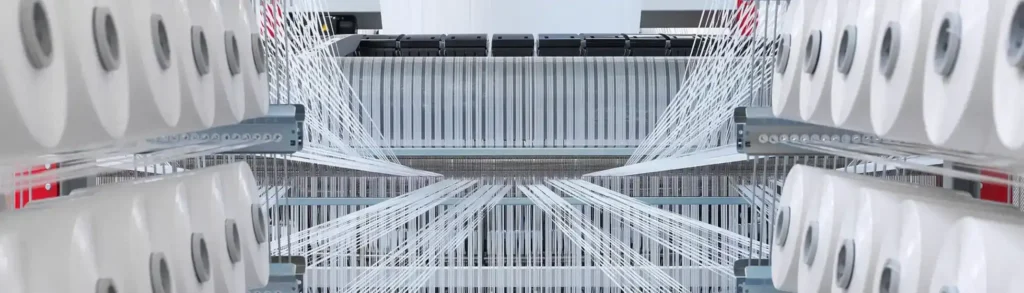
- Tape extrusion & orientation (Starlinger): PP pellets → sheet → slit → oriented tapes. Control denier, draw ratio, shrink; check tensile/elongation inline.
- Weaving (circular/flat looms): Set PPI and loom tension to protect flatness and seamability; avoid over‑tension that thins tapes and weakens corners.
- Coating/lamination (Starlinger/W&H): Bond reverse‑printed BOPP at controlled coat weights and nip pressures; choose finishes to tune friction and shelf presence.
- Printing (gravure/flexo): High registration; manage solvent retention to prevent blocking; verify barcodes under abrasion.
- Cutting & forming: Block‑bottom or pinch‑bottom; size valve sleeves to filler and dust targets; add gussets, easy‑open, or handles as needed.
- Closures & sealing: Heat‑seal liners and pinch‑bottoms; or chain‑stitch with hot‑melt tapes; ultrasonic where cleanliness rules.
- Converting & palletizing: Count, stack, bundle with consistent compression; avoid set‑creases that disturb forming.
Release: Quality Control and Traceability
- Dimensional & mass checks: cut sizes, gusset width, GSM within window.
- Mechanical tests: tensile/tear, seam strength, drop height and cycles, edge‑crush proxies.
- Surface & print: gloss/haze windows, registration tolerance, rub resistance.
- Barrier checks: WVTR and pinhole counts where liners are used.
- Traceability: lot coding from resin silo to pallet wrap with retains for audits.
Equipment note: relying on mature platforms—Starlinger for extrusion/weaving and W&H for coating/printing—keeps uptime high and variability low. In lightweight programs, narrow windows are not a luxury; they are the only safe way to make grams vanish.
Applications: Where Lightweight Woven Bags Win
The best defense of a design is a working pallet. Across industries, Lightweight Woven Bags deliver value where humidity, abrasion, and cube efficiency collide.
- Construction powders: cement, gypsum, mortar—square stacks and valve speed matter; liners mitigate hydration and dusting.
- Agriculture: fertilizers, seeds, grains—UV stability for yards; breathable options for respiration‑sensitive contents.
- Chemicals: salts, resins, additives—moisture and dust control are non‑negotiable; antistatic packages mitigate ignition risk.
- Retail & consumer: pet food, rice, sugar, charcoal—graphics must survive conveyors and handling; barcodes must scan on first pass.
- Logistics & warehousing: house‑brand SKUs—lower tare plus face stiffness increases units per container and reduces CO₂ per ton‑kilometer.
| Product | Recommended Format | Barrier Setup | Why |
|---|---|---|---|
| Cement & mortar | Block‑bottom valve | BOPP + PE liner | Sift‑proof, fast fill, square stacks |
| Fertilizer | Block‑bottom or tubular | UV‑stabilized fabric + optional liner | Outdoor storage tolerance |
| Pet food | Pinch‑bottom with liner | Matte/pearlescent BOPP + food‑grade liner | Shelf appeal + aroma retention |
| Salts/chemicals | Pinch‑bottom/FFS | Antistatic options + liner | Clean, dust‑controlled operation |
Quality Governance: How VidePak Controls and Guarantees Results
Quality is not a gate at the end; it is a loop that runs through everything. VidePak organizes that loop into four pillars that keep lightweight designs safe and repeatable.
- Standards‑aligned production & testing. SOPs reference ISO/ASTM/EN/JIS where applicable; acceptance criteria map to tensile/tear, seam/drop, WVTR, rub resistance, and scan reliability.
- Virgin, tier‑one raw materials. When grams are scarce, variability is costly. 100% virgin PP (unless specified), vetted BOPP/PE films, and stable masterbatches keep inputs predictable.
- Best‑in‑class equipment. Starlinger and W&H platforms run extrusion, weaving, coatings, and printing—tight process windows, global service, reliable controls.
- Layered inspection & traceability. Incoming → in‑process → final; lot retains and coded lineage enable targeted root‑cause analysis instead of broad recalls.
Certification does not ship a good bag—capable processes do. But documentation proves the discipline behind every pallet when audits arrive.
System Thinking: Coordinating Materials, Geometry, Process, and Logistics
Lightweighting is choreography: pull one lever and others move. Reduce GSM, and seam loads rise. Add lamination, and face stiffness improves while breathability changes. Switch to pinch‑bottom, and dust disappears while sealing discipline must tighten. How do we keep the dance in step? By anticipating counter‑moves.
| Design move | Risk introduced | Countermeasure |
|---|---|---|
| Lower GSM | Seam weakness; drop failures | Increase orientation; raise PPI slightly; add lamination; block‑bottom geometry |
| Add lamination | Reduced breathability | Micro‑perfs; liner humidity management |
| Switch to pinch‑bottom | Seal window sensitivity | Define heat‑seal windows; pinhole scans |
| Mono‑material emphasis | Weaker ESD paths | Compatible antistatic packages; test surface resistivity |
Parallel truths hold together here: lighter yet tougher; slimmer yet stronger; cleaner prints yet fewer grams. Paradox? Only if the program is undisciplined. In tuned systems, these are not contradictions—they are co‑benefits.
Engineering Economics and Sustainability
Resin is a dominant cost driver; freight magnifies it. Remove ten grams from a 150 g bag across five million units and you retire fifty metric tons of resin. That is a line on a COGS statement and a line on an emissions dashboard. But savings are real only if damage rates do not rise. The discipline of lightweighting is the discipline of whole‑system accounting.
| Economic lever | Mechanism | What to validate |
|---|---|---|
| Resin reduction | Lower GSM at equal strength | Seam/drop tests; edge‑crush; AQL sampling |
| Freight density | More units per container; extra pallet layer | Pallet drop/clamp; lean over time; wrap tension |
| Damage avoidance | Stiffer faces; sealed closures | Field returns; ticket categories; audit logs |
Analogy: pallets are portfolios. A small investment in face stiffness (via lamination) often derisks the entire stack, just as a minor hedge can stabilize an otherwise efficient asset mix.
Comparative Landscape: Alternatives and Trade‑offs
No design exists in a vacuum. Compare Lightweight Woven Bags with common alternatives and the trade‑offs sharpen into view.
| Attribute | Lightweight Woven Bags | Multiwall Paper | Jute | Monolayer PE |
|---|---|---|---|---|
| Wet strength | High with laminate/liner | Low–medium | Low | Medium |
| Scuff resistance | High (reverse‑printed BOPP) | Medium | Low | Low |
| Stack stiffness | High (laminate + geometry) | Medium | Low | Low |
Case Walkthroughs: From Specification to Field Result
Three condensed scenarios translate abstraction into action. Each shows the dials you would turn and the outcomes you should measure.
Cement 50 kg (Valve Block‑Bottom)
- Fabric: 80 g/m² PP woven; ~12×12 PPI; UV stabilized.
- Lamination: 20 μm matte BOPP, reverse‑printed.
- Liner: 60 μm PE, pinch‑sealed for sift‑proofing.
- Tests: drop 1.0 m × 5; seam ≥ spec; WVTR to hydration tolerance; registration ±0.5 mm.
- Expected result: square stacks; low dusting; barcode legibility after abrasion.
Fertilizer 25 kg (Outdoor Storage)
- Fabric: 75 g/m² PP woven; UV masterbatch; widened gusset.
- Lamination: pearlescent BOPP for friction tuning and branding.
- Liner: optional by climate; add antistatic where dust ignition risk exists.
- Protocol: pallet drop + clamp cycles at elevated temperature/humidity.
Pet Food 15 kg (Pinch‑Bottom)
- Fabric: 65 g/m² PP woven, 12×12 PPI.
- Lamination: 18–20 μm matte BOPP; premium shelf feel.
- Liner: 50–60 μm food‑grade PE; aroma barrier via co‑ex if required.
- Options: handle die‑cuts; easy‑open; graphics emphasizing brand blocks.
Testing and Validation: Lab, Line, Logistics
Prove a lightweight program where it counts. Lab tests anchor the physics; line trials verify speed and cleanliness; logistics simulations confirm stack behavior after time and motion.
- Lab: tensile, tear, seam pulls, drop heights, WVTR, rub resistance, adhesion, barcode legibility after scuff. For ESD‑sensitive SKUs, verify surface resistivity and discharge times.
- Line: run‑at‑rate on actual fillers; tune valve sleeves for back‑pressure and dusting; confirm fabric does not flutter at spouts.
- Logistics: pallet drops, clamp cycles, environmental conditioning (heat/humidity), lean measurements after 24 h and 72 h.
Risk and Troubleshooting Playbook
| Symptom | Likely Cause | Corrective Action |
|---|---|---|
| Bottom bursts during drop tests | Low seam strength; stitch cut‑through | Wider seam tape; change to pinch‑bottom; adjust needle/looper |
| Graphics rub‑off | Surface printing; low face stiffness | Reverse‑printed BOPP; raise coat weight; matte film |
| Leaning pallets | Insufficient face stiffness; loose wrap | Add lamination; set wrap pre‑stretch; revise stack pattern |
| Valve dusting at fill | Sleeve misfit; back‑pressure path | Resize sleeve; add vent path or dust sock |
| Moisture caking | Liner pinholes; under‑spec thickness | Heat‑seal and pinhole scans; adjust liner μm |
Specification Tables (At‑a‑Glance)
Bill of Materials & Roles
| Component | Spec Window | Contribution | Notes |
|---|---|---|---|
| PP woven fabric | 45–100 g/m²; 10×10–14×14 PPI | Tensile/tear; seam integrity | Prefer virgin PP for low variance |
| BOPP film | 15–25 μm | Scuff shield; print durability | Reverse‑printed |
| PE inner liner | 40–80 μm | WVTR; dust control | Heat‑sealed or stitched |
Geometry & Converting Options
| Parameter | Options | Impact |
|---|---|---|
| Bag type | Block‑bottom valve; Pinch‑bottom; Tubular sewn bottom | Square stacks vs. cost; dust control vs. speed |
| Gusset | 50–120 mm | Cube efficiency; pallet footprint |
| Perforation | None; micro‑perfs; breathable panels | Respiration vs. moisture balance |
| Reverse under BOPP; surface | Rub life vs. quick art changes |
Implementation Path: From First Spec to Stable Supply
- Define the use‑case: content density, particle size, moisture sensitivity, distribution map.
- Set targets: finished mass, drop height, WVTR, barcode legibility, pallet cube.
- Engineer substrate: denier, PPI, GSM; decide lamination and finish.
- Choose format & closures: block‑bottom valve vs. pinch‑bottom vs. tubular; liner plan.
- Pilot at the plant: run‑at‑rate trials; clamp/drop tests; humidity cycles.
- Lock specs: sampling plans, retains, change control, documentation.
- Rollout: onboarding, production part approvals as required, continuous improvement loops.
Questions People Actually Ask
Do Lightweight Woven Bags always need BOPP film? Not always. Industrial lanes can run coated fabric alone; retail lanes typically benefit from reverse‑printed BOPP for rub life and visuals.
How light is too light? When seam pulls and drop failures rise. The optimum is the minimum mass that preserves pallet behavior and damage rates.
Can they be recycled? Mono‑PP architectures fit many PP mechanical recycling streams; verify locally.
What if the filler is older? Run plant‑site trials. Face stiffness from lamination and tuned valve sleeves often restore line speed even at low GSM.
Looking for a focused explainer on substrate behavior and yarn orientation? Read this companion guide: A practical review of woven fabric PP bag features.
Keyword Language (Woven Naturally into the Copy)
Primary phrase: Lightweight Woven Bags. Useful variants in practitioner language: Lightweight PP Woven Bags, Lightweight Woven Sacks, BOPP‑laminated Lightweight Woven Bags, block‑bottom valve woven bags, low‑GSM PP woven sacks. These appear where they add clarity—not as noise, but as navigation.

- Setting the Stage: Why Lightweight Woven Bags Matter in Modern Logistics
- What Are Lightweight Woven Bags? (Definition and Aliases)
- Material Anatomy of Lightweight Woven Bags (Composition, Properties, and Cost Logic)
- Features That Legitimize the Lightweight Label
- Production Process of Lightweight Woven Bags (From Gatekeeping to Release)
- Applications: Where Lightweight Woven Bags Win
- Quality Governance: How VidePak Controls and Guarantees Results
- System Thinking: Coordinating Materials, Geometry, Process, and Logistics
- Engineering Economics and Sustainability
- Comparative Landscape: Alternatives and Trade‑offs
- Case Walkthroughs: From Specification to Field Result
- Testing and Validation: Lab, Line, Logistics
- Risk and Troubleshooting Playbook
- Specification Tables (At‑a‑Glance)
- Implementation Path: From First Spec to Stable Supply
- Questions People Actually Ask
- Keyword Language (Woven Naturally into the Copy)
Imagine a conversation between a logistics manager and a packaging engineer:
Client: “Our warehouse is overflowing, and shipping costs are skyrocketing. How can we balance durability with space savings?”
Engineer: “Lightweight woven bags with precision-engineered polypropylene filaments (1.8–2.3mm thickness), customizable weight ranges (45–120gsm), and anti-static coatings reduce storage volume by 25% while maintaining load capacities up to 50kg. VidePak’s 30+ years of expertise ensures these solutions are tailored to your industry.”
Client: “How do we verify performance metrics like electrostatic discharge protection?”
Engineer: “Third-party testing confirms our anti-static bags reduce surface resistivity to <10¹⁰ ohms, meeting IEC 61340-5-1 standards. Let’s analyze your workflow.”
This article explores how lightweight woven bags revolutionize storage efficiency, backed by VidePak’s technical innovations and global manufacturing excellence.
Section 1: The Engineering Behind Lightweight Woven Bags
1.1 Material Specifications: Thickness, Weight, and Dimensions
VidePak’s woven bags are crafted from virgin polypropylene (PP) with filament diameters ranging from 1.8mm to 2.3mm, achieving a tensile strength of ≥80 N/cm². Key parameters include:
| Parameter | Range | Application Example |
|---|---|---|
| Thickness | 0.08–0.15mm | Ultra-thin 0.08mm for retail packaging |
| Grammage | 45–120gsm | 60gsm for agricultural grains |
| Size (L×W) | 20cm×30cm to 120cm×180cm | 90cm×120cm jumbo bags for construction |
A 2024 study by the Global Packaging Alliance found that reducing bag thickness by 0.02mm decreases material usage by 12% without compromising load-bearing capacity.
1.2 Load Capacity and Durability
VidePak’s bags withstand weights of 5kg to 50kg, validated by ASTM D5264 abrasion tests. For instance:
- 25kg capacity bags (80gsm) are ideal for fertilizers, withstanding 1,000+ transport cycles.
- 50kg industrial-grade bags (120gsm) feature reinforced seams for construction materials.
Section 2: Anti-Static Technology in Woven Bags
2.1 Mechanism of Electrostatic Discharge (ESD) Prevention
VidePak integrates carbon-based conductive agents into PP fibers, creating a continuous anti-static network. This technology:
- Reduces surface resistivity to 10⁶–10⁹ ohms (vs. 10¹²–10¹⁵ ohms for standard PP).
- Neutralizes static charges within 0.1–2 seconds, per IEC 61340-5-1 testing.
2.2 Case Study: Chemical Powder Packaging
A European client handling explosive powders reduced ESD incidents by 98% after switching to VidePak’s anti-static bags. The bags’ conductive grid design dissipates charges evenly, preventing ignition risks.
Section 3: Storage and Logistics Optimization
3.1 Space-Saving Design
- Nested stacking: Thin profiles (0.08mm) allow 1,200 bags/m³ vs. 800 bags/m³ for traditional designs.
- Pallet efficiency: Uniform dimensions maximize pallet loads, reducing shipping containers by 15%.
3.2 Cost-Benefit Analysis
A Southeast Asian rice exporter saved $18,000 annually by adopting VidePak’s 60gsm bags, which cut warehouse space by 30% and reduced fuel costs due to lighter loads.
Section 4: VidePak’s Manufacturing Excellence
4.1 Precision Production
With 100+ circular looms and 30+ laminators, VidePak achieves:
- Tolerance control: ±0.5mm in bag dimensions.
- Print accuracy: 12-color flexographic presses with Pantone-matching.
4.2 Sustainability Initiatives
- 100% recyclable PP: Aligns with EU Directive 94/62/EC.
- Energy efficiency: 8.2 kWh/1,000 bags (20% below industry average).
FAQs: Addressing Key Client Concerns
| Question | Answer |
|---|---|
| Minimum order quantity (MOQ)? | 5,000 units for standard designs; 20,000 for custom anti-static coatings. |
| Certifications for food-grade bags? | FDA, EU 10/2011, and BRCGS compliance. |
| Lead time for bulk orders? | 15–20 days for 20,000+ units, backed by 16 extrusion lines. |
| Anti-static bag lifespan? | 3–5 years under standard conditions (tested at 500+ ESD cycles). |
Section 5: Global Applications and Custom Solutions
VidePak serves industries worldwide:
- Agriculture: UV-stabilized 70gsm bags for grain storage in Africa.
- Chemicals: Anti-static FIBC bags for European pharmaceutical powders.
- Retail: Matte-laminated 45gsm bags for premium cosmetics in North America.
Explore our specialized solutions like BOPP laminated woven bags or anti-static FIBC bags.
References
- VidePak Co., Ltd. (2025). Technical Specifications: Lightweight Woven Bags.
- Global Packaging Alliance. (2024). Efficiency Trends in Industrial Packaging.
- IEC 61340-5-1. (2023). Electrostatic Discharge Protection Standards.
- Contact: info@pp-wovenbags.com | Website: https://www.pp-wovenbags.com/
Optimize your supply chain with VidePak’s lightweight woven bags—where innovation meets reliability.