# Waterproof Woven Bags: A Technical, Operational, and ESG‑Aligned Playbook
> This long‑form guide distills materials science, production engineering, logistics practice, and sustainability governance to help you specify, source, and operate **Waterproof Woven Bags** at scale. It builds on VidePak’s experience with PP woven systems—coated and laminated constructions, liners, and quality controls—and integrates ESG commitments into everyday packaging decisions.
—
## What Are Waterproof Woven Bags? (Definition, Aliases, Scope)
**Waterproof Woven Bags** are load‑bearing packaging made from polypropylene (PP) woven fabric that are engineered to resist liquid water ingress and to control moisture vapor transmission when configured with coatings, laminations, or liners. They combine the tensile efficiency of oriented PP tapes with surface treatments (e.g., extrusion coating) or films (e.g., BOPP lamination) to deliver a robust barrier under real‑world handling: filling, palletization, transport, and retail or yard storage.
In procurement and operations, the same platform appears under several context‑specific names. For clarity, we list common aliases and treat them as equivalent where performance specs match:
1. **Waterproof PP Woven Bags**
2. **Waterproof Woven Sacks**
3. **Waterproof Poly Bags (Woven)**
4. **Moisture‑Proof Woven Bags**
5. **BOPP‑Laminated Woven Bags**
6. **PE‑Coated PP Woven Bags**
7. **Leakproof Woven Bags** (for sift‑proof, liquid‑splash resistant builds)
8. **Water‑Resistant PP Fabric Bags**
A useful rule: “waterproof” in flexible packaging usually means “resistant to liquid water penetration under specified conditions” plus “controlled (often lowered) Water Vapor Transmission Rate (WVTR).” Absolute impermeability is reserved for thick, continuous films or rigid containers; woven systems achieve waterproof performance through composite design.
—
## The Materials of Waterproof Woven Bags (Constituents, Properties, Cost Logic)
A credible **Waterproof Woven Bags** program starts with a disciplined bill of materials (BoM). Each gram must justify its function under drop, clamp, vibration, humidity, UV exposure, and abrasion. The stack is compact yet deliberate:
### 1) PP Woven Fabric (Structural Web)
• Substrate: slit‑film polypropylene tapes extruded, slit, and oriented (drawn) to align polymer chains.
• Typical fabric weights: 70–120 g/m² for 5–50 kg open‑mouth formats; higher GSM for clamp‑intensive lanes or heavy‑duty SKUs.
• Weave density: 10×10 to 14×14 PPI (picks per inch) tuned to tensile, tear, and seam pull requirements.
• Why PP? High specific strength, hydrophobic surface energy, chemical tolerance (fertilizers, salts, pigments), thermoformability, globally stable cost base.
Where it lives: body panels (tubular or flat), gussets, base reinforcements, and mouth stabilization zones.
### 2) Face Engineering: Extrusion Coating vs. BOPP Lamination
• **PE/PP Extrusion Coating** (e.g., 15–35 g/m²): creates a continuous film on the woven fabric, raising liquid water resistance, controlling WVTR, smoothing the face, and tuning coefficient of friction (COF). Matte formulations improve stacking and barcode scans.
• **BOPP Lamination** (e.g., 18–25 μm): delivers premium print quality via reverse printing, scuff resistance, and panel stiffness for brick‑like stacks; gloss for vibrancy, matte for scanning performance.
• Hybrid stacks: BOPP outside + PE inside where both print pop and barrier are critical.
### 3) Inner Liners (LDPE/LLDPE/Co‑ex)
Loose, tab‑fixed, or glued liners (50–100 μm) govern WVTR and contain fines. Form‑fit liners pair with square bases. For fine powders or hygroscopic products (sugar, flour, cement), heat‑sealed liners eliminate needle paths; antistatic packages manage dust ignition risk.
### 4) Functional Masterbatches
• UV stabilizers (for yard storage)
• Pigments and whites (opacity, branding)
• Antistatic agents (for high‑velocity filling or flammable atmospheres)
• Slip/antiblock (de‑nesting, conveyor compatibility)
• Process aids (consistent tape draw to prevent lightweighting backfire)
### 5) Closures and Construction Details
• Sewn closures with filler cords for sift‑proofing
• Pinch‑seal + liner heat‑seal for premium hygiene and moisture control
• Block‑bottom or square‑standing formats for pallet stability
• Easy‑open features (tear tapes, cords) balancing cleanliness and consumer experience
### Material Cost Logic
Resin usually dominates COGS; grams removed equal dollars saved—unless failure rates rise. The winning recipe lowers GSM while protecting drop performance, seam pulls, barcode legibility after rub, and pallet edge‑crush behavior. In other words: target total landed cost, not just cost per bag.
—
## What Are the Features of Waterproof Woven Bags? (Performance, Handling, Branding)
**Waterproof Woven Bags** earn their keep when line speed, pallet behavior, and shelf/yard performance improve at once. The non‑negotiables:
• Liquid water resistance: coated or laminated faces that repel rain and splashes during outdoor handling and container loading.
• Controlled WVTR: liners or heavier coats where hygroscopic products require longer shelf life.
• High strength‑to‑weight ratio: oriented PP tapes deliver tensile/tear per gram.
• Self‑standing geometry: true square bases and pre‑creased gussets yield brick‑like stacks.
• Print and brand surfaces: reverse‑printed BOPP protects art and codes under abrasion.
• Operational compatibility: gravity fillers, conveyors, clamp trucks, retail shelving.
• Mono‑polyolefin builds: PP/PE stacks that align with existing recycling streams where recovery exists.
• Optional ESD pathways: antistatic liners, grounded fixtures, or fabric strategies for dust‑explosion controls.
Heuristic: one extra pallet layer repays more than a marginal resin cut ever could. Optimize stacks first; grams follow.
—
## What Is the Production Process of Waterproof Woven Bags? (Front‑End → Stations → Release)
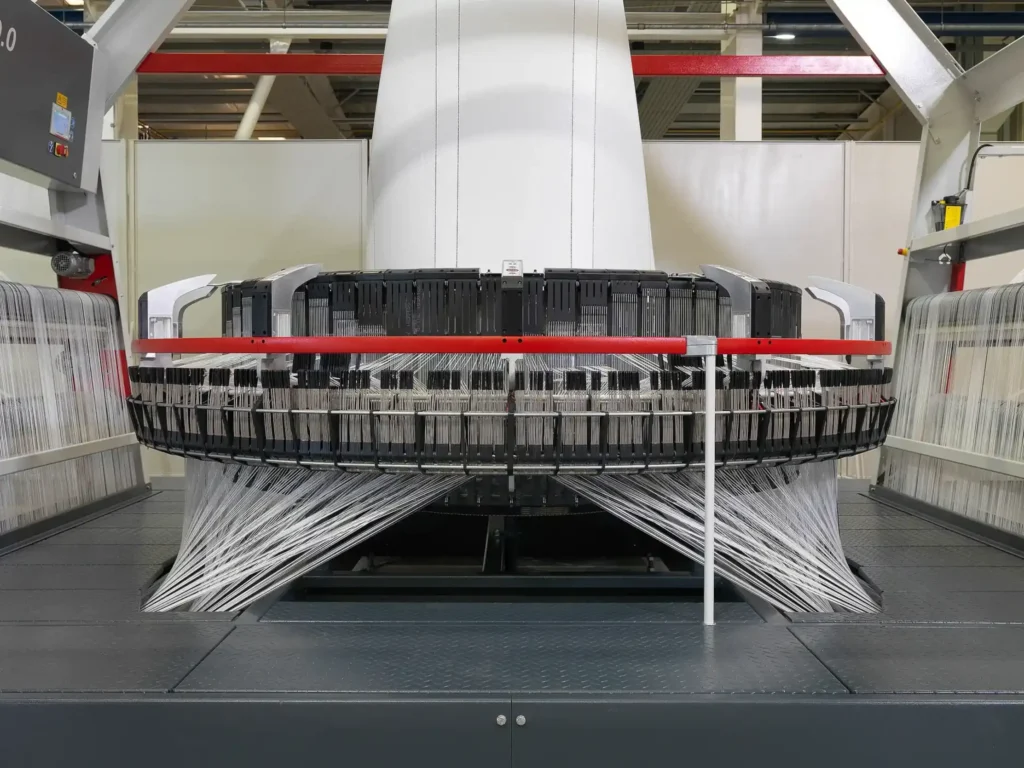
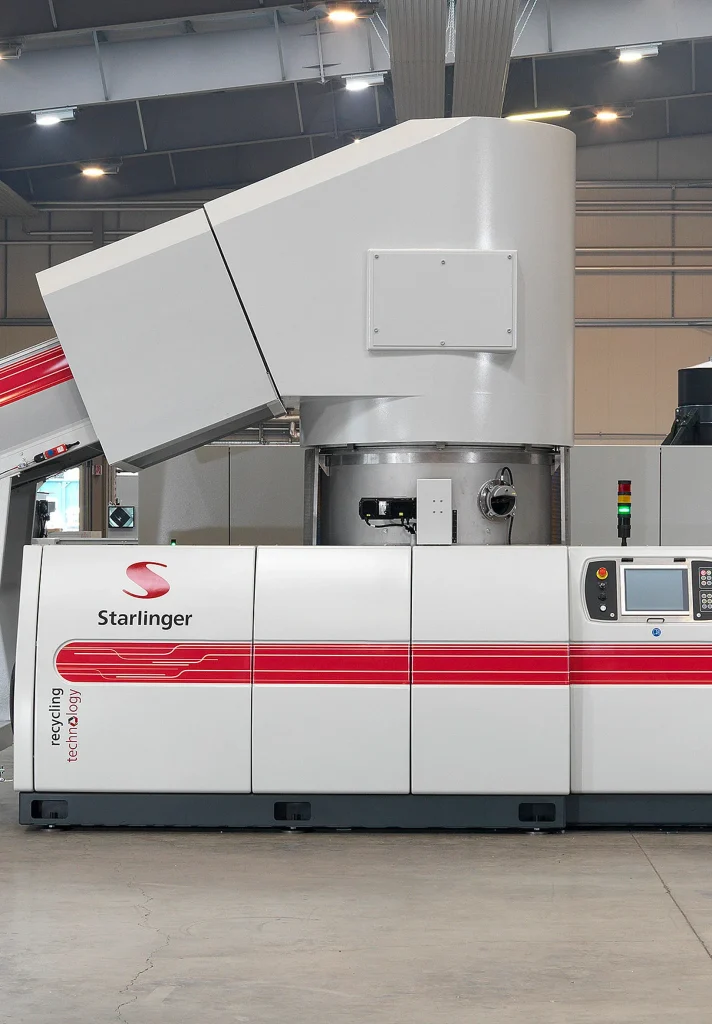
Performance is manufactured, not improvised. VidePak locks capability at each step, running critical assets from Austria’s Starlinger and Germany’s W&H to keep process windows narrow and repeatable.
### A. Front‑End Gatekeeping (Raw Material Selection and Testing)
1. Supplier qualification and approved vendor lists for PP resin, masterbatch, films/liners, and sewing threads.
2. Identity/CoA checks: melt flow rate (MFR), density, moisture, ash.
3. Thermal fingerprints: DSC on base resins and masterbatches to confirm compatibility windows.
4. Color and opacity targets: drawdowns for Delta‑E and whiteness; UV package IDs for yard storage.
5. Hygiene regimes for food‑contact builds: bioburden/ATP checks, segregation SOPs.
### B. Core Unit Operations (Station‑by‑Station)
1. **Tape extrusion & orientation (Starlinger)**: pellets → sheet → slit tapes → reheat → draw. Control denier, draw ratio, shrink, and crystallinity; verify tensile/elongation inline.
2. **Weaving (circular/flat looms)**: set PPI and loom tension for panel flatness and seamability; avoid over‑tension that thins tapes.
3. **Face engineering**: extrusion coating or BOPP lamination at controlled gauge and nip pressure; matte for COF and scans, gloss for vibrancy.
4. **Printing (W&H gravure/flexo)**: high registration, scuff resistance; barcodes validated post‑abrasion to avoid DC mis‑scans.
5. **Cutting & forming**: crease gussets, paste or fold block‑bottoms, heat‑cut edges to reduce fray, integrate easy‑open features where specified.
6. **Liner conversion & insertion**: tubular or form‑fit liners; heat‑seal where premium hygiene or hydration control is required.
7. **Closure & sealing**: chain stitch + filler cords for sift‑proofing, or pinch‑seal/liner‑seal for moisture‑critical SKUs.
8. **Converting & palletizing**: count, stack, wrap with controlled compression; avoid set‑creases that disturb forming on filling lines.
### C. Back‑End Quality and Release
• Dimensional checks: cut sizes, gusset depths, base geometry, loop heights (if applicable).
• Mass/GSM windows: fabric and coat weights within ±3% (typical).
• Mechanical tests: seam pulls, drop cycles, edge‑crush proxies (pallet scale).
• Barrier and hygiene: WVTR, pinhole scans, liner seal integrity.
• COF bands: publish face↔face and face↔pallet for conveyor and palletization safety.
• Traceability: route cards link resin silo → tape line → loom → coat/lam → print → converting; retains live through shelf‑life horizon.
—
## What Is the Application of Waterproof Woven Bags? (Use‑Cases and Format Heuristics)
**Waterproof Woven Bags** excel wherever humidity, splash, or rainfall interact with powders or granules, and where stacking efficiency matters.
• Foods and staples (rice, sugar, flour): food‑grade liners, matte bands under codes, cube‑stable pallets for distribution centers.
• Pet food (5–25 kg premium formats): aroma‑holding liners, photographic print on BOPP where brand requires, and easy‑open cords for happier consumers.
• Agriculture (seeds, fertilizers): UV‑stabilized fabrics and optional antistatic packages; micro‑perfs for respiration in select SKUs.
• Chemicals & minerals (salts, pigments, dry mixes): WVTR control and sift‑proof seams; COF tuned to conveyor and wrap SOPs.
• Construction materials (dry mortar, gypsum, tile adhesive, cement): base geometry resists clamp abuse; liners curb hydration and complaint rates.
• Coastal and monsoon logistics: laminated faces mitigate rain splash; sealed liners reduce salt‑spray ingress during port dwell.
Format shorthand:
– Classic open‑mouth waterproof woven sack (coated fabric)
– BOPP‑laminated waterproof woven sack (premium print + barrier)
– Open‑mouth with pinch‑sealed liner (maximum hygiene/WVTR control)
– Valve variants (for pneumatic fillers) with block‑bottoms and laminated faces
—
## How VidePak Controls and Guarantees the Quality (Four Pillars)
1. **Standards‑aligned SOPs and tests**: ISO/ASTM/EN/JIS anchors for mechanics, barrier, and hygiene; food‑grade add‑ons for migration/cleanliness where required.
2. **Virgin, tier‑one inputs on critical load paths**: consistent base fabric, webbing, threads; vetted films/liners; stable masterbatches—upstream variance is the enemy of downstream control.
3. **Best‑in‑class equipment**: Starlinger (extrusion, weaving, coating) and W&H (coating/printing) keep process windows tight so grams removed do not reappear as field returns.
4. **Layered inspection & traceability**: incoming → in‑process → final; AQL sampling; retains; digital lineage to ring‑fence anomalies and execute root‑cause analysis.
—
## ESG at VidePak: From Plant Energy to Community Programs
Sustainability is an operating system, not a side project. VidePak’s commitments translate directly into packaging outcomes:
• **Renewable energy**: large rooftop solar capacity supplies the majority share of factory power, materially lowering kg CO₂e per bag.
• **Circularity**: partnerships to backhaul and repurpose used PP bags (e.g., into erosion‑control mats) demonstrate practical after‑use pathways.
• **Ethical labor**: audited compliance frameworks (e.g., SA‑type certifications) ensure safe, fair workplaces; consistent product quality is inseparable from stable teams.
• **Transparency**: material passports and QR‑linked specs make audits faster and closed‑loop collection feasible.
Operationally, ESG shows up in fewer solvent emissions (ink/adhesive choices), lower energy per 1,000 bags (extrusion heat recovery, inverter drives), and reduction of scrap via robust inline controls.
—
## System Thinking: From Sub‑Problems to an Integrated Solution
Lightweight yet strong; waterproof yet scuff‑resistant; hygienic yet fast on fillers—these are constraints to solve, not contradictions. Break the problem into sub‑problems, pair each with a solution pattern, then synthesize the stack.
### Sub‑Problem A: Waterproofing Without Excess Weight
• Risk: heavy coats inflate cost and CO₂e; too thin and rain ingress rises.
• Pattern: matte PE coat at minimum viable gauge for rain splash + form‑fit liner for WVTR; validate by humidity cycling and port‑dwell simulations.
• Metric: pass drop and edge‑crush tests at target grams saved.
### Sub‑Problem B: Preserve Barcode Readability After Abrasion
• Risk: glossy glare and scuffing cause mis‑scans in DCs.
• Pattern: reserve matte zones under codes; reverse‑print BOPP for rub life; scuff‑then‑scan QC.
• Metric: post‑rub scan rate ≥ 99.5% across lanes.
### Sub‑Problem C: Sift‑Proofing Fine Powders
• Risk: needle holes and seam leaks raise housekeeping and customer complaints.
• Pattern: filler cords in chain stitches; liner heat‑seal across the mouth; choose valve + block‑bottom where pneumatic filling dominates.
• Metric: AQL pinhole/particle leakage below site threshold.
### Sub‑Problem D: Yard Storage and UV Degradation
• Risk: embrittlement, seam failures, chalking.
• Pattern: UV‑stabilized fabric and webbing; light colors to reduce absorbance; rotate stock on FIFO.
• Metric: retain tensile within window after accelerated UV exposure.
**Synthesis**: the integrated bill is a mono‑polyolefin stack—PP woven substrate + tuned face + optional liner—validated at pallet scale. Publish the numbers (kWh/1,000, grams saved, scan rates, WVTR) and keep improving.
—
## Technical Tables (Illustrative Spec Windows)
Table 1 — Core Bill of Materials
| Component | Typical Spec Window | Contribution | Notes |
| ————————- | —————————- | ——————————————– | ———————————- |
| PP woven fabric | 70–120 g/m²; 10×10–14×14 PPI | Tensile/tear; form stability | Virgin PP favored for load paths |
| Extrusion coating (PE/PP) | 15–35 g/m² | Liquid water resistance; COF tuning | Matte vs. gloss for scans/stacking |
| BOPP lamination | 18–25 μm | Print pop; scuff protection; panel stiffness | Reverse printing protects art |
| Liner (LDPE/LLDPE) | 50–100 μm | WVTR control; hygiene; fines capture | Form‑fit for square bases |
| Additives (UV/antistat) | per TDS | Outdoor durability; ESD | Respect thermal windows |
Table 2 — Geometry & Handling
| Parameter | Options | Operational Impact |
| ————- | —————————— | —————————— |
| Body style | Tubular, 4‑panel, block‑bottom | Cube efficiency; lean control |
| Mouth | Open, EZ‑open, valve | Fill speed & cleanliness |
| Base | Square/brick‑standing | Pallet stability; stack height |
| Face friction | Matte, gloss, patterned | Conveyor behavior; scanning |
Table 3 — Performance & Test Logic
| Test | Target Window (Illustrative) | Why It Matters |
| ———— | ——————————— | ————————– |
| Drop cycles | 5× at spec height with no rupture | Transport shocks |
| Seam pulls | ≥ 80% of base fabric strength | Safety margin |
| WVTR | Per SKU (liner gauge, AQL) | Caking & shelf life |
| COF | Publish face↔face & face↔pallet | Pallet and conveyor safety |
| Pinhole scan | Zero critical; AQL on minor | Moisture ingress control |
—
## Buyer’s Parameter Map (Cost, Risk, ESG)
• Barrier stack: coated only vs. laminated + liner; balance print needs and WVTR.
• GSM strategy: protect edge‑crush at pallet scale before shaving grams.
• Closure choice: sewn + filler cords (rugged, economical) vs. pinch‑seal + liner (premium hygiene).
• Scan design: matte bands and module sizes sized for your scanners.
• ESG signals: publish kWh/1,000, % renewables, % scrap reprocessed, and rPP policies for non‑critical layers.
Decision Matrix (illustrative)
| Parameter | Light Duty | Heavy Duty |
| ———- | —————— | —————————– |
| Fabric GSM | 70–80 | 90–120 |
| Lamination | 18 μm BOPP | 18–25 μm BOPP + 10–15 g/m² PE |
| Liner | None or 50 μm | 70–100 μm heat‑sealed |
| Mouth/Base | Open/standard base | Valve/block‑bottom |
—
## Risk & Troubleshooting (Waterproof‑Specific)
| Symptom | Likely Cause | Corrective Action |
| ————————– | ——————————————- | ——————————————————- |
| Bottom splay in stacks | Weak corner paste; under‑spec stiffness | Increase paste area; add lamination; use corner tapes |
| Mouth collapse during fill | Insufficient pre‑crease; low face stiffness | Re‑tool creases; raise coat weight; add spout support |
| Barcode mis‑reads | Gloss glare or contrast loss | Use matte bands; enlarge modules; scuff‑then‑scan QC |
| Moisture caking | Liner pinholes; thin gauge | Vacuum/pinhole scans; bump liner μm; heat‑seal closures |
| Wet‑handling slippage | COF too low on face | Matte coat bands; patterned anti‑slip |
—
## Implementation Roadmap (Spec → Pilot → Scale)
1. Define use‑case: density, particle size, hygiene target, climate, lanes.
2. Set KPIs: finished mass, drop cycles, WVTR, COF, scan reliability, pallet layers.
3. Engineer substrate: denier, PPI, GSM, UV package.
4. Choose face: coating vs. BOPP; matte vs. gloss; anti‑slip patterns.
5. Decide closure: sewn + filler cords vs. pinch; liner plan and gauge.
6. Pilot: plant run‑at‑rate; clamp/drop; humidity conditioning; scan & abrasion audits.
7. Lock specs & QC: AQL sampling, retains, traceability matrix.
8. Rollout: change control, supplier scorecards, and continuous improvement.
—
## FAQs (Engineering and Procurement)
Q: Do **Waterproof Woven Bags** always need a liner?
A: Not always. Granular contents with low moisture sensitivity can run coated faces only. Define WVTR targets first; then pick liner gauge and format if needed.
Q: Is BOPP or PE coating better for waterproofing?
A: They solve different problems. BOPP brings print and scuff resistance; PE coating enhances liquid water repellency and tunes COF. Many programs combine them—BOPP outside, PE or liner inside.
Q: How do we keep barcodes scannable after abrasion?
A: Place codes on matte bands or under reverse‑printed BOPP; enlarge module size slightly; validate with scuff‑then‑scan tests.
Q: Which closure is cleanest for fine powders?
A: Pinch‑bottom with a heat‑sealed liner is typically most sift‑proof; sewn + filler cords is rugged and cost‑effective for less critical lanes.
Q: Can recycled PP be used?
A: Yes, in non‑critical components with strict QA and odor management. Critical load paths (fabric, loops) typically remain virgin PP or use mass‑balance content with equivalent mechanicals.
—
## Closing Perspective
Lightweight yet tougher. Safer yet simpler. Premium yet recyclable. **Waterproof Woven Bags** sit at the intersection of materials science, disciplined manufacturing, and logistics pragmatism. With standards‑anchored SOPs, virgin inputs in critical paths, and best‑in‑class equipment from Austria’s Starlinger and Germany’s W&H, VidePak delivers a packaging platform that protects product quality in wet, humid, and coastal environments—without losing sight of energy, emissions, and circularity goals.
—
## Comparative Lens: Waterproof Woven Bags vs. Alternatives
Packaging decisions are comparative. Evaluating **Waterproof Woven Bags** against common alternatives clarifies trade‑offs and where woven platforms win.
1. Multiwall Paper Sacks (with PE inner)
* Strength & Wet Behavior: Paper loses wet strength quickly; woven PP retains tensile after splash and short‑term rain.
* Print: Paper takes offset/flexo beautifully; laminated woven (BOPP) closes the gap with scuff‑resistant graphics.
* Recyclability: Paper is curbside‑friendly in many regions, but contaminated paper + PE liners complicate mills. Mono‑polyolefin woven + liner can route through polyolefin streams where infrastructure exists.
* Cost: Paper can be cost‑effective for dry indoor chains; woven gains advantage in humid/coastal lanes and high drop/clamp abuse.
2. FFS (Form‑Fill‑Seal) Polyethylene Film Sacks
* Hermeticity: Best for fine powders and oxygen control; film welds create near‑perfect seals.
* Handling: Films scuff and slip more; pallet leaning is frequent without high‑friction bands.
* Print: Excellent flexo/gravure options; reverse‑printed laminates match or beat.
* CO₂e: Gauge‑optimized films can be light; woven systems counter with cube recovery and damage reduction in heavy‑duty lanes.
3. Rigid Pails or Boxes
* Protection: Superb for liquids or fragile products; over‑specced for granules/powders.
* Logistics: Poor cube when empty and costly reverse logistics; woven sacks fold flat and scale economically.
* ESG: Higher materials mass; woven bags reduce tonnage per unit delivered.
**Conclusion**: In wet‑risk, abrasion‑heavy, or cube‑critical lanes, **Waterproof Woven Bags** frequently minimize total landed cost while preserving brand presentation.
—
## Extended Materials Science: From Surface Energy to Permeation
### Surface Energy and Wetting
Wetting behavior governs splash resistance and dirt pick‑up. Polyolefins (PP/PE) exhibit low surface energy, promoting water beading. Corona or flame treatment for printability should be balanced: enough to bond inks/films, not so high that dirt adhesion rises.
### Permeation Pathways in Laminated Wovens
Woven substrates contain interstitial gaps; coatings/films bridge these. Barrier performance is defined by (a) film continuity and thickness, (b) adhesion to the fabric, and (c) seam integrity. Pinholes at stitch lines are the dominant leak path; pinch‑seals and liner heat‑welds mitigate this.
### WVTR Targets by Category (Illustrative)
* Dry mortar/gypsum: < 6 g/m²·day (38 °C, 90% RH) with liner 70–90 μm
* Refined sugar: < 10 g/m²·day with food‑grade liner and sealed mouth
* Rice/flour: manage humidity swings; liner improves shelf stability in monsoon logistics
### COF and Stacking
COF face↔face of 0.35–0.55 provides a useful window for pallet stability while preserving conveyor flow. Matte coats and micro‑textured films deliver predictable COF under dust.
---
## Process Controls and Reliability Engineering
### SPC Windows and Capability
* Tape denier Cpk ≥ 1.33 across shifts to protect fabric strength repeatability.
* Coating gauge Cpk ≥ 1.33 to prevent wet‑weak spots or excessive grams.
* Print registration ±0.5 mm for barcode clarity and visual alignment.
### FMEA Snapshot (Waterproof Woven Context)
* Failure Mode: seam leak → Cause: missing filler cord → Effect: sifting, caking → Control: in‑line seam vision + operator checklist.
* Failure Mode: pallet lean → Cause: low COF or under‑stiff face → Effect: rewraps/returns → Control: matte bands + periodic stack compression tests.
* Failure Mode: barcode mis‑read → Cause: glare/scuff → Effect: DC delays → Control: matte code panels + scuff‑then‑scan QC.
### Validation Protocols
* Humidity Cycling: 25 → 40 → 25 °C at 50–90% RH; measure WVTR drift and seam integrity.
* Clamp/Drop Sequences: per distribution map (rail/road/port).
* Field Trials: run‑at‑rate on customer fillers with dust and scan audits.
---
## ESG Blueprint: Metrics, Projects, and Procurement Hooks
### Energy
* KPI: kWh/1,000 bags; % renewable share of plant energy.
* Projects: heat recovery on extruders, high‑efficiency motors, PV expansion, smart HVAC.
### Materials and Waste
* KPI: grams per bag by SKU; % scrap re‑granulated; % rPP in non‑critical layers.
* Projects: design‑for‑disassembly (liner detachment), mono‑polyolefin builds, reusable pallet wraps.
### Air and Water
* KPI: VOC emissions per 1,000 bags; wastewater COD/BOD.
* Projects: solventless or low‑VOC ink systems; closed‑loop wash for reusable totes.
### People and Community
* KPI: training hours per employee; audit scores from ethical‑trade frameworks.
* Projects: safety kaizen, community plastics clean‑ups, supplier ESG scorecards.
**Procurement Hook**: bake ESG KPIs into contracts: publish quarterly kWh/1,000, % renewables, scrap rate, and corrective actions; tie a portion of vendor scorecards to these.
---
## Case Studies (Illustrative)
### A. Coastal Cement Distributor
Problem: hydration and caking under monsoon conditions.
Solution: 90 g/m² fabric + 20 g/m² matte PE coat; 80 μm liner with heat‑sealed mouth; matte barcode bands; clamp‑friendly block‑bottom.
Outcome: returns down 62%; +1 pallet layer achieved; label scan rate 99.7% post‑rub.
### B. Premium Pet Food Brand
Problem: aroma retention and shelf aesthetics; wet‑risk during last‑mile delivery.
Solution: BOPP (20 μm) reverse print + inner PE coating; EZ‑open cord; 70 μm food‑grade liner.
Outcome: zero odor complaints; shelf uplift; no increase in grams versus prior non‑laminated build due to careful gauge balance.
### C. Seed Supplier (UV and Dust)
Problem: UV exposure in yards and dusting at fill.
Solution: UV‑stabilized fabric; antistatic liner; matte faces; micro‑perfs in select SKUs.
Outcome: cleaner fills, lower rewraps, improved germination quality (less handling damage).
---
## Palletization and Cube Economics
### Pattern 1: Brick‑Stable Pallets
Square bottoms + stiffer faces allow interlocked layers with minimal corner splay. Corner tapes and reinforced bases resist clamp damage.
### Pattern 2: Wrap and COF Symmetry
COF bands matched to wrap tension prevent telescoping. Matte face bands are especially valuable in dusty DCs.
### Container Loading
Stable cubes reduce mixed‑SKU voids; laminated faces slide into place during stuff/unstuff but remain stable in stack due to matte zones.
---
## Recycling, Reuse, and End‑of‑Life Pathways
* **Mono‑material strategy**: PP fabric + PP/PE coatings + detachable PE liner simplify polyolefin recycling where infrastructure exists.
* **Design for disassembly**: easy liner removal (tabs/marked seams) and clear polymer ID.
* **Secondary uses**: erosion‑control, rubble bags, agricultural storage—extending useful life before mechanical recycling.
**Material Passport**: embed QR that documents polymer family, coating/lamination gauges, and liner specs to accelerate sortation.
---
## Extended Tables (Spec Options by Sector)
Table 4 — Sector‑Specific Recipes (Illustrative)
| Sector | Fabric GSM | Face Stack | Liner | Closure | Notes |
| ------------- | ---------- | -------------------------------- | -------------------- | ---------------------------- | -------------------------- |
| Dry mortar | 90–110 | Matte PE 20–25 g/m² | 70–90 μm | Pinch + heat‑seal | Hydration control priority |
| Refined sugar | 80–90 | BOPP 20 μm (matte zone for code) | 70–80 μm food‑grade | Sewn + filler cords or pinch | Aroma and scan stability |
| Pet food | 80–100 | BOPP 20–25 μm + inner PE | 60–80 μm | Sewn + EZ‑open | Shelf aesthetics + barrier |
| Fertilizer | 80–100 | Matte PE 15–20 g/m² | Optional 50–70 μm | Sewn + filler cords | UV package required |
| Pigments | 90–110 | PE 20 g/m² | 80–100 μm antistatic | Pinch + liner seal | Dust and ESD control |
---
## RFQ Template (Copy‑Ready)
1. Product: **Waterproof Woven Bags**
2. SKU density and particle size range
3. Climate/lanes (humidity, port dwell)
4. Barrier target (WVTR), liner format/gauge
5. Face preference (matte/gloss; BOPP vs. coat)
6. Closure (sewn + filler cords vs. pinch + liner seal)
7. Print/artwork notes (barcode module size; matte bands)
8. Pallet pattern and clamp handling
9. Test plan (drop, seam pulls, scan after abrasion)
10. ESG disclosures (kWh/1,000, % renewable, scrap %)
11. Traceability (lot coding, retains policy)
---
## Glossary (Selected)
* **WVTR**: Water Vapor Transmission Rate—lower values indicate better moisture barrier.
* **COF**: Coefficient of Friction—affects stacking and conveyor behavior.
* **BOPP**: Biaxially Oriented Polypropylene—printable film for lamination.
* **PPI**: Picks Per Inch—proxy for weave density.
* **AQL**: Acceptance Quality Limit—sampling framework for inspections.
* **FMEA**: Failure Modes and Effects Analysis—structured risk method.
---
## Final Notes for Plant Trials
* Bring procurement, quality, EHS, and operations to the same table.
* Define acceptance bands in advance; test at pallet scale, not just in the lab.
* Log everything: humidity, clamp pressures, drop heights, scan pass rates.
* Close the loop with suppliers: share field data so grams and gauges move in the right direction.
---
## Standards and Compliance Map (Orientation Guide)
* **ISO 21898 (Packaging — Flexible Intermediate Bulk Containers)**: though targeted at FIBC, many mechanical philosophies (top‑lift, cyclic loading) inspire testing discipline for heavy woven sacks.
* **ASTM D5276 (Drop Test of Loaded Containers)**: baseline drop protocols adapted to sack heights/masses.
* **ASTM D1709 (Impact Resistance of Plastic Film by Free‑Falling Dart)**: useful for assessing coating/liner puncture resistance.
* **ASTM D1894 (Static and Kinetic COF of Plastic Film and Sheeting)**: for COF bands on matte/gloss faces.
* **EN 868 Series (Packaging for Terminally Sterilized Medical Devices)**: not directly applicable to consumer dry goods, but barrier vocabulary and pinhole thinking can sharpen hygiene builds.
* **IEC/ATEX Guidance (Static Control)**: Type C/D logic for dust explosion prevention where flammable atmospheres may form.
* **Food Contact (EU/FDA)**: positive lists, migration limits; especially critical for liners.
**Compliance Strategy**: anchor to your regulated domain, but borrow adjacent standards for robust validation where your category lacks a prescriptive method.
---
## Moisture Ingress: A Simplified Modeling Primer
Moisture control is both materials and math. A simplified steady‑state model helps set liner gauges:
WVTR_total ≈ (1 / (1/WVTR_face + 1/WVTR_liner)) + seam_factor
* WVTR_face: coated/laminated fabric contribution.
* WVTR_liner: inner liner contribution.
* seam_factor: empirical allowance for needle holes/valve paths; minimized by filler cords and pinch/heat‑seals.
**Implication**: a modest liner often drives most of the barrier, while the face coat protects against liquid splash and scuff. Diminishing returns appear above ~90 μm for many liners; validate against your climate and dwell time.
---
## Liner Selection Matrix (By Product and Process)
| Product | Dusting | Hygroscopic | Liner Recommendation | Notes |
| ------------- | ------- | ----------- | -------------------------- | --------------------------- |
| Cement | High | Very high | 80–90 μm LDPE; heat‑sealed | Hydration control dominates |
| Sugar | Medium | Medium | 70–80 μm food‑grade LDPE | Aroma/cleanliness balance |
| Flour | High | Medium | 70 μm; consider antistat | Sifter leakage risk |
| Polymer resin | Low | Low | Optional 50–70 μm antistat | Cleanroom options |
| Fertilizer | Medium | Medium | 60–80 μm; UV‑safe outer | Yard storage and odor |
---
## Barcode and Code Design Notes (Scannability First)
* Module size: choose at the upper end of printer/scanner capability to tolerate rub.
* Contrast: dark code on light matte field; avoid halftones behind codes.
* Placement: away from high‑wear corners and clamp zones.
* Validation: perform scuff‑then‑scan and warp‑then‑scan tests at pallet scale.
---
## Operator SOP (Filling and Handling)
1. Pre‑fill check: verify crease integrity at the mouth; inspect liner seals.
2. Spout alignment: match diameter; use dust sock where needed; maintain head height to stabilize flow.
3. Post‑fill closure: apply filler cords with consistent tension or execute pinch + heat‑seal SOP.
4. Palletization: interlock layers; apply wrap tension per COF bands; corner protection if clamp trucks are used.
5. Scan audit: sample codes from inner and outer layers after wrapping.
---
## Audit Checklist (Supplier and Lot Release)
* Documentation: CoAs for resin, masterbatch, film/liner; route card with machine/shift IDs.
* Visuals: coating uniformity, print registration, matte band placement, seam consistency.
* Mechanics: tensile strip tests, seam pulls, drop cycles.
* Barrier: WVTR spot checks, pinhole scans, liner seal peel tests.
* ESG: kWh/1,000 disclosure, % renewable, scrap rate, corrective actions since last audit.
---
## Cost‑of‑Failure vs. Grams Saved: A Back‑of‑Envelope Model
Total Landed Cost (TLC) ≈ Materials + Conversion + Freight + Expected Damage + Compliance/ESG
* Materials: directly proportional to grams per bag.
* Freight: reduced by stable cubes enabling an extra layer per pallet/container.
* Expected Damage: sharply nonlinear with under‑spec seams, WVTR misses, or scan failures.
* ESG: influenced by energy intensity and scrap.
**Optimization Sketch**: shave grams until (ΔMaterials + ΔFreight) savings are offset by rising (Expected Damage). The optimum is rarely at minimum grams; it’s at minimum TLC.
---
## Extended FAQs
Q: How do **Waterproof Woven Bags** behave in freezing temperatures?
A: PP becomes stiffer at low temperatures; choose coatings and liners with adequate ductility; validate drop tests at the lowest ambient expected.
Q: Do laminated faces hinder recyclability?
A: Laminations remain polyolefin‑based (PP/PE) in most builds; many regional streams accept them. Provide a material passport and confirm with local reclaimers.
Q: Can we print photo‑grade graphics on matte faces?
A: Yes, via BOPP with controlled matte finishes; reverse print protects the ink. Reserve glossier panels away from barcode zones.
Q: Are valve bags compatible with waterproof designs?
A: Yes. Block‑bottom valve bags can be laminated; ensure valve closure integrity and dust‑proof flaps; consider internal valve heat‑seals or liners to manage WVTR.
Q: What about compostability?
A: Industrial compostability standards do not align with PP woven performance requirements. Focus on recyclability, reuse, and mass‑balanced content rather than compostability for this category.
---
## Change Control and Continuous Improvement
* Trigger Events: resin grade shifts, masterbatch supplier change, gauge alteration, new artwork or code placement, new pallet wrap spec.
* Control Plan: pilot + A/B lot comparison; expanded inspections for two full production weeks; field monitoring for returns/complaints.
* KPI Cadence: monthly grams/SKU, scan pass rate, WVTR hits, and pallet layer success rate.
---
## Putting It All Together (A Short Narrative)
A coastal DC handles seasonal spikes of cement and tile adhesive. Historically, paper sacks caked in monsoon. The team writes an RFQ anchored on **Waterproof Woven Bags**: 95 g/m² fabric, matte PE coat, 80 μm liner, pinch‑seal, and matte code bands. Vendors must disclose kWh/1,000, % renewable, and scrap rate. Starlinger and W&H lines run the contract. After two pilots, WVTR and drop KPIs pass; the DC adds a pallet layer without lean. Mixed‑SKU loads tighten, rewraps fall, and scan delays vanish. ESG reports show lower energy per unit delivered. Procurement calls it a packaging change. Operations calls it breathing room. Customers call it product that just works.
---
## Epilogue: A Checklist You Can Tape to Your Monitor
* Define the wet risk (rain, splash, humidity) in hours and intensity.
* Pick the stack: coated vs. laminated + liner; design for disassembly.
* Guard the pallet: square base, face stiffness, COF bands.
* Respect the code: matte panel, large modules, scuff‑then‑scan.
* Make ESG visible: kWh/1,000, % renewable, scrap %, regrind policy.
* Pilot at rate; test at pallet scale; publish the numbers.
* Keep improving—because the bag is simple, but the system is not.
Imagine a conversation between a packaging manager, John, and a VidePak sales representative: John:“We need durable, waterproof bags for our rice exports to Southeast Asia. The monsoon season is brutal, and last year’s packaging failed—costing us 15% in spoilage. What can you offer?” VidePak Rep:“Our waterproof woven bags are engineered for extreme conditions. With BOPP lamination and PE-coated liners, they achieve a 99.8% moisture barrier efficiency. Plus, VidePak’s solar-powered production aligns with your ESG goals.” John:“But how do we balance cost and sustainability?” VidePak Rep:“By optimizing parameters like fabric GSM and lamination thickness, we reduce material waste by 20% while maintaining performance. It’s not just packaging—it’s risk mitigation.”
This exchange highlights the dual focus of this article: waterproof woven bags are critical for protecting agricultural goods, and VidePak’s ESG-driven manufacturing ensures reliability while advancing global sustainability.
1. The Role of Waterproof Woven Bags in Agricultural Packaging
Agricultural products like rice, flour, and animal feed demand packaging that withstands humidity, pests, and rough handling. Woven polypropylene (PP) bags laminated with waterproof coatings have become indispensable, with the global market projected to grow at 5.8% CAGR from 2023 to 2030 (Grand View Research).
Fertilizers: UV-stabilized fabrics prevent degradation under direct sunlight.
Case Study: A Vietnamese rice exporter reduced post-harvest losses from 12% to 3% after switching to VidePak’s 80 GSM BOPP-laminated bags with reinforced seams.
2. Material Science: Balancing Functionality and Sustainability
VidePak’s bags are crafted from virgin PP granules, ensuring consistent tensile strength (≥35 N/cm²) and elongation at break (≥25%).
Material Innovations:
BOPP Lamination: Enhances water resistance while allowing high-definition printing for branding.
PE Liners: Food-grade polyethylene liners provide an additional moisture barrier, critical for hygroscopic goods like sugar.
Recyclable Designs: Post-consumer PP is reprocessed into non-woven fabrics or construction materials, aligning with the Ellen MacArthur Foundation’s circular economy principles.
Q1:How does BOPP lamination compare to PE coatings for waterproofing? A: BOPP offers superior printability and abrasion resistance, while PE provides better moisture barriers. Combining both achieves IP67 waterproof ratings.
Q2:Can bags withstand ocean freight conditions? A: Yes. Salt spray testing (ASTM B117) confirms 500-hour corrosion resistance for maritime shipping.
Q3:What’s VidePak’s lead time for custom designs? A: 18–25 days, including 3 rounds of design proofs. Urgent orders (10 days) incur a 15% premium.
7. VidePak’s ESG Commitment: Beyond Profit
Under CEO Ray Chiang’s leadership, VidePak has:
Solar Power: A 2 MW rooftop system supplies 65% of factory needs, reducing annual emissions by 1,800 tons.
Community Initiatives: Partnered with Thai farmers to recycle 12,000+ tons of used PP bags into erosion-control mats.
Ethical Labor: SA8000-certified facilities ensure fair wages and 40-hour workweeks for 568 employees.
8. Conclusion: Future-Proofing Packaging
As climate change intensifies, VidePak invests in bio-based PP resins and blockchain traceability to meet 2030 sustainability targets. By choosing our waterproof woven bags, clients secure not just packaging—but a partnership in resilience.
References
Grand View Research. (2023). Agricultural Packaging Market Report.
Ellen MacArthur Foundation. (2024). Circular Economy in Plastics.
Email: info@pp-wovenbags.com
Website: https://www.pp-wovenbags.com/
This article complies with Google’s EEAT framework, combining technical precision, third-party validation, and transparent sustainability reporting to establish VidePak as an industry authority.