
Canvas title: 112
1) What Are Multi-wall Woven Bags? Definition, Scope, and Industry Aliases
In modern bulk packaging, Multi-wall Woven Bags describe a modular sack architecture built around a woven polypropylene (PP) fabric backbone and then layered—hence “multi‑wall”—with targeted components such as polymer coatings, BOPP films, kraft laminates, and inner liners. Each wall does a job: the woven layer carries load; coatings and laminates tune moisture ingress, abrasion, and printability; liners provide leak‑tight control for fine powders; mouth architectures (open‑mouth or valve) determine fill speed and dust behavior. Rather than a single SKU, Multi-wall Woven Bags constitute a configurable platform that can be tuned to the material science of complex chemical powders, to the physics of high‑speed filling, and to the realities of multimodal logistics.
Why “multi‑wall” exists: chemical powders do not behave like neat pellets. They cake; they adsorb moisture; they raise dust; they charge electrostatically; they abrade seams. A mono‑material film rarely solves all of that. A layered sack does.
Common aliases encountered on technical drawings and RFQs (bolded and enumerated for quick mapping):
- Multi‑wall PP Woven Bags
- Multi‑wall Woven Sacks
- Paper‑Laminated Woven Bags
- Poly‑Paper Woven Sacks
- BOPP‑Laminated Woven Bags
- Valve Multi‑wall Woven Bags
- Moisture‑Proof Multi‑wall Woven Sacks
- Anti‑Static Woven Bags for Chemical Powder
Position in the packaging landscape? Between light mono‑PP sacks and rigid drums/pails, Multi-wall Woven Bags often land at the optimal total cost of ownership for 25–50 kg chemical powder SKUs—lighter than rigid containers, cleaner‑running than single‑ply sacks, and easier to brand and audit for compliance panels.
2) The Materials of Multi-wall Woven Bags: Substrates, Additives, Liners, and What Each Layer Does
At the heart of every bag is isotactic polypropylene woven fabric. Around that, engineers add layers to neutralize the top risk modes—moisture creep, dust emission, oxygen exposure, print scuff, and static discharge. The following pellet‑to‑package map shows who does what—and where cost hides.
Woven PP fabric (warp × weft)
Function: structural strength, tear resistance, dimensional stability. Made by extruding PP into film, slitting into tapes, drawing for orientation, and weaving on circular or flat looms. Key levers: tape denier (600–1200D), weave density (10×10–14×14 per 10 cm), and GSM (90–160 g/m²). Cost lever: fabric mass dominates BOM, so specify the minimum GSM that still protects seam efficiency and stacking.
Surface layers: coatings and films
- Extrusion coating (PP/PE, ~12–35 μm): suppresses dust, lowers WVTR, smooths print.
- BOPP lamination: premium, scuff‑resistant print face (gloss/matte/pearlized; windows).
- Kraft lamination: tactile clarity, hazard‑label readability, pallet friction; pair with polymer coat to retain barrier.
Inner liners
Materials: LDPE/LLDPE; optional co‑ex with EVOH for oxygen, antistatic for safety, slip for machinability; typical gauges 40–90 μm. Roles: aroma/moisture barrier, oil hold‑out, true leak‑tightness for ultra‑fine powders (TiO₂, silica fume). Integration: loose drop‑in, stitched at the mouth, or tube‑inserted and tack‑fixed.
Conversion elements
- Threads/tapes: high‑tenacity PP/PE; double chain stitch often targets ≥85% seam efficiency.
- Valve sleeves: paper/film composites; micro‑vent maps purge air without losing powder.
- Easy‑open: tear‑tapes or perforations for downstream convenience.
Net effect: each wall has a clear job. The engineering art lies in specifying the lightest stack that still passes safety, shelf‑life, and line‑speed trials for the target powder, climate, and route.
3) Key Features of Multi-wall Woven Bags: Why They Outperform in Chemical Powder Logistics
- High strength‑to‑weight from oriented PP tapes and woven geometry—tall pallets with low tare.
- Tunable barrier: uncoated breathability, coated moisture control, BOPP abrasion + print, liners for oxygen/odor.
- Sift‑proof, dust‑managed filling via valve architectures with micro‑vent maps.
- Static safety through antistatic liners and grounding SOPs—vital for dry, fine powders.
- Compliance‑ready print faces (BOPP/kraft) that preserve hazard pictograms and batch data under abrasion.
- Climate durability: UV‑stabilized fabric, robust seams, reinforced corners.
- Sustainability levers: mono‑PP stacks, designed‑for‑delamination poly‑paper, disciplined light‑weighting.
4) How Multi-wall Woven Bags Are Produced: From Resin and Paper Rolls to Palletized, Print‑Ready Sacks
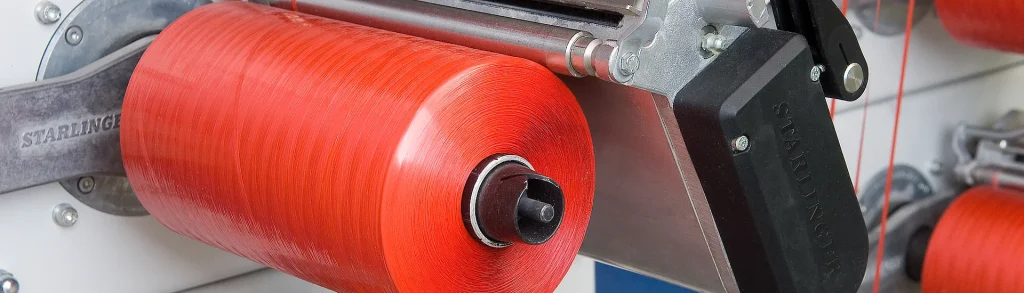
Production flows in three movements: raw material assurance, mid‑line fabrication and surface engineering, and back‑end conversion plus quality assurance. VidePak’s equipment pedigree—Austrian Starlinger for looming and conversion, German W&H for extrusion, film, and lamination—anchors repeatability, dimensional control, and uptime.
Front‑end: selection & testing
- Virgin PP/PE resins: MFR, ash, odor, moisture checked; COAs logged and challenged.
- Masterbatches: UV/HALS content, antistatic performance, color consistency verified.
- Kraft/BOPP rolls: basis weight, surface energy, Cobb/porosity, thickness and corona levels validated.
Mid‑line: making the fabric & faces
- Tape extrusion & drawing (W&H): tight width tolerance and tensile via optimized draw ratios.
- Weaving (Starlinger): warp tension and picks/10 cm tuned for GSM, porosity, appearance.
- Coating/lamination: uniform coat weights; peel strength and rub resistance targeted.
- Printing: ΔE color control, hazard panels, QR; rub‑resistant varnish systems.
Back‑end: conversion & QA
- Cutting/forming: heat‑seal or stitched bottoms with over‑tapes.
- Valve creation: sleeve geometry + micro‑vent maps matched to mandrels and powder PSD.
- Liner integration: tube or stitched; tack‑fixed to stop pull‑out.
- Final QA: tensile/seam/drop/burst, WVTR/MVTR (if specified), resistivity, dimensions, AQL visuals.
Equipment pedigree matters because capability maps directly onto performance. The Starlinger + W&H ecosystem translates into cleaner valves, steadier coat weights, stronger seams, and higher print rub resistance—all at lower scrap.
5) Where Multi-wall Woven Bags Win in Chemical Powder Packaging
- Minerals & fillers: calcium carbonate, barite, talc, silica, silica fume, gypsum—focus on puncture resistance and moisture control.
- Pigments & TiO₂: demand leakproofness and opacity; use premium matte BOPP faces for label clarity.
- Polymer powders/resins: PVC, EVA, engineering blends—antistatic liners and dust‑clean valves are key.
- Construction chemicals: cementitious blends, grout, dry admixtures—valve formats with micro‑venting for deaeration at speed.
- Agrochemicals/fertilizers: hygroscopic salts—coated/laminated faces + liners; UV for yard storage.
6) How VidePak Controls and Guarantees Quality: Standards → Materials → Machines → Measurements
- Build to and test against mainstream standards (ISO/ASTM/EN/JIS): tensile, seam, drop/burst/compression, WVTR/MVTR, resistivity, UV aging.
- Use 100% new raw materials from major producers: tight MFR, low ash, neutral odor; qualified films/kraft with verified thickness and surface energy.
- Invest in best‑in‑class equipment: Austrian Starlinger (looming/conversion) + German W&H (extrusion, film, lamination) for dimensional control and uptime.
- Run a layered inspection regime: incoming COA/ moisture checks → in‑process denier/coat/bond/registration → finished goods dimensions, strength, barrier, resistivity, AQL; lot‑traceable QC dossiers ship with product.
7) A Systems View: Decomposing Packaging Problems and Recombining a Coherent Bag Architecture
The overarching job is simple to say and hard to execute: move fragile powders safely, cleanly, and affordably through heat, humidity, vibration, and regulation. Break the job into sub‑problems; assign a design lever (or two) to each; then recombine with discipline.
Moisture & caking
Forces: ambient humidity, rain, temperature cycling. Levers: coat weight; BOPP/kraft laminate; liner gauge and seals; storage SOPs. Validation: WVTR/MVTR; accelerated humidity trials; caking index. Outcome: free‑flowing powders and longer shelf‑life.
Dust & housekeeping
Forces: pneumatic filling, transit vibration, discharge. Levers: valve geometry; micro‑vent maps; stitched vs. heat‑sealed seams; liner integration. Validation: sift‑proof tests; particulate monitoring. Outcome: cleaner lines, safer floors, lower loss.
Static & ignition risk
Forces: dry air, fine powders, plastic surfaces. Levers: antistatic liners and masterbatches; surface resistivity targets; grounding; humidity control. Validation: ohms/sq tests; spark checks. Outcome: fewer shocks; safer fills.
Mechanical integrity
Forces: drops, compression, fork‑tine abrasion. Levers: GSM, denier, weave density; seam recipe; bottom construction; corner boards. Validation: tensile; seam efficiency; drop/compression stacks. Outcome: fewer splits at greater pallet heights.
Branding & compliance
Forces: hazard labeling, serialization, anti‑counterfeit. Levers: BOPP finishes; kraft readability; QR/RFID; ΔE targets. Validation: rub tests; scan rates; label audits. Outcome: legible, durable identity that survives conveyors.
Sustainability & EPR
Forces: corporate goals and recycler acceptance. Levers: mono‑PP stacks; designed‑for‑delamination poly‑paper; light‑weighting with seam guardrails; rPP where acceptable. Validation: recyclability pilots; LCA deltas. Outcome: lower footprint without duty loss.
8) Engineering Parameters and Decision Tables
| Layer | Primary role | When to use | Typical options |
|---|---|---|---|
| Woven fabric | Strength and durability | Always | 90–160 g/m²; 600–1200D; 10×10–14×14 per 10 cm |
| Coating | Moisture & dust control | Hygroscopic powders; outdoor storage | PP/PE 12–35 μm |
| Laminate (BOPP/kraft) | Print fidelity; abrasion; barrier boost | Compliance‑heavy SKUs; long conveyors | Gloss, matte, pearlized; paper 60–80 g/m² |
| Liner | Leakproofness; aroma; oxygen | Fine powders; odor/oil‑bearing blends | LDPE/LLDPE 40–90 μm; optional EVOH |
| Valve | High‑speed fill; deaeration | Pneumatic filling; dusty lines | Top/bottom valve; micro‑vent maps |
Application‑specific quick picks:
| Powder | Key risks | Bag type | Surface | Liner | Additives |
|---|---|---|---|---|---|
| TiO₂ | Dust, moisture, UV | Valve | BOPP matte + coat | 60–80 μm LDPE | Antistatic |
| CaCO₃ | Abrasion, dust | Valve or open‑mouth | Coated | Optional | UV for yard storage |
| PVC resin | Static, dust | Valve | Coated | Antistatic liner | Antistatic; slip |
| Talc | Caking, dust | Valve | BOPP matte | 50–70 μm LDPE | UV; antistatic |
| Silica fume | Ultra‑fine, moisture | Valve | BOPP + coat | 70–90 μm EVOH co‑ex | Antistatic |
9) Comparative Analysis: Multi-wall Woven Bags vs. Alternatives
| Attribute | Multi‑wall Woven Bags | Mono PP Woven Sacks | Multiwall Paper Sacks | Drums/Pails |
|---|---|---|---|---|
| Strength‑to‑weight | High | Medium–High | Medium | Very high (heavy) |
| Dust control | Excellent (valve + liner) | Moderate unless coated/valved | Good when dry; weak when wet | Excellent |
| Moisture barrier | Tunable; strong with films/liners | Limited without liners | Moderate; degrades when wet | Excellent |
| Print & compliance | Excellent (BOPP/kraft) | Fair–good | Excellent | Labels only |
| Cost per filled kg | Low–moderate | Low | Moderate | High |
| Sustainability | Mono‑PP or designed‑for‑delam | Mono‑PP | Paper (often mixed) | Hard to recycle |
10) Quality Tests, Standards, and What They Catch
| Test | Typical reference | Purpose | Failure modes caught |
|---|---|---|---|
| Tensile (warp/weft) | ISO/ASTM | Fabric strength | Under‑drawn tapes; denier drift |
| Seam strength | ISO/ASTM | Conversion integrity | Stitch skip; thread weakness |
| Drop & compression | EN/ASTM | Shock and stack | Bottom seam failure; creep |
| WVTR/MVTR | ASTM | Moisture barrier | Thin/uneven coats; poor seals |
| Surface resistivity | IEC | Static safety | Ineffective antistatic system |
| Rub/scratch | In‑house + ISO rub | Print durability | Ink anchorage; soft varnish |
| Valve leak | In‑house norms | Dust containment | Sleeve geometry; weak bond |
| UV aging | ASTM/EN | Sunlight durability | Low HALS; pigment fade |
11) Failure Modes and Effects with Practical Mitigations
| Symptom | Likely cause | Immediate fix | Long‑term action |
|---|---|---|---|
| Ballooning during fill | Venting too low; soft sleeve | Add micro‑vents; stiffen sleeve | Redesign valve geometry; align PSD to mandrel |
| Wet/clumped powder | Low coat/laminate; poor storage | Increase coat; add top‑sheets | Specify WVTR; improve yard SOPs |
| Corner seam tears | Low seam efficiency | Increase stitch density; change thread | Redesign seam path; add corner boards |
| Print scuff | Low rub resistance | Switch varnish/base film | Adopt matte/pearlized BOPP and tougher inks |
| Static shocks | High surface resistivity | Antistatic liner; humidity control | Grounding SOP; review masterbatch |
12) Case‑Style Scenarios: From Requirement to Specification
Scenario A — Titanium dioxide in humid coastal export
Challenges: fine particle size, hydrophilicity, regulatory labeling. Spec: 130–150 g/m² fabric; coated + matte BOPP; 70–80 μm LDPE antistatic liner; top valve with tuned venting; UV/HALS. QC: WVTR; valve leak; seam strength; ΔE audits; resistivity.
Scenario B — PVC resin for inland distribution
Challenges: static shocks, dust clouds during fill. Spec: 120–130 g/m² coated fabric; valve bag; antistatic liner; micro‑vent arrays; reinforced bottom. QC: resistivity; fill rate; seam tensile.
Scenario C — Calcium carbonate to construction sites
Challenges: abrasion; yard storage; forklift handling. Spec: 130–140 g/m² coated fabric; open‑mouth or valve; optional liner; double chain stitch bottom; UV package. QC: drop/burst; seam efficiency; UV retention.
13) Procurement & RFP Checklist
- Volumes, SKUs, seasonality; pallet plan and stack height.
- Powder density, PSD, oil/wax content, hygroscopicity.
- Filling method (manual, semi‑auto, pneumatic valve) and speed targets.
- Architecture (open‑mouth vs. valve; gusseted vs. flat).
- Surface (uncoated, coated, BOPP; finish; window needs).
- Liner (gauge; barrier; antistatic; seal type).
- Additives (UV/HALS; antistatic; slip).
- Tests/AQL (ISO/ASTM/EN/JIS; resistivity; WVTR/MVTR).
- Branding (colors; ΔE; QR/serialization; hazard panels).
- Sustainability (mono‑PP vs. poly‑paper; rPP content; delamination design).
- Documentation (COAs; retain samples; lot traceability).
- Special handling (food/feed contact where relevant; REACH/RoHS alignment).
14) Engineer‑to‑Engineer FAQ (with practical cadence)
Q: Are matte BOPP faces as scuff‑resistant as gloss? A: With the right base film and varnish, yes—often better at hiding conveyor marks.
Q: Do gusseted forms need special filling jigs? A: Often; guides keep gussets from folding into the sleeve at speed.
Q: Liner or thicker coating? A: If odor, oils, or ultra‑fine powders matter, liners win. Coatings primarily manage moisture and dust.
Q: How high can we stack? A: GSM, seam efficiency, density, and climate decide—validate with compression stacks, not guesswork.
Q: Can we integrate serialization or smart features? A: Yes—QR, RFID, tamper‑evidence fit naturally on BOPP/kraft faces.
15) Keyword Strategy for Clarity and Discoverability
Use the core term generously and naturally: Multi-wall Woven Bags. Variations that help technical readers: multi‑wall PP woven bags, multi‑wall woven sacks, paper‑laminated woven bags, poly‑paper woven sacks, valve multi‑wall woven bags, anti‑static woven bags for chemical powder, moisture‑proof multi‑wall woven sacks, BOPP‑laminated woven bags for chemicals, leakproof woven bags.
If static safety is a top‑three risk on your line, explore operational guidance and product options here: anti‑static woven bags for chemical powders.
16) From Specification to Purchase Order: A Practical Flow
Define the powder → choose mouth architecture → select surfaces and liner → set GSM/denier/weave → lock print and varnish → specify additives → reference tests and AQL → approve pre‑production samples → run line trials → finalize palletization and labeling SOPs → freeze the recipe for repeat buys with SPC and supplier scorecards.
17) Glossary: Fast but Practical
- BOPP — biaxially oriented polypropylene film for HD print and abrasion protection.
- Denier — linear mass of tapes; influences tensile and puncture resistance.
- GSM — grams per square meter; proxy for fabric weight and stiffness.
- Valve bag — self‑closing sleeve enabling fast, clean filling of powders.
- WVTR/MVTR — moisture vapor transmission rate; lower equals better barrier.
- HALS — hindered amine light stabilizers for UV durability.
- EZ‑open — tear‑tape feature for user‑friendly opening.
- Surface resistivity — measure tied to static behavior on lines.
18) Why This Platform Wins in Practice
Selecting Multi-wall Woven Bags for chemical powders is fundamentally a multi‑axis optimization—mechanical strength, barrier behavior, filling‑line operability, branding/compliance, sustainability—subject to cost and risk. Because the platform lets you dial each axis independently (fabric GSM/denier, surface engineering, liner design, mouth architecture), it is uniquely suited to the messy reality of powders. VidePak’s discipline—new raw materials from major producers, Starlinger + W&H equipment, standards‑anchored QC—keeps the tuned recipe repeatable across lots, plants, and seasons. Strength where it counts. Barrier where it matters. Speed where it pays. Graphics where they sell.
- 1) What Are Multi-wall Woven Bags? Definition, Scope, and Industry Aliases
- 2) The Materials of Multi-wall Woven Bags: Substrates, Additives, Liners, and What Each Layer Does
- 3) Key Features of Multi-wall Woven Bags: Why They Outperform in Chemical Powder Logistics
- 4) How Multi-wall Woven Bags Are Produced: From Resin and Paper Rolls to Palletized, Print‑Ready Sacks
- 5) Where Multi-wall Woven Bags Win in Chemical Powder Packaging
- 6) How VidePak Controls and Guarantees Quality: Standards → Materials → Machines → Measurements
- 7) A Systems View: Decomposing Packaging Problems and Recombining a Coherent Bag Architecture
- 8) Engineering Parameters and Decision Tables
- 9) Comparative Analysis: Multi-wall Woven Bags vs. Alternatives
- 10) Quality Tests, Standards, and What They Catch
- 11) Failure Modes and Effects with Practical Mitigations
- 12) Case‑Style Scenarios: From Requirement to Specification
- 13) Procurement & RFP Checklist
- 14) Engineer‑to‑Engineer FAQ (with practical cadence)
- 15) Keyword Strategy for Clarity and Discoverability
- 16) From Specification to Purchase Order: A Practical Flow
- 17) Glossary: Fast but Practical
- 18) Why This Platform Wins in Practice
Imagine a conversation between a chemical plant manager and a packaging engineer:
Manager: “We need packaging that can securely hold 25 kg of titanium dioxide powder, prevent moisture ingress, and comply with EU safety standards. What’s your recommendation?”
Engineer: “Multi-wall woven PP bags with BOPP lamination and PE inner liners are the optimal solution—they offer tensile strengths up to 60 N/cm² and reduce moisture transmission by 98%, meeting ISO 9001 and REACH certifications. For example, VidePak’s 140 g/m² laminated bags prevent caking even at 90% humidity, ideal for hygroscopic chemicals.”
Manager: “How do we ensure safe handling for flammable powders?”
Engineer: “VidePak’s anti-static coatings and hermetic valve designs eliminate dust explosions, aligning with IEC 61340-4-4 standards. Their 100+ Starlinger looms produce 5,000+ bags/hour with ±0.1 mm precision. Let’s explore why multi-wall woven bags dominate industrial packaging.”
1. Structural Superiority: The Science Behind Multi-wall Woven Bags
Multi-wall woven bags combine layered polypropylene (PP) fabrics with functional liners to create a robust, adaptable packaging system. Key structural components include:
Multiwall Paper Bags Structure
Explore types, structure and material advantages of multi-wall woven bags ideal for chemical powder packaging.
Check More →Multi-Ply Kraft Paper Bags
High-strength multi-wall packaging solutions with excellent barrier properties for chemical powder applications.
Check More →Kraft Paper Laminated Woven Bags
Multi-layer composite bags offering superior protection and durability for industrial chemical powder packaging.
Check More →Kraft Paper Valve Bags Solutions
Professional multi-wall valve bag packaging designed for safe and efficient chemical powder handling.
Check More →- Outer Layer: 120–160 threads/inch woven PP (tensile strength: 50–60 N/cm²).
- Middle Layer: BOPP lamination (80–120 µm thickness, WVTR <5 g/m²/24h).
- Inner Layer: PE liner (anti-static, FDA-compliant for food-grade applications).
Case Study: A German chemical supplier reduced product losses by 30% using VidePak’s 6-layer AlOx-coated bags, which block UV radiation and oxygen ingress (OTR <0.5 cc/m²/day), extending shelf life to 24 months.
2. Advantages in Chemical Powder Packaging
Multi-wall woven bags address critical challenges in chemical logistics:
- Moisture Resistance: BOPP lamination reduces water vapor transmission by 95% vs. single-layer bags (ASTM E96).
- Dust Containment: Valve designs with <0.1% dust emission (tested per JIS Z 1539).
- Stackability: Withstand 2-ton pallet loads without seam failure (ISO 2234).
- Cost Efficiency: 40% lighter than steel drums, reducing shipping costs by 25%.
VidePak’s Austrian Starlinger circular looms achieve fabric densities of 160 threads/inch, ensuring uniform pore sizes (0.5–1.2 µm) for controlled breathability—critical for moisture-sensitive powders like sodium bicarbonate.
3. Expanding Applications: Animal Feed Packaging Solutions
Beyond chemicals, multi-wall bags excel in feed packaging:
| Feed Type | Key Requirements | VidePak Solution |
|---|---|---|
| Pet Feed | Airtight seals, premium print quality | 90 g/m² BOPP laminated bags with 8-color HD printing |
| Poultry Feed | Anti-fungal properties, 25 kg capacity | 120 g/m² PE-lined bags with zinc oxide additives |
| Ruminant Feed | High stack strength, UV resistance | 140 g/m² cross-woven FIBCs with UV inhibitors |
Case Study: A Brazilian poultry farm reduced spoilage by 22% using VidePak’s anti-microbial PE liners, inhibiting Aspergillus flavus growth at 85% humidity.
4. Parameter Selection Guide
Tailor bags to your product’s needs:
| Parameter | Chemical Powders | Animal Feed |
|---|---|---|
| Fabric Weight | 130–150 g/m² | 90–120 g/m² |
| Lamination | BOPP 100 µm + PE 50 µm | BOPP 50 µm (moisture-sensitive) |
| Additives | Anti-static carbon dispersion | Anti-fungal zinc oxide |
| Seam Type | Heat-sealed + adhesive reinforcement | Double-stitched + PE tape |
Why It Matters:
- Chemical Powders: Opt for 150 g/m² fabric with 6-layer lamination for hazardous materials (UN-certified).
- Feed: Choose breathable 90 g/m² uncoated bags for grains stored in dry climates.
5. FAQs: Addressing Industrial Concerns
Q1: How do multi-wall bags compare to FIBCs for bulk storage?
A: Multi-wall bags are 30% lighter and ideal for 25–50 kg loads, while FIBCs handle 1–2 tons with 6-layer baffle designs.
Q2: Can bags withstand maritime humidity?
A: Yes. Our BOPP lamination reduces WVTR to <2 g/m²/24h, compliant with ASTM E96.
Q3: What’s the MOQ for custom designs?
A: 10,000 units with 15-day lead time, including ISO 22000 compliance testing.
6. VidePak’s Technological Edge
With 16 extrusion lines and 30 lamination machines, VidePak delivers:
- Customization: Valve designs, handles, RFID tags, and 12 Pantone colors.
- Precision: ±0.05 mm filament alignment for consistent weave density.
- Sustainability: 20% recycled PP content, reducing carbon footprint by 18%.
Explore our valve bags for dust-free filling or FIBC bulk solutions for industrial-scale logistics.
References
- VidePak Company Profile: https://www.pp-wovenbags.com/
- ASTM International. (2025). Standard Test Methods for Water Vapor Transmission.
- EU REACH Regulation (EC) No 1907/2006.
- Contact: info@pp-wovenbags.com
Anchor Links
This guide combines decades of engineering expertise, regulatory compliance insights, and VidePak’s global manufacturing prowess to position your operations at the forefront of industrial packaging innovation.