
1. SOM PP Fabric Bags: What They Are and Why They Matter
When packaging specialists, procurement managers, or logistics engineers talk about SOM PP fabric bags, they are describing far more than a simple woven sack. They are referring to a family of engineered industrial packages built around polypropylene fabric and a sewn-open-mouth top construction. In everyday operations, these bags behave not as passive wrappers, but as active structural components of the supply chain: they carry heavy loads, protect sensitive products, and interact with filling machines, forklifts, and workers in predictable ways.
The abbreviation SOM stands for Sewn Open Mouth. It describes the basic geometry of the bag: the bottom is factory-closed, while the top is supplied open so it can be filled and then sewn shut. Combined with a tough woven polypropylene body, this construction produces SOM PP fabric bags that can be tailored for agriculture, construction materials, minerals, chemicals, and even certain food-related ingredients.
In different markets, the same concept appears under multiple names. Understanding these aliases helps buyers recognize when a supplier is essentially offering the same platform with slightly different terminology. Common alternative names include:
- SOM PP fabric bags
- Sewn open mouth PP fabric bags
- SOM PP woven bags
- Sewn open mouth polypropylene woven bags
- SOM PP packaging bags
- Sewn open mouth PP sacks for bulk goods
- Industrial SOM PP fabric sacks
- Heavy-duty SOM PP woven fabric bags
The vocabulary changes, but the architecture is remarkably consistent: a woven polypropylene fabric tube or panel, a robust factory-closed bottom, and a top that is sewn after filling to create a secure closure. What looks like a simple product is, in reality, the result of many coordinated design choices about materials, weave density, coatings, additives, and seam patterns.
Key idea: A SOM PP fabric bag is not just a container; it is part of a larger system that includes product characteristics, filling equipment, transport modes, storage conditions, and customer requirements. When any of these elements change, the bag design may need to evolve as well.
From a systems perspective, it is useful to imagine three functional “organs” working together inside every SOM PP fabric bag:
- A mechanical skeleton formed by the woven PP fabric that carries the load, resists impact and abrasion, and keeps the bag intact even during rough handling.
- A functional surface made up of coatings, laminations, and printed graphics that control friction, moisture behavior, and visual communication.
- An interaction interface consisting of the sewn open mouth, the bottom construction, possible gussets or handles, and any accessories that connect the bag with filling machinery and end users.
Only when these three organs are designed together and tuned to a specific application does a SOM PP fabric bag reveal its full potential: high load capacity, predictable behavior on the filling line, and reliable performance through distribution and storage.
2. The Material Science Behind SOM PP Fabric Bags
To understand why SOM PP fabric bags have become a standard solution in many industrial sectors, we need to unpack the materials that make them possible. Each resin, additive, and auxiliary component contributes to the final performance. Small choices at the material level can translate into very large differences in real-world logistics.
Reminder for engineers and buyers: when you specify a SOM PP fabric bag, you are indirectly specifying a material system. If the system changes – lower grade resin, weaker tape, different coating – performance will change as well, even if nominal dimensions stay the same.
2.1 Polypropylene as the structural foundation
At the core of almost every industrial SOM PP fabric bag is polypropylene (PP). This widely used thermoplastic combines relatively low cost with strong mechanical properties, chemical resistance, and excellent processability. Virgin PP granules form the starting point: they are melted, extruded into sheets, slit into tapes, and drawn to create oriented filaments with high tensile strength.
Why is PP such a good match for SOM PP fabric bags?
- High strength-to-weight ratio: once oriented, PP tapes can carry substantial loads with surprisingly low grammage. This allows bag designers to keep the fabric light but strong.
- Chemical resistance: PP is resistant to many salts, weak acids, bases, and a wide range of industrial chemicals, making it suitable for fertilizers, resins, and mineral products.
- Low density: at roughly 0.9 grams per cubic centimeter, PP is lighter than water, which keeps the tare weight of SOM PP fabric bags low and improves transport efficiency.
- Fatigue resistance: woven PP fabrics can be folded, flexed, and handled repeatedly without cracking, which is essential in busy warehouses.
- Thermoplastic flexibility: because PP is thermoplastic, the same base resin can be extruded, coated, laminated, and even recycled, enabling a wide range of bag designs built from a single polymer family.
The PP used in SOM PP fabric bags is rarely pure, however. To fine-tune performance, masterbatches are introduced that carry additives in a well-dispersed form. These additives might improve UV stability, control static electricity, add color, or modify processing behavior.
2.2 UV stabilizers and outdoor durability
Many SOM PP fabric bags spend part of their life outdoors: stacked in yards, sitting on docks, or traveling on flatbed trucks. Unprotected PP degrades in ultraviolet light, becoming brittle and losing strength. To prevent this, UV stabilizer packages are incorporated via masterbatches.
These stabilizers work by absorbing or quenching UV radiation before it can break polymer chains. In practical terms, a UV-stabilized SOM PP fabric bag will retain acceptable mechanical strength for months or even years in outdoor conditions that would quickly destroy unstabilized fabric. For bags used with fertilizers, building materials, or agricultural commodities that are routinely stored outside, specifying a defined UV lifetime is not a luxury – it is a safety requirement.
2.3 Anti-static behavior and electrostatic safety
Granules and powders flowing into and out of bags can generate static charge. If this charge accumulates, it can cause nuisance shocks, attract dust, or, in extreme situations, create sparks that pose explosion risks in dusty or solvent-rich environments. Some applications therefore require SOM PP fabric bags with controlled electrostatic behavior.
Anti-static masterbatches can reduce surface resistivity of the woven fabric, allowing charges to dissipate more quickly. In specialized applications, more advanced conductive systems may be required. The goal is not to eliminate static entirely – that is practically impossible – but to keep it within safe, manageable limits. As always, the material choice must be aligned with the risk profile of the product and the filling environment.
2.4 Coatings, laminations, and barrier films
Base woven PP is breathable and somewhat rough. For many applications, that is a feature rather than a problem: air can escape during filling, and friction helps with stacking. But other products – especially hygroscopic powders or high-value chemicals – demand greater control over moisture ingress, dust emission, and print quality. Here, coatings and laminations turn a simple woven fabric into a more complex functional surface.
- Extruded PE coatings form a thin polyethylene skin on one side of the fabric, improving moisture resistance and allowing certain types of heat sealing.
- BOPP laminations bond a smooth, bi-axially oriented polypropylene film to the fabric, creating a high-quality print surface and enhancing barrier performance.
- Matt or anti-slip varnishes add micro-texture to the surface, increasing friction between stacked bags and reducing pallet slippage.
In laminated SOM PP fabric bags, the outer film can carry detailed graphics while the inner fabric handles mechanical stress. This division of labor allows engineers to optimize appearance and performance separately yet within a single bag structure.
2.5 Sewing threads, tapes, and reinforcements
Because the top closure of SOM PP fabric bags is created by sewing, the choice of thread and seam design is more than a minor detail. It is central to safety and reliability.
High-tenacity polypropylene or polyester yarns are commonly used as sewing threads. They are selected to match or exceed the tensile properties of the fabric, so that the seam does not become the weak point. Stitch density, seam allowance, and fold geometry all determine how the load is transferred from bag walls to the sewn section.
Reinforcement tapes or folded hems may be added at the top mouth to increase gripping strength and reduce fraying. In critical applications, double or triple rows of stitching can be used, or different seam configurations adopted to maximize resistance against peel and shear.
2.6 Optional liners and composite structures
Not all SOM PP fabric bags are mono-material. For powders that are extremely sensitive to moisture, oxygen, or contamination, internal liners or more advanced composite barriers are often specified.
- Polyethylene liners are inserted as separate inner bags and sealed after filling. They offer a clean contact surface and improved moisture control.
- Barrier films based on EVOH, PA, or metallized polymers may be introduced for aroma, oxygen, or solvent-sensitive products.
- Foil laminates are rarely used due to cost and recyclability constraints, but can be appropriate for niche applications with extreme barrier demands.
These hybrid versions of SOM PP fabric bags turn a simple woven structure into a multi-layer containment system. They illustrate how the same basic platform can evolve to serve everything from basic building materials to specialty chemical intermediates.
2.7 Material stack overview table
The table below summarizes a typical material stack for industrial SOM PP fabric bags. Real-world designs may vary, but this overview helps clarify which layer does what.
| Layer / Component | Typical Specification | Primary Function |
|---|---|---|
| Woven PP fabric | 80–150 g/m², 10×10–14×14 mesh | Load bearing, tear resistance, dimensional stability |
| Optional BOPP film | 18–30 µm | High-quality print surface, moisture barrier, aesthetics |
| Optional PE coating | 20–60 µm | Enhanced moisture resistance, sealability |
| Sewing thread | High-tenacity PP or polyester | Top and bottom seam integrity in SOM construction |
| Optional PE liner | 40–120 µm LDPE/LLDPE | Product contact, dust control, moisture barrier |
| UV and anti-static masterbatches | Tailored loading rates in PP resin | Outdoor durability, electrostatic safety |
With this foundation in mind, it becomes easier to understand why SOM PP fabric bags behave the way they do in real distribution networks – and how subtle specification changes can significantly improve or degrade performance.
3. Functional Features and Performance Advantages
Users of industrial packaging rarely think in terms of polymers and weave counts. They think in terms of broken bags, rejected pallets, loading speeds, and brand perception. The popularity of SOM PP fabric bags is rooted in a set of concrete performance advantages that reveal themselves on filling lines, in warehouses, and at end-user sites.
3.1 High load capacity and low tare weight
A central advantage of SOM PP fabric bags is their ability to safely carry heavy loads with very little packaging mass. Depending on design, they can support from a few dozen kilograms up to several hundred kilograms per bag in smaller formats, and, in special constructions, even reach the low end of bulk-bag loads. This high strength comes from the synergy between oriented PP tapes and the woven structure that shares loads among many filaments.
From a sustainability perspective, this means less plastic per kilogram of product shipped. From a cost perspective, it means lower material usage per bag and fewer transport resources wasted on packaging weight. Neither extreme minimalism nor overdesign is ideal; what matters most is matching fabric grammage, seam strength, and bag geometry to the specific load and logistics profile.
3.2 Tear resistance and damage tolerance
In real warehouses, pallets are not handled gently. Forklift tines may scrape the sides, bags may rub against concrete, and sharp edges on crates or pallets may create nicks in the fabric. In less advanced packaging, a small cut can escalate quickly into a catastrophic tear. In a well-designed SOM PP fabric bag, however, the woven structure redistributes stress and slows tear propagation.
This damage tolerance is an underappreciated safety feature. It means that a bag with a minor defect may still survive the rest of its journey without spilling product. Operators gain time to identify and manage the issue, and the risk of sudden, large spills is reduced. Tear resistance therefore supports both product protection and occupational safety.
3.3 Flexible, forgiving behavior under dynamic loads
Consider the life of a bag: it might be dropped from a conveyor, clamped by a truck, vibrated on a trailer, and dragged across a floor. At each step, it experiences dynamic loads – not just static weight. The combination of woven PP and sewn construction in SOM PP fabric bags provides a kind of flexible armor: strong enough to resist catastrophic failure, but compliant enough to absorb shocks through deformation.
As a result, when a pallet is pushed or jolted, the bags deform and recover rather than cracking like rigid containers. This flexible response reduces peak forces on both the packaging and the product, which is especially important for brittle, granular materials or powders prone to segregation.
3.4 Tunable barrier and surface properties
Another major feature of the SOM PP fabric bag platform is its ability to offer different barrier profiles. Some products, such as cement or certain fertilizers, may tolerate moderate moisture exposure. Others, such as hygroscopic chemicals or food-related ingredients, require strict protection. By varying lamination, coatings, and liners, designers can move along a continuum from highly breathable to highly protective packaging.
At the same time, surface properties can be tuned. High-friction surfaces help stacks remain stable without excessive stretch wrap; smoother, lower-friction surfaces may be desirable for automated depalletizers or certain conveyor systems. The same base concept – the SOM PP fabric bag – can therefore appear in many different guises, each optimized for a specific use case.
3.5 Visual communication and branding
In competitive markets, the bag is often the only information carrier that accompanies the product all the way from plant to point of use. BOPP-laminated SOM PP fabric bags make full use of this role by offering high-definition graphics, vivid color, and space for detailed instructions and hazard information.
This visual performance serves several practical purposes at once:
- It reduces the risk of misidentification or mis-shipment by making products easy to recognize at a distance.
- It supports regulatory compliance by presenting hazard pictograms and safety text clearly.
- It reinforces brand recognition and perceived quality, especially important for premium grades of resins, additives, or specialty products.
In some designs, traceability is further enhanced through printed barcodes, QR codes, or even customized serial identifiers. Here, the SOM PP fabric bag becomes part of a digital information system, not just a physical container.
3.6 Efficient integration with filling and closing equipment
The sewn-open-mouth concept might seem old-fashioned at first glance, but in practice it offers great flexibility. SOM PP fabric bags can be filled on simple gravity lines in small plants, or on high-speed automated systems in large factories. The open mouth tolerates minor misalignment, and closure by sewing is both fast and robust.
Because the top is closed after filling, line operators can visually verify the fill level and, if necessary, adjust quantity before sewing. This is especially useful where product density varies slightly or when multiple products share the same packaging line. For rework or quality deviations, product can be easily re-bagged without specialized tools.
4. Manufacturing SOM PP Fabric Bags at VidePak: From Resin to Finished Sack
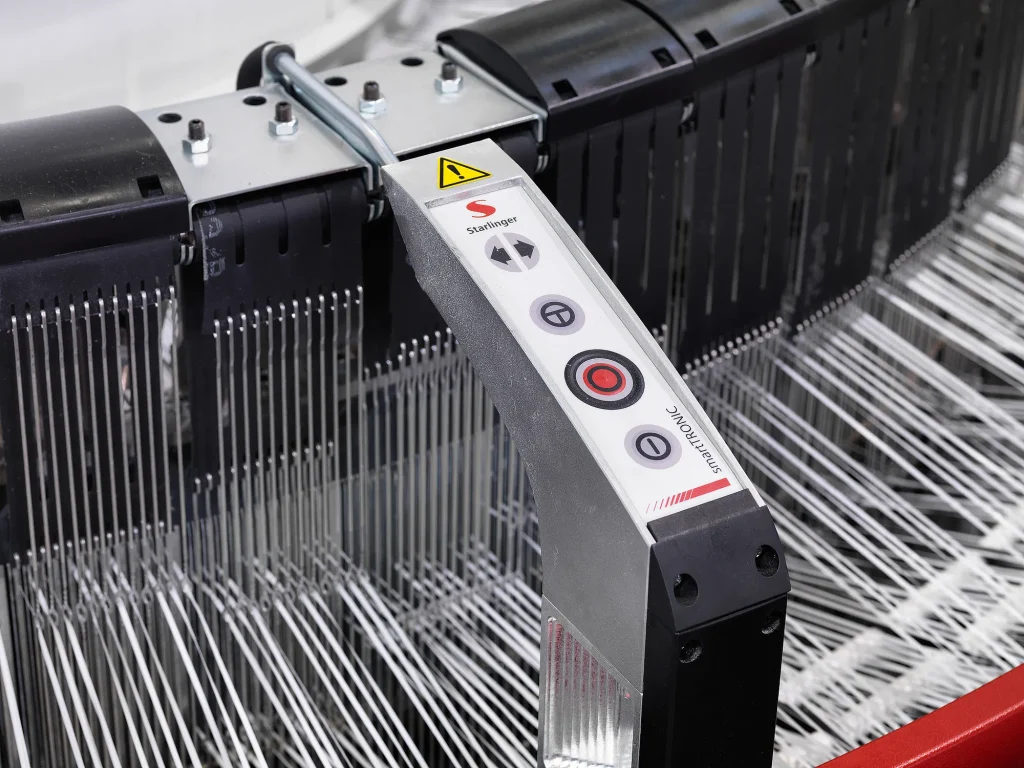
Producing high-quality SOM PP fabric bags is not about a single machine or a single step; it is about a chain of synchronized processes. VidePak structures this chain around advanced Austrian Starlinger equipment for extrusion and weaving, and German W&H systems for printing and, where relevant, lamination and converting. At every stage, process stability is treated as a first-class design parameter.
4.1 Raw material selection and incoming inspection
Everything begins with raw materials. VidePak sources virgin polypropylene resins from large, reputable producers with strong process control. UV, anti-static, and color masterbatches are selected based on documented performance and compatibility with the base resin. Where coatings or liners are involved, appropriate polyethylene or BOPP grades are specified.
Incoming inspection checks key parameters such as melt flow index, density, moisture content, and visual appearance. Film rolls are inspected for gauge uniformity and surface defects; sewing threads are tested for tensile strength and elongation. These checks align with mainstream methods described in ISO, ASTM, EN, and JIS standards, ensuring that the input to SOM PP fabric bag production is stable and predictable.
4.2 Extrusion and tape drawing on Starlinger lines
The first major transformation step is turning PP granules into oriented tapes. On Starlinger extrusion lines, resin and masterbatches are melted and homogenized, then extruded through a flat die into a thin sheet. This sheet is chilled, slit into tapes, and drawn to orient the polymer chains. Orientation dramatically increases tensile strength while reducing elongation under load.
Process control is crucial here. Temperatures, draw ratios, and line speeds are tuned to keep tape width and thickness within narrow limits. Laser-based measuring devices and tension sensors provide continuous feedback. The result is a population of tapes that are consistent from bobbin to bobbin, a prerequisite for uniform behavior in the finished SOM PP fabric bag.
4.3 Weaving and online inspection
Once tapes are prepared, they are woven into fabric on circular or flat looms, again predominantly from Starlinger. Loom settings – pick density, warp tension, loom speed – are adjusted according to the desired fabric grammage and mesh.
During weaving, automatic stop systems detect broken tapes, mispicks, and other defects. Off-quality sections are marked or cut out. The aim is not to eliminate all variation – that is impossible in any real process – but to keep it within well-understood boundaries. High-quality fabric is then wound into rolls that will form the structural body of the SOM PP fabric bag.
4.4 Coating, lamination, and printing with W&H systems
Where the bag design calls for coatings or laminations, woven fabric passes through additional process steps. Extrusion coaters apply molten PE onto the fabric; laminators bond BOPP film with controlled adhesive or heat-and-pressure systems. W&H printing presses then apply graphics and text.
At this stage, the functional surface of the SOM PP fabric bag is created. Coating thickness, lamination bond strength, color registration, and print density all influence how the bag will behave later: how it will stack, how it will communicate information, how it will resist abrasion, and how it will interact with moisture.
4.5 Cutting, forming, and SOM sewing
The last mechanical transformation is converting woven or laminated fabric into finished SOM PP fabric bags. Cutting units create blanks of precise length and width. Bottom seams are folded and sewn to form a strong base, sometimes with additional reinforcement for heavy loads. In some designs, gussets are added along the sides to give the bag a more rectangular cross-section.
The top of the bag is left open – this is the defining feature of the SOM style. At the customer’s site, after filling, the open mouth is folded and sewn shut using high-speed industrial sewing heads. Proper design ensures that, when this sewing is done according to guideline stitch patterns, the seam achieves the intended strength and dust tightness.
4.6 Final inspection and palletizing
Before being shipped, finished SOM PP fabric bags undergo final quality checks. These may include dimensional measurements, seam strength tests, visual inspection of printing, and drop tests on sample bags. Statistical sampling plans ensure that every lot is represented without excessive testing that would delay deliveries.
Bags that pass all criteria are counted automatically, stacked in predefined quantities, and palletized. Stretch wrap or strapping secures the pallets for transport. Because the entire production flow is built around Starlinger and W&H platforms, lot-to-lot variation is minimized, and customers can rely on stable behavior across different deliveries.
5. Application Landscape of SOM PP Fabric Bags
The true test of any packaging format is not how it looks in a brochure, but how it performs across real application domains. SOM PP fabric bags have spread widely because they strike a compelling balance between strength, customizability, and cost in several key sectors.
5.1 Agriculture and bulk commodities
In agriculture, SOM PP fabric bags are a familiar sight. They carry seeds, grains, feed, and fertilizers through rough environments where automation levels vary and storage conditions are often challenging. Farmers, distributors, and cooperatives value a package that is as forgiving as the environment is unforgiving.
- For grains and seeds, breathable uncoated fabric may be preferred to prevent condensation and mold.
- For fertilizers and soil amendments, laminated or coated versions offer improved moisture protection and UV stability.
- For animal feed, printed SOM PP fabric bags support brand recognition while protecting product quality.
Because the sewn-open-mouth top can be closed with standard sewing equipment, even smaller facilities with limited automation can implement reliable packaging processes using the same bags as large upstream suppliers.
5.2 Construction materials and minerals
Cement, dry mortar, sand, aggregates, and mineral powders represent another major domain. Here, the abrasion resistance and tear strength of SOM PP fabric bags are especially important. Bags are often dragged over rough concrete surfaces, stacked high on pallets, and stored outdoors for extended periods.
Appropriately specified SOM PP fabric bags mitigate these risks through higher grammage fabrics, UV stabilization, and optional coatings for moisture resistance. Clear printed instructions on mixing ratios or safety precautions help reduce errors at the job site. When a product is premium – for example, specialty mortar or additive blends – the ability to use high-impact graphics on BOPP-laminated SOM bags becomes an additional differentiator.
5.3 Industrial chemicals and plastic resins
The chemical industry uses SOM PP fabric bags for an enormous variety of powders and granules: pigments, fillers, salts, catalysts, plastic pellets, and more. For these materials, dust control, moisture protection, and traceability are central concerns.
When combined with PE liners or tailored coatings, SOM PP fabric bags help keep powders inside and ambient moisture outside. Traceability is supported by printed batch codes or serialized identifiers. Because the open mouth allows easy sampling and re-bagging, quality-control processes at intermediate storage points can be integrated without complex equipment.
5.4 Food-related ingredients and additives
Certain food-related ingredients – such as sugar, starches, or food-grade minerals – can also be packed in SOM PP fabric bags when combined with food-contact compliant liners and inks. In these cases, hygiene requirements are higher, and the full system – from resin to printing to sewing – must be validated accordingly.
The balance between mechanical performance and regulatory compliance can be delicate, but it is precisely this balance that makes the SOM PP fabric bag platform so attractive: the structural concept remains the same while the materials and process controls are adjusted to match the sensitivity of the product.
5.5 Retail and reusable contexts
Beyond heavy industry, lighter versions of SOM PP fabric bags appear in retail and promotional contexts. Reusable shopping bags made from woven PP often share many structural traits with industrial SOM bags, but with softer handles, decorative laminations, and ergonomics prioritized over maximum load.
Even in these contexts, the same principles apply: woven PP fabric for strength, sewn seams for durability, and printed surfaces for communication. The technical heritage of industrial SOM PP fabric bags quietly supports everyday consumer use.
6. Quality Assurance at VidePak: Making SOM PP Fabric Bags Reliable
For end users, the quality of SOM PP fabric bags is not an abstract concept; it is directly linked to safety incidents, product loss, and brand reputation. VidePak approaches quality as a system that spans four pillars: standards, materials, equipment, and inspection.
Packaging as risk management: every strong, consistent SOM PP fabric bag is a small piece of risk removed from the supply chain. Every weak or inconsistent bag is a potential incident waiting to happen.
6.1 Standards-based design and testing
VidePak aligns the design and validation of SOM PP fabric bags with mainstream international standards such as ISO, ASTM, EN, and JIS. These frameworks define methods for tensile testing of fabrics and seams, drop testing of filled bags, and environmental conditioning. By tying internal tests to recognized methods, VidePak ensures that performance data can be interpreted consistently by customers around the world.
6.2 Virgin raw materials from major producers
Material consistency is essential. For critical load-bearing layers and coatings in SOM PP fabric bags, VidePak uses virgin PP and PE resins sourced from large petrochemical suppliers. Additives and masterbatches come from specialists with strong quality systems. While recycled content may be considered for some non-critical components, it is never allowed to compromise mechanical integrity in demanding applications.
6.3 Starlinger and W&H as process anchors
High-end machinery—Starlinger for extrusion, weaving, and some lamination steps; W&H for printing and converting—anchors process capability. These platforms support precise control of tape dimensions, fabric grammage, registration, and seam formation. They also facilitate data collection that feeds into statistical process control, allowing trends to be spotted before they become problems.
6.4 Layered inspection: incoming, in-process, outgoing
Inspection is not a single gate at the end of the line. VidePak uses a layered approach for SOM PP fabric bags:
- Incoming checks on resins, films, and threads verify conformance with agreed specifications.
- In-process monitoring tracks key parameters such as tape width, weaving density, fabric GSM, bond strength in laminations, and print registration.
- Final inspections sample finished bags for dimensions, seam strength, drop performance, and visual quality.
This layered system creates redundancies: if a deviation slips past one stage, it is likely to be caught at another. Combined with full lot traceability, it allows VidePak to both prevent and, when necessary, quickly diagnose issues in SOM PP fabric bags seen in the field.
7. System Thinking: Subsystems Inside SOM PP Fabric Bags
Although they appear simple, SOM PP fabric bags are an excellent example of how complex performance emerges from several interacting subsystems. Thinking in subsystem terms helps designers, buyers, and quality managers make informed trade-offs rather than chasing single-parameter optimizations.
7.1 Barrier subsystem
The barrier subsystem governs the exchange of moisture, gases, and dust between the environment and the bag interior. When no coatings or liners are used, a SOM PP fabric bag is highly breathable, which can be ideal for certain agricultural goods. With coatings, laminations, or liners, the barrier performance can be strengthened step by step.
Designers can adjust coating thickness, select specific film types, or vary liner gauge to reach a desired water-vapor transmission rate. However, increasing barrier performance may also reduce breathability during filling, potentially trapping air and affecting line speed. Balancing these factors is one of the most important system-level tasks in specifying SOM PP fabric bags.
7.2 Mechanical subsystem
The mechanical subsystem includes tape strength, fabric GSM, weave pattern, bag dimensions, and seam design. Together, these elements determine the safe working load, drop resistance, and stacking behavior of SOM PP fabric bags.
Increasing fabric grammage or adding seam reinforcements can improve drop performance and clamp resistance, but also adds cost and weight. Conversely, aggressive lightweighting may save material but narrow the safety margin. System thinking encourages stakeholders to view mechanical parameters in the context of logistics severity, product sensitivity, and acceptable risk.
7.3 Information subsystem
The information subsystem is embodied in printing, labels, and any digital identifiers associated with the bag. A SOM PP fabric bag carrying fertilizers must present hazard symbols clearly; a bag carrying branded cement must communicate mixing instructions and safety steps; a bag carrying animal feed may need to display nutritional information.
By designing print layouts, color schemes, and code placements carefully, the bag becomes a reliable medium for critical information. High-resolution printing on laminated SOM PP fabric bags even allows region-specific labeling in multiple languages without sacrificing legibility.
7.4 Process-capability subsystem
Finally, there is the process-capability subsystem: the combination of equipment, control strategies, and maintenance practices that determine how consistently a bag design can be produced. Even a perfectly designed SOM PP fabric bag will fail if the process itself drifts and tolerances are not maintained.
Starlinger and W&H platforms, complemented by VidePak’s process knowledge, form the backbone of this subsystem. Stable process windows, predictive maintenance, and data-driven control loops make it possible to deliver bags whose performance is not just high on average, but consistently high lot after lot.
8. Technical Parameters and Specification Windows
For engineers and buyers, conceptual descriptions must eventually turn into numbers. While each project requires its own optimization, typical parameter ranges for SOM PP fabric bags provide a useful starting point.
| Parameter | Typical Range | Design Impact |
|---|---|---|
| Bag width | 300–900 mm | Influences fill volume and pallet layout |
| Bag length | 450–1,350 mm | Affects stacking height and ergonomics |
| Fabric GSM | 80–150 g/m² | Controls tensile strength, stiffness, puncture resistance |
| Weave density | 10×10–14×14 tapes per inch | Balances breathability, surface appearance, and strength |
| Safe working load | 25–2,000 kg depending on design | Defines mechanical performance envelope |
| Coating or lamination thickness | 20–60 µm PE, 18–30 µm BOPP | Adjusts barrier performance and print quality |
| Optional liner thickness | 40–120 µm | Controls moisture protection and dust retention |
| Print colors | 1–8 or more | Enables branding and regulatory information |
| Stitch density at seams | 8–14 stitches per inch | Influences seam strength and closure speed |
These values are not rigid rules; they are guideposts. When specifying a new SOM PP fabric bag, collaboration between user and manufacturer can quickly turn these generic ranges into a targeted specification tailored to a particular product and route.
9. Customization Pathways and Design Choices
One reason SOM PP fabric bags have become a long-term platform rather than a short-lived trend is their inherent customizability. Instead of treating customization as a final decorative step, it is better to view it as a structured set of design pathways.
9.1 Structural customization
Structural customization deals with geometry and load capacity. By changing bag width, length, gusset depth, and fabric grammage, designers can adapt SOM PP fabric bags to match pallet patterns, container sizes, and ergonomic requirements. For heavy products, reinforcing patches or special seam configurations may be added at high-stress points.
9.2 Barrier and environmental customization
Barrier customization steps beyond “coated or uncoated.” Instead, it asks more nuanced questions: how sensitive is the product to humidity jumps? Does it need to breathe during curing or storage? Will bags see coastal climates, desert climates, or temperature-cycled warehouses?
Based on these answers, SOM PP fabric bags can be specified with no coating, with light PE coating, with full BOPP lamination, or with additional liners. This modularity allows users to pay for precisely the performance they need – not more, not less.
9.3 Branding, information, and digital integration
Branding and information are no longer limited to simple logos. High-resolution printing on laminated SOM PP fabric bags supports detailed technical charts, pictograms, and multilingual text. In addition, serialized QR codes or barcodes can connect the physical bag with digital records, enabling traceability and, in some cases, customer-engagement tools.
For example, a QR code on a bag of specialty mortar might link to a technical data sheet, application tutorial, or safety instructions. The SOM PP fabric bag thereby becomes a bridge between the physical product and digital knowledge.
9.4 Sustainability-oriented customization
Sustainability is increasingly part of the specification process. Mono-material designs that keep all structural layers within the polypropylene family support recycling initiatives. Thoughtful reduction of coating thickness can save resources without compromising key barrier functions. In the future, greater use of bio-based PP resins may further reduce carbon footprints while keeping SOM PP fabric bags compatible with existing processing and recycling streams.
To explore structural alternatives in more depth, packaging engineers sometimes compare SOM PP fabric bags with other polypropylene-based solutions, such as advanced polypropylene woven bags in different formats. These comparisons help clarify when SOM geometry is the best fit and when valve-style or block-bottom constructions may offer additional benefits.
10. Sustainability Roadmap for SOM PP Fabric Bags
Sustainability is not a fixed destination but a moving target. As regulations tighten and customer expectations evolve, SOM PP fabric bags must adapt. Fortunately, their material and process flexibility provide several levers for improvement.
10.1 Preventing product loss as a first priority
The environmental footprint of lost product often outweighs that of the packaging many times over. When a pallet of cement or fertilizer is destroyed because of bag failures, the embedded energy, water, and emissions of that product are wasted. Robust SOM PP fabric bags reduce such losses, acting as a silent but powerful sustainability feature.
10.2 Material efficiency and lightweighting
By combining strong tapes and optimized weaving patterns, VidePak can progressively reduce fabric grammage without compromising the safe working load of SOM PP fabric bags. This lightweighting must be done methodically, supported by testing, but over millions of bags even small reductions in material use produce significant resource savings.
10.3 Recycling and circularity
Mono-material polypropylene designs make SOM PP fabric bags increasingly compatible with PP recycling streams. When collection and sorting systems are in place, used bags can be shredded, washed, and reprocessed into new products that do not require pristine resin properties. Designing bags with minimal use of incompatible layers or difficult-to-remove labels supports this circular pathway.
10.4 Process energy and manufacturing efficiency
Efficient extrusion, weaving, and printing lines reduce energy consumption per bag. Starlinger and W&H equipment is optimized for high throughput with low waste, and when combined with energy management and, where available, renewable electricity, the embedded emissions of SOM PP fabric bags can be reduced further over time.
11. Failure Modes, Case Examples, and Engineering Responses
To appreciate how well-engineered SOM PP fabric bags mitigate risk, it helps to examine typical failure modes observed with weaker or poorly specified packaging and then see how SOM designs address them.
11.1 Bag bursting under clamp handling
In modern warehouses, clamp trucks are often used to move palletized loads. If bags are too weak or seams too fragile, clamp pressure can cause splits. Weaker woven sacks may burst along side seams when squeezed, leading to product spills and unstable pallets.
Well-designed SOM PP fabric bags counter this problem through appropriate fabric grammage, seam reinforcement, and, where needed, anti-slip coatings that reduce the necessary clamp force. Mechanical testing under simulated clamp conditions becomes part of the validation process, turning qualitative worries into quantitative design targets.
11.2 Moisture damage during long-distance shipping
Another common failure mode involves moisture damage. A producer might switch from multi-wall paper sacks to cheaper uncoated woven bags, only to discover that products cake or lump after transoceanic shipping. Ambient moisture penetrates the packaging, and the powder changes behavior.
By introducing laminated SOM PP fabric bags with tailored barrier layers and optional liners, the same producer can significantly reduce water-vapor ingress without needing to change the product formulation. Moisture-sensitive materials arrive at their destination free-flowing and ready to use, even after weeks in variable climates.
11.3 Misidentification and traceability gaps
In busy warehouses, visually similar products packed in generic bags invite mistakes. Mis-shipped pallets create downstream disruptions and may even pose safety risks if incompatible materials are used where they should not be.
High-quality printing on SOM PP fabric bags – combined with clear color coding and digital identifiers – helps prevent such errors. The bag itself becomes a robust information carrier, from plant floor to end customer, reducing reliance on separate labels that can be damaged or lost.
12. Practical Selection Framework for SOM PP Fabric Bags
How should a buyer or engineer decide which configuration of SOM PP fabric bags is appropriate for a particular project? A structured selection framework helps avoid purely price-driven decisions that ignore risk and long-term cost.
Four guiding questions often prove useful: what is the product, how harsh is the logistics chain, what information must the bag carry, and what are the sustainability priorities?
12.1 Understanding product sensitivity
First, examine the product:
- Is it hygroscopic, prone to caking, or sensitive to oxidation?
- Does it generate dust or static when handled?
- What is its monetary value and the consequence of loss?
High-value or highly sensitive products justify more robust SOM PP fabric bags with stronger fabrics, additional barrier layers, and stricter quality margins. Bulk commodities with low sensitivity may opt for simpler, more economical designs.
12.2 Mapping logistics severity
Next, map the logistics route:
- How many handling events occur from filling to final use?
- Is outdoor storage common at any point?
- Are pallets double-stacked, clamped, or transported over long distances?
The harsher the route, the more conservative the mechanical design needs to be. For severe routes, higher fabric grammage, UV stabilization, and reinforced seams become prudent non-negotiables for SOM PP fabric bags.
12.3 Clarifying information and branding requirements
Some products require extensive regulatory labeling, usage directions, and multilingual content. Others require little more than a product name and batch code. The more information the bag must carry, the stronger the case for laminated SOM PP fabric bags with high-resolution printing.
12.4 Integrating sustainability and corporate values
Finally, sustainability priorities shape the remaining choices. If recyclability is a key goal, mono-PP structures may be preferred. If reducing product loss is the dominant concern, stronger bags with higher safety margins may be justified, even if they use slightly more material. In corporate environments where both goals matter, designers work to find balanced SOM PP fabric bag configurations that minimize overall environmental impact rather than focusing on packaging mass alone.
Taken together, these considerations show that choosing SOM PP fabric bags is not a one-time decision but an ongoing engineering task. As products, routes, and regulations evolve, the bags can evolve with them, ensuring that packaging remains an asset rather than a constraint in modern supply chains.
2025-11-22
- 1. SOM PP Fabric Bags: What They Are and Why They Matter
- 2. The Material Science Behind SOM PP Fabric Bags
- 2.1 Polypropylene as the structural foundation
- 2.2 UV stabilizers and outdoor durability
- 2.3 Anti-static behavior and electrostatic safety
- 2.4 Coatings, laminations, and barrier films
- 2.5 Sewing threads, tapes, and reinforcements
- 2.6 Optional liners and composite structures
- 2.7 Material stack overview table
- 3. Functional Features and Performance Advantages
- 4. Manufacturing SOM PP Fabric Bags at VidePak: From Resin to Finished Sack
- 5. Application Landscape of SOM PP Fabric Bags
- 6. Quality Assurance at VidePak: Making SOM PP Fabric Bags Reliable
- 7. System Thinking: Subsystems Inside SOM PP Fabric Bags
- 8. Technical Parameters and Specification Windows
- 9. Customization Pathways and Design Choices
- 10. Sustainability Roadmap for SOM PP Fabric Bags
- 11. Failure Modes, Case Examples, and Engineering Responses
- 12. Practical Selection Framework for SOM PP Fabric Bags
- 12.1 Understanding product sensitivity
- 12.2 Mapping logistics severity
- 12.3 Clarifying information and branding requirements
- 12.4 Integrating sustainability and corporate values
- 1. Material Selection: The Foundation of Durability
- 2. Manufacturing Process: Precision at Every Stage
- 3. Technical Specifications and Performance Metrics
- 4. Sustainability and Future Innovations
**At VidePak, SOM (Sewn Open Mouth) PP fabric bags are engineered to deliver unparalleled strength, customization flexibility, and sustainability. With tensile strengths exceeding 35 MPa, load capacities up to 2,000 kg, and ISO 9001-certified quality control, our bags are trusted by global clients in agriculture, construction, and chemicals. Leveraging 30+ years of expertise and 100+ Starlinger circular looms, we ensure **precision manufacturing with defect rates below 0.2%, while our 16 extrusion lines and 30+ lamination machines enable rapid scalability for orders exceeding 10,000 units.
1. Material Selection: The Foundation of Durability
The performance of SOM PP fabric bags begins with high-quality polypropylene (PP) resins. VidePak exclusively uses virgin PP granules with a melt flow index (MFI) of 2–6 g/10 min (ASTM D1238) to ensure optimal melt consistency during extrusion. Key material properties include:
- UV Resistance: Additives like Chimassorb 119 extend UV stability to 2,000+ hours (ISO 4892-3), critical for outdoor storage.
- Anti-Static Properties: Carbon-black masterbatches achieve surface resistivity ≤10¹² Ω/sq (IEC 61340-4-1), preventing spark risks in flammable environments.
- Recyclability: 100% PP composition aligns with EU Directive 94/62/EC, reducing landfill waste by 70% compared to multi-layer alternatives.
Case Study: A U.S. fertilizer client reduced transport damage by 45% using VidePak’s UV-stabilized bags, which maintained tensile strength after 18 months of sun exposure in Texas.
2. Manufacturing Process: Precision at Every Stage
VidePak’s production integrates Austrian Starlinger and German W&H machinery, ensuring ISO-compliant workflows from raw material to finished bags.
2.1 Extrusion and Filament Drawing
- Extrusion: Starlinger extruders heat PP granules to 200–240°C, forming homogeneous molten polymer. Real-time sensors monitor melt temperature (±2°C) and pressure (15–25 MPa) to prevent voids or inconsistencies.
- Filament Drawing: Melt is extruded through spinnerets to create 80–150 denier filaments, cooled in water baths at 25–30°C. Filament tensile strength is tested hourly (≥5.5 g/denier, ASTM D2256).
Quality Control: Laser micrometers ensure filament diameter tolerance ≤±5 µm, while DSC analyzers validate crystallinity levels (45–55%) for optimal weaving performance.
2.2 Weaving and Fabric Formation
- Circular Looms: 100+ Starlinger CT-F8 looms weave 14×14 threads/inch fabric at 200 rpm, achieving tear resistance ≥18 N/mm² (ISO 13937-2).
- Fabric Inspection: Automated vision systems detect defects (e.g., misweaves, slubs) with 99.8% accuracy, rejecting substandard rolls in real time.
Example: A 2024 audit showed VidePak’s fabric achieved 98.5% elongation uniformity across 10,000+ meters, critical for heavy-duty applications like cement packaging.
2.3 Lamination and Coating
- BOPP Lamination: W&H laminators apply 18–25 µm BOPP films at 180°C, enhancing moisture barrier properties (WVTR ≤5 g/m²/day, ASTM E96).
- PE Coating: For chemical-resistant liners, extrusion coating adds 50–100 µm PE layers with dart impact resistance ≥500 g (ASTM D1709).
Technical Insight: Laminated bags for a Brazilian coffee exporter reduced moisture absorption by 60%, extending shelf life by 6 months in humid climates.
2.4 Printing and Customization
- Flexographic Printing: 30+ machines deliver 1440 dpi resolution using FDA-certified inks, supporting up to 8 Pantone colors.
- QR Code Integration: Laser-etched QR codes enable traceability, as implemented for a German pharmaceutical client tracking 50,000+ vaccine packaging units.
Quality Assurance: Sutherland rub tests (ASTM D5264) confirm print durability ≥4/5 ratings after 500+ abrasion cycles.
2.5 Bag Sewing and Finishing
- Sewn Open Mouth (SOM): High-speed sewing machines stitch 12–14 stitches/inch with Kevlar threads, achieving seam strength ≥80% of base fabric (ISO 13935-2).
- Valve Integration: For FIBC bags, ultrasonic welding attaches PE valves with leak-proof seals tested at 1.5× operational pressure.
3. Technical Specifications and Performance Metrics
Product Parameters
| Parameter | VidePak Standard | Industry Average |
|---|---|---|
| Load Capacity | 500–2,000 kg | 300–1,500 kg |
| Fabric GSM | 80–150 | 70–130 |
| UV Resistance | 2,000 hrs (ISO 4892-3) | 1,200 hrs |
| Moisture Barrier | ≤5 g/m²/day (BOPP laminated) | ≤15 g/m²/day |
| Print Durability | 4/5 Sutherland Rub Test | 2/5 |
FAQs
Q: How does SOM design improve bag handling?
A: The sewn open mouth allows easy filling and resealing, reducing spillage by 30% compared to heat-sealed designs.
Q: Can bags withstand -30°C environments?
A: Yes—our PE-coated variants pass ASTM D746 brittleness tests at -40°C, ideal for cold chain logistics.
Q: What’s the lead time for custom designs?
A: Samples in 10 days; bulk production within 25 days, supported by 24/7 shifts across 100+ looms.
4. Sustainability and Future Innovations
VidePak is pioneering eco-friendly advancements:
- Bio-Based PP: Pilot projects with 30% plant-derived PP reduce carbon footprints by 25% (ISO 14040 LCA).
- Smart Packaging: RFID tags enable real-time temperature/humidity monitoring, trialed with a Dutch agrochemical supplier.
- Closed-Loop Recycling: Partnerships in 15 countries reclaim post-consumer bags for pelletizing and reuse.
Industry Trend: By 2030, 70% of EU manufacturers will mandate recyclable packaging—VidePak’s SOM bags already exceed EN 13432 standards.
References
- VidePak Official Website: https://www.pp-wovenbags.com/
- Email: info@pp-wovenbags.com
- Related Articles:
- Understanding FFS Woven Bags: Key Parameters and Specifications
- The Craftsmanship Behind BOPP Woven Bags: VidePak’s Commitment to Excellence
Authored by VidePak’s Engineering and Sustainability Teams | Updated: March 19, 2025