
Understanding Custom Printed Woven Bags: Definitions, Purpose, and Common Aliases
Within industrial and retail‑adjacent packaging, custom printed woven bags stand at the crossroads of durability and on‑pack communication. They are engineered sacks whose backbone is a woven polypropylene (PP) substrate, while the face is optimized to carry legible graphics, color‑accurate brand assets, regulatory icons, and machine‑readable codes. What differentiates custom printed woven bags from plain open‑mouth sacks is the composite architecture: a tensile woven body for strength and drop resistance; an optional coating or laminate for barrier and print protection; and a finishing flow that preserves barcodes and microtype under rough logistics. In practice, these packages carry animal feed, fertilizer, seed, grains, flour, salt, sugar, construction powders, minerals, pellets, and many retail‑adjacent goods. The intent is simple yet demanding: fast on the filler, clean on the pallet, persuasive at the point of sale.
Also traded under multiple aliases that signal materials and print routes:
- Printed PP woven bags
- Printed BOPP woven bags
- BOPP laminated woven bags
- Custom PP woven sacks
- Woven poly bags with custom printing
- Laminated polypropylene printed sacks
- Coated woven PP printed bags
- Retail‑grade printed woven packaging
- Brand‑printed woven sacks
Why so many names for the same family? Because buyers approach the category through different doors: some emphasize the PP woven structure, others the BOPP lamination, others the printing technique. Yet the core promise holds: custom printed woven bags fuse mechanical performance with graphic communication so that a bulk container becomes a brand asset without compromising function.
Constituent Materials of Custom Printed Woven Bags: Structure, Properties, Cost, and Roles
A custom printed woven bag is a layered system rather than a monolithic object. Selecting the right bill of materials (BoM) means balancing tensile strength, tear resistance, breathability, barrier, print fidelity, and total cost of ownership (TCO). Below, each constituent is dissected for what it is, what it does, how much it tends to cost, and where it sits in the construction.
Woven Polypropylene (PP) Fabric
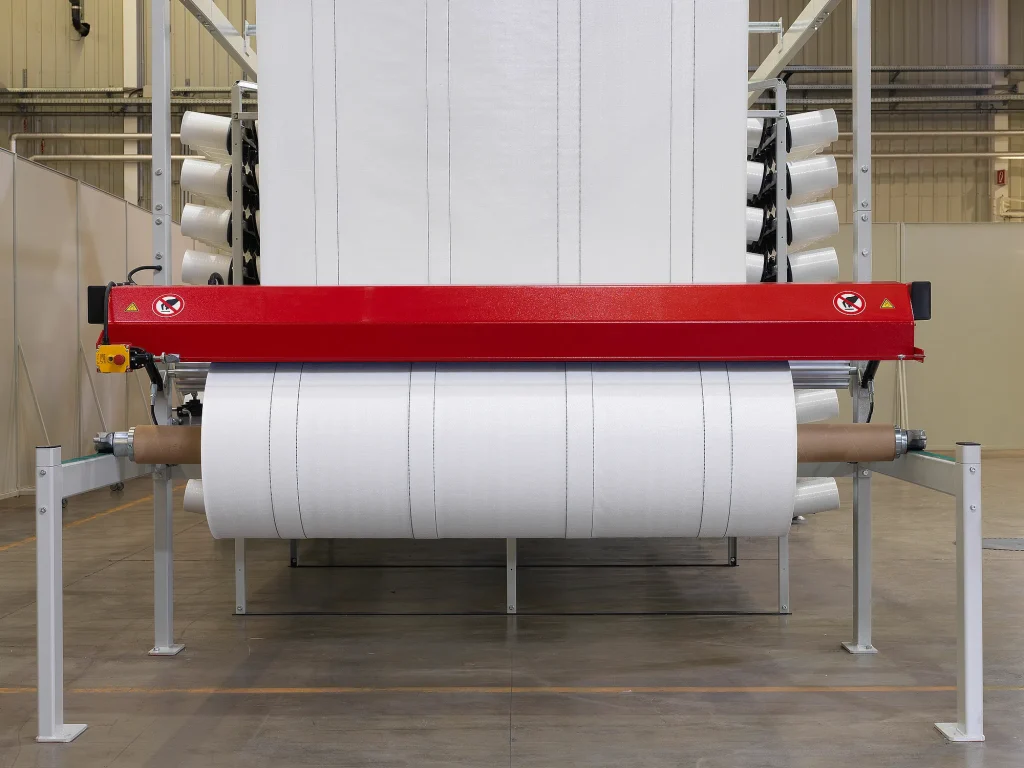
Drawn PP tapes (raffia) are slit and oriented, then woven on circular or flat looms into tubular or sheet fabric. Benefits: high tensile‑to‑weight ratio, excellent tear resistance, flex‑fatigue tolerance, tunable breathability via weave openness and micro‑perforation. Economics: low resin density (~0.90 g/cm³) coupled with productive looms makes PP a cost‑efficient structural backbone. In the stack, it is the load‑bearing shell of printed PP woven bags and printed BOPP woven bags.
BOPP Film (Optional Laminated Face)
Biaxially Oriented Polypropylene is reverse‑printed by gravure or high‑definition flexo, then bonded to the fabric. It elevates artwork to retail quality, guards ink from abrasion, adds sheen or matte tactility, and improves moisture resistance. Cost drivers include film thickness, cylinder/plate count, ink coverage, and lamination energy. It is integral to many BOPP laminated woven bags for fertilizer, pet food, and premium feeds.
Polyethylene (PE) Coatings and Liners
LDPE/LLDPE (sometimes metallocene blends) ensure heat‑sealability and barrier against moisture and grease. Antistatic grades dissipate charge around fine powders. Thicker liners extend barrier but restrict de‑aeration and raise cost; thinner gauges balance seal and breath. Liners are crucial for hygroscopic goods such as starch, flour, and salts.
Inks and Adhesives
Solvent/waterborne flexo inks and solvent gravure systems are tuned for adhesion, color, and migration limits; overprint varnishes add rub resistance. Lamination employs extrusion tie‑layers or polyurethane adhesives with strict residual control. These chemistries determine how faithfully a custom PP woven sack carries photography, microtext, and barcodes through transit.
Additives and Masterbatches
UV stabilizers protect fabric outdoors; antistatic agents limit dust cling and nuisance shock; slip/anti‑block regulate friction for conveyor flow versus pallet grip; white and color masterbatches create opacity and brand fidelity. Without these small percentages, performance windows narrow and re‑order consistency erodes.
Typical Constructions
Unlaminated builds (woven PP + coating; direct flexo print) favor breathability and economy. Laminated builds (woven PP + printed BOPP + optional PE liner) emphasize premium graphics and barrier. Hybrid paper‑PP laminates target stiffness, friction, and a paper‑like optics where required.
Callout: choosing materials is an exercise in trade‑offs. More barrier can mean less breathability; higher gloss can mean greater pallet slip; thicker film can mean better scuff resistance but stiffer hand‑feel. The correct balance depends on powder behavior, filling method, transport distance, warehouse climate, and brand ambitions.
Signature Features of Custom Printed Woven Bags
The following attributes recur across successful specifications of custom printed woven bags. Some belong to the woven structure; others arise from coatings, laminates, or finishing choices. Together they map what end users actually experience: speed at fill, cleanliness in handling, visibility at retail, and stability on pallets.
- High strength at low mass: Woven PP enables drop and tear resistance with lower grams per bag than many multiwall paper equivalents.
- Graphic durability: Reverse‑printed BOPP shelters ink under film; direct‑to‑fabric flexo plus varnish resists rub and scuff on mixed pallets.
- Friction tuned to purpose: Surface COF is adjustable for smooth conveyor flow or grippy stacking; anti‑slip textures add security without choking lines.
- On‑demand barrier: Coatings, laminations, and liners scale moisture and grease protection; micro‑perforation retains de‑aeration in breathable builds.
- Regulatory readiness: Low‑migration inks and food‑contact liners; discrete traceability codes; space for multilingual compliance marks.
- Stack‑smart geometry: Square or block bottoms create brick‑like pallets that travel safely and present large, flat print panels.
- Sustainability levers: Mono‑PP designs, down‑gauging, recovery‑minded adhesives, and pilots with recycled content in appropriate non‑food SKUs.
Production Process: From Qualified Inputs to Finished Custom Printed Woven Bags
VidePak operates end‑to‑end on Austrian Starlinger and German W&H platforms to stabilize tape uniformity, lamination bond, and print register. The flow comprises incoming qualification, unit operations, and final QA. “Good in, good out” is not a cliché—it is a measurable discipline that keeps repeat orders consistent.
Pre‑Material Selection and Incoming Tests
- PP resin: appearance, odor, ash, melt flow index (MFI), moisture (Karl Fischer), isotacticity, and gel count with lot traceability.
- BOPP film: thickness tolerance, haze/gloss, dyne level (≥38 dyn/cm), COF, and heat‑shrink behavior.
- PE liners: WVTR, seal initiation temperature (SIT), dart impact, and slip migration over time.
- Inks/adhesives: viscosity windows, solids, solvent ratios, and residual limits; migration conformance for food‑contact builds.
- Masterbatches: UV‑stabilizer hours, antistatic decay time, and color ΔE controls against master swatches.
Unit Operations on Starlinger + W&H
- Extrusion and tape orientation (Starlinger): PP pellets are extruded, slit to tapes, oriented and annealed to target denier and tensile. Closed‑loop tension control limits weak points.
- Weaving (Starlinger circular/flat looms): Tapes become fabric. Picks/inch, GSM, and broken‑end rate are monitored to secure uniformity.
- Surface preparation: Corona treatment lifts dyne level to anchor inks and adhesives; inadequate treatment shows up later as flaking or delam risk.
- Printing route A: direct flexographic printing on coated fabric—fast changeover, economical plates, suitable up to 6–8 colors with modern anilox/plate technologies.
- Printing route B: pre‑print film (W&H gravure or HD flexo) for reverse printing on BOPP; enables photo‑grade art and protected microtype.
- Lamination (W&H or Starlinger): extrusion tie‑layer or PU adhesive lamination; bond strength and register stability are verified in‑line.
- Conversion: cutting, gusseting, hem/sew or heat‑seal, block‑bottom formation; optional liners inserted; options for valve or open‑mouth closure.
- In‑line inspection: vision systems confirm register, code clarity, seam formation, and dimensional tolerances.
End‑of‑Line QA and Compliance
- Mechanical: tensile/tear/burst; multi‑orientation drop tests (e.g., five drops at 1.2 m) on corners, edges, and flats.
- Surface: COF (static/kinetic) windows set for conveyor machinability versus pallet grip.
- Graphics: ΔE tolerance, tape/cross‑hatch adhesion checks, rub resistance to avoid mixed‑pallet offset.
- Barrier: WVTR/OTR where applicable; leak/tightness for linered builds.
- Regulatory: migration testing for food contact; lot traceability and retention samples for audit readiness.
Equipment pedigree matters. Starlinger’s tape and loom control narrows variability at the yarn level; W&H’s register and tension control keeps halftones sharp and barcodes scannable. When inputs and equipment are right, yields rise, rework drops, and pallets look consistent across re‑orders.
Applications: Where Custom Printed Woven Bags Excel
Because custom printed woven bags combine mechanical strength, tunable barrier, and high‑impact graphics, they fit markets that demand both performance and persuasion. The same pack that resists tears in a warehouse must also carry nutritional tables, safety warnings, and brand stories at a store. Representative use cases include:
- Animal nutrition and pet food (printed BOPP woven bags with grease/odor control, matte film for legibility, and rub‑resistant varnishes).
- Fertilizers, soil amendments, and seeds (UV stability, moisture barrier, abrasion resistance).
- Rice, flour, sugar, salt, starch (food‑contact liners, barcode clarity, unit‑price labels that scan first‑time).
- Construction powders and minerals (breathable unlaminated builds with engineered de‑aeration for fast fill).
- Pellets and resin granules (tear resistance and traceability codes that survive mixed pallets).
- Coal, biomass, and solid fuels (abrasion‑resistant faces, anti‑slip textures, stable pallets).
VidePak’s Quality Architecture: How Performance Is Controlled and Proven
VidePak’s quality architecture rests on four pillars that translate engineering intent into repeatable output. The aim is not just to meet specifications once, but to hold them across seasons, resin lots, and artwork refreshes.
- Standards‑aligned manufacture and verification aligned with ISO/ASTM/EN/JIS. Documented SOPs span tensile, tear, drop, COF, WVTR, print adhesion, and migration. SPC charts watch critical‑to‑quality points—tape denier, pick rate, lamination bond, press register. AQL sampling and CAPA close the loop; PPAP‑style packs are available for demanding programs.
- Virgin raw materials from tier‑1 suppliers: 100% virgin PP, certified BOPP films, food‑safe PE liners, approved ink and adhesive sets. Full lot traceability from silo to bale prevents guesswork when troubleshooting.
- Best‑in‑class equipment throughout the chain—Austrian Starlinger for extrusion/orientation/looms/coating; German W&H for gravure/flexo presses, lamination, and converting lines.
- Three‑gate inspection: incoming qualification, in‑process controls (vision register, seam peel, in‑line measures), and outgoing audits (drop/leak, COF, WVTR, dimensions, pallet compression).
Control Point A
Color delta (ΔE) ≤ 2.0 across re‑orders; barcode grade ≥ B by ISO/IEC 15416; varnish rub resistance validated on high‑touch zones.
Control Point B
COF windows tuned to 0.30–0.40 for pallet stability versus conveyor flow; optional anti‑slip textures on glossy faces.
Control Point C
WVTR caps for hygroscopic goods; leak/tightness criteria for linered builds; five‑drop matrix at 1.2 m across orientations.
Printing Techniques Compared and Contextualized
Printing is not an afterthought; it is engineering by other means. The route you choose mediates color, durability, cost, and sustainability—and it must harmonize with the product’s moisture sensitivity and the filler’s aeration needs. Below, four principal approaches are analyzed with practical triggers and watch‑outs. Throughout this section, keywords such as custom printed woven bags, printed BOPP woven bags, and laminated polypropylene printed sacks are used deliberately, because buyers often search by technique as much as by substrate.
Direct Flexographic Printing (on coated fabric)
Strengths: short make‑ready, economical plates, solid vector graphics, viable up to 6–8 colors with modern anilox and flat‑top plates. Considerations: fabric texture can telegraph; varnishes raise rub resistance; screen tints need consistent impression. Choose when breathability matters and artwork is bold rather than photographic.
Reverse Rotogravure (pre‑print BOPP film)
Strengths: continuous‑tone imagery, tiny microtype, rich neutrals, crisp codes; the printed film is then laminated to the fabric for scuff protection. Considerations: cylinder investments and lead times; careful prepress is essential. Choose for premium panels, long runs, and retail‑facing BOPP laminated woven bags.
High‑Definition Flexo on BOPP
With refined plates and high line screens, HD flexo approaches gravure quality while keeping plate costs and job changes favorable. It still requires lamination, but provides a middle path for custom printed woven bags that need photographic cues without gravure cylinders.
Digital Printing (emerging for films)
Digital presses shrink setup time and enable versioning by SKU or season. Per‑unit cost can be higher, but inventory risk falls. Compatibility with laminating chemistry and rub performance must be verified. Use for pilots, regional art, and frequent refreshes.
Key Parameters: Numbers That Translate Design into Performance
A robust specification converts brand ambition into measurable targets. The table below gathers frequently used parameters for custom printed woven bags and explains why each number matters. Use it as a shared language between procurement, graphics, and operations.
| Parameter | Typical Target/Range | Why It Matters |
|---|---|---|
| Dyne level (treated surface) | ≥ 38 dyn/cm | Anchors ink and adhesive; low dyne risks flaking/delam. |
| BOPP film thickness | 18–35 µm (matte or gloss) | Controls scuff resistance, stiffness, barrier, and hand‑feel. |
| Lamination coat weight | 18–30 g/m² | Bond strength, curl, and residual solvent management. |
| Color tolerance (ΔE) | ≤ 2.0 across re‑prints | Preserves brand consistency across lots and plants. |
| Rub resistance | Pass tape/rub tests | Prevents scuff and offset on mixed pallets. |
| Barcode grade | ISO/IEC 15416 grade B or better | Ensures scanability under real warehouse lighting. |
| COF (static/kinetic) | 0.25–0.45 window | Balances pallet stability with conveyor throughput. |
| WVTR (liner/laminate) | Application‑specific | Controls moisture pickup for hygroscopic goods. |
| Drop performance | Five drops at 1.2 m | Mitigates transit damage and claims. |
A System Thinking Blueprint: From Sub‑Problems to Integrated Decisions
Selecting custom printed woven bags is best managed as a system: break the decision into smaller questions, solve each with targeted data, then synthesize a balanced specification. The framework below mirrors how experienced buyers converge on the right answer.
Sub‑Problem A: Product and Process Characterization
Flowability, bulk density (loose/tapped), particle size distribution, hygroscopicity, and grease/odor inform whether you need breathable fabric or laminated + liner builds. Filler geometry (nozzle OD), de‑aeration path, target BPM, and dust limits influence micro‑perforation density and closure method. Climate and logistics (temperature, humidity, road quality, stack heights) shape UV stabilization, COF windows, and bottom style.
Sub‑Problem B: Brand, Regulatory, and Sustainability Targets
Visual ambition (photography vs. vector), finish (matte vs. gloss), and tactile cues set the print route. Food‑contact rules and migration limits constrain ink sets and adhesives. Sustainability intentions—mono‑material builds, down‑gauging, recycled content—steer substrate choices and on‑pack claims for custom PP woven sacks.
Sub‑Problem C: TCO and Operational Risks
Direct costs (film, cylinders/plates, adhesive energy, press time) are only part of the picture. Indirect costs—downtime from dust cleanup, product loss, pallet collapse, returns—often dominate. Model pallet density, validate leak/tightness, and measure cycle time on the real filler.
Integrated Path (Step‑By‑Step)
- Intake: powder data + filler specs + brand/compliance.
- Concept short‑list: unlaminated flexo; BOPP gravure; BOPP HD flexo; hybrid paper‑PP.
- DFMEA: leak paths, delamination risk, barcode scuff, pallet slip.
- Pilot: 500–2,000 bags on the real line; capture BPM, dust, closure, pallet data.
- Lock spec: materials, GSM, print route, laminate, COF, QA plan.
- Scale with SPC: chart CTQs (denier, bond strength, register); AQL sampling.
- Quarterly review: color drift, down‑gauging, recycled content, regulatory shifts.
Comparative Options and When to Use Them
No single construction wins everywhere. The table maps three common choices for custom printed woven bags and clarifies the trade‑offs. The point is not to crown a universal champion but to make an informed, context‑aware selection.
| Option | Build | Print Route | Strengths | Watch‑outs | Best For |
|---|---|---|---|---|---|
| Unlaminated coated PP | Woven PP + coating | Direct flexo | Breathable, economical, fast changeovers | Fabric telegraphing; limited photo art | Cement, gypsum, salt where de‑aeration is key |
| BOPP laminated | Woven PP + BOPP + optional PE liner | Gravure or HD flexo (reverse) | Photo‑grade art, scuff resistance, moisture barrier | Cylinder investment; lamination complexity | Pet food, fertilizer, branded feed |
| Paper‑PP hybrid | Kraft + woven PP laminate | Flexo on paper face | Paper optics, high COF, premium feel | Moisture sensitivity of paper face | Pigments, retail‑adjacent construction mixes |
Scenario Cards: Practical Problems and Targeted Remedies
Pet food grease halos → adopt printed BOPP woven bags with PE liner, matte film for legibility, high‑build varnish, and—where applicable—ultrasonic sealing. Outcome: clean pallets and clearer graphics.
Fertilizer caking in coastal humidity → laminated + liner build, validated WVTR, UV‑stabilized masterbatch, COF tuned for hot climates. Outcome: fewer clumps and safer stacking.
Poor retail barcode scans on rice/flour → ΔE ≤ 2.0, matte/gloss zoning around code blocks, and overprint varnish on high‑touch faces. Outcome: higher first‑pass scan rates.
Dust at cement filler → breathable unlaminated fabric plus engineered micro‑perfs; consider block‑bottom for pallet discipline. Outcome: faster fills, fewer complaints.
Purchasing Checklist for VidePak
To accelerate quoting and avoid avoidable iterations, share the following with the VidePak team when specifying custom printed woven bags:
- Product description, PSD, bulk density, hygroscopicity/grease content.
- Filler data: BPM target, nozzle OD, de‑aeration method, allowable dust.
- Logistics: pallet height, container goals, outdoor exposure duration.
- Compliance: food contact? migration plan? traceability format.
- Branding: art complexity, matte vs. gloss, tactile needs, color targets.
- Sustainability: mono‑PP aim, down‑gauging, recycled content policy.
- Performance: drop matrix, COF window, WVTR/OTR caps, UV hours.
Frequently Asked Engineering Questions
Real programs raise real questions. The answers below are concise but backed by the process and parameter targets spelled out above.
- Flexo on fabric or gravure on BOPP? Choose direct flexo when breathability is crucial and art is vector‑heavy. Choose reverse gravure (or HD flexo) on BOPP for photographic depth and rub resistance.
- Recyclability claims for laminated builds? Favor mono‑PP: PP fabric, BOPP film, PP‑compatible ties; avoid paper layers; communicate local recovery routes.
- Realistic color tolerance across plants? ΔE ≤ 2.0 with calibrated inks, press profiles, and retention swatches.
- How to mitigate pallet slippage on glossy films? Tune COF, add micro‑textures, and validate on the palletizer with real wrap recipes.
- How small can a scannable barcode be? With gravure/HD flexo on BOPP and tight register, small x‑dimensions are feasible—verify to achieve ISO/IEC 15416 grade B or better.
Extended Context and Cross‑References
Specifications rarely live in isolation. Adjacent formats and materials offer solutions for edge cases or alternative value propositions. The resources below are internal pathways that broaden the decision space around custom printed woven bags without derailing the core brief.
- Eco‑oriented woven packaging for construction loads — when sustainability claims and heavy‑duty performance must align.
- Poly BOPP solutions for waste and recycling streams — where contamination control and print signaling matter.
- A perspective on multiwall paper formats — useful for comparing fiber‑based friction and optics to PP.
- Aluminum‑foil woven constructions — high barrier where odor, oxygen, or grease challenge PP alone.
- BOPP valve woven options — for high‑speed, low‑dust filling with retail‑grade faces.
- FIBC jumbo bag programs — when the payload scales from kilograms to tons and policy alignment matters.
- FFS roll film for pet food — an alternative when form‑fill‑seal speed is the main constraint.
Risk, Cost, and Sustainability: A Three‑Lens Decision
Risk asks, “What can go wrong?” Cost asks, “What must we pay—directly and indirectly?” Sustainability asks, “What will we state publicly, and can we defend it?” A mature specification for custom printed woven bags reconciles all three.
Risk Lens
- Leakage from poor sleeve/nozzle fit or insufficient lamination bond.
- Color drift beyond ΔE targets or barcode degradation from rub.
- Pallet slippage due to low COF on glossy film faces.
Cost Lens
- Plates/cylinders vs. print complexity and run length.
- Barrier film gauges vs. WVTR targets and scuff risk.
- Indirect costs: dust cleanup, product loss, claim handling.
Sustainability Lens
- Mono‑PP designs to simplify end‑of‑life recovery.
- Down‑gauging to reduce mass per unit while retaining drop strength.
- Recycled content pilots where regulations and applications allow.
Expanded Technical Notes: Color, Halftones, and Anilox Strategy
Color management underpins brand trust. For custom printed woven bags, three elements drive outcomes: plate technology, anilox selection, and substrate planarity. Flat‑top plates reduce dot gain; higher line screens enable smoother gradients; anilox volumes must pair with ink rheology and drying constraints. Meanwhile, film finish (matte vs. gloss) changes perceived saturation and scanability; matte often lifts barcode contrast while gloss lifts photographic depth. In practical terms, specify Pantone targets, ΔE limits, press profiles, and retention swatches that travel with art.
Halftone Fitness
Photographic panels benefit from reverse print on BOPP with gravure or HD flexo at high line screens. Vector‑heavy panels with big color blocks thrive on direct flexo when fabric planarity and coating smoothness are secured.
Anilox and Varnish Pairing
Use lower‑volume anilox for fine text to avoid fill‑in; deploy high‑build varnish only on high‑touch areas to maintain COF windows. When in doubt, run a short make‑ready series and measure rub, ΔE, and COF on live pallets.
Glossary for Stakeholders New to the Category
- BOPP: biaxially oriented polypropylene film used for premium print faces.
- WVTR: water vapor transmission rate; indicator of moisture barrier.
- COF: coefficient of friction; governs pallet stability vs. machine flow.
- ΔE: color difference metric; lower equals closer to target swatch.
- DFMEA: design failure mode and effects analysis; anticipates defects.
November 25, 2025
- Understanding Custom Printed Woven Bags: Definitions, Purpose, and Common Aliases
- Constituent Materials of Custom Printed Woven Bags: Structure, Properties, Cost, and Roles
- Signature Features of Custom Printed Woven Bags
- Production Process: From Qualified Inputs to Finished Custom Printed Woven Bags
- Applications: Where Custom Printed Woven Bags Excel
- VidePak’s Quality Architecture: How Performance Is Controlled and Proven
- Printing Techniques Compared and Contextualized
- Key Parameters: Numbers That Translate Design into Performance
- A System Thinking Blueprint: From Sub‑Problems to Integrated Decisions
- Comparative Options and When to Use Them
- Scenario Cards: Practical Problems and Targeted Remedies
- Purchasing Checklist for VidePak
- Frequently Asked Engineering Questions
- Extended Context and Cross‑References
- Risk, Cost, and Sustainability: A Three‑Lens Decision
- Expanded Technical Notes: Color, Halftones, and Anilox Strategy
- Glossary for Stakeholders New to the Category
Over 60% of global brands now prioritize eco-friendly packaging, with polypropylene (PP) woven bags emerging as a $12.7 billion market by 2026. At VidePak, our ISO-certified production lines combine 8-color flexographic precision, 100% recyclable PP materials, and compliance with 15+ international standards to deliver bags that reduce carbon footprints by 30% while maximizing branding impact.
1. The Science Behind Printing: Techniques That Define Quality
Custom printing on PP woven bags is not merely aesthetic—it’s a technical endeavor requiring expertise in color fidelity, durability, and material compatibility. VidePak’s 30+ years of innovation have refined three core methods:
A. Flexographic Printing
- Resolution: 150–200 LPI (lines per inch), ideal for logos and text.
- Speed: 200 meters/minute, enabled by our 30+ Starlinger circular looms.
- Eco-Inks: Water-based pigments reduce VOC emissions by 70% compared to solvent-based alternatives.
Case Study: A European fertilizer brand achieved 98% color accuracy across 500,000 bags using our Pantone-matched flexo printing, complying with EU’s REACH chemical safety standards.
B. Gravure Printing
- Detail Precision: 250–300 LPI for photorealistic designs.
- Durability: Withstands 50+ wash cycles, critical for reusable retail totes.
- Cost Efficiency: Economical for runs exceeding 100,000 units due to cylinder reuse.
C. Screen Printing
- Texture Depth: 3D effects for tactile branding (e.g., embossed charity slogans).
- UV Resistance: Retains vibrancy after 1,200 hours of UV exposure (ASTM G154).
2. Key Parameters: Balancing Performance and Sustainability
Technical Specifications Table
| Parameter | Range | Industry Application | Compliance Standard |
|---|---|---|---|
| Fabric Density | 8×8 to 14×14 yarns/cm² | Agriculture (lower density) vs. Chemicals (higher density) | ISO 2231:1989 |
| Grammage | 80–200 g/m² | 120 g/m² for rice; 180 g/m² for cement | EN 277:2016 (leak-proof) |
| Tensile Strength | 35–60 N/cm² | 50 N/cm² for 25 kg pet food | ASTM D5034 |
| Print Adhesion | ≥90% (tape test) | Retail branding durability | BS EN ISO 2409:2013 |
Example: For a U.S. coffee chain, we engineered 140 g/m² bags with 12×12 weave density and BOPP lamination, reducing bean moisture uptake by 40% while supporting 4-color landscape prints.
3. The Green Revolution: PP’s Role in Circular Economies
A. Recyclability in Action
- Closed-Loop Systems: VidePak partners with European recyclers to reprocess 85% of post-consumer PP into new bags, slashing virgin plastic use by 50%.
- Carbon Metrics: Each ton of recycled PP reduces CO2 emissions by 1.45 tons versus virgin production.
B. Biodegradable Innovations
- Additive-Enhanced PP: Oxo-biodegradable additives (TDPA™) enable 18-month decomposition in landfills (tested per ASTM D6954).
- Plant-Based Blends: Pilot projects with 30% sugarcane-derived PP aim for 2026 commercialization.
Case Study: A Japanese retailer cut plastic waste by 22 tons annually using our recyclable PP bags with QR-code-guided disposal instructions.
4. Social Impact: Where Profit Meets Planet
- Job Creation: VidePak’s 568 employees include 120+ women in rural Chinese communities, aligning with UN SDG 8 (Decent Work).
- Waste Reduction: Our 2024 “Zero Scrap” initiative reclaims 98% of production offcuts for reuse.
- Consumer Shift: 73% of buyers pay a 5–10% premium for sustainability-certified packaging (2024 Nielsen Report).
5. Future Trends: Beyond 2025
- Blockchain Tracking: RFID tags embedded in bags enable real-time supply chain transparency (patent pending).
- Self-Healing Films: Nano-coatings repair <0.5mm punctures, extending bag lifespan by 3x.
- Regulatory Momentum: VidePak’s R&D team anticipates stricter EU PP recycling quotas (85% by 2030 vs. 50% today).
FAQs: Addressing Procurement Priorities
Q1: What’s the MOQ for custom designs?
A: 10,000 bags, with 5-day prototyping using our in-house CAD/CAM systems.
Q2: How does recycled PP affect pricing?
A: Costs rise 8–12%, offset by tax incentives (e.g., U.S. EPA’s 45Q credits) and brand loyalty ROI.
Q3: Can bags withstand -20°C freezer storage?
A: Yes. Our cold-chain PP blend (with 15% LDPE) retains flexibility down to -25°C (tested per ISTA 3A).
Conclusion
In an era where 78% of consumers judge brands by packaging ethics, VidePak’s custom woven bags fuse technical mastery with planetary stewardship. Explore our BOPP laminated solutions and eco-printing innovations to transform your packaging into a growth engine.
References
- VidePak Sustainability Report 2025: Circular PP Systems and Carbon Metrics.
- Nielsen Global Packaging Survey 2024: Consumer Preferences in Sustainable Packaging.
- Made-in-China Technical Database: PP Woven Bag Manufacturing Standards.
Contact VidePak:
- Website: https://www.pp-wovenbags.com/
- Email: info@pp-wovenbags.com