
BOPP Laminated Woven Bags: A Product Analysis of High-Impact Printing and Practical Customization
Strong enough for demanding supply chains, refined enough for retail shelves, and flexible enough for product-specific design, BOPP Laminated Woven Bags combine a woven polypropylene body with a printable biaxially oriented polypropylene film. For brand owners, the value is not one feature but a balanced system: strength and appearance, protection and visibility, efficient filling and stable stacking.
VIDEPAK capability at a glance: custom Printing from 1 to 9 colors, high-resolution brand graphics, tailored bag dimensions and constructions, and functional choices such as a Transparent Window, Matt Surface, Glossy Surface, Micro-Perforation, and Anti-Slip Treatment. The best result comes from choosing these options as one connected specification rather than as isolated add-ons.
Why BOPP Laminated Woven Bags Work as a Packaging System
A layered structure with clear roles
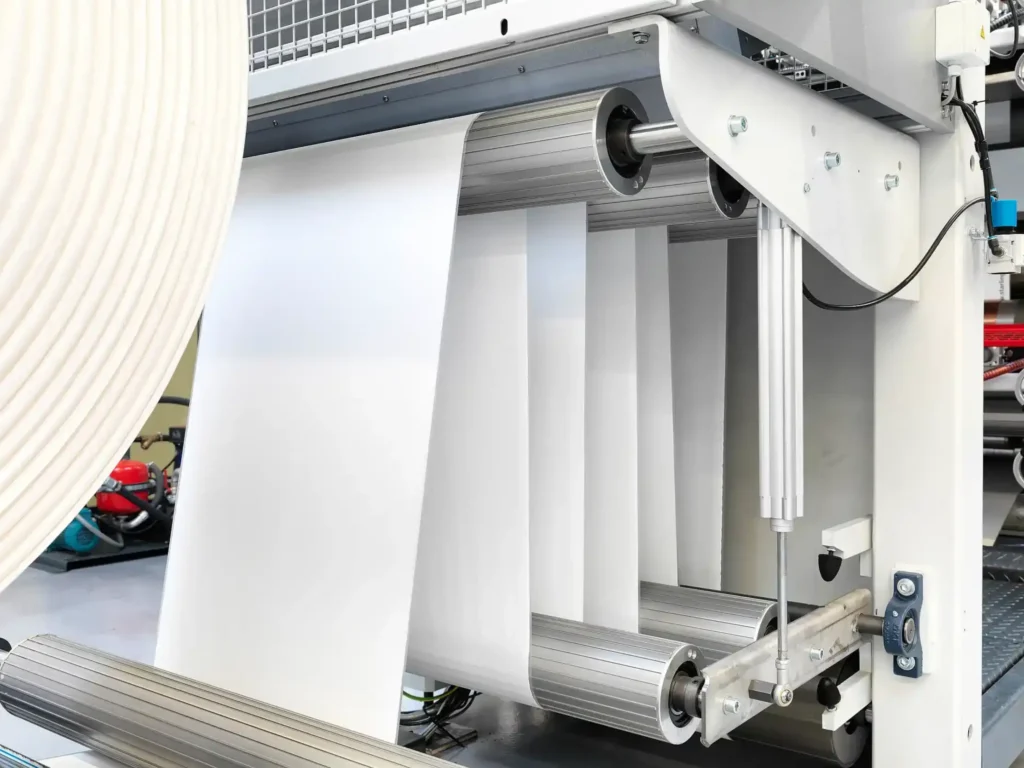
BOPP Laminated Woven Bags are built by bonding a BOPP film to a woven polypropylene fabric. The woven fabric carries the load. It provides tensile strength, resistance to tearing, and dimensional support when bags are filled, moved, dropped, stacked, or stored. The BOPP film creates the smooth visual face. It supports detailed Printing, helps protect graphics from scuffing, and improves resistance to dust and external moisture when the laminate and closures are correctly designed. Industrial equipment documentation confirms that printed BOPP film can be laminated to woven fabric to combine visual appeal with functional protection.
The result is a useful contrast: the inside structure behaves like industrial packaging, while the outside face behaves like premium consumer packaging. One layer handles force; another carries the story. One protects the product; another sells the product. This dual role explains why BOPP Laminated Woven Bags are widely considered for rice, grains, seeds, animal feed, pet food, fertilizer, minerals, resin, salt, flour, and selected building materials.
Woven Strength
Oriented PP tapes are woven into a stable fabric that supports heavy contents and repeated handling.
BOPP Image Layer
A smooth film face carries detailed artwork, product information, brand colors, and photo-style images.
Lamination Bond
The bonding layer connects film and fabric, helping the finished bag act as one structure instead of two loose materials.
Functional Finish
Surface texture, vents, friction control, handles, gussets, liners, and closures adapt the bag to real operating conditions.
Typical specification ranges and the need for validation
Common market specifications may include BOPP film around 15–35 μm, woven fabric around 55–120 g/m², and weave densities often near 10×10 to 14×14 tapes per inch, but these are planning ranges rather than universal rules. The correct structure depends on filled weight, particle shape, drop risk, storage climate, closure method, pallet pattern, filling speed, and required shelf life. VIDEPAK therefore treats the final specification as an engineered combination. A heavier fabric does not automatically solve a weak seam; a thicker film does not automatically solve poor lamination; a brighter design does not automatically improve sales if glare hides the product name.
VIDEPAK 1-to-9-Color Printing Capability
From one clear color to nine-color visual depth
VIDEPAK supports customized Printing from 1 to 9 colors for BOPP Laminated Woven Bags. This range gives buyers practical control over cost, visual complexity, and brand consistency. A one-color design can communicate a product name, grade, weight, and handling marks with direct clarity. Two to four colors can build a recognizable brand system. Five to seven colors can support richer illustrations, tonal transitions, and stronger shelf contrast. Eight or nine colors can combine process colors with dedicated spot colors, opaque white, deep black, metallic-style effects, or other brand-specific elements where the artwork and film structure permit.
The key point is not to use the highest color count by default. It is to use the right color count with discipline. More colors may improve realism and brand control, but they also add cylinders or plates, ink stations, registration demands, setup work, and approval steps. Fewer colors can be powerful when the layout is bold, the contrast is clear, and the message is simple. Nine colors can whisper luxury; one color can shout certainty. Good package design is not a contest of quantity. It is a match between product position and customer expectation.
Reverse Printing Protects the Image
For many premium constructions, the image is reverse-printed on the inner side of clear BOPP film and then laminated to the woven substrate. The ink becomes trapped between film and fabric, so normal rubbing, pallet contact, and shelf handling do not directly scrape the ink surface. Industry equipment sources describe this reverse-printed BOPP construction as a method for protecting the motif from abrasion while preserving an attractive face.
Gravure, flexographic, and artwork strategy
Rotogravure is often selected for long runs, high image detail, smooth gradients, strong ink coverage, and repeatable reproduction. Central-impression flexographic Printing can be attractive for faster changeovers, shorter campaign cycles, and flexible SKU management. The best route depends on order volume, image detail, number of SKUs, film type, line setup, and color tolerance. VIDEPAK reviews artwork before production so text size, barcodes, fine lines, halftones, reverse areas, and color separations can be adapted to the real material and conversion process rather than judged only on a computer screen.
Color accuracy also depends on surface energy and ink adhesion. BOPP film is commonly surface-treated before Printing because untreated polypropylene has low surface energy. Production control should therefore cover film cleanliness, treatment level, ink viscosity, drying, web tension, registration, and the time between treatment, Printing, and lamination. The visual target is simple: sharp type, clean edges, stable color, smooth solids, and no hidden weakness under the shine.
| Color Level | Best Fit | Marketing Effect | Control Focus |
|---|---|---|---|
| 1 color | Simple industrial marks or value products | Clear, direct, economical | Solid density and text clarity |
| 2–4 colors | Core brand systems and product families | Recognizable and balanced | Spot-color matching and register |
| 5–7 colors | Detailed illustrations and premium food or feed packs | Richer depth and stronger shelf presence | Tone balance, trapping, and gradients |
| 8–9 colors | Photo-style artwork plus special brand colors | Maximum visual control | Registration, proofing, and repeat consistency |
A practical artwork-to-bag workflow
Transparent Window: Visibility Built into the Material
How the window is actually created
The VIDEPAK Transparent Window is not simply a hole cut into an otherwise opaque bag. The design uses transparent PP fabric as the substrate in the viewing area, together with a clear film structure where required. During Printing, the registered window area is intentionally left unprinted. Because no opaque ink covers that zone, light can pass through the clear layers and the packed product becomes visible. In simple terms: transparent base material plus an unprinted area creates the view.
This distinction matters. A printed white fabric cannot become truly clear merely because a graphic shape is omitted. The substrate itself must support visibility. Likewise, a clear substrate can lose its window function if opaque white or dense color is printed across the zone. VIDEPAK therefore coordinates fabric selection, film choice, artwork registration, lamination clarity, and bag conversion so the Transparent Window remains aligned and useful after gusseting, cutting, sewing, sealing, or bottom forming.
The consumer value is immediate
A Transparent Window lets shoppers check grain size, color, cleanliness, texture, mixture uniformity, or visible product condition without opening the package. It reduces uncertainty. It supports comparison. It turns the product itself into part of the package design. Clear-window packaging is widely used to improve product visibility and buyer confidence.
Window placement is a design decision, not decoration
A front-panel Transparent Window creates strong shelf impact and makes the product easy to inspect. A narrow side window can preserve more graphic space while still allowing a quality check. A vertical strip may help consumers see product level from top to bottom. A shaped window can support brand recognition, but very complex shapes may make registration and quality control harder. The ideal location must also avoid seam folds, valve areas, high-stress corners, handle cuts, and zones that may be hidden by pallet overlap.
Visibility must be balanced with protection. Clear areas reveal the product, but they also reduce the space available for opaque light-blocking graphics. Products sensitive to light may need a smaller window, a side placement, or no window at all. Fine powders can leave dust on the inner face and reduce clarity. Oily or high-static products may also affect appearance. For these reasons, the window should be tested with the actual product, actual filling line, actual storage period, and actual retail light—not with an empty sample alone.
Matt Surface and Glossy Surface: Two Different Brand Languages
When a Matt Surface makes sense
A Matt Surface reduces strong reflections and gives the package a softer, calmer appearance. It can make dark colors feel deeper, large color fields feel more controlled, and simple typography feel more premium. It is often a strong fit for natural foods, specialty grains, premium feed, organic-style positioning, high-value ingredients, or brands that want confidence without visual noise.
The marketing benefit is restraint, but the technical details still matter. A Matt Surface may show oil marks, pressure polishing, or rub changes differently from a glossy film. Small text must retain enough contrast. Black areas must not become muddy. The final feel should be reviewed after lamination and bag forming because folds and tension can change how light moves across the panel. A good Matt Surface says “considered,” not “dull.”
When a Glossy Surface creates stronger shelf impact
A Glossy Surface reflects more light and can make colors appear bright, clean, and energetic. It works well for photo-style food images, bold category colors, fresh-product cues, and crowded retail environments where the package must catch attention quickly. The film can add visual depth because the image appears beneath a clear, smooth layer.
Yet high shine is not always better. Glare can hide text under direct lighting. Fingerprints, scratches, and pallet rub may be more visible on certain colors. A Glossy Surface should therefore be paired with suitable artwork contrast, protected reverse Printing, controlled handling, and, where needed, Anti-Slip Treatment on a different panel. The front can sparkle while the back grips. Beauty and stability do not need to fight.
Matt Surface
Visual tone: quiet, refined, modern.
Strong use: premium and natural positioning.
Watch: contrast, rub polishing, and mark visibility.
Glossy Surface
Visual tone: bright, vivid, energetic.
Strong use: photo graphics and fast shelf impact.
Watch: glare, fingerprints, scratches, and slide behavior.
VIDEPAK can also develop mixed-finish concepts when the production route and order plan support them. A glossy image zone can make the product look fresh, while a matte brand panel can improve text focus. A matte front can communicate quality, while a treated back panel improves pallet friction. Contrast creates hierarchy: shine against calm, image against information, attention against trust.
Micro-Perforation and Anti-Slip Treatment
Micro-Perforation manages air during filling
Dry powders and fine granules often carry air into the bag during high-speed filling. If the air cannot escape, the bag may inflate, fill slowly, form an unstable shape, or release dust at the mouth. Micro-Perforation creates a controlled path for this air. Industrial bag systems use dedicated micro-perforation technology to provide air permeability while limiting product escape, and woven sack equipment supports this function for application-specific needs.
The hole size, density, location, and pattern must be matched to the product. Too little venting can restrict filling speed. Too much venting can reduce moisture resistance or allow fine particles to sift out. Holes placed below the settled product level may behave differently from holes concentrated near the top or valve. A correct design therefore considers particle-size distribution, dust level, filler pressure, target bags per minute, pallet compression, and climate exposure.
Design rule: ventilation and barrier move in opposite directions. More open area helps air leave; less open area helps moisture stay out. The answer is not maximum venting or maximum closure. The answer is controlled venting in the right place.
Anti-Slip Treatment supports safer pallet behavior
Smooth BOPP faces can slide against one another, especially on tall pallets, during truck braking, or under repeated vibration. Anti-Slip Treatment increases surface friction on selected areas, commonly the back panel or controlled stripes, so stacked bags are less likely to shift. Coefficient-of-friction testing for plastic film and sheeting is covered by ASTM D1894, which measures starting and sliding friction under defined conditions.
Anti-Slip Treatment must still allow bags to move through filling, conveying, stacking, and depalletizing equipment. Excessive friction can cause feeding problems or make automated handling less smooth. Insufficient friction may leave pallets unstable. The target should therefore be set with the full line in mind. The same package may need a visually smooth front, a controlled-friction back, and clean side folds. Function belongs where it works best.
| Feature | Problem Solved | Risk if Overused | Best Validation |
|---|---|---|---|
| Micro-Perforation | Trapped air, slow filling, poor bag shape | Sifting or lower moisture protection | Trial on the actual filler with the actual product |
| Anti-Slip Treatment | Pallet movement and bag-on-bag sliding | Poor machine feeding or difficult separation | COF test plus pallet vibration and transport simulation |
Customization Beyond the Surface
Bag shape, opening, closure, and carrying features
BOPP Laminated Woven Bags can be developed in open-mouth, sewn, pinch-bottom, square-bottom, block-bottom, or valve-style formats, subject to product and line requirements. Side gussets increase capacity and help form a stable rectangular pack. A flat bag may be cost-effective and easy to handle. A block-bottom bag can create a brick-like shape that improves pallet use and shelf posture. A valve bag can support cleaner powder filling. A handle can improve consumer convenience, but the cut area must be reinforced and positioned away from critical graphics.
Closure design is equally important. Sewing is flexible and familiar across many filling operations. Heat-sealed or welded structures may improve cleanliness and reduce needle-hole pathways when the material stack and equipment are compatible. Easy-open tape can improve user experience, but opening force must be controlled: easy enough for the customer, secure enough for transport. The top and bottom are not minor details. They are where a good laminate becomes a reliable package—or where it fails.
Liners, UV protection, and product contact
An optional inner liner may be added for fine powders, moisture-sensitive products, oily contents, or improved containment. Liner thickness, fit, seal method, venting, and attachment should be coordinated with filling speed and closure design. Outdoor storage may require UV stabilization in the woven tapes and careful ink and film selection. Food-related uses require a compliance review of every relevant layer, not only the PP fabric. In the European Union, Regulation (EU) No 10/2011 establishes requirements for plastic materials and articles intended for food contact, while United States food-contact applications commonly reference applicable olefin polymer provisions such as 21 CFR 177.1520.
A complete customization brief should answer five questions
What is being packed? Powder, grain, pellet, irregular piece, or oily product.
How is it filled? Manual, gravity, impeller, air packer, valve filler, or automatic open-mouth line.
How is it distributed? Local retail, export container, humid warehouse, outdoor yard, or long-distance trucking.
How is it sold? Industrial specification, retail shelf, wholesale display, or e-commerce delivery.
How is success measured? Fewer breaks, faster filling, stronger branding, better pallet stability, cleaner storage, or improved buyer trust.
Quality Control from Film to Finished Bag
Control the process, not only the final sample
High-quality BOPP Laminated Woven Bags require linked controls across raw material, weaving, film, Printing, lamination, conversion, and final packing. Film should be checked for thickness, appearance, treatment, and defects. Woven fabric should be checked for GSM, width, weave consistency, broken tapes, and tensile behavior. Thin plastic film tensile properties can be evaluated using methods such as ASTM D882, while haze and light transmission can be examined with relevant optical test methods when a Transparent Window is critical.
During Printing, operators monitor register, color, solid coverage, text clarity, ink drying, and defect repetition. During lamination, bond uniformity, web tension, temperature, pressure, curl, wrinkles, and edge adhesion require attention. During bag making, dimensions, gussets, cut position, valve placement, seam quality, perforation position, and artwork alignment are verified. Final tests may include filled-bag drop tests, seam strength, peel or bond checks, COF checks, stacking trials, leakage observation, and product-specific filling tests.
Common defects and practical responses
VIDEPAK also recommends approval samples made with production-intent materials. A digital proof can confirm layout, but it cannot fully show film shine, matte feel, window clarity, seam position, filled shape, or pallet behavior. The final decision should include the filled bag. Packaging lives in three dimensions, under weight, in motion.
Application-Based Selection Guide
Match the feature set to the product journey
The strongest specification is not the one with every available feature. It is the one in which each feature has a job. Retail rice may benefit from bright 7-to-9-color Printing, a front or side Transparent Window, a stable bottom, and moderate anti-slip control. Premium pet food may favor photo-style graphics, an optional liner, a Matt Surface for a refined look, and an easy-open top. Fertilizer may prioritize Micro-Perforation, UV stabilization, a valve or block-bottom form, strong seams, and Anti-Slip Treatment. Industrial resin may need clear identification, clean filling, and stable pallets more than elaborate artwork.
| Application | Suggested Visual Direction | Useful Functional Options | Priority Validation |
|---|---|---|---|
| Rice and grains | Glossy Surface or mixed finish; product image | Transparent Window, gusset, handle, anti-slip | Window clarity, drop, seam, shelf shape |
| Pet food and feed | Matt Surface or high-detail image system | Liner, easy-open, anti-slip, strong closure | Grease resistance, odor, scuff, filled drop |
| Fertilizer and chemicals | Clear coding and high-contrast safety information | Micro-Perforation, UV package, valve, liner | Filling speed, sifting, moisture, pallet stability |
| Resins and minerals | Technical, clean, grade-led design | Valve, controlled vents, anti-slip, trace codes | Dust, closure integrity, COF, identification |
| Retail building materials | Bold category color and simple instructions | Block bottom, handle, micro-vents, anti-slip | Dust control, impact, stacking, legibility |
A disciplined specification creates a stronger brand
For VIDEPAK, BOPP Laminated Woven Bags are not only containers. They are moving billboards, protective shells, handling tools, and trust signals. The 1-to-9-color Printing range gives each brand room to choose its own visual level. The Transparent Window lets the product prove its quality. The Matt Surface speaks with calm confidence. The Glossy Surface speaks with brightness and speed. Micro-Perforation manages air. Anti-Slip Treatment manages movement.
The best package does all of this without becoming complicated for the customer. It looks clear. It feels right. It fills smoothly. It stacks safely. It arrives intact. That is the central product logic behind VIDEPAK BOPP Laminated Woven Bags: not strength instead of beauty, not function instead of branding, but strength with beauty and function with branding.
VIDEPAK Specification Summary
Define the product, filled weight, dimensions, bag format, film, fabric, 1-to-9-color Printing, Transparent Window position, Matt Surface or Glossy Surface, Micro-Perforation pattern, Anti-Slip Treatment area, liner, closure, compliance needs, and test plan. When these choices are aligned from the start, the finished package becomes easier to approve, easier to run, and easier to trust.
In today’s competitive packaging industry, BOPP Woven Bags have emerged as a leading solution for businesses across a range of sectors. These bags offer a unique combination of durability, cost-effectiveness, and aesthetic appeal. Among the top manufacturers, VidePak stands out as a leading BOPP Bags Manufacturer and BOPP sacks Manufacturer, utilizing cutting-edge equipment from Starlinger, the world-renowned equipment supplier.
- BOPP Laminated Woven Bags: A Product Analysis of High-Impact Printing and Practical Customization
- Why BOPP Laminated Woven Bags Work as a Packaging System
- VIDEPAK 1-to-9-Color Printing Capability
- Transparent Window: Visibility Built into the Material
- Matt Surface and Glossy Surface: Two Different Brand Languages
- Micro-Perforation and Anti-Slip Treatment
- Customization Beyond the Surface
- Quality Control from Film to Finished Bag
- Application-Based Selection Guide
- Match the feature set to the product journey
- A disciplined specification creates a stronger brand
- VIDEPAK Specification Summary
- What are BOPP Laminated Woven Bags?
- Printing Techniques for BOPP Laminated Woven Bags
- Customization Options for BOPP Laminated Woven Bags
- Advantages of BOPP Laminated Woven Bags
- VidePak: A Leading BOPP Bags Manufacturer
- Conclusion
This article will delve into the world of BOPP Laminated Woven Bags, exploring the sophisticated printing techniques available for these sacks and how they can be customized for various industry needs. Additionally, we will explore why VidePak‘s approach to producing high-quality BOPP Woven Bags sets the company apart in the global market.
Printed BOPP Woven Bags
Professional printed BOPP laminated woven bags with advanced printing techniques and high-quality customization.
Check More →BOPP Bags With Custom Printing
Full customization options for BOPP laminated woven bags, supporting personalized design and industrial packaging.
Check More →Laminated BOPP Woven Bags
Premium laminated BOPP woven bags with flexible printing solutions and durable packaging performance.
Check More →BOPP Laminated Woven Bags Analysis
In-depth analysis of BOPP laminated bags, including printing technology, materials and customization advantages.
Check More →What are BOPP Laminated Woven Bags?
BOPP Laminated Woven Bags, or Biaxially Oriented Polypropylene bags, are a type of multi-wall woven bags constructed with woven polypropylene fabric. The BOPP film is laminated on the surface, which not only enhances the aesthetic appeal but also improves the bag’s durability, moisture resistance, and strength. These bags are widely used in sectors such as agriculture, construction, and food packaging due to their robust nature and customizable features.
As a top BOPP Woven Bags Supplier, VidePak ensures that its bags are produced using Starlinger’s advanced extrusion lines and circular looms, which deliver optimal structural integrity. Combined with high-quality printing techniques, the end product is visually appealing, with a high degree of precision in branding and design elements.
Printing Techniques for BOPP Laminated Woven Bags
One of the defining features of BOPP sacks is their ability to undergo various printing processes. The print quality on BOPP laminated bags is an essential aspect that determines the brand’s visibility and overall appeal. VidePak, leveraging its state-of-the-art equipment from Starlinger, offers a range of printing techniques:
- Single Color Printing
This is the most basic form of printing, ideal for companies with simpler branding needs. It involves the use of one color and is often utilized for basic logo designs or text. Single-color printing is cost-effective and can still be impactful when used with thoughtful design. - Multi-Color Printing
For more intricate designs, multi-color printing is used. This process allows for greater visual complexity and depth, making it ideal for brands that require a detailed representation of their logos, product details, or promotional images. VidePak, as a premier BOPP Woven Bags Supplier, uses Starlinger’s multi-color printing machines that ensure vibrant color reproduction and sharp details. - Full-Color (CMYK) Printing
For brands looking for the highest level of detail and vibrancy, full-color printing using CMYK technology is the best option. This method allows the creation of photographic-quality images, ideal for businesses that require full-color product pictures or promotional graphics on their packaging. VidePak‘s equipment ensures that every hue is captured with high precision, resulting in a visually stunning final product. - Block Printing for BOPP Bags
Another common technique is block printing, which involves pressing ink through a stencil or template to create bold, graphic patterns. Block BOPP Bags are often used in industries like agriculture and construction, where the focus is on clarity and high visibility. VidePak’s experience in block printing ensures consistency and quality across high-volume orders.
Comparison of Different Printing Methods
| Printing Method | Advantages | Disadvantages |
|---|---|---|
| Single Color Printing | Cost-effective, simple, and clear branding options | Limited design possibilities |
| Multi-Color Printing | Offers more design flexibility, visually appealing | Slightly more expensive than single-color printing |
| Full-Color (CMYK) Printing | Photographic quality, high visual appeal, captures detailed images and complex designs | Higher production costs |
| Block Printing | Clear, bold designs, ideal for high visibility and durability; suitable for branding agricultural or construction sacks | Limited design flexibility, can appear less refined than multi-color or full-color prints |
Customization Options for BOPP Laminated Woven Bags
Another key benefit of BOPP Laminated Woven Bags is their flexibility in terms of customization. Depending on the requirements, customers can choose from a variety of finishing options, surface textures, and sizes. VidePak, as a top BOPP Woven Bags Supplier, provides a range of customizable features to suit the specific needs of its global clientele.
- Matte Finish vs. Glossy Finish
The surface finish of a BOPP laminated woven bag can be customized to create different visual effects.
- Matte Finish: Ideal for a more subtle, sophisticated look, matte finishes reduce the amount of light reflected from the surface, giving the bag a smooth and premium appearance. It is often used in packaging for luxury goods or products where understated branding is preferred.
- Glossy Finish: Glossy finishes are highly reflective and create a shiny, attention-grabbing appearance. These are perfect for products that need to stand out on the shelf and catch the consumer’s eye with vibrant colors and bold designs.
- Bag Sizes and Shapes
Another aspect of customization is the size and shape of the bag. VidePak, as a seasoned BOPP sacks Manufacturer, offers flexibility in this regard, allowing clients to choose from a variety of sizes, from small packaging bags to multi-wall woven bags that can hold heavy-duty materials like sand, cement, or fertilizers. - Custom Laminations
Custom lamination can also be applied to BOPP Laminated Woven Bags for added protection and durability. This option is particularly useful for bags that will be exposed to harsh environmental conditions or moisture. In some cases, lamination also adds a layer of UV resistance, which is critical for outdoor storage. - Specialized Features
For customers with unique packaging requirements, specialized features such as perforations for breathability, anti-skid surfaces, or handles for easy transport can also be added. These small customizations can greatly enhance the utility and convenience of the bags in specific applications.
Advantages of BOPP Laminated Woven Bags
When choosing BOPP Laminated Woven Bags, customers benefit from several advantages that set them apart from traditional packaging solutions:
- Durability
The combination of woven polypropylene fabric and laminated BOPP film creates an exceptionally durable product. These bags are highly resistant to tears, punctures, and abrasions, making them ideal for transporting heavy or sharp materials. - Moisture Resistance
Lamination provides excellent moisture resistance, a critical feature for products that are sensitive to water damage, such as food, agricultural products, or cement. This feature ensures that products are kept dry and safe during transport and storage. - Cost-Effectiveness
Compared to alternative packaging solutions, BOPP sacks offer a cost-effective option without compromising on quality. They are lightweight, reducing transportation costs, yet strong enough to withstand demanding conditions. - High-Quality Printing
With high-definition printing, businesses can enhance their brand visibility and product appeal. The ability to use vibrant colors, sharp images, and complex designs on the surface of BOPP laminated woven bags offers significant marketing advantages.
VidePak: A Leading BOPP Bags Manufacturer
With over 30 years of industry experience, VidePak has positioned itself as a global leader in the production of BOPP Woven Bags. Utilizing cutting-edge Starlinger equipment, the company ensures that its bags meet the highest standards of durability and quality. VidePak serves a wide range of markets, including North America, Europe, and Southeast Asia, and maintains a strong focus on customer satisfaction through its customizable packaging solutions.
Conclusion
BOPP Laminated Woven Bags are an excellent choice for businesses looking for durable, moisture-resistant, and aesthetically pleasing packaging. By offering various printing techniques such as single color, multi-color, and full-color printing, VidePak ensures that every client’s branding needs are met with precision. Furthermore, the company’s commitment to quality, evidenced by its use of Starlinger’s equipment, cements its position as a leading BOPP Bags Manufacturer and BOPP Woven Bags Supplier in the global market.
The ability to customize these bags in terms of size, shape, surface finish, and other features means that companies across multiple industries can find a solution that meets their specific needs. Whether for food packaging, agricultural products, or heavy-duty industrial use, BOPP Laminated Woven Bags provide the reliability and flexibility that modern businesses demand.