
1) What are poly paper bags?
Poly paper bags are hybrid industrial sacks that merge a printable, high‑stiffness kraft paper face with a load‑bearing woven polypropylene (PP) fabric core. Their practical value is simple to express but difficult to match: in the same envelope they provide rapid filling, low dust, square‑shouldered palletization, and retail‑grade visual presentation. Whether configured as open‑mouth pinch‑top, sewn‑top, pasted block bottom, or block‑bottom valve formats, poly paper bags offer a multipurpose platform for powders and small granules moving through agriculture, mining, construction materials, chemicals, feed, and select food ingredients.
Because markets and factories use different names for the same architecture, it is helpful to index common aliases. In purchasing and QA documents you will often see the following variants:
- Kraft‑poly bags
- Poly‑paper composite sacks
- Paper‑laminated PP woven bags
- Poly paper valve bags
- Kraft face woven poly bags
- Paper‑poly block bottom bags
- Poly paper pinch‑bottom sacks
- Paper‑polypropylene bags
Callout — the core idea: Think of poly paper bags as a systems bridge. The kraft face communicates the brand and provides stiffness for crisp pallets; the woven PP skeleton carries mechanical loads; a tie layer welds the two; and optional liners control moisture and odor. When tuned together, the result is faster lines, cleaner warehouses, and fewer claims in transit.
2) The material architecture of poly paper bags
A poly paper bag is less a single material than a layered decision tree. The bill of materials (BoM) is chosen to solve for tensile/tear strength, breathability or barrier, print fidelity, machinability, and total cost of ownership (TCO). What follows is a part‑by‑part explainer that ties material science to in‑plant behavior and field performance.
2.1 Outer kraft paper face
High‑strength sack kraft (≈ 80–150 g/m²), bleached or natural, supplies a matte, low‑glare canvas that takes flexo or offset ink cleanly and stiffens the panel for square, billboard‑like pallets. The optics matter: matte surfaces improve barcode capture under warehouse lighting; the haptics matter, too, conveying a natural, premium feel without inviting scuff when protected by targeted varnish. The trade‑off is moisture sensitivity if left unlaminated; extrusion or adhesive lamination solves that at the cost of breathability and a small mass increment.
2.2 Woven polypropylene (PP) core
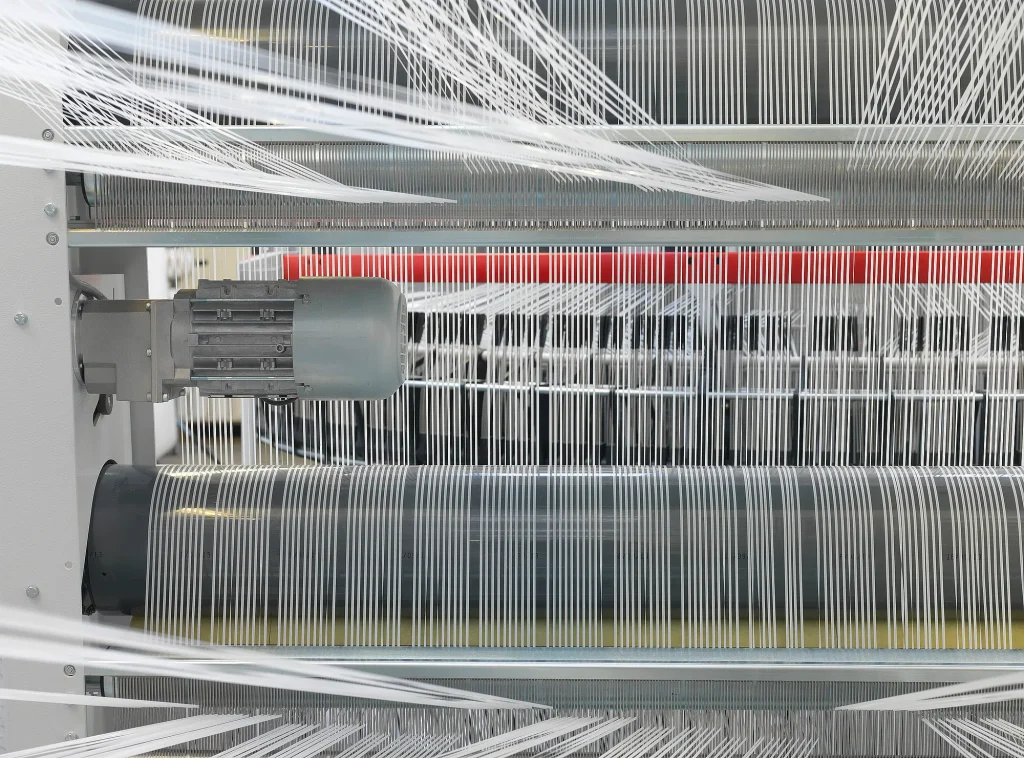
Drawn and oriented PP tapes woven on circular or flat looms (≈ 60–120 g/m²) form the structural skeleton. This lattice carries drop energy, resists tear propagation, and presents a tunable air path. Open weaves plus engineered micro‑perforation accelerate de‑aeration at the filler; tighter weaves support moisture discipline in storage. Because PP density is low (~0.90 g/cm³), strength‑to‑weight is favorable, enabling down‑gauging programs that remove grams without sacrificing integrity.
2.3 Lamination tie layer
Either an extrusion‑coated LDPE/LLDPE/PP tie or a solventless polyurethane (PU) adhesive welds kraft to fabric. Extrusion ties are robust, high‑speed, and recyclable‑friendly when PP‑compatible; solventless PU offers low heat on delicate papers but requires cure control and residual management, especially for food‑adjacent SKUs. The tie is small in mass yet large in consequence: it defends print during conversion and service, and it decides whether bonds hold their value after months of handling.
2.4 Optional inner liner
Mono‑ or co‑extruded PP or PE liners (≈ 20–60 μm) establish the WVTR/OTR envelope for hygroscopic powders (starch, salts, NPK fertilizers) and grease‑bearing feeds. Specify antistatic grades for fine PSD products and align seal initiation temperature (SIT) with the chosen closure. The penalty for thicker liners is lower breathability and a bending‑stiffness bump that can influence pallet face flatness; the payoff is reduced caking and odor transfer.
2.5 Valve sleeve assembly (for valve styles)
A precision inlet—fabric, film, or paper laminate—interfaces with the filler nozzle. The ID and length must match the spout; optional elastic cuffs and check‑flaps can improve dust control and post‑fill tightness. Closure paths include self‑closure by head pressure, thermal bar sealing on PE/PP‑rich sleeves, ultrasonic welding on laminate sleeves, or hot‑melt tape for paper composites.
2.6 Additives and masterbatches
UV stabilizers (≥1,600 h) for yard dwell; antistatic agents for fine powders; slip/anti‑block to tune coefficient of friction (COF) for conveyor flow versus pallet grip; and color/white masterbatch to manage opacity and brand fidelity. Each is a small lever with an outsized operational effect.
Relationship map: Kraft controls optics and panel stiffness; PP fabric controls strength and breathability; tie controls adhesion and moisture edge performance; liner controls barrier and sealability; sleeve controls dust, BPM, and leak metrics. Aligning these five creates the characteristic advantages of poly paper bags.
3) Features that make poly paper bags outperform legacy sacks
Strength without mass
Woven PP’s tensile/tear envelope supports down‑gauging while preserving the drop matrix, reducing resin mass per shipped ton. In practice this manifests as fewer corner ruptures, fewer forklift‑tine tears, and less edge weeping in real warehouses.
Dual‑dial breathability and barrier
Open weave plus micro‑perfs improve de‑aeration and line speed; lamination and liners block moisture/grease for hygroscopic goods. One platform, two dials—turn them to match the product and climate instead of swapping packaging families.
Square pallets that behave like boxes
Block‑bottom geometry, panel stiffness, and tuned COF yield tidy, high stacks with better container cube than pillow sacks. The externality is lower rewrap and less stretch‑film consumption.
Cleaner fills and safer operator zones
Proper sleeve geometry and perf maps evacuate air quickly and keep dust from billowing back. The payoff is higher bags‑per‑minute, fewer top‑offs, and better housekeeping metrics.
Compliance and branding in the same skin
Kraft optics support premium shelf presence; migration‑safe ink stacks and food‑contact liners support regulatory movement for ingredients. Barcode windows maintain ISO/IEC 15416 grades even under mixed lighting.
TCO that moves real P&L
Faster lines, fewer damages, cleaner pallets, better cube: these compound to reduce cost per delivered ton beyond what a line‑item bag price reveals. That is why procurement teams measure not only bag price but dust loss, rewrap rate, and claim frequency.
4) Production flow for poly paper bags (VidePak standard)
VidePak operates Austrian Starlinger and German W&H platforms end‑to‑end. This pairing is less a branding flourish than a process control statement: Starlinger stabilizes tape denier and loom GSM; W&H preserves register, microtype, and lamination bond across long runs. The following blueprint aligns with SOPs used by high‑capability converters.
4.1 Raw‑material qualification and incoming tests
- PP resin (virgin): melt flow index, isotacticity, ash, odor, moisture (Karl Fischer), gel count; lot barcoding for cradle‑to‑pallet traceability.
- Sack kraft: basis weight, moisture, burst/tensile, Cobb water absorption, stiffness, surface cleanliness for ink anchorage.
- Films/liners: thickness tolerance, haze/gloss, dyne ≥ 38 dyn/cm, COF, heat‑shrink, dart impact; for liners, SIT and antistatic decay.
- Inks/adhesives: viscosity windows, solids %, solvent balance, residual limits; low‑migration stacks when food/ feed contact applies.
- Additives: UV hours, ΔE color targets, slip/anti‑block levels; antistatic behavior.
- Valve sleeve components: dimensional tolerances, stiffness, peel/shear bond strength; closure compatibility.
4.2 Core unit operations (Starlinger + W&H)
- Extrusion & tape orientation (Starlinger): PP pellets are plastified, cast, slit into tapes, then oriented in hot draw/anneal zones. Controls: denier uniformity, tape width, crystallinity (DSC), tensile/elongation.
- Weaving (Starlinger circular/flat looms): Tapes become tubular or flat fabric. Metrics: picks per inch, GSM, loom speed, broken‑end rates, defect maps.
- Surface treatment: Corona or plasma elevates dyne for ink/adhesive anchorage.
- Printing on kraft: Flexo/offset artwork with tight register; matte windows over codes; high‑build edge varnish for rub resistance.
- Lamination: Extrusion ties (LDPE/LLDPE/PP) or solventless PU bond kraft to fabric; verify bond strength, residuals, curl, and thermal windows for downstream conversion.
- Conversion & bottom formation: Cut‑to‑length, gusseting, creasing, and hot‑air/heat pasting to form block‑bottom/SOS or pillow geometries with crisp edges for pallet faces.
- Valve sleeve fabrication & insertion: Build sleeves to target ID/length; add elastic cuffs/check‑flaps as needed; insert with controlled overlap for leak performance.
- Perforation & de‑aeration engineering: Pattern micro‑perfs and breathable windows to evacuate entrained air at fill while defending against moisture ingress in storage.
- In‑line inspection & counting: Vision checks for register and code legibility; seam integrity tests; auto‑counting/baling with barcoded labels.
4.3 End‑of‑line QA and compliance
- Mechanical: tensile, tear, burst; five‑drop tests at 1.2 m (corner/edge/flat).
- Leak/tightness: simulated fill pressure; acceptance typically ≤ 0.5% mass loss over set time.
- COF and stackability: tune static/kinetic COF to application window (≈0.30–0.45) to balance conveyors and pallets.
- Barrier: WVTR/OTR validation per ASTM/ISO for linered/laminated builds.
- Dimensional audit: width/length/bottom‑depth tolerance, GSM, bale counts.
- Regulatory: migration testing for food ingredients; retention samples; GMP records; full traceability.
Why equipment pedigree matters: Starlinger’s closed‑loop tension and defect logging fix fabric fundamentals that downstream processes cannot repair. W&H’s presses and laminators preserve microtype and bond strength across long runs. Together they produce predictable repeat orders—an operational luxury for busy plants.
5) Applications where poly paper bags excel
The true test of packaging is not in a spec sheet but in a yard, a truck, a port, or a store. Poly paper bags meet those tests across a broad spectrum of products and climates.
- Construction materials: cement, gypsum, dry mortar, plaster. Prefer breathable constructs with engineered vents; require rugged drop performance and matte faces that photograph cleanly for tenders.
- Operational insight: Upgrading from pillow to block‑bottom often adds an extra pallet layer in containers, a quiet cube win.
- Fertilizers and soil amendments: NPK, urea, potash. Hygroscopic products benefit from laminated faces, thicker liners, and UV‑stabilized masterbatch for yard dwell.
- Minerals and pigments: calcium carbonate, TiO₂, carbon black. Require leak‑tight sleeves, scuff‑resistant faces, and sometimes antistatic options.
- Food ingredients: flour, starch, sugar, salt. Demand food‑contact liner stacks, migration‑safe chemistry, and barcode windows that hit consistent scan grades.
- Feed and pet food: value retail optics and grease/odor control; BOPP‑on‑kraft hybrids can be justified where branding drives sell‑through.
- Resins and pellets: favor traceability, tear resistance, and pallet stability through long intermodal routes.
- Specialty chemicals and absorbents: ESD awareness, tuned perf maps, and leak criteria ≤ 0.5% for cleanliness.
Further reading inside the product family: Explore fertilizer‑specific dynamics in chemical fertilizer packaging best practices, see how high‑efficiency lines benefit from BOPP‑woven programs using Starlinger equipment, and consider block‑bottom valve strategies via valve woven bags optimization.
6) How VidePak guarantees quality (four‑pillar method)
- Standards‑driven manufacture and verification: ISO/ASTM/EN/JIS methods govern tensile, tear, burst, drop, COF, WVTR/OTR, print adhesion, and migration. SOPs embed SPC on denier, pick rate, lamination bond, and register.
- Virgin, big‑brand inputs: 100% virgin PP resin, certified sack kraft, approved inks/adhesives, and food‑safe PP/PE liners where specified; end‑to‑end lot traceability.
- Best‑in‑class equipment: Austrian Starlinger for extrusion/tape/looms, German W&H for printing/lamination/converting—selected to reduce variability before it becomes a customer problem.
- Complete test coverage: Incoming → in‑process → outgoing; vision register checks, seam/valve peel tests, online length/weight, leak/COF/WVTR/dimension gates, pallet audits, and labeled retention samples.
7) Global market patterns and how poly paper bags adapt
Regulatory climates differ; roads and warehouses differ; humidity curves differ. The same poly paper bags platform adapts by turning known dials—perf density, liner gauge, UV hours, COF window, and closure method.
- North America: retail‑adjacent bulk; matte optics and scan reliability; anti‑slip stripes for polished floors.
- European Union: EPR and detailed documentation; mono‑material bias; migration records for cross‑border movement.
- Middle East/Africa: high heat and UV; stiffer faces; strong sleeve closures for dusty, long‑haul transits.
- South & Southeast Asia: monsoon humidity; thicker liners and gloss/matte print mixes; robust drop matrices for dense urban logistics.
- Latin America: mixed intermodal routes; square bottoms and tuned COF to prevent load creep.
For building‑materials lanes and composite options, compare regional practices through multiwall laminated woven bags in construction and laminated kraft paper bag safety frameworks. Bulk transport programs can benefit from FIBC jumbo bag design and high‑throughput lines from FFS roll woven bag trends.
8) Systems thinking: decompose decisions, recombine into one spec
Packaging decisions reward structure. Decompose the problem into crop/powder physics, filler mechanics, environment and logistics, brand/regulatory boundaries, and circularity goals. Then recombine into one, testable specification that your line can run without heroics.
A. Powder & process
PSD, bulk density, angle of repose, hygroscopicity, grease/odor content; nozzle OD, BPM target, de‑aeration path, allowable dust ppm. Output: weave openness, perf density, sleeve ID/length, closure method, and leak target.
B. Brand, compliance, sustainability
Photography vs. vector, matte vs. gloss, tactile cues; food/ feed contact and migration; recyclability claims, down‑gauging roadmap, recycled content pilots. Output: print route, varnish map, liner chemistry, labeling language.
C. TCO & risk
Bag price is not destiny—dust cleanup, product loss, pallet collapse, rewraps, returns, and cube all shift the P&L. Output: block‑bottom vs pillow ROI, COF window, pallet pattern, pilot lot size and metrics.
A practical integration path:
- Collect data (powder + filler + environment + brand/regulatory + circularity).
- Short‑list concepts: breathable kraft/PP; laminated kraft/PP + liner; block‑bottom valve; mono‑PE film for cleanliness‑first facilities.
- Run DFMEA for valve mis‑fit, delamination, panel scuff, pallet slip, and code glare.
- Pilot 500–2,000 bags on the real filler; instrument BPM, dust ppm, leak rates, code grades, pallet audits.
- Freeze the spec: GSM, sleeve, closure, print route, liner gauge, COF, QA gates.
- Scale with SPC on denier, pick rate, bond strength, register; AQL sampling; retention swatches/samples.
- Quarterly reviews: down‑gauging experiments, recycled‑content pilots (non‑food), UV‑hour calibration, artwork governance.
9) Technical reference tables
| Attribute | Typical range | Notes |
|---|---|---|
| Capacity | 5–50 kg (25/50 kg dominate) | Align with filler tooling and pallet plan |
| Fabric GSM | 60–120 g/m² | Validate drop matrix for lane severity |
| Kraft basis | 80–150 g/m² | Controls optics, stiffness, and print feel |
| BOPP film (if used) | 18–35 μm (matte/gloss) | Matte for barcodes; gloss for shelf depth |
| Liner gauge | 20–60 μm (PP/PE) | Thicker = higher barrier, less breathability |
| Valve sleeve | PP fabric 60–120 g/m² or film 40–80 μm | Match ID/length to nozzle OD |
| Attribute | Target/method | Why it matters |
|---|---|---|
| Drop performance | 5× at 1.2 m (corner/edge/flat) | Predicts transit survival |
| Leak/tightness | ≤ 0.5% mass loss at set pressure/time | Cleanliness, yield, customer satisfaction |
| COF window | ≈ 0.30–0.45 (application‑dependent) | Balance conveyor flow vs pallet grip |
| WVTR/OTR | Application‑specific target | Moisture/oxygen discipline |
10) Case scenarios (problem → intervention → outcome)
A. Windy cement sites generating dust and rework
Problem: Dust plumes, sweep‑ups, slow top‑offs. Intervention: Shift to block‑bottom valve poly paper bags at higher weave GSM with tuned micro‑perfs and a check‑flap sleeve; set COF 0.35–0.40. Outcome: Higher BPM, cleaner air, fewer pallet slumps.
B. Coastal fertilizer caking in yard storage
Problem: Moisture ingress and seam stress. Intervention: Laminated kraft/PP with 40–50 μm liner, UV‑stabilized masterbatch, matte barcode windows; validate WVTR under climate. Outcome: Reduced caking, stable scan grades, resilient stacks.
C. Pet food grease halos on pallets
Problem: Oil bleed staining wraps and neighbors. Intervention: Increase liner gauge; use ultrasonic or thermal closure on PE/PP‑rich sleeve; apply high‑build edge varnish. Outcome: Clean pallets and fewer store complaints.
D. Pigment fines with static cling
Problem: Dust cling and nuisance shocks at the filler. Intervention: Antistatic liner, grounded spouts and conveyors, perf maps placed away from display faces. Outcome: Safer operator zone and better housekeeping metrics.
11) Sizing, palletization, and logistics discipline
Work backward from bulk density × target mass; allocate headspace for de‑aeration and valve closure; choose brick‑bond patterns for block‑bottom formats; align graphics on retail‑adjacent lines; verify unit‑load compression; match COF to wrap recipe; add interlayers for very glossy faces; print lot/QR codes and retain samples 12–24 months depending on duty.
12) Purchasing checklist (data that makes a first quote accurate)
- Powder/granule description, PSD, bulk density (loose/tapped), hygroscopicity, odor/grease notes.
- Filler details: nozzle OD, clamp style, target BPM, de‑aeration method, allowable dust ppm.
- Logistics: pallet heights, container goals, outdoor dwell time, climate profile, warehouse COF targets.
- Compliance: food contact? migration plan? traceability/label format?
- Branding: art complexity, matte vs gloss accents, Pantone targets, anti‑counterfeit cues.
- Sustainability: mono‑material claim, down‑gauging targets, recycled content policy.
- Performance: drop matrix, leak target, COF window, WVTR cap, UV hours.
13) Troubleshooting matrix
| Symptom | Likely cause | Corrective action |
|---|---|---|
| Barcode fails at intake | Gloss glare; color drift; low contrast | Matte windows; lock ΔE; adjust ink density; protect with varnish |
| Delamination blisters | Low dyne; residual solvent; poor nip | Increase treatment; extend drying; tune nip temperature/pressure |
| Pallet slippage | COF too low; glossy face + wrap synergy | Add texture/strips; tune COF; adjust wrap recipe; interlayers |
| Dust during filling | Weak de‑aeration; sleeve mis‑fit | Add micro‑perfs; open weave; re‑spec sleeve ID/length |
| Corner ruptures | GSM too low at stress points | Reinforce corners; step up GSM locally; re‑validate drop matrix |
| Caking after storage | WVTR too high; liner too thin | Increase liner gauge; improve seals; climate‑correct WVTR |
14) Frequently asked engineering questions
Do block‑bottom valve formats always beat pillow sacks? For pallet density and stack stability, generally yes. Where stacks are low and breathability must be extreme at the lowest converting cost, pillow sacks can be optimal.
How do we minimize dust during filling? Combine open weave with engineered perf maps, ensure snug valve/nozzle fit, and add a check‑flap sleeve. Verify with dust sensors near the operator zone.
Which closure is most reliable for kraft‑face valves? Thermal bar sealing on PE/PP‑rich sleeves is robust and simple; ultrasonic welding excels on laminate sleeves. Self‑closure can work for coarse powders if leak targets are verified on your line.
Can laminated builds still be recycled? If the laminate remains PP family (woven PP + BOPP + PP‑compatible tie) and is identified/labeled correctly, many regions accept it; mixed polyolefin (PP+PE) recovery is feasible in some streams. Always confirm locally.
What ΔE tolerance is practical across seasons and plants? ΔE ≤ 2 is a brand‑safe target with calibrated presses, disciplined ink management, and retention swatches that travel with the BoM.
Does thicker film or liner always increase safety? Past a point, stiffness penalizes pallet friction and can cause curl. Balance gauge with WVTR goals, COF targets, and converting behavior.
15) Example integrated specifications (adapt and pilot)
25 kg tile adhesive (humid coast)
Fabric 85–90 g/m² (UV MB); kraft 100–120 g/m²; extrusion tie 22–28 g/m²; liner 40 μm PP; block‑bottom valve with elastic cuff; tuned perfs away from rain paths; COF 0.35–0.40; UV ≥ 1,600 h; leak ≤ 0.5%; five‑drop pass; ΔE ≤ 2.
50 kg NPK fertilizer (yard storage)
Fabric 100–110 g/m²; kraft + BOPP 30 μm gloss; liner 50 μm PP; internal sleeve for thermal bar sealing; brick‑bond pallet pattern; interlayers for glossy faces; barcode grade ≥ B.
20 kg hybrid seed (high value)
Fabric 80–85 g/m² (antistatic MB); BOPP 25 μm matte/gloss mix with microtext; optional PP liner; check‑flap valve; ultrasonic closure; serialized QR; leak ≤ 0.3%.
16) Cross‑links for product strategy
Build a fuller strategy with adjacent formats and operations content: upgrade block‑bottom programs in building materials via multiwall laminated woven bags for building materials; design safety‑first paper composites with laminated kraft paper bag guidance; push bulk‑haul efficiency through custom FIBC jumbo bags; and modernize high‑throughput lines by adopting FFS roll woven bag methodologies.
November 25, 2025
- 1) What are poly paper bags?
- 2) The material architecture of poly paper bags
- 3) Features that make poly paper bags outperform legacy sacks
- 4) Production flow for poly paper bags (VidePak standard)
- 5) Applications where poly paper bags excel
- 6) How VidePak guarantees quality (four‑pillar method)
- 7) Global market patterns and how poly paper bags adapt
- 8) Systems thinking: decompose decisions, recombine into one spec
- 9) Technical reference tables
- 10) Case scenarios (problem → intervention → outcome)
- 11) Sizing, palletization, and logistics discipline
- 12) Purchasing checklist (data that makes a first quote accurate)
- 13) Troubleshooting matrix
- 14) Frequently asked engineering questions
- 15) Example integrated specifications (adapt and pilot)
- 16) Cross‑links for product strategy
- 1. Why Poly-Paper Bags Dominate Construction Logistics
- 2. Material Science: PP’s Technical Superiority in Construction Applications
- 3. Application-Specific Solutions for Construction Materials
- 4. Parameter Selection: Balancing Cost and Performance
- 5. Sustainability: Circular Design for Regulatory Compliance
- 6. VidePak’s Manufacturing Excellence
- FAQs: Simplifying Procurement
- Conclusion
Over 30% of construction material losses during transit stem from packaging failures. VidePak’s poly-paper bags, engineered with 180 g/m² polypropylene (PP) woven fabric and BOPP lamination, reduce spillage by 95% while offering 5+ reuse cycles, making them the preferred choice for cement, gypsum, and mortar producers across 50+ countries. With ISO 9001-certified manufacturing and 30+ years of expertise, we deliver solutions that align with EU, ASTM, and GB/T standards, combining unmatched strength with circular economy principles.
1. Why Poly-Paper Bags Dominate Construction Logistics
Poly-paper bags—hybrid structures of PP woven fabric and kraft paper lamination—are redefining durability in harsh industrial environments. Key advantages include:
- Tensile Strength: 45–60 N/cm² (machine direction), outperforming traditional jute sacks by 300%.
- Moisture Resistance: BOPP lamination achieves ≤5 g/m²/24h water vapor transmission (WVTR), critical for hygroscopic materials like joint fillers.
- Abrasion Resistance: Withstand 15,000+ Martindale cycles, ideal for sharp-edged aggregates.
Case Study: A Turkish cement producer reduced bag rupture rates from 8% to 0.5% using VidePak’s 200 g/m² bags with 14×14 weave density, saving $250,000 annually in product loss.
2. Material Science: PP’s Technical Superiority in Construction Applications
Performance Metrics Across Key Materials
| Material | PP Woven Bags | Jute Bags | Paper Bags |
|---|---|---|---|
| Tensile Strength | 45–60 N/cm² | 10–15 N/cm² | 5–8 N/cm² |
| Moisture Barrier | ≤5 g/m²/24h (BOPP) | 50+ g/m²/24h | 20–30 g/m²/24h |
| Reusability | 5+ cycles | 1–2 cycles | Non-reusable |
| Cost per Cycle | $0.12 | $0.35 | $0.50 |
Example: For calcium carbonate powder transport, our 150 g/m² bags with PE liners reduced moisture absorption from 8% to 0.3%, meeting China’s GB/T 8947-2008 standards.
3. Application-Specific Solutions for Construction Materials
Technical Configuration Guide
| Material | Recommended Specifications | Features |
|---|---|---|
| Cement | 180–200 g/m² + BOPP lamination | UV coating, ≤0.1% leakage rate |
| Gypsum Powder | 140 g/m² + 80 µm PE liner | Anti-static treatment (10⁶ Ω/sq) |
| Mortar | 12×14 weave + block-bottom valve | 8-color branding, RFID tracking |
Innovation Spotlight: Our laser-perforated inner liners reduce residual powder in valves by 90%, complying with Australia’s AS 2070-1999 “zero waste” certification.
4. Parameter Selection: Balancing Cost and Performance
Critical Parameters for Construction Clients
- Grammage: 120–200 g/m² for 25–50 kg loads.
- Lamination: BOPP for moisture resistance; aluminum foil for static-sensitive powders.
- Seam Type: Double-stitched seams withstand 1,500 N/cm² pressure (ISO 13934-1).
Case Study: A Mexican dry-mix producer uses our 160 g/m² bags with 10×10 weave and matte finish, cutting packaging costs by 20% while enhancing brand visibility.
5. Sustainability: Circular Design for Regulatory Compliance
- Recycled Content: Up to 50% post-industrial PP without compromising strength (tested per ASTM D5034).
- Carbon Metrics: Each ton of recycled PP reduces CO2 emissions by 1.8 tons.
- EU Compliance: Full alignment with Extended Producer Responsibility (EPR) mandates.
Future Focus: 2025 rollout of 30% sugarcane-based PP bags, targeting net-zero supply chains.
6. VidePak’s Manufacturing Excellence
- Capacity: 300,000 bags/day via 100+ Starlinger circular looms.
- Printing: 8-color gravure printing with ≤ΔE 1.5 color accuracy (Pantone Matching).
- Certifications: ISO 9001, ISO 14001, and FDA 21 CFR for food-grade liners.
FAQs: Simplifying Procurement
Q1: What’s the MOQ for custom-printed bags?
A: 10,000 units, with 7-day prototyping using AI-driven CAD tools.
Q2: How does BOPP lamination affect recyclability?
A: Our eco-friendly BOPP dissolves during recycling, maintaining 98% PP purity.
Q3: Can bags withstand pneumatic filling systems?
A: Yes. Valve designs support 200 kg/hr rates (tested per ISTA 3E).
Conclusion
In a sector where 1% leakage can mean $50,000 in losses, VidePak’s poly-paper bags redefine reliability through material innovation and precision engineering. Explore our BOPP laminated solutions and valve bag technologies to transform your construction logistics.
References
- VidePak Technical Whitepaper: PP Woven Bags in Construction Logistics (2024).
- China National Standard: GB/T 8947-2008 – Woven Plastic Bags.
- Alibaba Industrial Database: PP Woven Bag Specifications.
Contact VidePak:
- Website: https://www.pp-wovenbags.com/
- Email: info@pp-wovenbags.com