
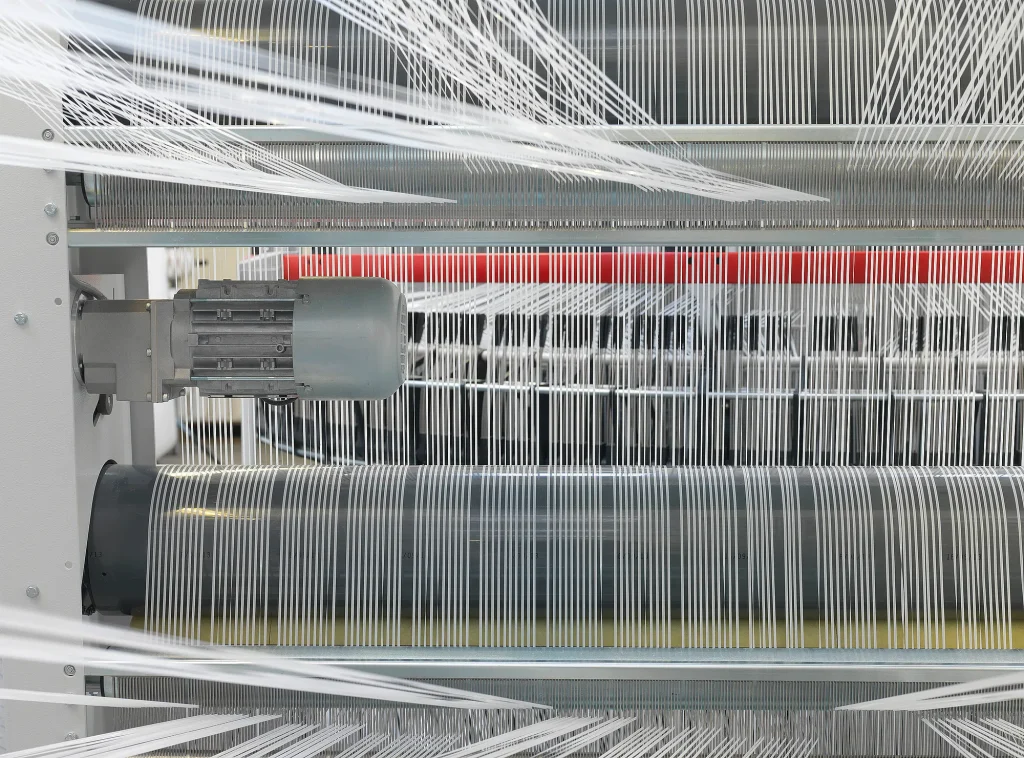
What Are Heavy-Duty Woven Bags? Definition, Scope, and Why the Format Wins
Heavy-Duty Woven Bags are engineered polymer-fabric sacks—predominantly polypropylene (PP) woven structures—purpose-built to move dense powders, coarse granules, and irregular particulates through harsh, real-world logistics without tearing, leaking, or collapsing. They convert into open-mouth, gusseted, valve, pinch-bottom, and block-bottom forms and commonly operate in the 10–50 kg class; the same material science scales to FIBC (250–2,000 kg) where the physics are similar but the handling devices change. The practical equation is end-to-end: fill quickly with minimal dust, clamp safely with minimal damage, stack squarely with minimal tilt, travel far with minimal moisture creep, and arrive clean with codes that still scan.
The same concept appears under a variety of market names. Common aliases include:
- Heavy‑Duty PP Woven Bags
- Heavy‑Duty Woven Polypropylene Sacks
- Industrial Woven Bags for Bulk Handling
- Raffia Heavy‑Duty Sacks
- Block‑Bottom Heavy‑Duty Woven Bags
- Valve‑Type Heavy‑Duty Woven Sacks
- High‑Strength Woven Poly Bags
What unifies these labels is a simple engineering intent: a woven PP backbone bears the load and resists tear; coatings, laminations, and liners manage barrier and print; valves and closures control filling dynamics; and inks plus additives safeguard brand legibility and weatherability. All the rest—speeds, costs, defects per thousand—emerge from how well these interfaces are chosen and controlled.
The Materials of Heavy-Duty Woven Bags: From Resin and Fabric to Barrier and Brand
A Heavy‑Duty Woven Bag is a stack of functions expressed through materials. Each layer neutralizes a distinct failure mode—vapor diffusion, liquid splash, abrasion, puncture, dust egress, pallet slip, UV weathering, barcode scuff. The art is not a single “super” layer; the art is interfaces tuned in concert.
- Origin & morphology: PP pellets extruded into slit‑film tapes or monofilament strands, drawn for molecular orientation, then woven on circular or flat looms.
- Role: Tensile and tear strength per gram far above monolayer films or paper; typical fabric 70–140 g/m²; tape denier ~700–1,600D; PPI balanced for strength and baseline porosity.
- Optics/color: Natural tapes allow translucent windows; white masterbatch maximizes contrast. UV packages extend outdoor life to 6–12 months.
- Cost levers: Resin grade/MFI, draw ratio, tape width, loom speed, and defect control (ends‑down, mis‑picks) dominate yield and cost.
- Clear PP coating (≈18–40 μm): fills interstices, cuts dust, creates a printable face; heavier coats push MVTR down but reduce breathability.
- BOPP lamination (18–25 μm): reverse‑printed film protects artwork, adds scuff resistance, enables matte/gloss hybrids, and contributes to moisture discipline.
- Functional finishes: Anti‑slip varnish tunes outer COF (0.35–0.60); matte coats temper glare and keep codes scannable under bright light.
- LDPE/LLDPE liners (25–80 μm): loose or spot‑glued; essential for hygroscopic goods (gypsum, RDPs, certain salts) or splash‑exposed lanes.
- Tie layers: compatibilizers for durable film‑to‑fabric bonds; good bonds ensure clean faces after miles of vibration.
- Valve sleeves: PE film, PP‑coated fabric, or composite webs sized to nozzle families; sleeve stiffness governs coupling speed and leak risk.
- Closures: pinch‑top heat seals, ultrasonic corners, external heat‑seal patches; on open‑mouth types: crepe‑tape sewing or hot‑air welding.
- Reinforcements: heavier patches at valves/handles; crisp block‑bottom creases resist layer creep and clamp‑truck stress.
- Ink systems: solvent/low‑migration inks for reverse printing under BOPP; ΔE discipline keeps colors within tolerance; rub/abrasion tests simulate conveyors.
- UV & antistats: UV stabilizers delay embrittlement; antistats reduce dust adhesion and improve depalletizing in dry seasons.
- Recyclate strategy: where permitted, post‑industrial PP enters non‑critical layers while preserving a mono‑polyolefin architecture.
What Are the Features of Heavy-Duty Woven Bags? From Fill Speed to Pallet Physics
Operations measure outcomes, not adjectives. The hallmark attributes of Heavy‑Duty Woven Bags translate directly into fewer stoppages, fewer returns, and fewer near‑misses on docks.
- High‑speed filling, low mess: valve geometry and calibrated venting allow gravity and air‑pack fillers to hit cycle‑time targets without blowback; weigh systems stabilize faster; settle time shortens.
- Mechanical toughness at sensible mass: woven PP outperforms films and paper on tear/puncture at similar weight; block‑bottoms distribute stress; reinforced corners resist clamp‑truck damage.
- Moisture and dust discipline: coated/laminated faces cut dust and survive rain‑side handling; liners push MVTR down for hygroscopic or reactive powders; surfaces wipe clean so barcodes still scan after a muddy yard.
- Stack stability and cube efficiency: defined COF and square geometry reduce layer creep; straighter walls allow higher layer counts without courting collapse.
- Brand and compliance surface: BOPP reverse‑print protects high‑fidelity graphics; hazard icons and multilingual instructions remain legible; codes remain scannable after vibration.
- Climate resilience: UV‑stabilized builds endure months in outdoor yards; waterproof corners, where specified, survive splash and pooling.
What Is the Production Process? From Raw-Material Gate to Lot Release (Starlinger & W&H)
VidePak builds for repeatability rather than heroics. Geometry, tension, and register are non‑negotiable, which is why the equipment baseline is Austrian Starlinger (tape extrusion, weaving, coating/lamination, block‑bottom formation) plus German W&H (web handling and printing).
- PP resins: homopolymer for stiffness/tensile; impact copolymer for cold‑route toughness. Verify MFI, density, moisture, ash, pellet contamination; track lots with COAs.
- BOPP and tie layers: gauge tolerance, haze, gloss, surface energy; reverse‑print adhesion; winding quality that avoids telescoping.
- Liners and sleeves: gauge uniformity, slip levels, seal windows; sleeve stiffness matched to nozzle families.
- Inks and varnishes: ΔE targets, adhesion, solvent resistance; scuff rubs against representative conveyors.
- Additives: UV and antistatic packages suitable for target routes; compatibility with intended recycling streams.
- Tape extrusion & drawing (Starlinger): extrude, slit, draw to denier/elongation windows; control chill‑roll temperature and edge‑trim refeed.
- Weaving (Starlinger): set warp tension and PPI; manage humidity/static; audit porosity and tape width for uniform faces.
- Coating or lamination: clear PP coating or reverse‑printed BOPP; hold corona, nip, temperature; add vent patches/micro‑perfs where line speeds demand.
- Printing (W&H flexo/gravure): reverse‑print with 6–8 colors; control viscosity/drying; inline vision for register and barcode readability.
- Conversion & closure: tube forming, valve insertion, block/pinch bottoms; seal via heat/ultrasonic/pasting per route risk; tune corners for square footprint and leak resistance.
- Counting & palletizing: optical counters, alignment fences, wrap to a defined containment force to arrest layer creep.
- Dimensions & geometry: length, width, gusset, valve dimensions; squareness/corner integrity.
- Seams & seals: peel/shear; ultrasonic fusion audits; pinhole counts at gusset turns.
- Fabric mechanics: tensile, tear, burst per ISO/ASTM; outer COF; drop/vibration for transport simulation.
- Barrier checks: MVTR for moisture‑sensitive SKUs; hydro‑resistance where splash is credible.
- Print/optical: ΔE targets, scuff rubs, and barcode/QR readability after vibration exposure.
- Aging: UV exposure windows; cold‑drop for winter logistics; heat/humidity conditioning for tropical routes.
What Is the Application of Heavy-Duty Woven Bags? Use-Case Atlas Across Industries
Heavy‑Duty Woven Bags thrive wherever dense, abrasive, or dusty contents must move quickly and arrive in spec. The same backbone scales from cement to seed to sandbag because physics does not change when the weather does.
| Domain | Typical Contents | Design Priorities |
|---|---|---|
| Construction & minerals | Cement, dry‑mix mortar, gypsum, silica sand, aggregates | Abrasion resistance, dust discipline, square stacks; liners for gypsum; valve vent patches for speed |
| Fertilizers & soil amendments | Urea, NPK, potash, biochar | Puncture resistance, UV‑stable faces, controlled MVTR; high‑graphics BOPP for labeling |
| Agriculture & staples | Rice, pulses, seeds, grain | Strength for rural handling, readable labels, optional breathability |
| Chemicals & specialty powders | Calcium carbonate, RDPs, pigments | Low MVTR, antistatic performance, scuff‑safe codes |
| Pet food & animal nutrition | Kibble and meal | Grease/oil resistance, odor control, reliable seals, retail‑grade graphics |
| Emergency & flood control | Sandbagging, levee stabilization | Immediate availability, tear resistance when wet, UV stability |
- Graphics and surface science: mesh PP bags and custom printing
- Forming high‑graphics structures: advanced BOPP laminated woven bags
- Waste and recycling flows: multi‑wall woven bags in recycling
- Hybrid substrates: kraft paper laminated with PP woven fabric
- Food‑adjacent safety: block‑bottom valve bags for food contexts
- Scaling to bulk handling: FIBC bulk bags for construction
- Automation pathway: form‑fill‑seal woven bags guide
How VidePak Controls and Guarantees Quality: A Four-Pillar Model
Quality is a loop—design, run, measure, improve—not a poster on a wall. VidePak’s assurance framework for Heavy‑Duty Woven Bags rests on four mutually reinforcing pillars.
- Standards‑aligned design, production, and testing: acceptance criteria reference mainstream norms (ISO/ASTM/EN/JIS). Setpoints—draw ratios, PPI, coating weight, lamination pressure, seal temperatures—are documented and audited. Testing cadence spans incoming COA verification, in‑process SPC checks, and lot‑release audits (dimensions, mechanicals, MVTR, COF, print ΔE, barcode readability).
- 100% virgin raw materials from tier‑1 suppliers: PP resins, masterbatch, BOPP films, inks, and liners arrive with auditable COAs. Random sampling confirms MFI, haze, bond strength, contamination limits, and liner continuity in moisture‑sensitive builds.
- Best‑in‑class equipment pedigree: Starlinger governs tape uniformity, loom stability, coating/lamination control, and consistent block‑bottom forming; W&H delivers register stability and color accuracy across long runs.
- Comprehensive inspection and sampling: incoming verification, in‑process fabric/bond/seal checks, finished goods audits, and AQL‑based sampling, plus periodic transport simulations on random pallets. Non‑conformities trigger CAPA with root‑cause analysis and SOP/tooling updates.
Systems Thinking: Decompose the Choice, Then Recombine into a Winning Specification
The source idea—Heavy‑Duty Woven Bags as versatile solutions for bulk handling—invites a systems treatment. Break the challenge into sub‑problems, solve each with measurable design choices, then recombine into a robust spec that reads like a contract with physics.
- Granulometry & trapped air: fine powders balloon bags; micro‑perfs and one‑way vent patches prevent rebound on the scale.
- Hygroscopicity: gypsum, pigments, specialty chemicals demand low MVTR; liners or heavier coating shift the moisture curve.
- Abrasion index: angular minerals act like sandpaper; heavier GSM and reinforced corners cut pinhole risk.
- Nozzle dynamics: gravity vs. air‑pack vs. impeller; sleeve stiffness and vent density follow the pressure curve.
- Cycle‑time target: venting is the throttle—too little, you balloon; too much, you leak barrier; trial to minimum required.
- Weigh stability: bag stiffness and settle time drive weigh‑cell error and rework; control porosity to shorten damped oscillation.
- Pallet pattern & cube: fit L×W×G to lift bags per layer; define outer COF for conveyors/floors; square block‑bottoms carry layers upward.
- Route exposure: open‑deck trucking and quayside staging argue for waterproof corners/liners; UV dosage tracks outdoor months.
- Forklift physics: clamp pressure destroys weak corners; reinforcement at stress concentrators is cheaper than claims.
- Substrate: reverse‑printed BOPP for photoreal panels; matte/gloss hybrids keep codes readable under glare.
- Code plan: keep data carriers out of fold/impact zones; validate readability after vibration and scuff simulation.
Recombination step: freeze GSM, lamination route, liner gauge, valve design, vent density, and bottom geometry only after a live line trial measures fill time, dust index, weight variance, leak rate, code readability, and stack tilt. Two pallets of data beat a dozen opinions.
Engineering Tables and Cheatsheets
| Parameter | Typical options/targets | Why it matters |
|---|---|---|
| Nominal fill weight | 10 / 20 / 25 / 40 / 50 kg | Governs bag size, GSM, and corner geometry |
| Fabric GSM | 70–140 g/m² | Balances strength, abrasion resistance, and cost |
| Tape denier | 700–1,600D | Tensile/tear behavior; loom stability |
| Coating thickness (clear PP) | 18–40 μm | Dust/moisture control; print holdout |
| BOPP film | 18–25 μm; gloss/matte | Graphics quality, scuff resistance, barrier |
| Valve sleeve | PE film or PP‑coated fabric | Nozzle coupling, self‑closure, leak control |
| Vent scheme | None / micro‑perfs / vent patches | Fill speed vs. barrier trade‑off |
| Liner | LDPE/LLDPE 25–80 μm (optional) | Low MVTR for hygroscopic goods |
| Outer COF | 0.35–0.60 | Pallet stability and conveyor behavior |
| UV stability | 6–12 months | Outdoor yard resilience |
| Scenario | Dominant risk | Preferred strategy |
|---|---|---|
| Inland warehouse, seasonal humidity | Vapor diffusion | Coated fabric + BOPP; vent for speed |
| Open‑deck trucking in rainy season | Splash/pooling | Liner + sealed corners; minimal vents |
| Coastal depots & quayside staging | Wind‑driven rain, salt spray | Waterproof corners; UV‑stabilized faces |
| High‑speed fillers, dusty powders | Trapped air & dust | Micro‑perfs + controlled valve stiffness |
| Stage | Test | Intent |
|---|---|---|
| Incoming | MFI, moisture, haze/clarity, surface energy | Confirm processability and optical potential |
| In‑process | GSM, tape tensile, bond strength, seal pull | Ensure strength is built, not assumed |
| Finished | Dimensions, COF, drop/vibration, MVTR, ΔE/barcode | Verify performance in use |
| Audit | UV aging, cold‑drop, valve leak, print abrasion | Validate extremes of storage and transport |
Failure Modes and Line Controls: A Targeted Mini-FMEA
- Extrusion & drawing: gauge bands, gels, tape fibrillation → lock MFI window; clean die lips; control chill‑roll temperature; manage edge‑trim refeed.
- Weaving: mis‑picks, broken tapes, loom marks → maintain warp tension, PPI, and humidity; deploy ends‑down monitors; audit porosity bands.
- Coating/lamination: poor adhesion, curl, haze → verify corona; hold nip and temperature; align webs; measure bond strength after conditioning.
- Printing: color drift, ghosting, scuffing → control viscosity and anilox/cylinder pressure; inline ΔE/barcode vision; specify rub tests.
- Valve & bottom: weak corners, open valves, pinholes at gusset turns → tune seal temperature/pressure/dwell; optimize corner geometry; consider ultrasonic fusion for waterproof builds.
- Packout: off‑count, skewed stacks → optical counting; alignment fences; specified wrap containment force.
Cost and ROI Modeling: Price per Bag vs. Cost per Delivered Ton
The cheapest bag can be the most expensive system. Model throughput, damage, freight, inventory, and brand—all five move the ledger. Seconds per bag saved via tuned venting and valve geometry reduce labor per ton and increase effective capacity; stronger corners and scuff‑safe art cut claims; square geometry and correct COF raise pallet counts; common architectures reduce leftovers and simplify code management; durable panels preserve shelf conversion. Ask yourself: do you pay for packaging, or do you pay for stoppages, cleanup, and claims? The math will answer.
Comparative Lens: Heavy-Duty Woven Bags vs. Alternatives
- Versus multiwall paper sacks: paper breathes yet loses strength when wet and scuffs quickly; Heavy‑Duty Woven Bags add outdoor resilience and abrasion resistance while maintaining premium print via BOPP.
- Versus monolayer film bags: films can be clear and cheap, but struggle with puncture/tear in 10–50 kg classes; woven poly outperforms on forklift‑side abuse with modest weight penalty.
- Versus standard woven poly sacks: heavy‑duty versions add higher GSM, reinforced corners, and tuned closures for bulk handling; the difference becomes obvious after a week in a yard.
- Versus PE FFS tubular film: FFS offers dust‑tight automation at scale but demands high capital and rigid layouts; Heavy‑Duty Woven Bags keep ergonomic handling and cube advantages across many SKUs.
- Versus FIBC bulk bags: FIBC take over above ~500 kg; in the 10–50 kg class, Heavy‑Duty Woven Bags remain ergonomic, retail‑capable, and line‑friendly.
Implementation Roadmap: From RFQ to First Truckload
- Requirements workshop: document product behavior (particle size, hygroscopicity), fill weight, cycle time, storage climate, pallet pattern, route exposure, and artwork/compliance.
- DFM & proposal: VidePak proposes GSM, lamination route, liner options, valve geometry, venting band, COF targets, and UV dosage; validates within Starlinger/W&H capability windows.
- Pre‑production samples: printed or white; run on customer fillers; capture baseline data (fill time, dust index, leak rate, weight variance, stack tilt, ΔE/barcode).
- Line trials: adjust venting, sleeve stiffness, and seal parameters; evaluate MVTR/visual checks and pallet stability.
- Spec sign‑off: freeze parameters; issue golden samples and QC matrices.
- First mass run: full QC plus transport simulation; ship with traceable lot records.
- Continuous improvement: KPI reviews, artwork refresh cycles, and managed changes under formal change control.
Frequently Asked Questions
- What Are Heavy-Duty Woven Bags? Definition, Scope, and Why the Format Wins
- The Materials of Heavy-Duty Woven Bags: From Resin and Fabric to Barrier and Brand
- What Are the Features of Heavy-Duty Woven Bags? From Fill Speed to Pallet Physics
- What Is the Production Process? From Raw-Material Gate to Lot Release (Starlinger & W&H)
- What Is the Application of Heavy-Duty Woven Bags? Use-Case Atlas Across Industries
- How VidePak Controls and Guarantees Quality: A Four-Pillar Model
- Systems Thinking: Decompose the Choice, Then Recombine into a Winning Specification
- Engineering Tables and Cheatsheets
- Failure Modes and Line Controls: A Targeted Mini-FMEA
- Cost and ROI Modeling: Price per Bag vs. Cost per Delivered Ton
- Comparative Lens: Heavy-Duty Woven Bags vs. Alternatives
- Implementation Roadmap: From RFQ to First Truckload
- Frequently Asked Questions
The tensile strength of heavy-duty woven bags hinges on filament width selection, where fine yarns (1.0–1.5 mm) enable 8-color HD printing for retail-ready feeds, while coarse yarns (2.0–3.0 mm) deliver 50 kg load capacities for abrasive ores—all achieved through VidePak’s Austrian Starlinger extrusion systems with ±0.02 mm precision. For example, our 2.5 mm coarse yarn FIBC bags reduced tear incidents by 32% for a Chilean copper mining client, whereas 1.2 mm fine yarn pet food bags boosted shelf appeal with 95% color accuracy for a European brand.
1. Filament Science: Fine vs. Coarse Yarns in PP Woven Bags
Defining Filament Width
- Fine Yarns: 1.0–1.5 mm width, 80–120 denier.
- Coarse Yarns: 2.0–3.0 mm width, 200–300 denier.
Performance Comparison
| Parameter | Fine Yarns (1.0–1.5 mm) | Coarse Yarns (2.0–3.0 mm) |
|---|---|---|
| Tensile Strength | 25–35 N/cm² | 40–55 N/cm² |
| Flexibility | 180° fold endurance | 120° fold endurance |
| Surface Finish | Smooth (Ra 0.8–1.2 μm) | Textured (Ra 2.5–3.5 μm) |
| Print Resolution | 1440 dpi achievable | 720 dpi max |
| Abrasion Cycles | 2,500 (ISO 4649) | 4,000+ (ISO 4649) |
| Cost per kg | $1.80–$2.20 | $2.50–$3.00 |
Application-Specific Recommendations
- Fine Yarns: Pet food, retail feeds requiring branding precision.
- Coarse Yarns: Construction aggregates, mining ores, FIBC bulk bags.
Case Study: A Vietnamese coffee exporter cut packaging waste by 18% using our 1.5 mm laminated bags with vented microperforations, balancing moisture control and aroma retention.
2. Manufacturing Excellence: Starlinger & W&H Machinery
VidePak’s 16 Starlinger extrusion lines and 100+ circular looms ensure:
- Extrusion Precision: Melt temperatures controlled at 230±5°C, producing tapes with ±0.03 mm thickness tolerance.
- Stretch Consistency: 5:1 monoaxial stretching ratio, enhancing tensile strength by 30% vs. industry-standard 4:1.
- Weave Uniformity: 12 tapes/inch density on W&H looms, achieving <2% elongation under 40 kg loads.
Technical Impact:
- Coarse Yarn Production: Starlinger’s iQ5 extruders process 300 kg/hour of 3.0 mm tapes, ideal for mining FIBC bags.
- Fine Yarn Optimization: W&H’s ATEX-compliant looms weave 1.2 mm filaments at 150 rpm, enabling 10,000 bags/day output for custom-printed feeds.
3. Bulk Handling Solutions by Industry
Agricultural Feeds
- Requirements: UV resistance, breathability, pest deterrence.
- VidePak’s Design: 1.8 mm yarns + 0.03 mm BOPP lamination (IPX4 rating), 5 μm venting pores.
Construction Materials
- Requirements: Abrasion resistance, stackability.
- VidePak’s Design: 2.8 mm yarns + double-stitched seams, 60×110 cm block-bottom FIBC bags.
Performance Data Table
| Application | Yarn Width | Lamination | Load Capacity | Cost per 1,000 |
|---|---|---|---|---|
| Pet Food | 1.2 mm | BOPP | 25 kg | $220–$280 |
| Cement | 2.5 mm | Non-laminated | 50 kg | $180–$240 |
| FIBC Minerals | 3.0 mm | PE Coated | 1,000 kg | $450–$600 |
4. FAQs: Technical and Procurement Guidance
Q1: How does yarn width affect printing quality?
- A: Fine yarns (≤1.5 mm) allow 8-color HD prints with 0.2 mm registration accuracy; coarse yarns limit to 4-color designs.
Q2: Can coarse yarn bags withstand -20°C environments?
- A: Yes. VidePak’s PP formulations retain 85% flexibility at -20°C (ASTM D746 tested).
Q3: What’s the MOQ for custom FIBC designs?
- A: 500 units for standard sizes, 15-day lead time via 30 lamination machines.
5. VidePak’s Global Operational Capacity
Founded in 2008 by CEO Ray, VidePak serves 85+ countries with:
- Production Scale: 100+ circular looms, 16 extrusion lines, 30 printing machines.
- Certifications: ISO 9001, ISO 14001, Oeko-Tex® for food-grade bags.
- Sustainability: 100% recyclable PP, 25% post-industrial recycled content by 2025.
Example: A Canadian potash producer reduced CO2 emissions by 12% switching to our recyclable 2.2 mm FIBC bags vs. traditional PVC options.
6. Compliance and Innovation Roadmap
- EU Directive 2019/904: 50% recycled content compliance by 2025.
- R&D Focus: Bio-PP blends (20% sugarcane-based) for carbon-neutral bulk bags.
References
- VidePak Woven Bags. (2025). Understanding FIBC Bulk Bags: Custom Solutions for the Construction Industry.
- VidePak Woven Bags. (2025). The Craftsmanship Behind BOPP Woven Bags: VidePak’s Commitment to Excellence.
- Industry Standards: ASTM D5265, ISO 4649, EU Directive 2019/904.
Contact
- Website: https://www.pp-wovenbags.com/
- Email: info@pp-wovenbags.com
For specialized applications like heavy-duty FIBC bags in mining or high-resolution branded packaging, explore our resources on FIBC bulk bags and BOPP laminated solutions.