
1. Understanding multiwall laminated woven bags in modern food supply chains
In contemporary food and ingredient logistics, packaging is no longer a passive container that merely holds product until it reaches a destination. It has become a dynamic interface between product, machinery, regulation, and brand storytelling. Within this evolving landscape, Multiwall Laminated Woven Bags stand out as one of the most sophisticated and adaptable formats for powders and granules. These bags are engineered to combine the toughness of woven polypropylene, the protection of barrier films, and the fine printability of advanced laminates into a single, high performance shell.
At their core, Multiwall Laminated Woven Bags are composite sacks that merge several material traditions: multi-ply paper thinking, woven plastic strength, and flexible film barrier design. Instead of a single sheet of paper or a plain woven fabric, they rely on multiple layers that are laminated, coated, and sometimes combined with inner liners. Each layer plays a distinct role, from resisting puncture during clamp truck handling to blocking moisture in humid climates to hosting detailed artwork and regulatory information for global markets.
The term itself already reveals much of their identity. “Multiwall” underlines the presence of several functional layers; “laminated” points to the bonding of those layers into a unified structure; “woven” signals a polypropylene fabric backbone; and “bags” conveys their role as unit packaging in weight ranges typically between ten and fifty kilograms. Because of this hybrid nature, the same technology is also referred to with various alternative names such as multiwall laminated woven sacks, laminated multiwall woven food bags, or multiwall laminated PP woven packaging bags. Each phrase highlights a slightly different angle but still points back to the same family of heavy duty solutions.
A practical way to describe Multiwall Laminated Woven Bags is to see them as engineered shells: a woven polypropylene chassis for strength, multi-layer films for barrier and sealing, and optional paper or foil components for stiffness, aesthetics, and extreme protection when required.
These bags have been refined most notably in sectors such as flour milling, sugar refining, starch production, and spice blending, where product safety, hygiene, and shelf life are non negotiable. In those environments, the ability of food grade multiwall laminated woven bags to maintain low moisture ingress, resist infestation, and preserve aroma is just as important as their capacity to survive long distance transportation on trucks, rail, and ships. The same format then extends outward into segments like food additives, functional ingredients, and even some non food powders where similar performance requirements apply.
Seen systemically, Multiwall Laminated Woven Bags are a response to a multi dimensional design brief: protect sensitive ingredients from the environment, run efficiently on automated filling lines, support brand differentiation in competitive markets, and contribute to resource efficiency in an era of rising environmental expectations. Understanding how they are built, what they do, and where they excel requires a closer look at their material architecture.
2. Material architecture and layer by layer functions
The impressive performance of Multiwall Laminated Woven Bags begins with their internal structure. What looks like a single wall is actually a carefully orchestrated composition of polymers, fibres, coatings, and sometimes paper or foil. Each layer is chosen not only for its individual properties but also for how it interacts with the others as part of a system. When the architecture is tuned correctly, the result is a shell that behaves predictably under filling, handling, storage, and transport.
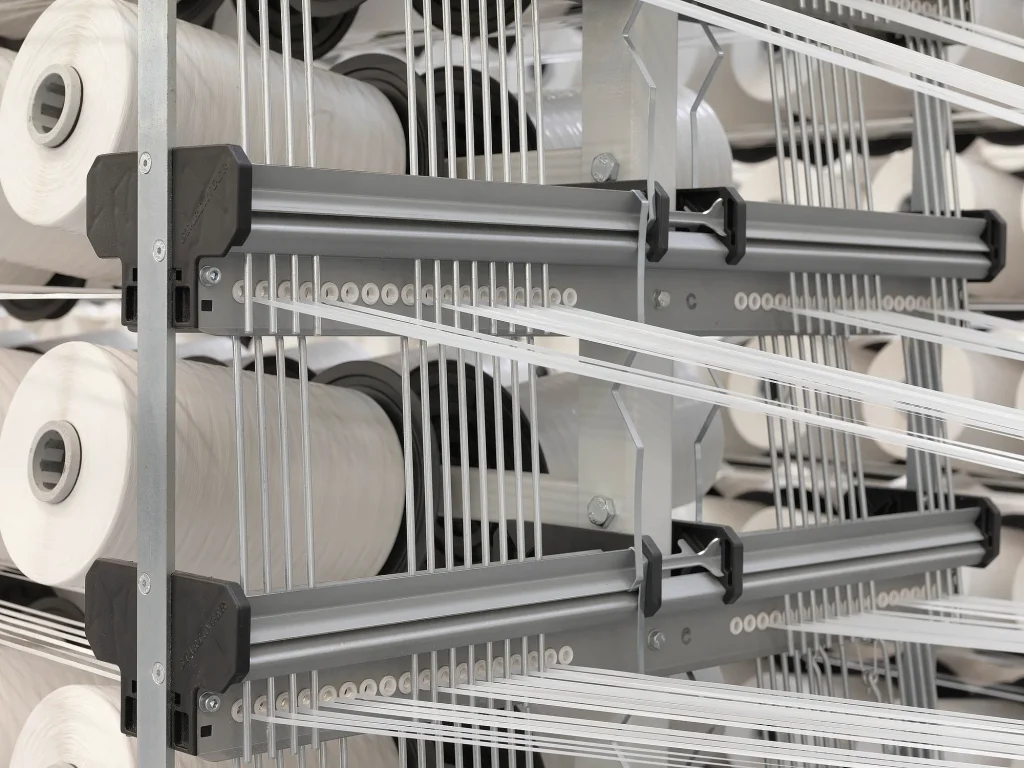
Woven polypropylene fabric as the structural backbone. At the heart of every multiwall laminated woven sack lies a woven polypropylene fabric. Polypropylene granules are melted, extruded into thin sheets, slit into tapes, and drawn under controlled conditions so that polymer chains align and tensile strength increases along the tape length. These oriented tapes are then woven at defined densities into a fabric whose weight per square metre can be tailored. Heavier fabrics with tighter weaves offer higher puncture resistance and better drop performance; lighter ones support cost reduction where risk levels are lower.
Laminated films as barrier and print layers. The woven fabric alone, while strong, is porous, slightly rough, and difficult to seal. To transform it into a smooth, protective wall, converters add one or more films via lamination. Biaxially oriented polypropylene (BOPP) is commonly used for the outer layer because it combines strength, stiffness, clarity, and excellent printability. On the inside, polyethylene or co-extruded polyolefin films are used to create a sealable, low porosity surface that resists moisture and dust migration. In more demanding recipes, higher barrier polymers or metallised films may be introduced to slow down oxygen ingress or aroma loss.
Optional paper plies for stiffness and tactile appeal. In some multiwall laminated woven food bags, especially those targeting premium retail or professional markets, paper plies are added outside or between film and fabric layers. Paper contributes stiffness, stackability, and a familiar tactile surface. Brown kraft sends a robust, natural message; white or coated paper supports high resolution graphics and a clean technical appearance. The choice of paper basis weight and ply count helps fine tune the feel and behaviour of the bag without compromising the woven fabric’s mechanical role.
Foil and ultra high barrier components for sensitive products. For high value, aroma rich, or highly reactive ingredients, such as complex spice blends or specialty additives, aluminium foil or metallised films can be added as inner layers. These barriers drastically reduce oxygen and moisture transmission, extending shelf life and stabilising sensitive flavour profiles. While they increase material complexity and complicate recycling, they are invaluable in niches where product degradation would be far more costly than the packaging itself.
Adhesives, extrusion coatings, and tie layers as invisible connectors. The stability of Multiwall Laminated Woven Bags depends on the quality of the bonds between layers. Extrusion coatings of polypropylene or polyethylene fill gaps between woven tapes and films, creating a more uniform surface and a strong bond. Where different polymers must adhere, specially formulated tie resins link them without compromising food contact safety. In constructions that include paper, water based or solvent based adhesives create durable connections while allowing some flex so that folds and impacts do not cause delamination.
Additives, inks, and surface treatments for tuned behaviour. Finally, additives and surface chemistries fine tune performance. Slip agents adjust friction so that bags slide reliably on conveyors but stay stable in pallet stacks. Anti static packages reduce dust attraction and help dissipate electrostatic charges during filling. UV stabilisers protect both the materials and printed artwork from sunlight during outdoor storage. Food compliant inks and overprint varnishes provide vivid branding and dense regulatory information while resisting abrasion, stacking pressure, and occasional condensation.
Typical layer stack in Multiwall Laminated Woven Bags
- Outer printed BOPP film for branding, abrasion resistance, and basic moisture barrier.
- Polyolefin extrusion coating or tie layer to bond film to woven fabric and close pores.
- Woven polypropylene fabric providing tensile strength, tear resistance, and drop performance.
- Optional intermediate paper ply for stiffness, feel, and additional print surface.
- Inner polyethylene or co-extruded film liner to enhance moisture, dust, and grease barrier.
- Optional foil or metallised film for products needing ultra low oxygen or aroma transmission.
Because this architecture is modular, engineers can configure Multiwall Laminated Woven Bags for very different risk profiles. A relatively simple three layer design may be enough for local flour distribution in moderate climates, while long distance export of high fat cocoa powder or intensely aromatic spices may require multi layer liners and reinforced walls. The design challenge lies in assembling just enough protection, stiffness, and aesthetics without drifting into over engineered, resource intensive constructions.
3. Functional advantages across mechanical, barrier, and visual dimensions
While material architecture explains how Multiwall Laminated Woven Bags are built, users ultimately judge them by what they do. Do they keep flour free flowing? Do they preserve sugar crystals intact? Do they maintain spice aroma over long voyages? Can they be filled on existing lines without problematic downtime? Answering these questions means translating structural features into tangible benefits across several dimensions.
High strength at moderate wall weight. The woven polypropylene chassis grants these bags an impressive strength to weight ratio. A suitable fabric weight combined with carefully designed seams allows multiwall laminated woven sacks to handle typical loads of 25 or 50 kilograms with generous safety margins. Compared with traditional multi ply paper sacks delivering similar mechanical performance, the total wall grammage can often be lower. This improves the product to packaging weight ratio and reduces the number of pallets required to ship empty bags to filling plants.
Tailored barrier performance for specific ingredients. The laminate structure allows barrier properties to be adapted precisely to product needs. Flour and starch primarily require moisture control and cleanliness; sugar must avoid caking and infestation; spices need protection against oxygen, light, and aroma loss. By choosing appropriate film types and thicknesses, and by deciding whether to add foil or metallised layers, Multiwall Laminated Woven Bags can be tuned so that moisture vapour transmission rates and oxygen ingress are low enough to maintain quality across the intended shelf life without unnecessary cost.
Compatibility with automated filling and palletising. Modern mills and ingredient plants depend on high speed packers and automated palletisers. Bags that vary irregularly in width, length, or stiffness cause jams and unexpected stoppages. Because their dimensions and friction behaviour can be controlled precisely, multiwall laminated woven food bags are designed to move smoothly through filling jaws, closing units, checkweighers, and palletising grippers. Valve openings can be tailored to specific filling spouts, and outer friction can be adjusted to balance conveyor sliding with pallet stability.
Strong printability and brand communication. The laminated outer surface, especially when based on BOPP, provides a smooth, dimensionally stable printing canvas. Multi colour flexographic or gravure printing can reproduce detailed images, fine text, and gradients without the interference of woven textures. This transforms Multiwall Laminated Woven Bags into powerful brand carriers. In wholesale clubs, cash-and-carry outlets, or warehouse style retailers, pallets of such bags act as large format billboards that signal quality, provenance, and safety certifications at a glance.
Food safety and regulatory alignment. In the food industry, packaging must support compliance with regulations around migration, traceability, hygiene, and allergen control. Well designed food grade multiwall laminated woven bags draw on approved resins, inks, and adhesives and are manufactured within quality systems that support lot level traceability. Detailed printing on the bags helps communicate regulatory information, from nutrition tables and ingredient declarations to allergen warnings and use instructions, while the physical structure protects product integrity.
The unique attraction of Multiwall Laminated Woven Bags lies in how they reconcile demands that often conflict: high strength with low material usage, high barrier with manageable cost, strong visual impact with industrial robustness, and sophisticated structures with efficient machinability.
As brand owners increasingly seek differentiated packaging that is both functional and visually distinctive, Multiwall Laminated Woven Bags naturally intersect with related innovations such as block bottom PP bags optimised for stability and packing efficiency or block BOPP woven bags designed for efficient handling. These formats share a focus on precise geometry, stable stacking, and bold graphics, reinforcing the broader shift towards packaging that delivers both performance and presence.
4. Manufacturing chain: from resin to finished multiwall laminated woven bags
The reliability of Multiwall Laminated Woven Bags is closely tied to the precision of their manufacturing chain. Each process step, from transforming polypropylene granules into tapes to forming and closing filled bag structures, influences performance on filling lines and in the field. Understanding this chain clarifies why investment in advanced equipment and process control is critical.
Raw material reception and validation. The journey starts with polypropylene and polyethylene resins, BOPP or other films, optional paper plies, and additives such as masterbatches and inks. Responsible producers screen incoming materials for key properties: melt flow index for resins, thickness and mechanical strength for films, basis weight and moisture content for paper, and solids content for adhesives. Only materials that meet predefined windows progress toward production of multiwall laminated PP woven packaging bags.
Tape extrusion and weaving. Polypropylene destined for the woven fabric is extruded into a thin sheet, cooled, slit into tapes, and drawn to orient molecules and raise tensile strength. Tape width, draw ratio, and cooling conditions are finely tuned. The tapes are then woven on circular or flat looms into fabrics with specific thread densities and weights. On quality focused lines, sensors detect broken tapes, tension deviations, or pattern problems in real time so that fabric rolls outside specification do not reach downstream processes.
Lamination, extrusion coating, and liner production. Woven fabric rolls are combined with films using extrusion coating or adhesive lamination. A thin layer of molten polyolefin is applied between fabric and film, closing pores and creating a strong bond. Co-extrusion technology can add multiple functional layers at once, such as a low friction outer skin and a robust tie layer beneath. Inner liners, when produced separately, are blown on film lines at controlled thickness and mechanical performance before being inserted or combined with the main wall.
Printing and surface customisation. Printed reels originate on flexographic or gravure presses where inks, plates, and cylinders are selected to match the required graphical resolution and durability. Registration control ensures that artwork aligns accurately with future folds, valves, and bottoms. For premium Multiwall Laminated Woven Bags, colour management systems help maintain consistent brand colours across long runs and multiple plants, reinforcing brand recognition worldwide.
Conversion: cutting, forming, valve construction, and bottom closing. Laminated and printed webs are cut into sheets or tubes, then folded and joined into bag bodies. Valves are formed or inserted at precisely defined positions and angles to match filling spouts. Bottoms are pasted in block or pinch formats so that filled bags stand firmly on pallets and in retail displays. Every fold, cut, and seam adds an opportunity for variation, so converting lines are equipped with quality checks measuring length, width, valve dimensions, and seam integrity.
Process control priorities in manufacturing Multiwall Laminated Woven Bags
- Consistent tape denier, fabric weight, and weave density to stabilise mechanical strength.
- Uniform lamination thickness and adhesion to prevent pinholes and delamination.
- Accurate printing registration and colour stability for clear branding and regulatory text.
- Precise valve cutting and folding for clean filling and reliable self closing behaviour.
- Controlled bottom pasting and folding for square, stable bag bases and neat pallet patterns.
High quality Multiwall Laminated Woven Bags thus depend less on any single miracle material and more on the disciplined orchestration of multiple process stages into one coherent production system. When this system runs well, bags behave consistently on demanding filling lines and in varied distribution environments, justifying their reputation as reliable workhorses of modern food packaging.
5. Application scenarios in modern food and ingredient chains
The technical virtues of Multiwall Laminated Woven Bags would mean little if they did not translate into meaningful advantages across real product categories. In practice, these bags have become indispensable in several core segments of food and feed supply chains, each with its own product sensitivities, handling patterns, and regulatory expectations.
Flour, semolina, and milled grains. Flour mills handle large volumes of dense, hygroscopic powders that must remain free flowing and microbiologically safe. For these products, multiwall laminated woven flour bags deliver a combination of moisture control, dust containment, and pallet stability. Internal liners and tight laminates slow moisture ingress, while woven fabrics resist puncture during mechanical handling. Clear printed surfaces carry baking guidelines, enrichment statements, and batch codes that support traceability.
Sugar and sweeteners. Granulated sugar, icing sugar, and alternative sweeteners are highly sensitive to humidity and are attractive targets for insects. Multiwall constructions for sugar often emphasise tight weaves, smooth laminates, and secure seams. In some markets, transparent or translucent BOPP allows visual inspection while maintaining barrier performance. For industrial customers, Multiwall Laminated Woven Bags help preserve granule integrity and prevent caking, which in turn protects downstream processing efficiency.
Spices, herbs, and flavour rich additives. Spices and herbs derive much of their value from volatile aroma compounds and vivid colours that can degrade when exposed to oxygen, light, and moisture. In this category, multiwall laminated woven bags for spices may integrate high barrier liners, UV blocking films, and carefully chosen inks to preserve flavour and visual appeal. For long export routes, foil or metallised layers significantly slow aroma loss, allowing brands to ship globally while delivering products that taste and smell as intended.
Starches, proteins, and functional ingredients. Modern food and beverage formulations rely on a wide array of powders such as modified starches, plant proteins, hydrocolloids, and stabilisers. These ingredients must arrive at plants with predictable functionality. Properly configured Multiwall Laminated Woven Bags protect against lumping, microbial growth, and contamination, while well designed valves and venting systems reduce dust release during filling and emptying. Clear labelling on the outer surface helps maintain correct usage in complex formulation environments.
Feed ingredients and premixes. In livestock and aquaculture sectors, nutritionally dense premixes and additives are commonly supplied in heavy duty bags. Multiwall laminated woven constructions are often preferred here for their robustness and compatibility with aggressive handling environments. In parallel, packaging solutions like optimised FFS roll bags for livestock feed packaging demonstrate how woven and film based formats coexist, each serving different plant layouts and automation strategies.
Illustrative mapping of Multiwall Laminated Woven Bag applications
| Application area | Typical products | Key packaging priorities |
|---|---|---|
| Milling and baking | Flour, semolina, maize meal, bakery mixes | Moisture control, dust containment, pallet stability, traceable labelling. |
| Sweeteners | Granulated sugar, icing sugar, glucose powders | Protection against humidity and infestation, abrasion resistance, clean discharge. |
| Herbs and spices | Spice blends, dried herbs, seasonings | High barrier against oxygen and light, aroma retention, premium graphics. |
| Functional ingredients | Starches, proteins, texturisers, stabilisers | Protection from lumping and microbial growth, dust control, accurate labelling. |
| Feed and premixes | Vitamin premixes, mineral blends, specialty feed additives | High mechanical strength, rough handling tolerance, clear product identification. |
Across these applications, the same message recurs: Multiwall Laminated Woven Bags provide a configurable platform that can be tuned to the specific technical and commercial needs of each product category, rather than forcing a one size fits all solution.
6. Quality governance and risk control strategies
For all their advantages, Multiwall Laminated Woven Bags must still pass the most demanding test of all: consistent performance in the real world. A single serious failure on a large shipment can negate years of careful brand building. That is why responsible manufacturers and brand owners treat quality management not as an afterthought but as a central pillar of their packaging strategy.
Standards based testing and specification. A disciplined approach begins with clear specifications informed by widely recognised standards. Mechanical properties such as tensile strength, seam strength, drop resistance, and puncture resistance are measured with established methods. Barrier performance, including moisture vapour and oxygen transmission, is assessed under defined conditions. By aligning multiwall laminated woven sacks with such test protocols, producers can quantify performance rather than relying on subjective impressions.
Lot level traceability and documentation. In food and feed supply chains, traceability has become indispensable. Each batch of Multiwall Laminated Woven Bags can be linked to underlying resin, film, and paper lots, as well as to specific production runs. Documentation of test results, materials used, and process parameters provides an audit trail that reassures regulators and customers alike. When rare issues do occur, this traceability enables targeted investigation and corrective action rather than broad, unfocused recalls.
Structured inspection regimes. Quality management spans three main stages: incoming inspections, in process controls, and final checks. Incoming inspections confirm that resins, films, paper, and adhesives meet agreed specifications. In process controls track tape tensile properties, fabric weight, lamination bond strength, print registration, and valve dimensions. Final checks simulate real handling conditions via drop tests, compression tests, and stacking trials. Only when results fall within acceptable limits are batches of Multiwall Laminated Woven Bags released.
Risk based design and continuous improvement. Not all packaging risks are equal. Some relate to catastrophic failures, such as bags splitting during handling or flooding a truck with product. Others involve more subtle issues, like gradual caking due to marginal barrier performance or scuffed artwork that erodes perceived quality. Effective packaging programmes rank these risks, direct design and testing resources toward the most serious ones, and then revisit assumptions regularly as products, markets, and logistics conditions evolve.
In many ways, modern Multiwall Laminated Woven Bags behave like engineered components in a machine. They are specified, validated, monitored, and improved using systematic tools rather than left to trial and error or purely aesthetic judgement.
Quality governance for these bags also intersects with wider packaging families. Insights from high performance valve bag development, from advanced valve bag formats and their future trends in sustainable packaging, or from robust bulk solutions like FIBC bags in sustainable packaging solutions feed into the design of multiwall laminated formats. Lessons learned in one segment often become catalysts for improvement in another.
7. System thinking: Multiwall Laminated Woven Bags within supply chain networks
Even the most perfectly engineered Multiwall Laminated Woven Bags do not operate in isolation. They form part of a network that stretches from raw material extraction to processing plants, distribution centres, retail or food service outlets, and ultimately to consumers or industrial users. A system oriented perspective reveals consequences that are easy to overlook when focusing solely on individual bag properties.
At the production plant, the bags influence overall equipment effectiveness. If multiwall laminated woven food bags consistently open on filling spouts, accept product without excessive dust emission, and close reliably, line speeds can remain high and unplanned downtime falls. Maintenance teams can direct attention to preventive work rather than constantly responding to packaging related stoppages. In this sense, bags operate as enablers of efficient, predictable production.
In warehouses and distribution centres, bag stiffness, coefficient of friction, and dimensional accuracy dictate pallet stability. Square, consistent Multiwall Laminated Woven Bags form cubic pallets that can be stacked safely to greater heights, improving space utilisation. Less leaning means fewer stretch film layers are needed to stabilise stacks, which in turn reduces packaging waste and labour time. In high throughput environments, reliable pallet behaviour contributes significantly to smooth material flow.
During transport, from short local trips to long maritime journeys, pallets experience vibration, shocks, and shifting loads. Bags rub against each other and against surfaces in trucks and containers. Robust woven fabrics backed by strong laminates help bags resist these stresses. Secure seams and valves reduce the likelihood of leaks that might cause shipments to be rejected or require messy, time consuming cleanups.
At the point of use, whether in a bakery, a beverage plant, a feed mill, or a seasoning facility, operators judge bags by how easily they can be moved, opened, and emptied. Well designed Multiwall Laminated Woven Bags allow clean cuts without uncontrolled tearing, discharge completely or predictably, and minimize residues that would distort batch accuracy. Clear graphics help staff identify the correct ingredient quickly, supporting accurate inventory management and recipe execution.
Examples of system level roles played by Multiwall Laminated Woven Bags
- Supporting high speed filling and palletising as part of automated plant design.
- Protecting product quality so that fewer batches are downgraded or discarded.
- Acting as mobile information carriers through barcodes, QR codes, and printed instructions.
- Interfacing with other packaging formats, such as bulk FIBC containers or small retail packs.
In more strategic terms, Multiwall Laminated Woven Bags also play a role in how brands are perceived across global markets. Their visual quality and reliability contribute to customer trust, reinforcing narratives of professionalism and care. Articles that explore brand influence and competition in a global context for multiwall laminated woven bags underline how packaging choices ripple outward into market positioning, distributor relationships, and even pricing power.
8. Technical parameters and configuration guidelines
In order to translate broad concepts into practical decisions, engineers and buyers need a shared vocabulary of technical parameters. For Multiwall Laminated Woven Bags in the ten to fifty kilogram range, specification work often revolves around geometry, material grammage, film and liner thickness, valve design, and surface properties such as friction.
Illustrative parameter ranges for Multiwall Laminated Woven Bags
| Parameter | Typical range | Functional impact |
|---|---|---|
| Bag width (flat) | Approximately 350 to 600 millimetres | Defines cross section, influences pallet pattern and fill weight. |
| Bag length | Approximately 550 to 1100 millimetres | Affects stack height, ergonomics of manual handling, and visual proportions. |
| Woven PP fabric weight | Roughly 90 to 140 grams per square metre | Determines tensile strength, puncture resistance, and drop performance. |
| Outer film thickness (BOPP or similar) | Around 25 to 35 micrometres | Balances print quality, gloss, stiffness, and moisture barrier. |
| Inner liner thickness | Approximately 20 to 40 micrometres | Influences sealability, dust retention, and resistance to humidity. |
| Total wall grammage | Roughly 110 to 180 grams per square metre equivalent | Balances mechanical safety margins with material cost. |
| Surface friction (outer) | Coefficient of friction approximately 0.25 to 0.45 | Crucial for pallet stability and conveyor behaviour. |
| Recommended filling weight | Typically 10 to 50 kilograms | Linked to product density, handling norms, and logistics design. |
These ranges are not rigid rules but starting points. For example, a premium bakery mix might justify slightly thicker films to ensure flawless print quality and enhanced moisture protection, whereas a commodity sugar for industrial users might focus on robust fabric and seam strength with more modest graphics. By systematically adjusting these parameters, packaging teams can shape Multiwall Laminated Woven Bags that align tightly with the physical and commercial realities of each product.
9. Economic and risk oriented considerations
When organisations consider switching to or upgrading Multiwall Laminated Woven Bags, they naturally ask whether the benefits justify the cost. On a purely per bag basis, these structures usually cost more than single layer woven sacks or simple paper bags. However, the economics change once spoilage, operational efficiency, and risk reduction are factored into the calculation.
Direct material and process costs. Laminated fabrics, multi layer liners, and high quality printing all add cost. Complex conversions with valves and square bottoms require sophisticated machinery. At first glance, procurement tables might flag multiwall laminated woven sacks as more expensive options that put pressure on packaging budgets.
Reduced spoilage and product loss. Yet real world evidence often shows substantial reductions in product loss when such bags replace weaker formats. Fewer broken bags in warehouses, fewer moisture damaged pallets in humid seasons, and fewer aroma degraded spice shipments all translate into tangible savings. If even a small fraction of high value ingredients is saved from downgrading or disposal, the incremental packaging cost may be more than offset.
Improved operational efficiency. Stable, predictable bag behaviour on filling and palletising lines can increase throughput and reduce overtime. Less dust at filling machines reduces cleaning time and supports occupational health goals. Reliable pallet stability cuts down on rework and stretch film consumption. In this way, Multiwall Laminated Woven Bags support both lower hidden costs and smoother day to day operations.
Risk mitigation and brand protection. Packaging failures that reach customers or end users can trigger complaints, claims, or even recalls. The cost of such events extends far beyond the value of damaged goods; it touches reputation, future business, and regulatory scrutiny. Investing in robust, well engineered Multiwall Laminated Woven Bags can be understood as a form of insurance premium that reduces the probability and impact of severe failures.
When viewed across the full life cycle of product movement, from filling line to customer site, the true cost of a bag is not just its unit price. It is the sum of its effects on quality, efficiency, risk, and brand perception. On that broader balance sheet, Multiwall Laminated Woven Bags often emerge as cost effective investments rather than luxuries.
These economic and risk based reflections are mirrored in other advanced packaging families. For instance, the growing popularity of poly paper bags in modern retail applications similarly reflects not just material choices but the search for formats that minimise waste, secure products, and support compelling brand stories in competitive environments.
10. Comparative positioning among alternative packaging formats
Deciding in favour of Multiwall Laminated Woven Bags typically involves a comparison with several competing packaging options. Each alternative offers a distinct balance of strength, barrier, automation compatibility, appearance, and recyclability. Understanding where multiwall laminated woven constructions sit on this landscape helps organisations build coherent packaging portfolios.
Compared with simple woven PP sacks. Plain woven polypropylene sacks, sometimes with basic liners, deliver good mechanical strength at low cost. However, they often fall short in barrier performance and high impact printing. They may leak dust, allow moisture ingress, and limit branding possibilities. In contrast, multiwall laminated woven sacks close fabric pores with films and coatings, allowing much better moisture control and richer graphics while maintaining the underlying strength.
Compared with multi-ply paper sacks. Classic multi-ply paper sacks have a long history in flour and sugar packaging. They are familiar and, when uncontaminated by plastic, can integrate readily into paper recycling streams. However, paper loses strength rapidly under high humidity and is vulnerable to puncture in rough logistics environments. Multiwall Laminated Woven Bags outperform them in mechanical robustness and long distance shipping resilience, especially under variable climate conditions.
Compared with thin film FFS bags. Form fill seal systems using thin polyethylene films are formidable competitors where automation and low material usage are top priorities. Thin films, however, may lack the puncture resistance and stacking integrity required by dense, abrasive food powders. Woven based multiwall laminated woven food bags occupy a middle position: they can be run on high speed lines while also delivering superior drop resistance and pallet stability. Discussions around optimised FFS roll bags for livestock feed illustrate how these film based systems complement, rather than fully replace, woven based solutions.
Compared with rigid or bulk formats. Rigid containers and FIBC jumbo bags serve vital roles in bulk logistics and long term storage. They handle hundreds or thousands of kilograms per unit, but they require forklifts, hoists, or specialised discharging equipment. In many supply chains, Multiwall Laminated Woven Bags represent the intermediate format between bulk FIBC units and small retail packs, offering manageable weights and flexible distribution. Insights into the role of FIBC bags in sustainable packaging solutions highlight how these bulk formats complement, rather than compete directly with, the multiwall laminated woven segment.
Portfolio thinking in packaging
- Use bulk FIBC containers where large scale, low frequency transfers dominate.
- Deploy Multiwall Laminated Woven Bags for intermediate distribution to industrial or food service customers.
- Reserve flexible film or small paper bags for retail facing units and consumer use.
Within such portfolios, multiwall laminated woven formats are rarely the cheapest or the most visually radical, but they often represent the most balanced option when mechanical demands, barrier needs, and brand considerations are weighed together.
11. Practical roadmap for adopting Multiwall Laminated Woven Bags
Recognising the potential of Multiwall Laminated Woven Bags is the first step; implementing them effectively is the real challenge. Successful transitions typically follow a structured roadmap that combines careful analysis, collaborative design, and data driven iteration.
Step one: diagnose current packaging performance. Organisations begin by assessing their existing formats: damage rates, moisture related complaints, dust levels at filling lines, pallet stability, and customer feedback. This diagnostic stage quantifies the problems that new multiwall laminated woven sacks are expected to solve.
Step two: develop target specifications. Packaging engineers then translate performance goals into preliminary specifications for fabric weight, film and liner composition, bag dimensions, valve style, and desired graphics. Benchmarking against related solutions, including alternatives such as poly paper bags used in modern retail or other laminated woven designs, helps teams understand trade offs and possibilities.
Step three: run lab tests and pilot trials. Prototype Multiwall Laminated Woven Bags are produced and subjected to laboratory tests for strength, barrier performance, and seam integrity. Successful designs then undergo pilot trials on real filling lines and logistics routes. During this phase, operators provide feedback on machinability, dust behaviour, and pallet handling, while quality teams inspect product condition at arrival.
Step four: scale up and integrate into the packaging portfolio. Once a design proves itself in trials, volumes are ramped up. Standard operating procedures, maintenance routines, and staff training materials are updated to reflect the new packaging. Inventory management systems are adjusted to handle new dimensions or stacking patterns associated with Multiwall Laminated Woven Bags.
Step five: monitor performance and pursue continuous improvement. Even after a successful launch, packaging remains a living system. Data on damage rates, customer satisfaction, and sustainability indicators such as material usage and recyclability are reviewed regularly. Over time, incremental adjustments in grammage, film structure, or printing can yield further gains in performance and resource efficiency.
A structured adoption roadmap transforms Multiwall Laminated Woven Bags from an appealing idea into a proven tool woven into the daily operations of mills, refineries, and food plants.
12. Innovation pathways and future outlook for multiwall laminated woven packaging
Like every significant packaging technology, Multiwall Laminated Woven Bags are not static. They continue to evolve under the influence of material science, regulatory shifts, automation trends, and changing consumer expectations. Looking ahead, several innovation pathways are particularly relevant.
One pathway involves further optimisation of resource use. Lightweighting programmes aim to reduce total grammage while maintaining safety margins by improving tape orientation, lamination uniformity, and seam design. Even modest reductions in material per bag, when multiplied across millions of units, can yield substantial savings and lower environmental footprints.
Another pathway focuses on balancing performance with recyclability. Although multi material bags offer strong technical advantages, they complicate recycling streams. Research and development efforts explore versions of Multiwall Laminated Woven Bags that rely more on compatible polyolefin layers and less on aluminium or other hard to recycle components. In parallel, complementary formats such as advanced valve designs and mono material laminates, similar in spirit to those discussed in resources on future valve bag trends, help broaden the range of sustainable options.
Digitalisation adds yet another dimension. As printing and coding technologies improve, it becomes easier to add variable data, traceability codes, and interactive elements to bag surfaces. This transforms Multiwall Laminated Woven Bags into nodes in data rich networks where each unit can be scanned, tracked, and linked to information about origin, quality checks, and correct usage. Packaging thereby supports not only physical logistics but also information flows.
Finally, innovation also occurs at the level of system integration. Lessons drawn from block bottom geometries, as highlighted in analyses of efficient block bottom PP bags, or from the handling advantages of block BOPP bag designs, continue to influence how multiwall laminated woven constructions are shaped and filled. Cross fertilisation between multiwall laminated woven formats and other packaging types ensures that no single innovation remains isolated for long.
In the broader packaging ecosystem, these dynamics underscore that Multiwall Laminated Woven Bags are part of an interconnected family of solutions that includes poly paper, valve, FIBC, and FFS based formats. Articles examining poly paper bags in retail, evolving valve bag concepts, FIBC bag contributions to sustainable packaging, and high performance FFS roll bags all point towards a shared objective: protecting product quality while supporting efficient, responsible, and competitive supply chains.
2025-11-28
- 1. Understanding multiwall laminated woven bags in modern food supply chains
- 2. Material architecture and layer by layer functions
- 3. Functional advantages across mechanical, barrier, and visual dimensions
- 4. Manufacturing chain: from resin to finished multiwall laminated woven bags
- 5. Application scenarios in modern food and ingredient chains
- 6. Quality governance and risk control strategies
- 7. System thinking: Multiwall Laminated Woven Bags within supply chain networks
- 8. Technical parameters and configuration guidelines
- 9. Economic and risk oriented considerations
- 10. Comparative positioning among alternative packaging formats
- 11. Practical roadmap for adopting Multiwall Laminated Woven Bags
- 12. Innovation pathways and future outlook for multiwall laminated woven packaging
VidePak’s multiwall laminated woven bags reduce product spoilage by 40%, achieve FDA and EU food-grade compliance, and withstand 50 kg loads with reinforced seams, making them the optimal choice for flour, spices, and food additives. With 16 years of expertise and ISO 22000-certified production lines, VidePak delivers packaging solutions that balance cost, safety, and performance for global food manufacturers.
1. Food Industry Challenges: Why Packaging Matters
Food raw materials like flour, sugar, and additives demand packaging that ensures freshness, prevents contamination, and survives rigorous logistics. Substandard bags lead to moisture absorption, pest infestations, and regulatory non-compliance. VidePak’s multiwall laminated bags address these issues through:
- Barrier Efficiency: BOPP lamination (25–35 microns) reduces moisture vapor transmission rate (MVTR) to <3 g/m²/day, critical for hygroscopic powders.
- Load Capacity: 12–14 threads/inch weaving density supports 50 kg loads without seam failure (tested per ASTM D5265).
- Certifications: FDA CFR 21, EU 10/2011, and ISO 22000 compliance for direct food contact.
Case Study: A Southeast Asian spice exporter reduced transit damage by 35% using VidePak’s 120 GSM laminated bags with UV-blocking additives, maintaining product integrity during 60-day maritime shipments.
2. Application-Specific Requirements and Solutions
2.1 Flour and Grain Packaging
- Key Needs: Moisture resistance, anti-static properties, stackability.
- VidePak Solution:
- Structure: 3-layer lamination (PP woven + BOPP film + PE liner).
- Grammage: 110–130 GSM for 25–50 kg capacities.
- Certifications: Kosher, Halal, and Non-GMO Project Verified options.
2.2 Sugar and Sweeteners
- Key Needs: Puncture resistance, insect-proof design, clarity for product visibility.
- VidePak Solution:
- Anti-Pest Features: Tight weave (14 threads/inch) + insect-repellent coatings.
- Transparency: 85% light transmission via BOPP films.
2.3 Spices and Additives
- Key Needs: UV protection, aroma retention, small-batch customization.
- VidePak Solution:
- UV Blockers: Carbon-black masterbatches extend shelf life by 6 months.
- AromaLock™ Liners: Aluminum foil layers reduce volatile compound loss by 90%.
3. Technical Parameters: Tailoring Bags to Food Types
| Material | Recommended Specifications | Critical Performance Metrics |
|---|---|---|
| Wheat Flour | 120 GSM, BOPP lamination, PE liner | MVTR <2 g/m²/day |
| Powdered Sugar | 100 GSM, anti-static coating, valve spout | Seam strength ≥45 N/cm² |
| Curry Blends | 130 GSM, UV-stabilized, 8-color printing | Lightfastness Grade 7 (ISO 105-B02) |
| Citric Acid | 140 GSM, chemical-resistant liner | pH resistance 1–14 |
4. Cost-Benefit Analysis: Balancing Durability and Budget
| Feature | Cost Impact (+/- vs. Standard Bags) | ROI Example |
|---|---|---|
| BOPP Lamination | +15% | 30% longer shelf life → 20% revenue boost |
| PE Inner Liners | +10% | 50% reduction in spoilage claims |
| UV Additives | +8% | 25% fewer returns due to discoloration |
5. FAQs: Addressing Food Manufacturers’ Concerns
Q1: How do laminated bags prevent condensation in humid climates?
A: Our 3-layer structure blocks 99.9% humidity, with MVTR rates certified per ASTM E96.
Q2: Are bags suitable for high-fat additives like cocoa powder?
A: Yes. Anti-grease liners (25 g/m² PE) prevent oil migration, tested per ISO 7875.
Q3: Can we print nutritional labels directly on bags?
A: Absolutely. Our rotogravure printers support 1200 dpi resolution for FDA-compliant labeling.
Q4: What’s the MOQ for custom designs?
A: 5,000 units, with 18-day production cycles using 30+ dedicated printing machines.
6. VidePak’s Manufacturing Edge
- Starlinger Technology: 100+ circular looms produce 18 million bags/month with ±0.2 mm tolerance.
- Food Safety Protocols: HACCP-certified lines, allergen-free production zones.
- Global Reach: 50+ countries served, including partnerships with Cargill and Ajinomoto.
For insights into BOPP laminated woven bags for moisture-sensitive products, explore our technical guide on optimizing barrier properties. Learn how valve bag designs enhance filling efficiency for powdered ingredients.
References
- VidePak Official Website: https://www.pp-wovenbags.com/
- Email: info@pp-wovenbags.com
- Industry Standards: FDA CFR 21, EU Regulation 10/2011, ISO 22000.
Anchor Links Integrated: